
Editor Summary
Organizational Velocity - Improving Speed, Efficiency & Effectiveness of Business is a 47-slide PowerPoint framework by STRATICX for diagnosing and improving operational speed via process audits and workload analysis, organized across 7 sections (Organizational Velocity; Improving Speed, Efficiency & Effectiveness; Process Audits; Worked Example; Workload Analysis; Benchmarking; Becoming Faster).
Read moreIncludes templates and tools such as a process audit framework, workload survey template, benchmarking report format, improvement opportunities dashboard, meeting quality assessment tool, and continuous improvement roadmap. Created with consulting-grade rigor akin to McKinsey, Bain, and BCG. Sold as a digital download on Flevy.
Use this presentation when an organization must accelerate decision-making and execution by diagnosing process inefficiencies, rebalancing workloads, or benchmarking performance against peers — common in strategic planning, post-acquisition integration, or continuous improvement initiatives.
Corporate executives using the deck to run strategic planning sessions that identify and prioritize process inefficiencies and improvement initiatives.
Integration leaders conducting live process audit workshops to capture gaps and build implementation roadmaps.
Consultants performing benchmarking and selecting BBFTB opportunities for clients.
Project managers administering workload surveys to reallocate tasks and reduce meeting overhead.
The audit-plus-analysis methodology mirrors consulting-grade frameworks used at McKinsey, Bain, and BCG by combining process audits, workload analysis, and benchmarking into a prioritized implementation roadmap.
Lack of efficiency and effectiveness in an organization can have a significant impact on the overall cost of operation.
Organizational Velocity – Improving Speed, Efficiency & Effectiveness of Business provides a framework for diagnosing, assessing and implementing to improve the speed at which the organization operates.
There are two main areas for focus:
1. Process Audits – a framework for assessing key processes within the different functions of the organization and detailing where improvements are to be had
2. Workload Analysis – based on a workforce survey to identity where and what time in the organization is spent doing, including the efficiency and effectiveness of Meetings
The outcome from using the PPT framework will be a prioritised list of initiatives for implementation to increase organizational speed and reduce the cost of operation.
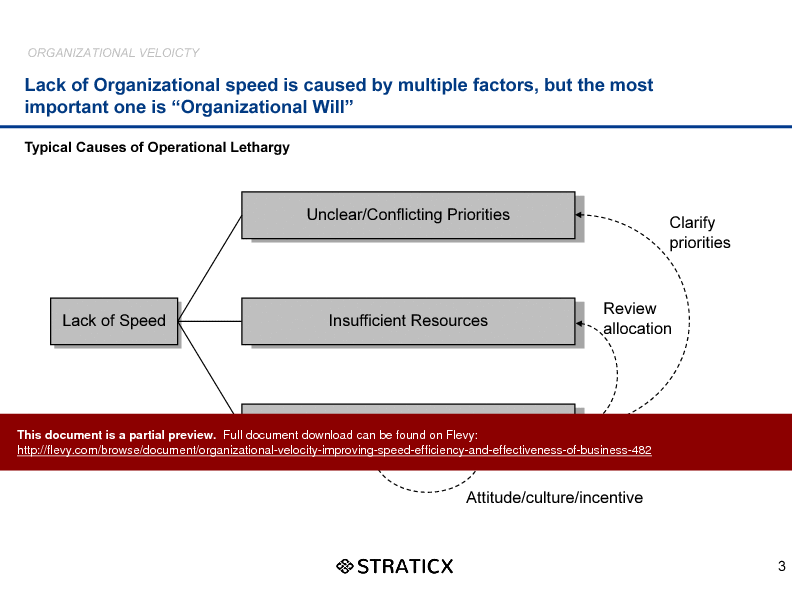
The document delves into the root causes of operational lethargy, emphasizing the critical role of "Organizational Will." It identifies unclear priorities and insufficient resources as key barriers to speed. The framework offers actionable steps to clarify priorities and review resource allocation, ensuring your organization operates at peak efficiency.
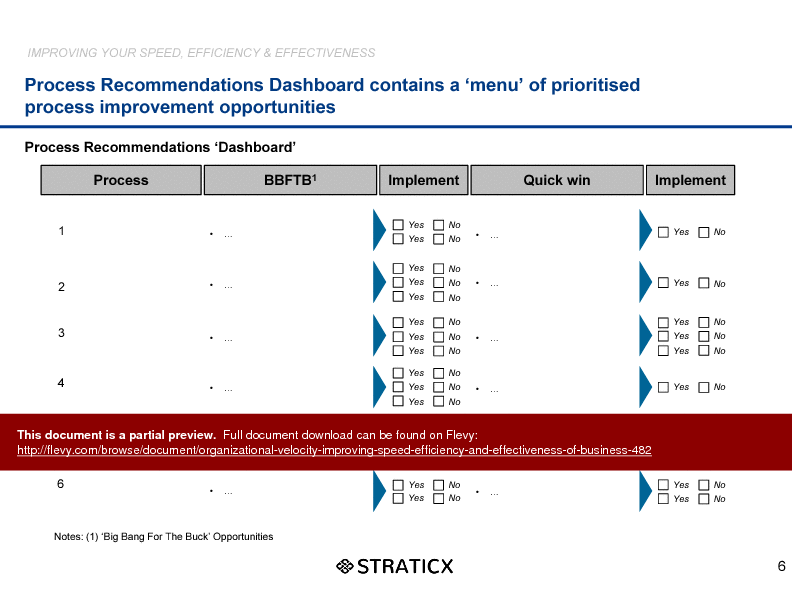
A comprehensive Process Recommendations Dashboard is included, providing a prioritized menu of improvement opportunities. Each process is evaluated for its potential impact and ease of implementation, enabling you to focus on high-value initiatives. The dashboard is designed to streamline decision-making and accelerate the implementation of strategic changes.
The workload analysis section offers a detailed assessment of how time is spent within the organization. It highlights inefficiencies in meetings and projects, providing insights into how to better allocate time and resources. This analysis is crucial for identifying areas where your organization can gain additional capacity and improve overall productivity.
Got a question about the product? Email us at support@flevy.com or ask the author directly by using the "Ask the Author a Question" form. If you cannot view the preview above this document description, go here to view the large preview instead.
MARCUS OVERVIEW
This synopsis was written by Marcus [?] based on the analysis of the full 47-slide presentation.
Executive Summary
This presentation titled "Organizational Velocity - Improving Speed, Efficiency & Effectiveness of Business" is designed to help organizations enhance their operational capabilities through a structured approach to process audits and workload analysis. Created with a consulting-grade rigor akin to McKinsey, Bain, or BCG-quality frameworks (not affiliated), this deck empowers corporate executives and integration leaders to identify key improvement initiatives that drive efficiency and effectiveness. By leveraging actionable insights from process audits and workload assessments, organizations can prioritize opportunities for improvement, streamline operations, and ultimately achieve faster decision-making and execution.
Who This Is For and When to Use
• Corporate executives focused on operational efficiency and strategic alignment
• Integration leaders managing process improvements and organizational change
• Consultants advising on operational excellence and performance optimization
• Project managers overseeing workload distribution and resource allocation
Best-fit moments to use this deck:
• During strategic planning sessions to identify inefficiencies in current processes
• When conducting process audits to benchmark against best practices
• In workshops aimed at fostering a culture of continuous improvement
Learning Objectives
• Define organizational velocity and its impact on business performance
• Build a comprehensive process audit framework to identify inefficiencies
• Establish a workload analysis methodology to assess team capacity and effectiveness
• Identify key improvement opportunities through benchmarking against peers
• Develop actionable recommendations for enhancing operational speed
• Create a roadmap for implementing continuous process improvements
Table of Contents
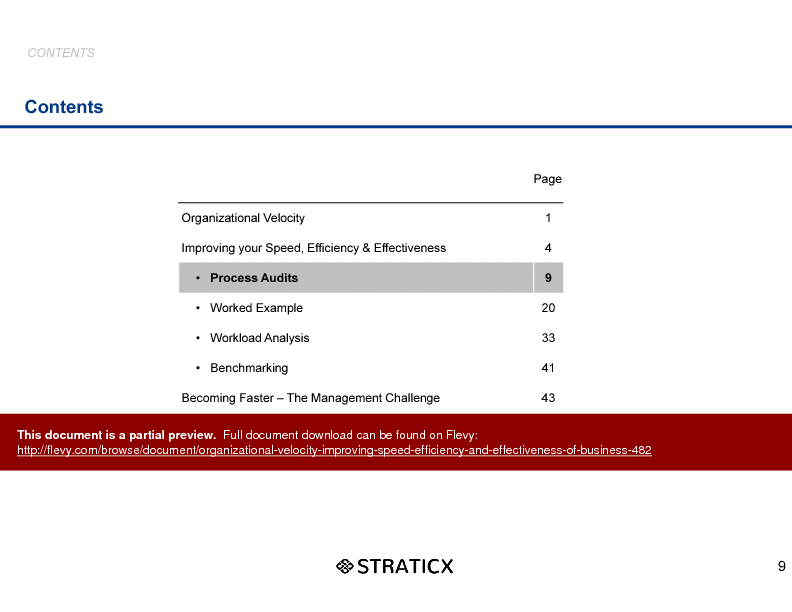
• Organizational Velocity (page 1)
• Improving Your Speed, Efficiency & Effectiveness (page 4)
• Process Audits (page 9)
• Worked Example (page 20)
• Workload Analysis (page 33)
• Benchmarking (page 41)
• Becoming Faster – The Management Challenge (page 43)
Primary Topics Covered
• Process Audits - A systematic approach to evaluate the efficiency and effectiveness of priority processes, identifying gaps and improvement opportunities.
• Workload Analysis - A survey-based assessment to evaluate how team members allocate their time across various activities and processes.
• Benchmarking - A comparative analysis against local and international peers to identify performance gaps and improvement areas.
• Improvement Opportunities - Actionable insights derived from audits and analyses that prioritize initiatives for enhancing organizational speed.
• Organizational Will - The cultural and attitudinal factors that influence an organization's ability to implement changes and improve speed.
• Management Challenges - The leadership dynamics that impact organizational velocity and the strategies to overcome them.
Deliverables, Templates, and Tools
• Process audit framework template for evaluating efficiency and effectiveness
• Workload survey template for assessing team capacity and activity distribution
• Benchmarking report format for comparing performance metrics against peers
• Improvement opportunities dashboard for tracking prioritized initiatives
• Meeting quality assessment tool to evaluate the effectiveness of organizational meetings
• Continuous improvement roadmap template to guide implementation efforts
Slide Highlights
• Overview of the advantages and cautions associated with increasing organizational speed
• Key analyses and recommendations framework for improving efficiency and effectiveness
• Process audit steps summary detailing the methodology for conducting audits
• Workload analysis findings showcasing time allocation across key processes
• Benchmarking insights that highlight areas for potential improvement
Potential Workshop Agenda
Process Audit Workshop (90 minutes)
• Introduce the process audit framework and its significance
• Conduct a live audit of a selected process with participants
• Identify and prioritize improvement opportunities based on findings
Workload Analysis Session (60 minutes)
• Present findings from the workload survey
• Discuss implications for resource allocation and team effectiveness
• Develop action plans for addressing identified inefficiencies
Continuous Improvement Strategy (90 minutes)
• Define the principles of continuous improvement within the organization
• Collaboratively create a roadmap for implementing identified initiatives
• Establish governance structures to monitor progress and outcomes
Customization Guidance
• Tailor the process audit framework to align with specific organizational processes and priorities
• Adjust the workload survey questions to reflect unique team dynamics and roles
• Incorporate industry-specific benchmarks into the benchmarking analysis
• Modify the improvement opportunities dashboard to include relevant metrics and KPIs
• Adapt the continuous improvement roadmap to fit the organization’s strategic goals
Secondary Topics Covered
• Organizational culture and its impact on operational speed
• Strategies for enhancing meeting effectiveness and decision-making
• The role of leadership in driving organizational change
• Techniques for fostering a culture of continuous improvement
• Tools for tracking and measuring process performance
Topic FAQ
What are the core steps in conducting a process audit for operational speed?
A process audit systematically details the process, interviews stakeholders, assesses efficiency and effectiveness, identifies improvement opportunities, and prioritizes actions. The approach aims to uncover gaps and candidate initiatives for implementation and is summarized in the deck’s process audit steps, comprising 5 primary steps.
How can I use workload analysis to identify time wasted in meetings and projects?
Workload analysis uses a workforce survey to capture how team members allocate time across activities, highlighting meeting inefficiencies and project time drains. Survey findings feed into discussions on resource allocation and capacity, and the Flevy product provides a workload survey template and a meeting quality assessment tool.
How does benchmarking help pinpoint operational improvement areas?
Benchmarking compares an organization’s processes and performance against local and international peers to reveal performance gaps and best-practice opportunities. Results guide prioritization of initiatives by impact and effort and can be presented using a benchmarking report format.
With limited budget and a short timeline, what should I look for in an organizational velocity toolkit?
Prioritize a toolkit that includes ready-to-use templates, clear workshop agendas, and tools for rapid diagnosis and prioritization so you can run time-boxed sessions. The STRATICX deck includes workshop agendas for 90-minute process audits, a 60-minute workload session, and a 90-minute continuous improvement strategy session.
What tangible outcome should I expect from using process audit and workload templates?
The expected outcome is a prioritized list of improvement initiatives that target faster decision-making and lower operating cost, supported by measurable artifacts such as a Process Recommendations Dashboard. The deck’s deliverables include a Process Recommendations Dashboard to track prioritized initiatives.
Which tools help identify over- or under-utilized staff during a post-merger integration?
Combine a workload survey to quantify time allocation with targeted process audits to reveal redundant or inefficient workflows; use the findings to reassign tasks and streamline roles. Flevy’s Organizational Velocity presentation includes a workload survey template to capture time use and inform reallocation decisions.
How can leadership address cultural barriers that slow organizational speed?
Leaders should clarify priorities, review resource allocation, embed continuous improvement principles, and establish governance to sustain changes. The deck highlights "Organizational Will" as a root cause of lethargy and supports action planning through a continuous improvement roadmap template.
What templates and tools should an organizational velocity toolkit include?
A practical toolkit should include a process audit framework, workload survey template, benchmarking report format, an improvement opportunities or Process Recommendations Dashboard, a meeting quality assessment tool, and a continuous improvement roadmap template to guide implementation.
Document FAQ
These are questions addressed within this presentation.
What is organizational velocity?
Organizational velocity refers to the speed at which an organization can operate and respond to changes, impacting overall efficiency and effectiveness.
How can process audits improve efficiency?
Process audits identify inefficiencies and gaps in current operations, allowing organizations to implement targeted improvements that enhance performance.
What is the purpose of a workload analysis?
A workload analysis assesses how team members allocate their time across various activities, helping to identify areas where efficiency can be improved.
How does benchmarking contribute to organizational improvement?
Benchmarking provides insights into how an organization performs relative to peers, highlighting areas for potential enhancement and best practices to adopt.
What are 'BBFTB' opportunities?
'BBFTB' stands for "Big Bang For The Buck" opportunities, which are high-impact, low-effort initiatives that can significantly improve efficiency and effectiveness.
How can leadership influence organizational speed?
Effective leadership can set clear priorities, foster a culture of accountability, and ensure that resources are aligned to support rapid decision-making and execution.
What are the key steps in conducting a process audit?
Key steps include detailing the process, interviewing stakeholders, assessing efficiency and effectiveness, identifying improvement opportunities, and prioritizing actions.
How can organizations sustain continuous improvement?
Organizations can sustain continuous improvement by embedding it into their culture, regularly reviewing processes, and engaging employees in identifying and implementing enhancements.
Glossary
• Organizational Velocity - The speed at which an organization operates and adapts to changes.
• Process Audit - A systematic evaluation of a process to identify inefficiencies and improvement opportunities.
• Workload Analysis - An assessment of how team members allocate their time across various activities.
• Benchmarking - A comparative analysis against peers to identify performance gaps.
• BBFTB Opportunities - High-impact initiatives that require minimal effort for significant gains.
• Continuous Improvement - An ongoing effort to enhance products, services, or processes.
• Organizational Will - The collective attitude and commitment of an organization to implement changes.
• Meeting Quality - An assessment of the effectiveness and efficiency of organizational meetings.
• Improvement Dashboard - A tool for tracking and prioritizing improvement initiatives.
• Governance Structure - The framework for overseeing and managing organizational processes and changes.
• KPI - Key Performance Indicator, a measurable value that demonstrates how effectively an organization is achieving its objectives.
• Efficiency - The ability to accomplish a task with minimal waste of resources.
• Effectiveness - The degree to which objectives are achieved and desired outcomes are produced.
• Stakeholder - Any individual or group that has an interest in the outcome of a project or process.
• Resource Allocation - The process of assigning and managing assets in a way that supports an organization's strategic goals.
• Strategic Planning - The process of defining an organization's direction and making decisions on allocating resources to pursue that direction.
• Culture of Continuous Improvement - An organizational mindset that encourages ongoing enhancements to processes and practices.
• Action Plan - A detailed plan outlining actions needed to reach one or more goals.
• Governance - The framework of rules and practices by which an organization is directed and controlled.
• Operational Efficiency - The capability of an organization to deliver products or services in the most cost-effective manner without compromising quality.
This PPT slide analyzes time allocation across work activities in an organization, categorizing it into 3 segments: Recurring Processes (50%), Working in Groups & Projects (31%), and Other Activities (19%). It highlights 12 Key Processes that consume 53% of total process time, indicating their critical role in operations. The remaining 47% is attributed to 34 Other Processes, showcasing the diversity of activities affecting productivity. Key Processes include Innovation (27%) and Annual Budgeting (13%), with others like Account Management and Brand Planning ranging from 5% to 9%. This breakdown provides insights for targeted interventions to streamline processes and enhance organizational performance.
This PPT slide outlines financial benefits from process audits and observations, categorized in the "Benefits Dashboard" into benchmarking, general observations, and process audits. The benchmarking section shows a significant value of 164 for performance evaluation. General observations contribute a value of 17, while process audits dominate with a notable 131, emphasizing their role in identifying improvement areas. Specific opportunities are detailed under "BBFTB Opportunities," "Quick Wins," and "General Observations," highlighting efficiency gains such as in the 'Order to Cash' process. The "Quick Wins" section suggests immediate improvement opportunities, while "General Observations" focus on enhancing meeting effectiveness. The total impact reinforces the potential for significant efficiency and effectiveness gains through systematic audits and observations, making it a valuable tool for organizations aiming to enhance operational performance.
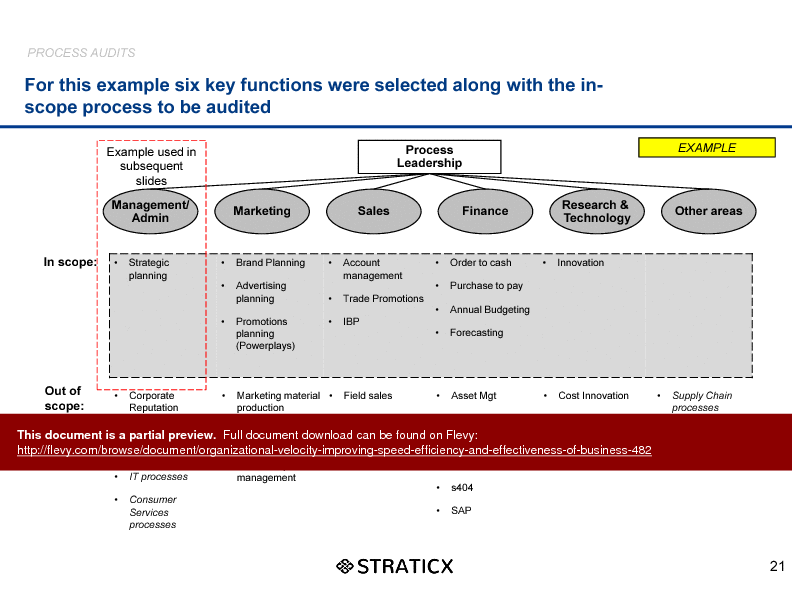
This PPT slide outlines a framework for conducting process audits across 6 key functions: strategic planning, brand planning, order to cash, and annual budgeting, categorized into "In scope" and "Out of scope." The "In scope" section focuses on critical operational areas impacting organizational performance, while the "Out of scope" section excludes functions like corporate reputation, HR, and IT processes. Specific tasks, such as advertising planning under marketing and asset management under finance, provide a detailed view of audited processes. Effective process leadership is essential for successful audits, and additional functions may be relevant, as indicated by "Research & Technology" and "Other areas." This framework enhances operational efficiency by clearly defining the audit's scope.
This PPT slide provides insights into organizational dynamics, focusing on structure, mechanics, style, and speed. Optimizing organizational structure enhances operational performance by refining roles and responsibilities to eliminate redundancy. Organizational mechanics examines activities that impact efficiency, highlighting the evaluation of workflows and identification of bottlenecks. The organizational style emphasizes cultural and behavioral aspects, suggesting that fostering a culture of transparency and collaboration improves productivity. Finally, organizational speed addresses decision-making pace and process execution, indicating that delays can lead to missed opportunities. Maintaining flexibility and responsiveness is crucial in a rapidly changing environment.
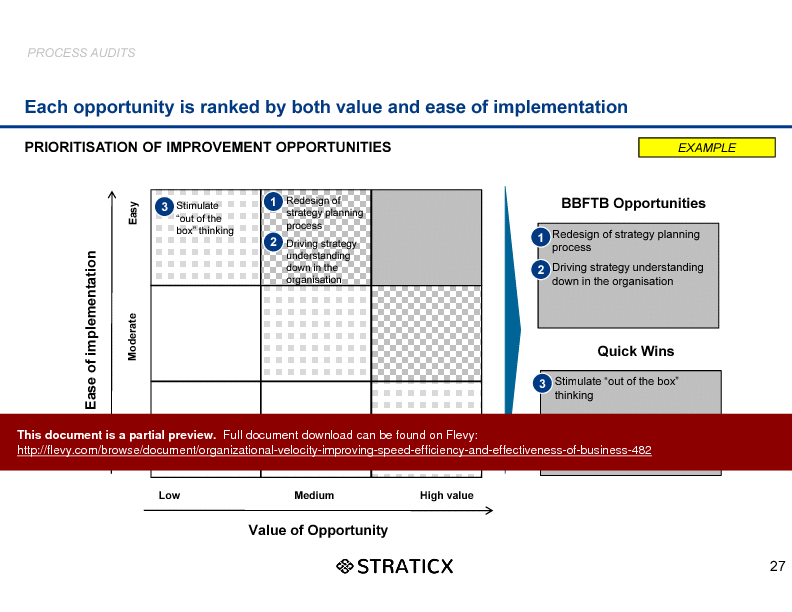
This PPT slide outlines a systematic approach to identifying and prioritizing improvement opportunities within an organization, focusing on 2 categories: BBFTB and Quick Wins. The two-dimensional matrix features "Ease of Implementation" on the vertical axis and "Value" on the horizontal axis, divided into 4 quadrants. The upper left quadrant highlights "Quick Wins," which are initiatives that are easy to implement and yield high value, suggesting prioritization for immediate impact. The overlapping area indicates initiatives that are both valuable and relatively easy to implement. This framework supports decision-making, enabling organizations to focus on initiatives that promise the best return on investment while minimizing implementation challenges.
This PPT slide outlines a structured approach to enhancing organizational performance through 3 primary analyses: Process Audits, Workload Analysis, and Benchmarking Review. Process Audits validate selected processes by assessing efficiency and effectiveness, identifying gaps relative to best practices, and prioritizing improvement opportunities. Workload Analysis surveys team members to evaluate workload distribution and meeting quality, highlighting resource utilization inefficiencies. Benchmarking Review compares organizational performance against local and international peers, revealing areas of competitive advantage or disadvantage. Recommendations from these analyses include process-specific suggestions and general observations aimed at improving efficiency, reallocating resources, and enhancing overall organizational effectiveness.
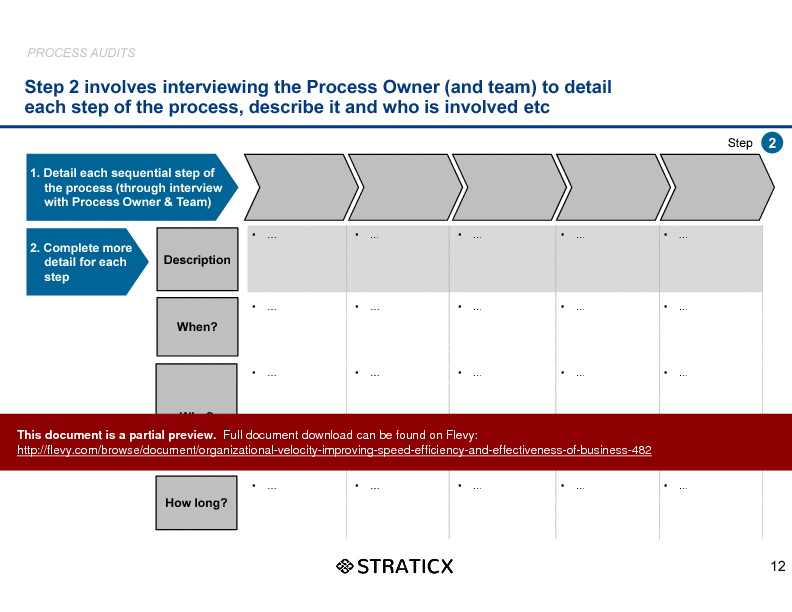
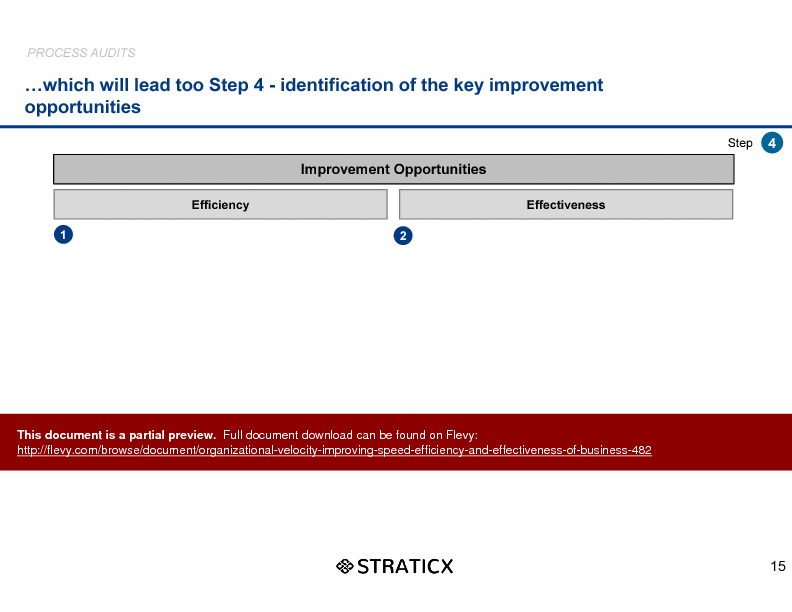
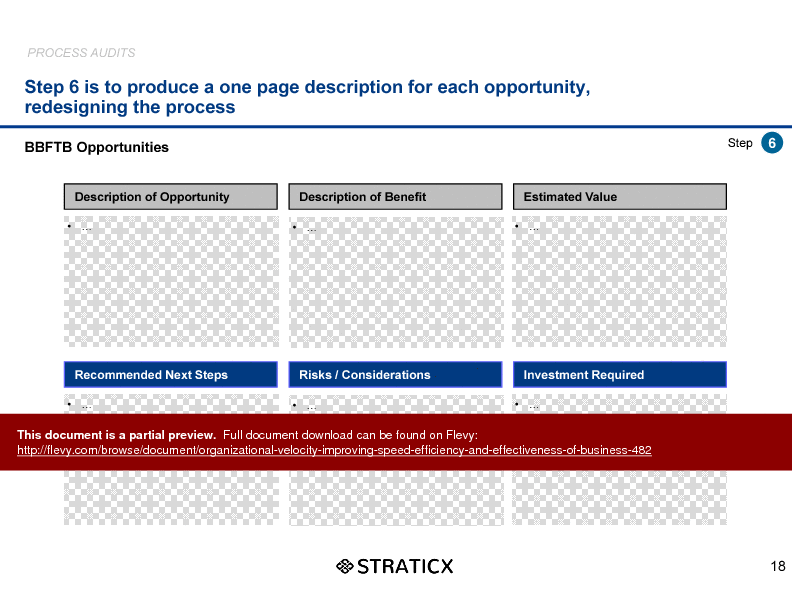
This PPT slide outlines a structured approach to conducting a process audit, consisting of 6 distinct steps. The first step, "Process Value Chain Overview," establishes the context for the audit. The second step, "Description of Main Activities," examines key activities driving the process. The third step, "Process Audit Results," presents findings that identify strengths, weaknesses, gaps, and opportunities for improvement. The fourth step, "Improvement Opportunities," focuses on actionable insights to enhance process efficiency. The fifth step, "Prioritisation of Opportunities," evaluates which initiatives to tackle first for effective resource allocation. Finally, the sixth step, "BBFTB Opportunity 1 Pagers," summarizes the top identified opportunities for quick reference and decision-making. This framework aims to enhance operational effectiveness through comprehensive process evaluation.
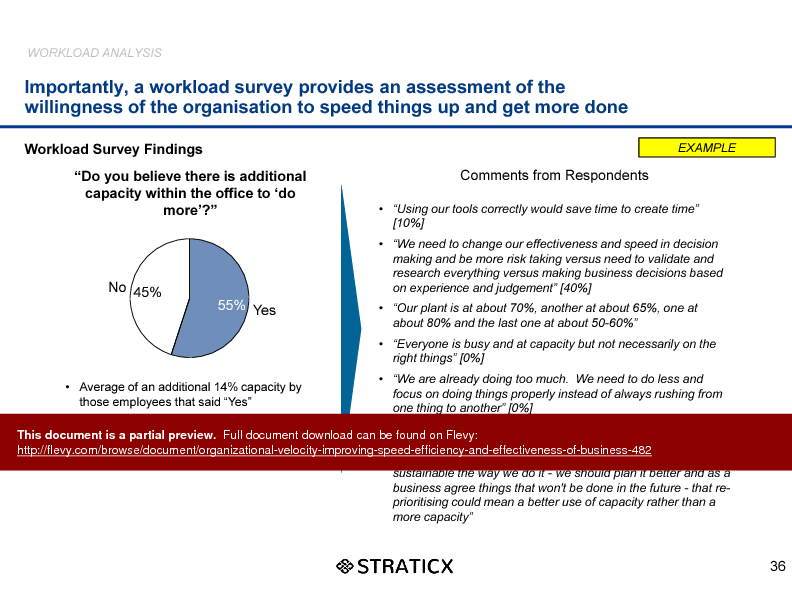
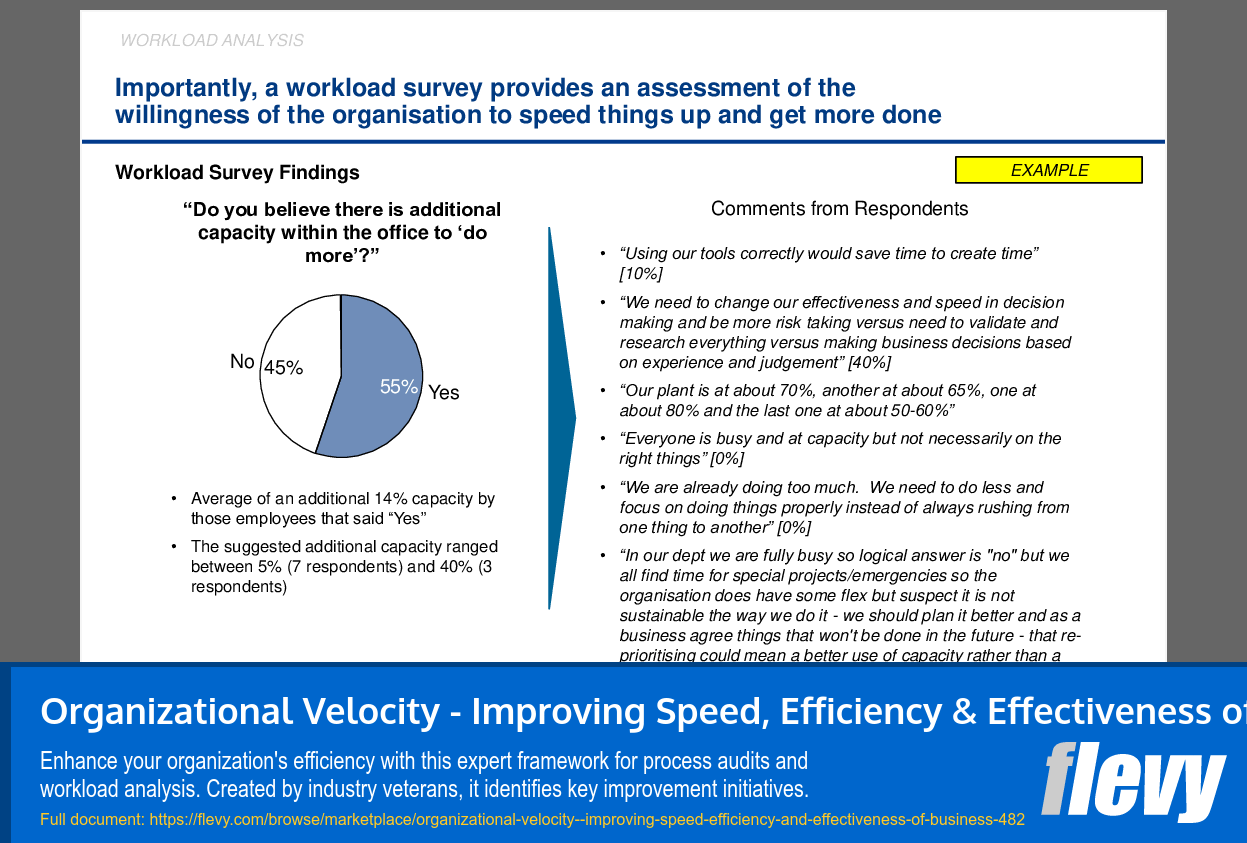
This PPT slide presents findings from a workload survey assessing organizational productivity capacity. Key insights reveal that 55% of respondents believe there is additional capacity to "do more," with an average potential increase of 14%, ranging from 5% to 40%. This variance suggests differing perceptions of workload and efficiency among teams. Qualitative comments indicate a need for improved effectiveness and decision-making processes, emphasizing better utilization of existing tools and a shift towards risk-taking in decisions. Many respondents feel overwhelmed, highlighting the necessity to focus on fewer tasks to enhance execution and align efforts with organizational priorities. Understanding employee perceptions of workload is critical for optimizing organizational performance.
This PPT slide presents a framework for prioritizing improvement opportunities based on ease of implementation and value. The vertical axis ranges from "Easy" to "Difficult," while the horizontal axis measures value from "Low" to "High." Opportunities are plotted in a grid format, including: "Redesign of strategy planning process" and "Driving strategy understanding down in the organization," both in the high value and moderate ease quadrant. The third opportunity, "Stimulate 'out of the box' thinking," is in the easy, but low value quadrant. The slide references "BBFTB Opportunities" and "Quick Wins," allowing decision-makers to focus on high-impact initiatives and quick wins for enhanced organizational efficiency.
This PPT slide outlines a structured approach to strategic planning, detailing 6 key stages. It begins with creating or revising a strategic roadmap based on prior performance, which identifies issues and opportunities for future strategies. The next stage involves defining detailed strategies across departments and brands, ensuring alignment with overarching goals. A thorough review integrates these strategies into a cohesive corporate strategy, promoting collaboration towards common objectives. Following refinement, a presentation deck is prepared to summarize the strategic roadmap and insights for the leadership team. The final stage includes presenting the strategy to facilitate feedback and alignment among stakeholders. Key roles include J. Smith as the process owner, with inputs from the previous year's roadmap, market analysis, and a global strategy framework, indicating an annual, systematic approach to strategic planning.
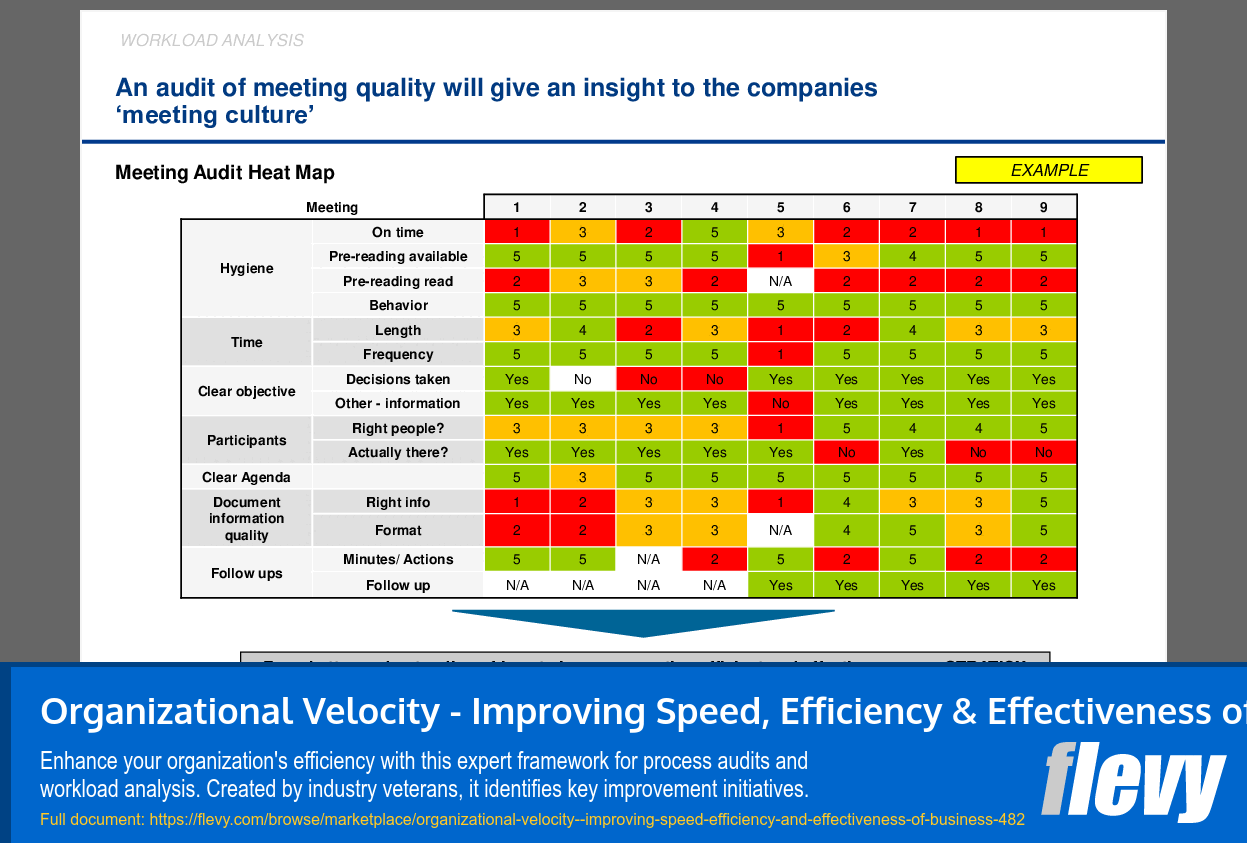
The "Meeting Audit Heat Map" evaluates meeting quality across criteria such as hygiene, time management, clarity of objectives, participant engagement, agenda clarity, document quality, and follow-up actions. Each criterion is rated on a scale from 1 to 5, indicating performance levels. The "Hygiene" section assesses punctuality, pre-reading materials, and participant behavior, revealing variability in performance. The "Time" category evaluates meeting length, frequency, and decision-making effectiveness. "Participants" examines attendance and engagement discrepancies, impacting overall effectiveness. The "Clear Agenda" and "Document Information Quality" sections highlight the need for structured agendas and quality materials. The "Follow-ups" section tracks actionable items post-meeting, with "N/A" indicating inconsistent practices. This heat map serves as a diagnostic tool for organizations to enhance meeting culture and identify improvement areas.
Source: Best Practices in Process Improvement PowerPoint Slides: Organizational Velocity - Improving Speed, Efficiency & Effectiveness of Business PowerPoint (PPTX) Presentation Slide Deck, STRATICX
Straticx is redefining strategy and innovation consulting through online access to high value consulting partners, who work with senior executives and boards of corporations to frame key business issues, develop hypothesis, apply structured problem solving and commercial acumen to drive development of solutions. The partners all have 10+ consulting experience covering a broad range of sectors and
... [read more] have delivered a range of engagements such as corporate and business unit strategy, business transformation, business case development, M&A, and operational improvement.
Since 2012, we have provided business templates to over 10,000 businesses and organizations of all sizes, from startups and small businesses to the Fortune 100, in over 130 countries.
Read Customer Testimonials
"[Flevy] produces some great work that has been/continues to be of immense help not only to myself, but as I seek to provide professional services to my clients, it gives me a large "tool box" of resources that are critical to provide them with the quality of service and outcomes they are expecting."
– Royston Knowles, Executive with 50+ Years of Board Level Experience
"As a niche strategic consulting firm, Flevy and FlevyPro frameworks and documents are an on-going reference to help us structure our findings and recommendations to our clients as well as improve their clarity, strength, and visual power. For us, it is an invaluable resource to increase our impact and value."
– David Coloma, Consulting Area Manager at Cynertia Consulting
"One of the great discoveries that I have made for my business is the Flevy library of training materials.
As a Lean Transformation Expert, I am always making presentations to clients on a variety of topics: Training, Transformation, Total Productive Maintenance, Culture, Coaching, Tools, Leadership Behavior, etc. Flevy
It is well worth the money to purchase these presentations. Sure, I have the knowledge and information to make my point. It is another thing to create a presentation that captures what I want to say. Flevy has saved me countless hours of preparation time that is much better spent with implementation that will actually save money for my clients.
"
– Ed Kemmerling, Senior Lean Transformation Expert at PMG
"Flevy is our 'go to' resource for management material, at an affordable cost. The Flevy library is comprehensive and the content deep, and typically provides a great foundation for us to further develop and tailor our own service offer."
– Chris McCann, Founder at Resilient.World
"Flevy is now a part of my business routine. I visit Flevy at least 3 times each month.
Flevy has become my preferred learning source, because what it provides is practical, current, and useful in this era where the business world is being rewritten.
many challenges and there is the need to make the right decisions in a short time, with so much scattered information, we are fortunate to have Flevy. Flevy investigates, selects, and puts at our disposal the best of the best to help us be successful in our work.
"
– Omar Hernán Montes Parra, CEO at Quantum SFE
"I am extremely grateful for the proactiveness and eagerness to help and I would gladly recommend the Flevy team if you are looking for data and toolkits to help you work through business solutions."
– Trevor Booth, Partner, Fast Forward Consulting
"Flevy.com has proven to be an invaluable resource library to our Independent Management Consultancy, supporting and enabling us to better serve our enterprise clients.
The value derived from our [FlevyPro] subscription in terms of the business it has helped to gain far exceeds the investment made, making a subscription a no-brainer for any growing consultancy – or in-house strategy team."
– Dean Carlton, Chief Transformation Officer, Global Village Transformations Pty Ltd.
"As a small business owner, the resource material available from FlevyPro has proven to be invaluable. The ability to search for material on demand based our project events and client requirements was great for me and proved very beneficial to my clients. Importantly, being able to easily edit and tailor
the material for specific purposes helped us to make presentations, knowledge sharing, and toolkit development, which formed part of the overall program collateral. While FlevyPro contains resource material that any consultancy, project or delivery firm must have, it is an essential part of a small firm or independent consultant's toolbox.
"
– Michael Duff, Managing Director at Change Strategy (UK)
Save with Bundles
This document is available as part of the following discounted bundle(s):
Receive our FREE presentation on Operational Excellence
This 50-slide presentation provides a high-level introduction to the 4 Building Blocks of Operational Excellence. Achieving OpEx requires the implementation of a Business Execution System that integrates these 4 building blocks.
Receive our FREE presentation on Operational Excellence
Get Our FREE Product.
This 50-slide presentation provides a high-level introduction to the 4 Building Blocks of Operational Excellence. Achieving OpEx requires the implementation of a Business Execution System that integrates these 4 building blocks.