
Introduction:
In the wake of a global economic downturn, organizations are under immense pressure to deliver high-quality products while maintaining competitive prices. To thrive in this challenging landscape, businesses must embrace Total Quality Management (TQM) principles. This comprehensive document explores the core principles of TQM, with a special focus on the Kaizen philosophy of continuous improvement.
1. Total Quality Management (TQM):
• *Navigating the Post-Recession Era*: Learn how the recent global recession has raised the bar for organizations to produce high-quality products at affordable prices.
• TQM Essentials for Organizational Success: Discover how TQM is essential for achieving organizational success and customer satisfaction while increasing profitability.
• Achieving Customer Satisfaction and Profitability: Explore how TQM is a catalyst for achieving customer satisfaction and enhanced profitability.
2. Understanding Kaizen:
• The Birth of Kaizen in Post-WWII Japan: Uncover the origins of the Kaizen philosophy and its significance in post-World War II Japan.
• The Essence of Kaizen: Continuous Improvement: Delve into the core principles of Kaizen, emphasizing the importance of continuous improvement.
• Extending Kaizen Beyond the Workplace: See how Kaizen extends its principles beyond the workplace, impacting personal and social lives.
3. Kaizen Strategies:
• Process-Oriented Approach vs. Results-Oriented Management: Compare the process-oriented approach of Kaizen with the results-oriented management prevalent in Western thinking.
• The Role of Management in Acknowledging Kaizen: Understand the pivotal role of management in recognizing and supporting Kaizen initiatives.
• Focusing on the Implementation Process: Learn how Kaizen places significant emphasis on effective implementation.
4. Exploring TQM Components:
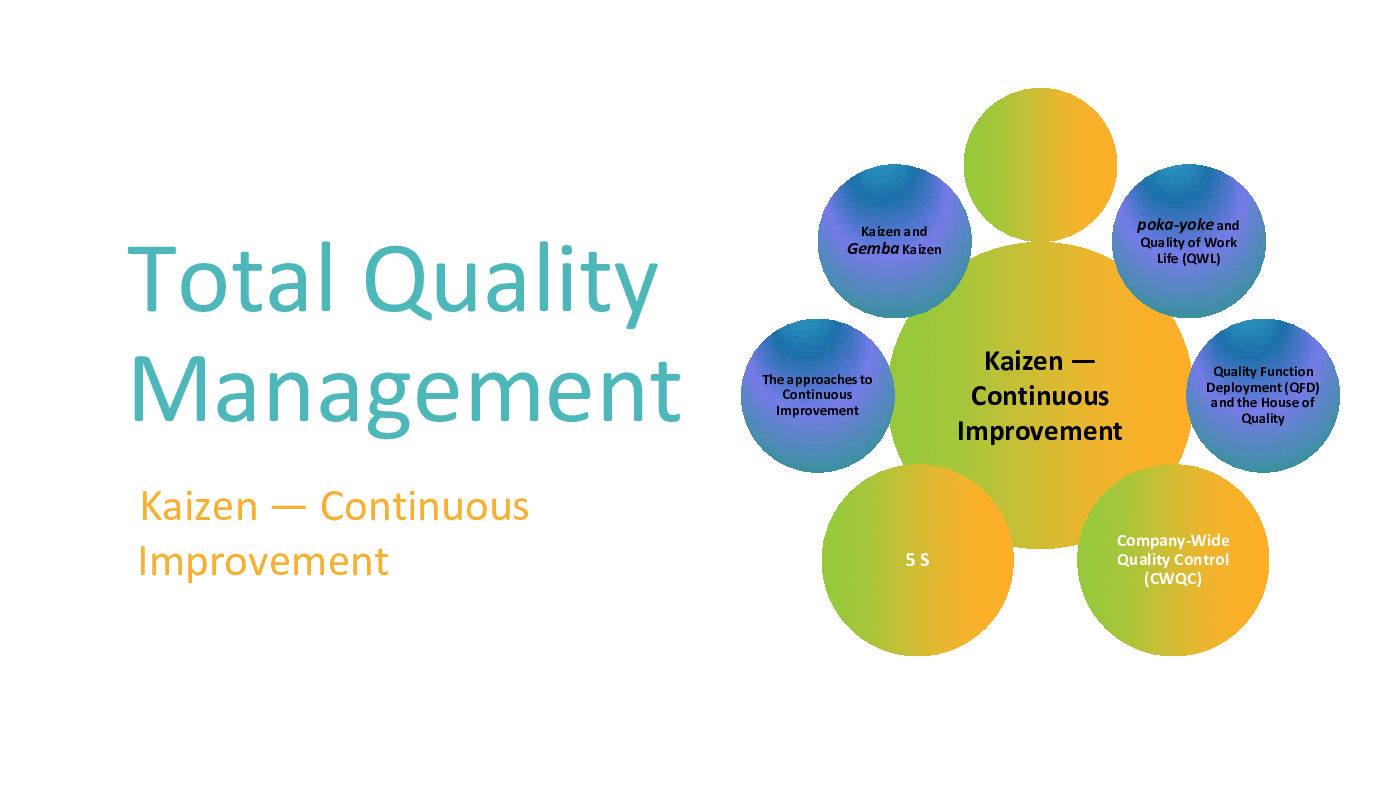
• Introduction to TQM: Gain a foundational understanding of Total Quality Management.
• Kaizen and Gemba Kaizen: Explore the concepts of Kaizen and Gemba Kaizen in the context of continuous improvement.
• Approaches to Continuous Improvement: Discover various approaches to achieving continuous improvement.
• The 5S Methodology: Learn about the 5S methodology for workplace organization.
• Company-Wide Quality Control (CWQC): Explore how CWQC fosters a culture of quality throughout an organization.
• Quality Function Deployment (QFD) and the House of Quality: Understand how QFD and the House of Quality enhance product and service quality.
• Poka-Yoke Techniques: Examine Poka-Yoke techniques for error prevention.
• Enhancing Quality of Work Life (QWL): See how QWL initiatives contribute to improved work environments.
This 71-slide PowerPoint presentation delves deep into Kaizen as a continuous improvement system, emphasizing the establishment and ongoing enhancement of quality standards. It provides valuable insights and actionable strategies for organizations looking to embrace TQM and Kaizen to achieve sustained success and customer satisfaction.
The document is fully customizable and includes compelling visuals, diagrams, and engaging content to facilitate a holistic understanding of Quality Systems concepts.
Got a question about the product? Email us at support@flevy.com or ask the author directly by using the "Ask the Author a Question" form. If you cannot view the preview above this document description, go here to view the large preview instead.
Executive Summary
The Total Quality Management - Kaizen Continuous Improvement presentation is a comprehensive guide designed to enhance organizational effectiveness through continuous improvement methodologies. Developed by experts from leading consulting firms, this presentation provides a structured approach to implementing Total Quality Management (TQM) principles and Kaizen strategies. It equips corporate executives and integration leaders with actionable insights to foster a culture of quality and efficiency, ultimately driving operational excellence and customer satisfaction.
Who This Is For and When to Use
• Corporate executives focused on quality management and operational efficiency
• Integration leaders responsible for process improvement initiatives
• Quality control teams aiming to implement TQM and Kaizen practices
• HR professionals interested in enhancing employee engagement through quality initiatives
Best-fit moments to use this deck:
• During strategic planning sessions aimed at improving operational processes
• In workshops focused on quality management training for employees
• When launching new initiatives to foster a culture of continuous improvement
Learning Objectives
• Define Total Quality Management (TQM) and its significance in organizational success
• Build a framework for implementing Kaizen principles across various departments
• Establish metrics for measuring the effectiveness of quality improvement initiatives
• Identify and eliminate waste using the Gemba approach
• Create a culture of continuous improvement through employee engagement
• Develop a comprehensive understanding of Quality Function Deployment (QFD) and its applications
Table of Contents
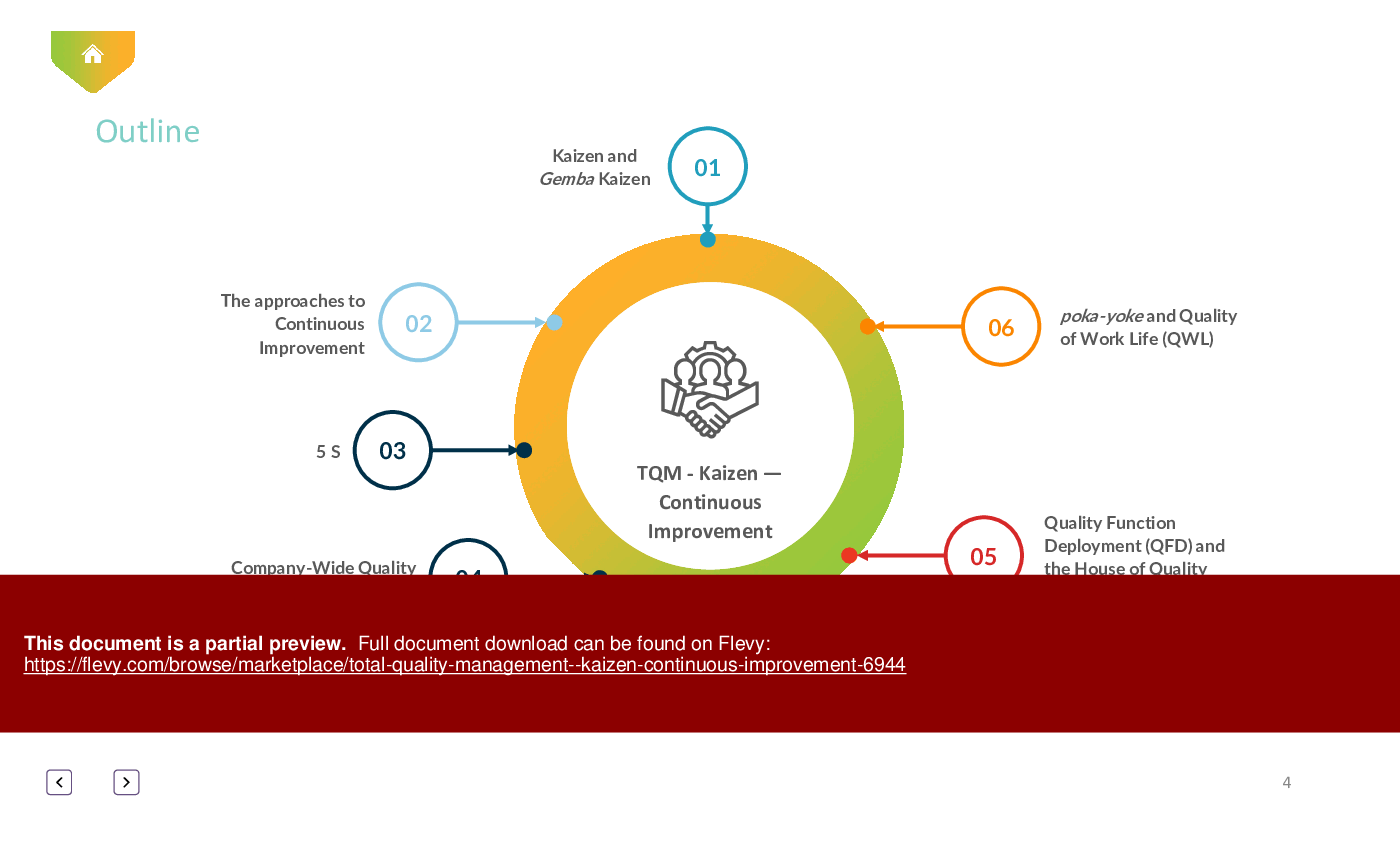
• Introduction to Total Quality Management (page 2)
• Kaizen and Gemba Kaizen (page 5)
• The Approaches to Continuous Improvement (page 6)
• Company-Wide Quality Control (CWQC) (page 47)
• Quality Function Deployment (QFD) and the House of Quality (page 59)
• Poka-Yoke and Quality of Work Life (QWL) (page 63)
• Summary (page 70)
Primary Topics Covered
• Total Quality Management (TQM) - TQM is a holistic approach to long-term success through customer satisfaction, emphasizing continuous improvement in all organizational processes.
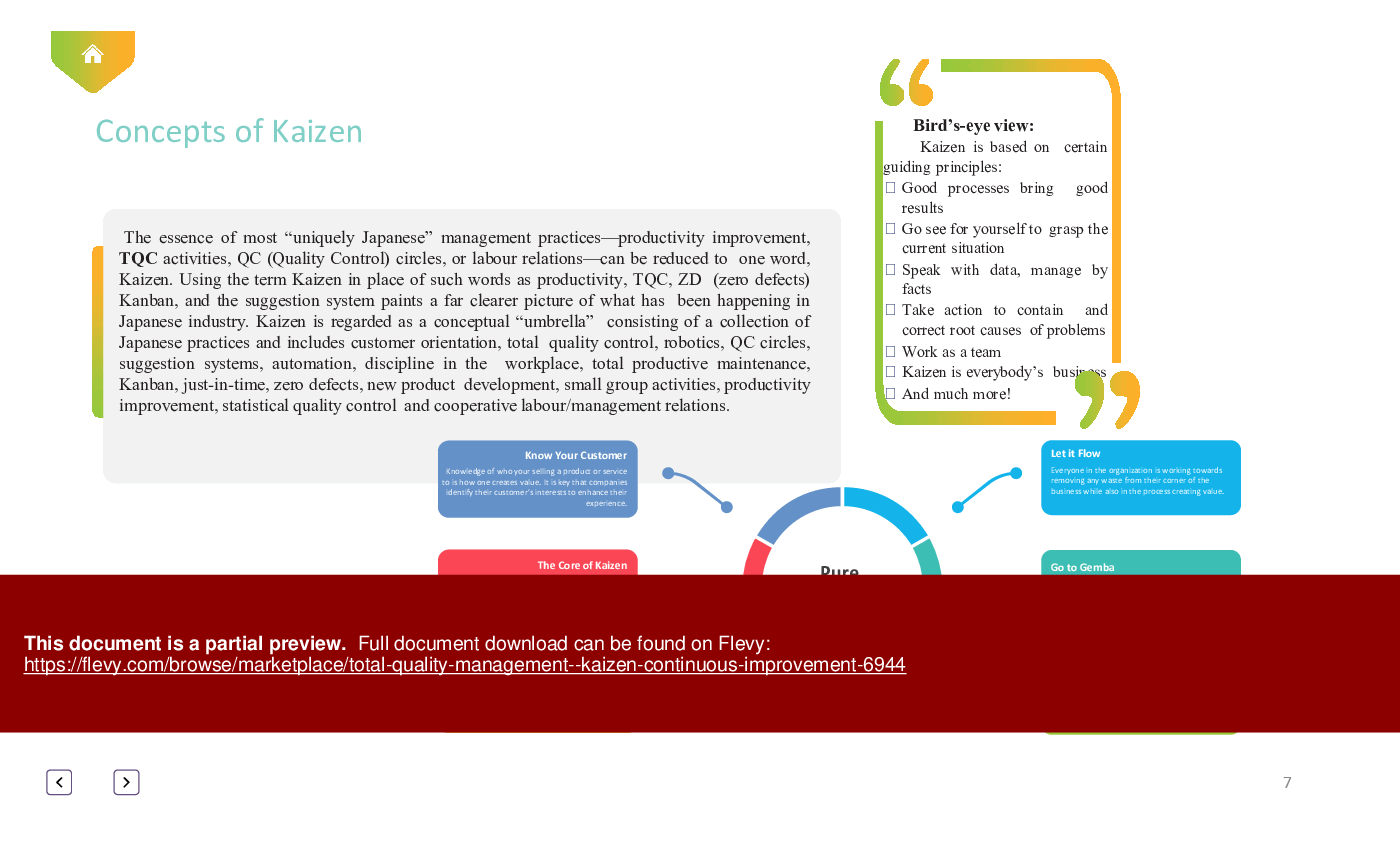
• Kaizen - A philosophy of continuous improvement that encourages all employees to contribute ideas for enhancing processes, products, and workplace culture.
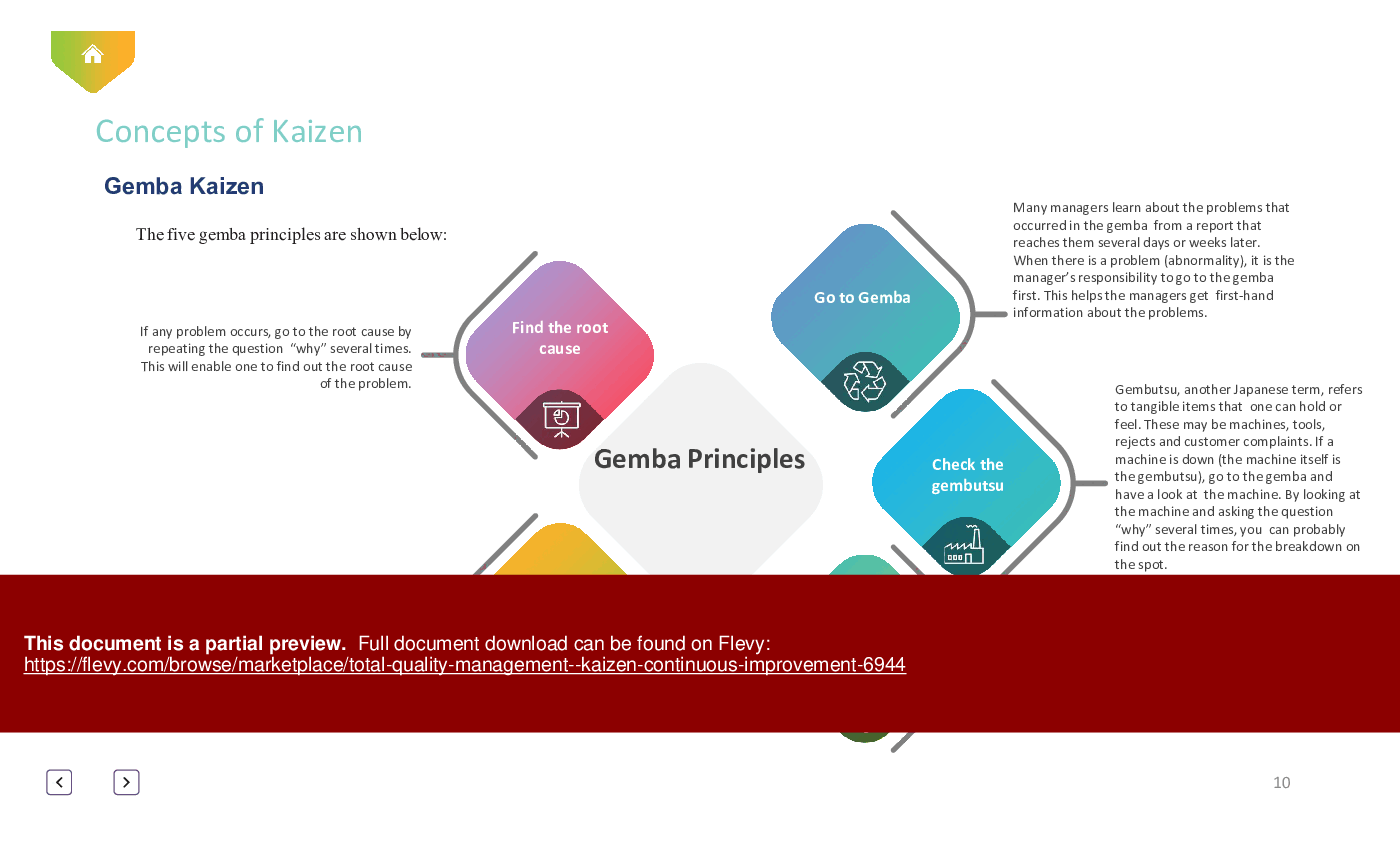
• Gemba Kaizen - Focuses on going to the "real place" where work occurs to observe processes and identify areas for improvement.
• Quality Function Deployment (QFD) - A structured method for translating customer needs into technical requirements, ensuring that product development aligns with customer expectations.
• Poka-Yoke - Techniques designed to prevent errors in manufacturing processes, enhancing quality and reducing defects.
• Company-Wide Quality Control (CWQC) - A comprehensive approach that involves all employees in quality management, fostering a culture of continuous improvement.
Deliverables, Templates, and Tools
• Kaizen Participation Index template for measuring employee involvement in improvement initiatives
• Quality Function Deployment (QFD) matrix for aligning customer requirements with product features
• Poka-Yoke implementation checklist for error-proofing processes
• CWQC audit framework for assessing quality control practices across the organization
• 5S implementation guide for workplace organization and efficiency
• Continuous improvement action plan template for tracking progress and results
Slide Highlights
• Overview of Kaizen principles and their application in various organizational contexts
• Visual representation of the House of Quality and its role in QFD
• Case studies illustrating successful implementation of TQM and Kaizen in leading companies
• Key metrics for measuring the success of quality initiatives
• Practical examples of Poka-Yoke devices and their impact on reducing defects
Potential Workshop Agenda
Kaizen Introduction Session (60 minutes)
• Discuss the principles of Kaizen and its relevance to organizational success
• Identify current challenges and opportunities for improvement
Quality Function Deployment Workshop (90 minutes)
• Engage teams in creating a QFD matrix for a specific product or service
• Analyze customer feedback to inform design decisions
Poka-Yoke Implementation Session (60 minutes)
• Explore common errors in processes and brainstorm Poka-Yoke solutions
• Develop a plan for integrating Poka-Yoke techniques into daily operations
Customization Guidance
• Tailor the Kaizen Participation Index to reflect specific departmental goals and employee roles
• Adjust the QFD matrix to align with unique customer requirements and organizational capabilities
• Modify Poka-Yoke examples to fit the specific processes and products within your organization
Secondary Topics Covered
• The role of leadership in fostering a culture of quality
• Techniques for measuring employee engagement in quality initiatives
• The impact of organizational culture on quality management practices
• Strategies for sustaining continuous improvement over time
• The relationship between quality management and customer satisfaction
FAQ
What is Total Quality Management (TQM)?
TQM is a management approach focused on long-term success through customer satisfaction, involving all employees in continuous improvement efforts.
How does Kaizen differ from traditional improvement methods?
Kaizen emphasizes small, incremental changes made by all employees, rather than large, top-down initiatives.
What is the Gemba approach?
Gemba refers to the practice of going to the actual place where work is done to observe processes and identify areas for improvement.
How can QFD improve product development?
QFD translates customer needs into technical requirements, ensuring that product design aligns with customer expectations and reduces the risk of defects.
What are Poka-Yoke techniques?
Poka-Yoke techniques are error-proofing methods designed to prevent mistakes in manufacturing processes, enhancing quality and reducing defects.
How can CWQC benefit an organization?
CWQC involves all employees in quality management, fostering a culture of continuous improvement and enhancing overall organizational performance.
What metrics should be used to measure quality improvement?
Metrics may include defect rates, customer satisfaction scores, employee engagement levels, and process efficiency indicators.
How can I encourage employee participation in Kaizen initiatives?
Foster an open culture where employees feel valued and empowered to share their ideas for improvement, and recognize their contributions regularly.
Glossary
• Kaizen - Continuous improvement philosophy involving all employees.
• TQM - Total Quality Management; a comprehensive approach to improving quality.
• Gemba - The real place where work occurs; emphasizes observation for improvement.
• QFD - Quality Function Deployment; a method for aligning customer needs with product design.
• Poka-Yoke - Techniques for preventing errors in processes.
• CWQC - Company-Wide Quality Control; involves all employees in quality management.
• 5S - A workplace organization method focusing on sorting, setting in order, shining, standardizing, and sustaining.
• Quality of Work Life (QWL) - The quality of relationships between employees and their work environment.
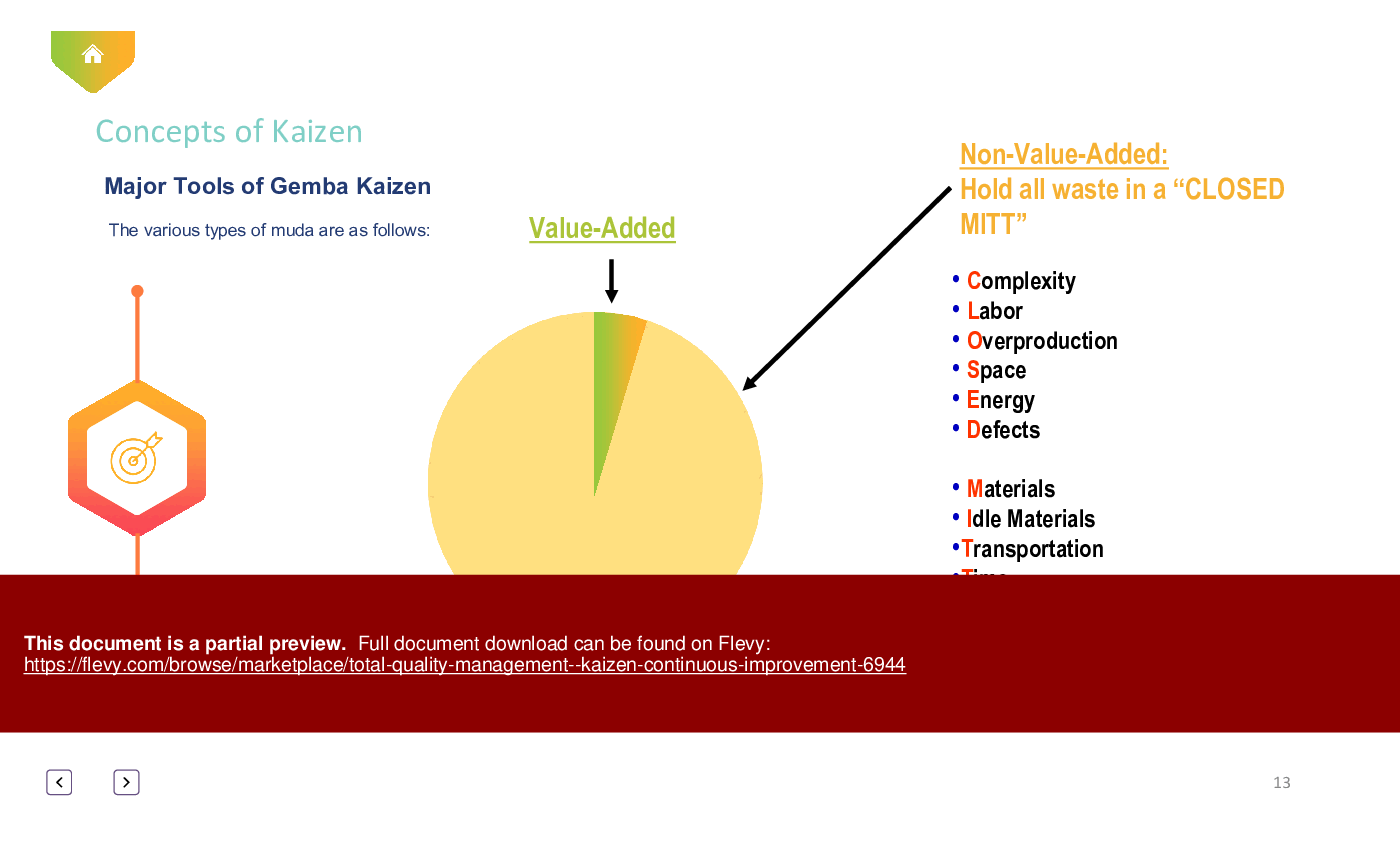
• Muda - Waste or non-value-adding activities in processes.
• Muri - Overburdening of systems or processes.
• Mura - Unevenness in work processes.
• Deming Wheel (PDCA) - Plan-Do-Check-Act cycle for continuous improvement.
• Quality Circles - Small groups of employees who meet regularly to discuss and solve work-related issues.
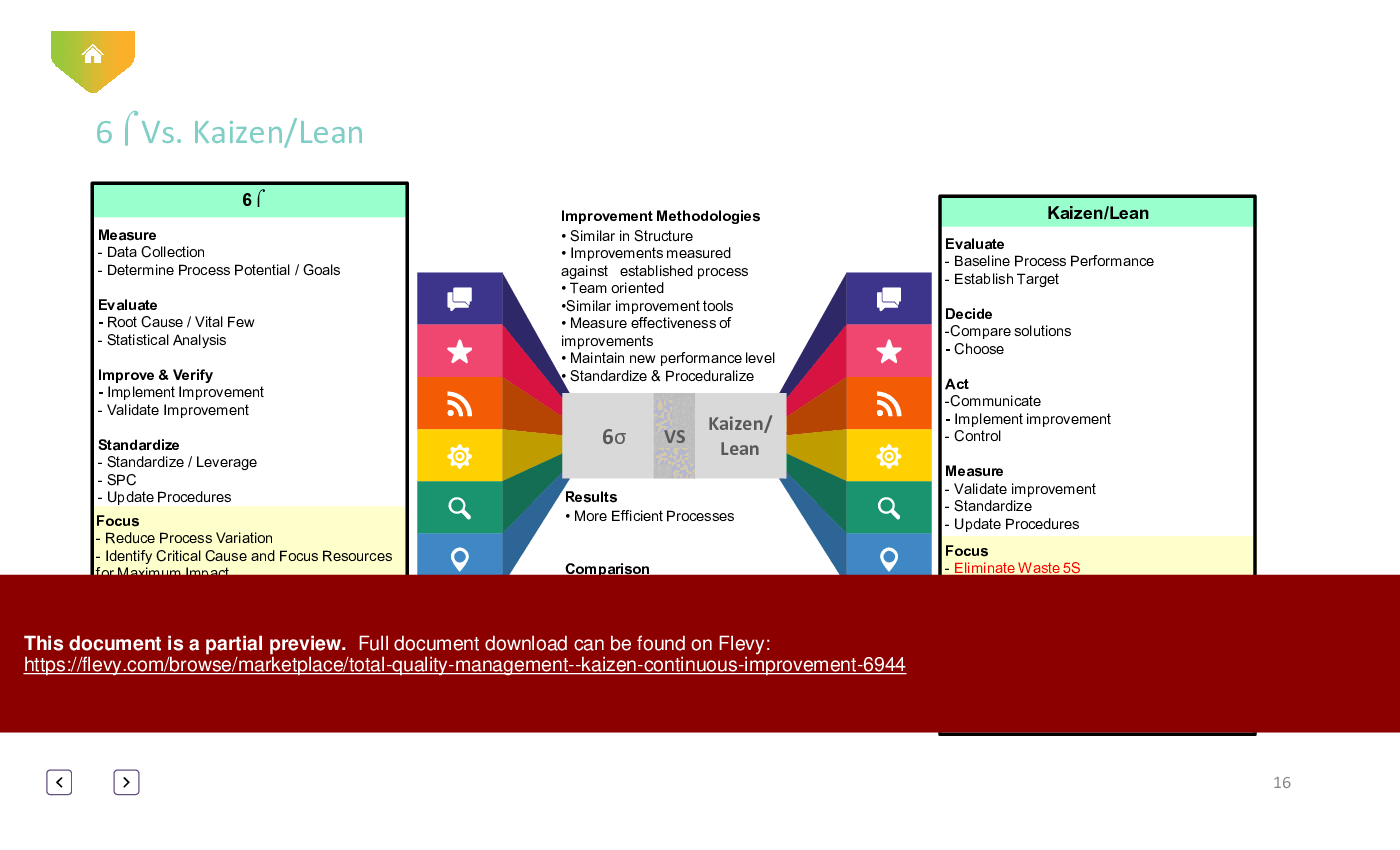
• Statistical Process Control (SPC) - A method of quality control using statistical methods to monitor and control processes.
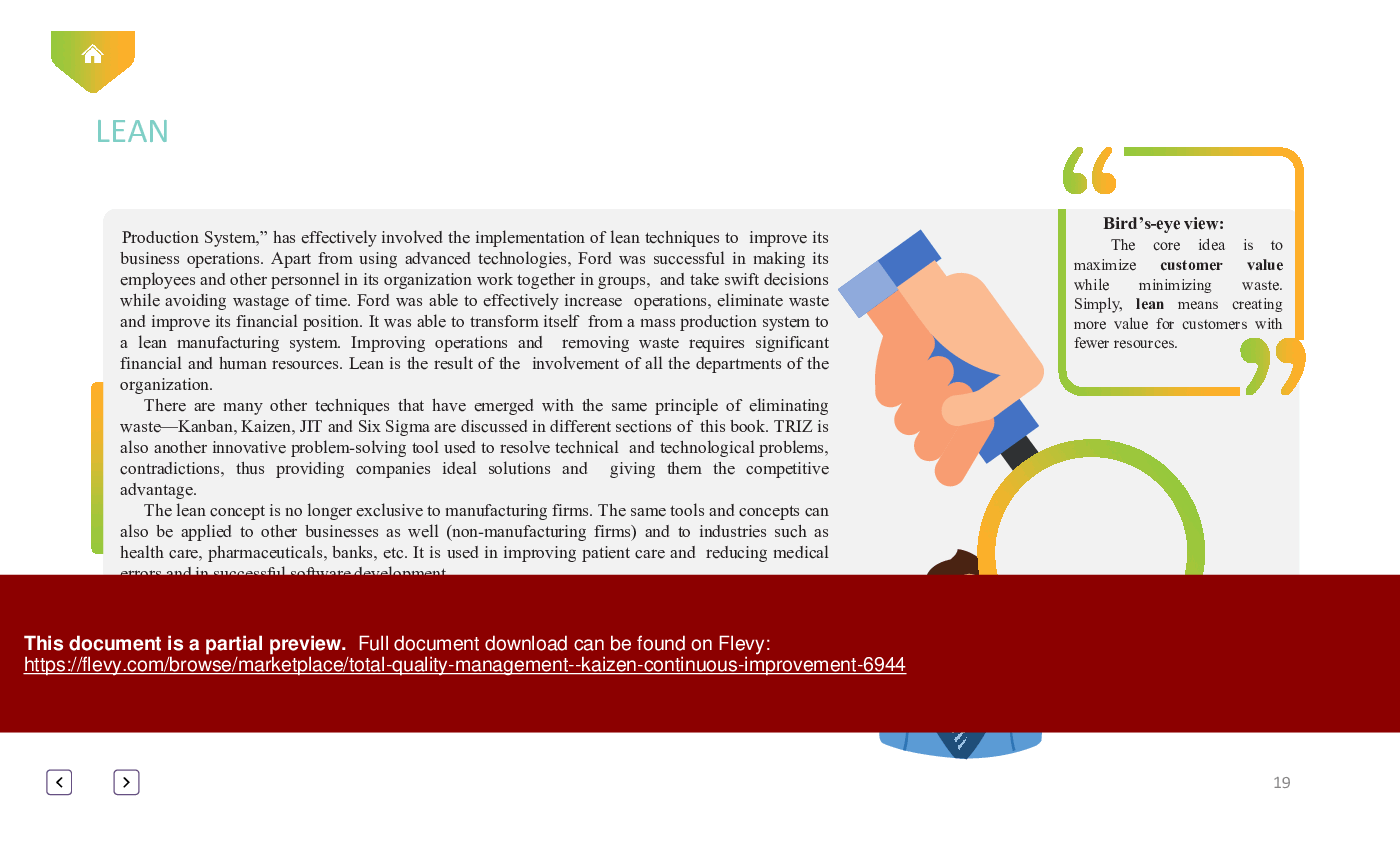
• Lean - A methodology focused on reducing waste and improving efficiency.
• Continuous Improvement - Ongoing efforts to improve products, services, or processes.
• Employee Engagement - The emotional commitment of employees to their organization and its goals.
• Customer Satisfaction - A measure of how products and services meet or exceed customer expectations.
• Benchmarking - Comparing business processes and performance metrics to industry bests or best practices.
Source: Best Practices in Kaizen, TQM PowerPoint Slides: Total Quality Management - Kaizen Continuous Improvement PowerPoint (PPTX) Presentation Slide Deck, RadVector Consulting
This document is available as part of the following discounted bundle(s):

Save %!
Total Quality Management
This bundle contains 14 total documents. See all the documents to the right.
|
Receive our FREE presentation on Operational Excellence
This 50-slide presentation provides a high-level introduction to the 4 Building Blocks of Operational Excellence. Achieving OpEx requires the implementation of a Business Execution System that integrates these 4 building blocks. |