
Total Quality Management - Eight Principles Demystified   62-slide PPT PowerPoint presentation slide deck (PPTX)
$55.00

Total Quality Management - Eight Principles Demystified (62-slide PPT PowerPoint presentation slide deck (PPTX)) Preview Image
Log in to unlock full preview.
Total Quality Management - Eight Principles Demystified (62-slide PPT PowerPoint presentation slide deck (PPTX)) Preview Image
Arrow   Click main image to view in full screen.

Total Quality Management - Eight Principles Demystified (PowerPoint PPTX Slide Deck)

PowerPoint (PPTX) 62 Slides

$55.00
Developed by a team of experts with global consulting experience at McKinsey, Deloitte, and Capgemini.
Add to Cart


Immediate download
Fully editable PowerPoint
Free lifetime updates

BENEFITS OF THIS POWERPOINT DOCUMENT

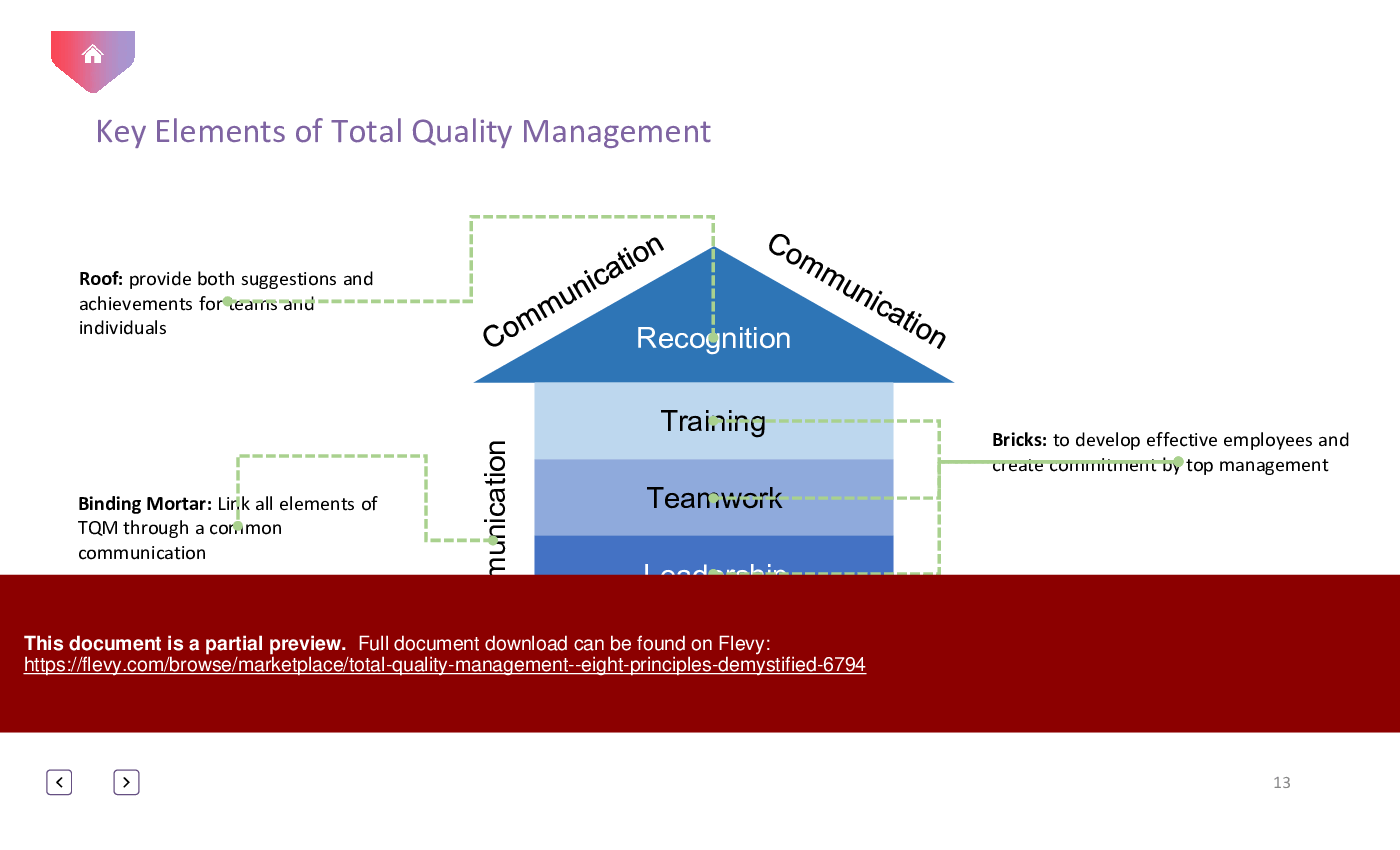
  1. Understand the eight Principles of the Total Quality Management.

TQM PPT DESCRIPTION

Editor Summary A 62-slide PowerPoint presentation, Total Quality Management - Eight Principles Demystified explains the eight core TQM principles and related tools for implementation. Read more

The recent global meltdown and recession has put great pressure on the organizations to produce the best quality products at the most affordable prices.

Organizations need to implement Total Quality Management in order to achieve organizational success as well as satisfying the customers so as to make more profit in the business arena.

This document on Quality covers an extensive compilation of topics to help you understand the Total Quality Management Principles. And, It can help develop a basic appreciation of quality concepts related to TQM's goal of continuous improvement.

Total Quality Management (TQM) is an approach to business that looks critically at the products and services a company provides in relation to the processes it employs to create them. It also focuses on the workforce to ensure that outputs fully satisfy customer requirements.

Organizations that follow the TQM approach consistently meet or exceed customer requirements. TQM can, therefore, be referred to as a journey with the sky as the limit for excellence.

This Second Unit contains :

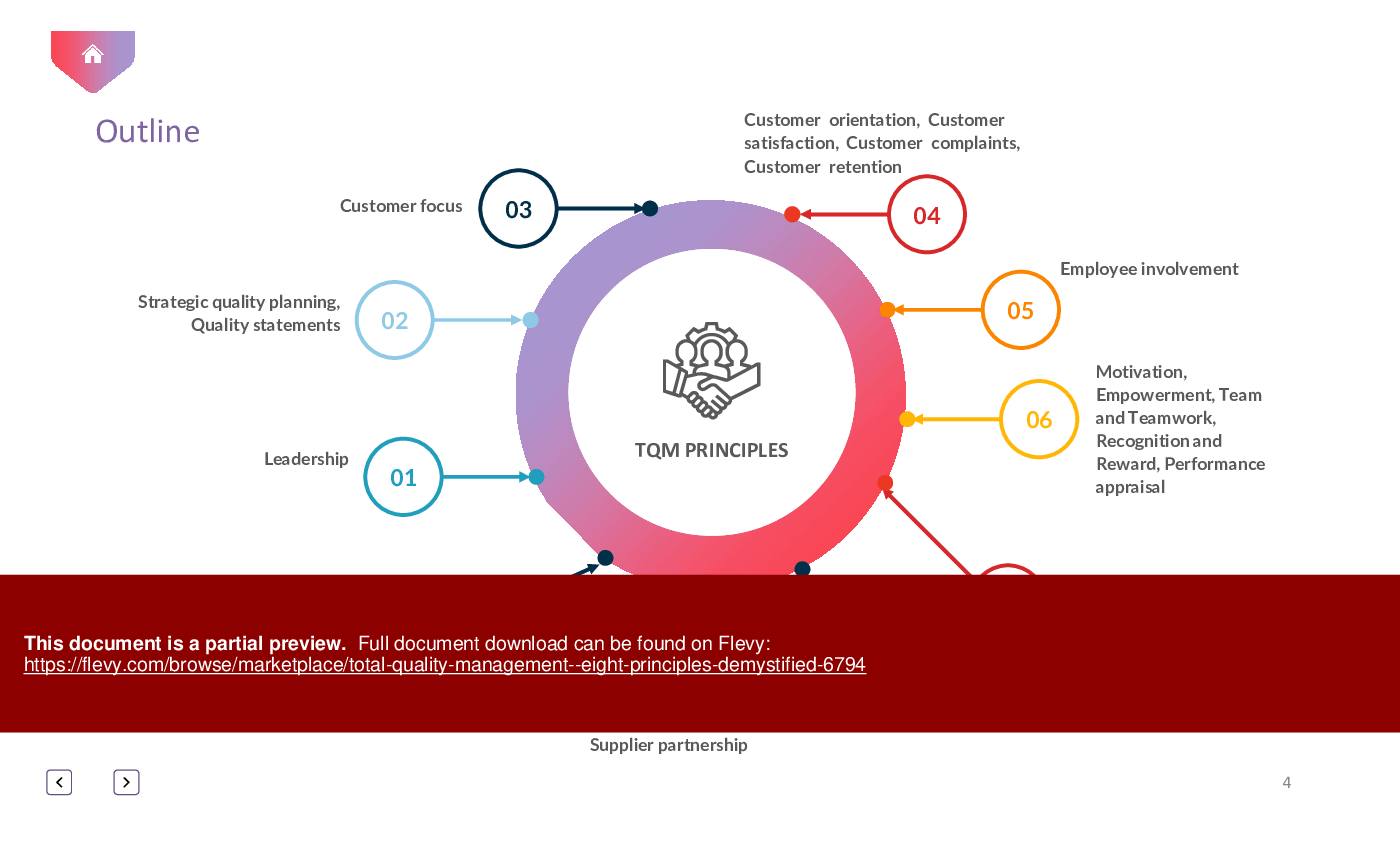
• Introduction
• Leadership
• Strategic quality planning, Quality statements
• Customer focus
• Customer orientation, Customer satisfaction, Customer complaints, Customer retention
• Employee involvement
• Motivation, Empowerment, Team and Teamwork, Recognition and Reward, Performance appraisal
• Continuous process improvement
• PDSA cycle, 5s, Kaizen
• Supplier partnership
• Partnering, Supplier selection, Supplier Rating

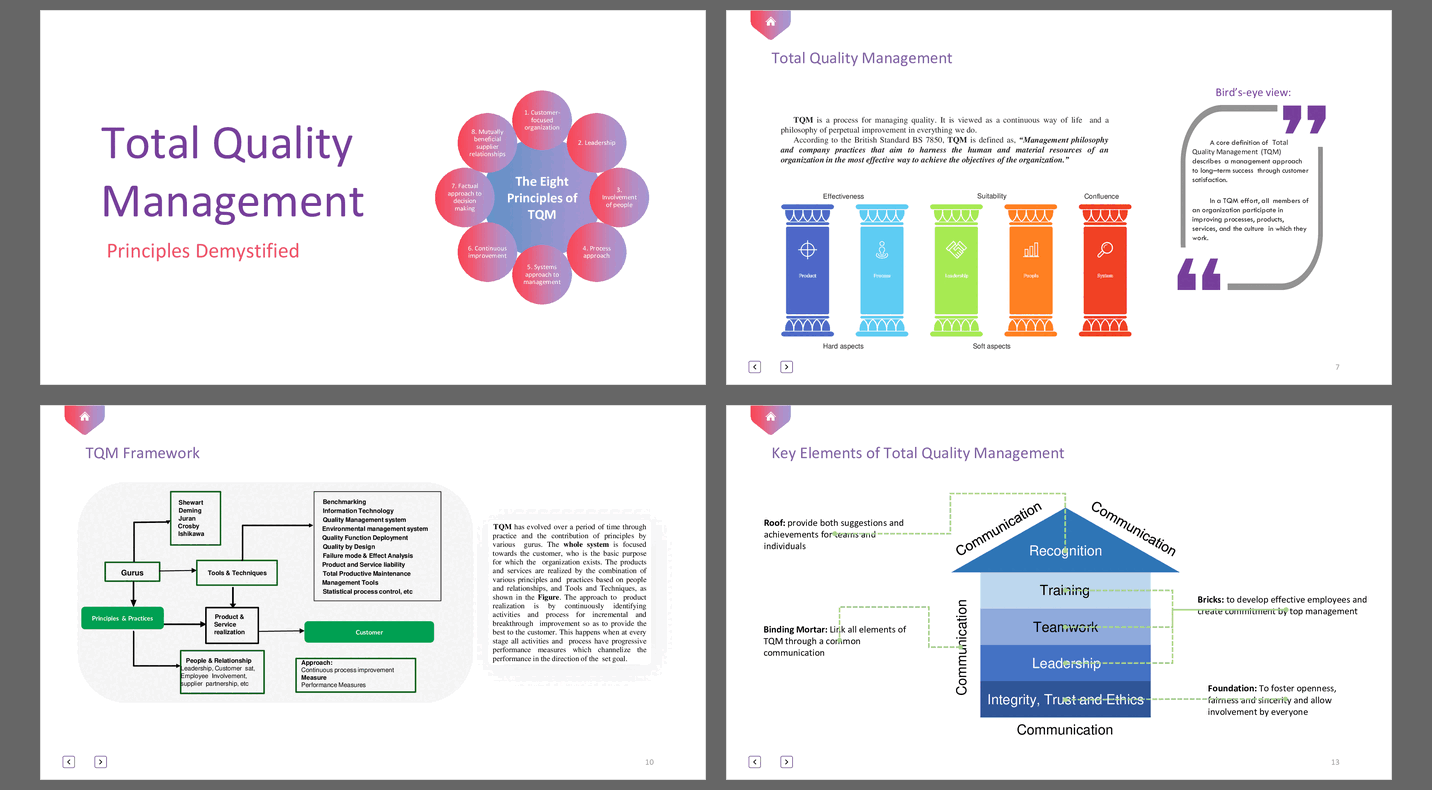
This 62-Slides PowerPoint document demystifies the eight principles of the TQM, it's easily customizable and contains many powerful diagrams, ice-breakers, pictures, ... to get the holistic view of the concepts of the Quality Systems.

Got a question about the product? Email us at support@flevy.com or ask the author directly by using the "Ask the Author a Question" form. If you cannot view the preview above this document description, go here to view the large preview instead.

MARCUS OVERVIEW

This synopsis was written by Marcus [?] based on the analysis of the full 62-slide presentation.


Executive Summary
The "Total Quality Management - Eight Principles Demystified" presentation is a comprehensive training resource designed to enhance understanding of Total Quality Management (TQM). Developed by experts with extensive consulting backgrounds, this presentation outlines the eight core principles of TQM, emphasizing a customer-focused approach, leadership, and continuous improvement. Executives and consultants can utilize this deck to implement TQM strategies effectively, ensuring organizational success through enhanced quality and stakeholder satisfaction.

Who This Is For and When to Use

•  Corporate executives aiming to drive quality improvement initiatives
•  Quality management professionals seeking to implement TQM principles
•  Consultants advising organizations on quality management practices
•  Team leaders responsible for fostering a culture of continuous improvement

Best-fit moments to use this deck:
•  During TQM training sessions for new employees
•  At leadership meetings focused on quality strategy development
•  In workshops aimed at enhancing team collaboration and engagement
•  When assessing current quality management practices and identifying areas for improvement

Learning Objectives
•  Define the eight principles of TQM and their relevance to organizational success
•  Build a customer-focused culture that prioritizes satisfaction and loyalty
•  Establish leadership practices that inspire and empower employees
•  Implement continuous improvement methodologies such as Kaizen and the PDSA cycle
•  Apply a factual approach to decision-making using data and analysis
•  Foster mutually beneficial relationships with suppliers to enhance value creation

Table of Contents
•  Introduction to TQM (page 1)
•  Definition of Quality (page 5)
•  The Eight Principles of TQM (page 15)
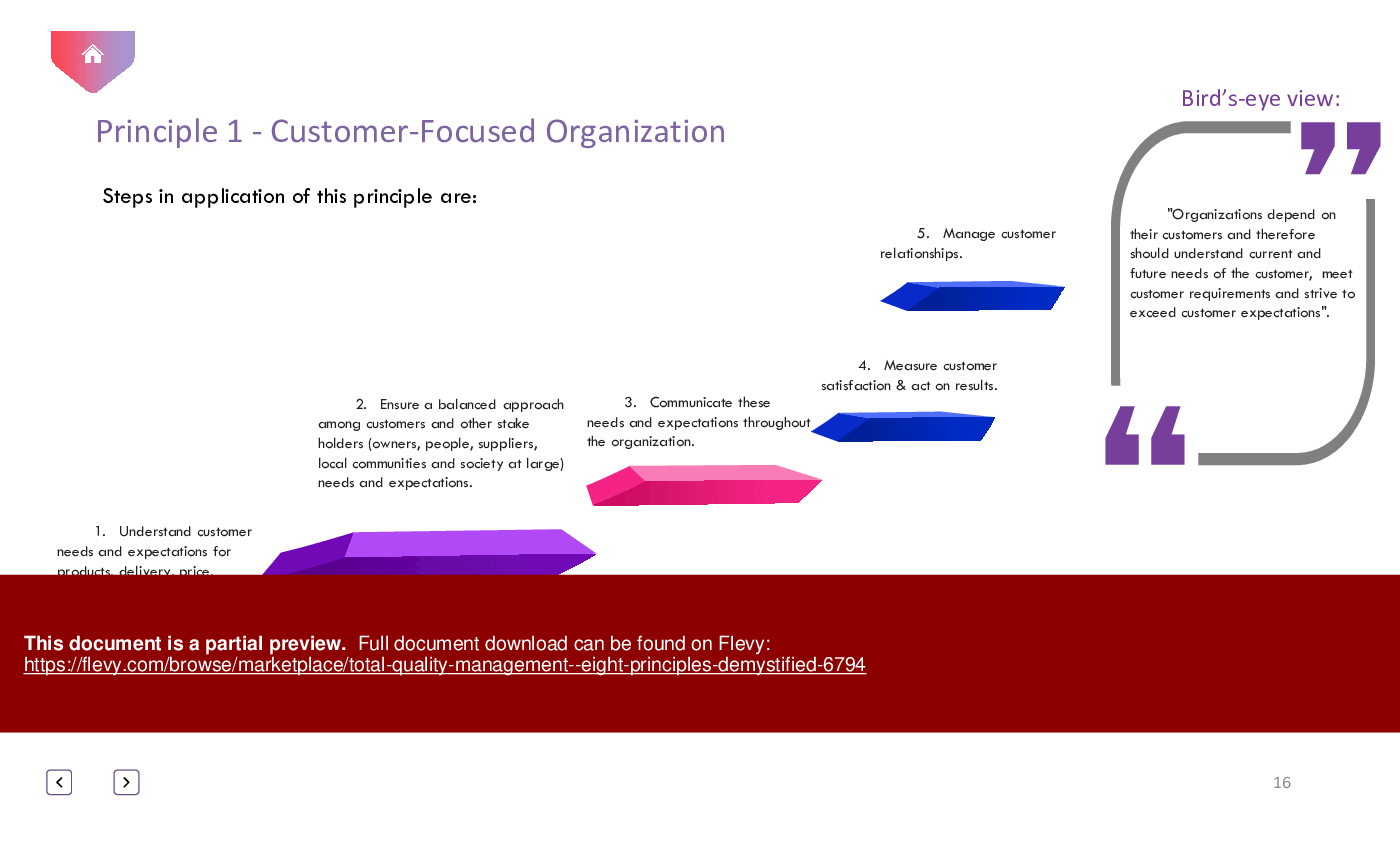
•  Principle 1: Customer-Focused Organization (page 16)
•  Principle 2: Leadership (page 18)
•  Principle 3: Involvement of People (page 26)
•  Principle 4: Process Approach (page 31)
•  Principle 5: Systems Approach to Management (page 33)
•  Principle 6: Continuous Improvement (page 35)
•  Principle 7: Factual Approach to Decision Making (page 46)
•  Principle 8: Mutually Beneficial Supplier Relationships (page 50)
•  Core Concepts of TQM (page 52)

Primary Topics Covered
•  Customer-Focused Organization - Organizations must understand and exceed customer needs to ensure satisfaction and loyalty.
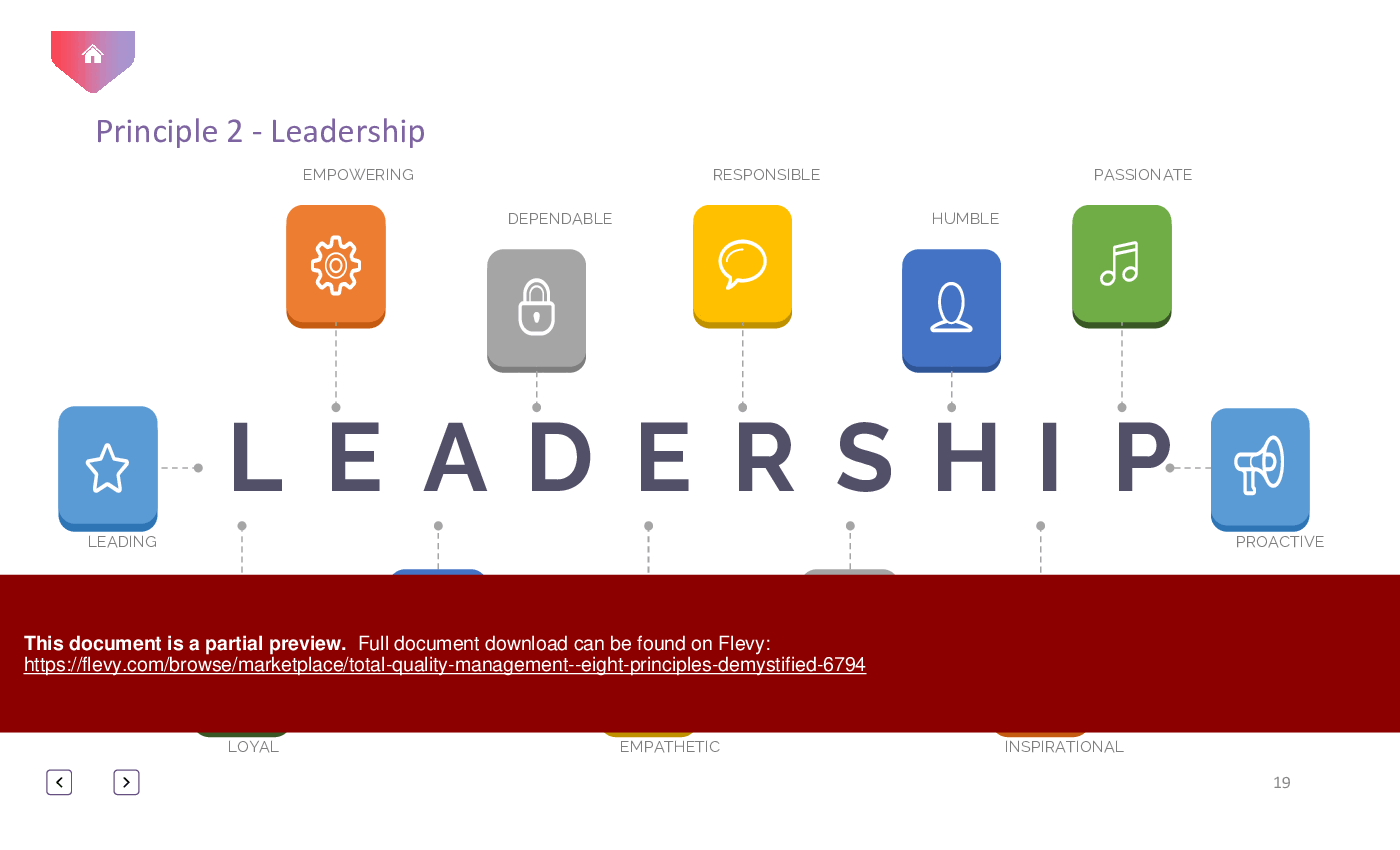
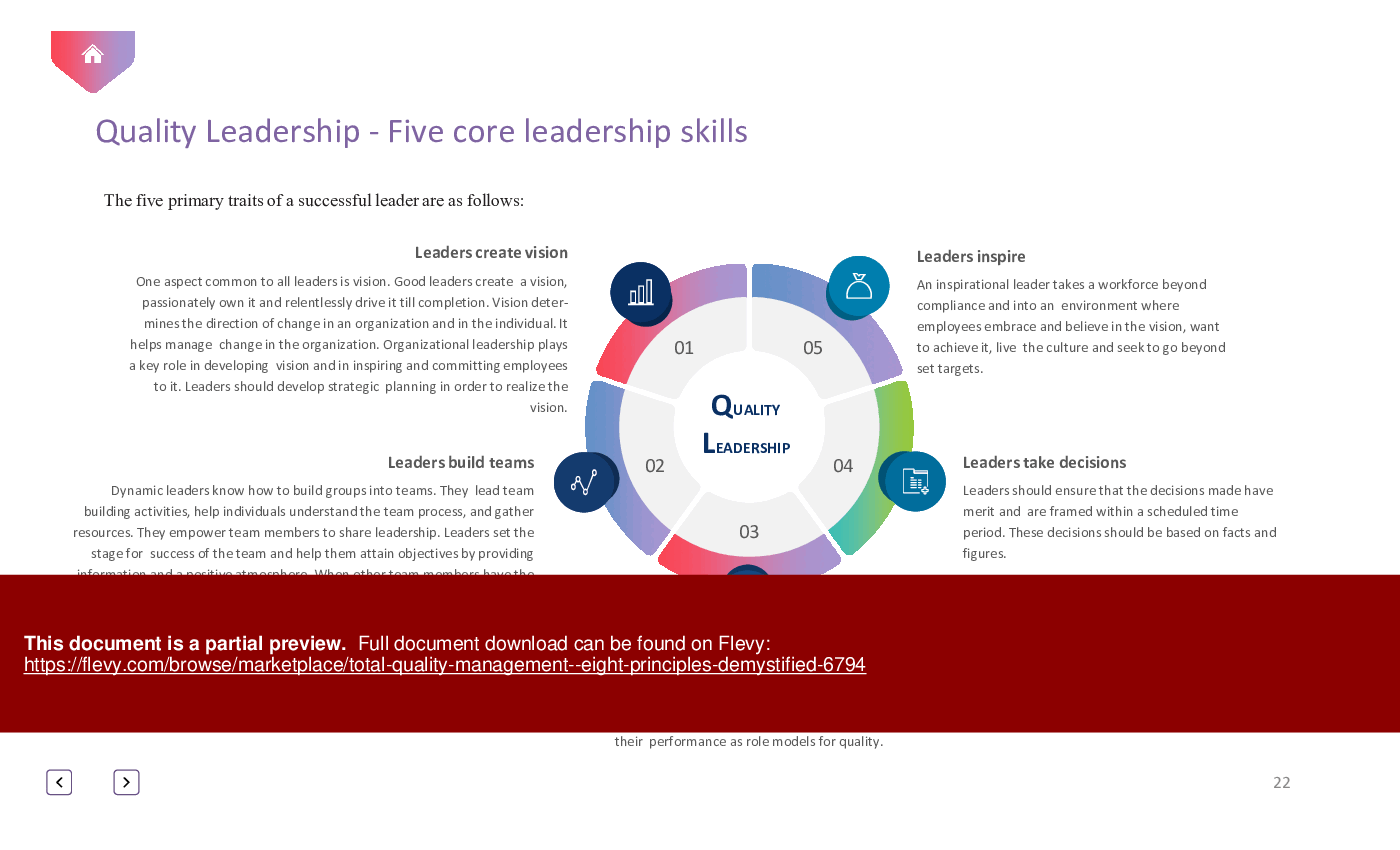
•  Leadership - Senior leaders must establish a clear vision and foster a culture of quality throughout the organization.
•  Involvement of People - Engaging employees at all levels enhances productivity and quality outcomes.
•  Process Approach - Efficient results are achieved by managing related resources and activities as a cohesive process.
•  Systems Approach to Management - Understanding interrelated processes improves organizational effectiveness and efficiency.
•  Continuous Improvement - Organizations should strive for ongoing enhancements in performance and quality.
•  Factual Approach to Decision Making - Decisions should be based on data analysis and logical reasoning.
•  Mutually Beneficial Supplier Relationships - Strong partnerships with suppliers enhance value creation for both parties.

Deliverables, Templates, and Tools
•  TQM implementation roadmap template
•  Customer satisfaction measurement framework
•  Leadership development plan
•  Continuous improvement action plan
•  Process mapping tools for efficiency analysis
•  Supplier relationship management checklist

Slide Highlights
•  Overview of the eight principles of TQM with visual representations
•  Detailed breakdown of the customer-focused organization principle
•  Leadership attributes that drive quality culture
•  Steps for effective employee involvement and engagement
•  Continuous improvement methodologies including the PDSA cycle

Potential Workshop Agenda
Introduction to TQM Principles (60 minutes)
•  Overview of TQM and its significance
•  Discussion on the eight principles of TQM

Customer Focus and Leadership (90 minutes)
•  Deep dive into customer-focused strategies
•  Leadership roles in fostering a quality culture

Employee Involvement and Continuous Improvement (90 minutes)
•  Techniques for engaging employees in quality initiatives
•  Implementing continuous improvement practices

Customization Guidance
•  Tailor the presentation to include specific organizational examples and case studies
•  Modify terminology to align with company culture and values
•  Adjust the focus on certain principles based on organizational needs and priorities

Secondary Topics Covered
•  Quality management systems and their components
•  The role of training and development in TQM
•  Measuring and monitoring quality performance
•  The impact of TQM on organizational culture

Topic FAQ

What are the eight principles of Total Quality Management that organizations should follow?

The eight TQM principles are customer-focused organization, leadership, involvement of people, process approach, systems approach to management, continuous improvement, factual approach to decision making, and mutually beneficial supplier relationships, together forming the core eight principles.

How does continuous improvement work within a TQM program?

Continuous improvement in TQM uses iterative methods to test and refine changes, notably the PDSA cycle (Plan-Do-Study-Act) and Kaizen events, supported by action plans and ongoing measurement to drive incremental performance gains using the PDSA cycle and Kaizen.

What tools are commonly used to implement TQM in training and workshops?

Common tools include process mapping for efficiency analysis, customer satisfaction measurement frameworks, supplier relationship checklists, leadership development plans, and TQM implementation roadmaps; these tools help structure training and workshops and include a TQM implementation roadmap template.

How should an organization measure customer satisfaction under a TQM approach?

Organizations measure customer satisfaction with surveys, feedback forms, and performance metrics that assess experience versus expectations, and use structured frameworks to analyze results and set improvement priorities, typically captured in a customer satisfaction measurement framework.

What should I look for when choosing a TQM training deck for executives and leaders?

Look for clear coverage of the eight TQM principles, templates for implementation (roadmap, process mapping), guidance for leadership and employee involvement, and customization advice; for example, Flevy’s Total Quality Management - Eight Principles Demystified provides 62 slides and multiple implementation templates.

How can supplier relationships be managed as part of a TQM program?

TQM manages suppliers through partnering, clear supplier selection criteria, collaborative development, supplier performance monitoring, and rating systems to create mutual value; practical items include a supplier relationship management checklist and supplier rating tools.

My department has rising customer complaints—what initial TQM steps should we take?

Start by measuring customer satisfaction to identify complaint drivers, map relevant processes to find failure points, engage leadership to set priorities, and run focused PDSA cycles to test fixes, using process mapping tools and the PDSA cycle for iterative improvement.

What role does leadership play in successful TQM implementation?

Leadership sets the vision and quality values, fosters a culture of participation and continuous improvement, allocates resources for training and change, and supports measurement-based decisions; leadership activities are often captured in a leadership development plan.

Document FAQ
These are questions addressed within this presentation.

What is Total Quality Management?
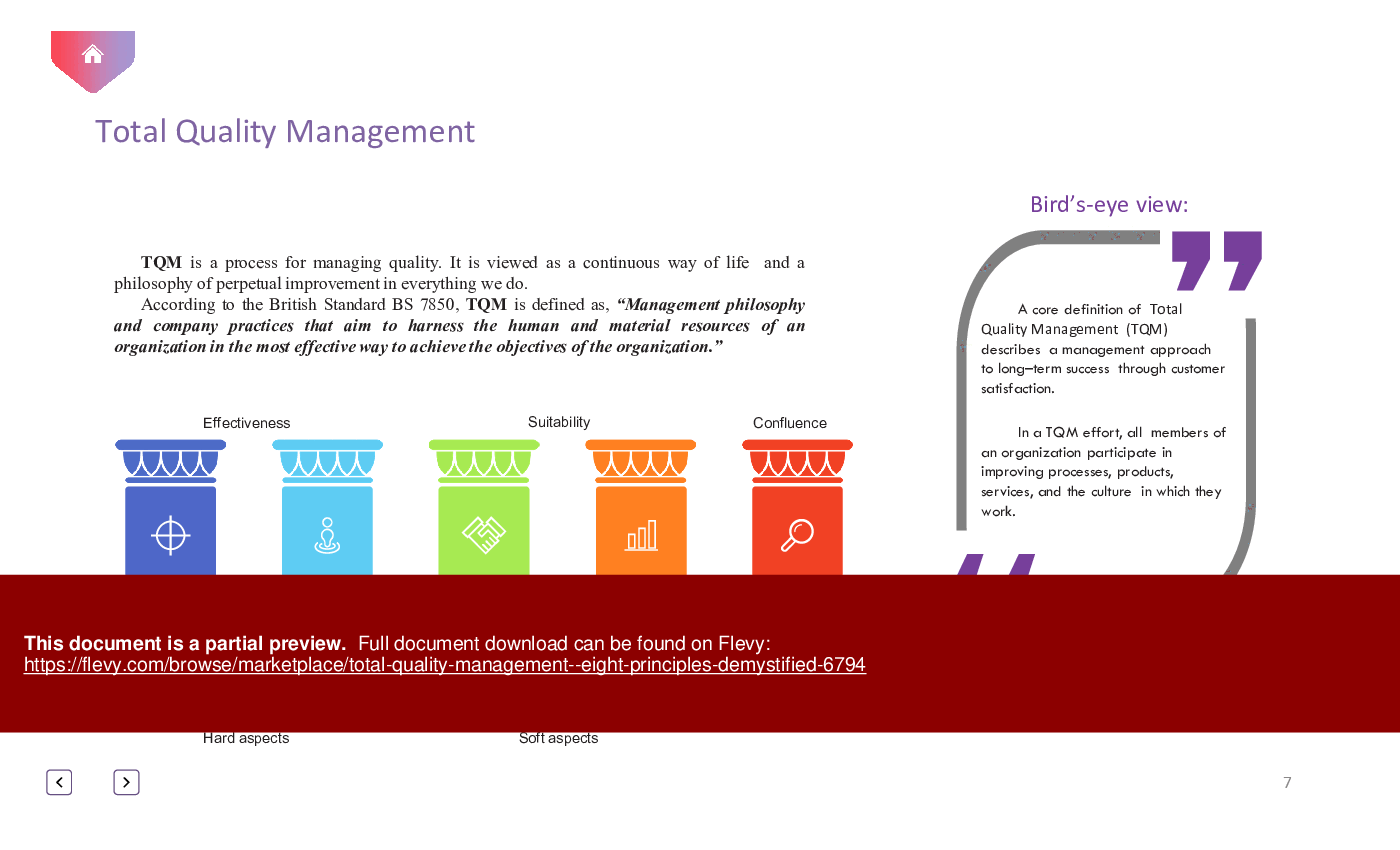
TQM is a management approach focused on long-term success through customer satisfaction, involving all members of an organization in improving processes, products, and services.

How can TQM benefit my organization?
Implementing TQM can lead to improved quality, increased customer satisfaction, enhanced employee engagement, and better overall organizational performance.

What are the eight principles of TQM?
The eight principles include customer-focused organization, leadership, involvement of people, process approach, systems approach to management, continuous improvement, factual approach to decision making, and mutually beneficial supplier relationships.

How do I measure customer satisfaction?
Customer satisfaction can be measured through surveys, feedback forms, and performance metrics that assess customer experiences and expectations.

What is the PDSA cycle?
The PDSA cycle (Plan-Do-Study-Act) is a continuous improvement methodology used to test changes and assess their effectiveness in achieving desired outcomes.

How can I engage employees in TQM initiatives?
Engaging employees can be achieved through training, recognition programs, team-building activities, and creating an open environment for feedback and suggestions.

What role does leadership play in TQM?
Leadership is crucial in setting the vision, establishing quality values, and fostering a culture that encourages participation and continuous improvement.

How can I ensure supplier relationships are mutually beneficial?
Establish clear communication, collaborate on product development, and recognize supplier contributions to create value for both parties.

Glossary
•  Total Quality Management (TQM) - A management approach aimed at long-term success through customer satisfaction.
•  Customer Satisfaction - The measure of how well a product or service meets customer expectations.
•  Continuous Improvement - Ongoing efforts to enhance products, services, or processes.
•  PDSA Cycle - A four-step model for continuous improvement: Plan, Do, Study, Act.
•  Leadership - The act of guiding and directing a group towards achieving goals.
•  Employee Involvement - Engaging employees in decision-making and improvement processes.
•  Supplier Relationships - The interactions and partnerships between an organization and its suppliers.
•  Process Approach - Managing activities and resources as interconnected processes to achieve desired results.
•  Systems Approach - Understanding and managing interrelated processes to enhance organizational effectiveness.
•  Factual Decision Making - Making decisions based on data analysis and logical reasoning.
•  Customer-Focused Organization - An organization that prioritizes understanding and meeting customer needs.
•  Mutually Beneficial Relationships - Partnerships that create value for all parties involved.

Source: Best Practices in TQM PowerPoint Slides: Total Quality Management - Eight Principles Demystified PowerPoint (PPTX) Presentation Slide Deck, RadVector Consulting


$55.00
Developed by a team of experts with global consulting experience at McKinsey, Deloitte, and Capgemini.
Add to Cart
  

ABOUT THE AUTHOR

Additional documents from author: 183

We are a group of aviation experts & specialists (PhDs, Engineers, Pilots, Navigators, ...), leaders in helping organizations to transform their business performance using Methodologies and Principles of Lean, Agile, Six Sigma, and Innovation.

Ask the Author a Question

You must be logged in to contact the author.

Click here to log in Click here register

Did you know?
The average daily rate of a McKinsey consultant is $6,625 (not including expenses). The average price of a Flevy document is $65.
Bundle and save! You can save up to % with bundles!

View bundle(s)


Trusted by over 10,000+ Client Organizations
Since 2012, we have provided business templates to over 10,000 businesses and organizations of all sizes, from startups and small businesses to the Fortune 100, in over 130 countries.
AT&T GE Cisco Intel IBM Coke Dell Toyota HP Nike Samsung Microsoft Astrazeneca JP Morgan KPMG Walgreens Walmart 3M Kaiser Oracle SAP Google E&Y Volvo Bosch Merck Fedex Shell Amgen Eli Lilly Roche AIG Abbott Amazon PwC T-Mobile Broadcom Bayer Pearson Titleist ConEd Pfizer NTT Data Schwab


Read Customer Testimonials

 
"As an Independent Management Consultant, I find Flevy to add great value as a source of best practices, templates and information on new trends. Flevy has matured and the quality and quantity of the library is excellent. Lastly the price charged is reasonable, creating a win-win value for "

– Jim Schoen, Principal at FRC Group
 
"As a young consulting firm, requests for input from clients vary and it's sometimes impossible to provide expert solutions across a broad spectrum of requirements. That was before I discovered Flevy.com.

Through subscription to this invaluable site of a plethora of topics that are key and crucial to consulting, I "

– Nishi Singh, Strategist and MD at NSP Consultants
 
"Last Sunday morning, I was diligently working on an important presentation for a client and found myself in need of additional content and suitable templates for various types of graphics. Flevy.com proved to be a treasure trove for both content and design at a reasonable price, considering the time I "

– M. E., Chief Commercial Officer, International Logistics Service Provider
 
"One of the great discoveries that I have made for my business is the Flevy library of training materials.

As a Lean Transformation Expert, I am always making presentations to clients on a variety of topics: Training, Transformation, Total Productive Maintenance, Culture, Coaching, Tools, Leadership Behavior, etc. Flevy "

– Ed Kemmerling, Senior Lean Transformation Expert at PMG
 
"Flevy.com has proven to be an invaluable resource library to our Independent Management Consultancy, supporting and enabling us to better serve our enterprise clients.

The value derived from our [FlevyPro] subscription in terms of the business it has helped to gain far exceeds the investment made, making a subscription a no-brainer for any growing consultancy – or in-house strategy team."

– Dean Carlton, Chief Transformation Officer, Global Village Transformations Pty Ltd.
 
"Flevy is now a part of my business routine. I visit Flevy at least 3 times each month.

Flevy has become my preferred learning source, because what it provides is practical, current, and useful in this era where the business world is being rewritten.

In today's environment where there are so "

– Omar Hernán Montes Parra, CEO at Quantum SFE
 
"I have found Flevy to be an amazing resource and library of useful presentations for lean sigma, change management and so many other topics. This has reduced the time I need to spend on preparing for my performance consultation. The library is easily accessible and updates are regularly provided. A wealth of great information."

– Cynthia Howard RN, PhD, Executive Coach at Ei Leadership
 
"I have used Flevy services for a number of years and have never, ever been disappointed. As a matter of fact, David and his team continue, time after time, to impress me with their willingness to assist and in the real sense of the word. I have concluded in fact "

– Roberto Pelliccia, Senior Executive in International Hospitality


Save with Bundles

This document is available as part of the following discounted bundle(s):

Save %!
Total Quality Management

This bundle contains 14 total documents. See all the documents to the right.

$399.00


Add Bundle & Save


Customers Also Bought These Documents


Customers Also Like These Documents

Explore Templates on Related Management Topics


Your Recently Viewed Documents
Receive our FREE presentation on Operational Excellence

This 50-slide presentation provides a high-level introduction to the 4 Building Blocks of Operational Excellence. Achieving OpEx requires the implementation of a Business Execution System that integrates these 4 building blocks.








