
The recent global meltdown and recession has put great pressure on the organizations to produce the best quality products at the most affordable prices.
Organizations need to implement Total Quality Management in order to achieve organizational success as well as satisfying the customers so as to make more profit in the business arena.
This document on Quality covers an extensive compilation of topics to help you understand the Total Quality Management Principles. And, It can help develop a basic appreciation of quality concepts related to TQM's goal of continuous improvement.
Total Quality Management (TQM) is an approach to business that looks critically at the products and services a company provides in relation to the processes it employs to create them. It also focuses on the workforce to ensure that outputs fully satisfy customer requirements.
Organizations that follow the TQM approach consistently meet or exceed customer requirements. TQM can, therefore, be referred to as a journey with the sky as the limit for excellence.
This Third & Fourth Units of TQM contain :
• Introduction
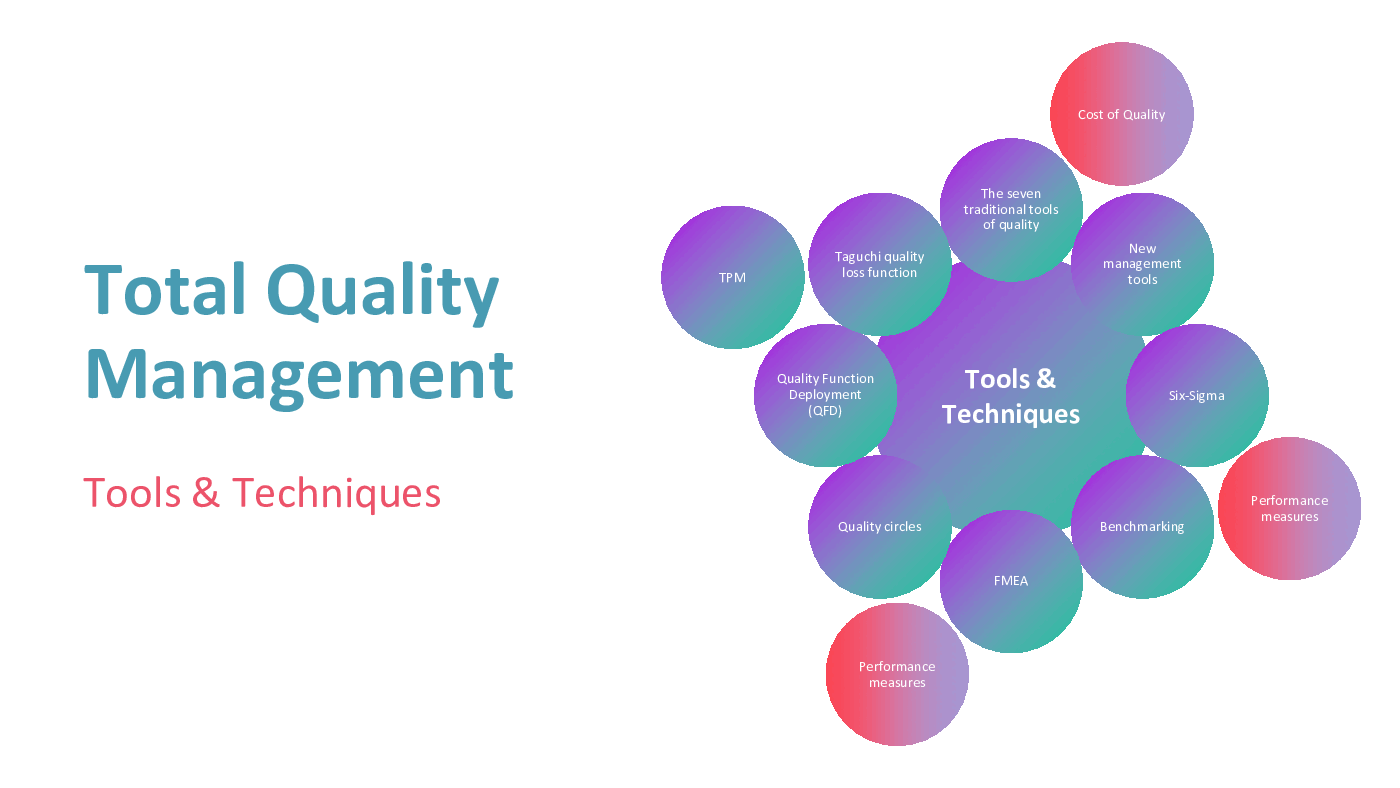
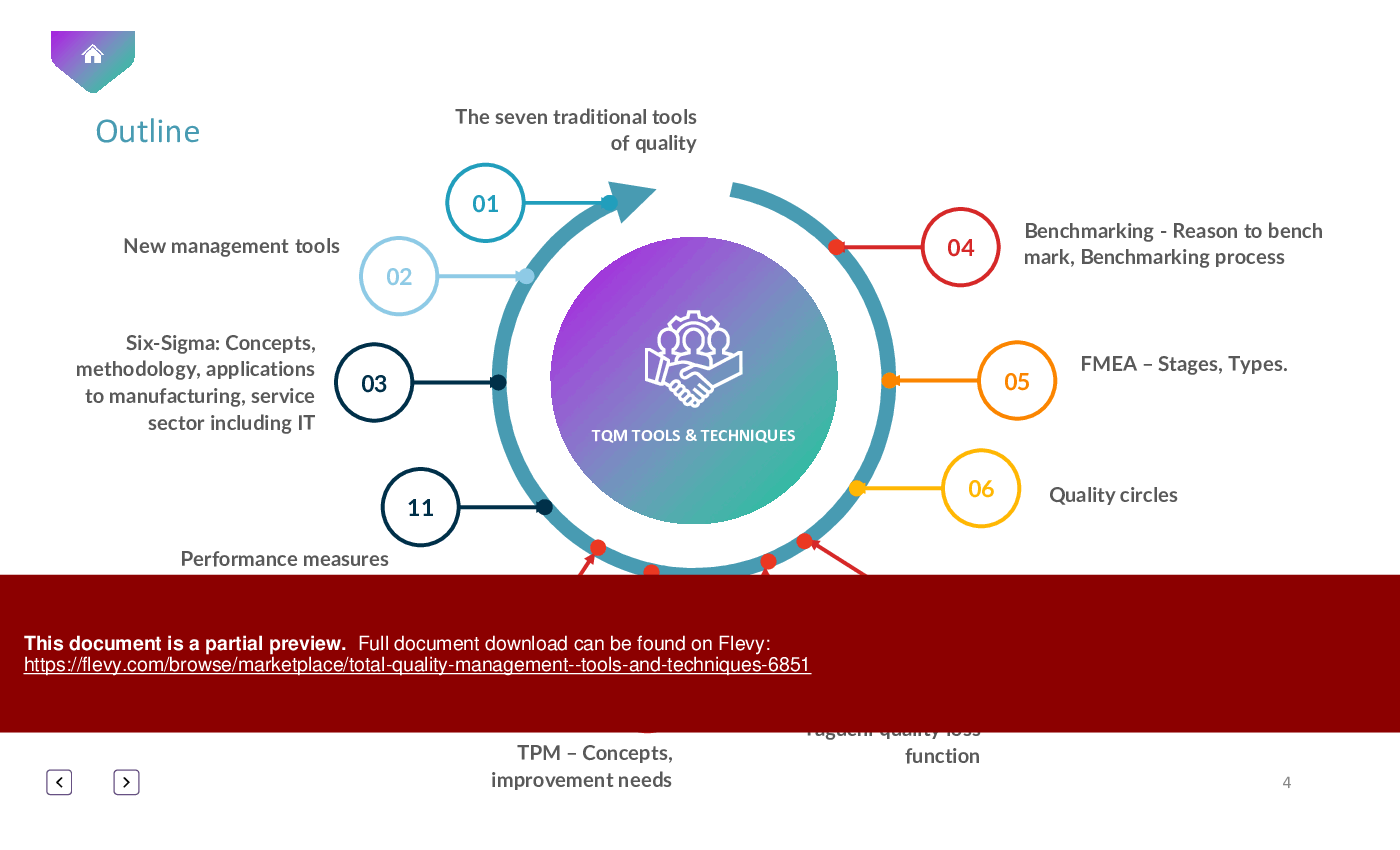
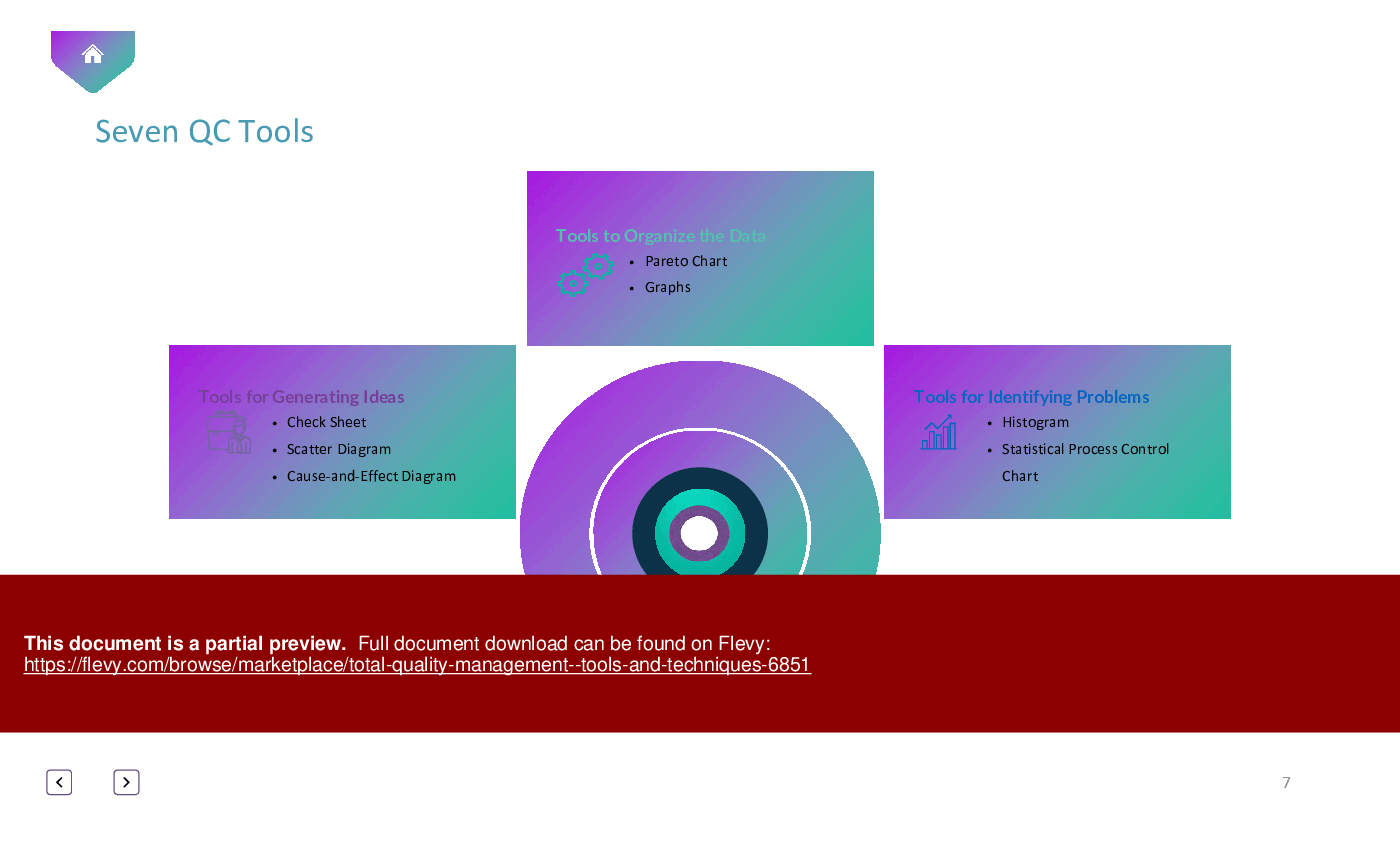
• The seven traditional tools of quality
• New (seven) management tools
• Six-Sigma: Concepts, methodology, applications to manufacturing, service sector including IT
• Benchmarking – Reason to benchmark, Benchmarking process
• FMEA – Stages, Types.
• Quality circles
• Quality Function Deployment (QFD)
• Taguchi quality loss function
• TPM – Concepts, improvement needs
• Cost of Quality
• Performance measures
This 142-Slide PowerPoint document explains in details the tools & techniques of the TQM, it's easily customizable and contains many powerful figures, diagrams, ice-breakers, pictures, ... to get the holistic view of the concepts of the Quality Systems.
Got a question about the product? Email us at support@flevy.com or ask the author directly by using the "Ask the Author a Question" form. If you cannot view the preview above this document description, go here to view the large preview instead.
Executive Summary
The "Total Quality Management - Tools and Techniques" presentation provides a comprehensive overview of essential quality management frameworks and methodologies. It is designed for corporate executives, integration leaders, and consultants seeking to enhance their understanding of Total Quality Management (TQM) principles. This deck equips users with practical tools and techniques, including Six Sigma, FMEA, benchmarking, and quality circles, to drive continuous improvement and operational excellence within their organizations.
Who This Is For and When to Use
• Quality Assurance Managers focused on implementing TQM strategies
• Operations Managers seeking to enhance process efficiency
• Consultants advising organizations on quality improvement initiatives
• Senior Executives aiming to foster a culture of quality within their teams
Best-fit moments to use this deck:
• During strategic planning sessions to integrate quality management into business objectives
• In training programs for employees on quality improvement methodologies
• When conducting workshops aimed at problem-solving and process optimization
Learning Objectives
• Define key concepts of Total Quality Management and its importance in modern organizations
• Build a robust understanding of the 7 traditional tools of quality
• Establish effective benchmarking processes to measure performance against industry standards
• Identify and apply the principles of Six Sigma to reduce defects and improve quality
• Develop and implement Failure Mode and Effects Analysis (FMEA) for risk management
• Create and facilitate quality circles to empower employees and enhance team collaboration
Table of Contents
• Introduction to Quality Management (page 2)
• Approaches to Quality Management (page 3)
• The Seven Traditional Tools of Quality (page 7)
• New Management Tools (page 38)
• Six Sigma: Concepts and Applications (page 68)
• Benchmarking: Process and Benefits (page 84)
• Failure Mode and Effects Analysis (FMEA) (page 90)
• Quality Circles: Structure and Function (page 97)
• Quality Function Deployment (QFD) (page 111)
• Cost of Quality (page 127)
• Performance Measures (page 136)
Primary Topics Covered
• Total Quality Management - A holistic approach to long-term success through customer satisfaction and continuous improvement.
• Six Sigma - A data-driven methodology aimed at reducing defects and improving process quality.
• Benchmarking - A process of comparing business processes and performance metrics to industry bests.
• FMEA - A systematic method for evaluating processes to identify where and how they might fail.
• Quality Circles - Small groups of employees who meet regularly to discuss and solve work-related problems.
• Quality Function Deployment (QFD) - A tool to translate customer requirements into technical specifications.
• Cost of Quality - The total cost of ensuring that a product or service is of good quality.
• Performance Measures - Metrics used to assess the efficiency and effectiveness of processes.
Deliverables, Templates, and Tools
• FMEA templates for risk assessment and management
• Quality circle facilitation guides for team engagement
• Benchmarking frameworks for performance evaluation
• Six Sigma project charters for structured improvement initiatives
• QFD matrices for aligning customer needs with product specifications
• Cost of Quality analysis tools for financial assessment
Slide Highlights
• Overview of the 7 traditional tools of quality, including Pareto charts and control charts
• Step-by-step guide for conducting FMEA and identifying potential failure modes
• Detailed explanation of the benchmarking process and its strategic importance
• Insights into the structure and function of quality circles in fostering employee involvement
• Visual representation of the house of quality in QFD for translating customer needs
Potential Workshop Agenda
Introduction to TQM (30 minutes)
• Overview of TQM principles and methodologies
• Discussion on the importance of quality in organizational success
Tools and Techniques Workshop (90 minutes)
• Hands-on training on the 7 traditional tools of quality
• Group activities to apply Six Sigma concepts and FMEA
Benchmarking and QFD Session (60 minutes)
• Interactive session on benchmarking best practices
• Workshop on creating a house of quality for product development
Quality Circles Implementation (45 minutes)
• Strategies for establishing effective quality circles
• Role-playing exercises to enhance facilitation skills
Customization Guidance
• Tailor the FMEA templates to fit specific industry requirements and processes
• Adapt benchmarking frameworks to align with organizational goals and objectives
• Modify quality circle activities to reflect the unique culture and dynamics of the team
Secondary Topics Covered
• Taguchi quality loss function
• Total productive maintenance (TPM) concepts
• New management tools for quality improvement
• Performance measurement systems and their significance
FAQ
What is Total Quality Management?
TQM is a comprehensive approach focused on continuous improvement, customer satisfaction, and employee engagement in quality processes.
How does Six Sigma differ from TQM?
While TQM encompasses a broad philosophy of quality management, Six Sigma is a specific data-driven methodology aimed at reducing defects.
What are the 7 traditional tools of quality?
These include Pareto charts, cause-and-effect diagrams, control charts, histograms, scatter diagrams, check sheets, and graphs.
How can benchmarking benefit my organization?
Benchmarking helps identify best practices, improve performance metrics, and foster a culture of continuous improvement.
What is FMEA and why is it important?
FMEA is a systematic approach to identifying potential failure modes in a process, allowing organizations to mitigate risks early in the design phase.
How can quality circles enhance employee engagement?
Quality circles empower employees to participate in problem-solving, fostering a sense of ownership and collaboration within teams.
What is the cost of quality?
Cost of quality refers to the total costs incurred by an organization to ensure that its products or services meet quality standards.
How can I implement a successful quality improvement program?
Start by establishing clear objectives, engaging employees, providing training, and continuously monitoring progress against quality metrics.
Glossary
• Total Quality Management - A management approach focused on long-term success through customer satisfaction.
• Six Sigma - A data-driven methodology for process improvement.
• FMEA - A structured approach to identifying potential failure modes in a process.
• Benchmarking - The practice of comparing business processes to industry bests.
• Quality Circle - A group of employees who meet to discuss and solve work-related problems.
• Quality Function Deployment (QFD) - A method for translating customer needs into technical specifications.
• Cost of Quality - The total cost associated with ensuring that products meet quality standards.
• Performance Measures - Metrics used to evaluate the effectiveness of processes.
• Taguchi Method - A statistical method for improving quality by minimizing variation.
• Total Productive Maintenance (TPM) - A maintenance strategy aimed at improving productivity by reducing downtime.
• Quality Control - The process of ensuring that products meet specified quality standards.
• Continuous Improvement - Ongoing efforts to improve products, services, or processes.
• Statistical Process Control (SPC) - A method of monitoring and controlling processes using statistical methods.
• Root Cause Analysis - A method for identifying the underlying causes of problems.
• Process Capability - The ability of a process to produce output that meets specifications.
• Defect - A failure to meet a specified requirement.
• Customer Satisfaction - The degree to which customer expectations are met.
• Quality Assurance - The systematic process of ensuring that quality requirements are fulfilled.
• Lean Manufacturing - A production practice that considers the expenditure of resources in any aspect other than the direct creation of value for the end customer to be wasteful and thus a target for elimination.
Source: Best Practices in TQM PowerPoint Slides: Total Quality Management - Tools and Techniques PowerPoint (PPTX) Presentation Slide Deck, RadVector Consulting
This document is available as part of the following discounted bundle(s):

Save %!
Total Quality Management
This bundle contains 14 total documents. See all the documents to the right.
|
Receive our FREE presentation on Operational Excellence
This 50-slide presentation provides a high-level introduction to the 4 Building Blocks of Operational Excellence. Achieving OpEx requires the implementation of a Business Execution System that integrates these 4 building blocks. |