
Total Quality Management - Business Process Management   55-slide PPT PowerPoint presentation slide deck (PPTX)
$55.00

Total Quality Management - Business Process Management (55-slide PPT PowerPoint presentation slide deck (PPTX)) Preview Image
Log in to unlock full preview.
Total Quality Management - Business Process Management (55-slide PPT PowerPoint presentation slide deck (PPTX)) Preview Image
Arrow   Click main image to view in full screen.

Total Quality Management - Business Process Management (PowerPoint PPTX Slide Deck)

PowerPoint (PPTX) 55 Slides

$55.00
Developed by a team of experts with global consulting experience at McKinsey, Deloitte, and Capgemini.
Add to Cart


Immediate download
Fully editable PowerPoint
Free lifetime updates

BENEFITS OF THIS POWERPOINT DOCUMENT

  1. Understand relevant concepts of the BPM in relation with the TQM as a Continuous Process Improvement (CPI) Tool.

TQM PPT DESCRIPTION

Editor Summary A 55-slide PowerPoint presentation, Total Quality Management - Business Process Management provides an overview of TQM and BPM with a ten‑phase BPM implementation framework and process mapping tools. Read more

The recent global meltdown and recession has put great pressure on the organizations to produce the best quality products at the most affordable prices.

Organizations need to implement Total Quality Management in order to achieve organizational success as well as satisfying the customers so as to make more profit in the business arena.

This document on Quality covers an extensive compilation of topics in order to introduce the Total Quality Management. It can help develop a basic appreciation of quality concepts related to TQM's goal of continuous improvement.

Total Quality Management (TQM) is an approach to business that looks critically at the products and services a company provides in relation to the processes it employs to create them. It also focuses on the workforce to ensure that outputs fully satisfy customer requirements.

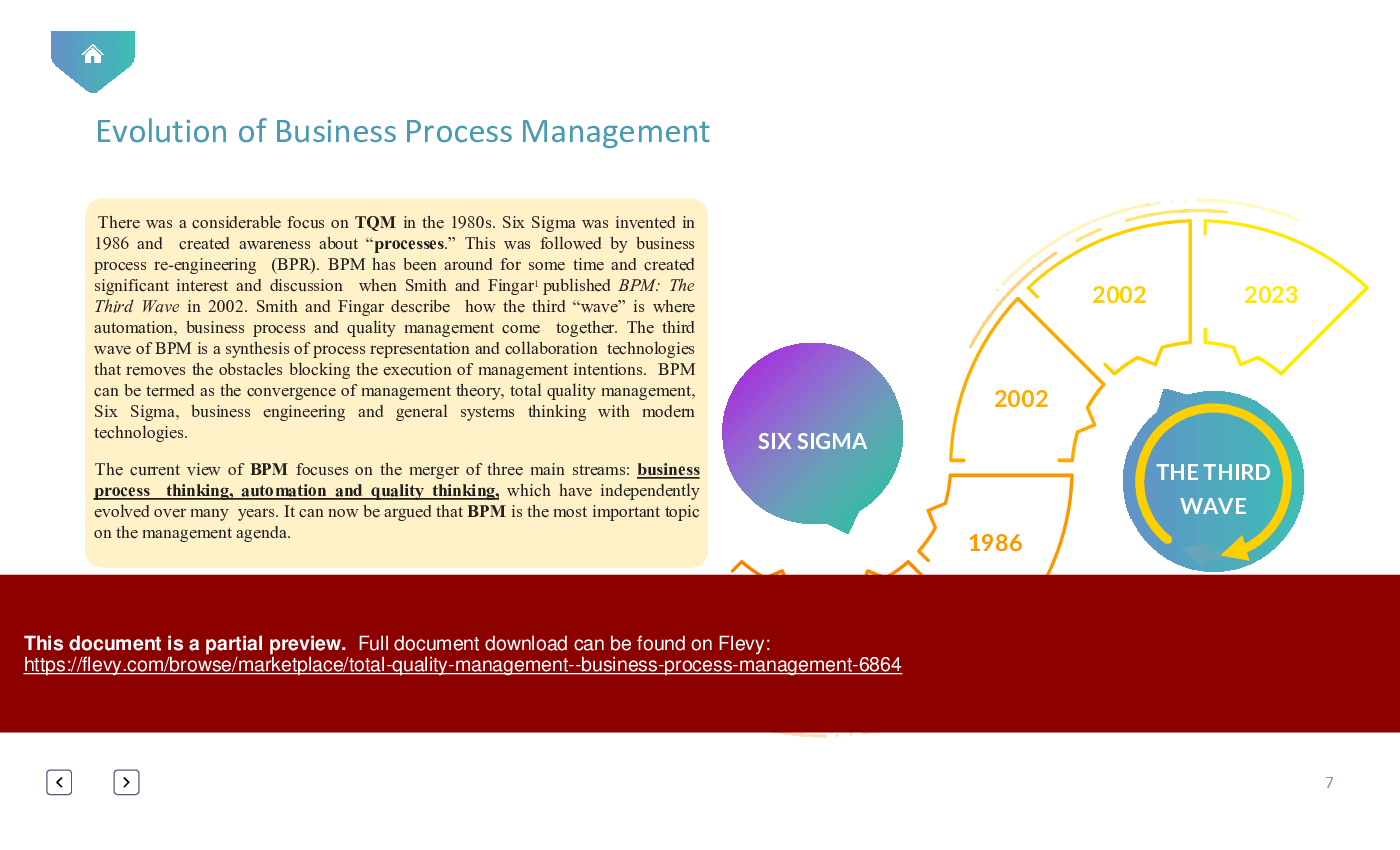
There was a considerable focus on TQM in the 1980s. Six Sigma was invented in 1986 and created awareness about "processes." This was followed by business process re-engineering (BPR). BPM has been around for some time and created significant interest and discussion when Smith and Fingar1 published BPM: The Third Wave in 2002. Smith and Fingar describe how the third "wave" is where automation, business process and quality management come together. The third wave of BPM is a synthesis of process representation and collaboration technologies that removes the obstacles blocking the execution of management intentions. BPM can be termed as the convergence of management theory, total quality management, Six Sigma, business engineering and general systems thinking with modern technologies.

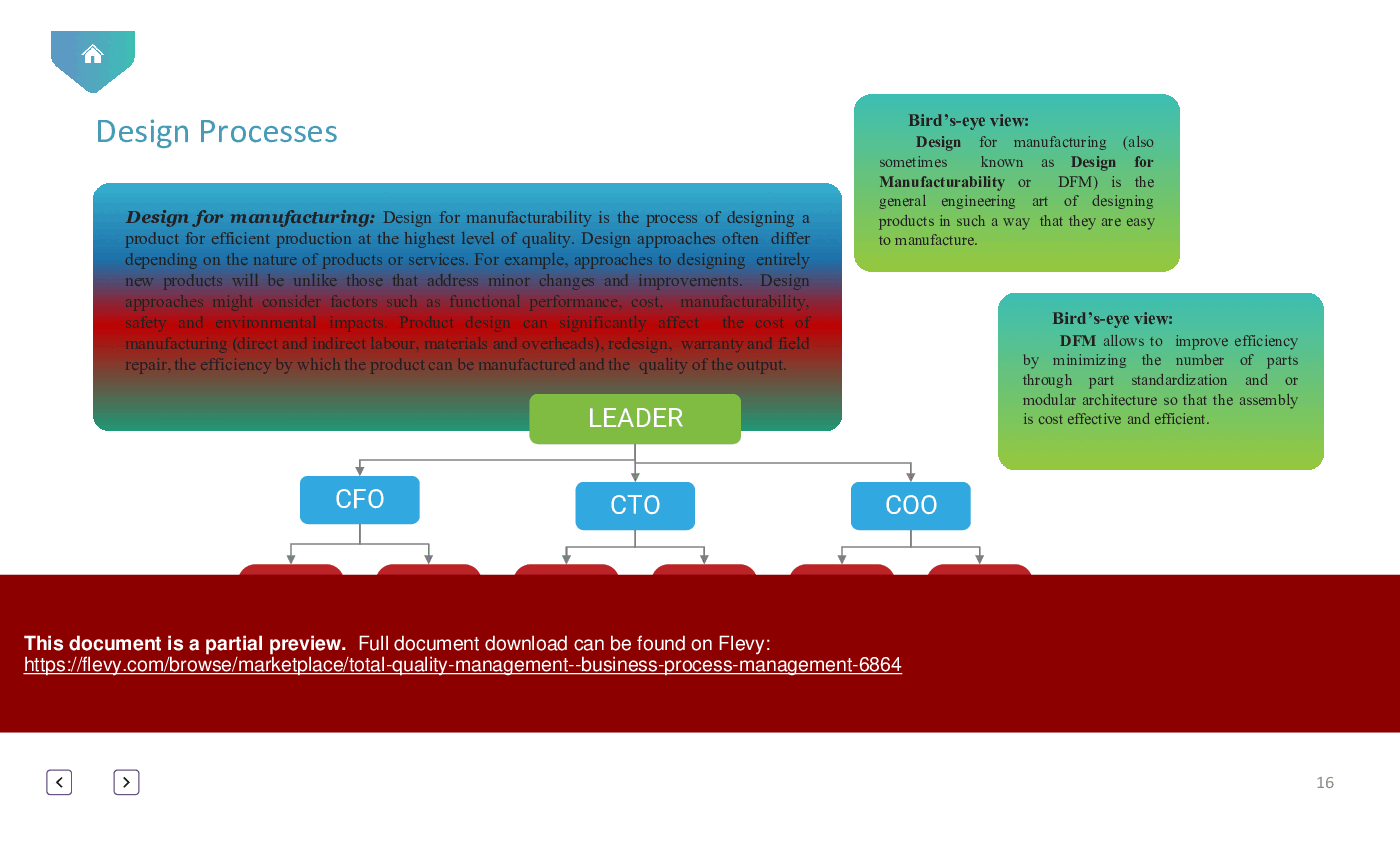
BPM is a holistic and systematic approach to achieve optimized business outcomes. It enables organizations to align business functions with customer needs, and helps executives determine ways to deploy, monitor, and measure the company's resources. When properly executed, BPM has the ability to enhance the efficiency and productivity, reduce costs, and minimize errors and risks, thereby optimizing results.
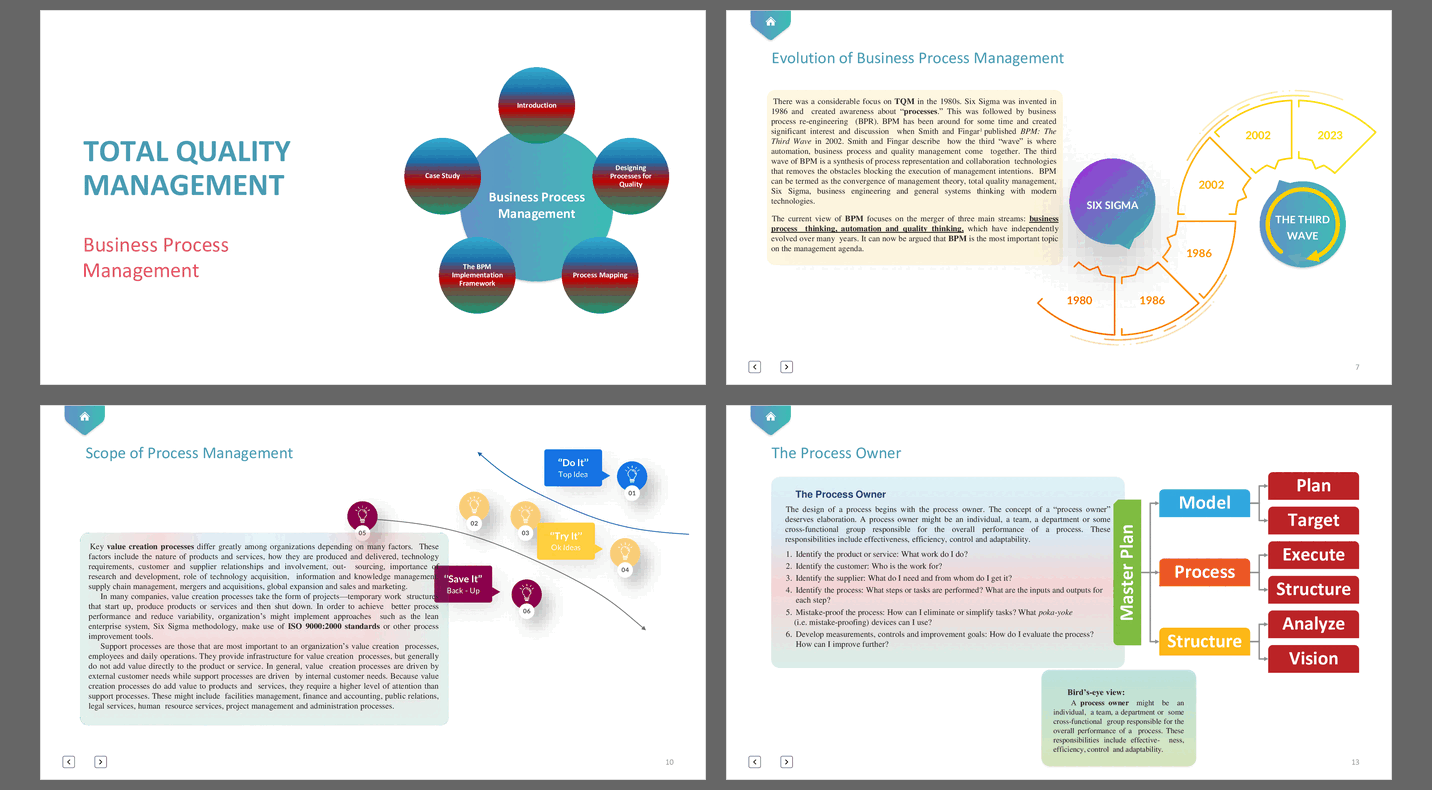
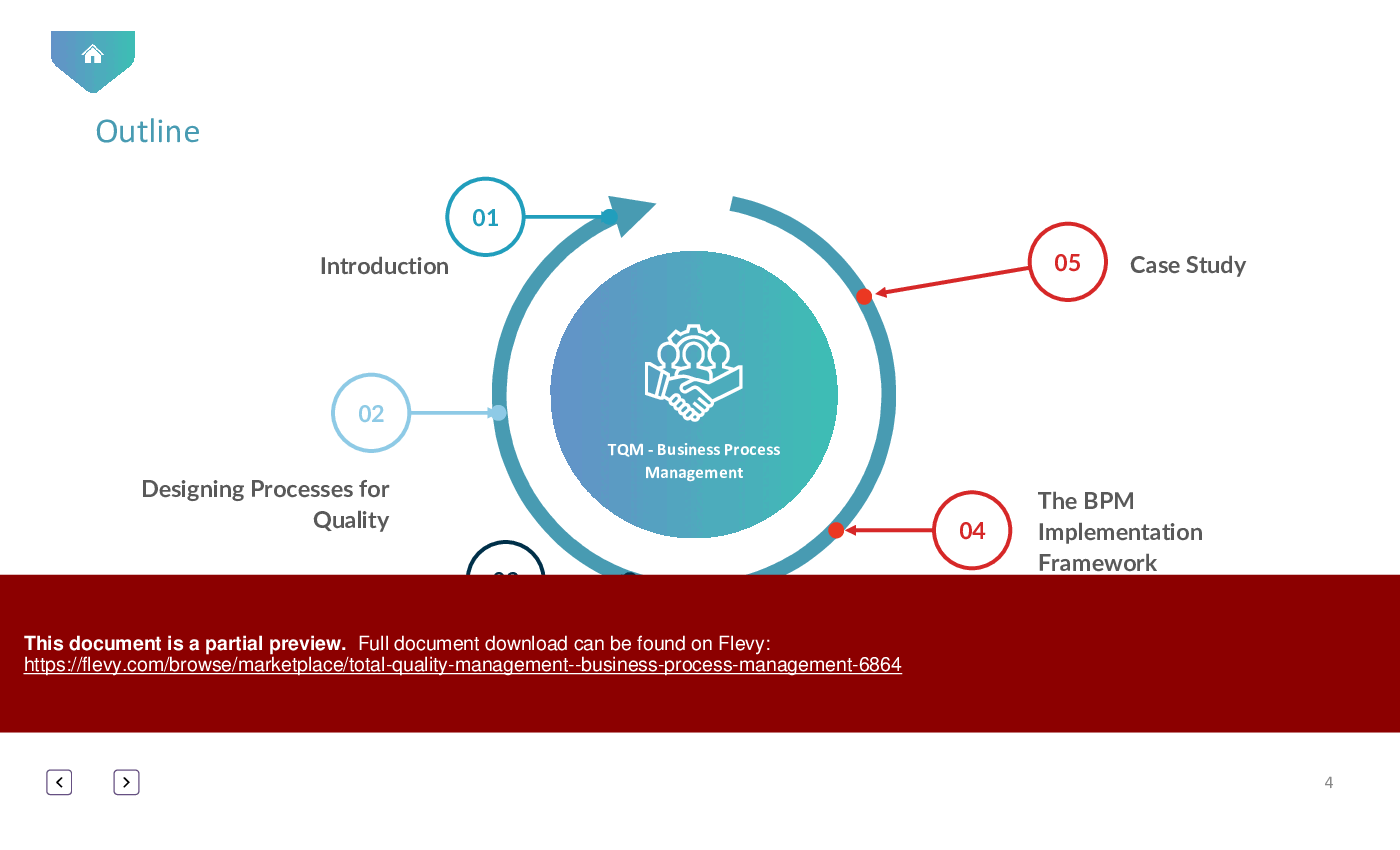
This Unit contains :

• Introduction
• Designing Processes for Quality
• Process Mapping
• The BPM Implementation Framework
• Case Study

This 55-Slide PowerPoint explains relevant concepts of the BPM in relation with the TQM as a Continuous Process Improvement (CPI) Tool.
The document is easily customizable and contains many powerful diagrams, ice-breakers, pictures, ... to get the holistic view of the concepts of the Quality Systems.

Got a question about the product? Email us at support@flevy.com or ask the author directly by using the "Ask the Author a Question" form. If you cannot view the preview above this document description, go here to view the large preview instead.

MARCUS OVERVIEW

This synopsis was written by Marcus [?] based on the analysis of the full 55-slide presentation.


Executive Summary
The Total Quality Management - Business Process Management (PPTX) presentation provides a comprehensive overview of key methodologies and frameworks essential for enhancing organizational efficiency and quality. Developed by a team of experts from renowned consulting firms, this presentation equips corporate executives and consultants with actionable insights into Business Process Management (BPM) and Total Quality Management (TQM). Users will learn to design, implement, and optimize processes that align with customer needs, ultimately driving operational excellence and cost reduction.

Who This Is For and When to Use
•  Corporate executives seeking to enhance operational efficiency and quality management
•  Process improvement teams focused on implementing BPM and TQM methodologies
•  Consultants advising organizations on quality management and process optimization
•  Project managers overseeing process redesign and implementation initiatives

Best-fit moments to use this deck:
•  During strategic planning sessions focused on quality improvement
•  When initiating BPM projects to align processes with organizational goals
•  In training sessions aimed at enhancing team capabilities in process management
•  For workshops that require a structured approach to process mapping and optimization

Learning Objectives
•  Define the principles of Total Quality Management and Business Process Management
•  Build a comprehensive BPM implementation framework tailored to organizational needs
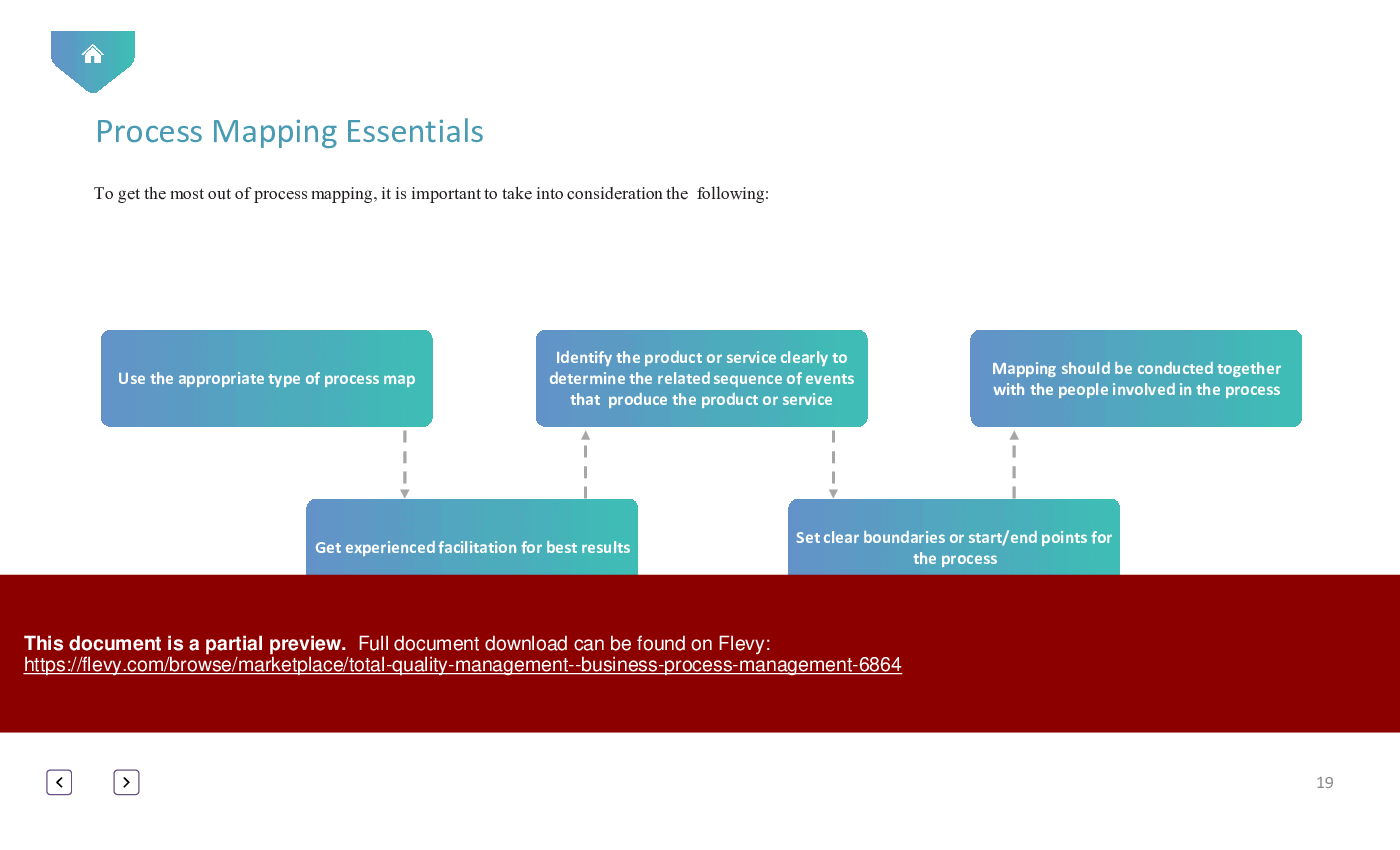
•  Establish effective process mapping techniques to visualize and analyze workflows
•  Identify key value creation and support processes that drive customer satisfaction
•  Develop a culture of continuous improvement through systematic process evaluation
•  Implement tools like SIPOC, VSM, and flowcharts for effective process management

Table of Contents
•  Introduction (page 2)
•  Designing Processes for Quality (page 11)
•  Process Mapping (page 18)
•  The BPM Implementation Framework (page 35)
•  Case Study (page 47)
•  Summary (page 54)

Primary Topics Covered
•  Total Quality Management (TQM) - TQM focuses on continuous improvement in processes and products to enhance customer satisfaction and operational efficiency.
•  Business Process Management (BPM) - BPM is a systematic approach to managing and optimizing an organization’s processes to achieve strategic goals.
•  Process Mapping Techniques - Various tools such as flowcharts, SIPOC diagrams, and value stream maps are essential for visualizing and improving processes.
•  BPM Implementation Framework - A structured approach consisting of ten phases, including organizational strategy, process architecture, and sustainable performance.
•  Value Creation Processes - Core processes that directly contribute to delivering value to customers and achieving competitive advantage.
•  Support Processes - Essential processes that provide infrastructure and support to value creation activities within the organization.

Deliverables, Templates, and Tools
•  BPM implementation framework template outlining the ten phases of BPM
•  Process mapping tools including flowcharts, SIPOC diagrams, and value stream maps
•  Case study examples demonstrating successful BPM implementation
•  Quality management assessment templates for evaluating process performance
•  Guidelines for establishing process ownership and governance structures
•  Continuous improvement tracking tools to monitor process enhancements

Slide Highlights
•  Overview of BPM and TQM principles emphasizing their importance in organizational success
•  Visual representations of process mapping techniques, including flowcharts and swim lane diagrams
•  Detailed explanation of the BPM implementation framework phases and their objectives
•  Case study showcasing the successful application of BPM at Otis Elevator Company
•  Summary slide encapsulating the key takeaways from the presentation

Potential Workshop Agenda
Introduction to BPM and TQM (30 minutes)
•  Overview of key concepts and principles
•  Discussion on the importance of quality management

Process Mapping Techniques (60 minutes)
•  Hands-on session on creating flowcharts and SIPOC diagrams
•  Group activity to map current processes

BPM Implementation Framework (90 minutes)
•  Detailed exploration of the ten phases of BPM
•  Interactive discussion on aligning BPM with organizational strategy

Case Study Analysis (45 minutes)
•  Review of the Otis Elevator Company case study
•  Group discussion on lessons learned and best practices

Customization Guidance
•  Tailor the BPM implementation framework to align with specific organizational goals and strategies
•  Modify process mapping templates to reflect unique business processes and workflows
•  Adjust case study examples to resonate with the industry context of the audience
•  Incorporate organizational terminology and metrics into the presentation for relevance

Secondary Topics Covered
•  Continuous Process Improvement (CPI) methodologies
•  Lean management principles and practices
•  Business Process Reengineering (BPR) concepts
•  The role of technology in enhancing BPM and TQM initiatives
•  Change management strategies for successful BPM implementation

Topic FAQ

What is the core difference between Total Quality Management (TQM) and Business Process Management (BPM)?

TQM emphasizes continuous improvement in products and processes to enhance customer satisfaction and quality, while BPM is a systematic approach to managing and optimizing processes to meet strategic goals. The presentation contrasts TQM’s quality focus with BPM’s process architecture and strategic alignment across ten implementation phases.

What process-mapping tools should I use to visualize workflows?

Common mapping tools include flowcharts and swimlane diagrams for step-level sequencing, SIPOC for high-level supplier-input-output-customer views, value stream mapping (VSM) for information/material flow, and spaghetti diagrams for movement analysis. Flevy's Total Quality Management - Business Process Management includes templates for SIPOC, VSM, and flowcharts.

How does applying BPM help reduce operational costs?

BPM reduces costs by streamlining processes, eliminating non-value activities, minimizing errors, and improving resource deployment. These efficiencies lower waste and rework and improve throughput, ultimately reducing operational expenses via techniques such as value stream mapping and governance-driven performance monitoring.

What are the main phases of a BPM implementation I should expect?

The presentation describes a structured BPM implementation framework composed of ten phases that span organizational strategy alignment, defining process architecture, implementation, and embedding sustainable performance and governance across the organization.

What should I look for when selecting a BPM/TQM presentation or toolkit for workshops?

Look for ready-to-use process mapping templates (SIPOC, VSM, flowcharts), an implementation framework with phases, case study examples, quality assessment templates, and customization guidance to align slides to your metrics and terminology—specifically templates for SIPOC and a ten-phase BPM framework.

How long should I plan for a workshop that introduces BPM and demonstrates mapping techniques?

The sample workshop agenda in the presentation totals about 3 hours and 45 minutes, including a 30-minute introduction to BPM/TQM, a 60-minute process-mapping session, a 90-minute BPM implementation framework deep dive, and a 45-minute case study analysis.

I need to map current processes before automation—which techniques are most appropriate?

Use SIPOC for a high-level scope of suppliers, inputs, processes, outputs, and customers; VSM to analyze material and information flow and identify waste; and detailed flowcharts or swimlane diagrams for step sequencing and handoffs. Flevy's Total Quality Management - Business Process Management supplies templates for these techniques.

After deploying BPM, how can I sustain continuous improvement in processes?

Establish a continuous improvement culture by assigning process ownership, setting performance metrics, implementing feedback loops, and using tracking tools to monitor enhancements. The presentation includes guidance and continuous improvement tracking tools to support ongoing process evaluation.

Document FAQ
These are questions addressed within this presentation.

What is the difference between TQM and BPM?
TQM focuses on continuous improvement in quality across all organizational processes, while BPM is a systematic approach to managing and optimizing business processes for efficiency and effectiveness.

How can I implement BPM in my organization?
Begin by assessing your current processes, defining your organizational strategy, and following the ten phases outlined in the BPM implementation framework to ensure a structured approach.

What tools can I use for process mapping?
Common tools include flowcharts, SIPOC diagrams, value stream maps, and spaghetti diagrams, each serving a specific purpose in visualizing and analyzing processes.

How does BPM contribute to cost reduction?
BPM enhances efficiency by streamlining processes, reducing waste, and minimizing errors, which collectively lead to lower operational costs.

What are value creation processes?
These are core processes that directly contribute to delivering value to customers and achieving a competitive advantage, often involving significant organizational resources.

How do I ensure continuous improvement in BPM?
Establish a culture of continuous improvement by regularly evaluating processes, implementing feedback mechanisms, and utilizing performance metrics to drive enhancements.

What is the role of a process owner?
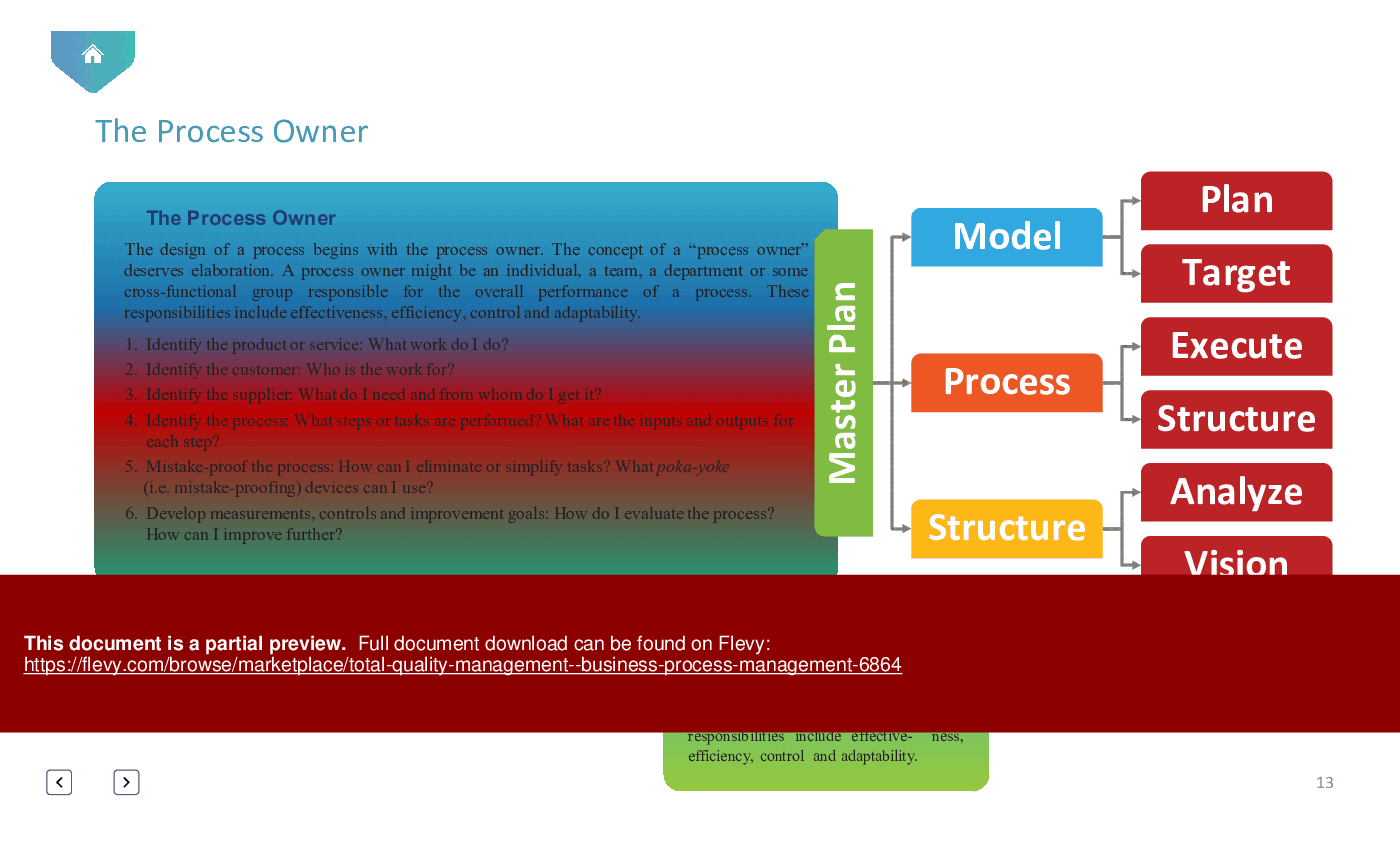
A process owner is responsible for the overall performance of a process, ensuring its effectiveness, efficiency, and adaptability to changing organizational needs.

Can BPM be applied in any industry?
Yes, BPM principles and methodologies can be adapted to fit various industries, making it a versatile approach to process management and improvement.

Glossary
•  BPM - Business Process Management, a systematic approach to managing and optimizing business processes.
•  TQM - Total Quality Management, a management approach focused on continuous quality improvement.
•  SIPOC - A high-level process mapping tool that outlines Suppliers, Inputs, Process, Outputs, and Customers.
•  VSM - Value Stream Mapping, a lean management tool for analyzing the flow of materials and information.
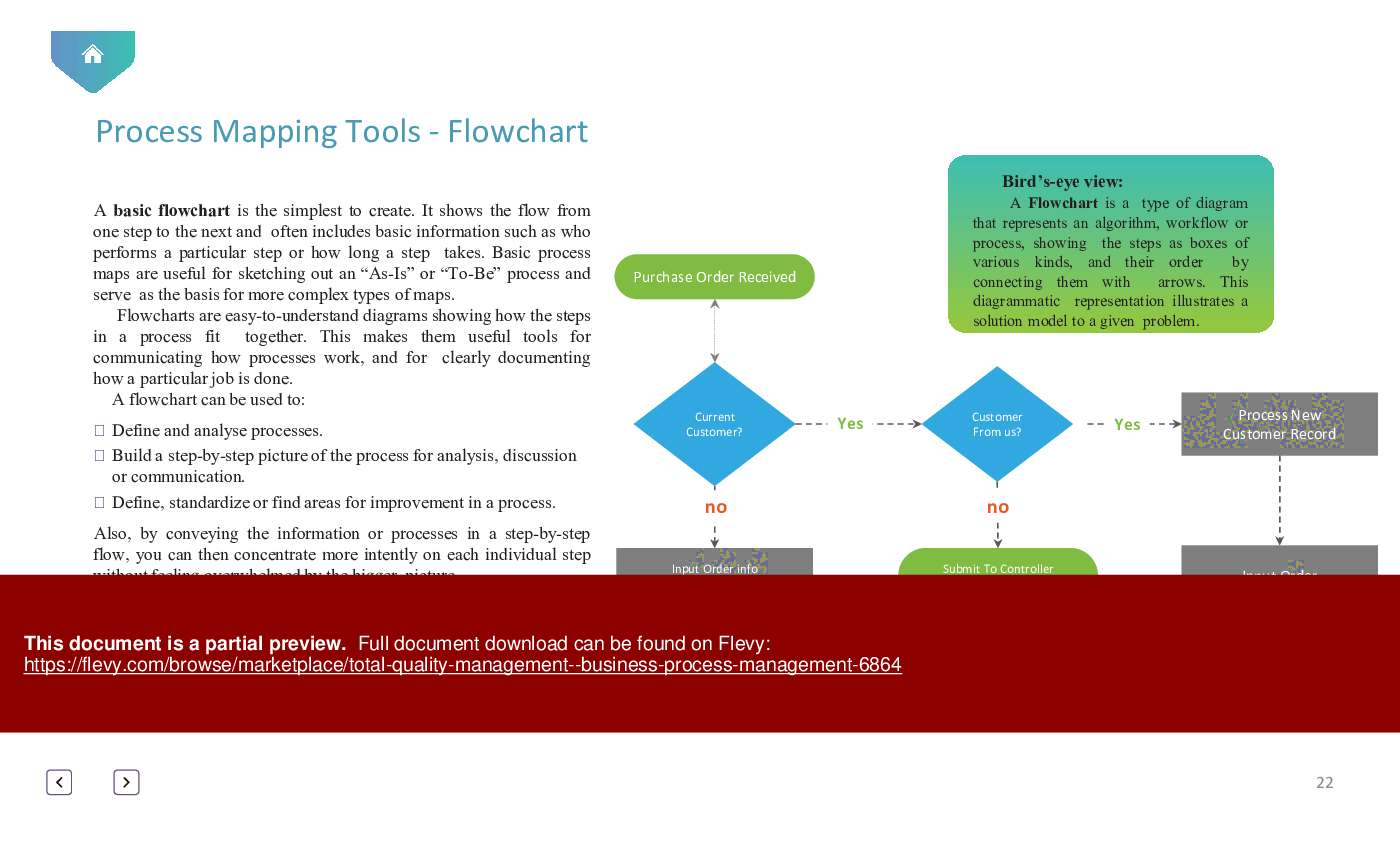
•  Flowchart - A diagram that represents a process, showing the steps as boxes and their order connected by arrows.
•  Process Owner - An individual or team responsible for the performance and management of a specific process.
•  Continuous Improvement - Ongoing efforts to enhance products, services, or processes over time.
•  Lean Management - A methodology focused on minimizing waste while maximizing productivity.
•  Kaizen - A Japanese term meaning "change for better," referring to activities that continuously improve all functions.
•  BPR - Business Process Reengineering, a strategy for improving efficiency and effectiveness by fundamentally rethinking business processes.
•  CPI - Continuous Process Improvement, an ongoing effort to improve products, services, or processes.
•  Stakeholder - An individual or group that has an interest in the outcome of a project or process.
•  Governance - The framework of rules and practices by which an organization is directed and controlled.
•  Metrics - Measurements used to assess the performance of a process or organization.
•  Customer Satisfaction - A measure of how products and services meet or exceed customer expectations.
•  Operational Efficiency - The ability to deliver products or services in the most cost-effective manner without compromising quality.
•  Process Mapping - The activity of defining and visualizing the steps involved in a process.
•  Quality Control - The process of ensuring that products and services meet specified requirements.
•  Process Architecture - The structure that defines the processes within an organization and how they interact.
•  Change Management - The approach to transitioning individuals, teams, and organizations to a desired future state.

Source: Best Practices in TQM, BPM PowerPoint Slides: Total Quality Management - Business Process Management PowerPoint (PPTX) Presentation Slide Deck, RadVector Consulting


$55.00
Developed by a team of experts with global consulting experience at McKinsey, Deloitte, and Capgemini.
Add to Cart
  

ABOUT THE AUTHOR

Additional documents from author: 182

We are a group of aviation experts & specialists (PhDs, Engineers, Pilots, Navigators, ...), leaders in helping organizations to transform their business performance using Methodologies and Principles of Lean, Agile, Six Sigma, and Innovation.

Ask the Author a Question

You must be logged in to contact the author.

Click here to log in Click here register

Did you know?
The average daily rate of a McKinsey consultant is $6,625 (not including expenses). The average price of a Flevy document is $65.
Bundle and save! You can save up to % with bundles!

View bundle(s)


Trusted by over 10,000+ Client Organizations
Since 2012, we have provided business templates to over 10,000 businesses and organizations of all sizes, from startups and small businesses to the Fortune 100, in over 130 countries.
AT&T GE Cisco Intel IBM Coke Dell Toyota HP Nike Samsung Microsoft Astrazeneca JP Morgan KPMG Walgreens Walmart 3M Kaiser Oracle SAP Google E&Y Volvo Bosch Merck Fedex Shell Amgen Eli Lilly Roche AIG Abbott Amazon PwC T-Mobile Broadcom Bayer Pearson Titleist ConEd Pfizer NTT Data Schwab


Read Customer Testimonials

 
"I like your product. I'm frequently designing PowerPoint presentations for my company and your product has given me so many great ideas on the use of charts, layouts, tools, and frameworks. I really think the templates are a valuable asset to the job."

– Roberto Fuentes Martinez, Senior Executive Director at Technology Transformation Advisory
 
"I have used Flevy services for a number of years and have never, ever been disappointed. As a matter of fact, David and his team continue, time after time, to impress me with their willingness to assist and in the real sense of the word. I have concluded in fact "

– Roberto Pelliccia, Senior Executive in International Hospitality
 
"Flevy.com has proven to be an invaluable resource library to our Independent Management Consultancy, supporting and enabling us to better serve our enterprise clients.

The value derived from our [FlevyPro] subscription in terms of the business it has helped to gain far exceeds the investment made, making a subscription a no-brainer for any growing consultancy – or in-house strategy team."

– Dean Carlton, Chief Transformation Officer, Global Village Transformations Pty Ltd.
 
"As a niche strategic consulting firm, Flevy and FlevyPro frameworks and documents are an on-going reference to help us structure our findings and recommendations to our clients as well as improve their clarity, strength, and visual power. For us, it is an invaluable resource to increase our impact and value."

– David Coloma, Consulting Area Manager at Cynertia Consulting
 
"The wide selection of frameworks is very useful to me as an independent consultant. In fact, it rivals what I had at my disposal at Big 4 Consulting firms in terms of efficacy and organization."

– Julia T., Consulting Firm Owner (Former Manager at Deloitte and Capgemini)
 
"I have found Flevy to be an amazing resource and library of useful presentations for lean sigma, change management and so many other topics. This has reduced the time I need to spend on preparing for my performance consultation. The library is easily accessible and updates are regularly provided. A wealth of great information."

– Cynthia Howard RN, PhD, Executive Coach at Ei Leadership
 
"As a young consulting firm, requests for input from clients vary and it's sometimes impossible to provide expert solutions across a broad spectrum of requirements. That was before I discovered Flevy.com.

Through subscription to this invaluable site of a plethora of topics that are key and crucial to consulting, I "

– Nishi Singh, Strategist and MD at NSP Consultants
 
"As a consulting firm, we had been creating subject matter training materials for our people and found the excellent materials on Flevy, which saved us 100's of hours of re-creating what already exists on the Flevy materials we purchased."

– Michael Evans, Managing Director at Newport LLC



Save with Bundles

This document is available as part of the following discounted bundle(s):

Save %!
Total Quality Management

This bundle contains 14 total documents. See all the documents to the right.

$399.00


Add Bundle & Save


Customers Also Bought These Documents


Customers Also Like These Documents

Explore Templates on Related Management Topics


Your Recently Viewed Documents
Receive our FREE presentation on Operational Excellence

This 50-slide presentation provides a high-level introduction to the 4 Building Blocks of Operational Excellence. Achieving OpEx requires the implementation of a Business Execution System that integrates these 4 building blocks.








