
The recent global meltdown and recession has put great pressure on the organizations to produce the best quality products at the most affordable prices.
Organizations need to implement Total Quality Management in order to achieve organizational success as well as satisfying the customers so as to make more profit in the business arena.
This document on Quality covers an extensive compilation of topics to help you understand the Total Quality Management (Breakthrough improvement). And, It can help develop a basic appreciation of quality concepts related to TQM's goal of continuous improvement.
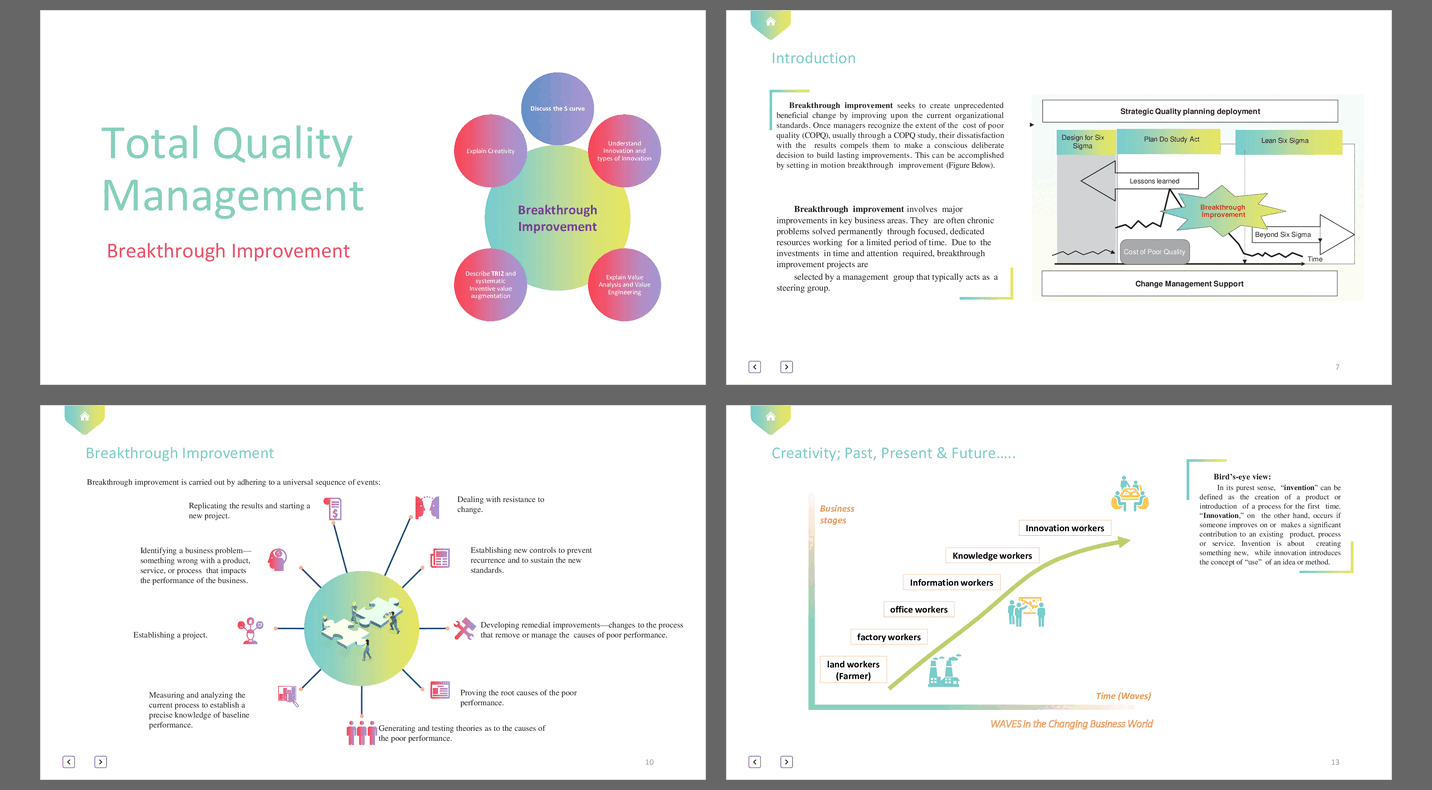
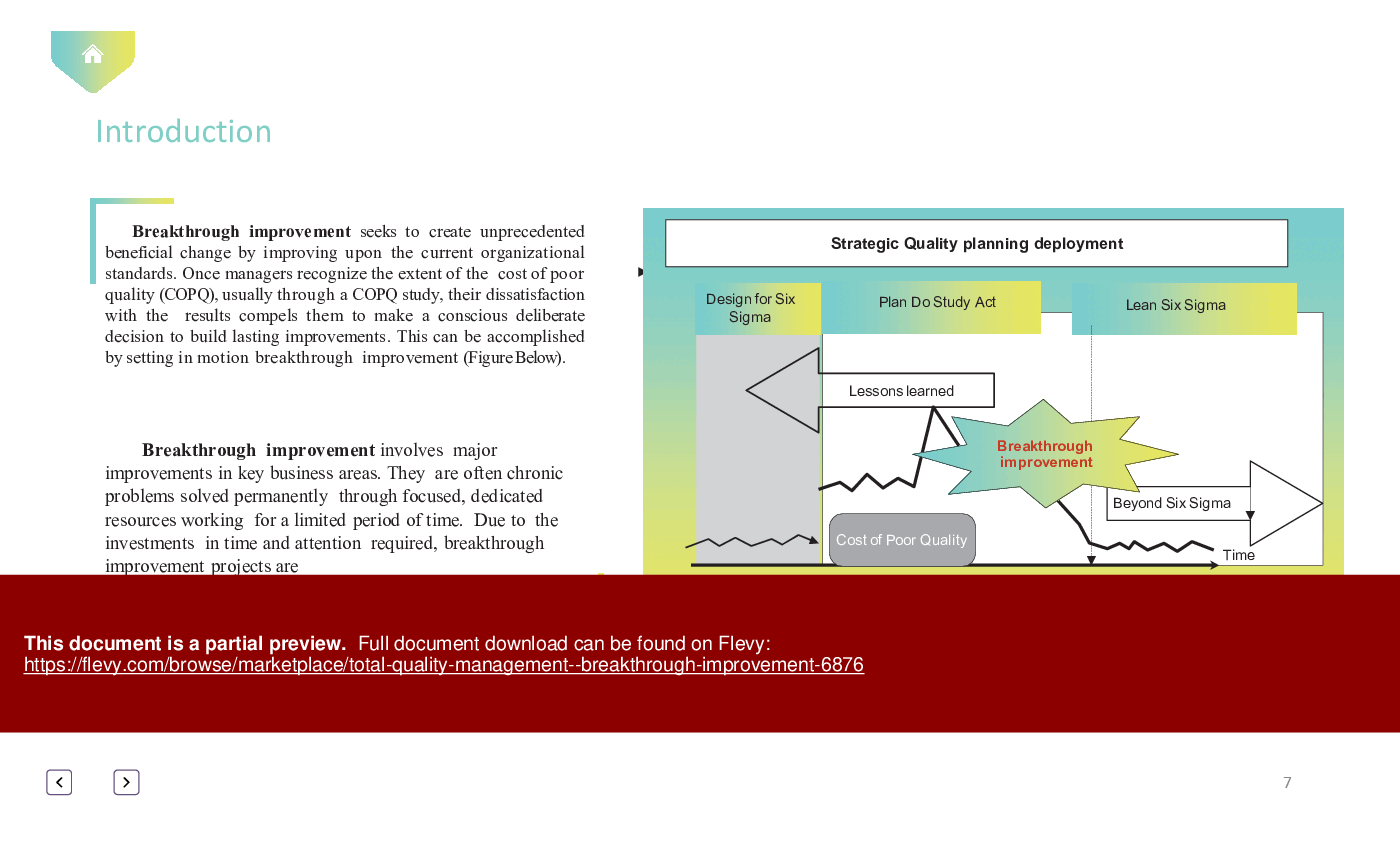
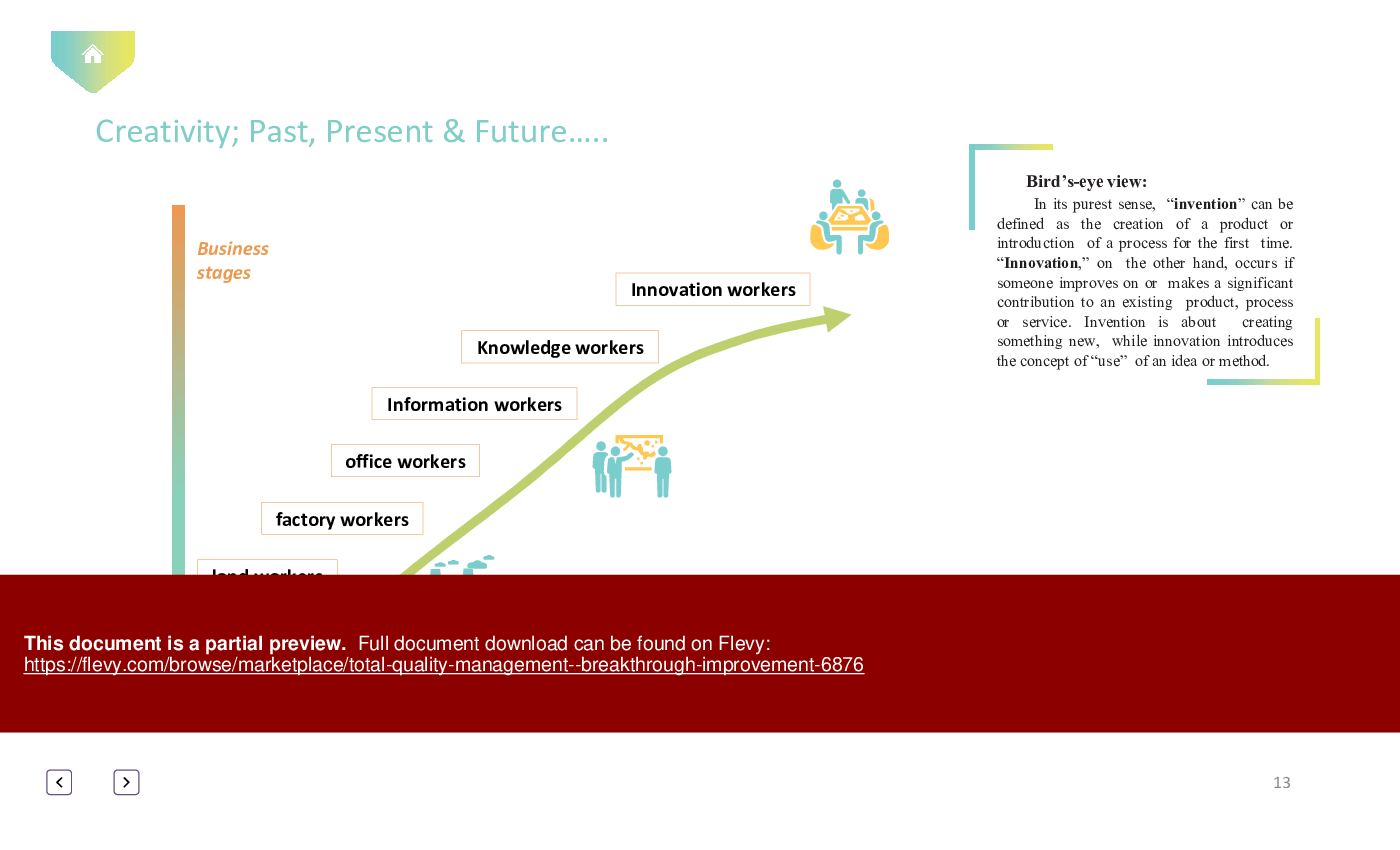
Breakthrough improvement refers to discontinuous change, as opposed to the gradual, continuous improvement philosophy of Kaizen. Breakthrough improvements result from innovative and creative thinking; often these are motivated by stretch goals or breakthrough objectives.
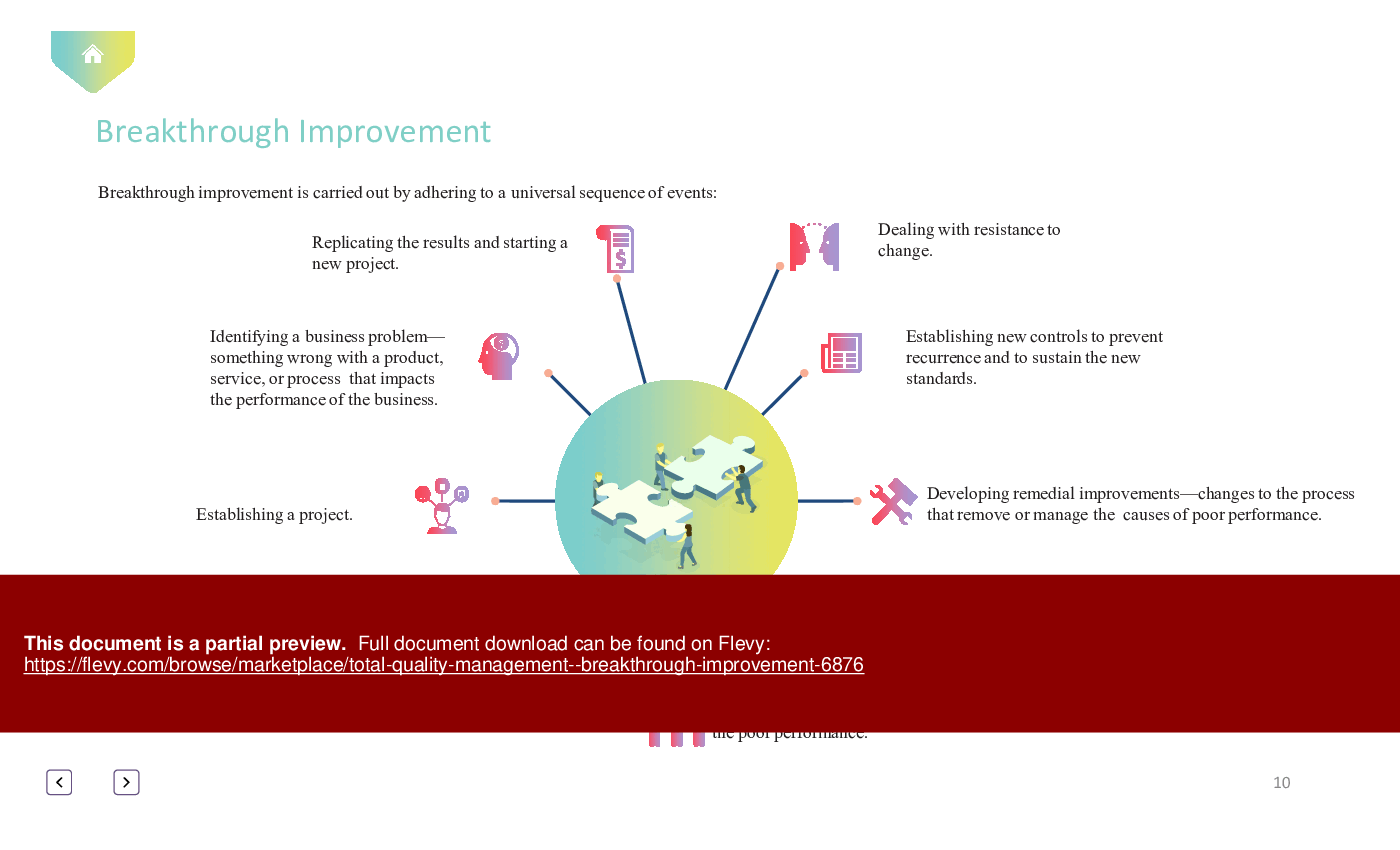
Breakthrough improvement is one component of the Juran trilogy. It refers to the meticulous uncovering and diagnosing of the root causes of chronic and costly problems within existing products or processes. It devises remedial changes that remove or manage the causes, and implement controls to prevent these from recurring.
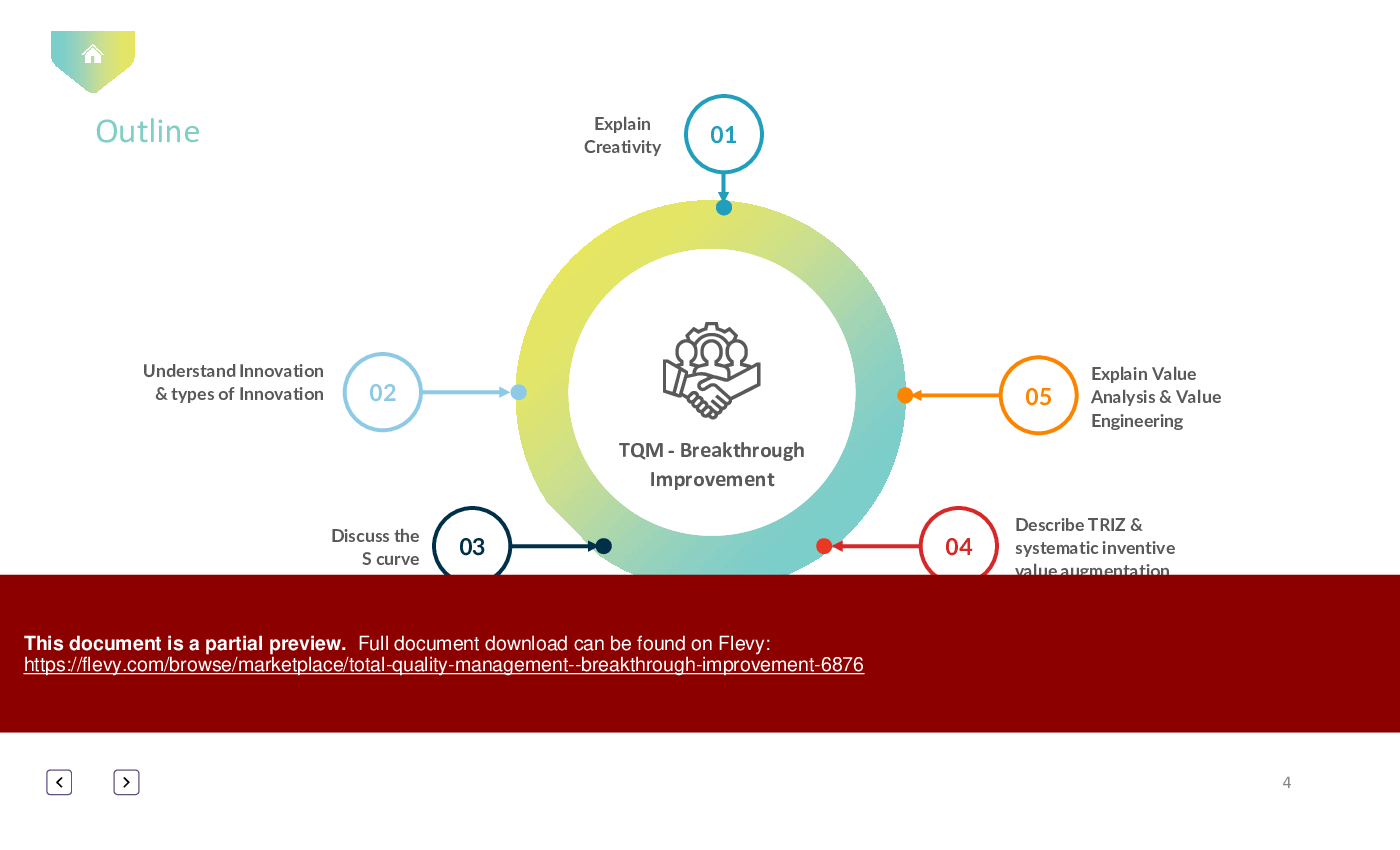
This Unit of TQM contains :
• Introduction
• Explain Creativity
• Understand Innovation & types of Innovation
• Discuss the S curve
• Describe TRIZ & systematic inventive value augmentation
• Explain Value Analysis & Value Engineering
This 72-Slide PowerPoint document explains in details the Breakthrough Improvement which seeks to create unprecedented beneficial change by improving upon the current organizational standards.
The document is easily customizable and contains many powerful figures, diagrams, ice-breakers, pictures, ... to get the holistic view of the concepts of the Quality Systems.
Got a question about the product? Email us at support@flevy.com or ask the author directly by using the "Ask the Author a Question" form. If you cannot view the preview above this document description, go here to view the large preview instead.
Executive Summary
The Total Quality Management - Breakthrough Improvement presentation is a robust guide designed for corporate executives and consultants aiming to enhance organizational performance through innovative strategies. This deck covers essential concepts such as creativity, innovation, value analysis, and TRIZ (theory of inventive problem solving). By utilizing this presentation, leaders can implement breakthrough improvements that lead to significant enhancements in quality and efficiency, ultimately driving sustainable competitive advantage in a rapidly evolving marketplace.
Who This Is For and When to Use
• Quality management professionals focused on driving organizational excellence
• Innovation leaders seeking to foster a culture of creativity and problem-solving
• Consultants advising on process improvement and strategic planning
• Project managers overseeing initiatives aimed at enhancing product and service quality
Best-fit moments to use this deck:
• During strategic planning sessions to identify areas for breakthrough improvements
• In workshops aimed at fostering creativity and innovative thinking among teams
• When conducting training on value engineering and analysis methodologies
• For presentations to stakeholders on quality improvement initiatives
Learning Objectives
• Define creativity and its role in driving innovation within organizations
• Build a comprehensive understanding of the S curve and its implications for product lifecycle management
• Establish methods for conducting value analysis and value engineering to enhance product value
• Describe TRIZ and its application in systematic inventive problem solving
• Discuss various types of innovation and their impact on organizational success
• Identify and implement breakthrough improvement strategies within existing processes
Table of Contents
• Introduction to Breakthrough Improvement (page 2)
• Understanding Innovation and Types of Innovation (page 4)
• Discussing the S Curve (page 6)
• Explaining Value Analysis and Value Engineering (page 60)
• Describing TRIZ and Systematic Inventive Value Augmentation (page 45)
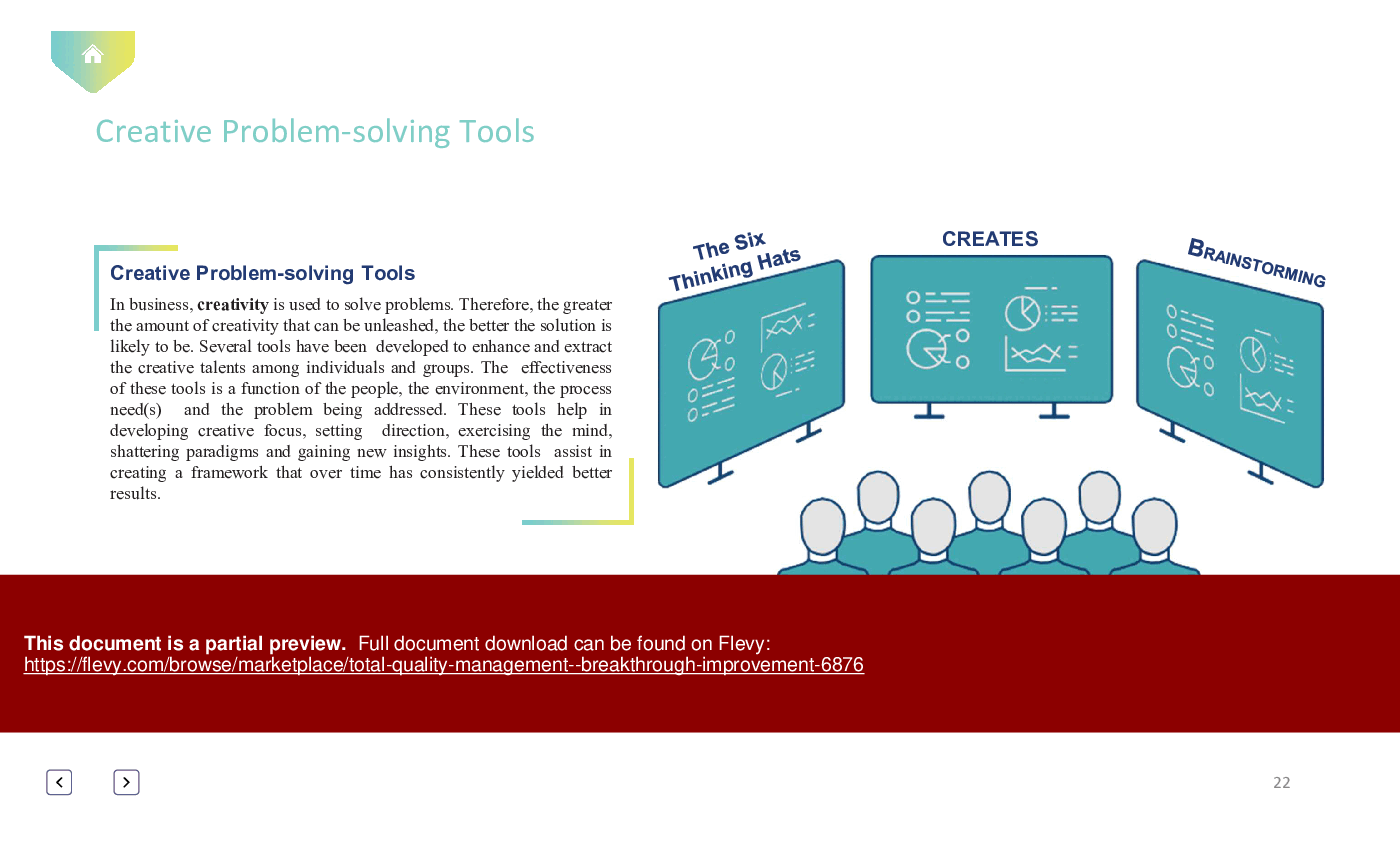
• Creative Problem-Solving Tools (page 22)
• Summary and Key Takeaways (page 71)
Primary Topics Covered
• Breakthrough Improvement - Focuses on discontinuous change driven by innovative thinking, contrasting with continuous improvement methods like Kaizen.
• Creativity - Defined as the ability to think and act in novel ways, essential for fostering innovation within organizations.
• S Curve - Describes the lifecycle of innovation, illustrating how new products evolve over time and the importance of strategic timing in market introduction.
• Value Analysis and Value Engineering - Systematic approaches aimed at improving product value by analyzing functions and reducing costs without compromising quality.
• TRIZ - A methodology for inventive problem solving that leverages patterns from existing patents to overcome technical challenges.
• Types of Innovation - Differentiates between incremental and radical innovations, highlighting their respective roles in market evolution.
Deliverables, Templates, and Tools
• Value analysis template for assessing product performance and cost efficiency
• TRIZ problem-solving framework to guide teams through inventive challenges
• S curve analysis tool for tracking product lifecycle and performance metrics
• Creativity enhancement workshop agenda to stimulate innovative thinking
• Value engineering checklist for evaluating and optimizing product functions
• Brainstorming session guide to facilitate effective idea generation
Slide Highlights
• Overview of breakthrough improvement strategies and their impact on organizational performance
• Insights into the S curve and its relevance to innovation lifecycle management
• Detailed explanation of TRIZ and its application in real-world problem-solving scenarios
• Case studies illustrating successful value analysis and engineering initiatives
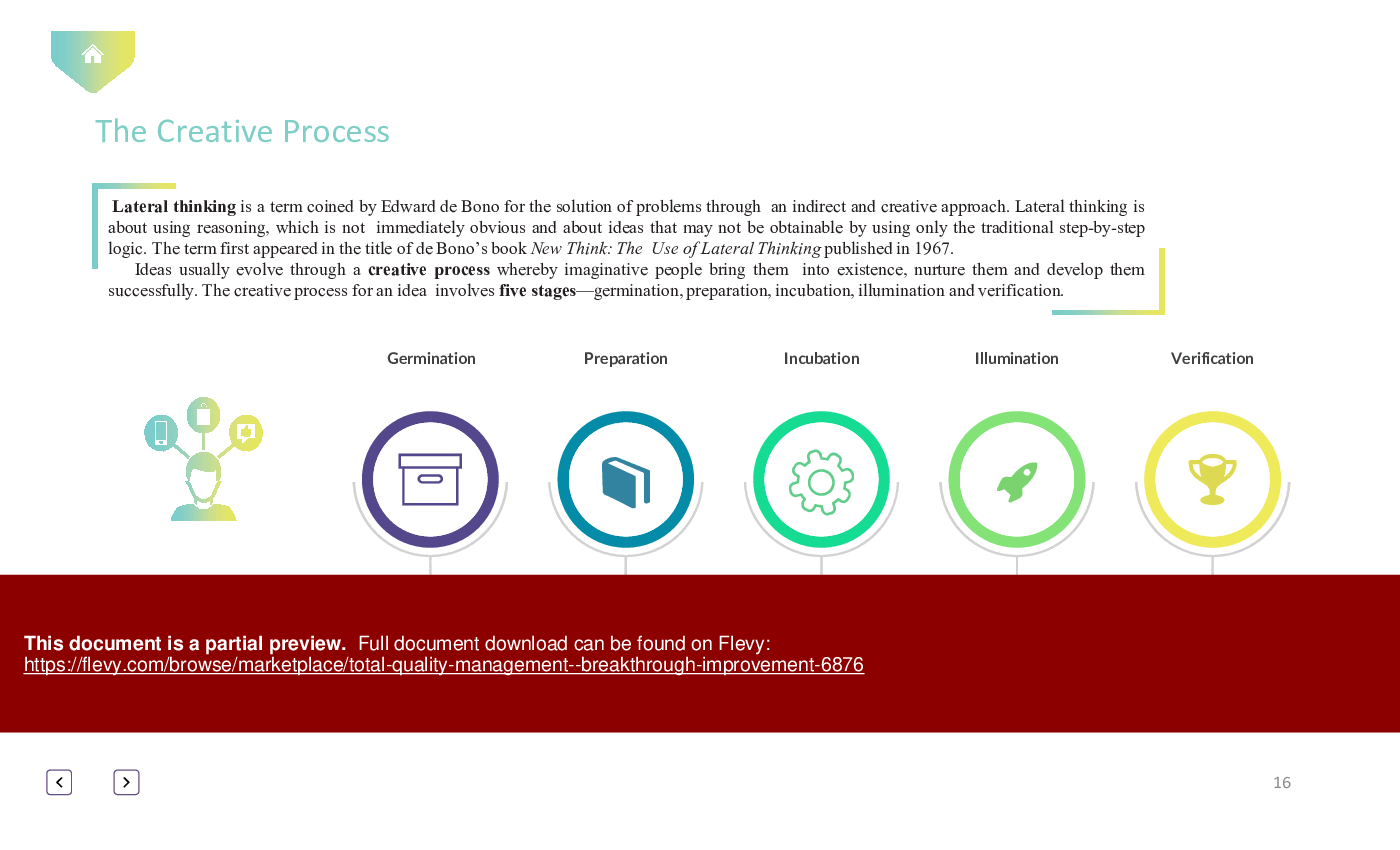
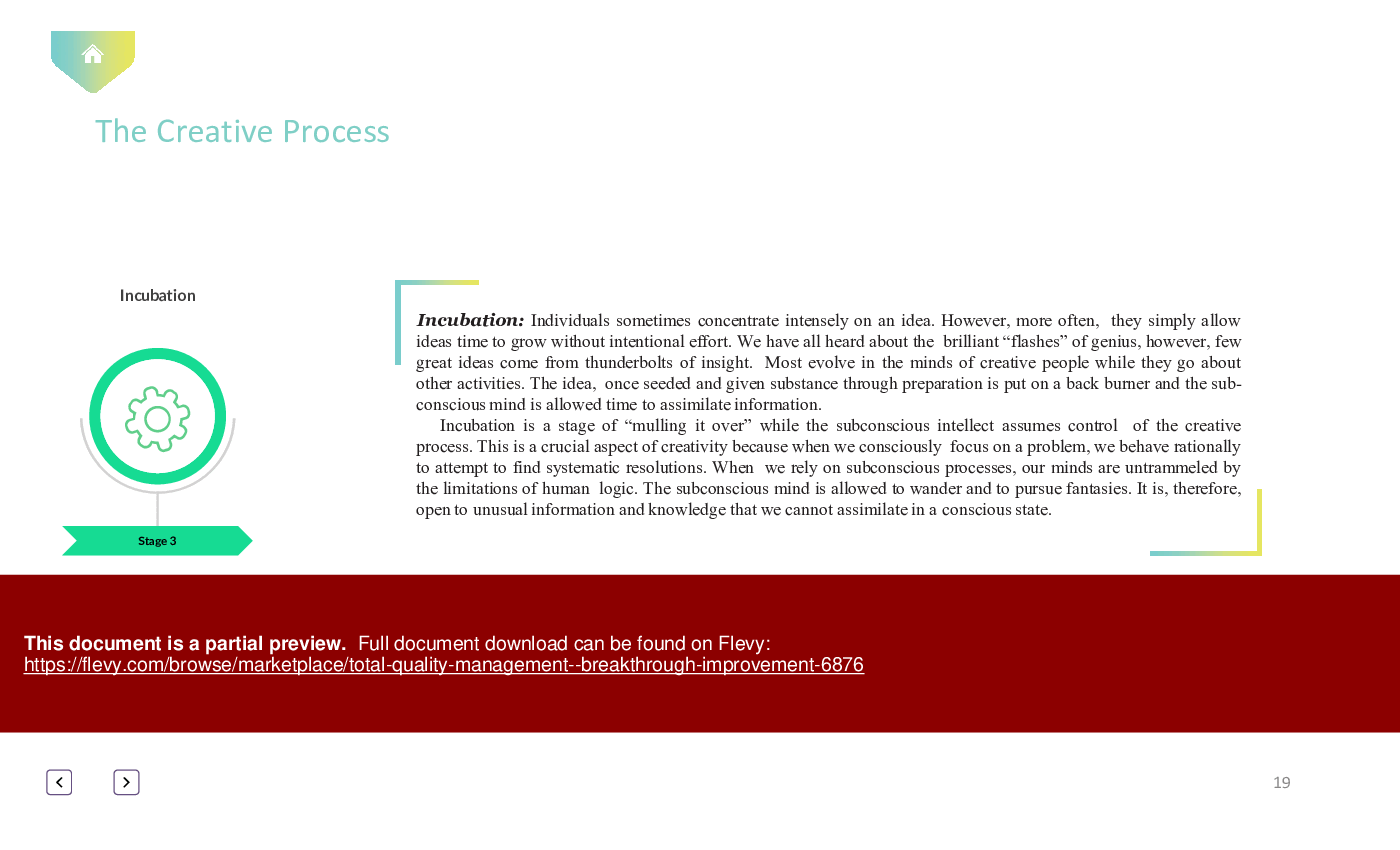
• Visual representation of the creative process and its stages from germination to verification
Potential Workshop Agenda
Introduction to Creativity and Innovation (60 minutes)
• Overview of creativity's role in business
• Discussion on types of innovation and their implications
Breakthrough Improvement Strategies (90 minutes)
• Identifying areas for improvement
• Group activities to brainstorm potential solutions
Value Analysis and Engineering Techniques (90 minutes)
• Introduction to value analysis methodologies
• Hands-on exercises to apply value engineering principles
TRIZ Problem-Solving Workshop (60 minutes)
• Overview of TRIZ principles
• Case study analysis and group problem-solving activities
Customization Guidance
• Tailor the presentation to reflect specific organizational goals and challenges
• Adjust case studies and examples to align with industry-specific contexts
• Incorporate company-specific terminology and metrics for relevance
• Modify workshop activities to suit the audience's experience level and expertise
Secondary Topics Covered
• The role of leadership in fostering a culture of innovation
• Techniques for managing resistance to change during improvement initiatives
• The importance of cross-functional collaboration in quality management
• Methods for measuring the impact of breakthrough improvements on business outcomes
FAQ
What is the difference between creativity and innovation?
Creativity is the ability to generate new ideas, while innovation involves implementing those ideas into practical applications that create value.
How can TRIZ be applied in our organization?
TRIZ can be utilized to systematically address inventive problems by leveraging existing solutions from various industries to overcome technical challenges.
What are the key benefits of value engineering?
Value engineering helps improve product value by reducing costs and enhancing functionality, leading to increased customer satisfaction and competitive advantage.
How do I measure the success of breakthrough improvement initiatives?
Success can be measured through metrics such as cost savings, quality improvements, and customer satisfaction scores, as well as tracking progress against predefined goals.
What types of innovation should we focus on?
Organizations should consider both incremental and radical innovations, as each plays a vital role in sustaining competitive advantage and responding to market changes.
How can we foster a culture of creativity within our teams?
Encouraging open communication, providing training on creative problem-solving techniques, and creating an environment that rewards innovative thinking can help foster creativity.
What is the S curve, and why is it important?
The S curve illustrates the lifecycle of innovation, showing how products progress from introduction to maturity, helping organizations strategize their innovation efforts effectively.
What challenges might we face when implementing value analysis?
Common challenges include resistance to change, lack of understanding of the process, and difficulty in quantifying value, which can be addressed through training and clear communication.
Glossary
• Breakthrough Improvement - Discontinuous change that leads to significant enhancements in quality and efficiency.
• Creativity - The ability to generate novel ideas and solutions.
• Innovation - The successful implementation of creative ideas into products or services.
• S Curve - A model illustrating the lifecycle of innovation and product performance over time.
• Value Analysis - A method for assessing product value by analyzing functions and costs.
• Value Engineering - A systematic approach to improving product value through function analysis.
• TRIZ - A theory of inventive problem solving based on patterns found in patents.
• Incremental Innovation - Gradual improvements made to existing products or processes.
• Radical Innovation - The introduction of entirely new products or technologies.
• Function Analysis - A technique used in value engineering to evaluate the functions of a product.
• Creative Problem Solving - Techniques used to generate innovative solutions to challenges.
• Brainstorming - A group creativity technique for generating ideas and solutions.
• Customer Satisfaction - A measure of how products or services meet customer expectations.
• Competitive Advantage - The favorable position an organization holds over its competitors.
• Organizational Culture - The shared values, beliefs, and practices within an organization.
• Change Management - The process of managing change within an organization effectively.
• Project Management - The discipline of planning, executing, and closing projects.
• Strategic Planning - The process of defining an organization's direction and making decisions on allocating resources.
• Continuous Improvement - Ongoing efforts to improve products, services, or processes.
• Leadership - The act of guiding and directing a group towards achieving goals.
Source: Best Practices in TQM PowerPoint Slides: Total Quality Management - Breakthrough Improvement PowerPoint (PPTX) Presentation Slide Deck, RadVector Consulting
This document is available as part of the following discounted bundle(s):

Save %!
Total Quality Management
This bundle contains 14 total documents. See all the documents to the right.
|
Receive our FREE presentation on Operational Excellence
This 50-slide presentation provides a high-level introduction to the 4 Building Blocks of Operational Excellence. Achieving OpEx requires the implementation of a Business Execution System that integrates these 4 building blocks. |