
This presentation has 114 slides and and comprises of the following:
• What is Kaizen?
• The 10 Commandments of Continuous Improvement
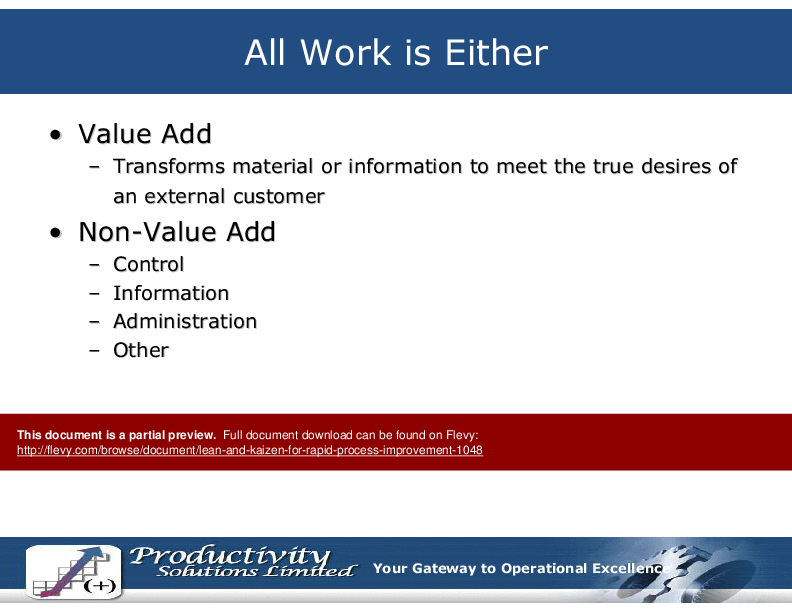
• Value versus Waste concept
• The 7 steps to eliminate or reduce waste:
1. Organize the workplace – 5S
2. Arrange everything to "flow"
3. Standardize work
4. Make small batches
5. Introduce Pull Systems
6. Make tiny batches
7. Never stop continuous improvement
Also included with this document is a bonus zip of 41 Lean documents (includes templates, case studies, articles, posters, charts, and more).
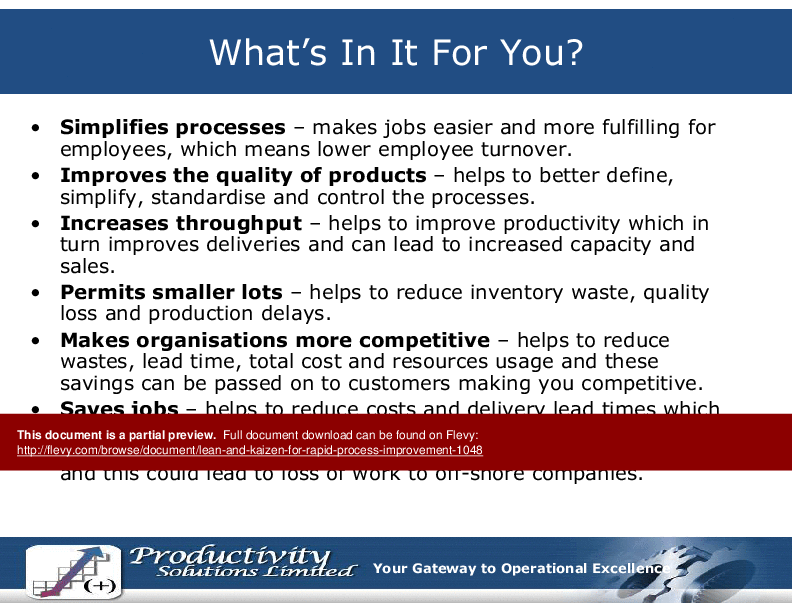
Lean and Kaizen methodologies are not just about reducing waste, but also about fostering a culture of continuous improvement and employee engagement. This presentation dives deep into the principles of Lean and Kaizen, offering actionable insights that can be implemented immediately. The focus is on simplifying processes, improving product quality, and increasing throughput, all of which contribute to a more competitive organization.
Kaizen events, described as intensive bursts of process improvement, are a key component of this approach. These events are designed to bring rapid and significant improvements to specific areas of your operations. The ultimate goal is human development, empowering employees to apply lean thinking daily and consistently generate innovative ideas. This document provides a comprehensive guide to conducting effective Kaizen events, ensuring that every team member is aligned with the organization's continuous improvement goals.
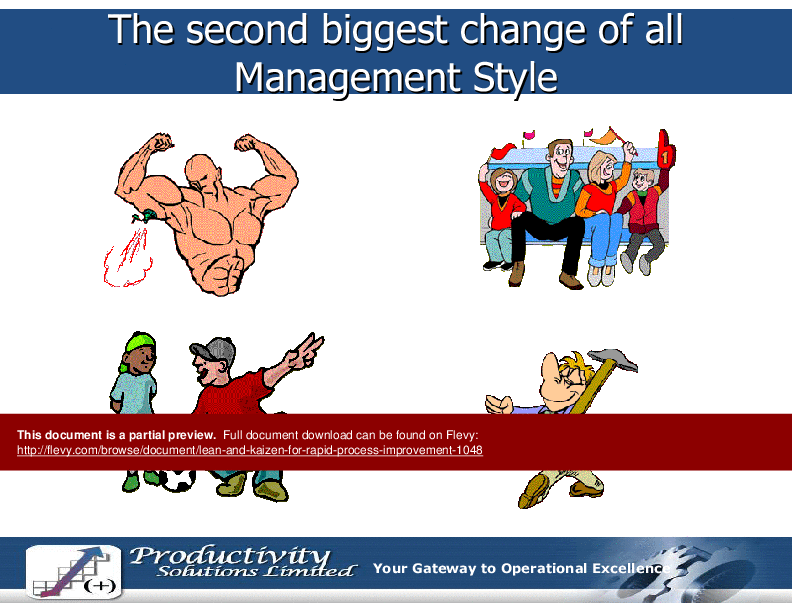
The presentation also highlights the importance of management style in driving these changes. Effective management is crucial for sustaining improvements and fostering a culture where continuous improvement is the norm. The document includes practical tools and templates for job design, change management, and training program development, making it a valuable resource for any organization committed to operational excellence. By adopting these practices, your organization can achieve significant cost savings, improved employee morale, and enhanced customer satisfaction.
Got a question about the product? Email us at support@flevy.com or ask the author directly by using the "Ask the Author a Question" form. If you cannot view the preview above this document description, go here to view the large preview instead.
Executive Summary
This presentation titled "Lean and Kaizen for Rapid Process Improvement" is designed to empower organizations to achieve operational excellence through the principles of Lean and Kaizen. Developed by a certified LSS Master Black Belt with extensive global training experience, this deck provides actionable insights into simplifying processes, improving product quality, and enhancing productivity. The content focuses on waste elimination, continuous improvement, and employee empowerment, enabling teams to implement effective change and drive sustainable results.
Who This Is For and When to Use
• Operations Managers seeking to enhance process efficiency
• Quality Assurance teams aiming to improve product standards
• Lean Practitioners and Continuous Improvement Leaders
• Executive teams focused on strategic operational excellence
• Employees at all levels engaged in process improvement initiatives
Best-fit moments to use this deck:
• During organizational change initiatives to introduce Lean methodologies
• In training sessions for teams focused on continuous improvement
• For workshops aimed at identifying and eliminating waste in processes
Learning Objectives
• Define Lean and Kaizen principles and their application in process improvement
• Identify and eliminate non-value-added activities within workflows
• Establish a culture of continuous improvement across all levels of the organization
• Implement the 5S methodology to organize and optimize the workplace
• Develop effective strategies for reducing lead times and inventory costs
• Create a framework for ongoing employee engagement in improvement initiatives
Table of Contents
• Introduction to Lean and Kaizen (page 2)
• Benefits of Lean Implementation (page 5)
• Understanding Kaizen Events (page 10)
• Employee Empowerment and Involvement (page 15)
• Waste Identification and Elimination (page 20)
• The 5S Methodology (page 25)
• Flow and Pull Systems (page 30)
• Standard Work and Takt Time (page 35)
• Continuous Improvement Strategies (page 40)
• Conclusion and Next Steps (page 45)
Primary Topics Covered
• Lean Principles - Lean focuses on maximizing customer value while minimizing waste, creating more value with fewer resources.
• Kaizen Events - Intensive, focused efforts to improve specific processes, emphasizing small, incremental changes that lead to significant results.
• Employee Empowerment - Engaging all employees in the improvement process, fostering a culture where everyone contributes ideas and solutions.
• Waste Reduction - Identifying and eliminating the 7 types of waste (defects, overproduction, waiting, non-effective use of resources, transportation, inventory, motion, excessive processing).
• 5S Methodology - A systematic approach to organizing the workplace to improve efficiency and effectiveness.
• Flow and Pull Systems - Creating uninterrupted workflows and producing only what is needed based on actual demand.
Deliverables, Templates, and Tools
• Kaizen Event planning template for structured process improvement sessions
• 5S implementation checklist to organize the workplace effectively
• Value Stream Mapping tools to visualize and analyze processes
• Standard Work documentation to ensure consistency in operations
• Takt Time calculation worksheet to align production with customer demand
• Continuous Improvement action plan template for tracking progress
Slide Highlights
• Visual representation of the Lean principles and their impact on operational efficiency
• Case studies showcasing successful Kaizen events and their outcomes
• Charts illustrating waste reduction metrics and improvements in productivity
• Diagrams of the 5S methodology in action within various workplace settings
• Flow charts demonstrating the transition from batch processing to continuous flow
Potential Workshop Agenda
Introduction to Lean and Kaizen (30 minutes)
• Overview of Lean principles and Kaizen philosophy
• Discussion on the importance of continuous improvement
Identifying Waste in Processes (60 minutes)
• Group activity to map current processes and identify waste
• Strategies for waste elimination
Implementing 5S in the Workplace (90 minutes)
• Hands-on workshop to practice 5S techniques
• Develop action plans for workplace organization
Creating a Culture of Continuous Improvement (60 minutes)
• Strategies for engaging employees in improvement initiatives
• Establishing metrics for tracking progress
Customization Guidance
• Tailor the presentation to reflect specific organizational goals and challenges
• Incorporate company-specific examples and case studies for relevance
• Adjust terminology and metrics to align with existing frameworks and practices
Secondary Topics Covered
• The role of leadership in fostering a culture of continuous improvement
• Techniques for measuring the impact of Lean initiatives
• Best practices for sustaining improvements over time
• The importance of communication in change management
FAQ
What is the primary goal of Lean and Kaizen?
The primary goal is to enhance operational efficiency by eliminating waste and continuously improving processes, ultimately delivering greater value to customers.
How can we measure the success of Lean initiatives?
Success can be measured through key performance indicators such as reduced lead times, improved quality metrics, and increased employee engagement in improvement activities.
What are the key components of a Kaizen event?
Key components include a defined scope, a cross-functional team, specific improvement targets, and a structured approach to identifying and implementing changes.
How does the 5S methodology contribute to Lean?
The 5S methodology organizes the workplace, reduces waste, and creates a more efficient environment, which is essential for sustaining Lean practices.
What challenges might we face when implementing Lean?
Common challenges include resistance to change, lack of employee engagement, and difficulty in sustaining improvements over time.
How can we encourage employee participation in improvement initiatives?
Encouraging participation can be achieved through training, recognition of contributions, and creating a safe environment for sharing ideas.
What is the significance of Takt Time in Lean?
Takt Time aligns production with customer demand, ensuring that resources are utilized efficiently and that products are delivered on time.
How often should we conduct Kaizen events?
Kaizen events should be conducted regularly, depending on organizational needs,, but frequent, smaller events can often yield better results than infrequent, larger ones.
Glossary
• Lean - A methodology focused on maximizing value by minimizing waste.
• Kaizen - A Japanese term meaning "continuous improvement."
• 5S - A workplace organization method consisting of Sort, Set in order, Shine, Standardize, and Sustain.
• Takt Time - The rate at which products must be produced to meet customer demand.
• Value Stream Mapping - A visual tool to analyze and design the flow of materials and information.
• Waste - Any activity that does not add value to the customer.
• Pull System - A production strategy that ensures items are made only as needed.

• Standard Work - Documented best practices for performing tasks consistently.
• Continuous Improvement - Ongoing efforts to improve products, services, or processes.
• Employee Empowerment - Involving employees in decision-making processes to enhance engagement and innovation.
• Flow - A process where work moves smoothly from one value-adding activity to another without interruptions.
• Kanban - A visual signaling system used to manage workflow and inventory.
• Jidoka - A principle of stopping production when a problem occurs to ensure quality.
• SMED - Single-Minute Exchange of Dies, a methodology for reducing setup times.
• Visual Management - Using visual tools to communicate information and performance metrics effectively.
• Root Cause Analysis - A method of identifying the underlying reasons for problems.
• Error Proofing (Poke Yoke) - Techniques designed to prevent errors in processes.
• Total Productive Maintenance - A proactive approach to maintaining equipment and preventing downtime.
• Continuous Flow - A production method where products are made continuously rather than in batches.
• Process Lead Time - The total time required to complete a process from start to finish.
• Cycle Time - The time it takes to produce one unit of product from start to finish.
Source: Best Practices in Operational Excellence, Process Improvement, Lean, Kaizen PowerPoint Slides: Lean and Kaizen for Rapid Process Improvement PowerPoint (PPT) Presentation Slide Deck, OpEx Academy NZ
|
Receive our FREE presentation on Operational Excellence
This 50-slide presentation provides a high-level introduction to the 4 Building Blocks of Operational Excellence. Achieving OpEx requires the implementation of a Business Execution System that integrates these 4 building blocks. |