
The recent global meltdown and recession has put great pressure on the organizations to produce the best quality products at the most affordable prices.
Organizations need to implement Total Quality Management in order to achieve organizational success as well as satisfying the customers so as to make more profit in the business arena.
This document on Quality covers an extensive compilation of topics to help you understand the Total Quality Management Principles. And, It can help develop a basic appreciation of quality concepts related to TQM's goal of continuous improvement.
An ISO audit, basically, means checking to ensure whether you are actually doing what you say you are doing. During an ISO audit, you will verify that the management system is in compliance with the relevant ISO standard and check to ensure that the actions taken to meet the quality objectives of the organization are suitable. Auditing is the onsite verification activity, such as inspection or examination, of a process or quality system, to ensure compliance to requirements. An audit can apply to an entire organization or might be specific to a function, process, or production step.
ISO 19011:2011 is used to carry out first- and second-party audits for risk management systems, quality management systems, energy management systems, safety management systems, health management systems, service management systems, records management systems, disaster management systems, document management systems, food safety management systems, emergency management systems, sustainability management systems, environmental management systems, business continuity management systems, information security management systems, supply chain security management systems, transportation safety management systems, organizational resilience management systems, and occupational health and safety management systems.
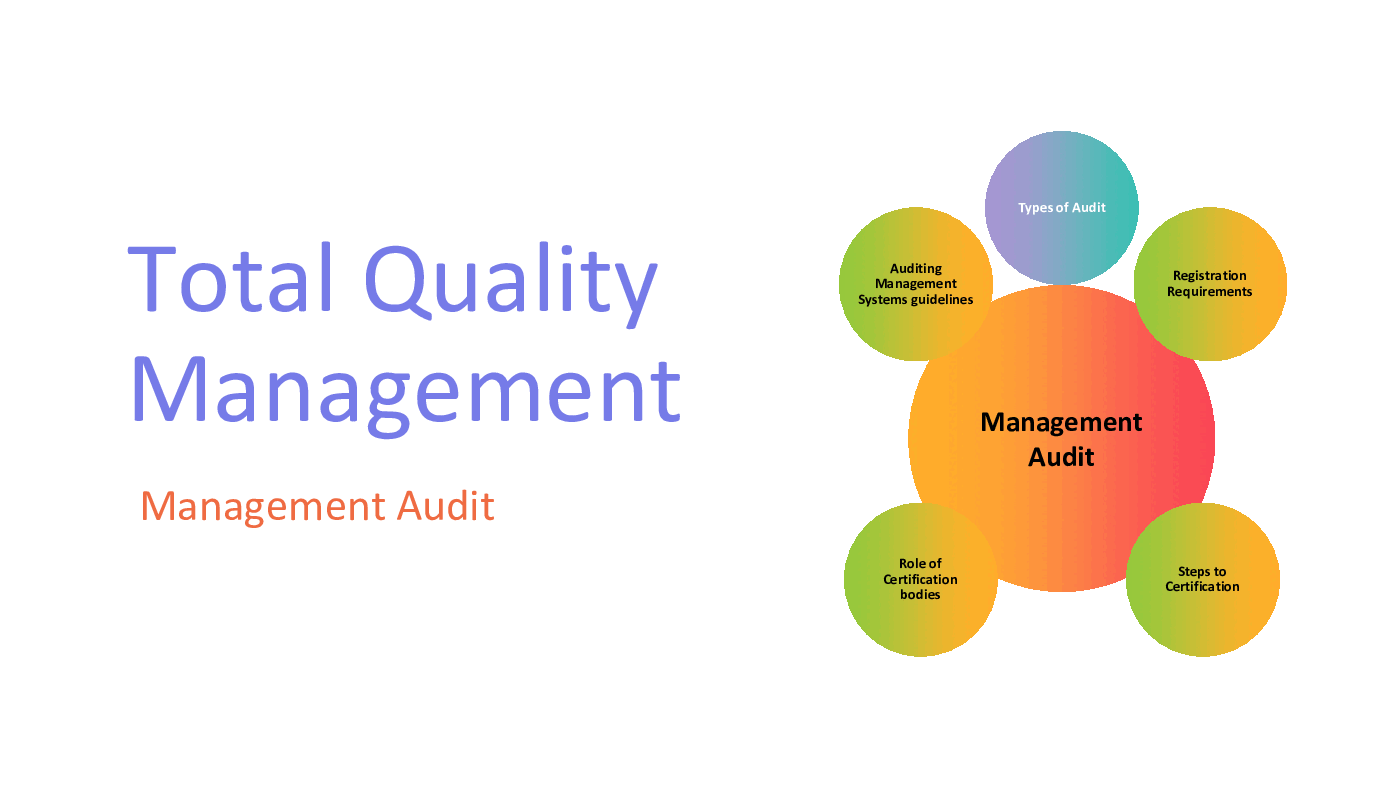
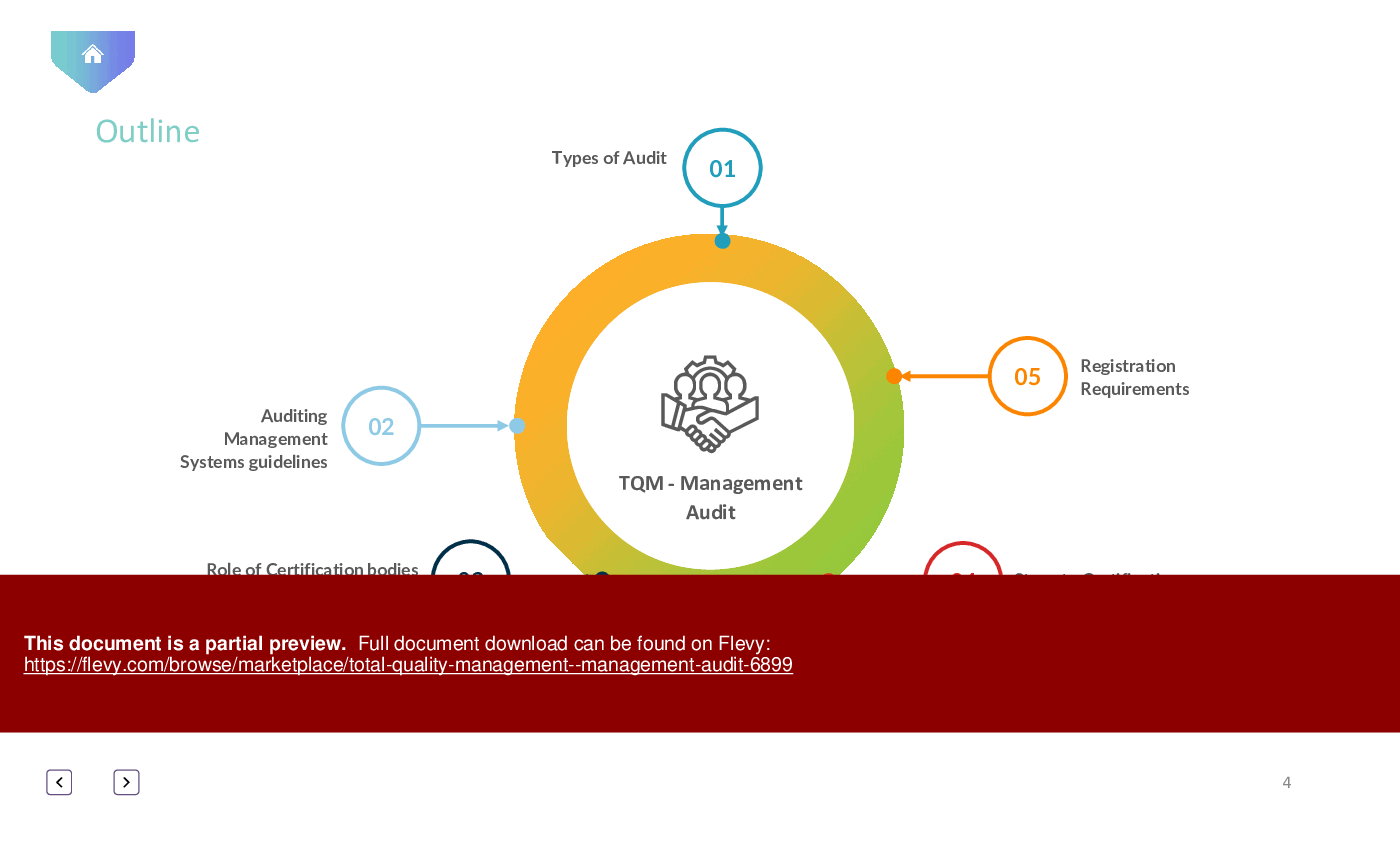
This Unit of TQM contains :
• Introduction
• Types of Audit
• Auditing Management Systems guidelines (ISO 19011:2011)
• Role of Certification bodies
• Steps to Certification
• Registration Requirements
This 93-Slide PowerPoint document explains in details the Management Audit (ISO 19011:2011—Guidelines for auditing management systems).
The document is easily customizable and contains many powerful figures, diagrams, ice-breakers, pictures, ... to get the holistic view of the concepts of the Quality Systems.
Got a question about the product? Email us at support@flevy.com or ask the author directly by using the "Ask the Author a Question" form. If you cannot view the preview above this document description, go here to view the large preview instead.
Executive Summary
The Total Quality Management - Management Audit presentation provides a comprehensive overview of auditing management systems, focusing on the principles and guidelines outlined in ISO 19011:2011. This presentation is designed for organizations seeking to understand the auditing process, including the roles of certification bodies, types of audits, and steps to achieve ISO certification. By utilizing this deck, corporate executives and consultants can effectively implement quality management systems and ensure compliance with international standards.
Who This Is For and When to Use
• Quality Assurance Managers responsible for implementing quality management systems
• Compliance Officers ensuring adherence to ISO standards
• Internal Auditors conducting first-party audits
• External Auditors performing second- and third-party audits
• Senior Management overseeing quality initiatives and certifications
Best-fit moments to use this deck:
• During training sessions for new auditors
• When preparing for an upcoming ISO certification audit
• In workshops focused on improving quality management practices
• For strategic planning meetings regarding quality assurance initiatives
Learning Objectives
• Define the principles of Total Quality Management and its relevance to auditing
• Identify the different types of audits and their specific purposes
• Explain the role of certification bodies in the auditing process
• Outline the steps necessary for achieving ISO certification
• Develop an understanding of the guidelines for auditing management systems
• Establish a framework for effective audit planning and execution
Table of Contents
• Introduction to Total Quality Management (page 2)
• Types of Audit (page 10)
• Role of Certification Bodies (page 5)
• Auditing Management Systems Guidelines (page 14)
• Steps to Certification (page 87)
• Registration Requirements (page 90)
Primary Topics Covered
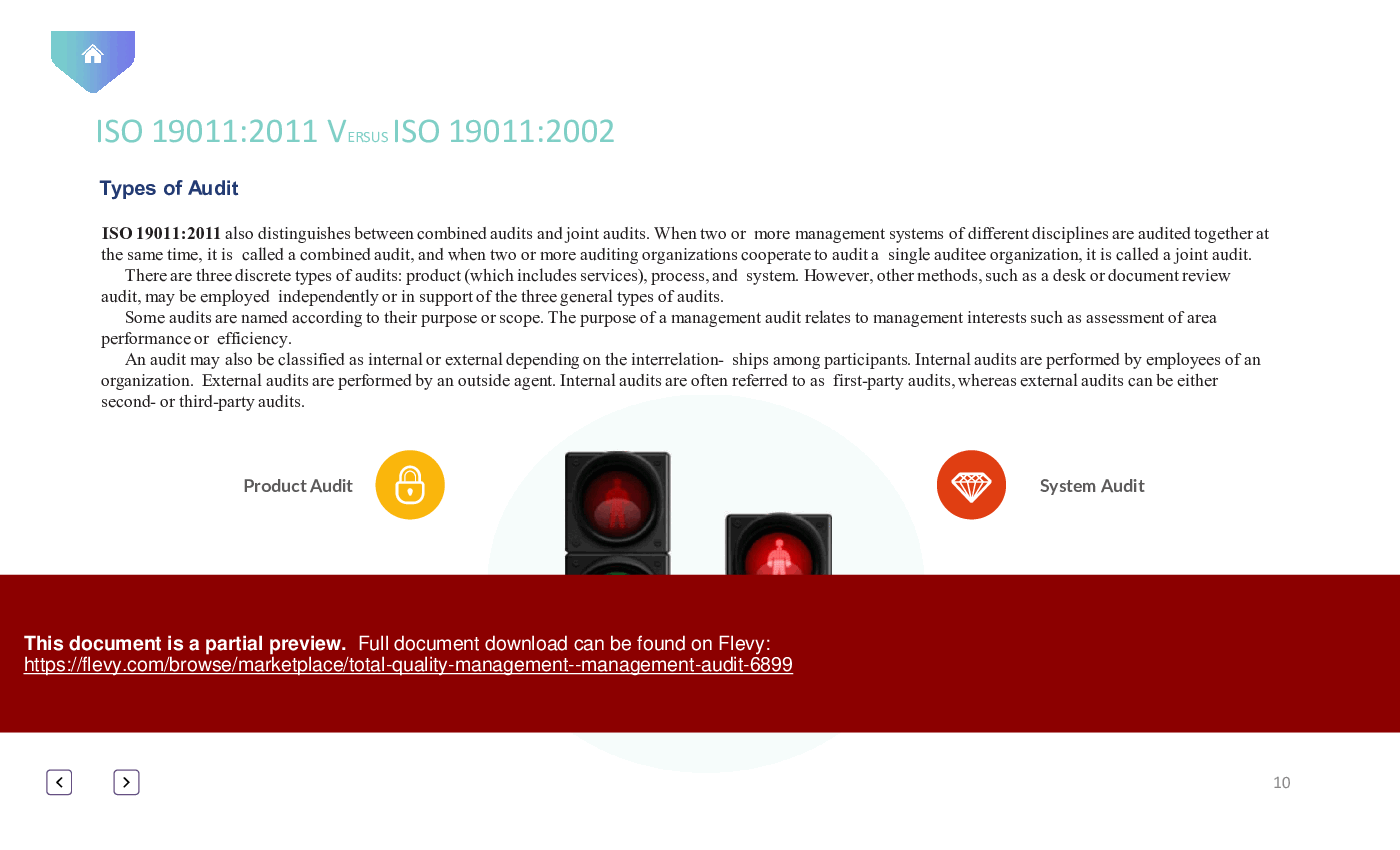
• Types of Audit - Differentiates between product, process, and system audits, explaining their unique objectives and methodologies.
• Role of Certification Bodies - Discusses the functions of certification bodies in ensuring compliance with ISO standards and their impact on quality management.
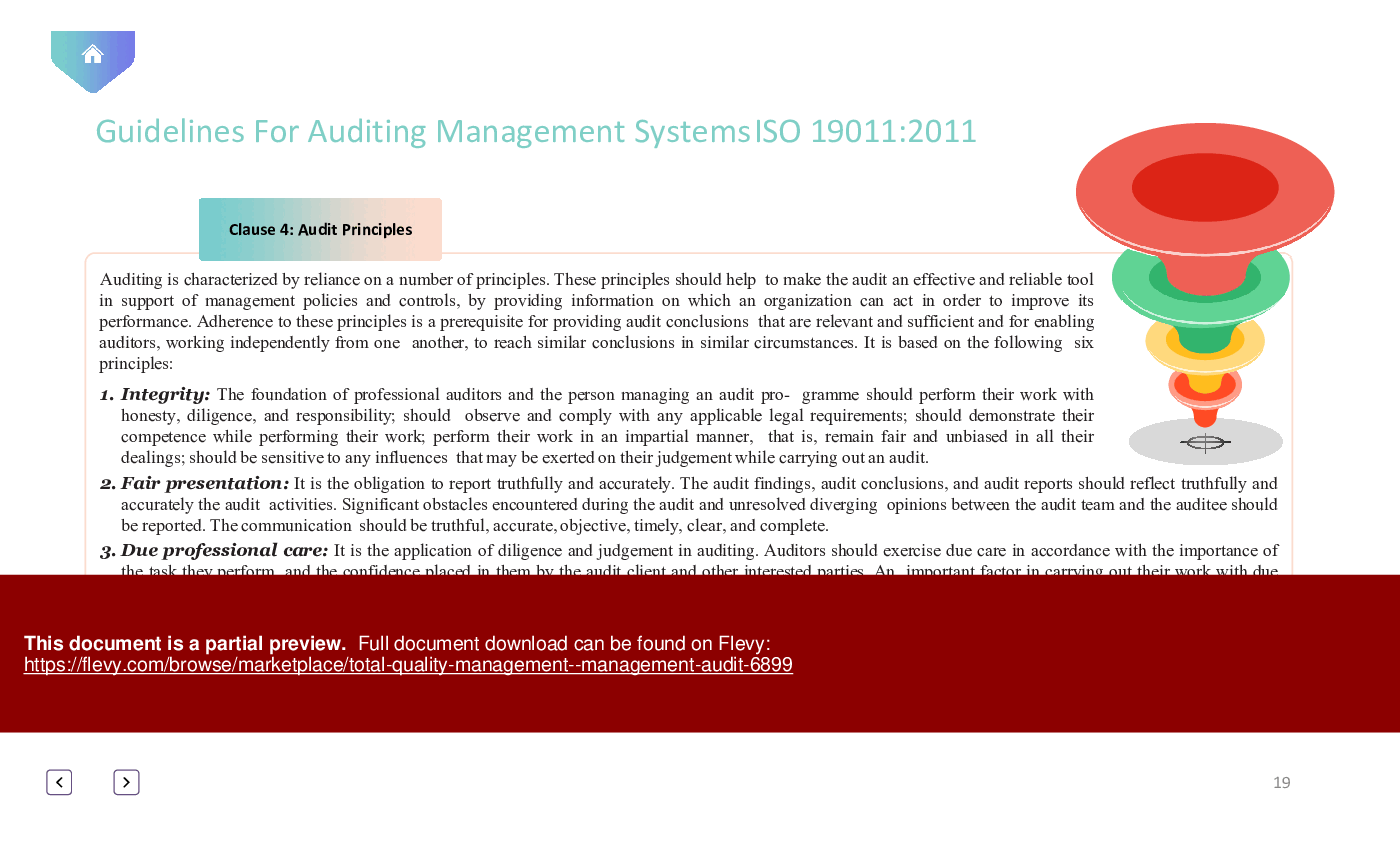
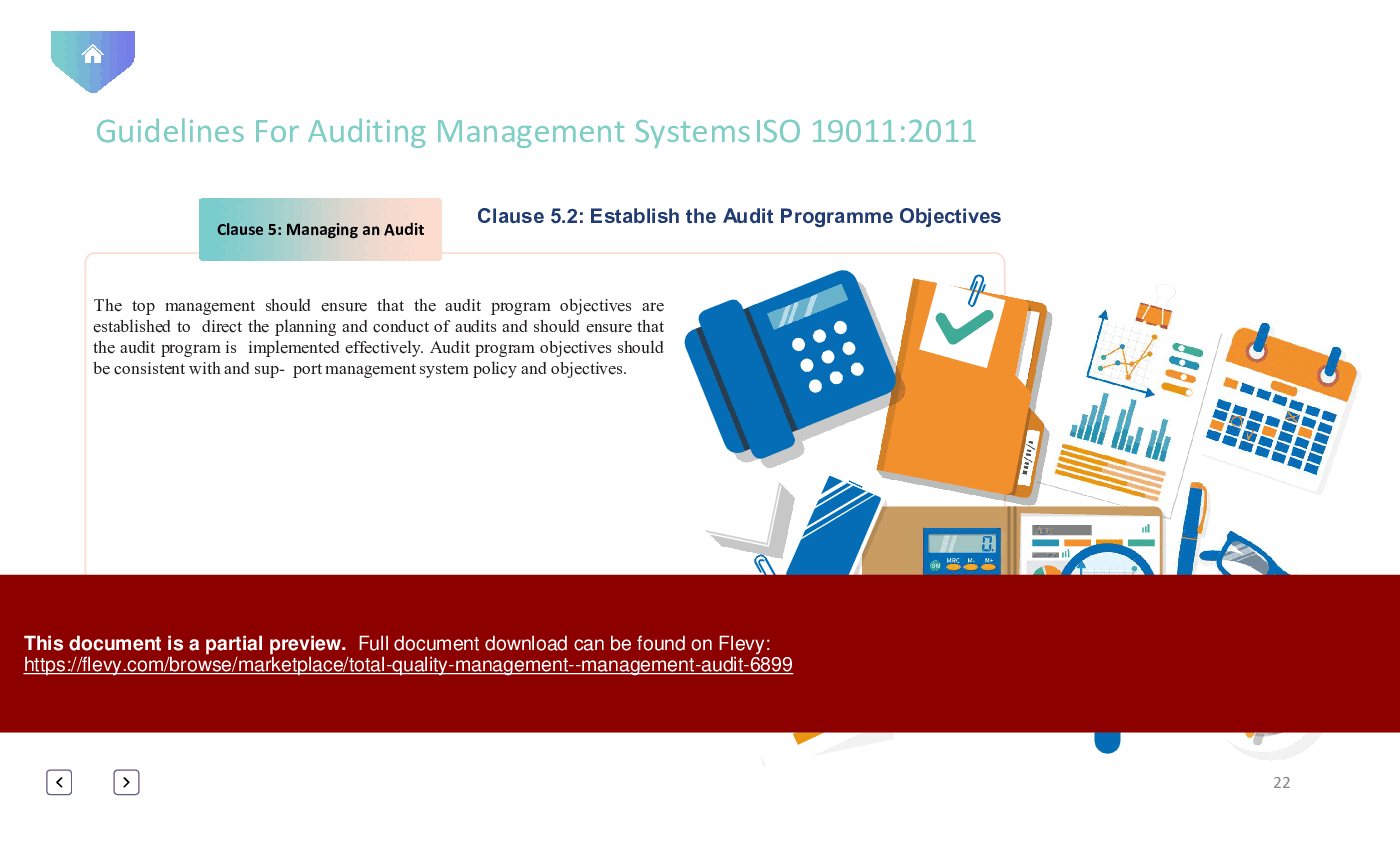
• Auditing Management Systems Guidelines - Provides an overview of ISO 19011:2011, detailing the principles, scope, and terms relevant to auditing practices.
• Steps to Certification - Outlines the sequential steps an organization must follow to achieve ISO certification, from initial application to follow-up surveillance.
• Registration Requirements - Describes the necessary conditions and documentation needed for successful registration with certification bodies.
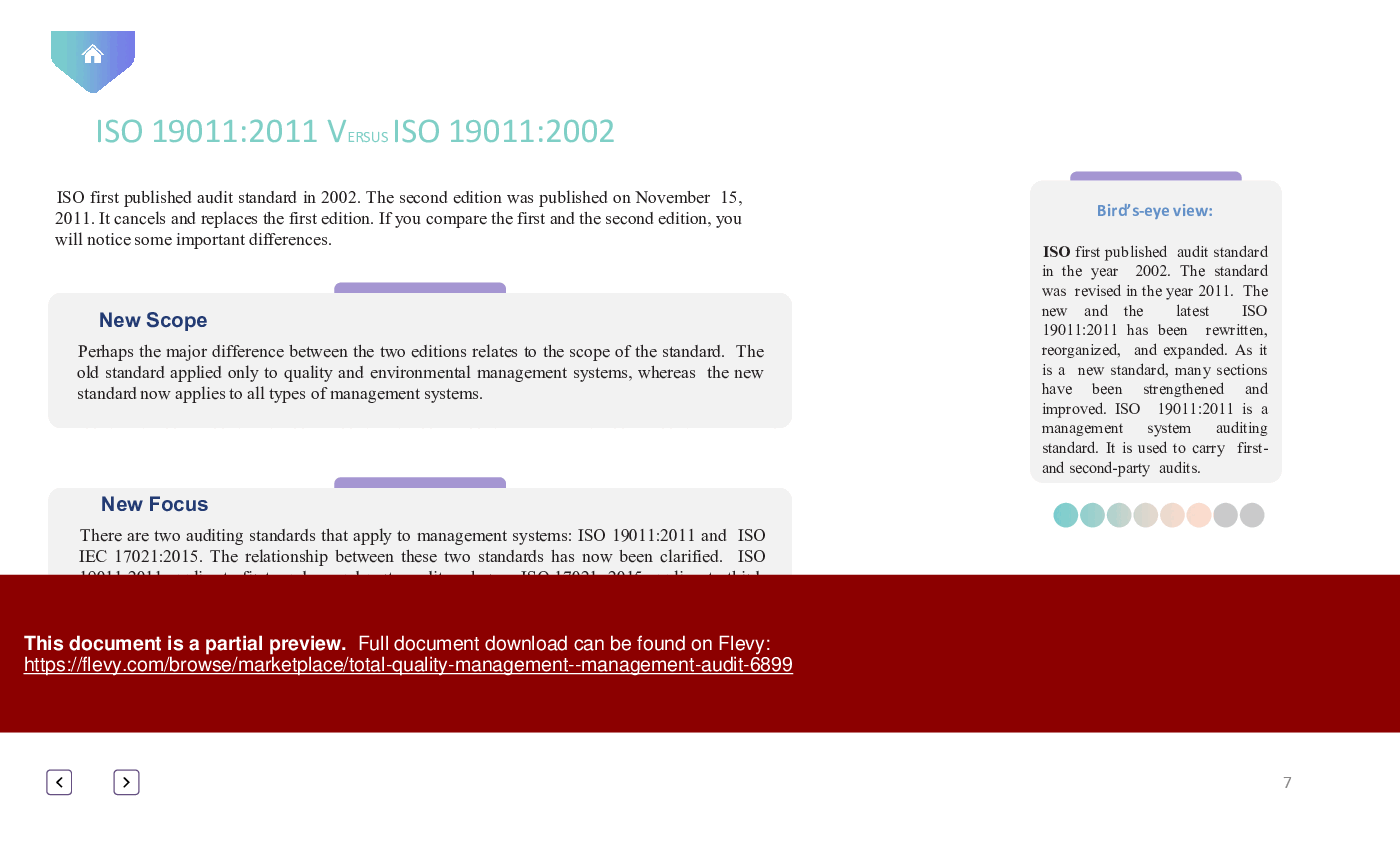
• ISO 19011:2011 vs. ISO 19011:2002 - Highlights the key differences between the 2 versions of the auditing standard, emphasizing updates and improvements.
Deliverables, Templates, and Tools
• Audit planning templates for organizing audit activities
• Checklists for conducting internal and external audits
• Guidelines for preparing audit reports and documentation
• Frameworks for evaluating auditor competence and performance
• Sample audit schedules for effective time management during audits
• Risk assessment tools to identify and mitigate potential audit challenges
Slide Highlights
• Overview of Total Quality Management principles and their application in audits
• Visual representation of the audit process, including preparation, performance, reporting, and follow-up
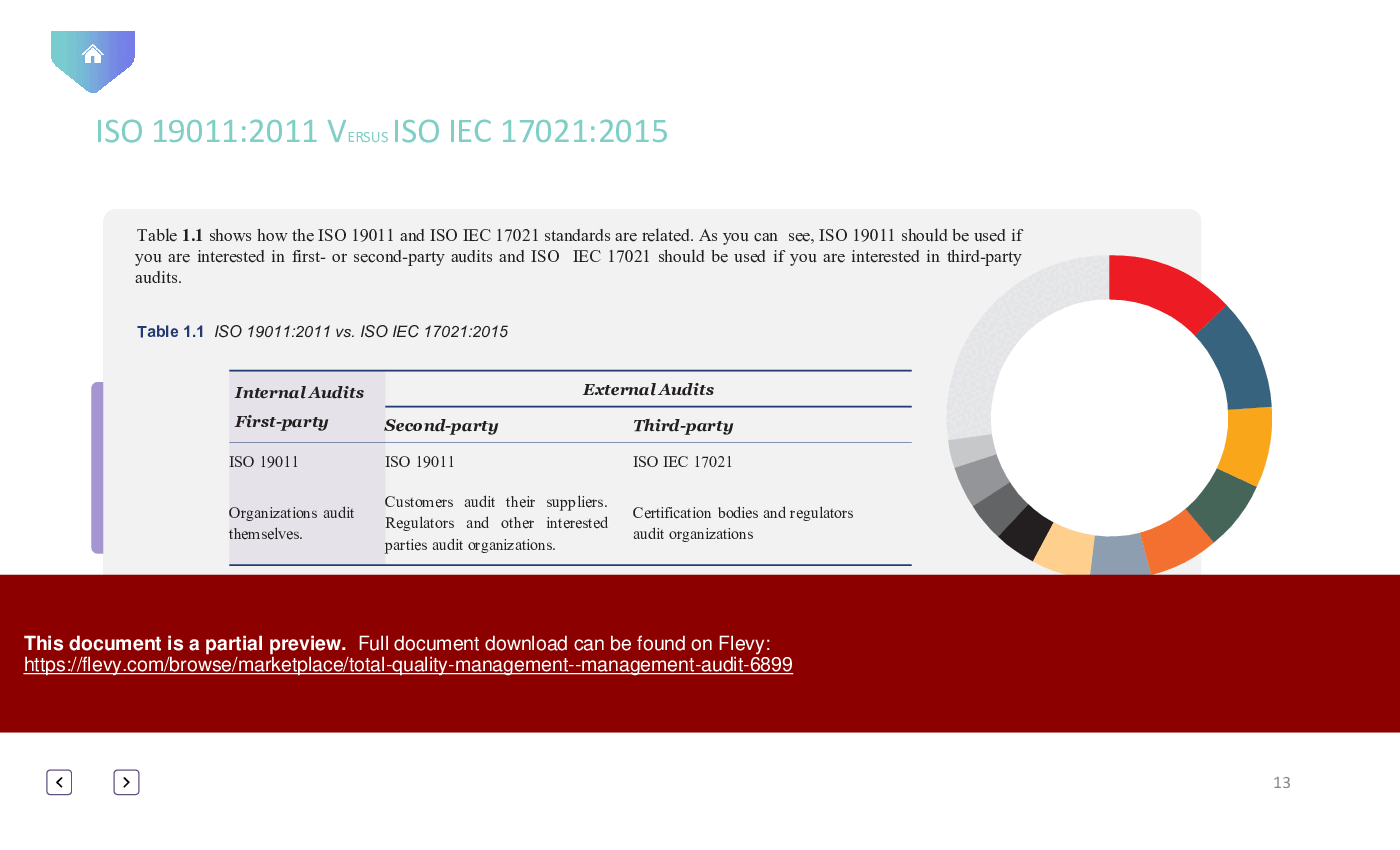
• Key differences between first-party, second-party, and third-party audits
• Detailed breakdown of the ISO certification process and its requirements
• Infographics illustrating the roles and responsibilities of auditors and certification bodies
Potential Workshop Agenda
Introduction to Auditing (60 minutes)
• Overview of Total Quality Management principles
• Discussion on the importance of auditing in quality management
Types of Audits (90 minutes)
• Detailed exploration of product, process, and system audits
• Group activity to identify audit types relevant to participants' organizations
ISO Certification Steps (120 minutes)
• Step-by-step guide through the certification process
• Case studies of successful ISO certification implementations
Best Practices in Auditing (90 minutes)
• Sharing of experiences and lessons learned from past audits
• Development of action plans for improving audit practices
Customization Guidance
• Tailor the audit planning templates to fit specific organizational needs and processes
• Adjust the training content based on the audience's familiarity with ISO standards
• Incorporate industry-specific examples to enhance relevance and engagement
• Modify the workshop agenda to focus on particular areas of interest or concern for participants
Secondary Topics Covered
• The significance of continuous improvement in quality management systems
• The impact of organizational culture on audit effectiveness
• Strategies for overcoming common challenges faced during audits
• The importance of stakeholder engagement in the auditing process
• The role of technology in facilitating efficient audit practices
Topic FAQ
Document FAQ
These are questions addressed within this presentation.
What is the purpose of an ISO audit?
An ISO audit verifies that an organization is adhering to the relevant ISO standards and effectively meeting its quality objectives through systematic evaluation.
What types of audits are there?
There are 3 main types of audits: product audits, process audits, and system audits, each serving different purposes in assessing compliance and performance.
How do certification bodies operate?
Certification bodies assess organizations against ISO standards, providing independent verification of compliance and issuing certificates upon successful audits.
What are the steps to achieve ISO certification?
The steps include application, document review, pre-assessment, full assessment, registration, and follow-up surveillance to ensure ongoing compliance.
What is the role of internal auditors?
Internal auditors conduct first-party audits to evaluate compliance with internal policies and external standards, identifying areas for improvement.
How can organizations prepare for an ISO audit?
Organizations should establish a robust management system, conduct internal audits, and ensure all documentation is complete and accessible before the audit.
What is the significance of the ISO 19011:2011 standard?
ISO 19011:2011 provides guidelines for auditing management systems, ensuring that audits are conducted consistently and effectively across various management disciplines.
What are the benefits of obtaining ISO certification?
ISO certification enhances credibility, improves operational efficiency, and demonstrates commitment to quality and continuous improvement to stakeholders.
Glossary
• Audit - A systematic examination of a management system to determine its compliance with specified requirements.
• Certification Body - An organization that conducts audits and issues certificates confirming compliance with ISO standards.
• ISO 19011:2011 - The international standard providing guidelines for auditing management systems.
• First-Party Audit - An internal audit conducted by an organization on its own management system.
• Second-Party Audit - An audit performed by a customer on a supplier's management system.
• Third-Party Audit - An independent audit conducted by a certification body.
• Nonconformity - A failure to meet specified requirements during an audit.
• Management System - A set of interrelated elements used by an organization to establish policies and achieve objectives.
• Accreditation - The process of evaluating certification bodies against recognized standards to ensure their competence.
• Quality Management System (QMS) - A structured system that documents processes, procedures, and responsibilities for achieving quality policies and objectives.
• Continuous Improvement - Ongoing efforts to enhance products, services, or processes over time.
• Risk-Based Auditing - An approach that prioritizes audit resources based on the significance of risks identified in the management system.
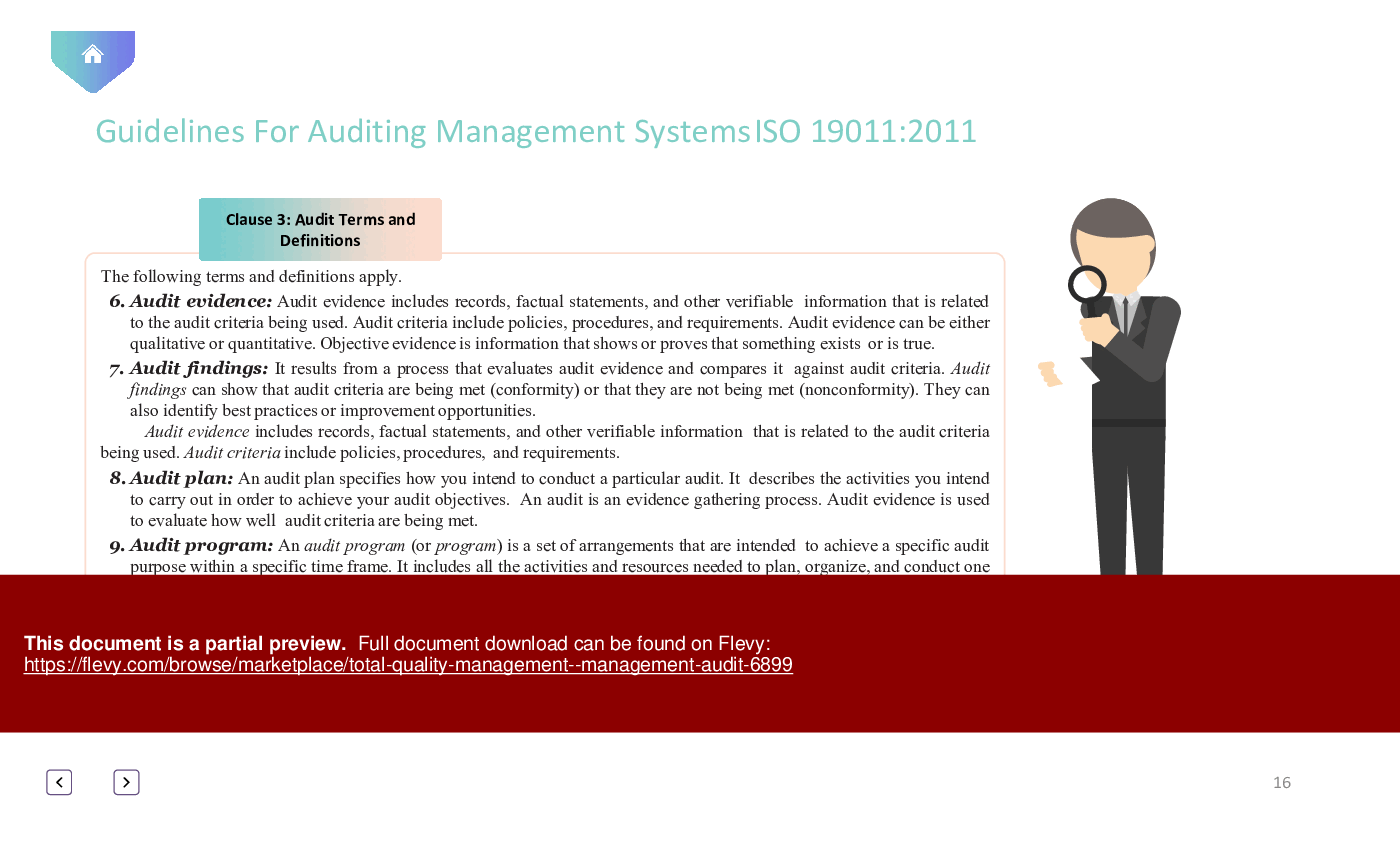
• Audit Evidence - Information collected during an audit to support findings and conclusions.
• Audit Plan - A document outlining the objectives, scope, and methodology for conducting an audit.
• Corrective Action - Steps taken to eliminate the causes of nonconformities to prevent recurrence.
• Surveillance Audit - A follow-up audit conducted to ensure ongoing compliance with ISO standards after certification.
• Stakeholder Engagement - Involvement of individuals or groups who have an interest in the outcomes of the audit process.
• Management Review - A formal evaluation of the management system's performance by top management.
• Internal Audit - An evaluation conducted by employees of the organization to assess compliance with internal policies and standards.
• External Audit - An evaluation conducted by an independent party to assess compliance with external standards.
Source: Best Practices in TQM PowerPoint Slides: Total Quality Management - Management Audit PowerPoint (PPTX) Presentation Slide Deck, RadVector Consulting
This document is available as part of the following discounted bundle(s):

Save %!
Total Quality Management
This bundle contains 14 total documents. See all the documents to the right.
|
Receive our FREE presentation on Operational Excellence
This 50-slide presentation provides a high-level introduction to the 4 Building Blocks of Operational Excellence. Achieving OpEx requires the implementation of a Business Execution System that integrates these 4 building blocks. |









