
The recent global meltdown and recession has put great pressure on the organizations to produce the best quality products at the most affordable prices.
Organizations need to implement Total Quality Management in order to achieve organizational success as well as satisfying the customers so as to make more profit in the business arena.
This document on Quality covers an extensive compilation of topics in order to introduce the Total Quality Management. It can help develop a basic appreciation of quality concepts related to TQM's goal of continuous improvement.
Total Quality Management (TQM) is an approach to business that looks critically at the products and services a company provides in relation to the processes it employs to create them. It also focuses on the workforce to ensure that outputs fully satisfy customer requirements.
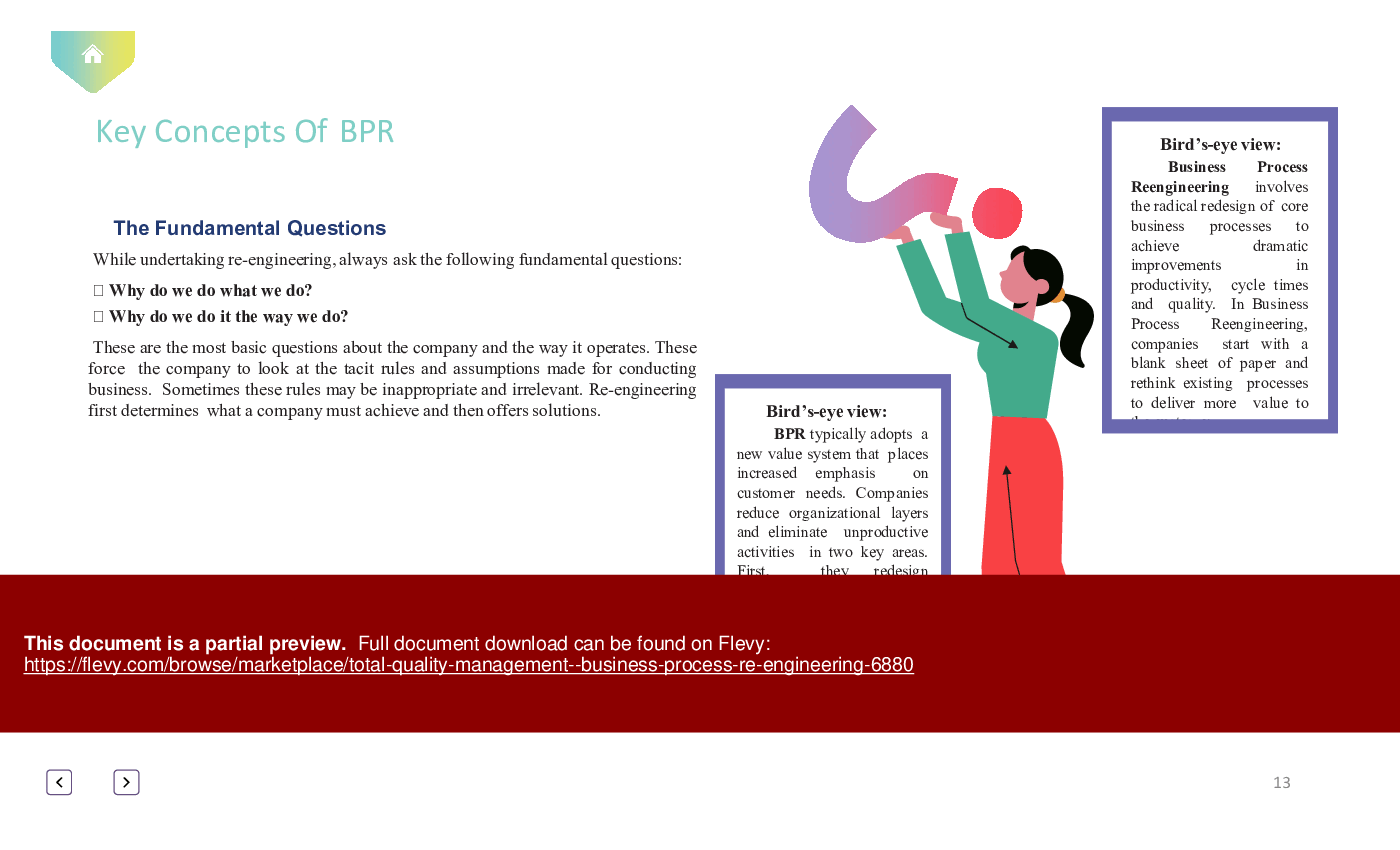
BPR is closely related to TQM because it is one of the best tools to achieve total quality and to improve a company's performance significantly. Both TQM and BPR primarily focus on customers, both are process-oriented and both involve cross-functional activities. While TQM aims at process improvement, BPR aims at drastic changes to improve a process, if possible discarding the existing process and developing an entirely new, improved process.
BPM is a holistic and systematic approach to achieve optimized business outcomes. It enables organizations to align business functions with customer needs, and helps executives determine ways to deploy, monitor, and measure the company's resources. When properly executed, BPM has the ability to enhance the efficiency and productivity, reduce costs, and minimize errors and risks, thereby optimizing results.
This Unit contains :
• Introduction
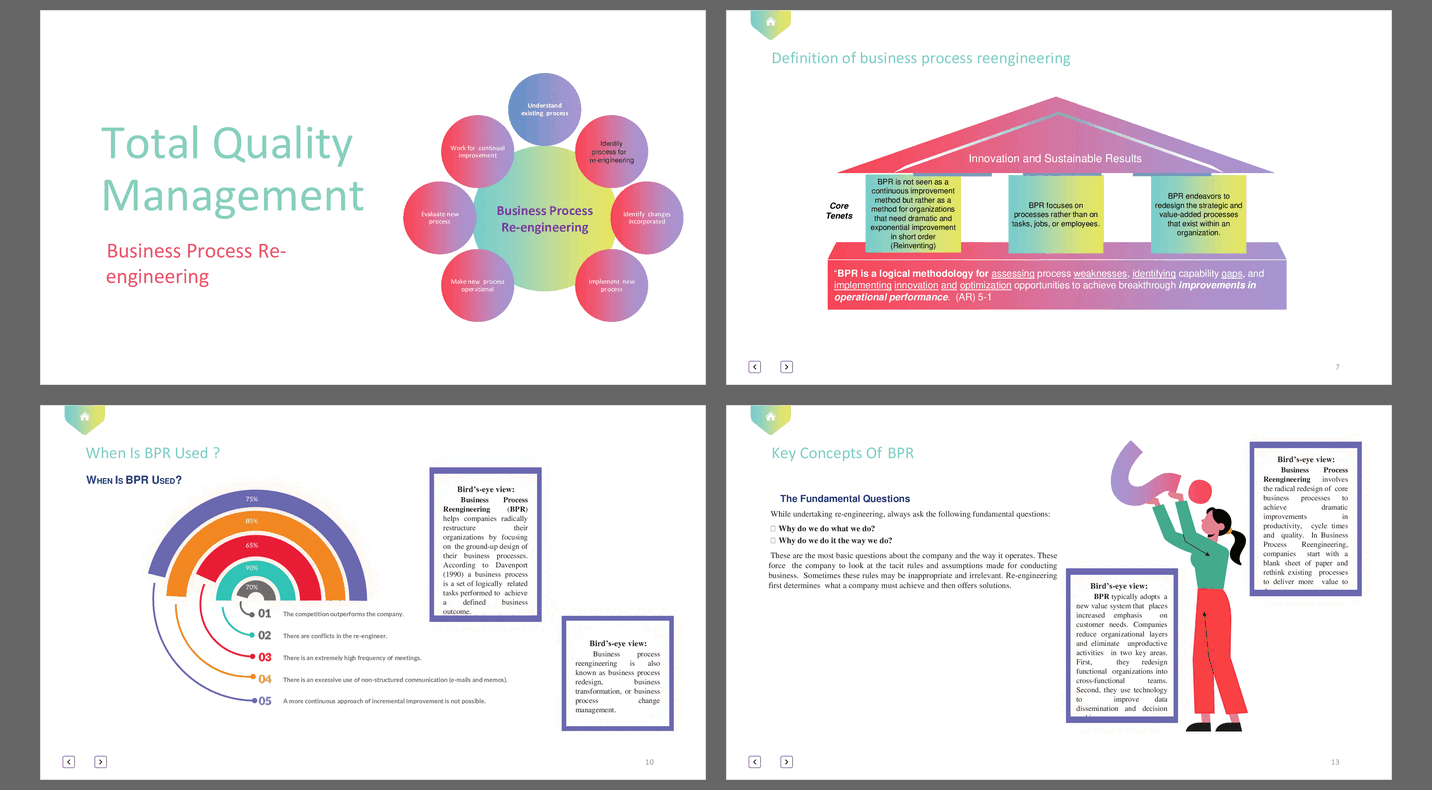
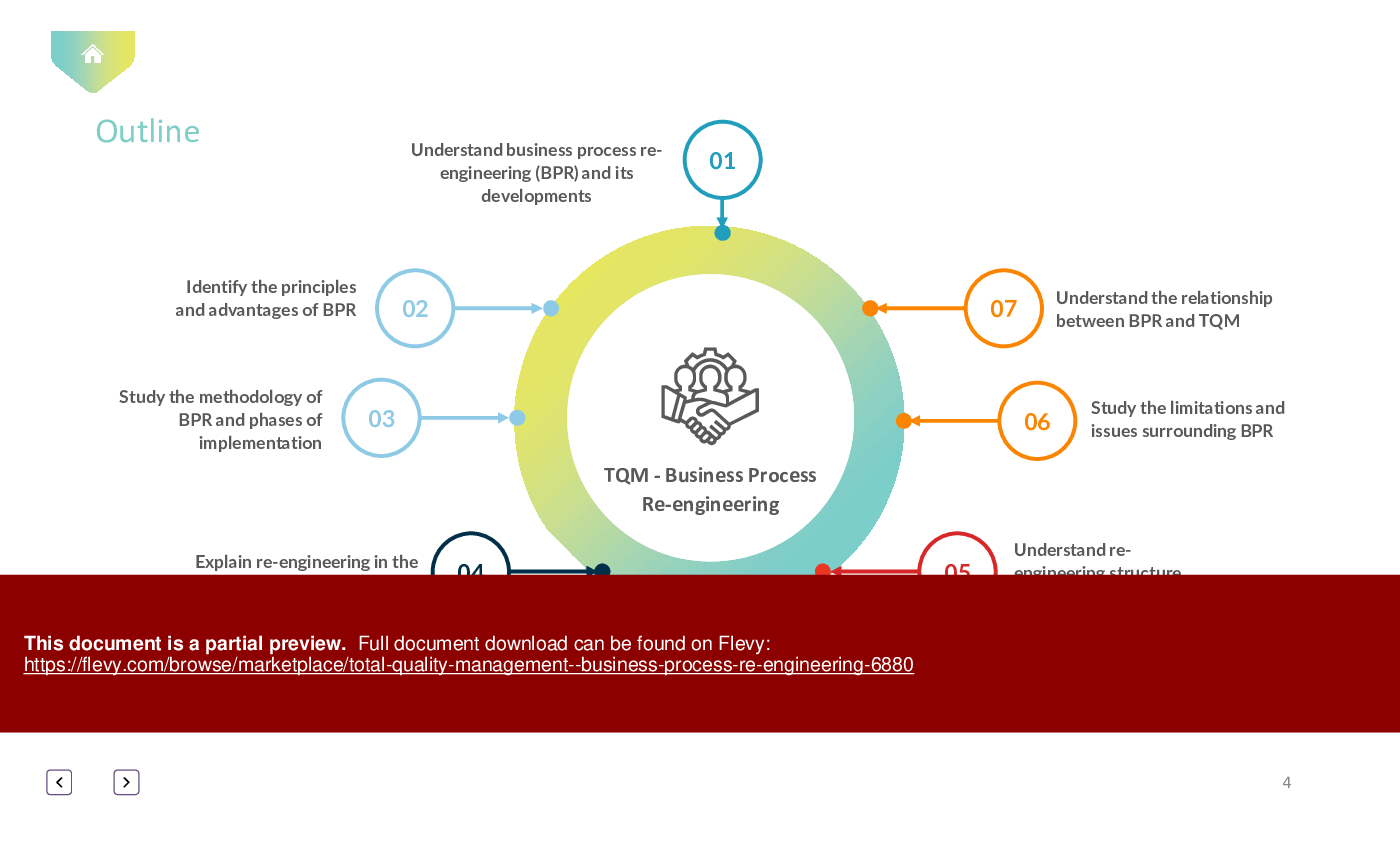
• Understand business process re-engineering (BPR) and its developments
• Identify the principles and advantages of BPR
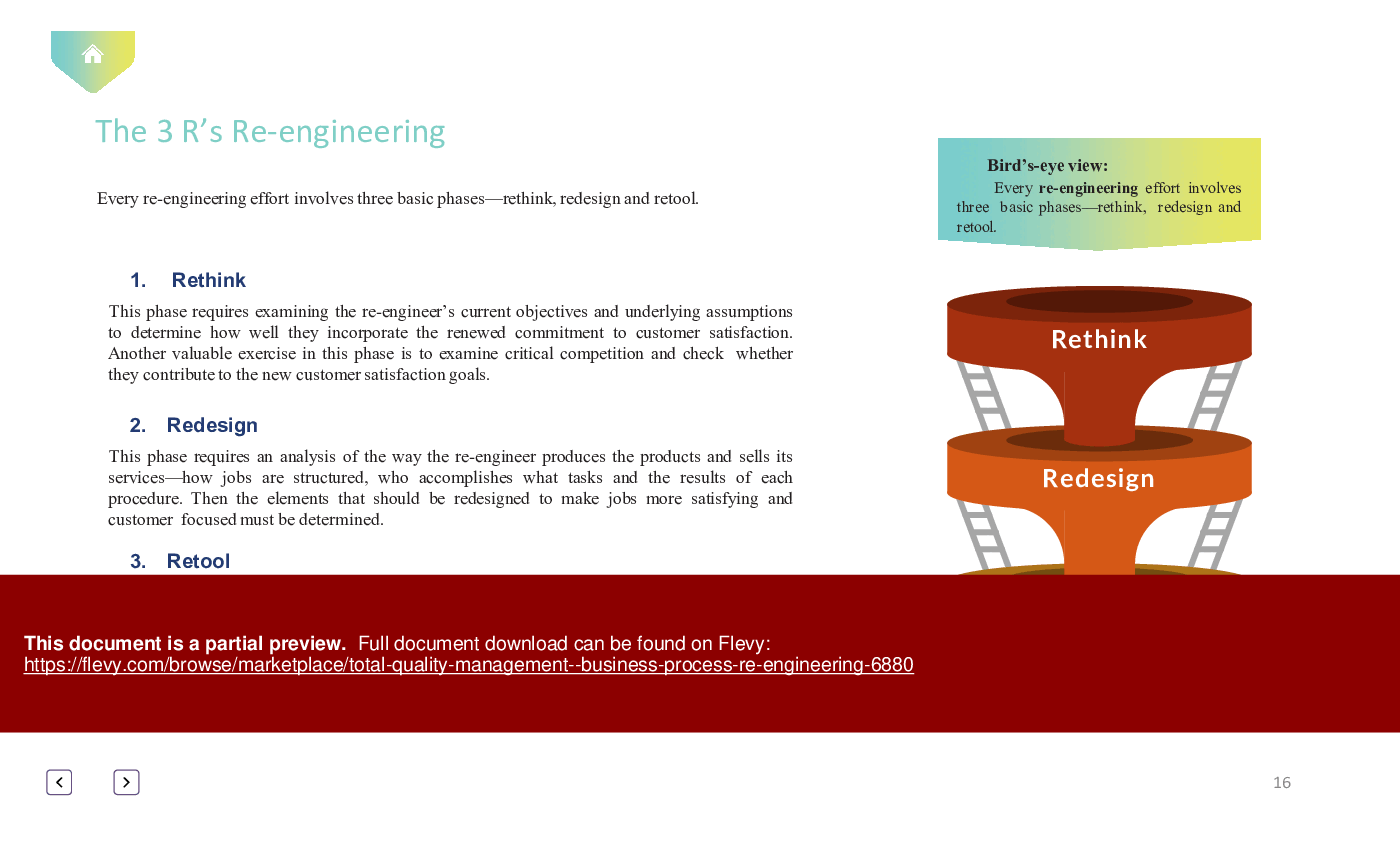
• Study the methodology of BPR and phases of implementation
• Explain re-engineering in the manufacturing and service industry
• Understand re-engineering structure
• Study the limitations and issues surrounding BPR
• Understand the relationship between BPR and TQM
This 65-Slide PowerPoint explains relevant concepts of the Business Process Re-engineering (BPR) in relation with the TQM as a Continuous Process Improvement (CPI) Tool.
The document is easily customizable and contains many powerful diagrams, ice-breakers, pictures, ... to get the holistic view of the concepts of the Quality Systems.
Got a question about the product? Email us at support@flevy.com or ask the author directly by using the "Ask the Author a Question" form. If you cannot view the preview above this document description, go here to view the large preview instead.
Executive Summary
The Total Quality Management - Business Process Re-engineering (BPR) presentation is a comprehensive resource designed to equip corporate executives, integration leaders, and consultants with the knowledge and tools necessary for effective process improvement. Developed by a team of experts from renowned consulting firms, this presentation focuses on the principles and methodologies of BPR, emphasizing the need for radical redesign and rethinking of business processes to achieve significant improvements in performance metrics such as cost, quality, and service. By leveraging the insights from this presentation, organizations can implement effective BPR strategies that enhance operational efficiency and customer satisfaction.
Who This Is For and When to Use
• Corporate executives seeking to drive organizational change and improve operational processes
• Integration leaders responsible for overseeing process improvement initiatives
• Consultants advising clients on quality management and process re-engineering strategies
• Project managers involved in implementing BPR methodologies
• Quality assurance teams focused on enhancing service delivery and product quality
Best-fit moments to use this deck:
• During strategic planning sessions to identify areas for process improvement
• When initiating BPR projects to align stakeholders on objectives and methodologies
• In training workshops aimed at building capabilities in process re-engineering
• For presentations to executive leadership to gain buy-in for BPR initiatives
Learning Objectives
• Define the core principles of Business Process Re-engineering (BPR) and its significance in modern business
• Identify the phases of BPR implementation and the methodologies involved
• Analyze existing business processes to uncover inefficiencies and areas for improvement
• Design and implement new processes that enhance operational performance
• Evaluate the effectiveness of re-engineered processes and make adjustments for continuous improvement
• Understand the relationship between BPR and Total Quality Management (TQM)
Table of Contents
• Introduction to BPR (page 1)
• Key Concepts of BPR (page 12)
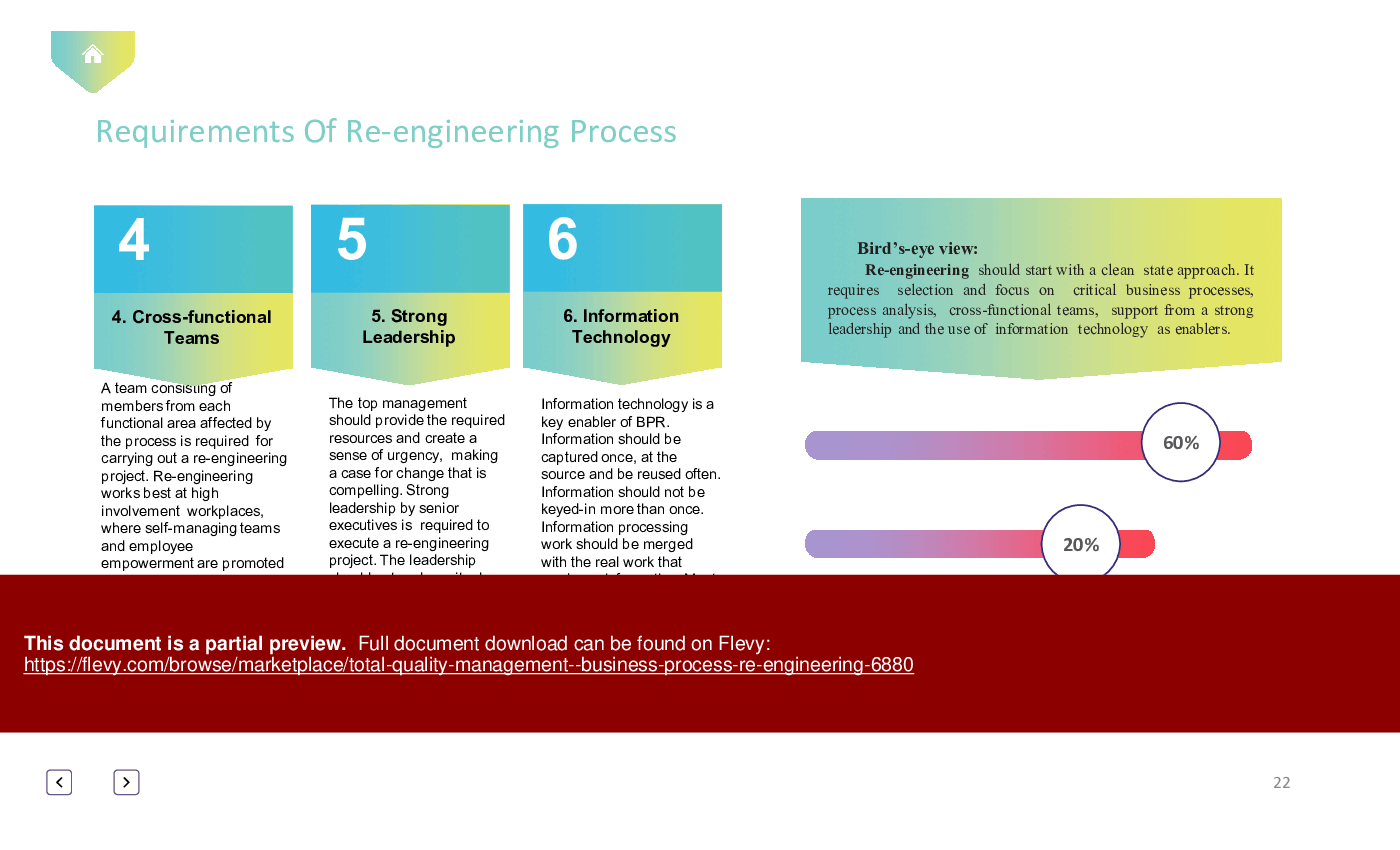
• Requirements of Re-engineering Process (page 20)
• Rules of BPR (page 23)
• Benefits of BPR (page 28)
• BPR Methodologies (page 32)
• Implementation of BPR (page 43)
• Re-engineering in Service & Manufacturing Industry (page 47)
• Re-engineering Structure (page 51)
• Limitations & Issues in BPR (page 59)
• TQM & BPR Relationship (page 61)
• Summary (page 63)
Primary Topics Covered
• Business Process Re-engineering (BPR) - A strategic approach to improving organizational efficiency by radically redesigning business processes to achieve significant performance improvements.
• Key Principles of BPR - Emphasizes the need for fundamental rethinking of processes, focusing on outcomes rather than tasks, and leveraging technology for innovation.
• Implementation Methodologies - Various frameworks and methodologies for executing BPR, including the Hammer and Champy methodology and Davenport's approach.
• Benefits of BPR - Highlights the tangible improvements in efficiency, cost savings, and customer satisfaction that can be achieved through effective BPR initiatives.
• Challenges and Limitations - Discusses common pitfalls in BPR implementation, including resistance to change and inadequate training.
• Relationship with TQM - Explores how BPR complements Total Quality Management in driving organizational excellence.
Deliverables, Templates, and Tools
• BPR implementation roadmap template for guiding project execution
• Process analysis and redesign frameworks for evaluating existing workflows
• Performance metrics dashboard for tracking improvements post-BPR
• Training materials for educating teams on BPR methodologies
• Case study examples illustrating successful BPR implementations
• Communication plans for engaging stakeholders throughout the BPR process
Slide Highlights
• Overview of BPR principles and methodologies, emphasizing radical redesign
• Case study of Mahindra & Mahindra's successful BPR implementation
• Visual representations of the BPR process flow and key phases
• Comparison of traditional vs. BPR approaches to process management
• Summary of the 7 rules of BPR proposed by Michael Hammer
Potential Workshop Agenda
Introduction to BPR (60 minutes)
• Overview of BPR principles and methodologies
• Discussion of the importance of radical redesign in business processes
• Group activity: Identifying current process inefficiencies
BPR Implementation Strategies (90 minutes)
• Detailed exploration of BPR implementation phases
• Case study analysis: Mahindra & Mahindra's BPR journey
• Group brainstorming: Developing a BPR roadmap for your organization
Evaluating BPR Success (60 minutes)
• Metrics for measuring BPR effectiveness
• Continuous improvement strategies post-BPR
• Wrap-up discussion: Key takeaways and next steps
Customization Guidance
• Tailor the BPR roadmap to align with your organization's specific goals and objectives
• Modify case studies to reflect industry-specific challenges and solutions
• Adjust training materials to incorporate company-specific terminology and processes
• Incorporate internal performance metrics and benchmarks into evaluation tools
Secondary Topics Covered
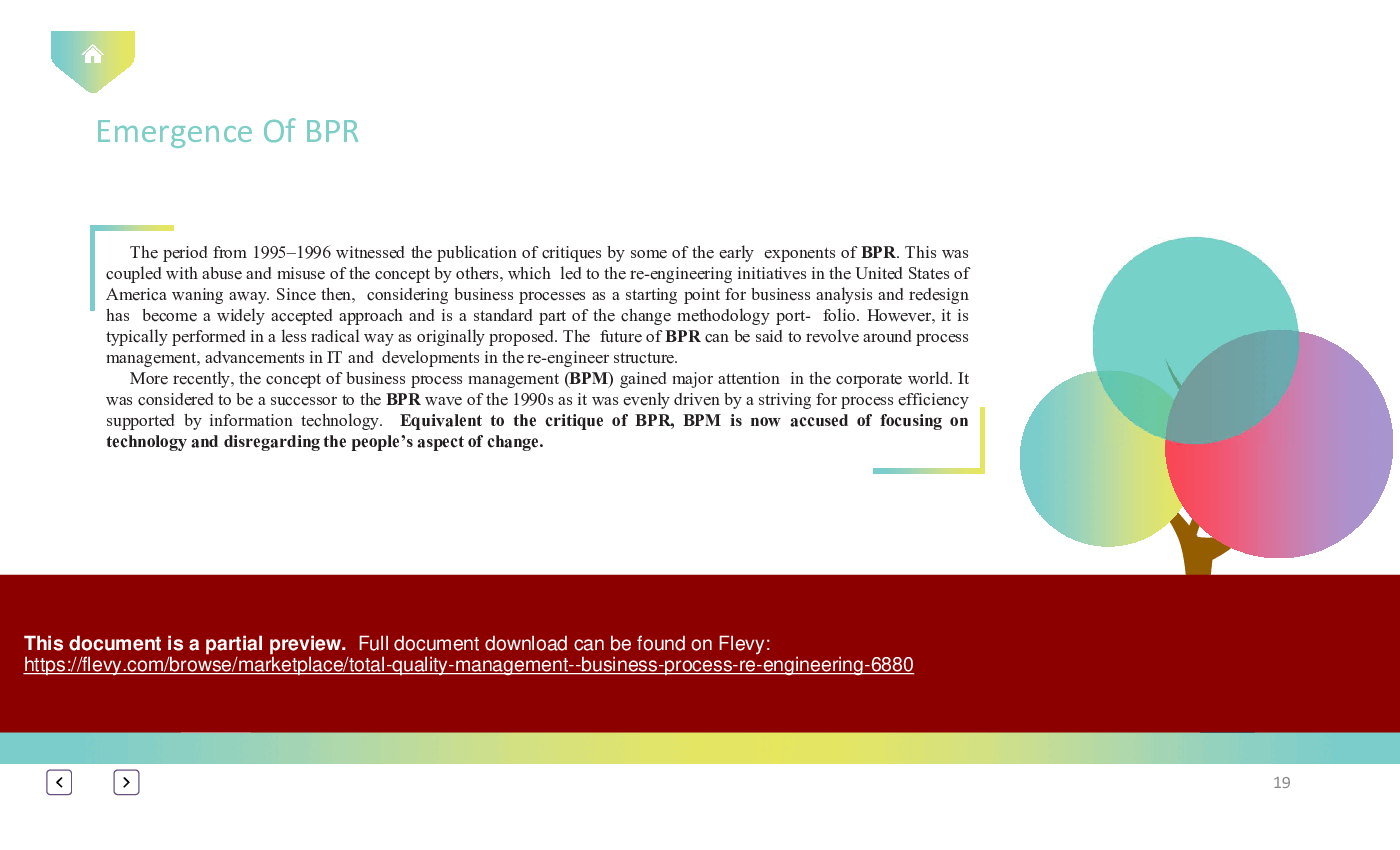
• Historical context and evolution of BPR
• Comparison of BPR with other process improvement methodologies like Lean and Six Sigma
• The role of technology in facilitating BPR initiatives
• Employee engagement strategies during BPR implementation
Topic FAQ
Document FAQ
These are questions addressed within this presentation.
What is Business Process Re-engineering (BPR)?
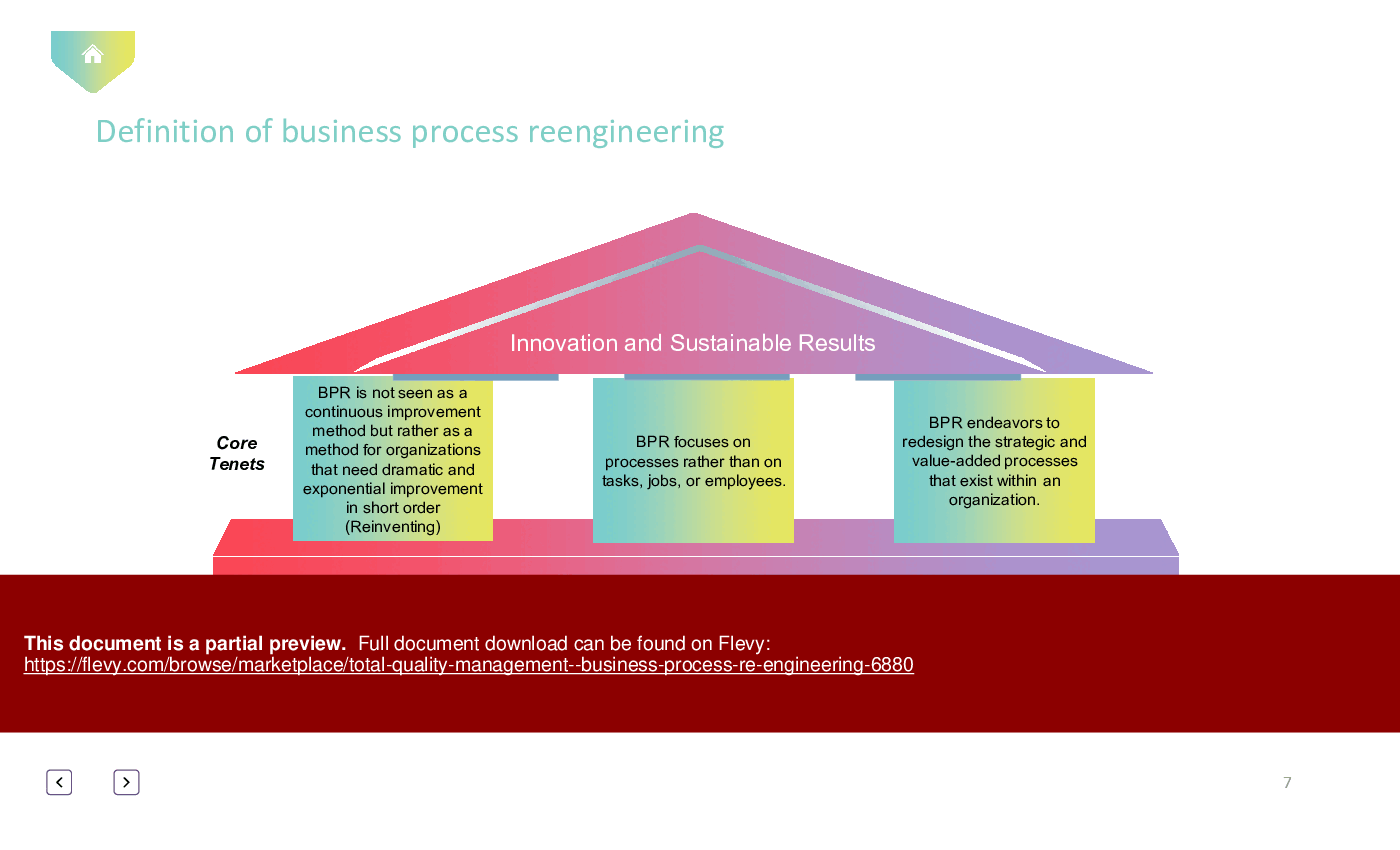
BPR is a management strategy focused on the radical redesign of business processes to achieve dramatic improvements in performance metrics such as cost, quality, and service.
How does BPR differ from continuous improvement methodologies?
BPR aims for fundamental changes and breakthroughs in processes, while continuous improvement methodologies focus on incremental enhancements.
What are the key phases of BPR implementation?
The key phases include understanding existing processes, redesigning processes, implementing changes, and continuously improving the new processes.
What are common challenges faced during BPR implementation?
Challenges include resistance to change, inadequate training, and the complexity of redesigning processes.
How can organizations measure the success of BPR initiatives?
Success can be measured through performance metrics such as cost savings, improved cycle times, and enhanced customer satisfaction.
What role does technology play in BPR?
Technology serves as a key enabler in BPR, facilitating the redesign of processes and improving efficiency through automation and data management.
How can BPR be integrated with Total Quality Management (TQM)?
BPR can complement TQM by providing a framework for radical process improvements that enhance overall quality and customer satisfaction.
What are the benefits of implementing BPR?
Benefits include increased efficiency, cost savings, improved service delivery, and enhanced competitive advantage.
What is the significance of the 7 rules of BPR?
These rules provide a framework for organizations to rethink and redesign their processes effectively, focusing on outcomes and customer needs.
Glossary
• BPR - Business Process Re-engineering, a strategy for radically redesigning processes to improve performance.
• TQM - Total Quality Management, an organization-wide approach to continuous improvement in quality.
• Process Redesign - The act of rethinking and altering existing processes to enhance efficiency and effectiveness.
• Stakeholders - Individuals or groups affected by or involved in a project or process.
• Performance Metrics - Standards used to measure the effectiveness and efficiency of processes.
• Cross-functional Teams - Groups composed of members from different departments working together on a common goal.
• Continuous Improvement - Ongoing efforts to improve products, services, or processes.
• Lean - A methodology focused on minimizing waste within manufacturing systems while maximizing productivity.
• Six Sigma - A data-driven approach to eliminating defects in any process.
• Agile Manufacturing - A method that emphasizes flexibility and responsiveness to customer demands.
• Just-in-Time (JIT) - A production strategy that strives to improve a business's return on investment by reducing in-process inventory and associated carrying costs.
• Information Technology (IT) - The use of computers and software to manage information.
• Customer Satisfaction - A measure of how products and services meet or exceed customer expectations.
• Process Owner - An individual responsible for the performance and improvement of a specific process.
• Executive Sponsor - A senior leader who champions a project and provides resources and support.
• Quality Assurance - The systematic process of ensuring that products and services meet specified requirements.
• Process Analysis - The examination of a process to identify inefficiencies and areas for improvement.
• Benchmarking - Comparing business processes and performance metrics to industry bests or best practices from other companies.
• Change Management - The approach to transitioning individuals, teams, and organizations to a desired future state.
• Organizational Culture - The values, beliefs, and behaviors that shape how work gets done within an organization.
Source: Best Practices in Process Improvement, TQM PowerPoint Slides: Total Quality Management - Business Process Re-engineering PowerPoint (PPTX) Presentation Slide Deck, RadVector Consulting
This document is available as part of the following discounted bundle(s):

Save %!
Total Quality Management
This bundle contains 14 total documents. See all the documents to the right.
|
Receive our FREE presentation on Operational Excellence
This 50-slide presentation provides a high-level introduction to the 4 Building Blocks of Operational Excellence. Achieving OpEx requires the implementation of a Business Execution System that integrates these 4 building blocks. |









