
Introduction:
In the wake of a global economic downturn, organizations worldwide face mounting pressure to deliver high-quality products at competitive prices. The solution to this challenge lies in the implementation of Total Quality Management (TQM). This comprehensive document explores the principles of TQM, with a particular focus on fostering a customer-centric approach that is essential for achieving organizational success, customer satisfaction, and increased profitability.
1. Total Quality Management (TQM):
• *Navigating Economic Challenges*: Discover how economic crises have intensified the need for organizations to produce top-quality, cost-effective products.
• *TQM's Strategic Imperative*: Understand why TQM is a pivotal driver of organizational success, customer contentment, and enhanced profitability.
2. The Shift to Customer-Centricity:
• *Expanding Customer Horizons*: Explore the transformation from traditional customer-supplier relationships to a more holistic view, where customers are both external and internal.
• *Quality's New Paradigm*: Embrace the paradigm shift where quality is deeply rooted in understanding and satisfying customer needs.
3. Customer Relationship Management (CRM):
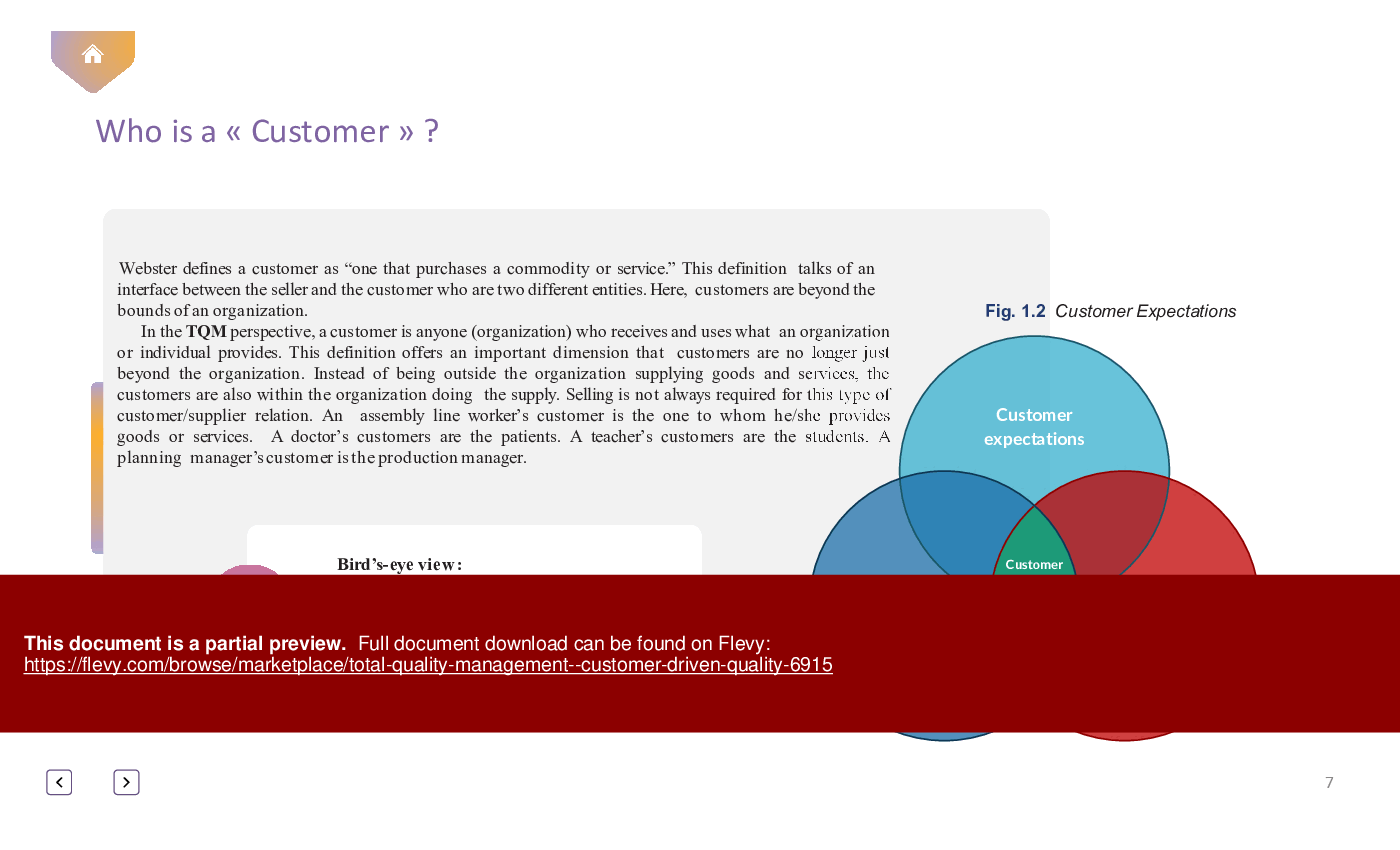
• *Defining the Customer*: In the TQM perspective, every individual or organization receiving and using a product or service becomes a customer.
• *Quality's Starting Point*: Recognize that quality is now intrinsically tied to the customer experience, whether within or beyond the organization.
• *The Competitive Marketplace*: Understand the necessity of a customer-focused approach in today's fiercely competitive business landscape.
4. Customer-Centric TQM Principles:
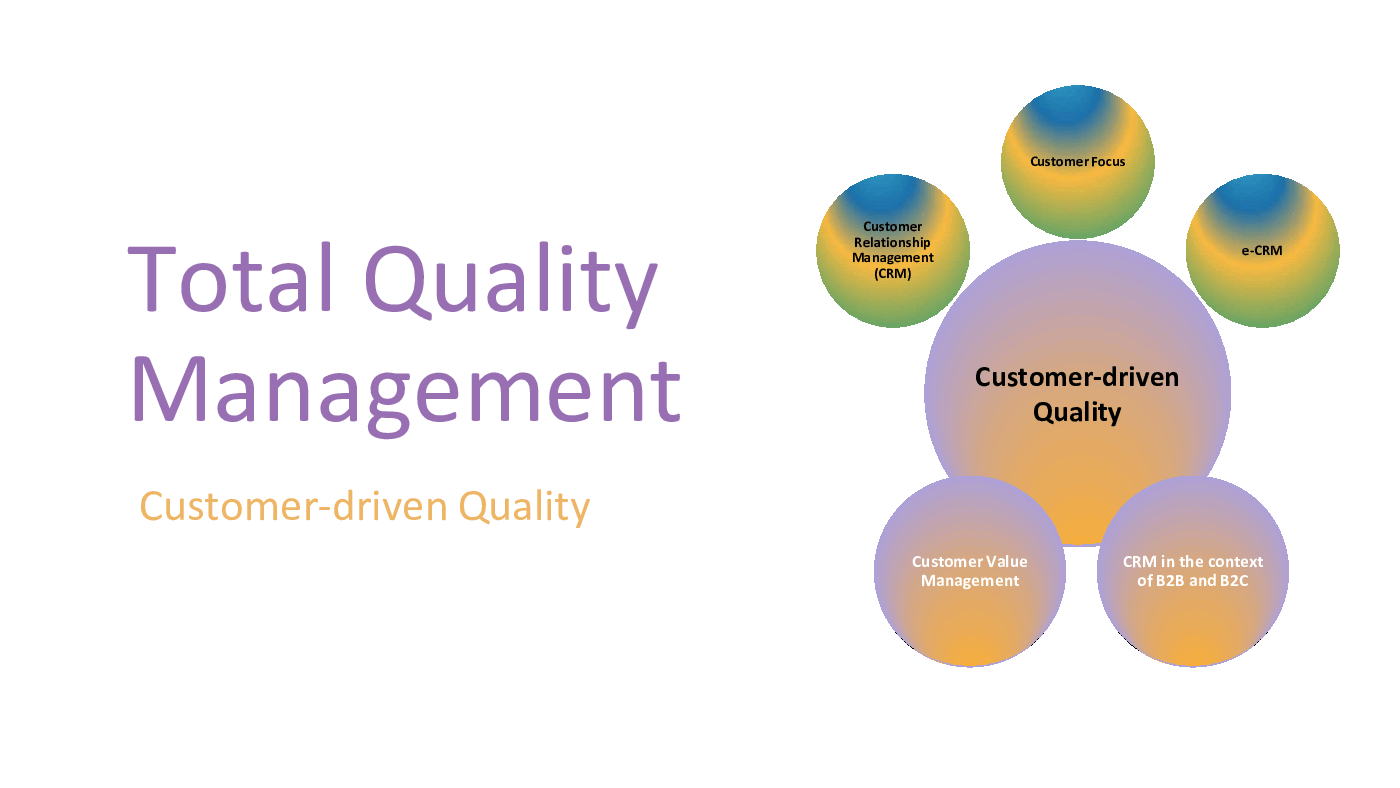
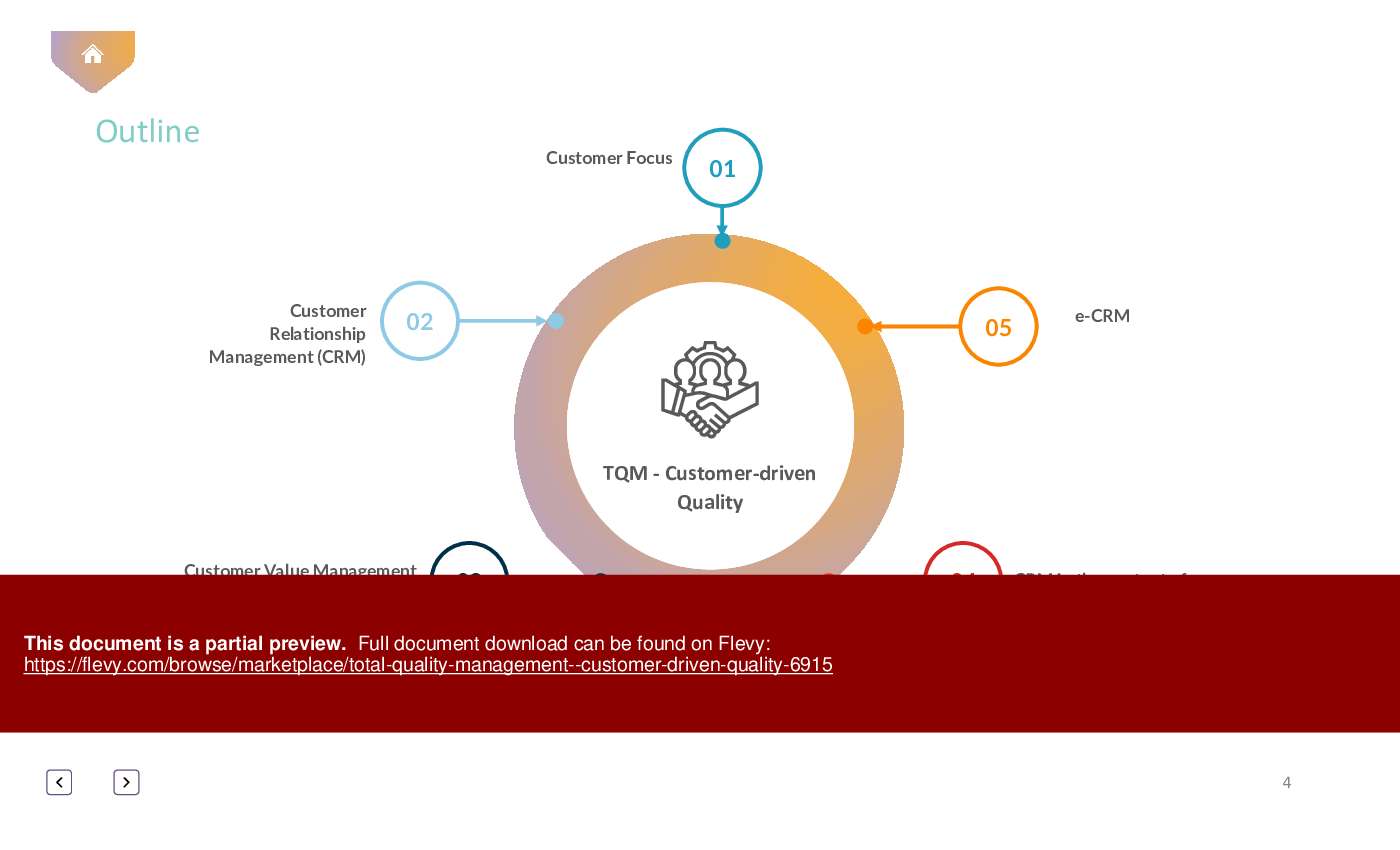
• *Introduction to Customer Focus*: Gain insight into the fundamental concept of customer-centricity in TQM.
• *Customer Relationship Management (CRM)*: Delve into the strategies and techniques for nurturing strong customer relationships.
• *Customer Value Management*: Explore the significance of delivering value to customers and how it drives organizational success.
• *CRM in B2B and B2C Contexts*: Differentiate between Customer Relationship Management approaches in business-to-business (B2B) and business-to-consumer (B2C) settings.
• *e-CRM (Electronic Customer Relationship Management)*: Embrace the digital dimension of customer relationship management and its impact on TQM.
This 91-slide PowerPoint presentation provides a comprehensive exploration of Customer-Driven Quality within the realm of Total Quality Management. It offers valuable insights, practical guidance, and a holistic view of Quality Systems concepts.
The document is fully customizable and features compelling visuals, diagrams, ice-breakers, images, and engaging content to facilitate a profound understanding of TQM principles in a customer-centric context.
Got a question about the product? Email us at support@flevy.com or ask the author directly by using the "Ask the Author a Question" form. If you cannot view the preview above this document description, go here to view the large preview instead.
Executive Summary
This Total Quality Management (TQM) presentation focuses on customer-driven quality, emphasizing the importance of understanding and meeting customer needs to enhance satisfaction and loyalty. Developed by a team of experts with experience at leading consulting firms, this presentation provides actionable insights into Customer Relationship Management (CRM) strategies and customer value management. By leveraging the principles of TQM, organizations can foster a culture of quality that begins and ends with the customer, ultimately driving business success.
Who This Is For and When to Use
• Quality managers and executives aiming to enhance customer satisfaction.
• CRM professionals looking to implement effective customer engagement strategies.
• Business leaders interested in integrating TQM principles into their operations.
• Marketing teams focused on improving customer loyalty and retention.
Best-fit moments to use this deck:
• During strategic planning sessions to align customer-focused initiatives with business objectives.
• In training workshops for employees on customer service excellence and quality management.
• When developing or revising CRM strategies to enhance customer relationships.
Learning Objectives
• Define customer-driven quality and its significance in TQM.
• Build effective CRM strategies that enhance customer engagement and loyalty.
• Establish a framework for measuring customer satisfaction and quality performance.
• Identify key customer expectations and how to exceed them.
• Develop actionable plans for continuous improvement in customer service.
• Analyze the impact of customer feedback on business processes and outcomes.
Table of Contents
• Introduction to Customer-Driven Quality (page 2)
• Importance of Customer Focus (page 3)
• Overview of Customer Relationship Management (CRM) (page 15)
• Strategies for Customer Value Management (page 60)
• The Ladder of Customer Loyalty (page 34)
• Implementation of CRM in B2B and B2C Contexts (page 81)
• Benefits of CRM and Future Trends (page 88)
Primary Topics Covered
• Customer-Driven Quality - Emphasizes the necessity of aligning organizational processes with customer expectations to enhance satisfaction.
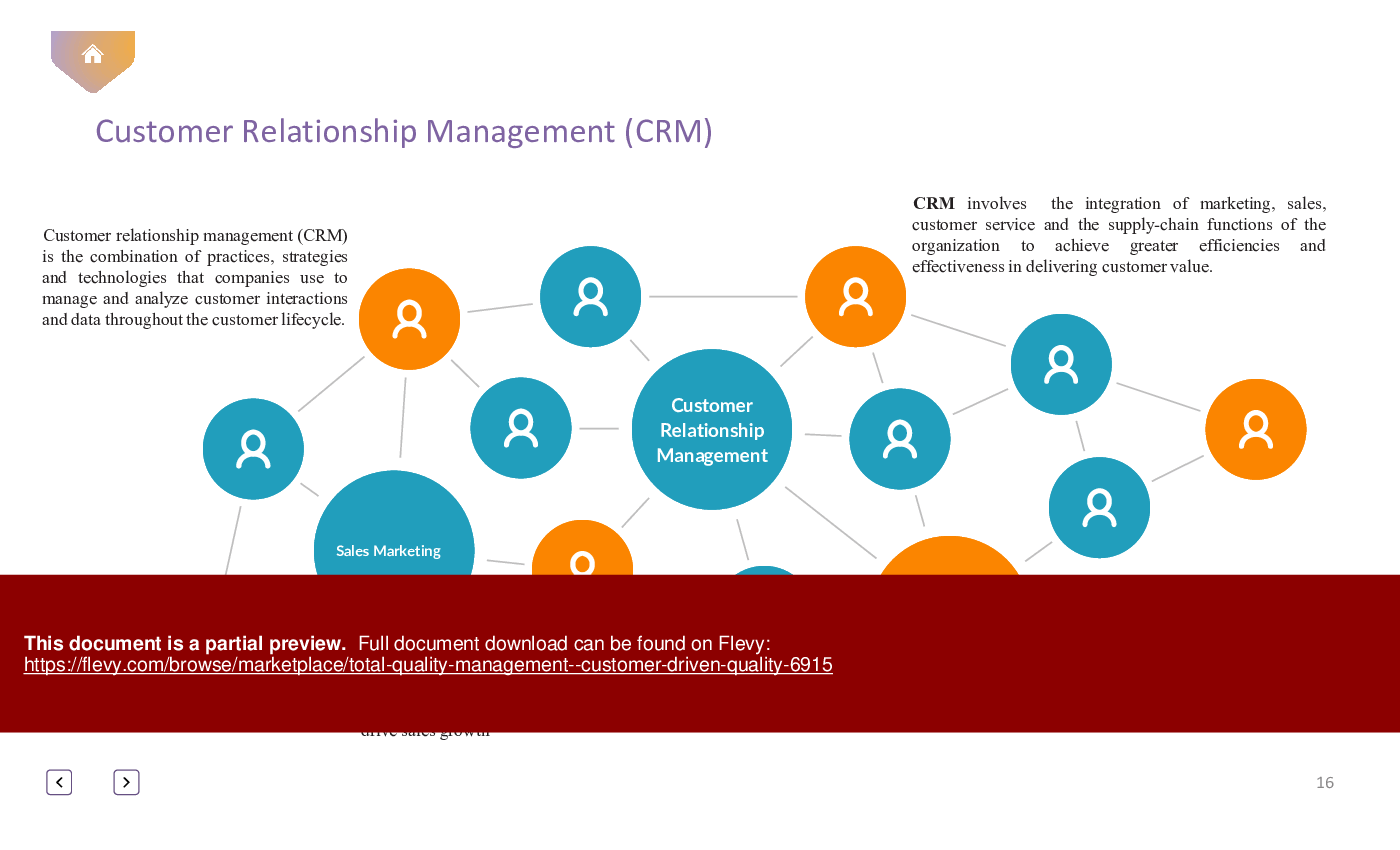
• Customer Relationship Management (CRM) - A strategic approach to managing interactions with customers to improve retention and drive sales growth.
• Customer Value Management - Focuses on understanding and maximizing the value derived from customer relationships over time.
• Ladder of Loyalty - A framework illustrating the stages of customer engagement from suspect to partner, highlighting the journey toward loyalty.
• Implementation Strategies - Practical steps for integrating TQM and CRM principles into business operations for sustained success.
• B2B vs. B2C CRM - Discusses the unique challenges and strategies for managing customer relationships in different market contexts.
Deliverables, Templates, and Tools
• Customer satisfaction survey templates for measuring feedback.
• CRM strategy development framework to guide implementation.
• Customer journey mapping tools to visualize engagement stages.
• Training materials for staff on TQM and customer service excellence.
• Performance metrics dashboards for tracking customer satisfaction and loyalty.
• Case studies illustrating successful CRM implementations.
Slide Highlights
• Overview of the Customer-Centric Model emphasizing the relationship between internal and external customers.
• Key quotes from industry leaders on the importance of quality and service.
• Visual representations of the Ladder of Loyalty highlighting customer engagement stages.
• Frameworks for effective CRM strategy development and implementation.
• Insights into the economic benefits of customer retention and loyalty.
Potential Workshop Agenda
Introduction to TQM and Customer Focus (60 minutes)
• Discuss the principles of TQM and their relevance to customer satisfaction.
• Explore the importance of customer focus in organizational success.
CRM Strategy Development Session (90 minutes)
• Identify key customer segments and their needs.
• Develop actionable CRM strategies to enhance engagement and loyalty.
Customer Value Management Workshop (60 minutes)
• Analyze customer feedback and its impact on business processes.
• Create a plan for continuous improvement in customer service.
Customization Guidance
• Tailor the presentation to reflect specific organizational goals and customer demographics.
• Adjust case studies and examples to align with industry-specific contexts.
• Incorporate company branding and terminology to enhance relevance.
Secondary Topics Covered
• The role of technology in enhancing customer relationships.
• Best practices for measuring and analyzing customer satisfaction.
• Strategies for managing customer defection and retention.
• The impact of social media on customer perceptions and engagement.
Topic FAQ
Source: Best Practices in TQM PowerPoint Slides: Total Quality Management - Customer-driven Quality PowerPoint (PPTX) Presentation Slide Deck, RadVector Consulting
This document is available as part of the following discounted bundle(s):

Save %!
Total Quality Management
This bundle contains 14 total documents. See all the documents to the right.
|
Receive our FREE presentation on Operational Excellence
This 50-slide presentation provides a high-level introduction to the 4 Building Blocks of Operational Excellence. Achieving OpEx requires the implementation of a Business Execution System that integrates these 4 building blocks. |









