
The recent global meltdown and recession has put great pressure on the organizations to produce the best quality products at the most affordable prices.
Organizations need to implement Total Quality Management in order to achieve organizational success as well as satisfying the customers so as to make more profit in the business arena.
Total Quality Management (TQM) is an approach to business that looks critically at the products and services a company provides in relation to the processes it employs to create them. It also focuses on the workforce to ensure that outputs fully satisfy customer requirements.
The TQM approach focuses on connecting the organization with the customer at every stage of the business process. The challenge of TQM in services lies in establishing smooth connectivity between business processes so as to retain the customer. Implementing an effective TQM mechanism in the service industry requires patience and commitment on the part of the management and the workforce to satisfy the customer.
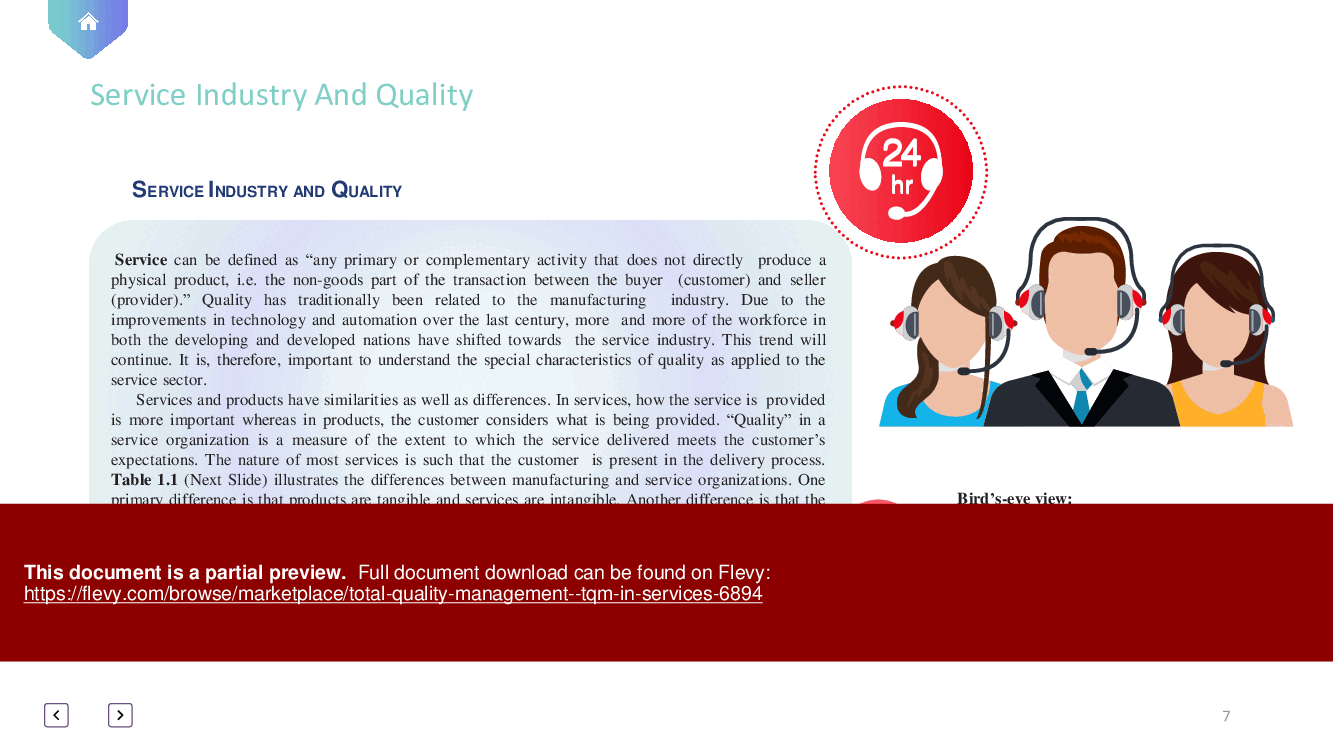
Service can be defined as "any primary or complementary activity that does not directly produce a physical product, i.e. the non-goods part of the transaction between the buyer (customer) and seller (provider)." Quality has traditionally been related to the manufacturing industry. Due to the improvements in technology and automation over the last century, more and more of the workforce in both the developing and developed nations have shifted towards the service industry. This trend will continue. It is, therefore, important to understand the special characteristics of quality as applied to the service sector.
This Unit contains :
• Introduction
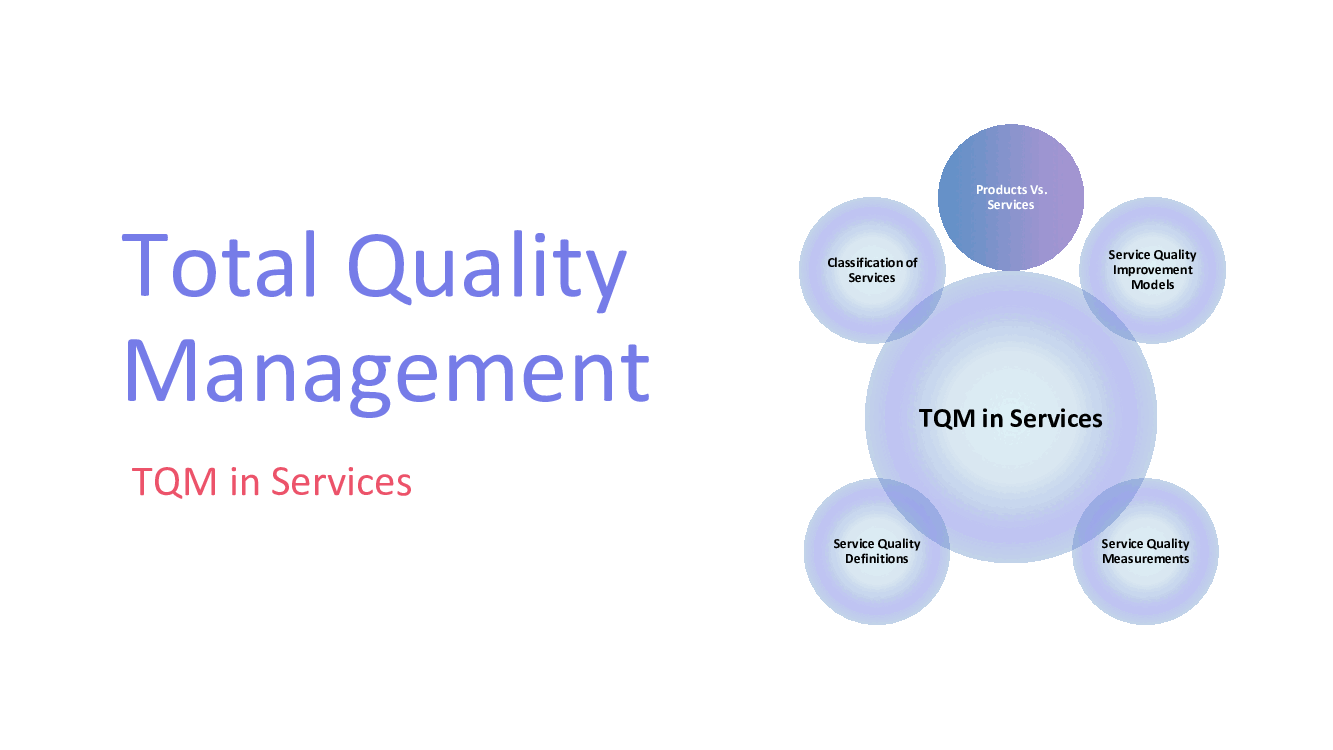
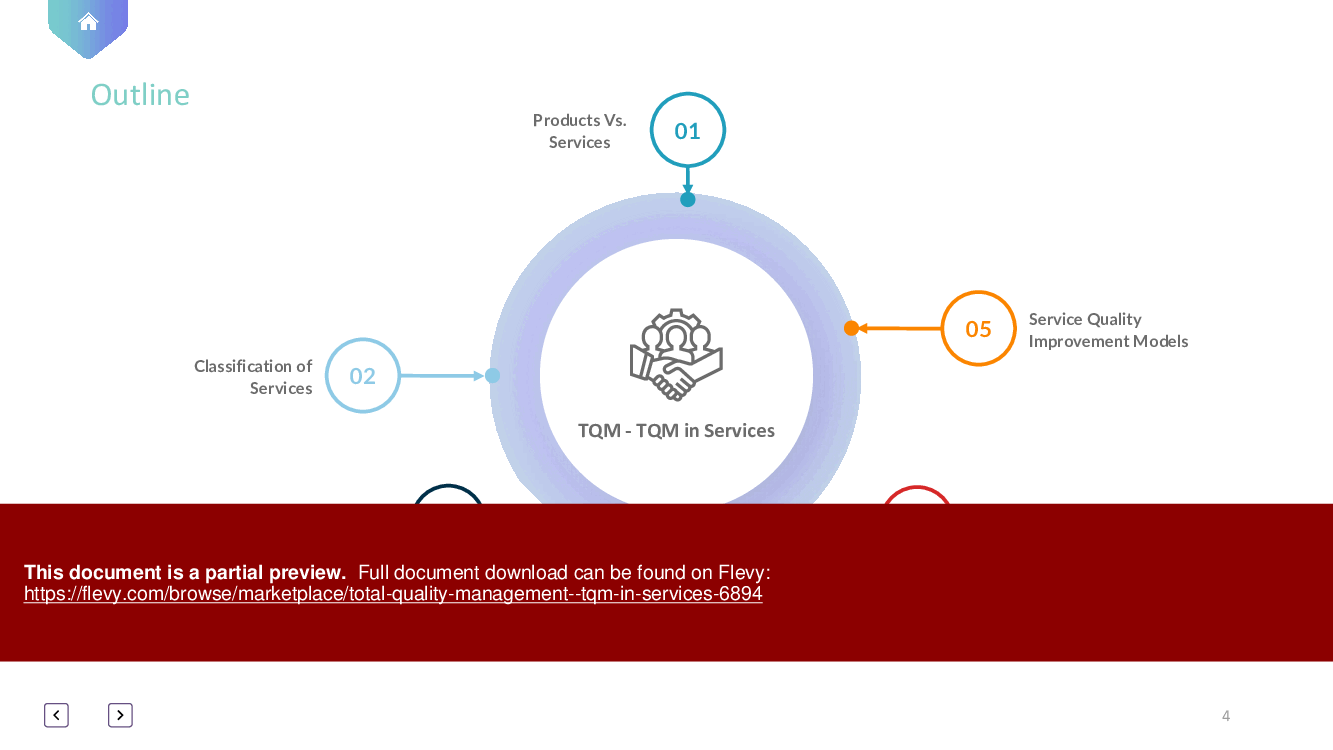
• Products Vs. Services
• Classification of Services
• Service Quality Definitions
• Service Quality Measurements
• Service Quality Improvement Models
This 62-Slide PowerPoint explains relevant concepts of the TQM in Services.
The document is easily customizable and contains many powerful diagrams, ice-breakers, pictures, ... to get the holistic view of the concepts of the Quality Systems.
Got a question about the product? Email us at support@flevy.com or ask the author directly by using the "Ask the Author a Question" form. If you cannot view the preview above this document description, go here to view the large preview instead.
Executive Summary
This Total Quality Management (TQM) in Services presentation provides a comprehensive overview of service quality models, measurements, and improvement tools tailored for the service sector. Developed by a team of experts with experience at leading consulting firms, this customizable PowerPoint deck equips corporate executives and consultants with the knowledge to enhance service quality across various industries. By implementing TQM principles, organizations can effectively connect with customers, streamline processes, and ultimately improve customer satisfaction.
Who This Is For and When to Use
• Corporate executives overseeing service quality initiatives
• Integration leaders managing service improvement projects
• Consultants advising organizations on TQM practices
• Quality assurance teams focused on enhancing customer experience
Best-fit moments to use this deck:
• During strategic planning sessions for service quality enhancement
• When training staff on TQM principles and practices
• In workshops aimed at aligning service delivery with customer expectations
Learning Objectives
• Define Total Quality Management and its relevance to the service sector
• Identify key service quality models and their applications
• Establish metrics for measuring service quality and customer satisfaction
• Develop strategies for continuous service quality improvement
• Analyze case studies demonstrating successful TQM implementation
• Create a roadmap for integrating TQM practices into existing service processes
Table of Contents
• Introduction to TQM in Services (page 5)
• Service Quality Definitions (page 15)
• Classification of Services (page 13)
• Service Quality Measurements (page 34)
• Service Quality Improvement Models (page 60)
• Summary and Key Takeaways (page 61)
Primary Topics Covered
• TQM Framework - An overview of the Total Quality Management framework tailored for service industries, emphasizing customer satisfaction and continuous improvement.
• Service Quality Models - Detailed examination of various service quality models, including the SERVQUAL model, which measures the gap between customer expectations and perceptions.
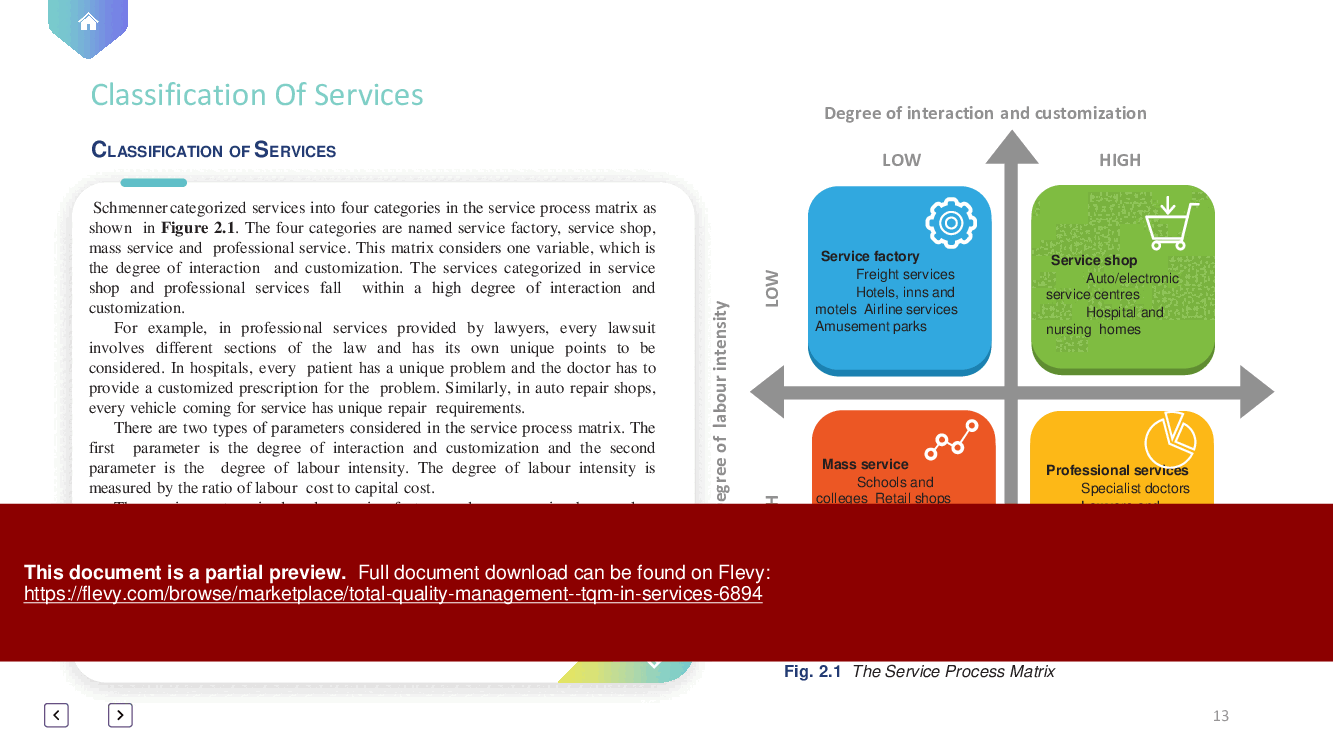
• Service Classification - Categorization of services into 4 types: service factory, service shop, mass service, and professional service, based on interaction and customization levels.
• Quality Improvement Strategies - Effective strategies for implementing TQM practices to enhance service quality and customer satisfaction.
• Measurement Tools - Tools and techniques for assessing service quality, including customer satisfaction surveys and employee feedback mechanisms.
• Case Studies - Real-world examples demonstrating successful TQM applications in various service sectors.
Deliverables, Templates, and Tools
• Service quality assessment templates for evaluating customer satisfaction
• Frameworks for implementing TQM practices in service organizations
• Case study analysis templates for understanding successful TQM applications
• Guidelines for conducting effective customer feedback surveys
• Tools for measuring service quality metrics and performance indicators
• Training materials for staff on TQM principles and practices
Slide Highlights
• Overview of TQM principles and their application in the service sector
• Comparison of service and product quality characteristics
• Detailed explanation of the SERVQUAL model and its dimensions
• Insights into the classification of services and their management challenges
• Strategies for continuous improvement in service quality
Potential Workshop Agenda
TQM Introduction and Overview (60 minutes)
• Discuss the principles of TQM and its relevance to services
• Review key service quality models and their applications
Service Quality Measurement Techniques (90 minutes)
• Explore various tools for measuring service quality
• Conduct a hands-on activity to design a customer satisfaction survey
Service Quality Improvement Strategies (90 minutes)
• Identify common service quality challenges
• Develop actionable strategies for continuous improvement
Customization Guidance
• Tailor the presentation to reflect specific organizational goals and service offerings
• Adjust case studies to align with industry-specific examples relevant to the audience
• Incorporate company-specific metrics and performance indicators for measuring service quality
Secondary Topics Covered
• The importance of employee engagement in service quality
• Strategies for effective service recovery and complaint management
• The role of technology in enhancing service delivery and quality
• Best practices for training staff on service quality standards
FAQ
What is Total Quality Management in services?
Total Quality Management (TQM) in services is a management approach focused on improving service quality through continuous feedback and customer satisfaction.
How can TQM improve customer satisfaction?
By implementing TQM principles, organizations can streamline processes, enhance service delivery, and better align with customer expectations, leading to improved satisfaction.
What are the key components of service quality?
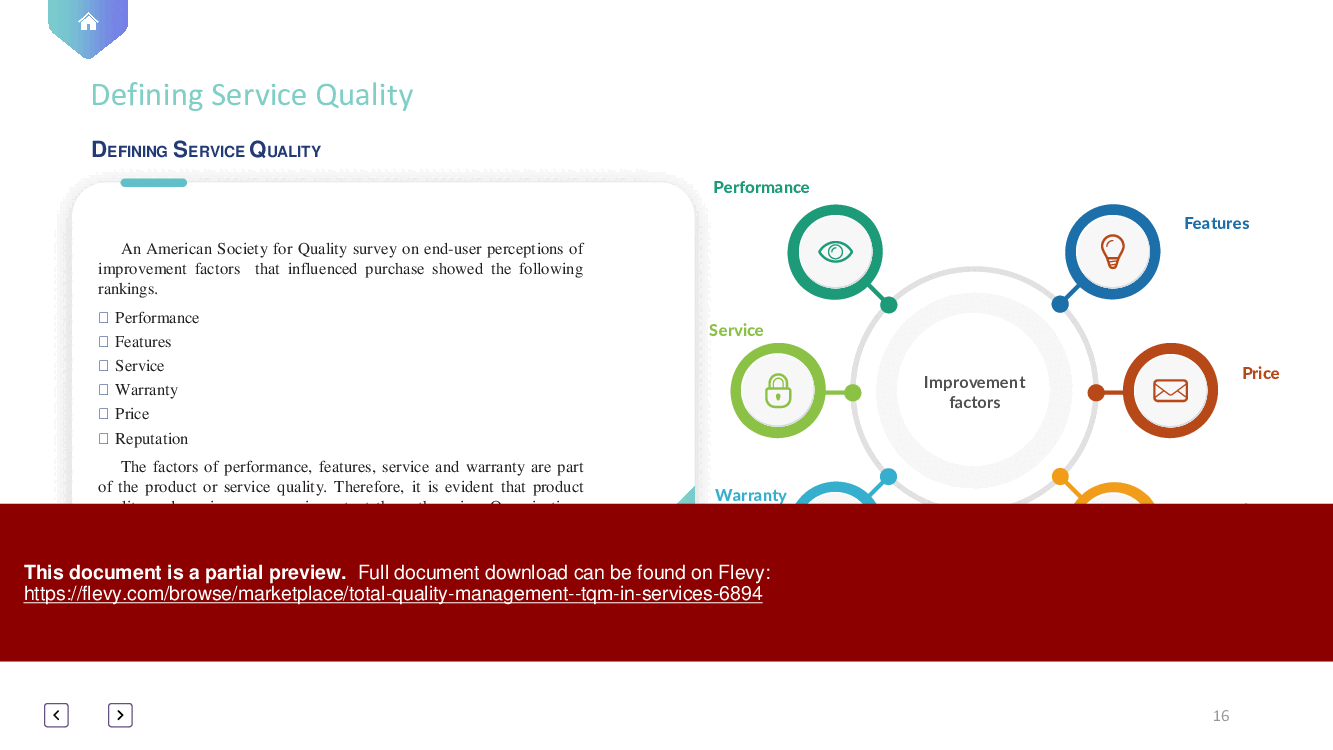
Key components include reliability, responsiveness, assurance, empathy, and tangibles, which collectively define customer perceptions of service quality.
How is service quality measured?
Service quality can be measured using tools like customer satisfaction surveys, employee feedback, and the SERVQUAL model, which assesses gaps between expectations and perceptions.
What industries can benefit from TQM?
TQM can be applied across various industries, including healthcare, banking, hospitality, and education, where service quality is critical to success.
What challenges are associated with implementing TQM in services?
Challenges include aligning employee engagement with quality goals, managing customer expectations, and maintaining consistent service delivery across all touchpoints.
How often should service quality be assessed?
Regular assessments should be conducted to ensure continuous improvement and alignment with changing customer expectations, typically on a quarterly or bi-annual basis.
What role does employee training play in TQM?
Employee training is essential for equipping staff with the skills and knowledge needed to deliver high-quality service and engage effectively with customers.
Glossary
• Total Quality Management (TQM) - A management approach focused on continuous improvement in service quality.
• SERVQUAL - A model for measuring service quality based on customer expectations and perceptions.
• Service Quality - The degree to which a service meets customer expectations.
• Customer Satisfaction - A measure of how products and services meet or exceed customer expectations.
• Continuous Improvement - Ongoing efforts to enhance products, services, or processes.
• Service Classification - The categorization of services based on interaction and customization levels.
• Feedback Mechanisms - Tools used to gather customer input on service quality.
• Quality Improvement Strategies - Methods employed to enhance service quality and customer satisfaction.
• Employee Engagement - The level of commitment and involvement an employee has towards their organization and its values.
• Service Recovery - Actions taken to rectify service failures and restore customer satisfaction.
• Quality Assurance - Processes put in place to ensure service quality meets established standards.
• Performance Metrics - Quantifiable measures used to assess service quality and operational efficiency.
Source: Best Practices in TQM PowerPoint Slides: Total Quality Management - TQM in Services PowerPoint (PPTX) Presentation Slide Deck, RadVector Consulting
This document is available as part of the following discounted bundle(s):

Save %!
Total Quality Management
This bundle contains 14 total documents. See all the documents to the right.
|
Receive our FREE presentation on Operational Excellence
This 50-slide presentation provides a high-level introduction to the 4 Building Blocks of Operational Excellence. Achieving OpEx requires the implementation of a Business Execution System that integrates these 4 building blocks. |