
Editor Summary
Fundamentals of Effective Communication is a 57-slide PowerPoint training deck presented as a major consulting-firm style resource, designed to teach planning, developing, and delivering business messages.
Read moreIncludes 5 tools/templates: a message planning template, audience analysis framework, feedback collection tool, structured writing guide, and presentation checklist. Target users include corporate executives, integration leaders, consultants, and team leaders. Used for communication training, high-stakes presentations, and team message development. Sold as a digital download on Flevy with immediate digital download.
This deck is designed for situations where teams must create and deliver clear, persuasive business messages — for example before board presentations, integration updates, or team alignment meetings.
Corporate executives preparing high-stakes presentations to align stakeholders using the Answer-First structure and the message planning template.
Integration leaders translating complex program updates into audience-tailored communications via the audience analysis framework.
Consultants structuring client recommendations and written summaries using the structured writing guide and presentation checklist.
Learning & development facilitators running communication skills sessions using the provided workshop agenda.
The deck’s focus on hypothesis-driven message structure and Answer-First organization mirrors the structured message construction used in top-tier consulting practice.
This deck is a training presentation of a major consulting firm on effective communication.
Contents include:
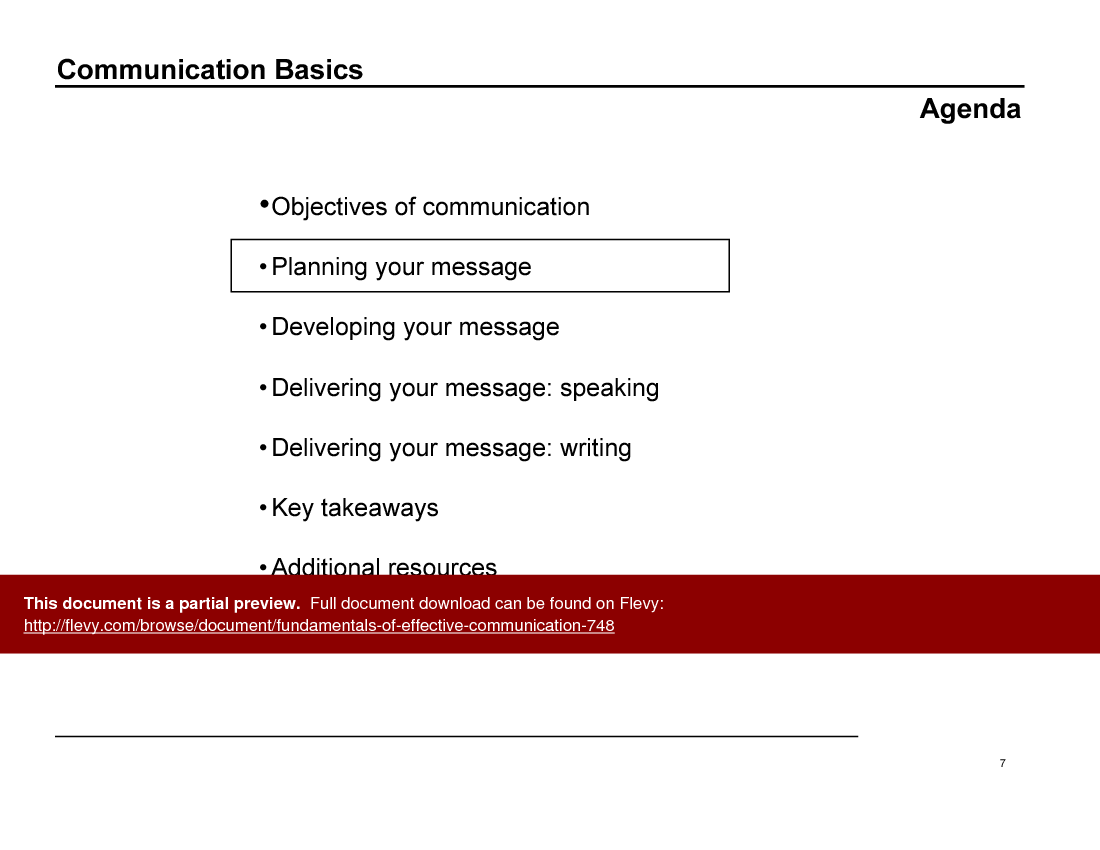
• Objectives of communication
• Planning your message
• Developing your message
• Delivering your message: speaking
• Delivering your message: writing
• Key takeaways
• Additional resources
This presentation delves into the core principles of effective communication, emphasizing the importance of clear objectives and structured planning. It highlights how to craft messages that not only inform, but also drive action, ensuring your audience is aligned with your goals. The deck provides a comprehensive framework for identifying key issues, organizing data, and understanding the potential impact of your message on different stakeholders.
The document also covers the nuances of delivering messages both orally and in writing. It offers practical advice on using plain English, avoiding jargon, and ensuring your communication is precise and engaging. The focus is on making your message easy to understand and compelling, which is crucial for maintaining audience interest and achieving your desired outcomes.
In addition, the presentation addresses the critical aspect of listening. It outlines a four-step process to enhance understanding and reduce misunderstandings, ensuring that your communication is a two-way street. This is vital for building trust and fostering effective collaboration within your organization.
The deck includes key takeaways and additional resources to reinforce learning and provide further guidance. Whether you are looking to refine your communication skills or train your team, this presentation offers valuable insights and practical tools to enhance your effectiveness.
Got a question about the product? Email us at support@flevy.com or ask the author directly by using the "Ask the Author a Question" form. If you cannot view the preview above this document description, go here to view the large preview instead.
MARCUS OVERVIEW
This synopsis was written by Marcus [?] based on the analysis of the full 57-slide presentation.
Executive Summary
The Fundamentals of Effective Communication PowerPoint presentation is a consulting-grade resource designed to enhance business communication skills. This deck, structured with the precision and clarity expected from McKinsey, Bain, or BCG-quality materials (not affiliated), equips corporate executives, integration leaders, and consultants with essential strategies for planning, developing, and delivering impactful messages. Users will learn to craft messages that resonate with their audience, ensuring clarity and connection, ultimately driving desired actions.
Who This Is For and When to Use
• Corporate executives aiming to refine their communication strategies
• Integration leaders needing to convey complex ideas clearly
• Consultants seeking to enhance client presentations and interactions
• Team leaders responsible for delivering effective messages in meetings
Best-fit moments to use this deck:
• During training sessions focused on communication skills
• When preparing for high-stakes presentations or meetings
• To guide teams in developing clear and effective business messages
Learning Objectives
• Define the objectives of effective communication in a business context
• Build structured messages that engage and inform the audience
• Establish clarity and connection through tailored communication
• Develop techniques for delivering messages effectively, both orally and in writing
• Create compelling narratives that drive audience action
• Utilize feedback to refine communication strategies
Table of Contents
• Objectives of Communication (page 2)
• Planning Your Message (page 3)
• Developing Your Message (page 20)
• Delivering Your Message: Speaking (page 33)
• Delivering Your Message: Writing (page 42)
• Key Takeaways (page 55)
• Additional Resources (page 57)
Primary Topics Covered
• Objectives of Communication - Understanding the purpose behind communication efforts, including informing and persuading the audience to take action.
• Planning Your Message - Steps to determine objectives, desired outcomes, and key messages tailored to audience needs.
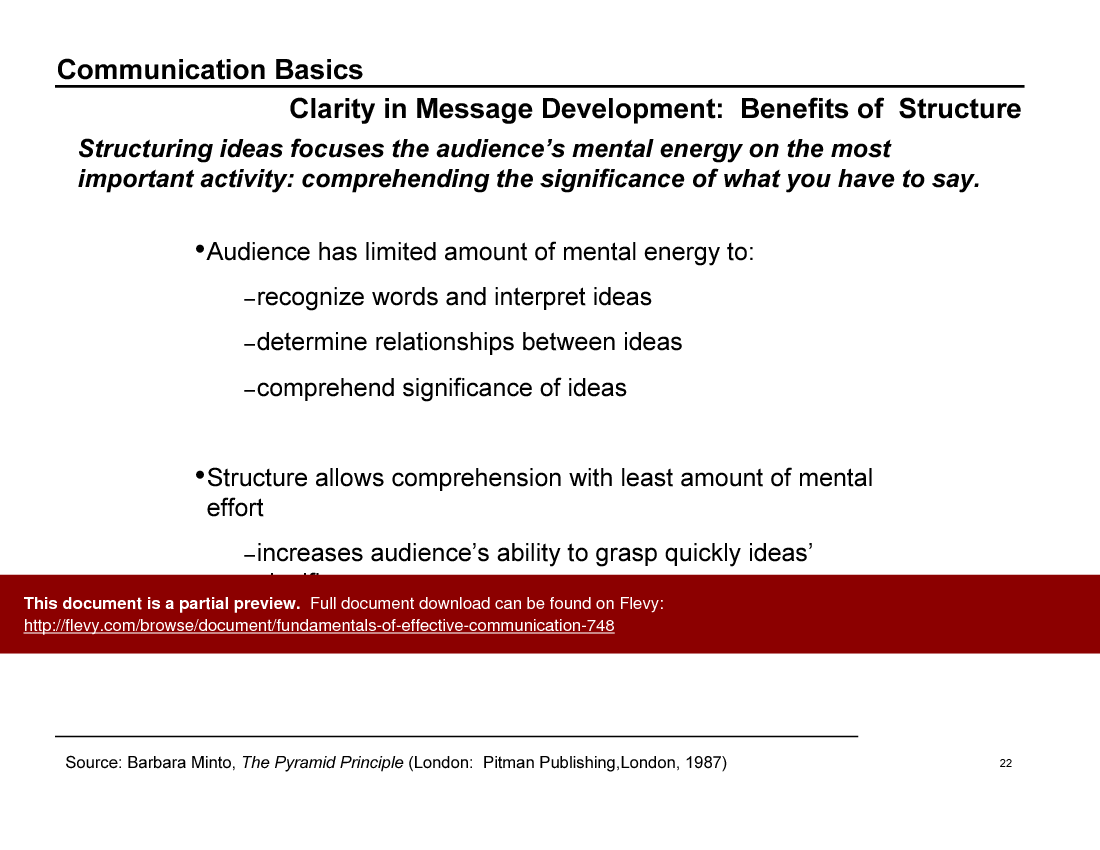
• Developing Your Message - Structuring messages logically and clearly to enhance audience comprehension and retention.
• Delivering Your Message: Speaking - Techniques for effective oral communication, including audience engagement and clarity in delivery.
• Delivering Your Message: Writing - Guidelines for crafting clear, concise, and impactful written communication.
• Key Takeaways - Summarized insights and strategies for effective communication practices.
Deliverables, Templates, and Tools
• Message planning template to outline objectives and key messages
• Audience analysis framework to assess communication needs
• Feedback collection tool to refine messages based on audience input
• Structured writing guide to ensure clarity and precision in written communication
• Presentation checklist to prepare for effective delivery
Slide Highlights
• Overview of communication objectives and their importance in business contexts
• Step-by-step guide for planning and developing messages
• Visual representation of the Answer-First structure for organizing communication
• Key speaking guidelines that enhance audience engagement
• Writing tips that emphasize clarity, precision, and active voice
Potential Workshop Agenda
Introduction to Effective Communication (30 minutes)
• Overview of communication objectives
• Discussion on the importance of audience analysis
Message Planning and Development (60 minutes)
• Steps for planning messages
• Group activity: Drafting key messages
Delivery Techniques (45 minutes)
• Best practices for speaking effectively
• Role-playing exercises for audience engagement
Writing for Impact (30 minutes)
• Guidelines for clear and concise writing
• Peer review of written communication samples
Customization Guidance
• Tailor the message planning template to reflect specific organizational goals and audience characteristics
• Adjust examples and scenarios to align with industry-specific contexts
• Incorporate company terminology and branding elements into communication materials
Secondary Topics Covered
• Importance of clarity and connection in communication
• Techniques for engaging diverse audiences
• Strategies for managing audience feedback and reactions
• The role of conviction and personal commitment in effective messaging
Topic FAQ
What are the main phases of an effective business communication process?
Effective business communication is presented as a sequence of phases: defining objectives, planning your message, developing the message, and delivering it via speaking or writing. The deck maps these phases to specific sections: Planning Your Message (page 3), Developing Your Message (page 20), Speaking (page 33), and Writing (page 42).
What is the Answer-First structure and how does it help presentations?
The Answer-First structure recommends presenting the key conclusion or recommendation up front, then following with supporting evidence and detail to improve clarity and retention. The Fundamentals of Effective Communication deck includes a visual representation of this approach and uses it to organize message flow with the Answer-First structure.
How should I plan a message to increase the likelihood of audience action?
Planning starts with identifying objectives, desired outcomes, and the audience’s needs, then drafting key messages tailored to those needs. Use audience analysis to tailor content and the message planning template to capture objectives and key points; the deck includes a message planning template for this purpose.
What speaking techniques improve audience engagement during meetings?
The presentation recommends techniques such as maintaining eye contact, active listening, concise and clear speech, and engaging the audience with relevant examples and summaries. These speaking guidelines are covered in the Delivering Your Message: Speaking section and reinforced by role-play exercises in the suggested workshop agenda.
What should I look for when choosing a communication training deck for my team?
Look for clear learning objectives, separate sections for planning, developing, and delivering messages, practical tools (message templates, audience analysis, feedback mechanisms), and a suggested workshop agenda. Flevy’s Fundamentals of Effective Communication lists these components and includes templates such as the message planning template.
How much time should I plan for a half-day communication workshop using this material?
The deck provides a potential workshop agenda summing to about 2 hours 45 minutes: 30 minutes for introduction, 60 minutes for message planning and development, 45 minutes for delivery techniques, and 30 minutes for writing for impact — totaling 165 minutes.
Are communication templates worth purchasing for internal training and why?
Templates provide reusable artifacts for consistent message design and review, helping teams plan objectives, analyze audiences, collect feedback, and standardize written output. The Fundamentals of Effective Communication supplies 5 practical items: a message planning template, audience analysis framework, feedback collection tool, structured writing guide, and presentation checklist.
I need to prepare a concise board update quickly — which framework elements should I apply?
For rapid board updates, apply an Answer-First opening, use the message planning template to state objectives and desired action, distill supporting evidence with the structured writing guide, and run through the presentation checklist before delivery. The deck highlights the Answer-First approach and includes a presentation checklist.
Document FAQ
These are questions addressed within this presentation.
What are the main objectives of effective communication?
The main objectives include enabling understanding, motivating action, and fostering relationships with the audience.
How can I ensure my message resonates with my audience?
Conduct thorough audience analysis to tailor your message to their needs and preferences, ensuring relevance and clarity.
What is the Answer-First structure?
The Answer-First structure organizes communication by presenting key points first, followed by supporting details, enhancing clarity and retention.
How important is feedback in the communication process?
Feedback is crucial as it helps refine your message, ensuring it meets audience needs and addresses any misunderstandings.
What techniques can I use for effective oral delivery?
Engage your audience through eye contact, active listening, and concise, clear speech to enhance understanding and connection.
What writing style should I adopt for business communication?
Use active voice, precise language, and plain English to ensure clarity and engagement in your written messages.
How can I improve my audience's retention of my message?
Use relevant examples, analogies, and periodic summaries to reinforce key points and facilitate understanding.
What resources are recommended for further developing communication skills?
Consider reading materials such as "The Pyramid Principle" by Barbara Minto and "Leading Out Loud" by Terry Pearce for deeper insights into effective communication.
Glossary
• Active Voice - A sentence structure where the subject performs the action, enhancing clarity.
• Audience Analysis - The process of understanding the audience's needs, preferences, and characteristics to tailor communication effectively.
• Clarity - The quality of being clear and easy to understand in communication.
• Connection - The relationship established between the speaker and the audience, crucial for effective communication.
• Feedback - Information provided by the audience regarding their understanding and interpretation of the message.
• Message Structure - The organization of ideas within a communication to promote clarity and retention.
• Precision - The quality of being exact and accurate in language and messaging.
• Succinctness - The quality of being brief and to the point in communication.
• Timeliness - The relevance of delivering a message at the appropriate moment for maximum impact.
• Writing Style - The manner in which written communication is crafted, including tone, structure, and clarity.
• Conviction - The speaker's belief in their message, which influences audience acceptance.
• Engagement - The process of capturing and maintaining audience interest and participation in communication.
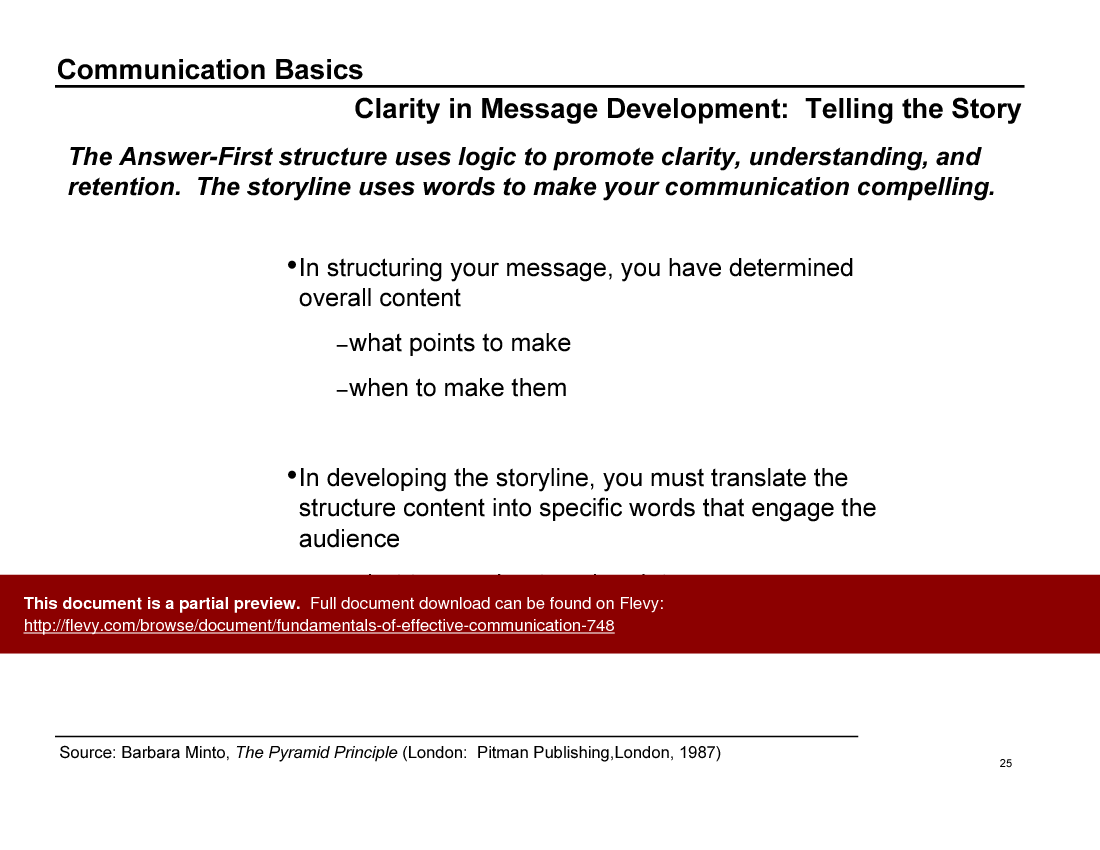
This PPT slide outlines the "Answer-First" communication method, emphasizing a logical top-down sequence: Situation, Complication, Question, and Answer. This framework enhances clarity and directness in communication. It features 3 Key Assertions supported by Supporting Assertions and Evidence, reinforcing the credibility of claims. Presenting the answer first allows the audience to grasp the core message quickly. The structured layout facilitates information flow, making it essential in high-stakes environments for decision-makers. The focus on evidence substantiates claims, fostering trust and authority. This approach enhances presentation effectiveness, encouraging actionable insights crucial for strategic decision-making.
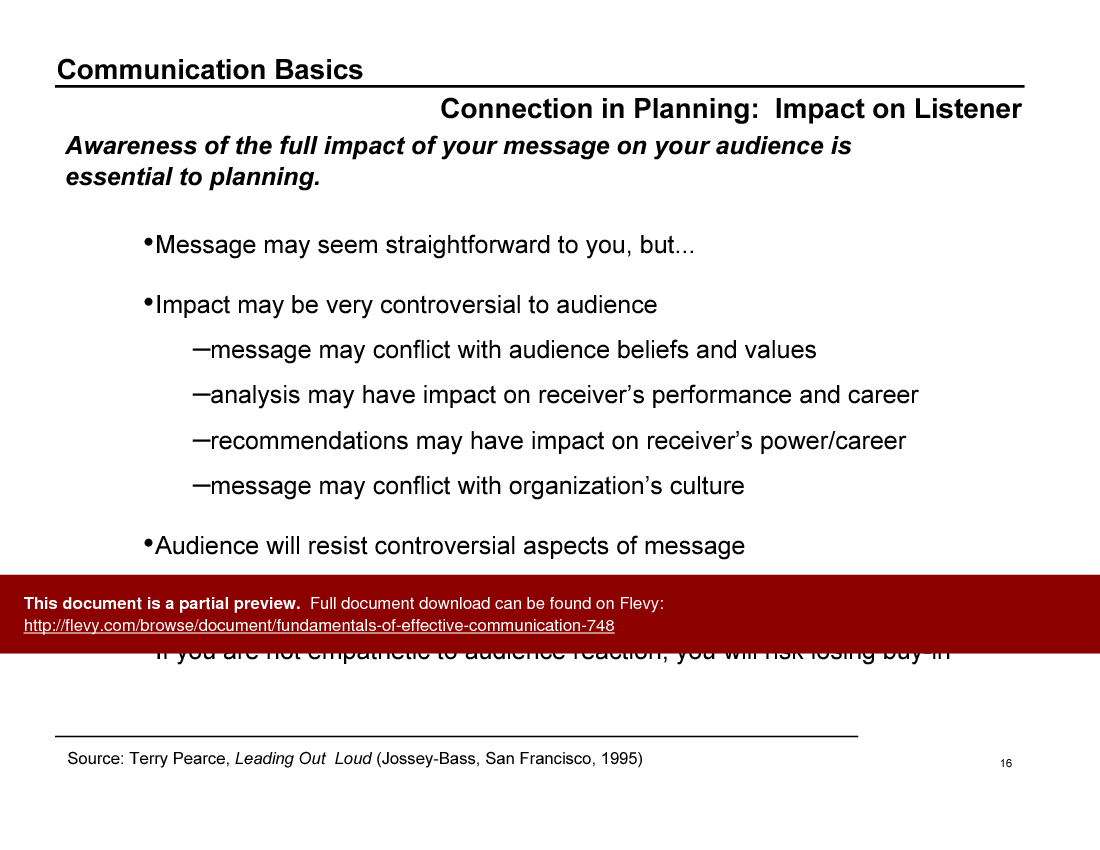
This PPT slide outlines essential communication principles focused on audience needs and message objectives. Effective communication aligns the sender's message with the audience's specific needs. Key audience needs include:
1. Commitment to action, with the objective of driving decisions through clarity and urgency.
2. Comfort level regarding work, requiring reassurance about progress along a timeline.
3. Credibility, where the objective is to showcase completed work to establish trust.
4. Awareness of opportunities, aimed at highlighting immediate critical factors that impact decision-making.
5. Need for data, emphasizing the importance of thoughtful presentation to avoid overwhelming the audience.
These principles guide message tailoring to enhance communication effectiveness.
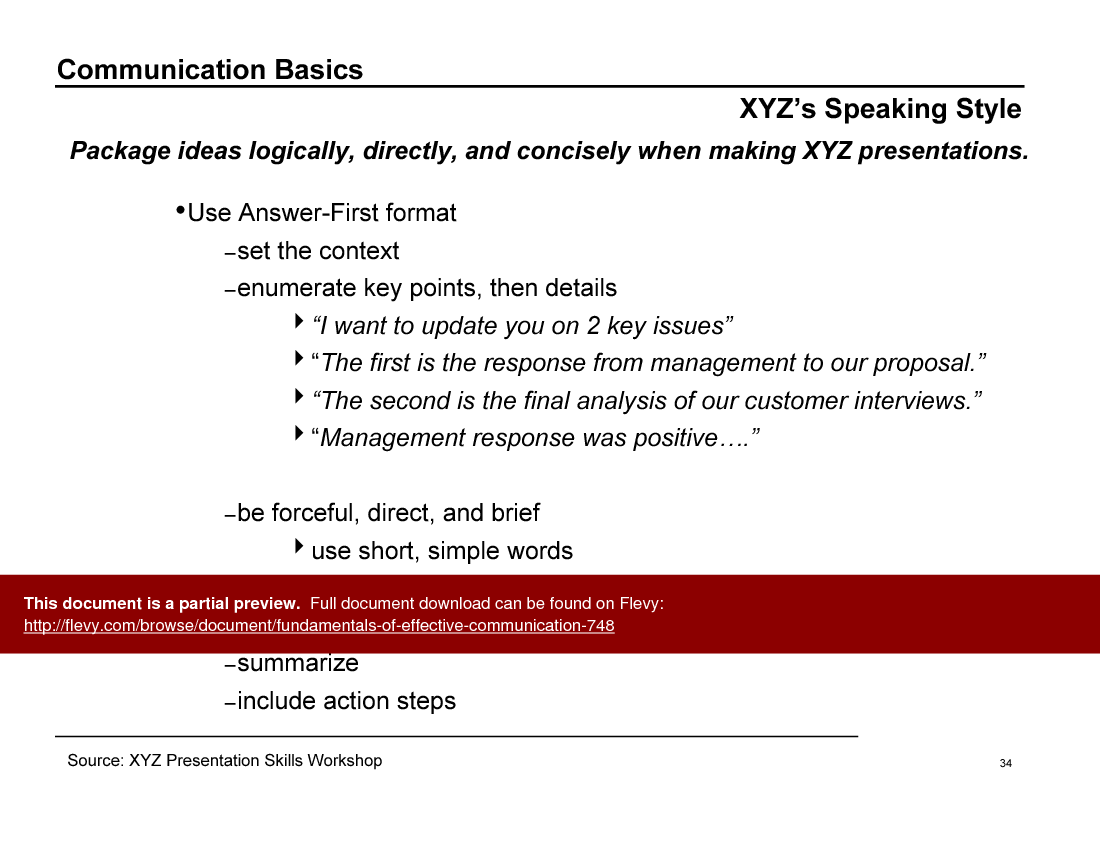
This PPT slide outlines fundamental principles for effective communication, structured into 3 sections: "How You Look," "How You Speak," and "What You Say."
The "How You Look" section emphasizes the speaker's physical presence, highlighting the importance of maintaining eye contact, adopting an open stance, and engaging directly with the audience to foster connection and active listening.
In "How You Speak," the focus is on language and delivery style, advocating for short, active sentences and conversational English. Pausing between ideas aids audience comprehension, while tone and pace significantly impact message clarity.
The "What You Say" section advises speakers to share insights rather than merely recount efforts, emphasizing the importance of conveying core messages succinctly, especially for C-level executives dealing with complex information.
This PPT slide emphasizes the importance of audience understanding in effective communication. It categorizes audiences into 3 groups: CEOs or Presidents, Operating Managers, and Analysts or Technicians, suggesting tailored communication strategies based on position and influence. The "Sophistication" dimension highlights aligning message complexity with the audience's education and familiarity with business concepts. The "Information Processing Style" contrasts preferences for words versus data or graphics and active versus passive engagement, enhancing communication effectiveness. The "Communication Environment" indicates that context—written, oral, or one-on-one—affects message reception. The "Controversial Nature of Conclusions" stresses the need to consider existing beliefs and the impact of recommendations on careers and culture. Lastly, "Client Perspectives" emphasizes understanding audience attitudes toward the topic and communicator for crafting resonant messages.
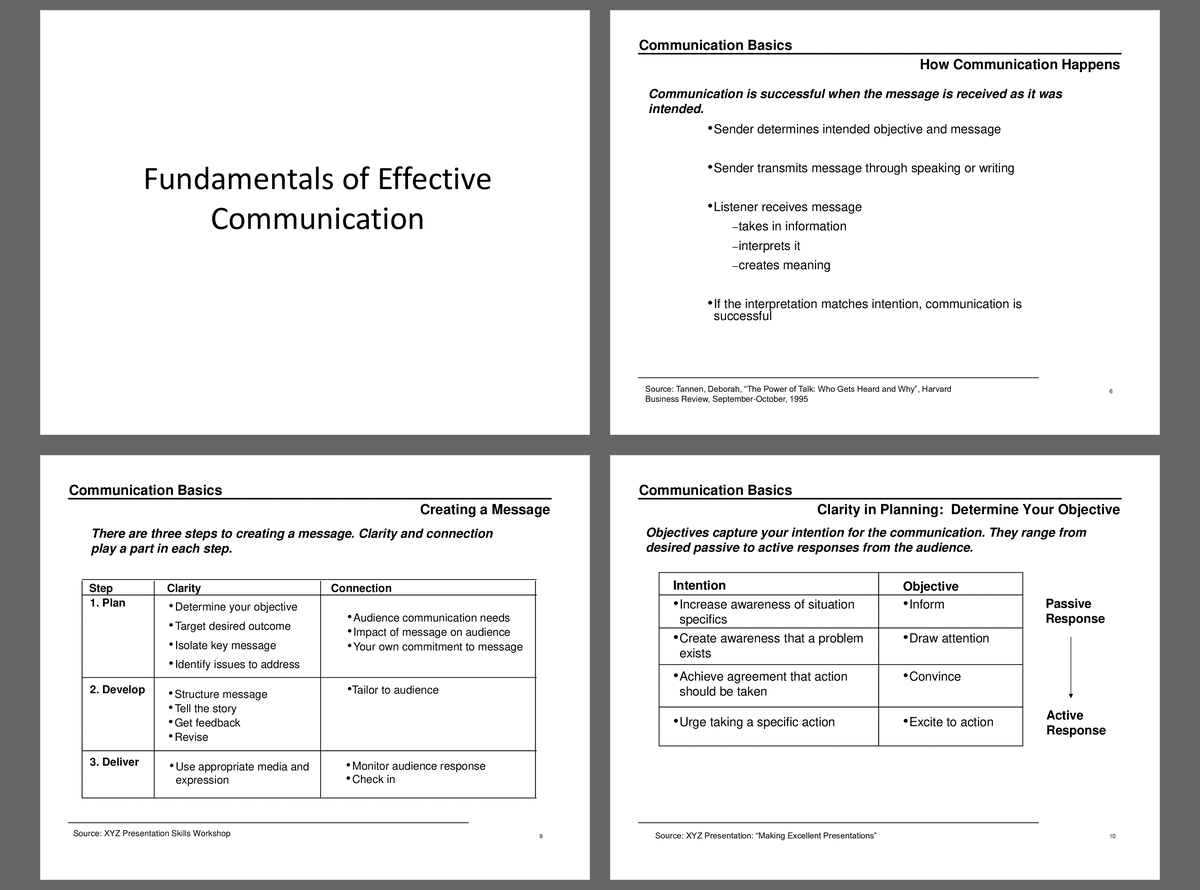
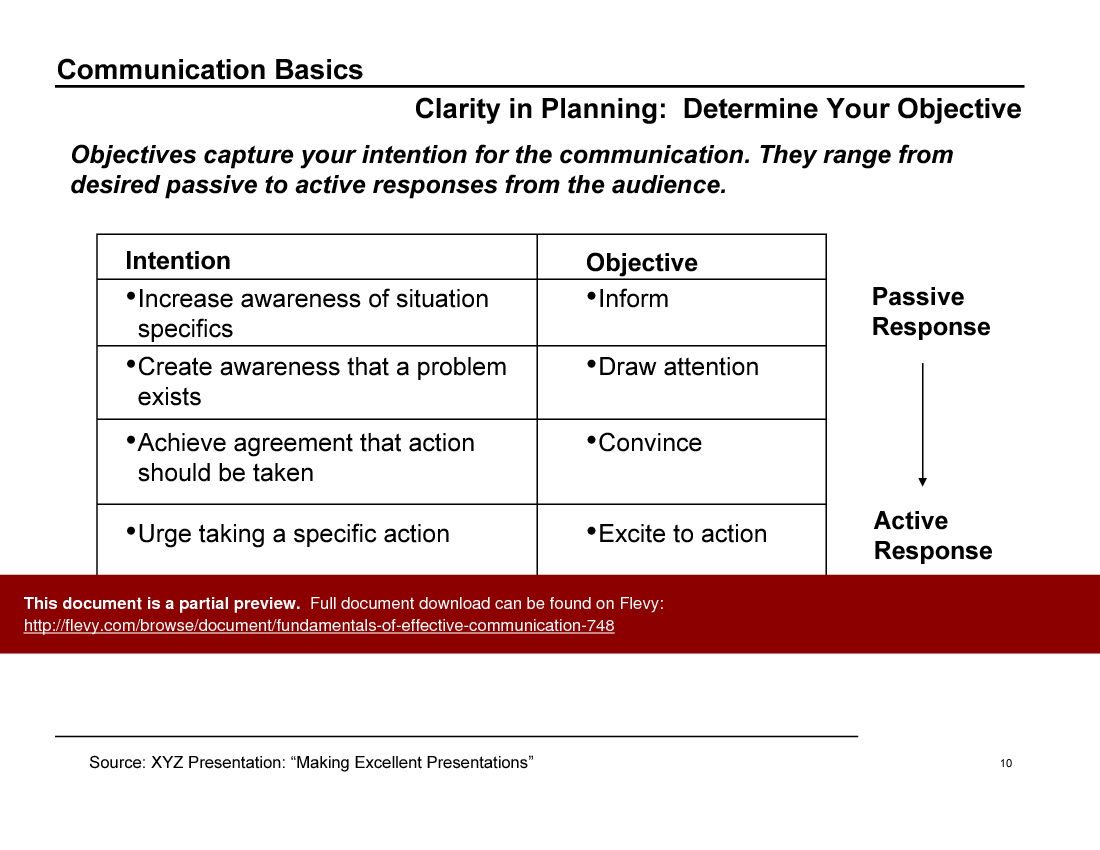
This PPT slide categorizes communication intentions and objectives, emphasizing clarity in aligning objectives with desired audience responses, ranging from passive awareness to active engagement. Key intentions include increasing awareness of specific situations to inform the audience, creating problem awareness to draw attention, and achieving agreement on necessary actions through persuasive communication. The ultimate goal is to inspire specific actions from the audience. The distinction between passive responses (awareness and understanding) and active responses (engagement and action) is critical. This framework guides executives to structure purposeful communication aimed at achieving specific outcomes, enhancing organizational communication strategies.
This PPT slide outlines a structured approach to effective communication, emphasizing 3 critical steps: Planning, Developing, and Delivering a message. In the Planning phase, clarity involves determining the communication objective, isolating the key message, and understanding the audience's needs. The Developing stage focuses on structuring the message by telling a compelling story and tailoring content to audience expectations. Finally, the Deliver phase emphasizes using appropriate media and expression, while monitoring audience response to ensure effective communication. This holistic approach highlights the importance of clarity and connection throughout the communication process for impactful interactions.
The memo from Steven Tallman, Worldwide Director of Training at XYZ, announces the launch of the XYZ Virtual University (BVU), an interactive education platform for employees focused on continuous learning and skill development. Key courses include XYZ Math, Client Skills, Presentation Delivery, and Telephone Interviewing, catering to diverse professional needs. The memo encourages active engagement with BVU and invites feedback, emphasizing a commitment to employee development and open communication. BVU's 24/7 accessibility through the BRAVA system offers flexibility in learning, aligning with modern work schedules. This initiative positions XYZ as a forward-thinking organization invested in workforce development.
Effective listening is a four-step process: Hear, Interpret, Understand, and Respond. A common pitfall is skipping from hearing to responding, bypassing interpretation and understanding, which can lead to miscommunication. Without proper interpretation, responses may misalign with the speaker's intent, causing confusion or conflict. This framework emphasizes the importance of cultivating better listening habits within teams to enhance communication skills. By addressing the tendency to rush responses, organizations can foster a culture of effective communication, improving collaboration and decision-making.
Source: Best Practices in Presentation Development, Communications Strategy PowerPoint Slides: Fundamentals of Effective Communication PowerPoint (PPT) Presentation Slide Deck, Documents & Files
Since 2012, we have provided business templates to over 10,000 businesses and organizations of all sizes, from startups and small businesses to the Fortune 100, in over 130 countries.
"One of the great discoveries that I have made for my business is the Flevy library of training materials.
As a Lean Transformation Expert, I am always making presentations to clients on a variety of topics: Training, Transformation, Total Productive Maintenance, Culture, Coaching, Tools, Leadership Behavior, etc. Flevy
It is well worth the money to purchase these presentations. Sure, I have the knowledge and information to make my point. It is another thing to create a presentation that captures what I want to say. Flevy has saved me countless hours of preparation time that is much better spent with implementation that will actually save money for my clients.
"
– Ed Kemmerling, Senior Lean Transformation Expert at PMG
"As a consulting firm, we had been creating subject matter training materials for our people and found the excellent materials on Flevy, which saved us 100's of hours of re-creating what already exists on the Flevy materials we purchased."
– Michael Evans, Managing Director at Newport LLC
"I have found Flevy to be an amazing resource and library of useful presentations for lean sigma, change management and so many other topics. This has reduced the time I need to spend on preparing for my performance consultation. The library is easily accessible and updates are regularly provided. A wealth of great information."
– Cynthia Howard RN, PhD, Executive Coach at Ei Leadership
"FlevyPro provides business frameworks from many of the global giants in management consulting that allow you to provide best in class solutions for your clients."
– David Harris, Managing Director at Futures Strategy
"FlevyPro has been a brilliant resource for me, as an independent growth consultant, to access a vast knowledge bank of presentations to support my work with clients. In terms of RoI, the value I received from the very first presentation I downloaded paid for my subscription many times over! The
quality of the decks available allows me to punch way above my weight – it's like having the resources of a Big 4 consultancy at your fingertips at a microscopic fraction of the overhead.
"
– Roderick Cameron, Founding Partner at SGFE Ltd
"[Flevy] produces some great work that has been/continues to be of immense help not only to myself, but as I seek to provide professional services to my clients, it gives me a large "tool box" of resources that are critical to provide them with the quality of service and outcomes they are expecting."
– Royston Knowles, Executive with 50+ Years of Board Level Experience
"I like your product. I'm frequently designing PowerPoint presentations for my company and your product has given me so many great ideas on the use of charts, layouts, tools, and frameworks. I really think the templates are a valuable asset to the job."
– Roberto Fuentes Martinez, Senior Executive Director at Technology Transformation Advisory
"I am extremely grateful for the proactiveness and eagerness to help and I would gladly recommend the Flevy team if you are looking for data and toolkits to help you work through business solutions."
– Trevor Booth, Partner, Fast Forward Consulting
Save with Bundles

This document is available as part of the following discounted bundle(s):
Receive our FREE whitepaper on the Top 101 Consulting Frameworks
Download our 200+ page guide summarizing the Top 101 Management Consulting Frameworks. Each framework provides a structured approach to analyzing and solving a common business problem.