
Editor Summary
How to Conduct Consulting Interviews is a 32-slide PowerPoint training presentation created by Documents & Files and industry veterans, providing a structured approach to planning, positioning, conducting, and synthesizing interviews across 4 core phases plus an appendix.
Read moreIncludes interview guide template, issue analysis worksheet, interview log, documentation plan, and follow-up communication templates. Target users include consultants, analysts, project managers, team leaders, and business development professionals. Sold as a digital download on Flevy.
Use this deck when teams need to gather stakeholder insights at different engagement stages — from initial scoping through mid-project validation to testing recommendations at close. Typical users and activities include:
Consultants and analysts developing a structured interview guide to collect qualitative data;
Project managers organizing logistics and stakeholder interviews to gather feedback;
Team leaders role-playing interviews to build rapport and refine questioning;
Business development professionals conducting guided interviews to clarify client needs.
The sequence—planning, positioning, conducting, synthesizing—aligns with common consulting practice of structured qualitative data collection and analysis.
This deck is a training presentation on how to conduct interviews in consulting projects. Contents include:
• Overview
• Planning and positioning the interview
• Conducting the interview
• Synthesizing the interview
• Appendix (interview template, useful techniques, reading materials etc.)
See also "How to Write A Business Plan"
/browse/marketplace/how-to-write-a-business-plan-835
See also "How to Prepare a Business Plan"
/browse/marketplace/how-to-prepare-a-business-plan-762
See also "How to Be a Great Manager"
/browse/marketplace/how-to-be-a-great-manager-755
See also "How to Be a Great Consultant"
/browse/marketplace/how-to-be-a-great-consultant-754
See also "How to Be a Great Associate Consultant "
/browse/marketplace/how-to-be-a-great-associate-consultant-753
See also "How to Deliver Effective Presentations"
/browse/marketplace/how-to-deliver-effective-presentations-751
See also "How to Run a Consulting Project"
/browse/marketplace/how-to-run-a-consulting-project-732
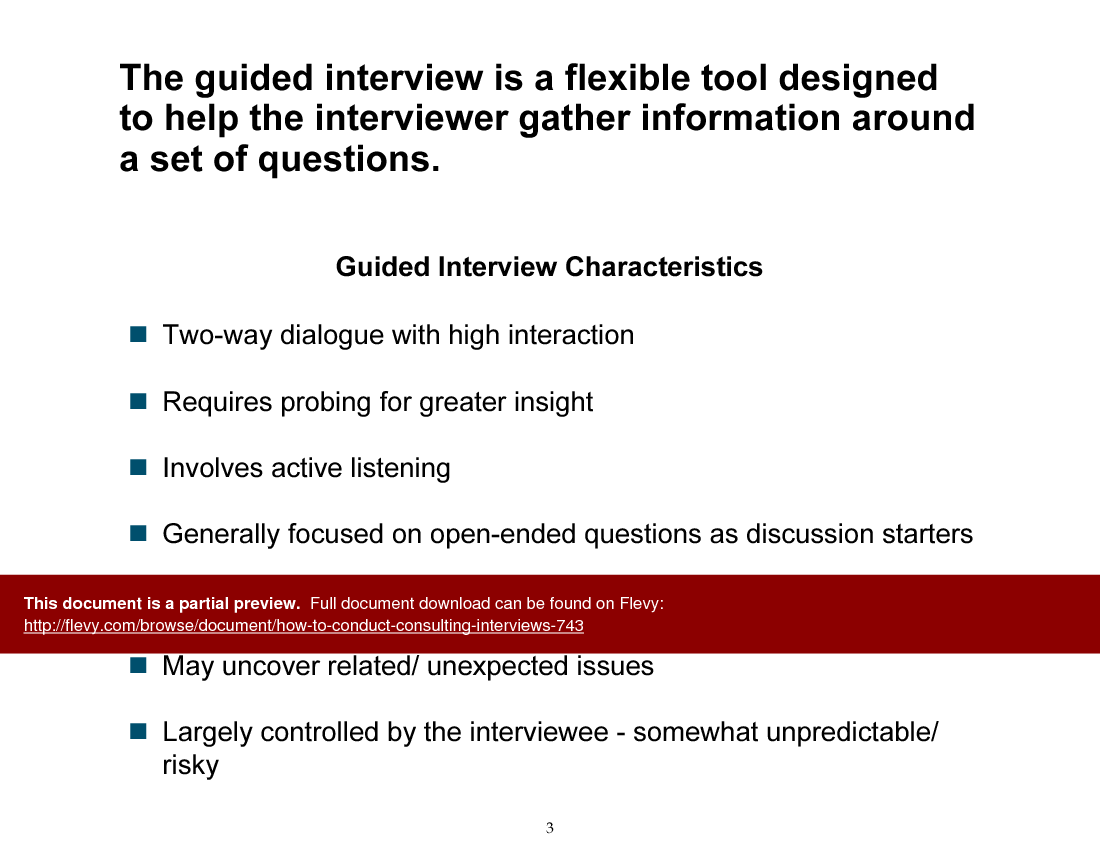
This presentation emphasizes the importance of a guided interview, which is a flexible tool designed to gather information through a set of questions. It highlights the characteristics of a guided interview, including the necessity for a two-way dialogue, active listening, and probing for deeper insights. The approach is generally focused on open-ended questions to foster discussion and uncover unexpected issues, making it somewhat unpredictable, but highly interactive.
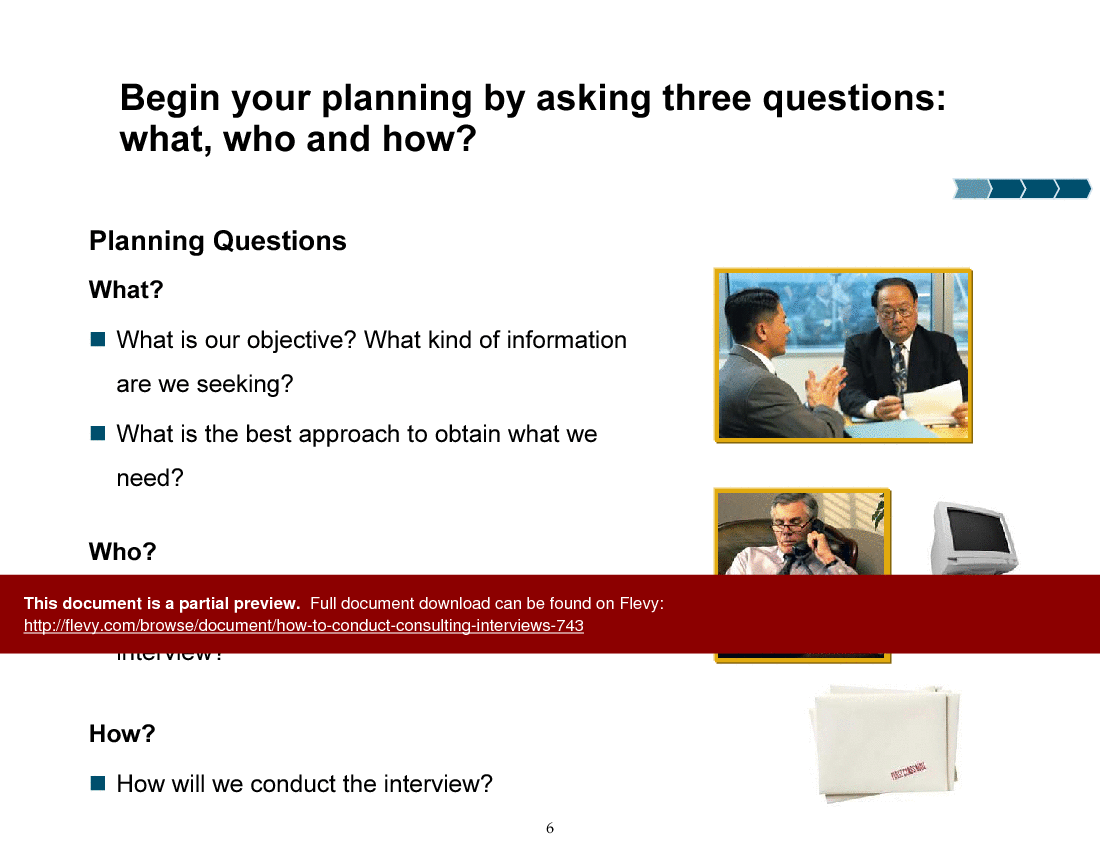
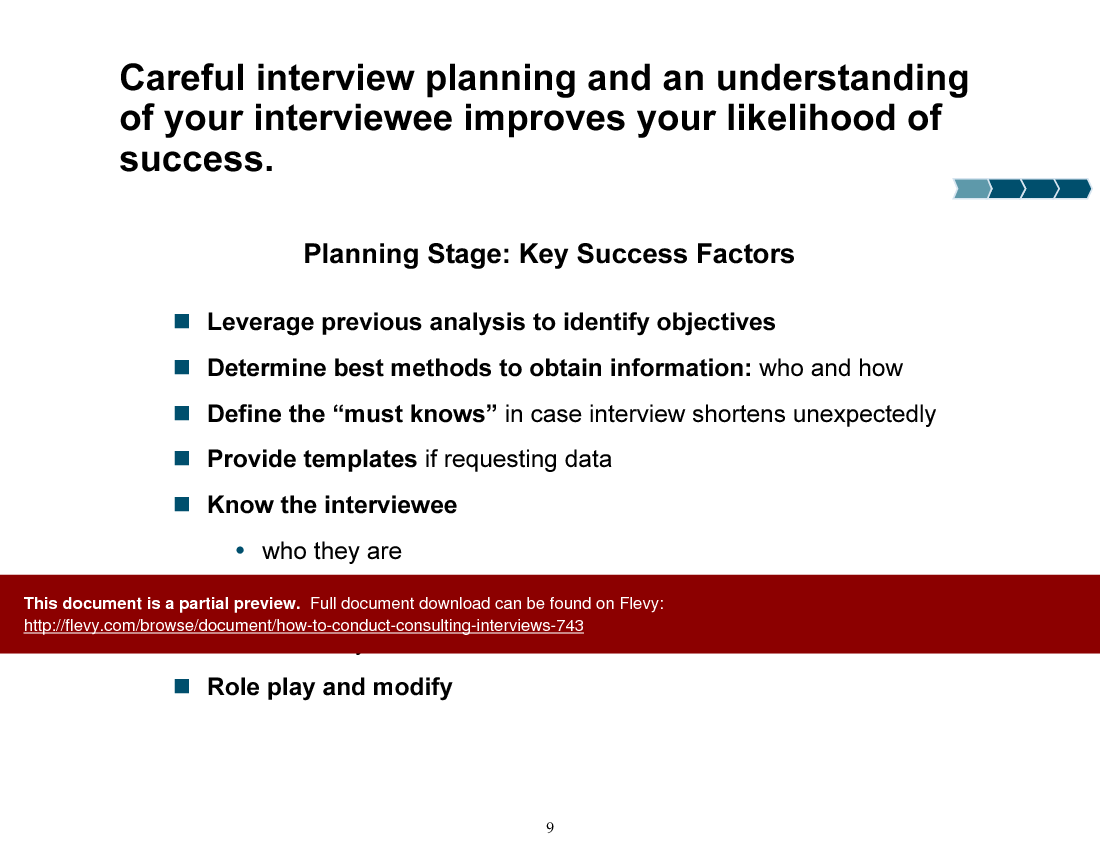
Planning your interview is crucial. Start by asking three fundamental questions: what, who, and how. Define your objectives and determine the best approach to obtain the necessary information. Identify who will be interviewed and how the interview will be conducted. This stage involves leveraging previous analyses, defining must-know information, and knowing your interviewee. Role-playing and modifying your approach based on the interviewee's responses can enhance the effectiveness of your planning.
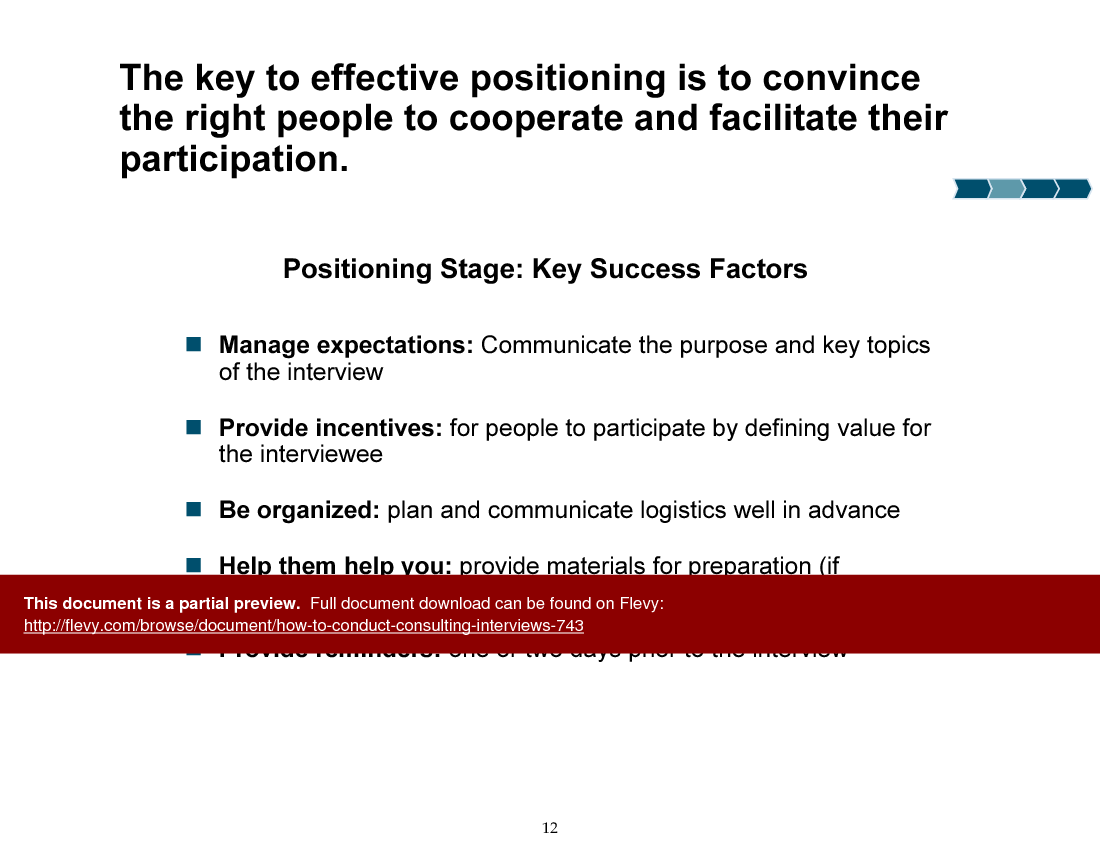
Positioning the interview is key to ensuring cooperation and participation. Managing expectations, providing incentives, and organizing logistics in advance are essential steps. Help your interviewees prepare by providing necessary materials and reminders. During the interview, use open questions to initiate broad discussions and closed questions to elicit specific information. Active listening, paraphrasing, and maintaining objectivity are critical to building rapport and ensuring the success of the interview.
Got a question about the product? Email us at support@flevy.com or ask the author directly by using the "Ask the Author a Question" form. If you cannot view the preview above this document description, go here to view the large preview instead.
MARCUS OVERVIEW
This synopsis was written by Marcus [?] based on the analysis of the full 32-slide presentation.
Executive Summary
This presentation titled "How to Conduct Effective Interviews in Consulting Projects" is a consulting-grade guide designed to enhance the skills of professionals conducting interviews. Created by industry veterans, this PPT provides a structured approach to planning, executing, and synthesizing interviews, ensuring that consultants can gather valuable insights effectively. The guide emphasizes the importance of active listening, probing for deeper understanding, and managing the interview process to achieve specific objectives. With this resource, users will be equipped to conduct interviews that yield actionable insights, ultimately driving project success.
Who This Is For and When to Use
• Consultants and analysts involved in project research and data collection
• Project managers seeking to gather stakeholder insights and feedback
• Team leaders aiming to build client relationships through effective communication
• Business development professionals looking to understand client needs and expectations
Best-fit moments to use this deck:
• During the initial phases of consulting engagements to gather background information
• When exploring complex problems that require detailed understanding and stakeholder input
• In mid-project stages to validate findings and refine solutions based on client feedback
• At the conclusion of projects to test recommendations and identify future opportunities
Learning Objectives
• Define the objectives of conducting interviews and the types of information needed
• Develop a structured interview guide that facilitates effective data collection
• Establish rapport and trust with interviewees to encourage open dialogue
• Utilize probing techniques to uncover deeper insights and unexpected issues
• Synthesize interview findings into actionable recommendations
• Manage logistics and expectations to ensure a smooth interview process
Table of Contents
• Overview of Conducting the Interview (page 3)
• Planning and Positioning the Interview (page 6)
• Conducting the Interview (page 17)
• Synthesizing the Interview (page 23)
• Appendix (page 25)
Primary Topics Covered
• Guided Interview Characteristics - A flexible tool designed for two-way dialogue, focusing on open-ended questions and active listening to gather insights.
• Planning Questions - Key questions to ask during the planning phase: what information is needed, who to interview, and how to conduct the interview.
• Interview Objectives by Engagement Stage - Understanding how interview objectives evolve from early engagement to late stages.
• Interview Guide Development - Creating a structured guide that outlines topics and questions to ensure comprehensive data collection.
• Conducting the Interview - Techniques for introducing, guiding dialogue, probing, and concluding interviews effectively.
• Synthesis of Findings - Strategies for synthesizing interview data into meaningful insights and recommendations.
Deliverables, Templates, and Tools
• Interview guide template to structure questions and objectives
• Issue analysis worksheet for identifying key topics and data sources
• Interview log for recording responses and insights
• Documentation plan for capturing and synthesizing data
• Follow-up communication templates for maintaining rapport with interviewees
Slide Highlights
• Overview slide detailing the guided interview process and its characteristics
• Planning questions slide emphasizing the importance of defining objectives, interviewees, and methods
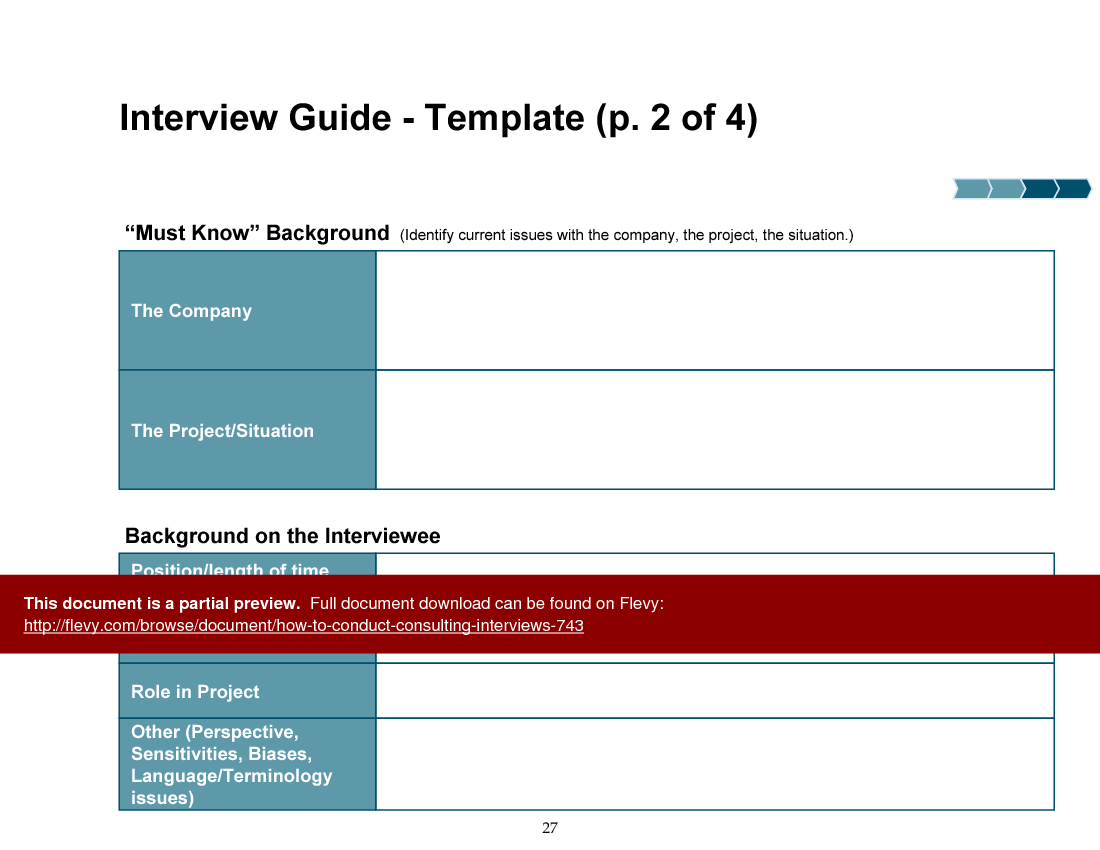
• Interview guide template slide showcasing the structure for effective data collection
• Techniques for probing and responsive questioning highlighted for effective dialogue
• Synthesis strategies slide focusing on how to analyze and validate interview findings
Potential Workshop Agenda
Introduction to Interviewing Techniques (60 minutes)
• Discuss the importance of effective interviewing in consulting
• Review the characteristics of guided interviews
• Explore planning and positioning strategies
Practical Application of Interview Guides (90 minutes)
• Develop a customized interview guide based on a case study
• Role-play interviews using the guide to practice techniques
• Gather feedback and refine approaches
Synthesis and Analysis of Interview Data (60 minutes)
• Learn methods for synthesizing interview findings
• Discuss how to translate insights into actionable recommendations
• Share best practices for documenting and presenting findings
Customization Guidance
• Tailor the interview guide template to fit specific project objectives and stakeholder needs
• Adjust the sequencing of questions based on the interviewee's background and expertise
• Incorporate company-specific terminology and context to enhance relatability
• Modify logistics and communication strategies based on the interview format (in-person, virtual)
• Define clear metrics for success based on the interview objectives
Secondary Topics Covered
• Techniques for building rapport and trust with interviewees
• Strategies for managing interview logistics and expectations
• Importance of active listening and responsive questioning
• Methods for handling sensitive topics during interviews
• Approaches for validating and synthesizing qualitative data
Topic FAQ
What are the main phases of a consulting interview process?
A standard consulting interview process starts with an overview, then moves to planning and positioning the interview, proceeds to conducting the interview, and ends with synthesizing findings; many training decks also include an appendix of templates and tools. These are presented as Overview, Planning and Positioning, Conducting, Synthesizing, and Appendix.
What is a guided interview and when is it useful in consulting?
A guided interview is a flexible, two-way dialogue technique that uses open-ended questions, active listening, and responsive probing to surface insights and unexpected issues. It is useful when exploring complex problems or gathering nuanced stakeholder perspectives because it emphasizes open-ended questions and active listening.
How should I plan a consulting interview—what initial questions should I ask?
Begin planning by asking 3 fundamentals: what information is needed, who to interview, and how to conduct the interview. Leverage prior analyses, define must-know topics, know the interviewee’s background, and consider role-playing to refine approach; this starts with the 3 fundamental questions: what, who, and how.
What should I look for in an interview training deck or toolkit when buying one?
Look for materials that cover planning, positioning, conducting, and synthesizing interviews plus practical templates for execution. Useful deliverables include an interview guide template, an issue analysis worksheet, an interview log, a documentation plan, and follow-up communication templates as concrete toolkit elements.
How much time should I budget to run a workshop teaching interview techniques?
A practical workshop agenda in the training suggests about 3.5 hours total: 60 minutes introduction to interviewing techniques, 90 minutes practical application with role-play, and 60 minutes on synthesis and analysis of interview data, totaling 210 minutes.
I need to validate mid-project findings with stakeholders—what interviewing approach should I use?
Use a guided interview focused on evolving interview objectives for mid-project validation, employ probing and active listening to test assumptions, capture responses in an interview log, and apply synthesis methods to compare findings against objectives; this approach ties into the Synthesizing the Interview section.
How can I handle sensitive topics during a consulting interview without biasing responses?
Build rapport and trust, manage expectations and logistics, use active listening and paraphrasing to maintain objectivity, and employ responsive, follow-up questions to explore sensitive areas carefully; these techniques are covered under rapport building, active listening, and probing methods.
Are interview templates worth buying and what practical value do they provide?
Templates standardize planning, execution, and documentation—helping teams define objectives, structure questions, record responses, and synthesize insights. Practical items to look for include an interview guide template, an issue analysis worksheet, an interview log, and a documentation plan to support consistent data collection.
Document FAQ
These are questions addressed within this presentation.
What is the purpose of a guided interview?
A guided interview serves as a flexible tool to facilitate a two-way dialogue, allowing interviewers to gather detailed information through open-ended questions and active listening.
How do I plan for an effective interview?
Begin by defining your objectives, identifying who has the necessary information, and determining the best approach to conduct the interview.
What should be included in an interview guide?
An interview guide should outline objectives, key questions, background information on the interviewee, and a documentation plan for capturing insights.
How can I ensure a smooth interview process?
Manage logistics effectively by confirming arrangements, setting clear expectations, and providing materials for preparation to the interviewee.
What techniques can I use to probe for deeper insights?
Utilize responsive questions, follow-up inquiries, and active listening to encourage interviewees to elaborate on their responses.
How do I synthesize interview findings?
Analyze the data by comparing it against your initial objectives, identifying patterns, and translating insights into actionable recommendations.
What are common challenges in conducting interviews?
Challenges may include managing interviewee expectations, addressing sensitive topics, and ensuring the collection of unbiased data.
How can I maintain rapport with interviewees?
Build rapport by establishing trust, actively listening, and showing appreciation for their time and insights throughout the interview process.
Glossary
• Guided Interview - A flexible interviewing technique that encourages dialogue and insight gathering.
• Interview Guide - A structured template outlining objectives and questions for interviews.
• Probing - The technique of asking follow-up questions to elicit deeper insights.
• Synthesis - The process of analyzing and combining interview findings into actionable insights.
• Rapport - A positive relationship established between the interviewer and interviewee to facilitate open communication.
• Active Listening - Engaging fully with the interviewee to understand their responses and clarify points.
• Logistics - The planning and organization of interview arrangements and communication.
• Documentation Plan - A strategy for capturing and synthesizing interview data effectively.
• Responsive Questions - Questions designed to clarify or expand on previous statements made by the interviewee.
• Issue Analysis - A method for identifying key topics and data sources relevant to the interview objectives.
• Qualitative Data - Non-numerical information gathered through interviews that provides insights into opinions and experiences.
• Objectives - The specific goals or outcomes desired from conducting an interview.
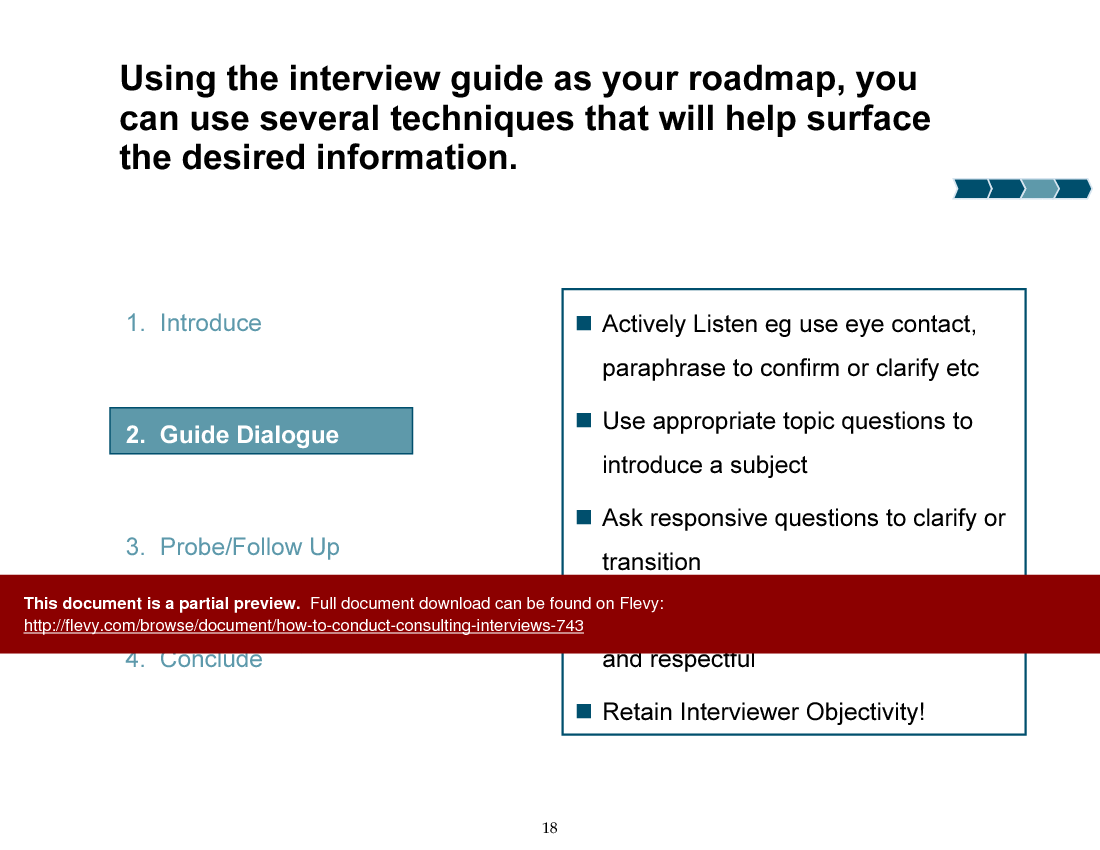
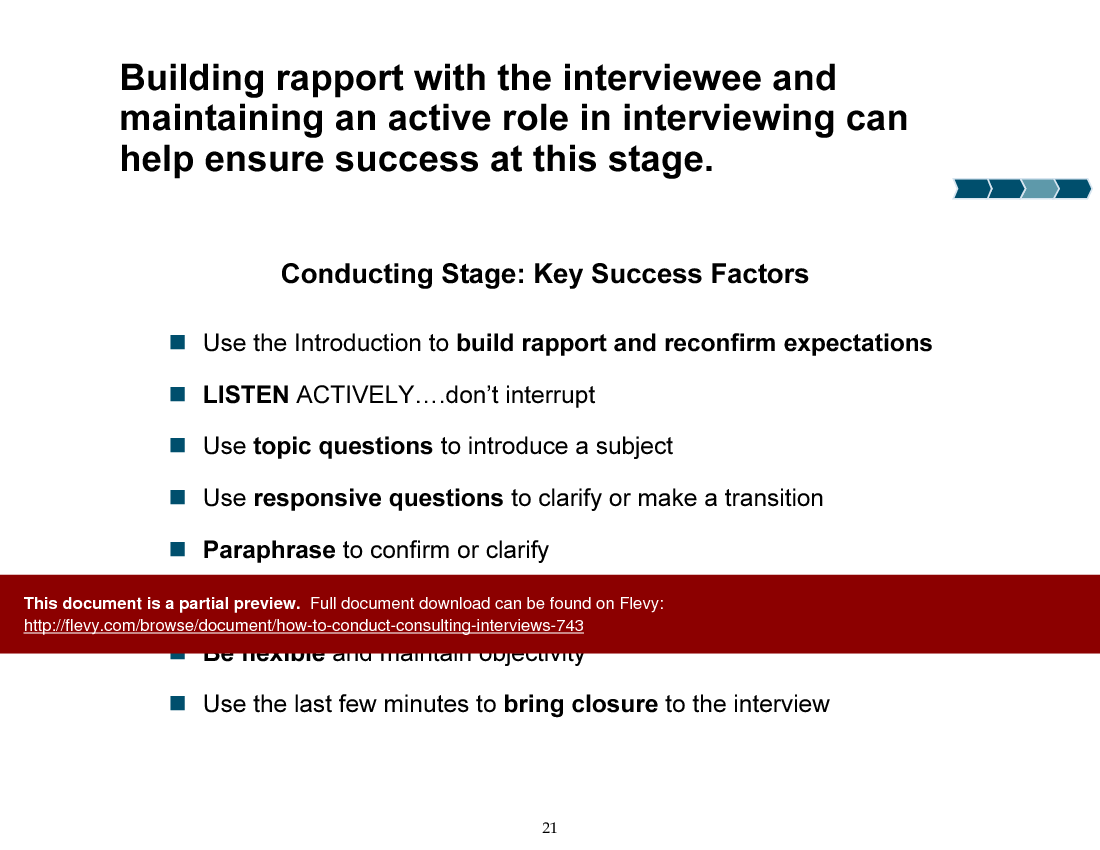
This PPT slide outlines techniques for guiding dialogue during consulting interviews, emphasizing effective communication to extract valuable information. Active listening is essential, involving eye contact and paraphrasing for clarity. Using appropriate topic questions introduces subjects for deeper exploration, steering discussions toward interview objectives. Responsive questions clarify points and facilitate smooth transitions, ensuring coherence. Controlling dialogue flow requires flexibility and respect, enhancing rapport and encouraging candid responses. Retaining interviewer objectivity is crucial to avoid biases that could skew information gathered. These strategies refine interviewing skills, leading to more effective outcomes.
This PPT slide focuses on the use of responsive questions to clarify vague statements during interviews. Common phrases like "Costs are quite low…" and "Operations is always late…" often lack detail and can lead to misunderstandings. To obtain clarity, interviewers can use targeted questions such as "Which costs specifically, and low compared to what?" and "Can you explain how that is measured?" This method enhances data quality and fosters productive dialogue, making it essential for effective interviewing in consulting contexts where precision and clarity are critical for decision-making and strategy formulation.
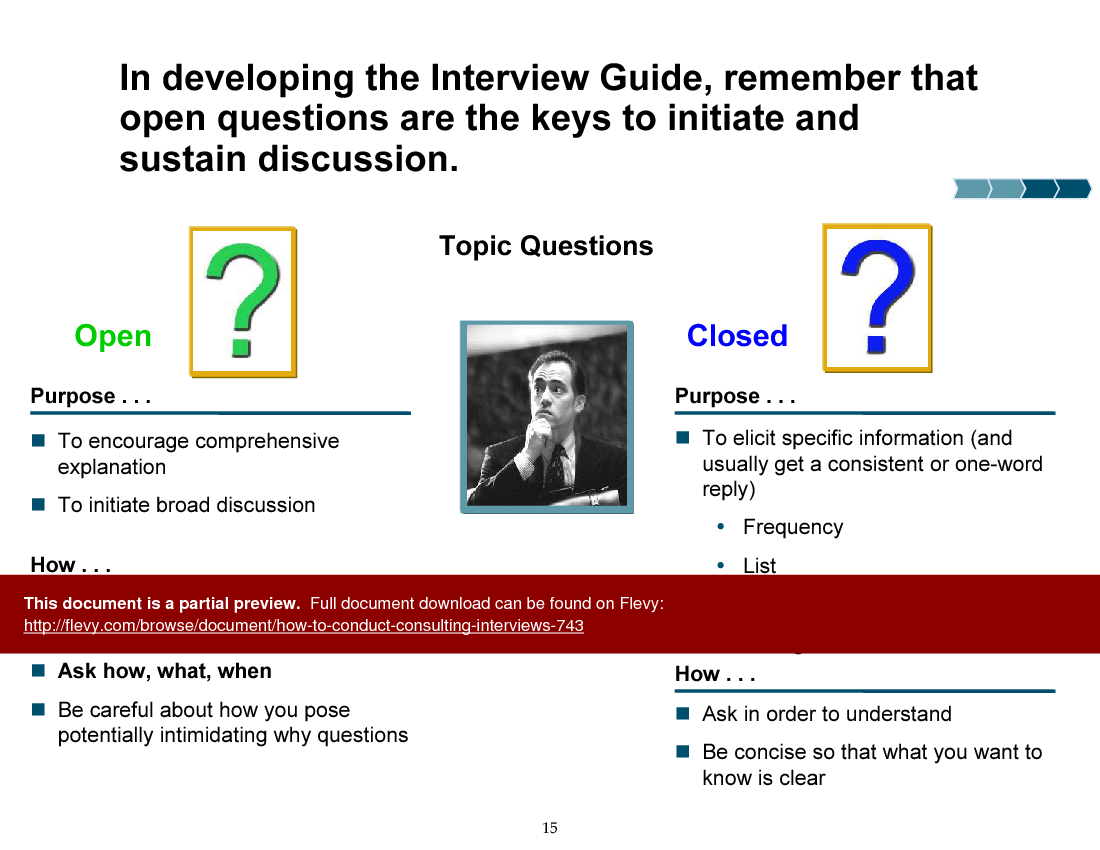
This PPT slide focuses on the importance of question types in interviews, distinguishing between open and closed questions. Open questions foster comprehensive discussions and detailed responses, promoting thorough explanations and broad dialogue. Effective phrasing includes "how," "what," and "when," encouraging interviewees to share context and insights. Closed questions elicit specific information, resulting in concise answers, and are useful for obtaining frequency data or simple yes/no responses. While closed questions provide straightforward information, they may limit conversational depth. Balancing open and closed questions enhances communication quality, refining interviewing skills for professionals seeking productive discussions.
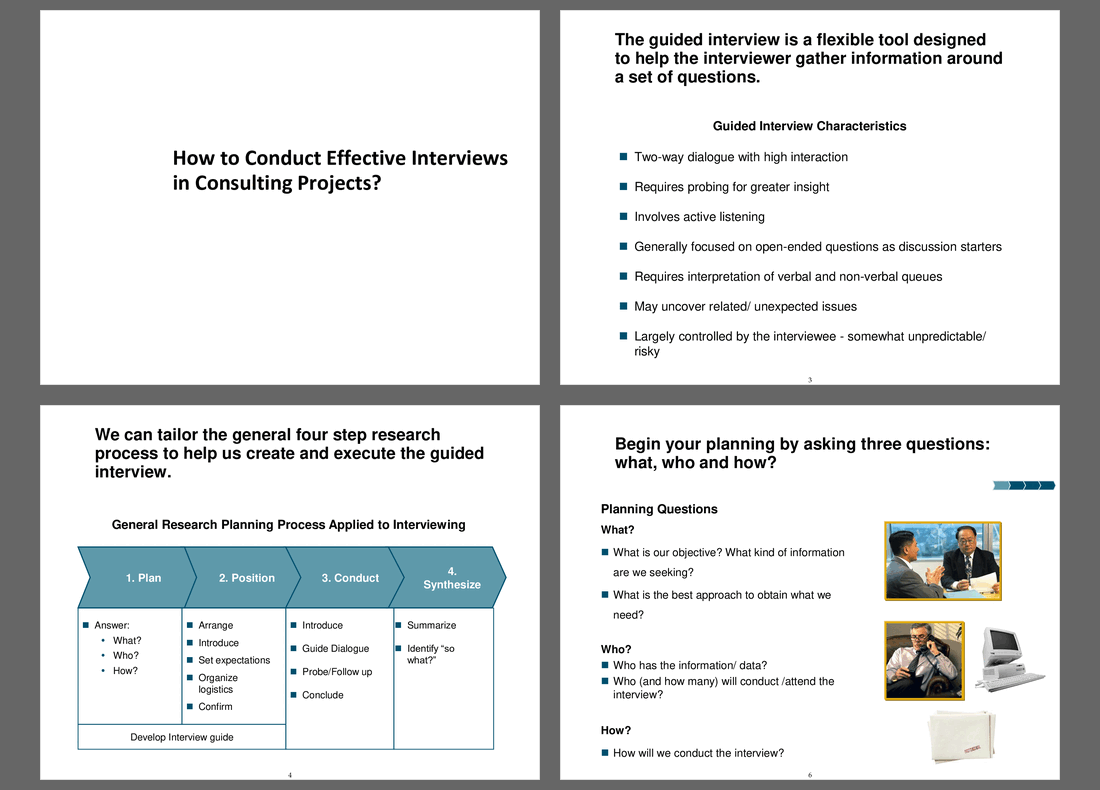
This PPT slide outlines a structured four-step research planning process for conducting guided interviews: Plan, Position, Conduct, and Synthesize.
In the "Plan" step, key questions include the interview's purpose, participants, and methodology, establishing clear objectives. The "Position" step focuses on logistical arrangements, such as setting the interview environment, introducing participants, and confirming details to foster open dialogue.
During "Conduct," the interview is executed by introducing the topic, guiding the conversation, probing for insights, and concluding effectively to capture all necessary information.
Finally, "Synthesize" involves summarizing insights and identifying their implications, transforming raw data into actionable recommendations for stakeholders. This process enhances organizational interviewing practices, maximizing the value of insights gathered.
This PPT slide outlines a structured approach to issue analysis for strategic planning, featuring an "Issue Analysis Worksheet." Key components include defining the issue, formulating hypotheses, conducting analysis, identifying required data, and determining data sources. The highlighted issue is whether "Coverco can improve profitability by reducing claims payouts." The worksheet suggests that Coverco can reduce costs and enhance profitability through lower claims payouts. The "Data Required" and "Data Source" columns guide research by emphasizing the need for accurate data to support hypotheses. The "Organizational Structure" section illustrates the hierarchy within Coverco, highlighting roles such as the Manager of Product Development and Managers of Operations and IT, clarifying responsibilities for addressing identified issues.
This PPT slide outlines a structured approach to effective interview planning in consulting, focusing on 3 critical inquiries: "What," "Who," and "How." The "What" section emphasizes defining interview objectives and identifying the specific information needed, highlighting the importance of clarity in purpose. The "Who" section addresses identifying key stakeholders who possess relevant insights and determining who will conduct the interviews, stressing the need for a well-prepared team. Lastly, the "How" section likely discusses methodologies for conducting interviews, including formats and effective questioning techniques. Thorough preparation and clear objectives are vital for achieving meaningful insights and informed decision-making.
Guided interviews are a flexible tool for information gathering, fostering a two-way dialogue that enhances interaction. This dynamic allows interviewers to probe for deeper insights through follow-up questions, leading to richer information than standard questioning techniques. Active listening is essential, involving the interpretation of both verbal and non-verbal cues to gauge the interviewee's true feelings, impacting the quality of insights gathered. Guided interviews typically center around open-ended questions, encouraging comprehensive exploration of topics and uncovering unexpected issues. The interviewer controls the process, introducing adaptability that ensures relevant topics are addressed as they arise.
Source: Best Practices in Interviewing, Focus Interviewing, Bain PowerPoint PowerPoint Slides: How to Conduct Consulting Interviews PowerPoint (PPT) Presentation Slide Deck, Documents & Files
Since 2012, we have provided business templates to over 10,000 businesses and organizations of all sizes, from startups and small businesses to the Fortune 100, in over 130 countries.
"Flevy.com has proven to be an invaluable resource library to our Independent Management Consultancy, supporting and enabling us to better serve our enterprise clients.
The value derived from our [FlevyPro] subscription in terms of the business it has helped to gain far exceeds the investment made, making a subscription a no-brainer for any growing consultancy – or in-house strategy team."
– Dean Carlton, Chief Transformation Officer, Global Village Transformations Pty Ltd.
"I am extremely grateful for the proactiveness and eagerness to help and I would gladly recommend the Flevy team if you are looking for data and toolkits to help you work through business solutions."
– Trevor Booth, Partner, Fast Forward Consulting
"Flevy is now a part of my business routine. I visit Flevy at least 3 times each month.
Flevy has become my preferred learning source, because what it provides is practical, current, and useful in this era where the business world is being rewritten.
many challenges and there is the need to make the right decisions in a short time, with so much scattered information, we are fortunate to have Flevy. Flevy investigates, selects, and puts at our disposal the best of the best to help us be successful in our work.
"
– Omar Hernán Montes Parra, CEO at Quantum SFE
"Flevy is our 'go to' resource for management material, at an affordable cost. The Flevy library is comprehensive and the content deep, and typically provides a great foundation for us to further develop and tailor our own service offer."
– Chris McCann, Founder at Resilient.World
"As a niche strategic consulting firm, Flevy and FlevyPro frameworks and documents are an on-going reference to help us structure our findings and recommendations to our clients as well as improve their clarity, strength, and visual power. For us, it is an invaluable resource to increase our impact and value."
– David Coloma, Consulting Area Manager at Cynertia Consulting
"I like your product. I'm frequently designing PowerPoint presentations for my company and your product has given me so many great ideas on the use of charts, layouts, tools, and frameworks. I really think the templates are a valuable asset to the job."
– Roberto Fuentes Martinez, Senior Executive Director at Technology Transformation Advisory
"As a consulting firm, we had been creating subject matter training materials for our people and found the excellent materials on Flevy, which saved us 100's of hours of re-creating what already exists on the Flevy materials we purchased."
– Michael Evans, Managing Director at Newport LLC
"As an Independent Management Consultant, I find Flevy to add great value as a source of best practices, templates and information on new trends. Flevy has matured and the quality and quantity of the library is excellent. Lastly the price charged is reasonable, creating a win-win value for
the customer, Flevy and the various authors. This is truly a service that benefits the consulting industry and associated clients. Thanks for providing this service.
"
– Jim Schoen, Principal at FRC Group
Save with Bundles

This document is available as part of the following discounted bundle(s):
Download our free compilation of 50+ slides and templates on Organizational Design, Change Management, and Corporate Culture. Methodologies include ADKAR, Burke-Litwin Change Model, McKinsey 7-S, Competing Values Framework, etc.