
Difficult Conversations Framework   31-slide PPT PowerPoint presentation slide deck (PPTX)
$29.00

Difficult Conversations Framework (31-slide PPT PowerPoint presentation slide deck (PPTX)) Preview Image
Log in to unlock full preview.
Difficult Conversations Framework (31-slide PPT PowerPoint presentation slide deck (PPTX)) Preview Image
Arrow   Click main image to view in full screen.

Difficult Conversations Framework (PowerPoint PPTX Slide Deck)

PowerPoint (PPTX) 31 Slides FlevyPro Document

#2 in Soft Skills $29.00
FlevyPro price: FREE (included in subscription)
This framework is developed by a team of former McKinsey and Big 4 consultants. The presentation follows the headline-body-bumper slide format used by global consulting firms.
Add to Cart


Immediate download
Free lifetime updates

COMMUNICATIONS STRATEGY PPT DESCRIPTION

Editor Summary 31-slide PowerPoint framework (PPTX) presenting the Difficult Conversations Framework developed by Douglas Stone, Bruce Patton, and Sheila Heen. Read more

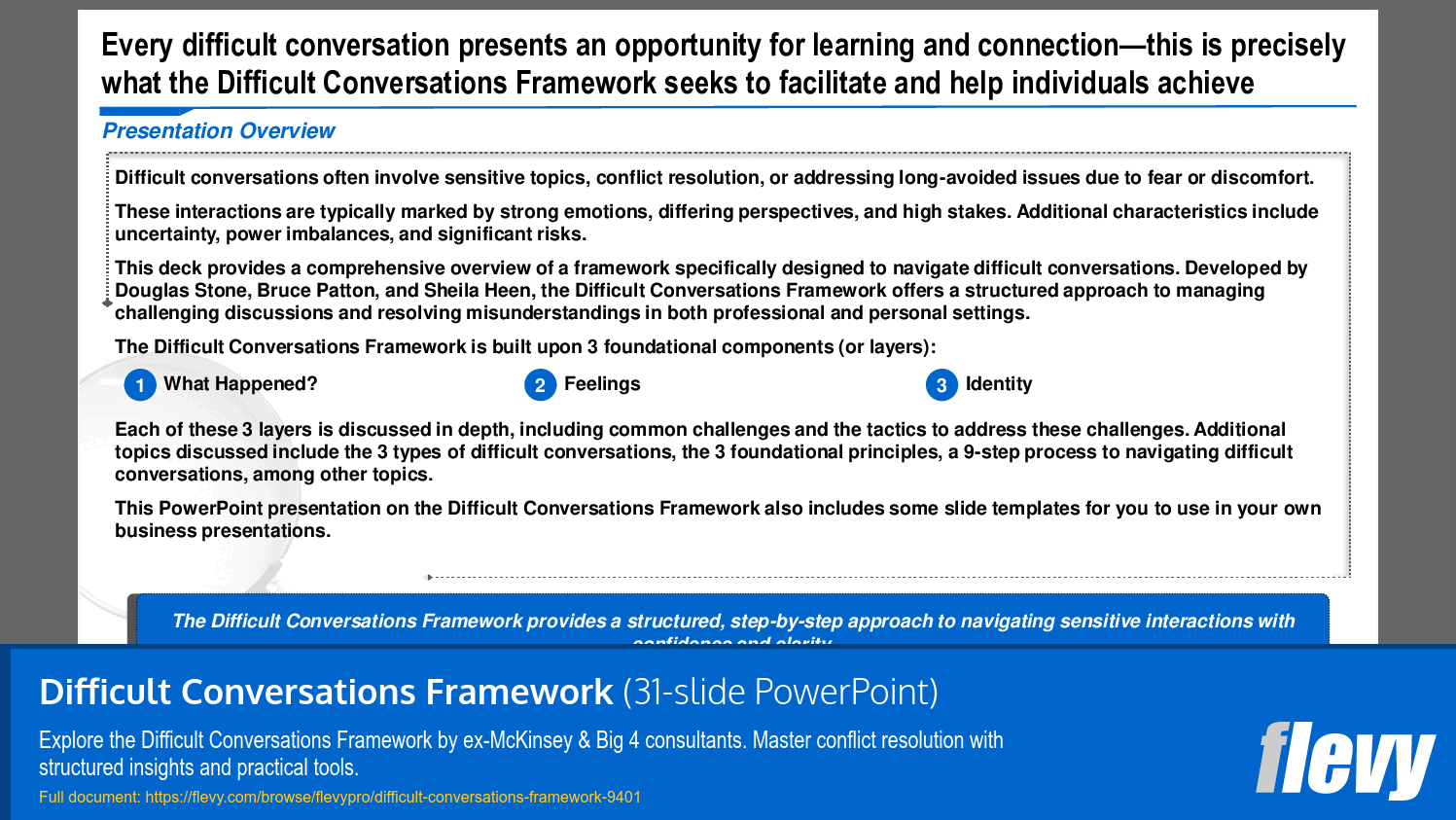
Difficult conversations often involve sensitive topics, conflict resolution, or addressing long-avoided issues due to fear or discomfort.

These interactions are typically marked by strong emotions, differing perspectives, and high stakes. Additional characteristics include uncertainty, power imbalances, and significant risks.

This PPT deck provides a comprehensive overview of a framework specifically designed to navigate difficult conversations. Developed by Douglas Stone, Bruce Patton, and Sheila Heen, the Difficult Conversations Framework offers a structured approach to managing challenging discussions and resolving misunderstandings in both professional and personal settings.

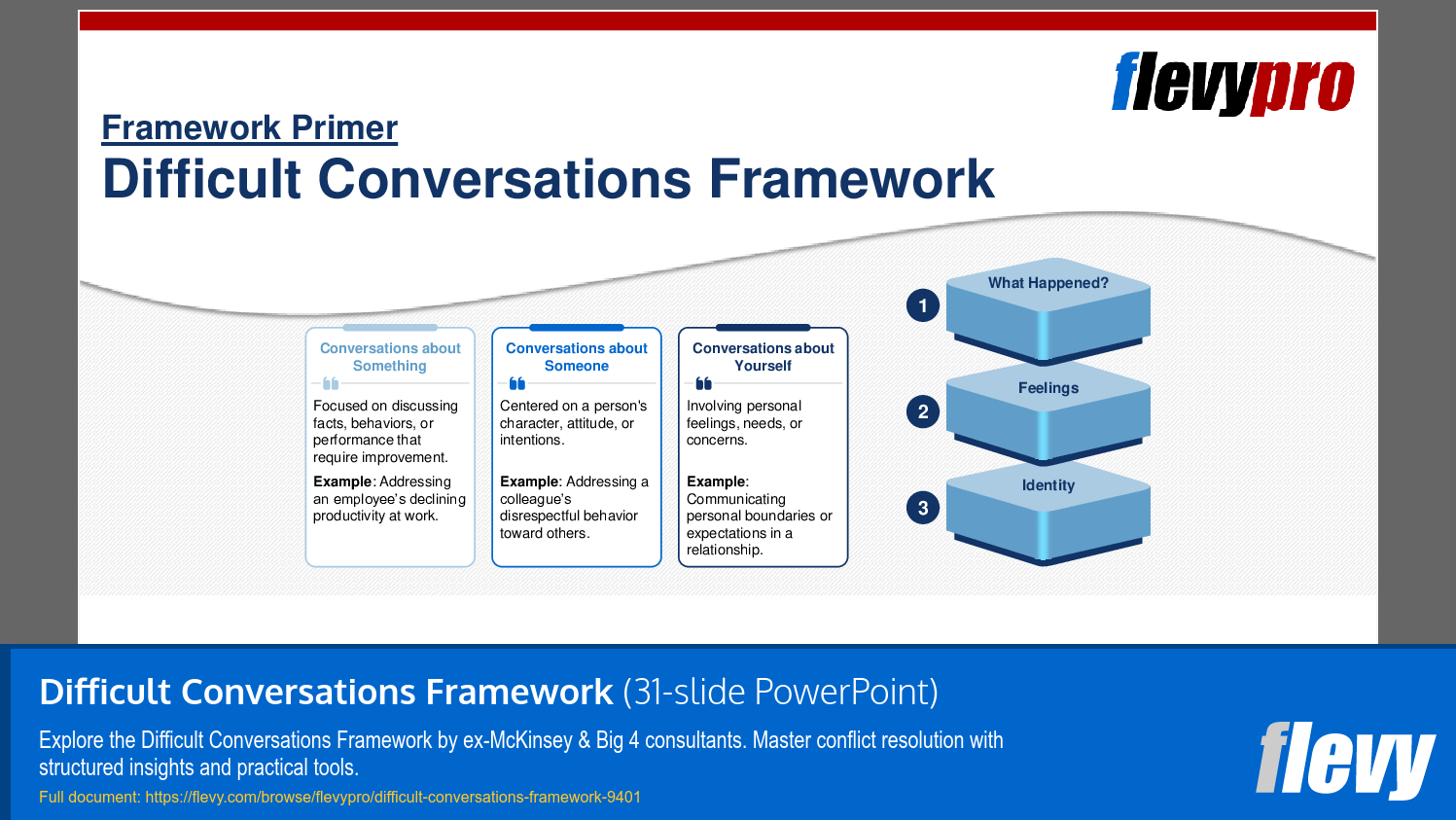
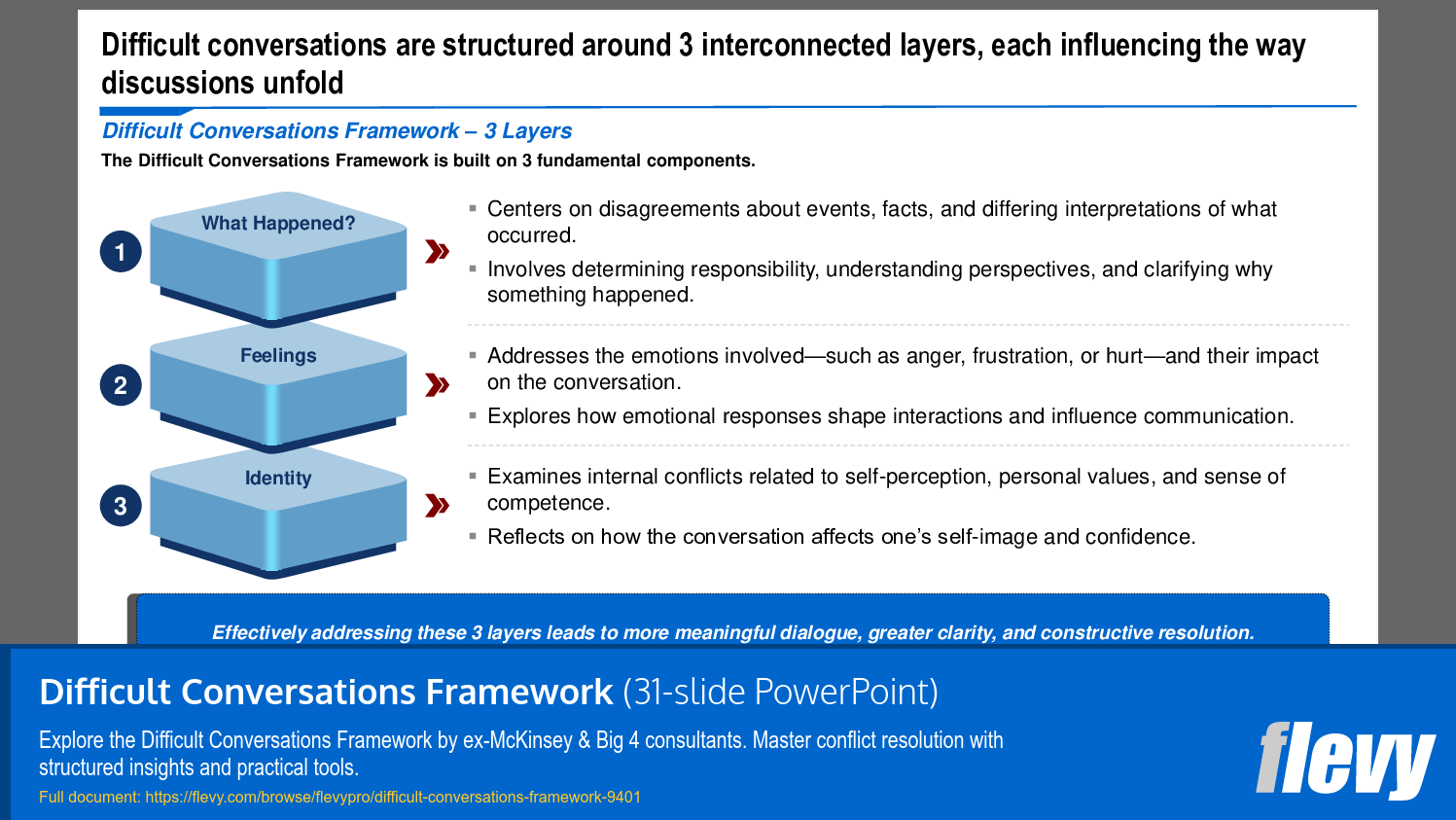
The Difficult Conversations Framework is built upon 3 foundational components (or layers):

1. What Happened?
•  This layer focuses on the factual aspects of the conversation—what occurred, who was involved, and why it happened. It often includes disagreements about events, intentions, and responsibility.

2. Feelings
•  This layer focuses on the emotions underlying the issue. Feelings such as frustration, anger, hurt, or fear often intensify the conversation and significantly impact its outcome.

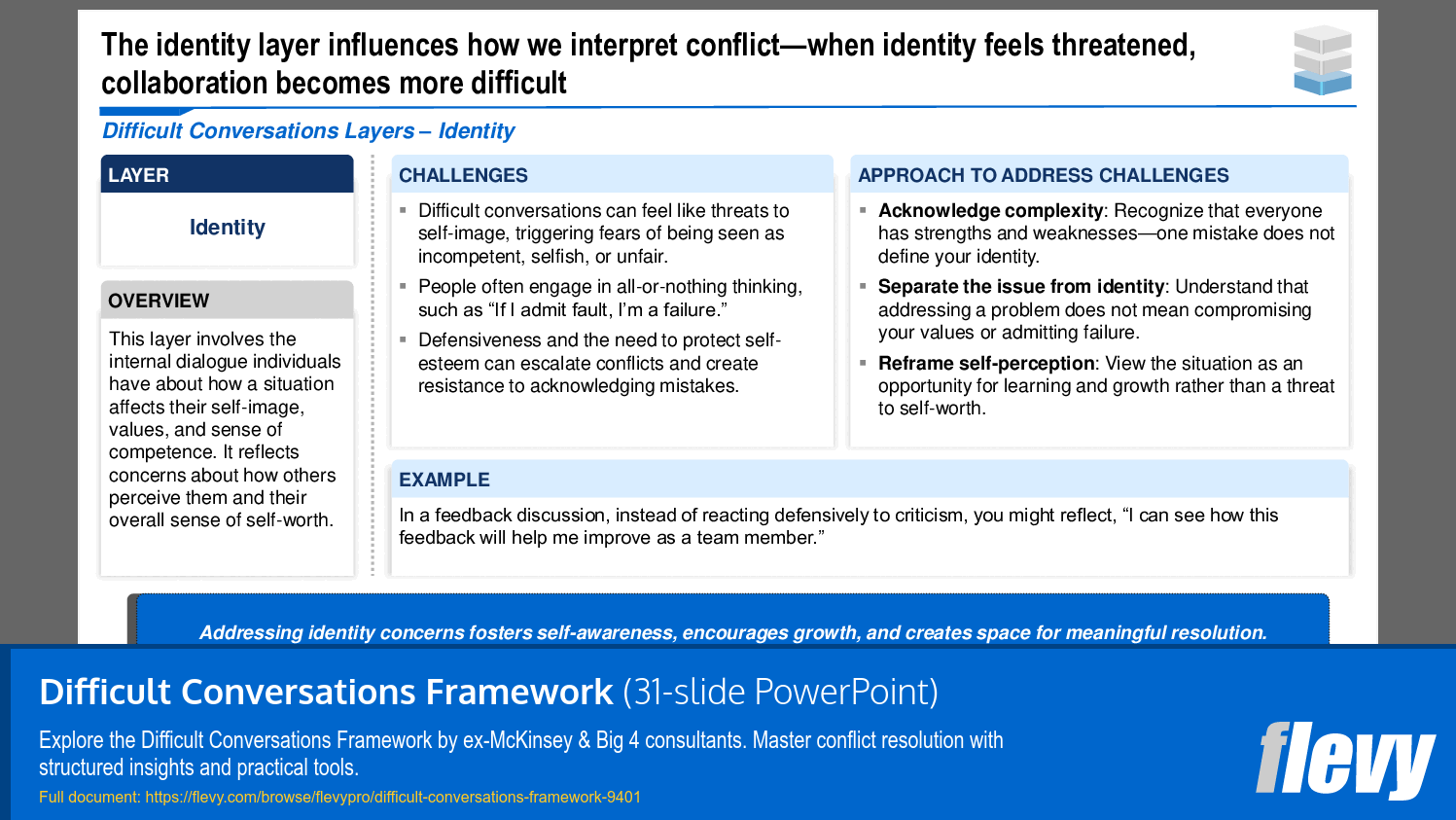
3. Identity
•  This layer involves the internal dialogue individuals have about how a situation affects their self-image, values, and sense of competence. It reflects concerns about how others perceive them and their overall sense of self-worth.

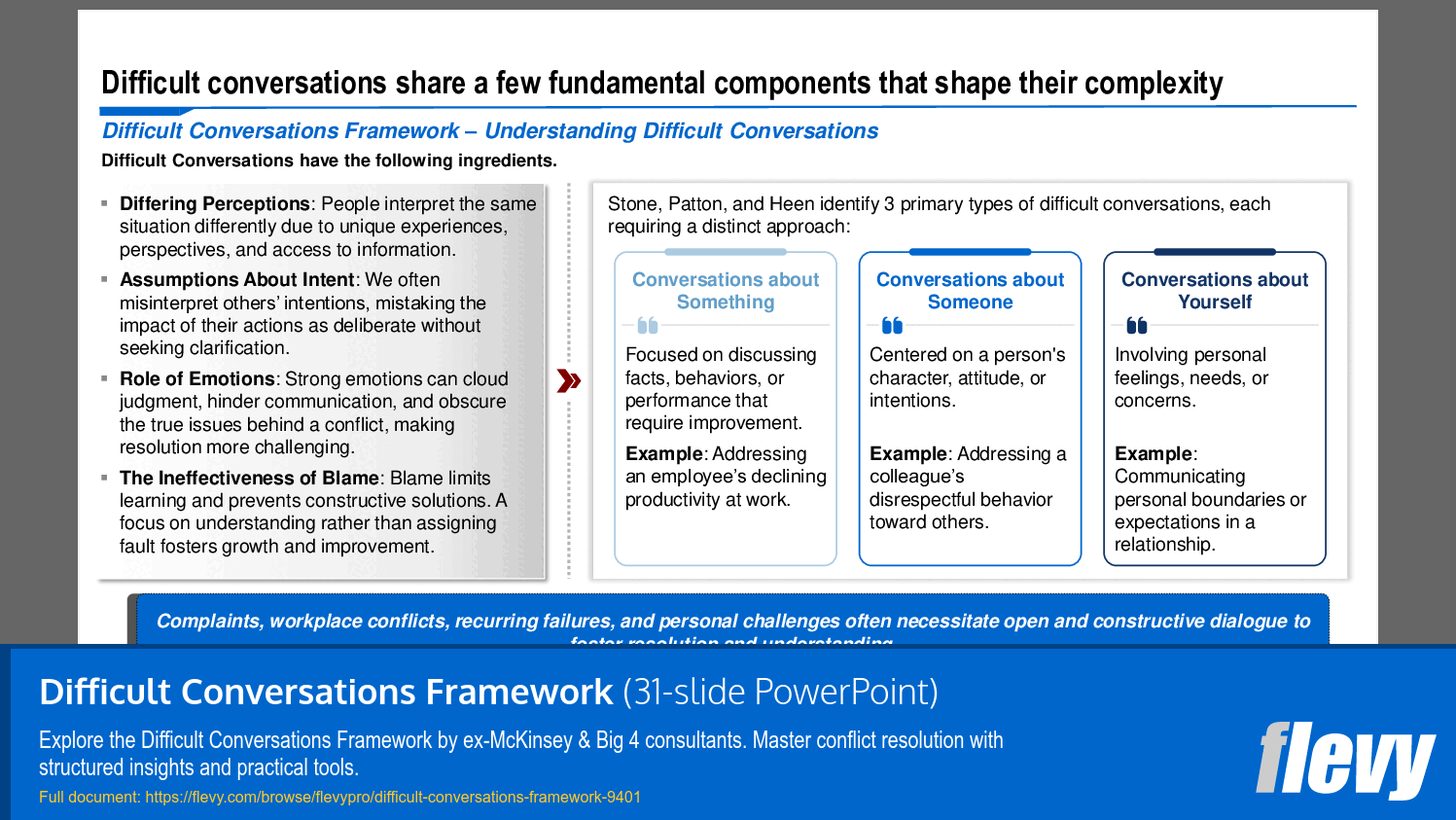
Each of these 3 layers is discussed in depth, including common challenges and the tactics to address these challenges. Additional topics discussed include the 3 types of difficult conversations, the 3 foundational principles, a 9-step process to navigating difficult conversations, among other topics.

This PowerPoint presentation on the Difficult Conversations Framework also includes some slide templates for you to use in your own business presentations.

Got a question about this document? Email us at flevypro@flevy.com.

MARCUS OVERVIEW

This synopsis was written by Marcus [?] based on the analysis of the full 31-slide presentation.


Executive Summary
The Difficult Conversations Framework is a structured approach designed to help individuals navigate challenging discussions effectively. Developed by Douglas Stone, Bruce Patton, and Sheila Heen, this framework is essential for addressing sensitive topics, resolving conflicts, and improving communication in both personal and professional settings. The framework emphasizes understanding the underlying dynamics of difficult conversations, preparing thoroughly, and fostering mutual understanding through empathy and curiosity. By utilizing this framework, individuals can transform potential conflicts into opportunities for collaboration and growth.

Who This Is For and When to Use
•  Corporate executives needing to address performance issues or conflicts within teams
•  HR professionals managing sensitive employee relations discussions
•  Team leaders facilitating constructive feedback sessions
•  Consultants guiding clients through conflict resolution processes

Best-fit moments to use this deck:
•  During performance reviews or feedback discussions
•  When addressing team conflicts or interpersonal issues
•  In training sessions focused on communication and conflict resolution
•  For workshops aimed at enhancing emotional intelligence and dialogue skills

Learning Objectives
•  Define the 3 layers of difficult conversations: What Happened, Feelings, and Identity
•  Build strategies for addressing sensitive topics with clarity and empathy
•  Establish techniques for acknowledging and validating emotions during discussions
•  Identify common pitfalls to avoid in difficult conversations
•  Develop skills for reframing conversations as opportunities for learning
•  Create actionable plans for navigating challenging discussions

Table of Contents
•  Overview (page 1)
•  Difficult Conversations Framework (page 2)
•  Difficult Conversations Layers (page 11)
•  Navigating Difficult Conversations (page 17)
•  Slide Design Structure & Templates (page 20)

Primary Topics Covered
•  Difficult Conversations Framework - A structured approach to managing challenging discussions, focusing on understanding dynamics and fostering empathy.
•  Three Layers of Difficult Conversations - The framework is built on 3 layers: What Happened, Feelings, and Identity, each influencing the conversation's outcome.
•  Common Pitfalls - Identifying and avoiding common mistakes that hinder effective communication during difficult conversations.
•  Navigating Difficult Conversations - A nine-step process to guide individuals through challenging discussions with clarity and confidence.
•  Benefits of the Framework - Understanding how the framework builds trust, enhances problem-solving, and promotes constructive dialogue.
•  Slide Design Structure - Guidelines for structuring presentations to effectively communicate the framework's principles.

Deliverables, Templates, and Tools
•  Framework overview slides for presentations
•  Templates for structuring difficult conversations
•  Checklists for identifying common pitfalls
•  Guides for preparing and reflecting on conversations
•  Tools for acknowledging feelings and fostering empathy
•  Example scenarios for practicing the framework

Slide Highlights
•  Overview of the Difficult Conversations Framework and its importance
•  Detailed explanation of the 3 layers: What Happened, Feelings, and Identity
•  Visual representation of common pitfalls to avoid
•  Step-by-step guide for navigating difficult conversations
•  Templates for structuring presentations and discussions

Potential Workshop Agenda
Understanding Difficult Conversations (60 minutes)
•  Introduce the framework and its significance
•  Discuss the 3 layers of difficult conversations
•  Explore common pitfalls and how to avoid them

Practical Application Session (90 minutes)
•  Role-play scenarios to practice navigating difficult conversations
•  Group discussions on personal experiences and insights
•  Develop action plans for applying the framework in real situations

Reflection and Feedback (30 minutes)
•  Summarize key takeaways from the workshop
•  Set expectations for follow-up and ongoing communication
•  Encourage participants to share their experiences and challenges

Customization Guidance
•  Tailor the framework examples to fit specific organizational contexts or cultures
•  Adjust the templates to reflect company branding and terminology
•  Incorporate real-life scenarios relevant to the audience's experiences
•  Modify the workshop agenda based on participant needs and time constraints

Secondary Topics Covered
•  Emotional intelligence in communication
•  The role of empathy in conflict resolution
•  Techniques for effective feedback delivery
•  Strategies for fostering a culture of open dialogue

Topic FAQ

What are the core elements of a difficult conversation according to the framework?

The framework breaks difficult conversations into 3 core layers—What Happened (facts, events, intentions), Feelings (emotional responses), and Identity (self-image and values)—and pairs this layered view with a structured nine-step navigation process to guide discussion preparation and execution.

How should I prepare mentally and practically for a difficult workplace conversation?

Preparation involves identifying key concerns, reflecting on your goals and emotions, setting a constructive tone, and using practical tools such as preparation guides and checklists to structure the discussion; the deck provides preparation guides and checklists to support this work.

What common pitfalls typically derail difficult conversations?

Common pitfalls include assuming self-righteousness, ignoring emotions, and jumping to conclusions about intent; the framework highlights these problems and provides checklists and tactics to avoid them during conversations and feedback sessions.

What features should I look for when buying a training deck on difficult conversations?

Look for a clear framework that addresses facts, emotions, and identity; practical templates and checklists; role-play or example scenarios; and a workshop agenda to rehearse skills—elements that appear as templates, checklists, and example scenarios in the Difficult Conversations Framework.

How can managers use a layered approach during performance reviews?

Managers can separate discussion into What Happened (specific behaviors), acknowledge Feelings, and address Identity concerns about competence or values, then follow a structured sequence to resolve issues; the framework supports this with templates and a nine-step process.

Are slide decks and templates cost-effective for internal training on difficult conversations?

Purchasing a deck provides reusable slide templates, checklists, and a sample workshop agenda that reduce design time and support role-play exercises; cost-effectiveness depends on reuse and training frequency, with deliverables like templates, checklists, and a workshop agenda included.

Why does the Identity layer matter in sensitive discussions?

Identity captures internal concerns about self-image, values, and competence, which influence defensiveness and openness; addressing Identity alongside facts and feelings helps reduce threat responses and improve dialogue by explicitly engaging the Identity layer.

We have recurring team conflicts—what first steps should we take to resolve them?

Begin by diagnosing incidents through the three-layer lens (What Happened, Feelings, Identity), prepare participants with reflection and checklists, and run structured practice sessions or workshops using a staged nine-step navigation and role-play scenarios to rehearse responses.

Document FAQ
These are questions addressed within this presentation.

What is the Difficult Conversations Framework?
The Difficult Conversations Framework is a structured approach to navigating challenging discussions, focusing on understanding dynamics and fostering empathy.

How can this framework be applied in the workplace?
It can be used to address performance issues, resolve conflicts, and enhance communication skills among team members.

What are the 3 layers of difficult conversations?
The 3 layers are What Happened, Feelings, and Identity, each influencing how conversations unfold.

What common pitfalls should be avoided?
Assuming self-righteousness, ignoring emotions, and jumping to conclusions about intent are key pitfalls to avoid.

How can I prepare for a difficult conversation?
Identify key concerns, set a constructive tone, and reflect on your goals and emotions before the conversation.

What are the benefits of using this framework?
It builds trust, enhances problem-solving, promotes constructive dialogue, and supports personal and professional growth.

Can this framework be used for personal conversations?
Yes, it is applicable in both personal and professional settings, helping individuals navigate sensitive discussions effectively.

What resources are available for further learning?
The presentation includes templates, checklists, and guides for applying the framework in various contexts.

Glossary
•  Difficult Conversations - Interactions characterized by strong emotions and differing opinions.
•  What Happened - The factual aspect of a conversation focusing on events and intentions.
•  Feelings - The emotional layer influencing the conversation's outcome.
•  Identity - Internal dialogue regarding self-image and values during discussions.
•  Empathy - The ability to recognize and validate others' emotions.
•  Curiosity - Encouraging exploration of different perspectives without judgment.
•  Reframing - Shifting the focus from blame to collaborative problem-solving.
•  Active Listening - Engaging fully in the conversation to validate the other person's experience.
•  Common Pitfalls - Mistakes that hinder effective communication in difficult conversations.
•  Mutual Understanding - Achieving clarity and agreement through open dialogue.
•  Preparation - The process of reflecting on goals and emotions before a conversation.
•  Constructive Dialogue - Conversations focused on solutions rather than blame.

COMMUNICATIONS STRATEGY PPT SLIDES

Framework for Navigating Difficult Conversations

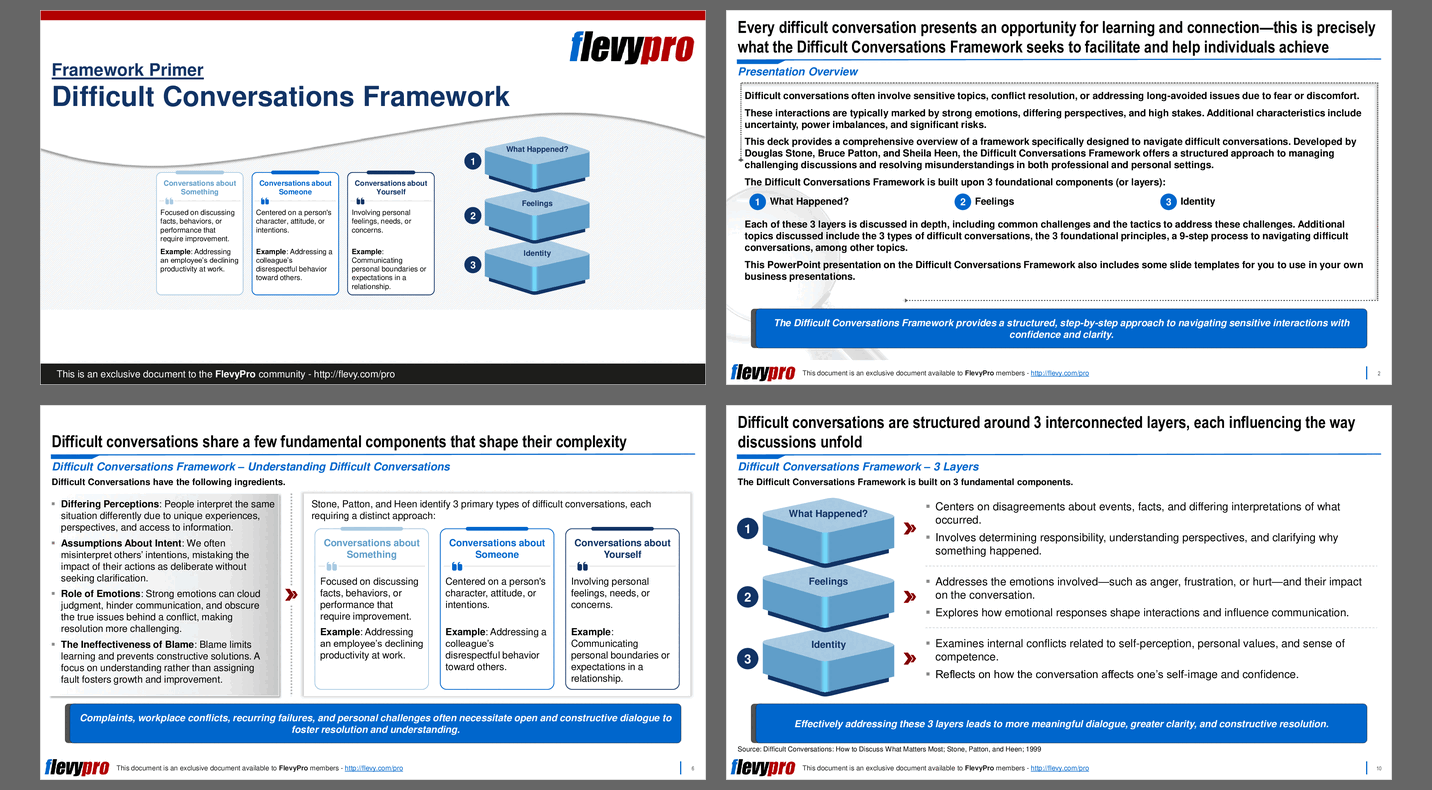
Difficult Conversations Framework: Three Essential Layers

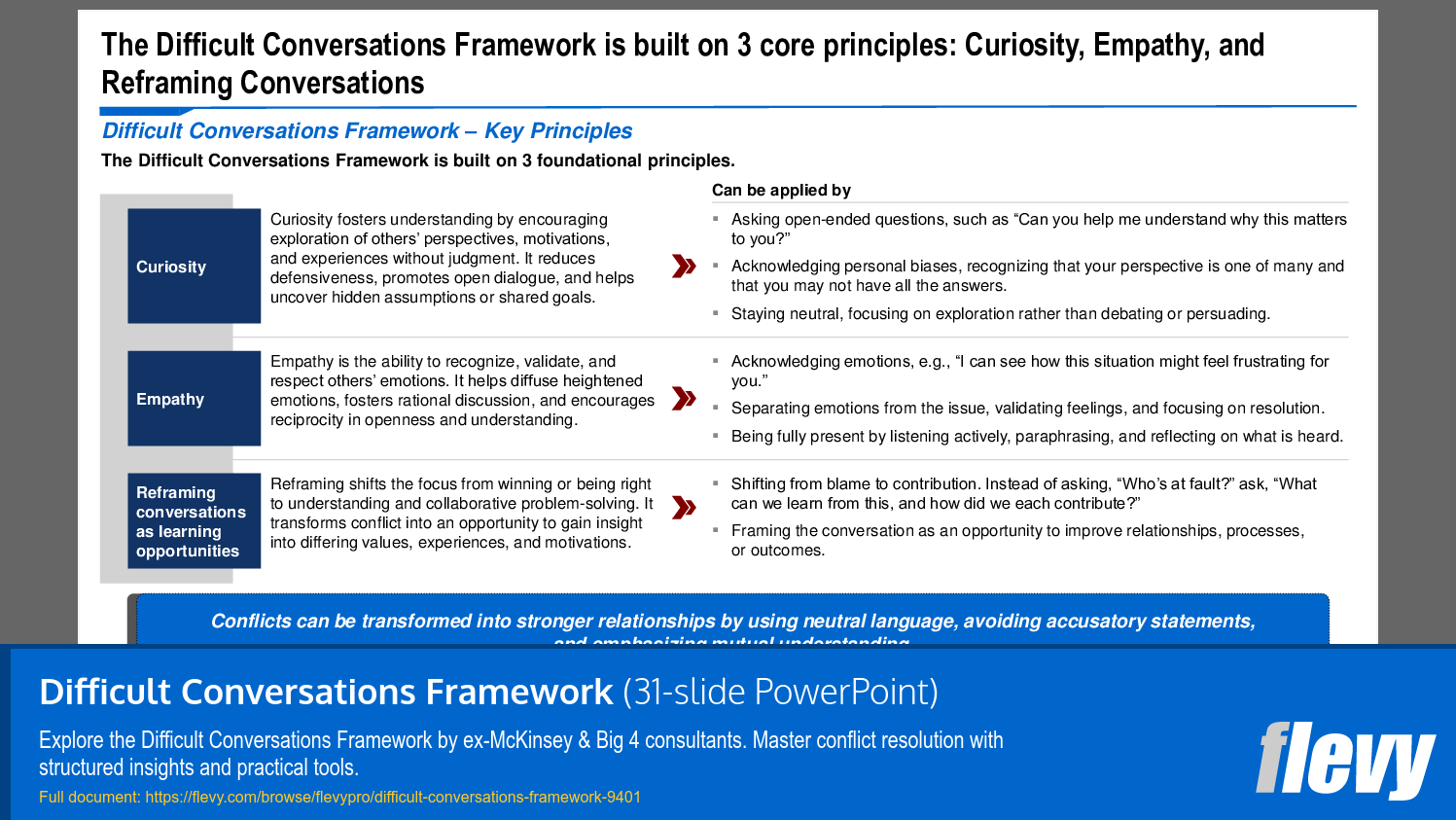
Core Principles of Effective Dialogue Management

Understanding Identity's Role in Conflict Resolution

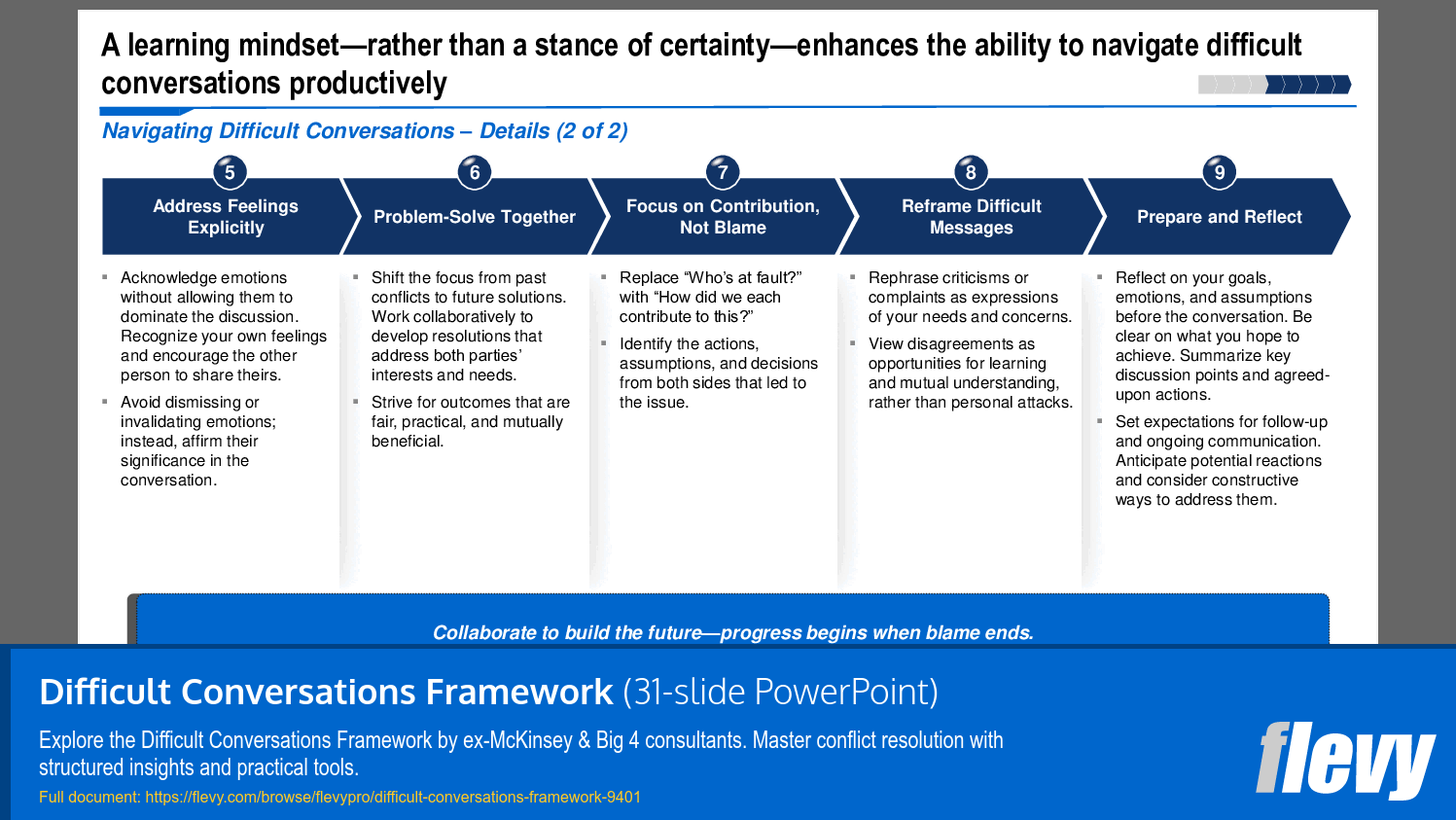
Navigating Difficult Conversations (Steps 5-9)

Source: Best Practices in Corporate Communications, Soft Skills PowerPoint Slides: Difficult Conversations Framework PowerPoint (PPTX) Presentation Slide Deck, LearnPPT Consulting


$29.00
FlevyPro price: FREE (included in subscription)
This framework is developed by a team of former McKinsey and Big 4 consultants. The presentation follows the headline-body-bumper slide format used by global consulting firms.
Add to Cart
  

Did you need more documents?

Consider a FlevyPro subscription from $39/month. View plans here.

For $10.00 more, you can download this document plus 2 more FlevyPro documents. That's just $13 each.

ABOUT FLEVYPRO

This document is part of the FlevyPro Library, a curated knowledge base of documents for our FlevyPro subscribers.

FlevyPro is a subscription service for on-demand business frameworks and analysis tools. FlevyPro subscribers receive access to an exclusive library of curated business documents—business framework primers, presentation templates, Lean Six Sigma tools, and more—among other exclusive benefits.

Click here to learn more about FlevyPro and its benefits.

Did you know?
The average daily rate of a McKinsey consultant is $6,625 (not including expenses). The average price of a Flevy document is $65.


Trusted by over 10,000+ Client Organizations
Since 2012, we have provided business templates to over 10,000 businesses and organizations of all sizes, from startups and small businesses to the Fortune 100, in over 130 countries.
AT&T GE Cisco Intel IBM Coke Dell Toyota HP Nike Samsung Microsoft Astrazeneca JP Morgan KPMG Walgreens Walmart 3M Kaiser Oracle SAP Google E&Y Volvo Bosch Merck Fedex Shell Amgen Eli Lilly Roche AIG Abbott Amazon PwC T-Mobile Broadcom Bayer Pearson Titleist ConEd Pfizer NTT Data Schwab


Read Customer Testimonials

 
"If you are looking for great resources to save time with your business presentations, Flevy is truly a value-added resource. Flevy has done all the work for you and we will continue to utilize Flevy as a source to extract up-to-date information and data for our virtual and onsite presentations!"

– Debbi Saffo, President at The NiKhar Group
 
"As an Independent Management Consultant, I find Flevy to add great value as a source of best practices, templates and information on new trends. Flevy has matured and the quality and quantity of the library is excellent. Lastly the price charged is reasonable, creating a win-win value for "

– Jim Schoen, Principal at FRC Group
 
"I have used Flevy services for a number of years and have never, ever been disappointed. As a matter of fact, David and his team continue, time after time, to impress me with their willingness to assist and in the real sense of the word. I have concluded in fact "

– Roberto Pelliccia, Senior Executive in International Hospitality
 
"FlevyPro has been a brilliant resource for me, as an independent growth consultant, to access a vast knowledge bank of presentations to support my work with clients. In terms of RoI, the value I received from the very first presentation I downloaded paid for my subscription many times over! The "

– Roderick Cameron, Founding Partner at SGFE Ltd
 
"Flevy is now a part of my business routine. I visit Flevy at least 3 times each month.

Flevy has become my preferred learning source, because what it provides is practical, current, and useful in this era where the business world is being rewritten.

In today's environment where there are so "

– Omar Hernán Montes Parra, CEO at Quantum SFE
 
"As a consulting firm, we had been creating subject matter training materials for our people and found the excellent materials on Flevy, which saved us 100's of hours of re-creating what already exists on the Flevy materials we purchased."

– Michael Evans, Managing Director at Newport LLC
 
"My FlevyPro subscription provides me with the most popular frameworks and decks in demand in today’s market. They not only augment my existing consulting and coaching offerings and delivery, but also keep me abreast of the latest trends, inspire new products and service offerings for my practice, and educate me "

– Bill Branson, Founder at Strategic Business Architects
 
"I have found Flevy to be an amazing resource and library of useful presentations for lean sigma, change management and so many other topics. This has reduced the time I need to spend on preparing for my performance consultation. The library is easily accessible and updates are regularly provided. A wealth of great information."

– Cynthia Howard RN, PhD, Executive Coach at Ei Leadership


Customers Also Bought These Documents


Customers Also Like These Documents

Explore Templates on Related Management Topics


Your Recently Viewed Documents
Download our FREE Organization, Change, & Culture, Templates

Download our free compilation of 50+ slides and templates on Organizational Design, Change Management, and Corporate Culture. Methodologies include ADKAR, Burke-Litwin Change Model, McKinsey 7-S, Competing Values Framework, etc.