
Editor Summary
How to Develop a Business Case is a 105-slide PowerPoint framework by Documents & Files that lays out an eight-step business case development process and deliverables including a business case template, assumptions checklist, guidelines for NPV/IRR/payback calculations, sensitivity analysis tools, decision matrix for non-financial benefits, and summary sheets.
Read moreAkin to frameworks used at McKinsey, Bain, and BCG (not affiliated). Target users include corporate executives, project managers, consultants, financial analysts, and cross-functional teams. Sold as a digital download on Flevy.
Use this presentation when an organization must justify a major investment, compare alternative options, align stakeholders on expected outcomes, or run a focused workshop to build a funding recommendation.
Corporate executives analyzing competing investment options and approving a preferred alternative using quantified financial metrics.
Project managers developing assumptions, estimating costs (hardware, software, labor), and building cash-flow projections.
Financial analysts calculating NPV, IRR, and payback period to assess project viability.
Cross-functional teams identifying non-financial impacts and populating a decision matrix during planning workshops.
The eight-step process—from determining approach through sensitivity analysis and summarizing findings—follows the structured, hypothesis-driven approach associated with McKinsey, Bain, and BCG.
• Executive Summary
• Business Case Overview
• Business Case Development Process
• Lessons Learned – Risks and Success Factors
• Business Case Template Overview
• Glossary
• Appendix and Example Slides
A business case is a tool that helps business leaders make investment decisions by helping them understand the financial impact of those decisions. A business case describes how the results will be delivered. A business case must be developed whenever a major investment decision is being made. The business case provides an understanding of which initiatives create the greatest value; supports decision-making; and helps track program performance.
The business case is often developed throughout the planning stage of a project to help justify a strategic direction and operating strategy. Business cases must clearly communicate the overall impact of a business decision; as well as the logic and methodology used to derive the results and should be used ongoing to "sell" and "defend" the program.
This deck is complemented by a companion document the "Business Case Template" Excel (separate product listing), which provides a step-by-step methodology for developing a high level business case. Explicit instructions on how to use this financial model are in the "Business Case Template Overview" section of this presentation
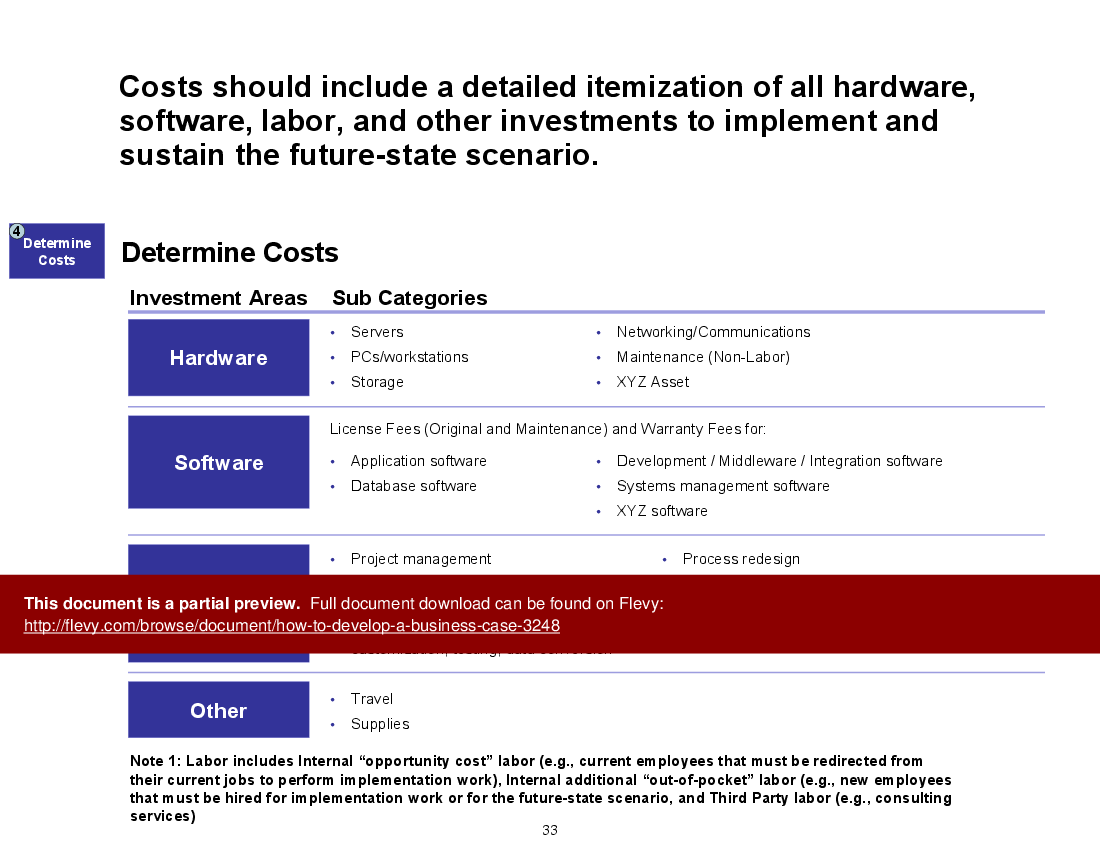
The document also delves into the importance of considering non-financial impacts, such as customer satisfaction and employee morale, to provide a comprehensive view of the benefits. It emphasizes the need for a decision matrix to reflect these benefits effectively. The presentation outlines the eight-step process for developing a business case, including determining approach, developing assumptions, and calculating financial impact. It also highlights the necessity of a detailed itemization of costs, including hardware, software, and labor, to sustain the future-state scenario. This structured approach ensures that all aspects of the business case are meticulously analyzed and presented.
Got a question about the product? Email us at support@flevy.com or ask the author directly by using the "Ask the Author a Question" form. If you cannot view the preview above this document description, go here to view the large preview instead.
MARCUS OVERVIEW
This synopsis was written by Marcus [?] based on the analysis of the full 105-slide presentation.
Executive Summary
This presentation titled "How to Develop a Business Case" provides a structured, consulting-grade framework for creating effective business cases, akin to the quality expected from McKinsey, Bain, or BCG (not affiliated). It guides business leaders through the essential steps of developing a business case, which is crucial for making informed investment decisions. The template empowers users to articulate the financial and non-financial impacts of their initiatives, ensuring clarity in decision-making and performance tracking. By utilizing this comprehensive PowerPoint guide, executives can effectively justify strategic directions and operational strategies.
Who This Is For and When to Use
• Corporate executives responsible for major investment decisions
• Project managers leading initiatives requiring financial justification
• Consultants advising clients on investment strategies
• Financial analysts assessing project viability and risk
• Cross-functional teams involved in business planning and execution
Best-fit moments to use this deck:
• During the planning phase of major projects to justify investment
• When evaluating multiple investment options to determine the best course of action
• To communicate the rationale behind investment decisions to stakeholders
• In workshops focused on aligning team objectives with financial outcomes
Learning Objectives
• Define the purpose and structure of a business case
• Develop assumptions that bound the scope of the analysis
• Identify and quantify financial and non-financial benefits
• Calculate key financial metrics such as NPV, IRR, and payback period
• Perform sensitivity and risk analysis to assess the robustness of the business case
• Summarize findings and provide actionable recommendations
Table of Contents
• Executive Summary (page 1)
• Business Case Overview (page 2)
• Business Case Development Process (page 3)
• Lessons Learned – Risks and Success Factors (page 7)
• Business Case Template Overview (page 9)
• Glossary (page 10)
• Appendix (page 11)
• Example Slides (page 12)
Primary Topics Covered
• Business Case Overview - A business case is a structured tool that assists leaders in making informed investment decisions by quantifying financial impacts and justifying strategic directions.
• Business Case Development Process - The process involves eight steps: determining approach, developing assumptions, identifying benefits, estimating costs, calculating financial impact, assessing non-financial impacts, performing sensitivity analysis, and summarizing findings.
• Financial Metrics - Key financial metrics such as Net Present Value (NPV), Internal Rate of Return (IRR), and payback period are essential for evaluating the financial viability of proposed investments.
• Sensitivity and Risk Analysis - This analysis examines how changes in assumptions affect financial outcomes, providing insights into potential risks associated with the investment.
• Non-Financial Impacts - Including non-financial benefits, such as improved employee morale or customer satisfaction, offers a more comprehensive view of the investment's value.
• Lessons Learned - Key success factors for developing a strong business case include early scope agreement, understanding client processes, and using familiar frameworks.
Deliverables, Templates, and Tools
• Business case template for structured development of investment proposals
• Checklist of key assumptions and inputs required for business cases
• Guidelines for calculating cash flow metrics, including NPV and IRR
• Sensitivity analysis tools for assessing the impact of varying assumptions
• Decision matrix for evaluating non-financial benefits
• Summary sheets for presenting financial metrics and outcomes
Slide Highlights
• Overview of the business case development process, outlining the eight essential steps.
• Visual representation of financial metrics, including NPV and IRR calculations.
• Examples of decision matrices to evaluate non-financial impacts.
• Sensitivity analysis graphs illustrating the impact of varying assumptions on financial outcomes.
• Summary slides that encapsulate key findings and recommendations.
Potential Workshop Agenda
Business Case Development Workshop (90–120 minutes)
• Introduction to the business case framework and objectives
• Group exercise on defining desired outcomes and assumptions
• Breakout sessions for identifying benefits and estimating costs
• Presentation of financial metrics and sensitivity analysis results
• Wrap-up discussion on lessons learned and next steps
Customization Guidance
• Tailor the business case template to reflect specific organizational terminology and frameworks.
• Adjust financial assumptions based on historical data and market conditions relevant to the project.
• Incorporate client-specific metrics and performance indicators to enhance relevance.
• Ensure alignment with existing strategic initiatives and operational plans.
Secondary Topics Covered
• Importance of stakeholder engagement in the business case development process
• Techniques for presenting complex financial data in an understandable format
• Strategies for managing risks and critical success factors in project execution
• Best practices for tracking and measuring the success of implemented initiatives
Topic FAQ
What are the typical phases of a business case development process?
A common structured process involves eight steps: determining approach, developing assumptions, identifying benefits, estimating costs, calculating financial impact, assessing non-financial impacts, performing sensitivity analysis, and summarizing findings. Many templates and teaching decks organize work around these eight steps.
How do I assess the financial viability of a proposed project?
Financial viability is typically assessed by modeling cash flows and calculating metrics such as Net Present Value (NPV), Internal Rate of Return (IRR), and payback period. Guidance on how to calculate these metrics and present results is commonly included in business case templates and summary sheets.
What is sensitivity analysis and how should I use it in a business case?
Sensitivity analysis examines how changes in key assumptions affect financial outcomes, helping identify which inputs create the most risk or opportunity. Use sensitivity graphs and scenario runs to show impacts on NPV, IRR, and payback when assumptions vary, supported by sensitivity analysis tools.
How can non-financial benefits be included alongside financial metrics?
Non-financial benefits like customer satisfaction or employee morale are included by identifying and describing impacts, then using a decision matrix to weigh them against strategic objectives. Present these alongside financial metrics to provide a more comprehensive view using a decision matrix tool.
What should I look for when choosing a business case template for my team?
Prioritize a template that enforces a logical structure, includes an assumptions checklist, provides guidelines for NPV/IRR/payback calculations, offers sensitivity analysis tools, and contains summary sheets for stakeholders. A companion Excel model is useful for carrying out the financial calculations and sensitivity runs.
How long should a business case workshop take and what activities work best?
A compact workshop can run 90–120 minutes and typically covers introduction to the framework, group exercises to define outcomes and assumptions, breakout sessions to identify benefits and estimate costs, presentation of financial metrics and sensitivity results, and a wrap-up on lessons learned.
I need to compare several investment options—what framework helps me choose?
Use a structured business case process: define approach and assumptions for each option, estimate costs and benefits, compute NPV/IRR/payback, run sensitivity analysis to test robustness, and apply a decision matrix to incorporate non-financial factors; this sequence is reflected in many business case templates.
How do paid business case templates and companion models help versus building from scratch?
Paid templates typically provide a prebuilt structure, assumptions checklist, calculation guidelines for NPV/IRR/payback, sensitivity analysis tools, decision matrix formats, and summary slide layouts, which can accelerate development and ensure standard elements like an assumptions checklist and sensitivity analysis are included.
Document FAQ
These are questions addressed within this presentation.
What is the purpose of a business case?
A business case helps leaders make informed investment decisions by quantifying the financial impact and justifying strategic directions.
When should a business case be developed?
A business case should be developed whenever a major investment decision is being made, especially when there are high implementation risks.
What are the key elements of a business case?
Key elements include a logical structure, clear assumptions, detailed benefits and costs, financial impact analysis, non-financial impacts, and sensitivity and risk analysis.
How do you calculate financial impact?
Financial impact is calculated using metrics such as NPV, IRR, and payback period, which assess the cash flows associated with the investment.
What is sensitivity analysis?
Sensitivity analysis examines how changes in key assumptions affect financial outcomes, helping to identify risks associated with the investment.
Why include non-financial impacts in a business case?
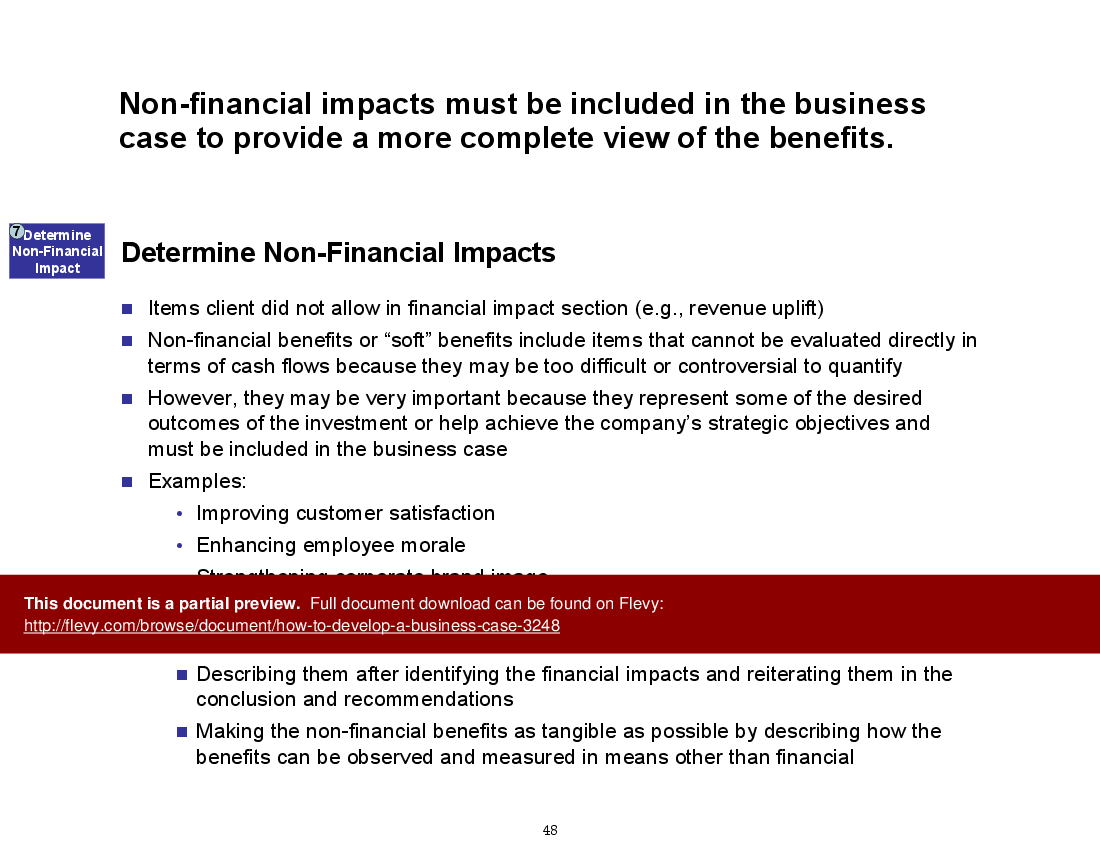
Non-financial impacts provide a more comprehensive view of the investment's value and can influence decision-making.
What are common pitfalls in developing a business case?
Common pitfalls include lack of stakeholder engagement, unclear assumptions, and failure to consider non-financial impacts.
How can I ensure my business case is effective?
To ensure effectiveness, involve key stakeholders early, use familiar frameworks, and present clear, actionable recommendations.
Glossary
• Net Present Value (NPV) - The sum of all net cash flows discounted to present value, used to evaluate investment options.
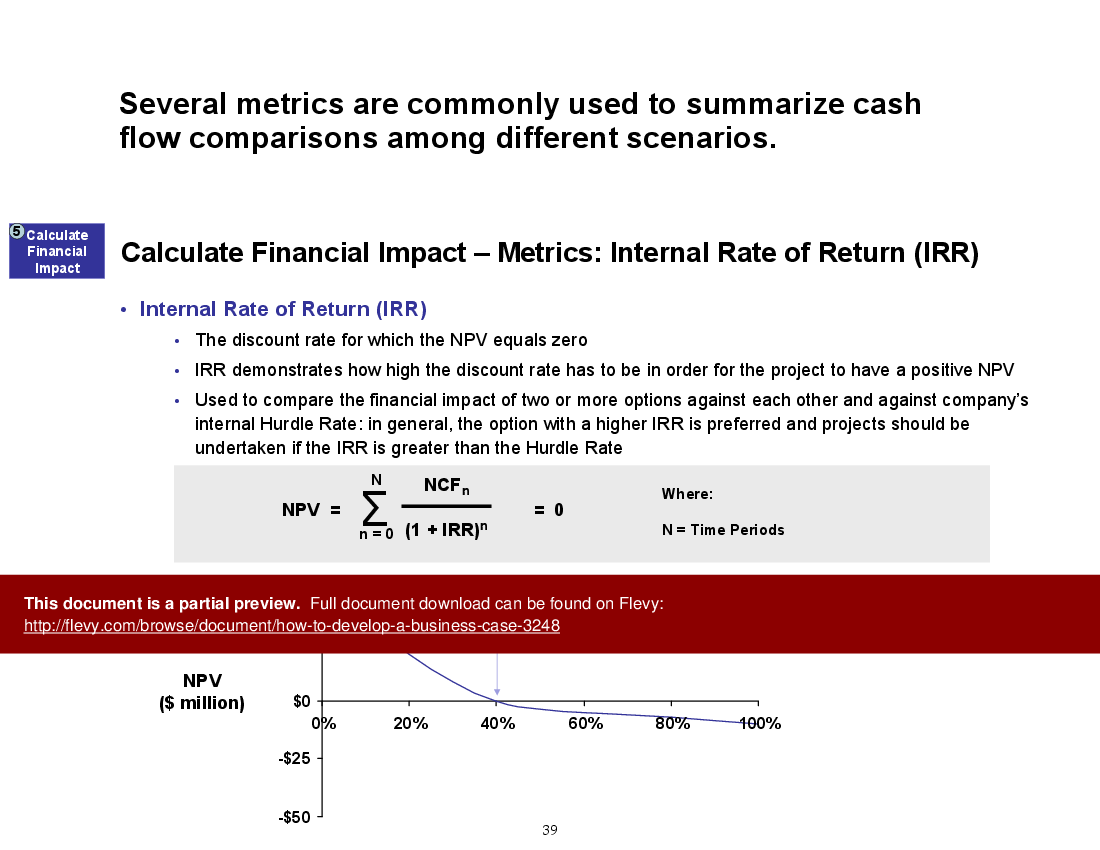
• Internal Rate of Return (IRR) - The discount rate at which the NPV of an investment equals zero, indicating the project's profitability.
• Payback Period - The time required for an investment to generate cash flows sufficient to recover its initial cost.
• Sensitivity Analysis - An assessment of how changes in assumptions impact financial outcomes.
• Decision Matrix - A tool for evaluating options against strategic objectives, factoring in both financial and non-financial benefits.
• Assumptions - Statements that define the scope and boundaries of the business case analysis.
• Cash Flow - The net amount of cash being transferred into and out of a business, crucial for financial analysis.
• Capital Expenditures - Funds used by a company to acquire or upgrade physical assets such as property, industrial buildings, or equipment.
• Operating Expenses - The costs associated with running a business's core operations.
• Cost Reduction - Strategies aimed at lowering expenses to improve profitability.
• Revenue Uplift - Increases in revenue resulting from strategic initiatives or investments.
• Risk Analysis - The process of identifying and assessing potential risks that could impact the success of an investment.
This PPT slide focuses on sensitivity analysis in developing a business case, highlighting its role in assessing the impact of varying assumptions on financial outcomes. Sensitivity analysis involves altering input assumptions to observe changes in financial metrics such as Net Present Value (NPV), Internal Rate of Return (IRR), and Payback period. It emphasizes the importance of identifying assumptions with high sensitivity, as minor adjustments can lead to significant shifts in financial results. The relationship between NPV and revenue growth sensitivity is illustrated, demonstrating how varying revenue growth assumptions affect NPV outcomes. By scrutinizing sensitive assumptions, organizations can enhance their business case robustness and improve risk management strategies.
This PPT slide outlines methods for estimating revenue uplift through 2 approaches: top-down and bottoms-up. The top-down approach focuses on estimating market share percentage increases using benchmark or survey data, providing quick insights for executives. A visual representation shows a market share shift from 70% to 60%, indicating strategic changes with revenue implications. The bottoms-up approach involves detailed analysis of unit volume and unit price increases, emphasizing product mix changes that affect overall financial performance. Bar graphs illustrate projected unit volume and revenue increases over 3 years, highlighting a clear growth trajectory. Combining both approaches offers a comprehensive perspective for informed decision-making on revenue enhancement strategies.
This PPT slide outlines 2 approaches for determining expected financial benefits: the top-down and bottom-up methods. The top-down approach uses macro-level data and analogies to estimate benefits, suitable when detailed client data is unavailable,, but characterized by high uncertainty. In contrast, the bottom-up approach focuses on specific business process metrics, allowing for granular analysis and more accurate financial estimations when detailed data is accessible. The accompanying diagram illustrates the relationship between business goals, key performance indicators (KPIs), and estimated opportunities, highlighting the alignment of strategic goals with measurable outcomes. The choice between these methodologies depends on data availability and the specific business context.
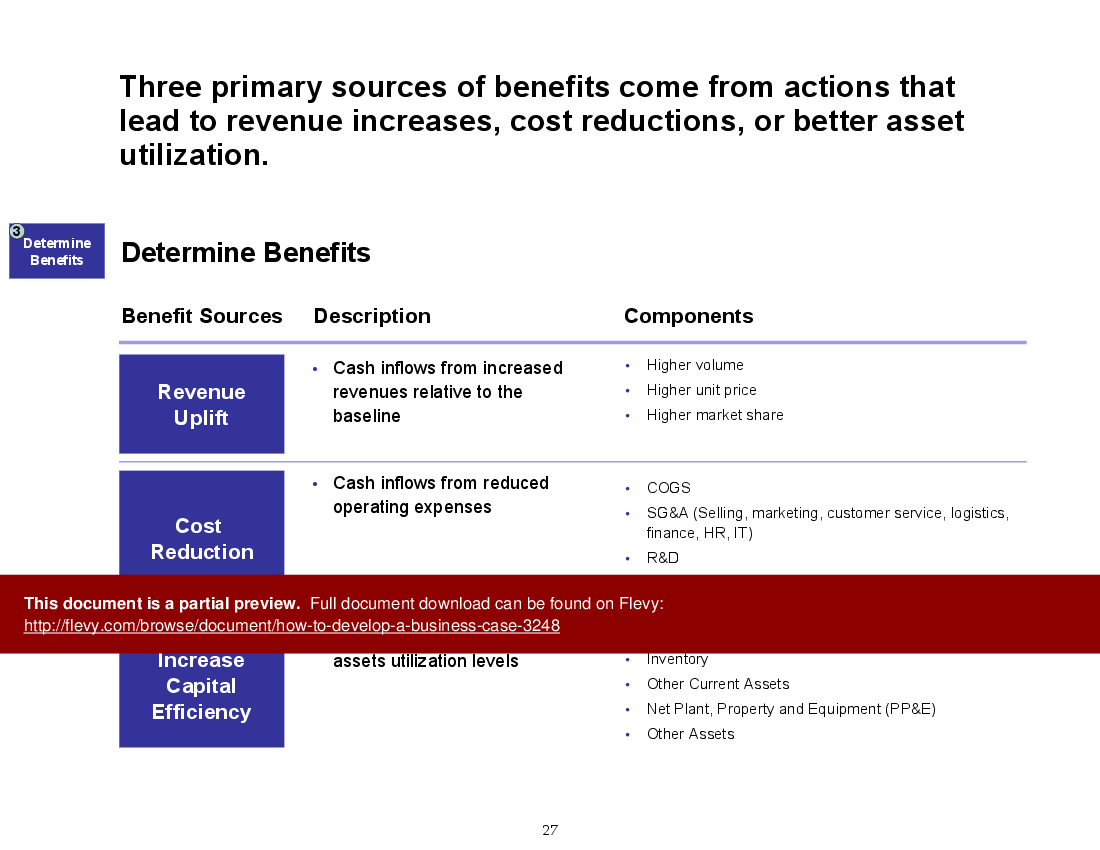
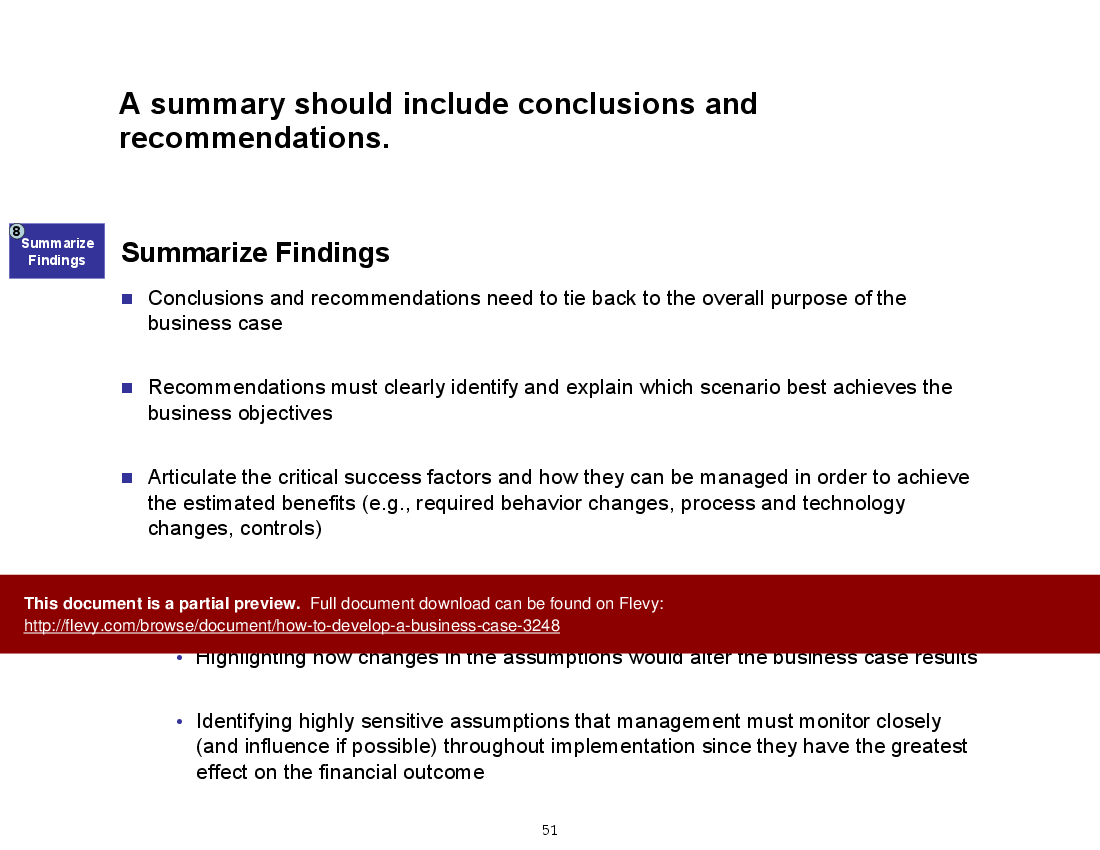
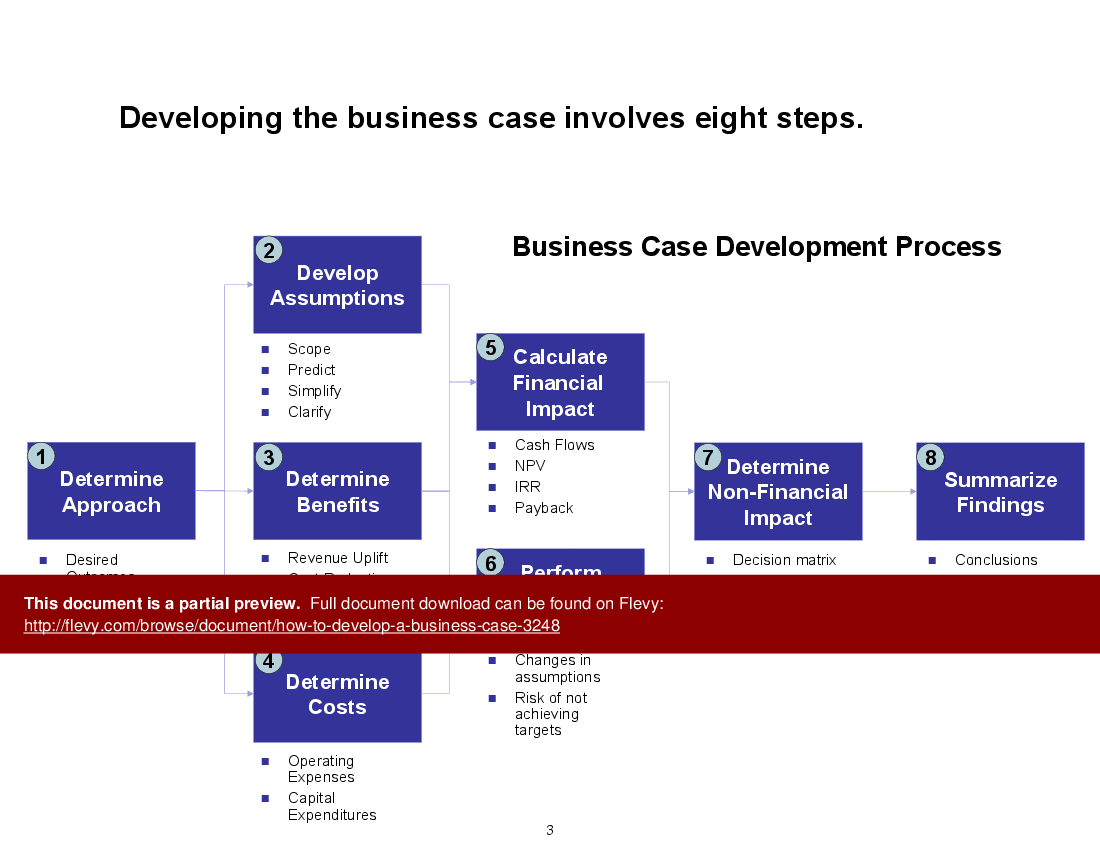
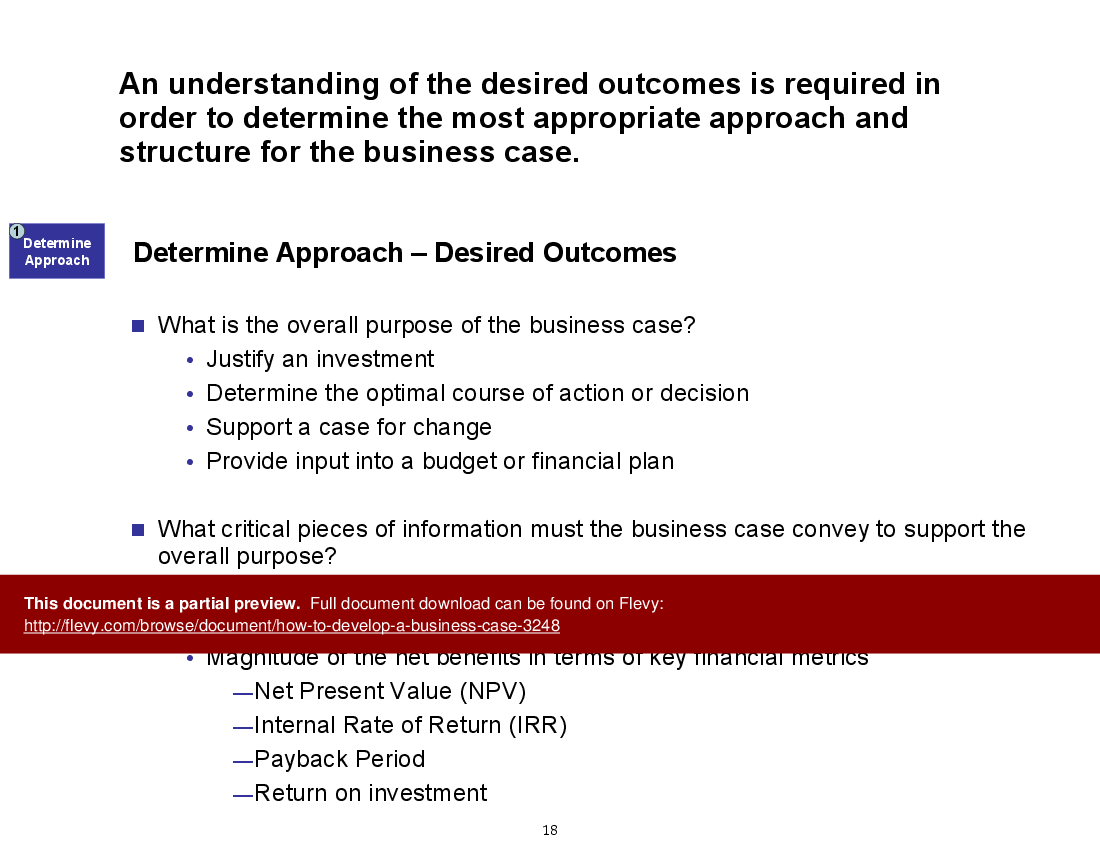
This PPT slide outlines a structured approach to developing a business case through eight key steps. "Determine Approach" defines desired outcomes and the overall structure. "Develop Assumptions" establishes the analysis scope by predicting outcomes and clarifying uncertainties. "Determine Benefits" identifies advantages such as revenue uplift, cost reduction, and increased capital efficiency. "Determine Costs" assesses financial implications for comprehensive evaluation. "Calculate Financial Impact" quantifies metrics like cash flows, net present value (NPV), internal rate of return (IRR), and payback period. "Perform Sensitivity and Risk Analysis" examines how changes in assumptions affect outcomes, highlighting project risks. "Determine Non-Financial Impact" evaluates qualitative factors using decision matrices. Finally, "Summarize Findings" consolidates insights into actionable recommendations, ensuring stakeholders have a comprehensive view for informed decision-making.
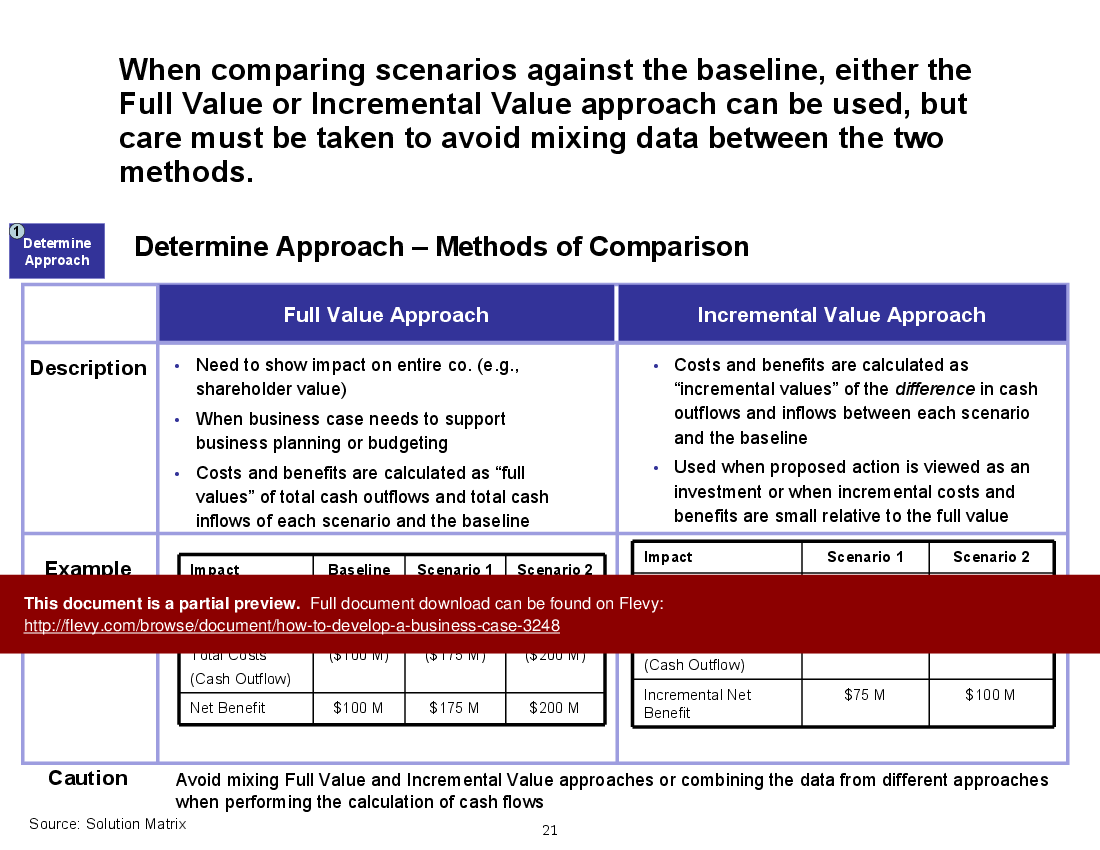
This PPT slide outlines 2 approaches for comparing financial scenarios against a baseline: the Full Value Approach and the Incremental Value Approach. The Full Value Approach calculates total costs and benefits, reflecting the overall financial impact on the organization, such as shareholder value, and is useful for business planning and budgeting. The Incremental Value Approach focuses on differences in cash flows between proposed scenarios and the baseline, ideal for investments with relatively small incremental costs and benefits. Choosing the appropriate approach is essential to avoid misleading conclusions and ensure informed decision-making in financial analysis.
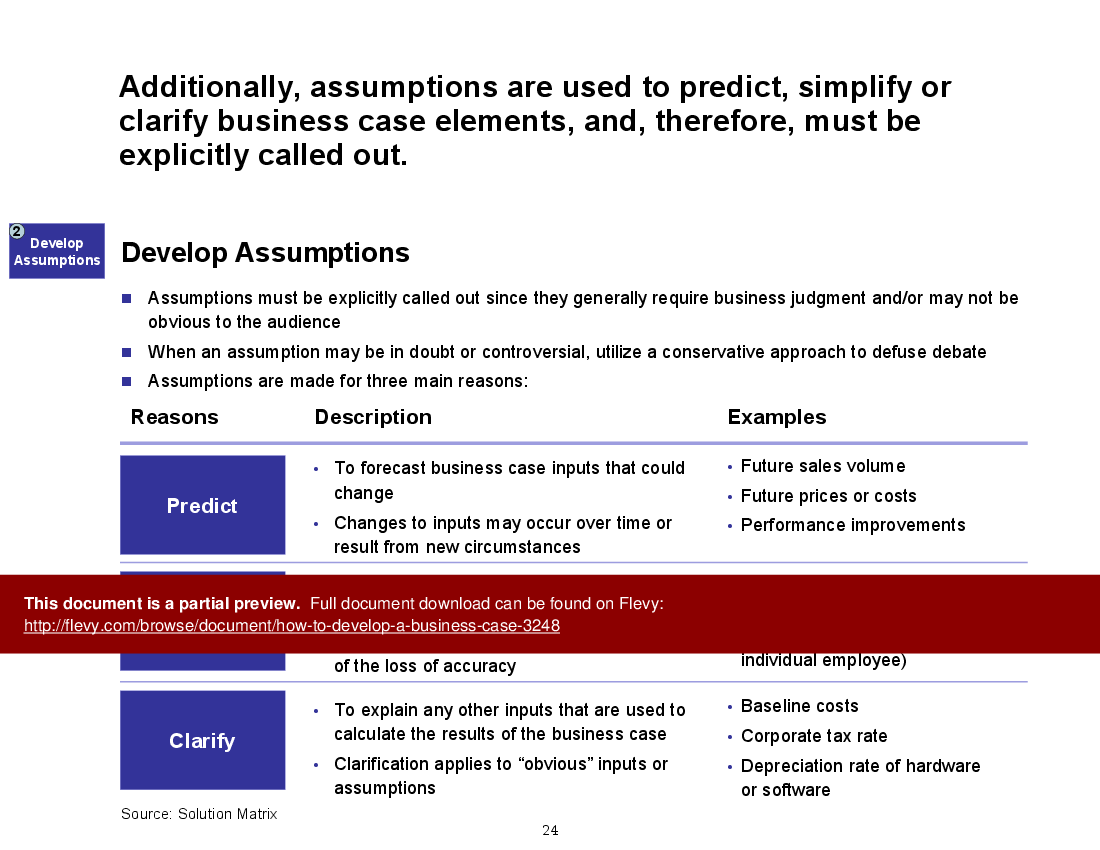
This PPT slide focuses on the significance of developing assumptions within a business case framework. Clearly articulated assumptions are essential for forecasting business case inputs, which may change due to evolving circumstances. The "Predict" section emphasizes the need for proactive forecasting of future sales volumes, prices, or performance improvements. The "Simplify" section highlights the importance of streamlining inputs while avoiding oversimplification that compromises accuracy, using average values instead of detailed data for clarity. Lastly, the slide underscores the need to clarify all relevant factors to enhance the robustness of the analysis, advocating for a conservative approach to contentious assumptions to mitigate disputes and foster consensus.
This PPT slide presents a graphical representation of costs and benefits, divided into 3 sections: One-time Investment, Recurring Annual Costs, and Recurring Annual Benefits. The One-time Investment totals £104.5 million, with key components including Business implementation (£70.7 million), Software (£9.4 million), and Hardware (£2.8 million). Recurring Annual Costs amount to £64.7 million, covering Software support, Hardware support, and IT implementation. The Recurring Annual Benefits section outlines anticipated gains of £46 million, including improved finance productivity and reduced IT maintenance. This juxtaposition of costs and benefits facilitates a straightforward evaluation of financial return on investment.
This PPT slide focuses on the Internal Rate of Return (IRR) as a key metric for evaluating financial impact in project comparisons. IRR is defined as the discount rate at which the Net Present Value (NPV) of cash flows equals zero, indicating the minimum return required for project viability. A higher IRR is generally more favorable, suggesting projects with IRRs exceeding the company's internal hurdle rate should be prioritized. The NPV formula illustrates cash flow discounting over time, providing a mathematical foundation for understanding IRR. The graphical representation shows the relationship between NPV and varying IRR percentages, aiding comprehension of how changes in IRR affect project viability. IRR should be used alongside other financial indicators for informed decision-making and comparative analysis of different projects, essential for effective resource allocation and maximizing returns.
This PPT slide analyzes expected bookings over 5 years (2003-2007) for Raytheon’s business segments. The bar chart shows key figures: $92 billion for Raytheon Defense Businesses, $82 billion for ES and C3I Only, $63 billion for ES and C3I Domestic, and $42 billion for ES and C3I Large Domestic opportunities. Benefits were calculated for large domestic opportunities in the ES and C3I sectors, excluding smaller opportunities valued at $100 million or less. Recommendations focus on domestic operations, excluding international and Foreign Military Sales (FMS) opportunities. This analysis establishes a baseline for assessing future performance and the impact of strategic changes.
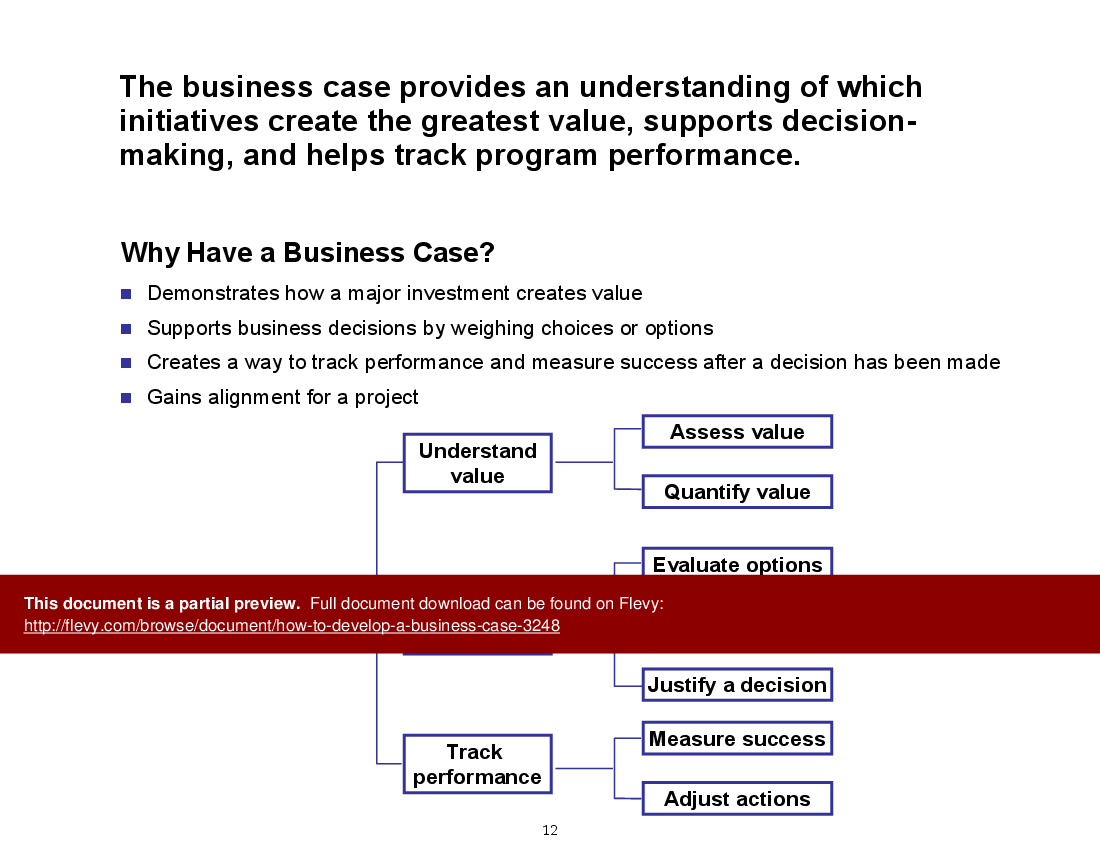
A well-structured business case is essential for guiding investment decisions and tracking project performance. It identifies initiatives that yield the most value, supporting informed decision-making. Key reasons for having a business case include justifying significant investments by demonstrating value creation, aiding in evaluating options for business decisions, providing a framework for performance tracking, and fostering stakeholder alignment on project goals. The accompanying flowchart outlines actionable steps: understanding value, assessing and quantifying it, evaluating options, testing decisions, and justifying them. This systematic approach enhances decision-making and ensures alignment with organizational goals.
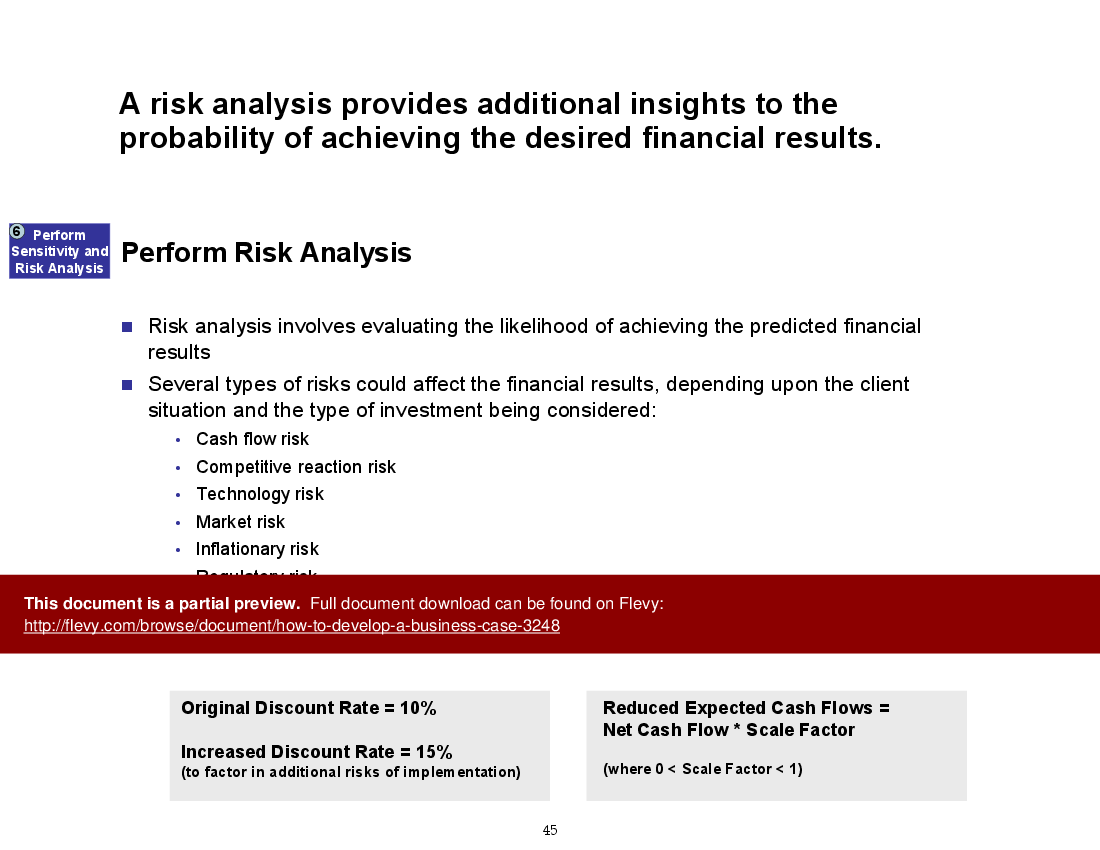
Advanced risk analysis is vital in financial decision-making, incorporating statistical simulations like Monte Carlo methods to evaluate the variability of financial outcomes. This analysis assesses the likelihood of changes in input values and assumptions, which is crucial for determining expected financial results. This PPT slide features 2 probability distributions for different input assumptions, labeled Input/Assumption #1 and Input/Assumption #2, illustrating expected values. Additionally, it presents a probability distribution of the financial result, representing the aggregated outcome of the simulations. By utilizing advanced risk analysis, organizations can better anticipate a range of possible outcomes, enhancing strategic planning and informed decision-making.
The business case is a dynamic tool within the project lifecycle, particularly developed during the Planning phase. It should be created early and refined continuously to ensure alignment with project objectives, justifying investments and guiding project direction. Key stages include Managing, Planning, Delivering, and Operating, with the business case integral to each phase. Developing a business case requires understanding value levers, enabling stakeholders to identify factors driving project value. Essential elements include 'Business Diagnosis,' 'Strategic Direction,' 'Operating Strategy,' and 'Business Architecture,' highlighting their interconnectedness for a comprehensive business case. A robust business case significantly influences project success by providing clarity and direction, leading to informed decision-making and better outcomes.
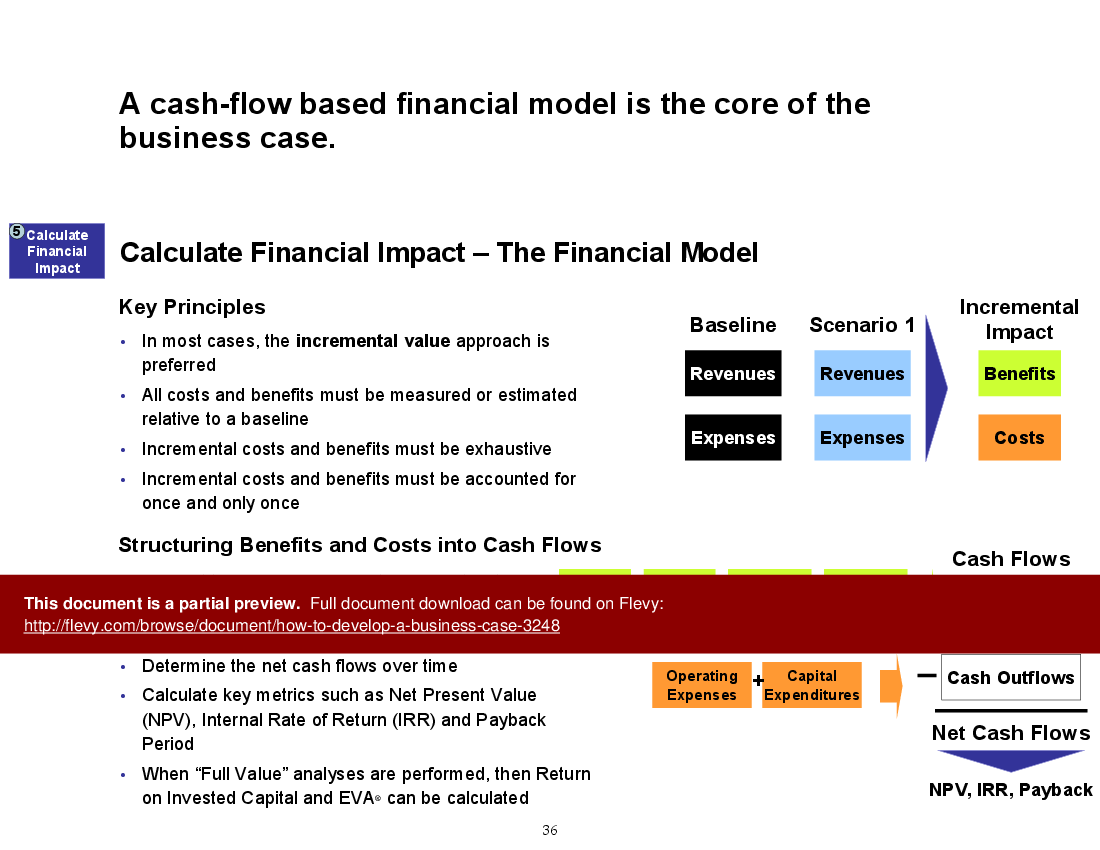
This PPT slide outlines the essential elements of a cash-flow based financial model for constructing a robust business case. It emphasizes an incremental value approach, which focuses on changes in cash flows relative to a defined baseline. Key principles include measuring all costs and benefits against this baseline to capture the project's complete financial impact. Both incremental costs and benefits must be accounted for precisely once to avoid double counting. The structure for translating benefits and costs into cash flows involves laying out these cash flows over time to determine net cash flows, crucial for assessing financial health. Key financial metrics such as Net Present Value (NPV), Internal Rate of Return (IRR), and Payback Period are vital for evaluating investment viability and profitability.
This PPT slide outlines a structured approach to evaluating business cases using baselines and scenarios. Establishing a baseline represents the current state of the business without investment, serving as a reference point for comparing potential future states from different investment options. The baseline illustrates existing business outcomes and enables straightforward comparisons across various future scenarios, which depict possible conditions resulting from specific investment choices. Each scenario is developed for each investment alternative, ensuring comprehensive analysis. The accompanying bar chart illustrates financial outcomes for various scenarios, highlighting the financial implications of each investment decision and aiding informed decision-making by evaluating performance against established baselines.
Source: Best Practices in Business Case Development PowerPoint Slides: How to Develop a Business Case PowerPoint (PPT) Presentation Slide Deck, Documents & Files
Since 2012, we have provided business templates to over 10,000 businesses and organizations of all sizes, from startups and small businesses to the Fortune 100, in over 130 countries.
"FlevyPro has been a brilliant resource for me, as an independent growth consultant, to access a vast knowledge bank of presentations to support my work with clients. In terms of RoI, the value I received from the very first presentation I downloaded paid for my subscription many times over! The
quality of the decks available allows me to punch way above my weight – it's like having the resources of a Big 4 consultancy at your fingertips at a microscopic fraction of the overhead.
"
– Roderick Cameron, Founding Partner at SGFE Ltd
"As a young consulting firm, requests for input from clients vary and it's sometimes impossible to provide expert solutions across a broad spectrum of requirements. That was before I discovered Flevy.com.
Through subscription to this invaluable site of a plethora of topics that are key and crucial to consulting, I
have been able to exceed expectations and deliver quality advice and solutions to my clients. The quality and expertise of the authors are exemplary and gives me great confidence to use as part of my service offerings.
I highly recommend this company for any consultant wanting to apply international best practice standards in their service offerings.
"
– Nishi Singh, Strategist and MD at NSP Consultants
"[Flevy] produces some great work that has been/continues to be of immense help not only to myself, but as I seek to provide professional services to my clients, it gives me a large "tool box" of resources that are critical to provide them with the quality of service and outcomes they are expecting."
– Royston Knowles, Executive with 50+ Years of Board Level Experience
"The wide selection of frameworks is very useful to me as an independent consultant. In fact, it rivals what I had at my disposal at Big 4 Consulting firms in terms of efficacy and organization."
– Julia T., Consulting Firm Owner (Former Manager at Deloitte and Capgemini)
"I have found Flevy to be an amazing resource and library of useful presentations for lean sigma, change management and so many other topics. This has reduced the time I need to spend on preparing for my performance consultation. The library is easily accessible and updates are regularly provided. A wealth of great information."
– Cynthia Howard RN, PhD, Executive Coach at Ei Leadership
"My FlevyPro subscription provides me with the most popular frameworks and decks in demand in today’s market. They not only augment my existing consulting and coaching offerings and delivery, but also keep me abreast of the latest trends, inspire new products and service offerings for my practice, and educate me
in a fraction of the time and money of other solutions. I strongly recommend FlevyPro to any consultant serious about success.
"
– Bill Branson, Founder at Strategic Business Architects
"As a consulting firm, we had been creating subject matter training materials for our people and found the excellent materials on Flevy, which saved us 100's of hours of re-creating what already exists on the Flevy materials we purchased."
– Michael Evans, Managing Director at Newport LLC
"Flevy is our 'go to' resource for management material, at an affordable cost. The Flevy library is comprehensive and the content deep, and typically provides a great foundation for us to further develop and tailor our own service offer."
– Chris McCann, Founder at Resilient.World
Save with Bundles

This document is available as part of the following discounted bundle(s):
Download our free compilation of 50+ Strategy & Transformation slides and templates. Frameworks include McKinsey 7-S, Balanced Scorecard, Disruptive Innovation, BCG Curve, and many more.