
This framework is developed by a team of former McKinsey and Big 4 consultants. The presentation follows the headline-body-bumper slide format used by global consulting firms.
Explore the Index Pricing Strategy framework by ex-McKinsey & Big 4 consultants. Gain insights on pricing models, challenges, and best practices for effective execution. Index Pricing Strategy is a 22-slide PPT PowerPoint presentation slide deck (PPT) available for immediate download upon purchase.
Volatile costs of raw materials often result in frequent heated price negotiations between suppliers and customers. To hedge this raw material cost volatility, companies are compelled to explore implementing Index Pricing Strategy. Index Pricing Strategy utilizes a market or raw material index (or cluster of indices) to calculate and regularly update prices.
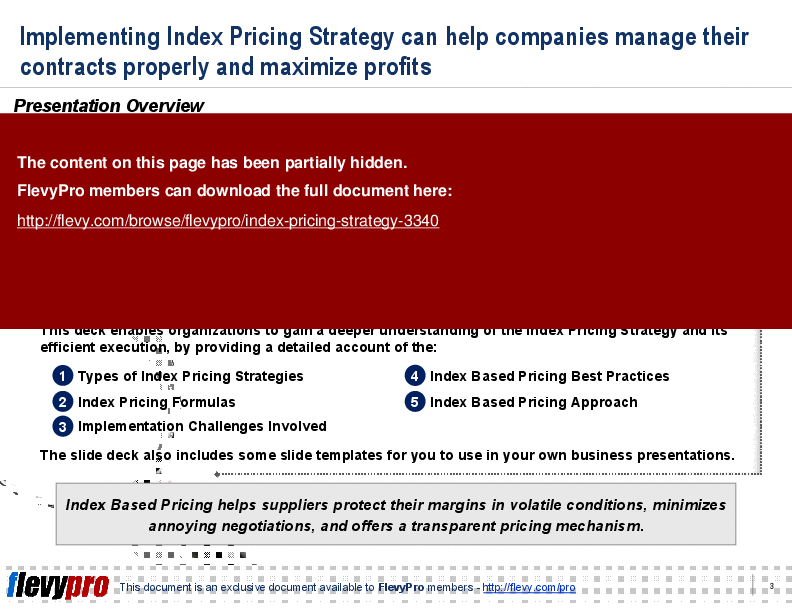
Index Based Pricing assists the suppliers protect margins in volatile conditions, minimizes annoying negotiations, and offers a transparent pricing mechanism. It helps suppliers protect their margins in volatile conditions, minimizes annoying negotiations, and offers a transparent pricing mechanism.
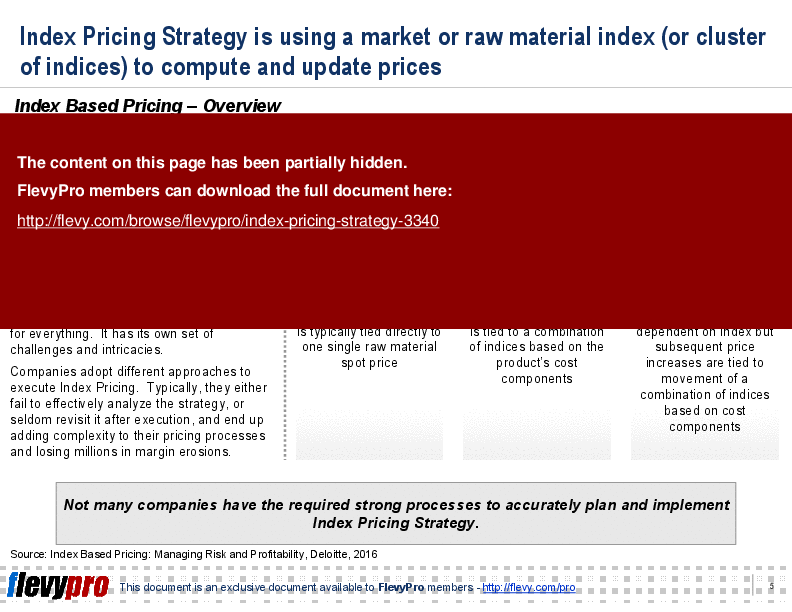
Index Pricing Strategy has its own set of challenges and intricacies. Not many firms have the expertise to accurately account for indices and calculate pricing formulas. Companies adopt different approaches to execute Index Pricing. Typically, they either fail to effectively analyze the strategy, or seldom revisit it after execution, and end up adding complexity to their pricing processes and losing millions in margin erosions.
This deck enables organizations to gain a deeper understanding of the Index Pricing Strategy and its efficient execution, by providing a detailed account of the:
1. Types of Index Pricing Strategies
2. Index Pricing Formulas
3. Implementation Challenges Involved
4. Index Based Pricing Best Practices
5. 3-Phase Index Based Pricing Approach
The slide deck also includes some slide templates for you to use in your own business presentations.
This comprehensive presentation also delves into the practical aspects of Index Pricing Strategy, offering actionable insights and real-world examples. It covers the nuances of different pricing models, such as Single Commodity Tied, Multiple Component Based, and Fixed Forward strategies. The deck highlights critical challenges and provides best practices to overcome them, ensuring your pricing mechanisms are robust and adaptable. With detailed templates and step-by-step guides, this PPT is an invaluable resource for any executive looking to implement or refine their Index Pricing Strategy effectively.
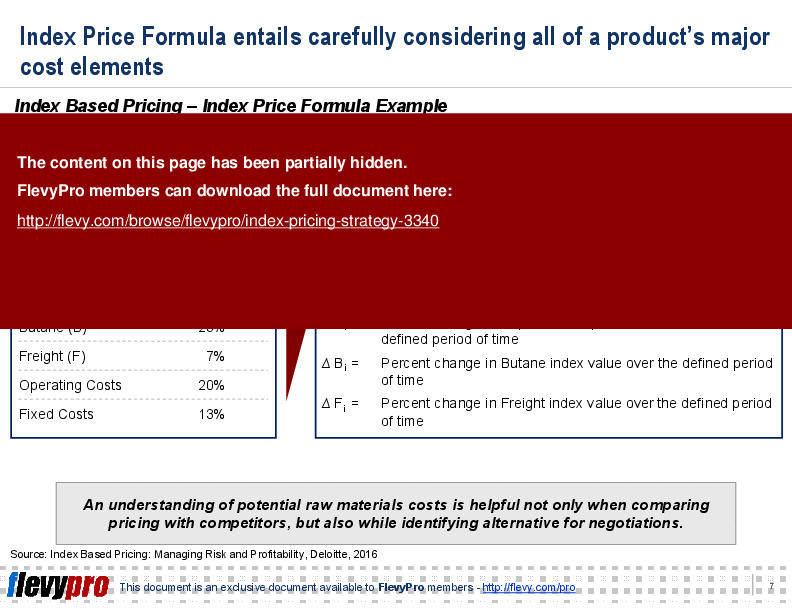
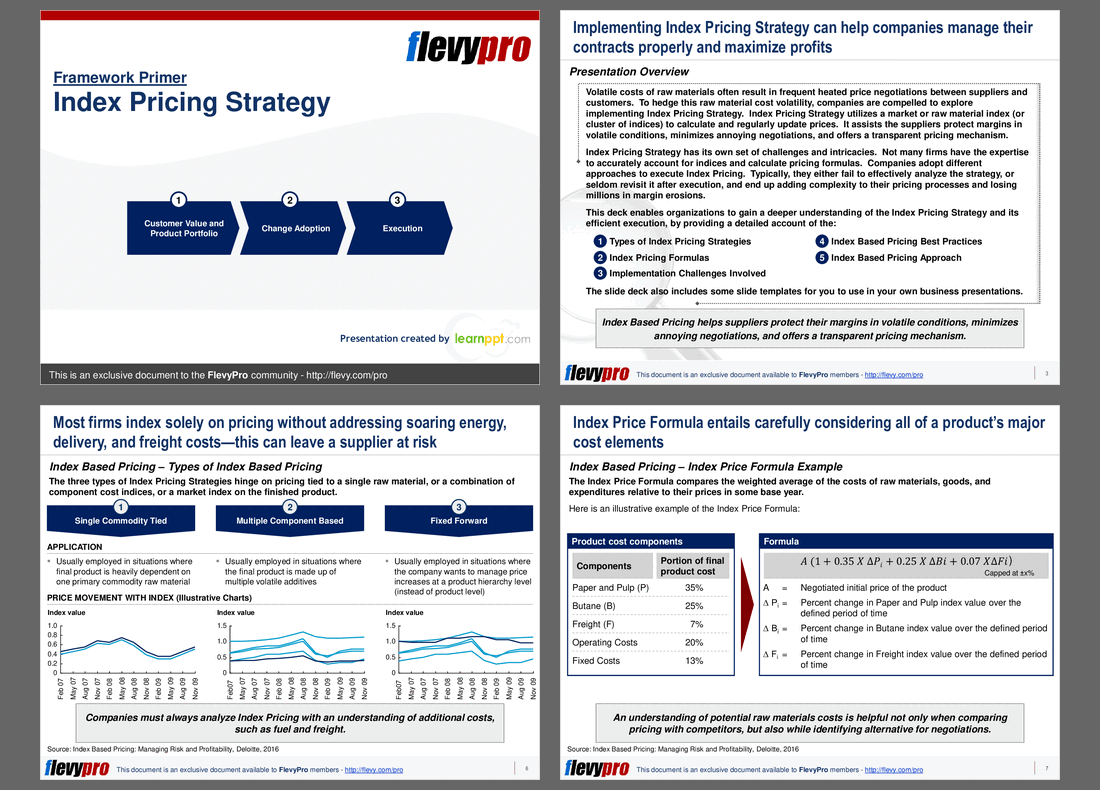
This PPT slide details the Index Price Formula, essential for understanding product pricing through cost components. Key contributions include Paper and Pulp (35%), Butane (25%), Operating Costs (20%), Freight (7%), and Fixed Costs (13%). The formula illustrates how the negotiated initial price (A) adjusts based on percentage changes in these components, with coefficients (0.35, 0.25, 0.07) indicating their relative weights. This model aids in accurate forecasting and financial planning. Understanding raw material costs not only helps in competitive pricing, but also identifies negotiation strategies, enhancing decision-making and alignment with market conditions.
This PPT slide provides an overview of Index Based Pricing as a cost-plus strategy that supports value-based pricing. Input costs must be reflected in pricing promptly to avoid lost sales and market share, as competitors may adjust prices more quickly. Companies face risks when making advance pricing commitments, especially if input costs rise unexpectedly, which can erode profit margins. For example, a logistics company locking in contracts without hedging against fuel costs may experience financial strain. Customers prefer to manage such risks, indicating that sellers should accommodate this preference. Large companies often overcomplicate pricing formulas for new contracts, leading to inefficiencies and resource allocation issues that can detract from profitability. Timely cost reflection and simplicity in pricing structures are essential for maintaining competitive positioning.
This PPT slide outlines a structured approach to implementing an Index Pricing Strategy, emphasizing a three-phase framework: "Customer Value and Product Portfolio," "Change Adoption," and "Execution."
In the first phase, organizations assess customer segments and value propositions to align product offerings with customer expectations. The second phase focuses on managing the transition to an index pricing model, highlighting the importance of training and communication for stakeholder buy-in. The final phase stresses precise implementation, warning that failure to monitor non-market adjustments and excessive human intervention can lead to pricing errors. Robust tracking mechanisms and automated processes are essential to mitigate risks associated with manual adjustments.
Careful execution is critical for successful adoption of index pricing.
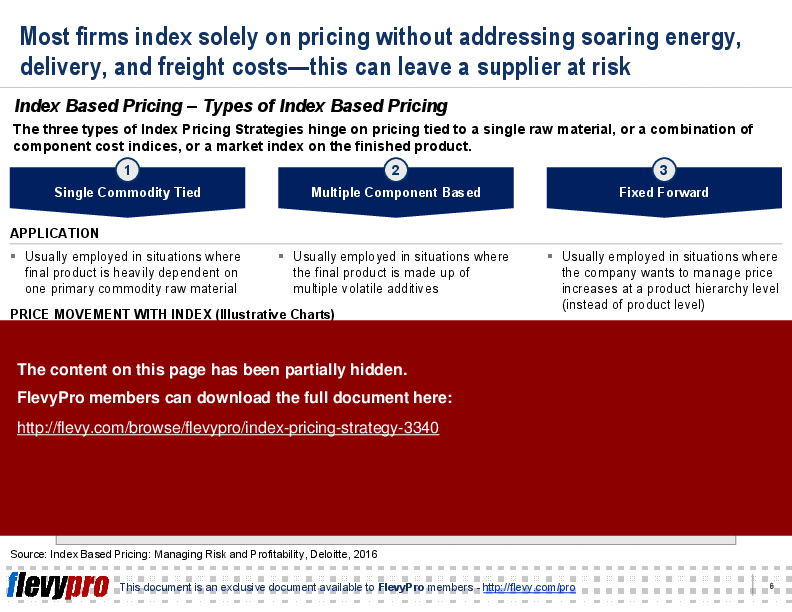
This PPT slide outlines Index Based Pricing strategies: Single Commodity Tied, Multiple Component Based, and Fixed Forward. The Single Commodity Tied strategy adjusts pricing based on fluctuations in a primary raw material's price, allowing for straightforward pricing adjustments. The Multiple Component Based strategy manages pricing dynamically for products with various volatile additives, reflecting the complexity of multiple inputs. The Fixed Forward strategy stabilizes pricing across a product hierarchy, mitigating risks of sudden price hikes. Companies must analyze Index Pricing while considering additional costs like fuel and freight, ensuring a comprehensive pricing strategy that accounts for external factors affecting overall pricing dynamics.
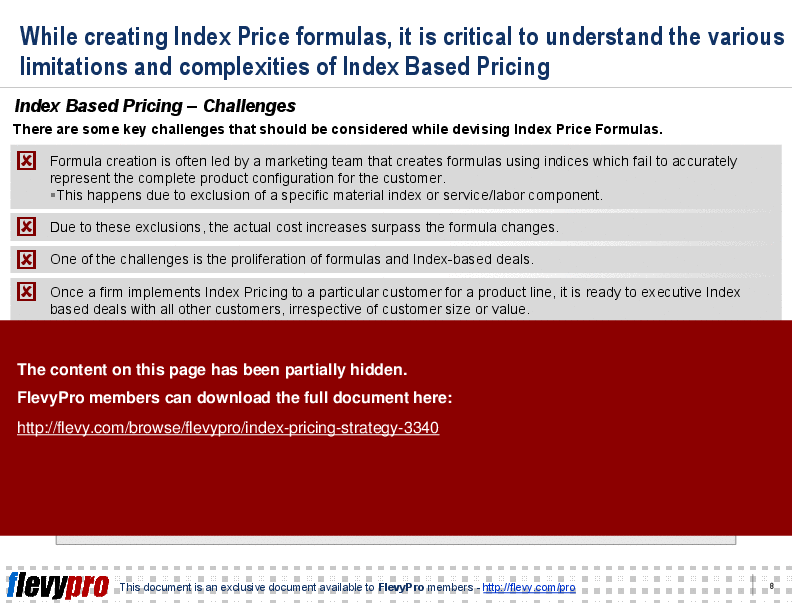
Developing Index Price formulas presents significant challenges, often driven by marketing teams that may overlook critical product configurations, including specific materials or labor components. This can lead to actual costs exceeding formula estimates. The proliferation of various Index-based deals complicates pricing strategies, as firms typically apply Index Pricing uniformly across all customers, resulting in inefficiencies. Inconsistent spreadsheet templates can generate numerous variations, increasing risks of manual errors and complicating margin performance tracking. Companies without robust processes may struggle to update contracts to reflect index movements, leading to outdated pricing structures. The inability to systematically review formulas can exacerbate price protection limitations and margin erosion, highlighting the need for effective Index Pricing strategies to avoid financial implications and operational inefficiencies.
Source: Best Practices in Pricing Strategy, Raw Materials PowerPoint Slides: Index Pricing Strategy PowerPoint (PPT) Presentation Slide Deck, LearnPPT Consulting
This framework is developed by a team of former McKinsey and Big 4 consultants. The presentation follows the headline-body-bumper slide format used by global consulting firms.
For $10.00 more, you can download this document plus 2 more FlevyPro documents. That's just $13 each.
ABOUT FLEVYPRO
This document is part of the FlevyPro Library, a curated knowledge base of documents for our FlevyPro subscribers.
FlevyPro is a subscription service for on-demand business frameworks and analysis tools. FlevyPro subscribers receive access to an exclusive library of curated business documents—business framework primers, presentation templates, Lean Six Sigma tools, and more—among other exclusive benefits.
The average daily rate of a McKinsey consultant is $6,625 (not including expenses). The average price of a Flevy document is $65.
Trusted by over 10,000+ Client Organizations
Since 2012, we have provided business templates to over 10,000 businesses and organizations of all sizes, from startups and small businesses to the Fortune 100, in over 130 countries.
"The wide selection of frameworks is very useful to me as an independent consultant. In fact, it rivals what I had at my disposal at Big 4 Consulting firms in terms of efficacy and organization."
– Julia T., Consulting Firm Owner (Former Manager at Deloitte and Capgemini)
"As a small business owner, the resource material available from FlevyPro has proven to be invaluable. The ability to search for material on demand based our project events and client requirements was great for me and proved very beneficial to my clients. Importantly, being able to easily edit and tailor
the material for specific purposes helped us to make presentations, knowledge sharing, and toolkit development, which formed part of the overall program collateral. While FlevyPro contains resource material that any consultancy, project or delivery firm must have, it is an essential part of a small firm or independent consultant's toolbox.
"
– Michael Duff, Managing Director at Change Strategy (UK)
"FlevyPro has been a brilliant resource for me, as an independent growth consultant, to access a vast knowledge bank of presentations to support my work with clients. In terms of RoI, the value I received from the very first presentation I downloaded paid for my subscription many times over! The
quality of the decks available allows me to punch way above my weight – it's like having the resources of a Big 4 consultancy at your fingertips at a microscopic fraction of the overhead.
"
– Roderick Cameron, Founding Partner at SGFE Ltd
"As a young consulting firm, requests for input from clients vary and it's sometimes impossible to provide expert solutions across a broad spectrum of requirements. That was before I discovered Flevy.com.
Through subscription to this invaluable site of a plethora of topics that are key and crucial to consulting, I
have been able to exceed expectations and deliver quality advice and solutions to my clients. The quality and expertise of the authors are exemplary and gives me great confidence to use as part of my service offerings.
I highly recommend this company for any consultant wanting to apply international best practice standards in their service offerings.
"
– Nishi Singh, Strategist and MD at NSP Consultants
"Flevy is now a part of my business routine. I visit Flevy at least 3 times each month.
Flevy has become my preferred learning source, because what it provides is practical, current, and useful in this era where the business world is being rewritten.

many challenges and there is the need to make the right decisions in a short time, with so much scattered information, we are fortunate to have Flevy. Flevy investigates, selects, and puts at our disposal the best of the best to help us be successful in our work.
"
– Omar Hernán Montes Parra, CEO at Quantum SFE
"If you are looking for great resources to save time with your business presentations, Flevy is truly a value-added resource. Flevy has done all the work for you and we will continue to utilize Flevy as a source to extract up-to-date information and data for our virtual and onsite presentations!"
– Debbi Saffo, President at The NiKhar Group
"I have used FlevyPro for several business applications. It is a great complement to working with expensive consultants. The quality and effectiveness of the tools are of the highest standards."
– Moritz Bernhoerster, Global Sourcing Director at Fortune 500
"Flevy is our 'go to' resource for management material, at an affordable cost. The Flevy library is comprehensive and the content deep, and typically provides a great foundation for us to further develop and tailor our own service offer."
Download our free compilation of 50+ Strategy & Transformation slides and templates. Frameworks include McKinsey 7-S, Balanced Scorecard, Disruptive Innovation, BCG Curve, and many more.