
Commercial Due Diligence (CDD) is a comprehensive analysis of a target company's business, market position, and commercial prospects, typically conducted by potential investors or acquirers. CDD assesses the viability and growth potential of a business before a financial transaction, such as a merger or acquisition.

The CDD information gathering process involves collecting, analyzing, and synthesizing detailed information about various aspects of a target company, including financial records, market positioning, legal compliances, operational data, and strategic plans.
This CDD data collection process is critically important, as it is important to Risk Identification, Informed Decision Making, Value Assessment, Negotiation Leverage, Post-Merger Integration (PMI) Planning, Compliance Verification, among other activities.
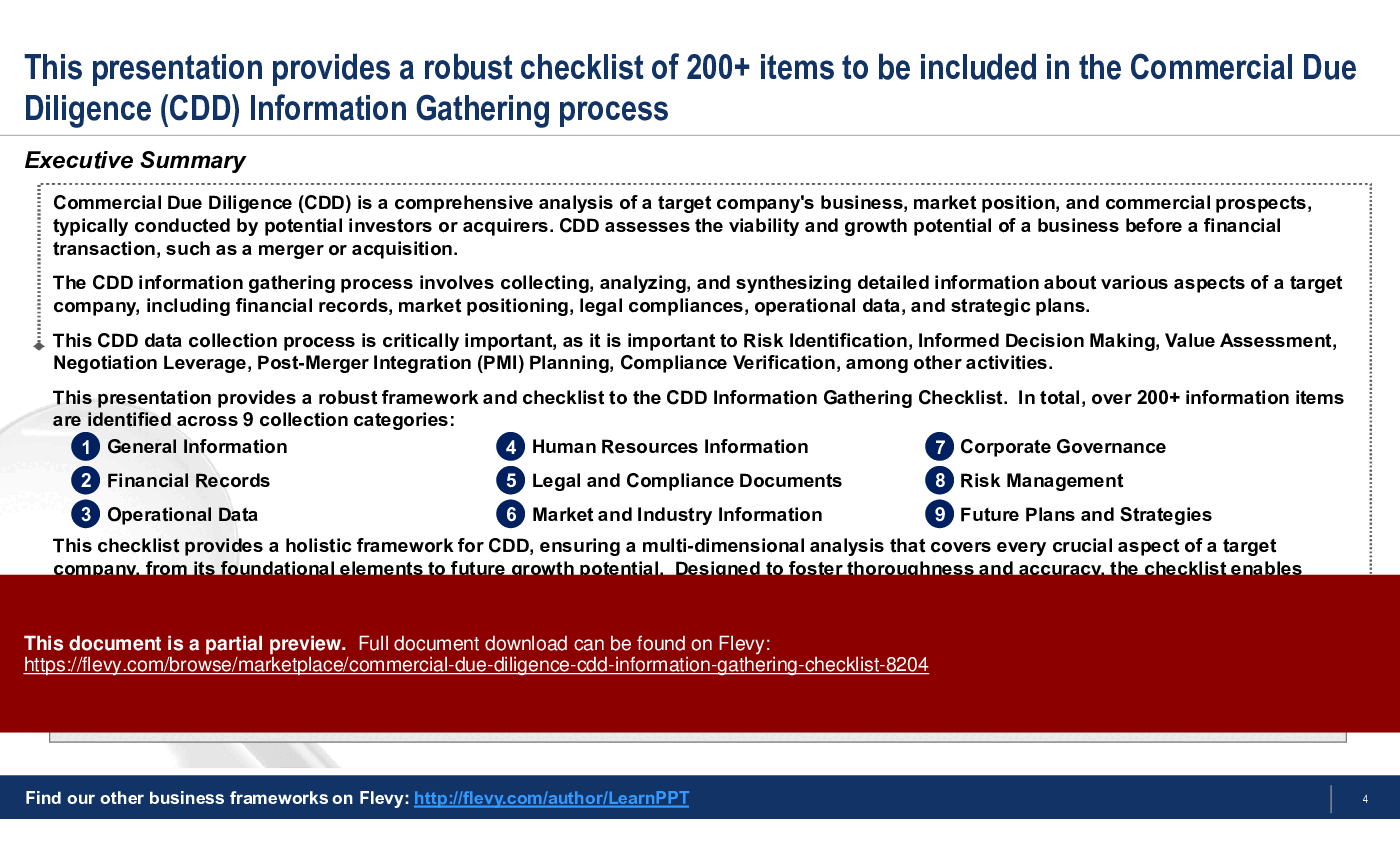
This PowerPoint presentation provides a robust framework and checklist to the CDD Information Gathering Checklist. In total, over 200+ information items are identified across 9 collection categories:
1. General Information
2. Financial Records
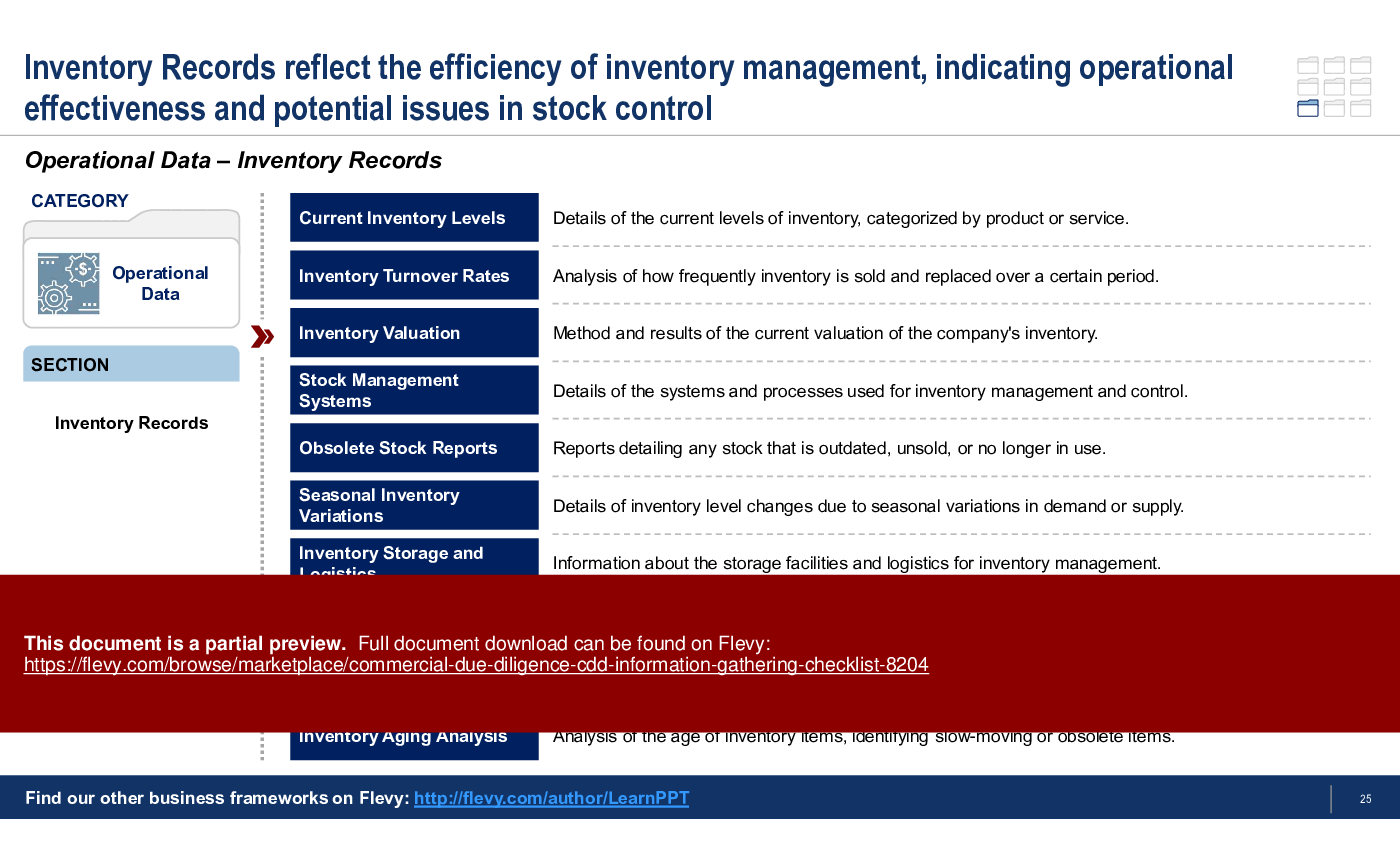
3. Operational Data
4. Human Resources Information
5. Legal and Compliance Documents
6. Market and Industry Information
7. Corporate Governance
8. Risk Management
9. Future Plans and Strategies
This checklist provides a holistic framework for CDD, ensuring a multi-dimensional analysis that covers every crucial aspect of a target company, from its foundational elements to future growth potential. Designed to foster thoroughness and accuracy, the checklist enables investors and acquirers to gain deep insights, facilitating informed decision-making in complex business transactions.
Utilizing this comprehensive checklist enables a meticulous and systematic approach to Due Diligence, fostering informed decision-making and strategic insight that can uncover hidden value and potential synergies.
This presentation also includes an accompanying Excel version of the CDD Information Gathering Checklist.
This checklist not only streamlines the information gathering process, but also enhances the quality of insights derived from the data collected. By employing this structured approach, stakeholders can effectively mitigate risks and make strategic decisions that align with their investment goals.
Got a question about the product? Email us at support@flevy.com or ask the author directly by using the "Ask the Author a Question" form. If you cannot view the preview above this document description, go here to view the large preview instead.
Executive Summary
The Commercial Due Diligence (CDD) Information Gathering Checklist is a meticulously crafted presentation designed to aid investors and acquirers in conducting thorough due diligence on target companies. This checklist, developed by former consultants from top firms such as McKinsey, BCG, Deloitte, EY, and Capgemini, encompasses over 200 critical items across nine key categories. It facilitates a structured approach to gathering essential information, enabling informed decision-making and strategic insights that can uncover hidden value and potential synergies. The CDD process is vital for assessing a company's viability and growth potential prior to financial transactions, such as mergers or acquisitions.
Who This Is For and When to Use
• Corporate executives involved in mergers and acquisitions
• Integration leaders tasked with post-merger integration planning
• Consultants conducting due diligence for clients
• Financial analysts assessing investment opportunities
• Legal teams ensuring compliance and risk management
Best-fit moments to use this deck:
• During the pre-acquisition phase to define the scope of due diligence
• When evaluating potential investments or acquisitions
• For post-merger integration planning to ensure alignment with strategic goals
• In legal compliance reviews to verify adherence to regulations
Learning Objectives
• Define the scope of Commercial Due Diligence (CDD) and its importance in investment decisions
• Identify and gather essential information across nine key categories relevant to CDD
• Analyze financial records, market positioning, and operational data to assess target companies
• Evaluate risk factors and compliance issues that may impact investment decisions
• Develop actionable insights for negotiation leverage and post-merger integration planning
• Foster a systematic approach to due diligence that enhances decision-making processes
Table of Contents
• Executive Summary (page 3)
• Commercial Due Diligence (CDD) Information Gathering (page 5)
• General Information (page 10)
• Market and Industry Information (page 15)
• Financial Records (page 21)
• Corporate Governance (page 27)
• Operational Data (page 32)
• Risk Management (page 37)
• Human Resources Information (page 42)
• Future Plans and Strategies (page 46)
• Legal and Compliance Documents (page 51)
Primary Topics Covered
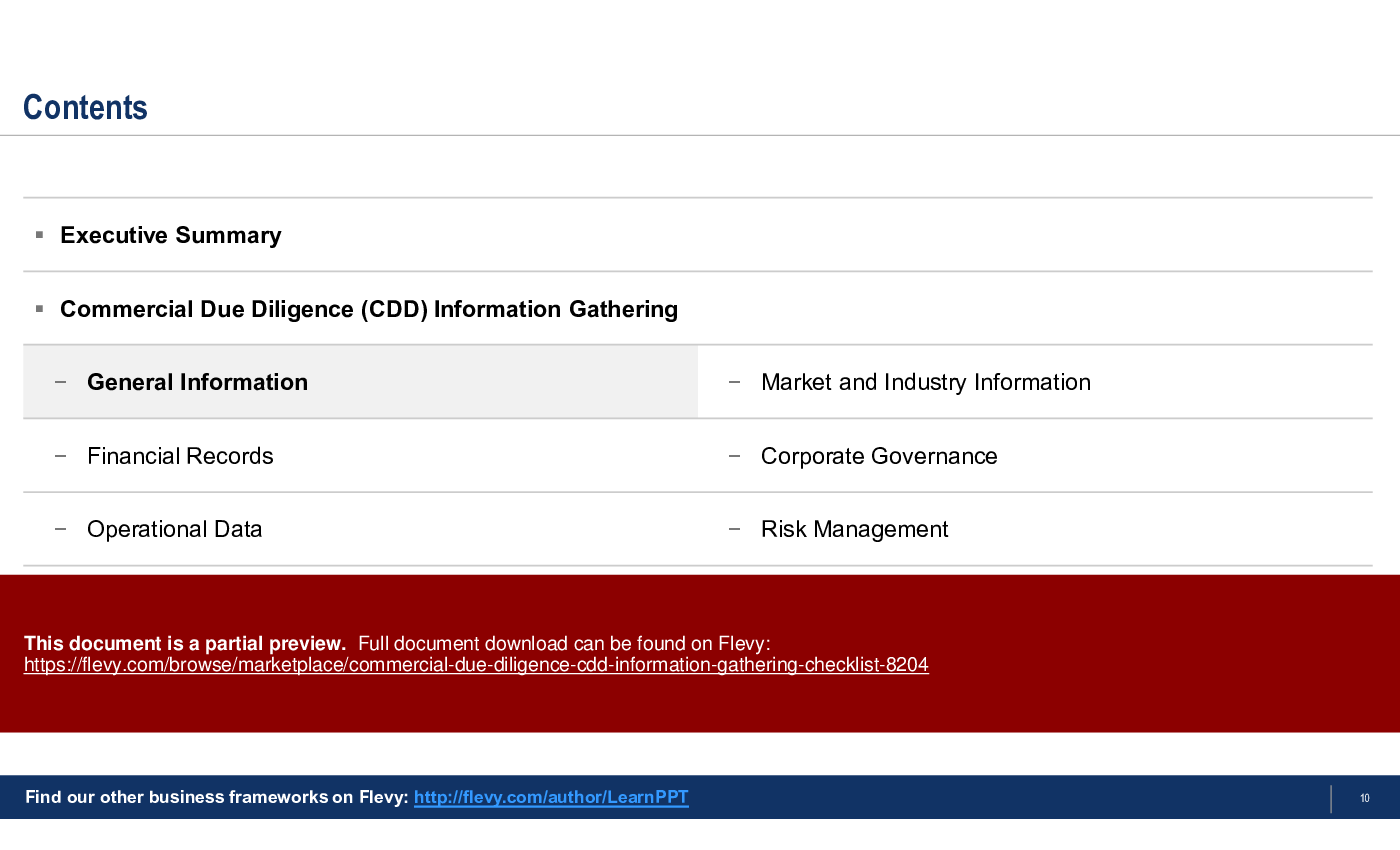
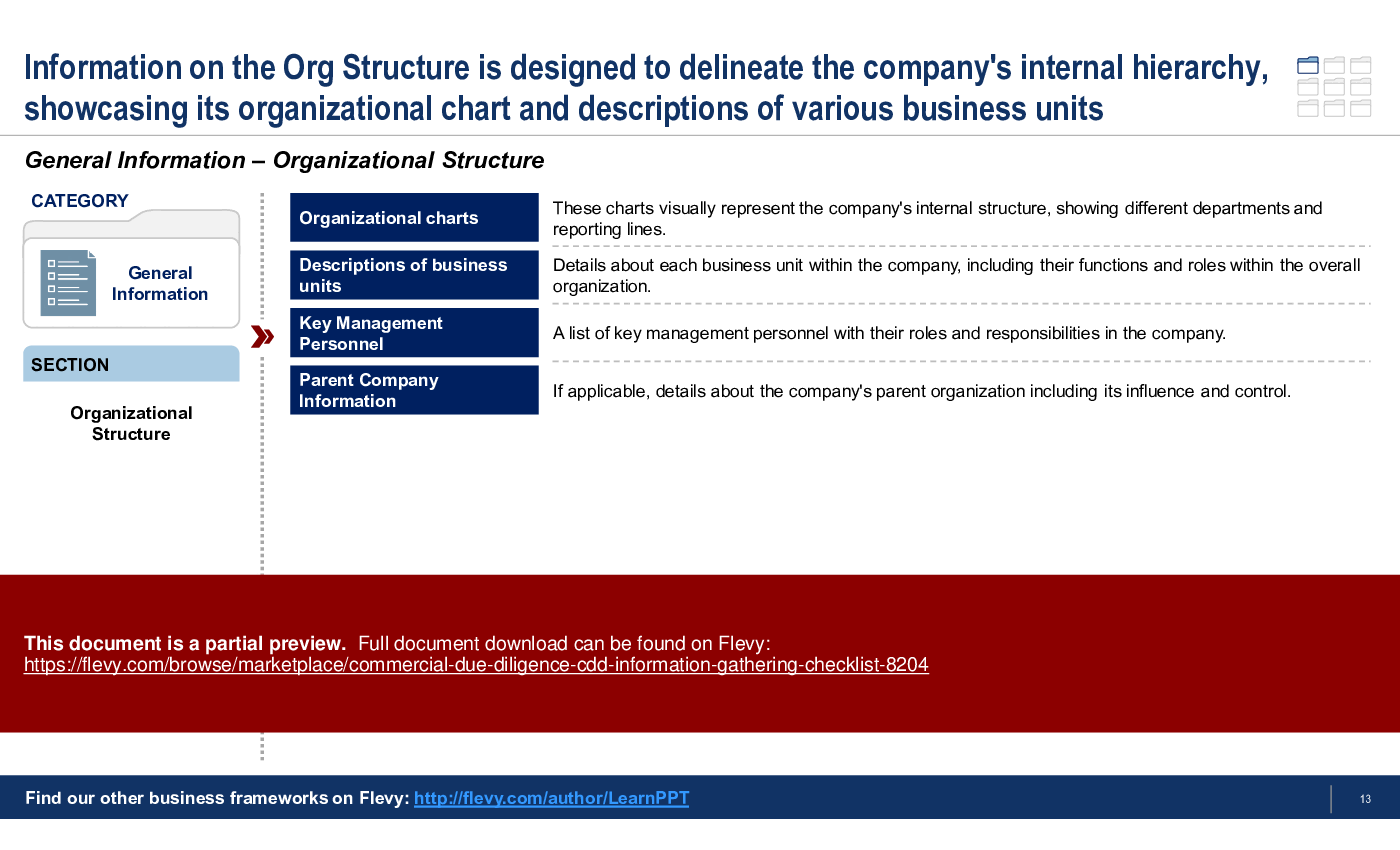
• General Information - This section outlines the foundational identity of the target company, including its legal name, trade names, and addresses.
• Market and Industry Information - Provides insights into market trends, size, and growth potential, essential for evaluating the company’s market position.
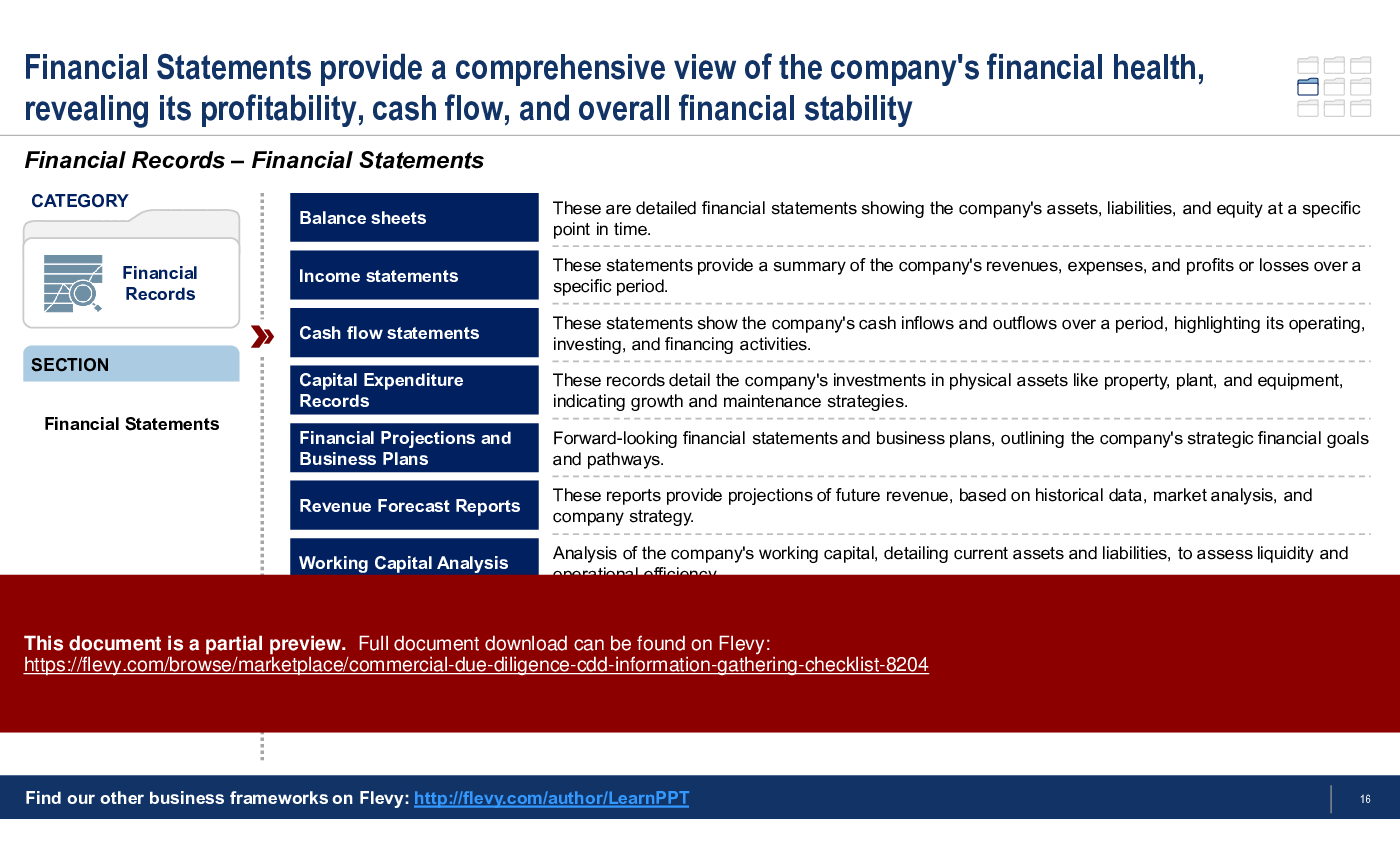
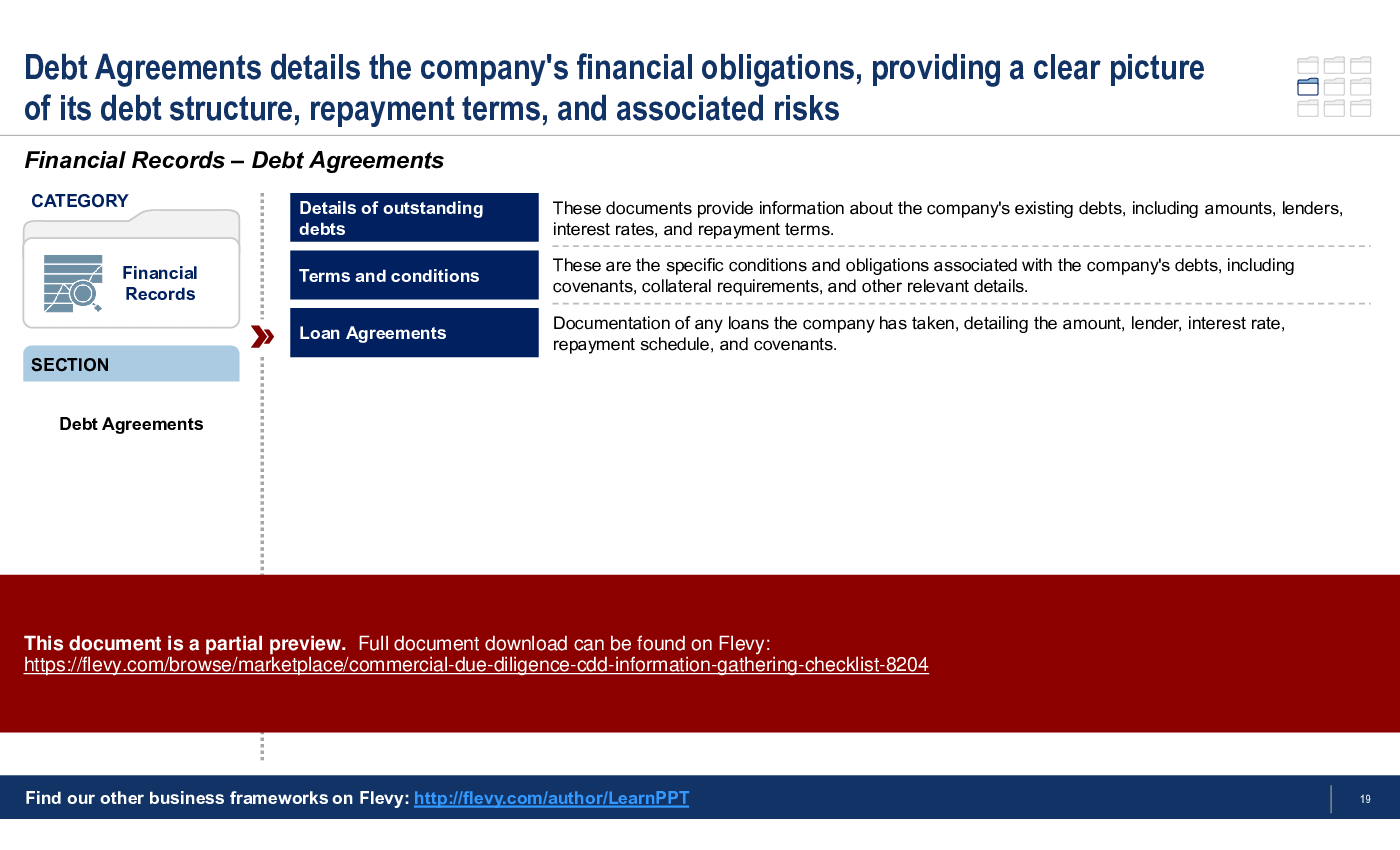
• Financial Records - Offers a comprehensive view of the company's financial health, including income statements, cash flow statements, and balance sheets.
• Corporate Governance - Details the governance structure, including board composition, shareholder information, and meeting minutes.
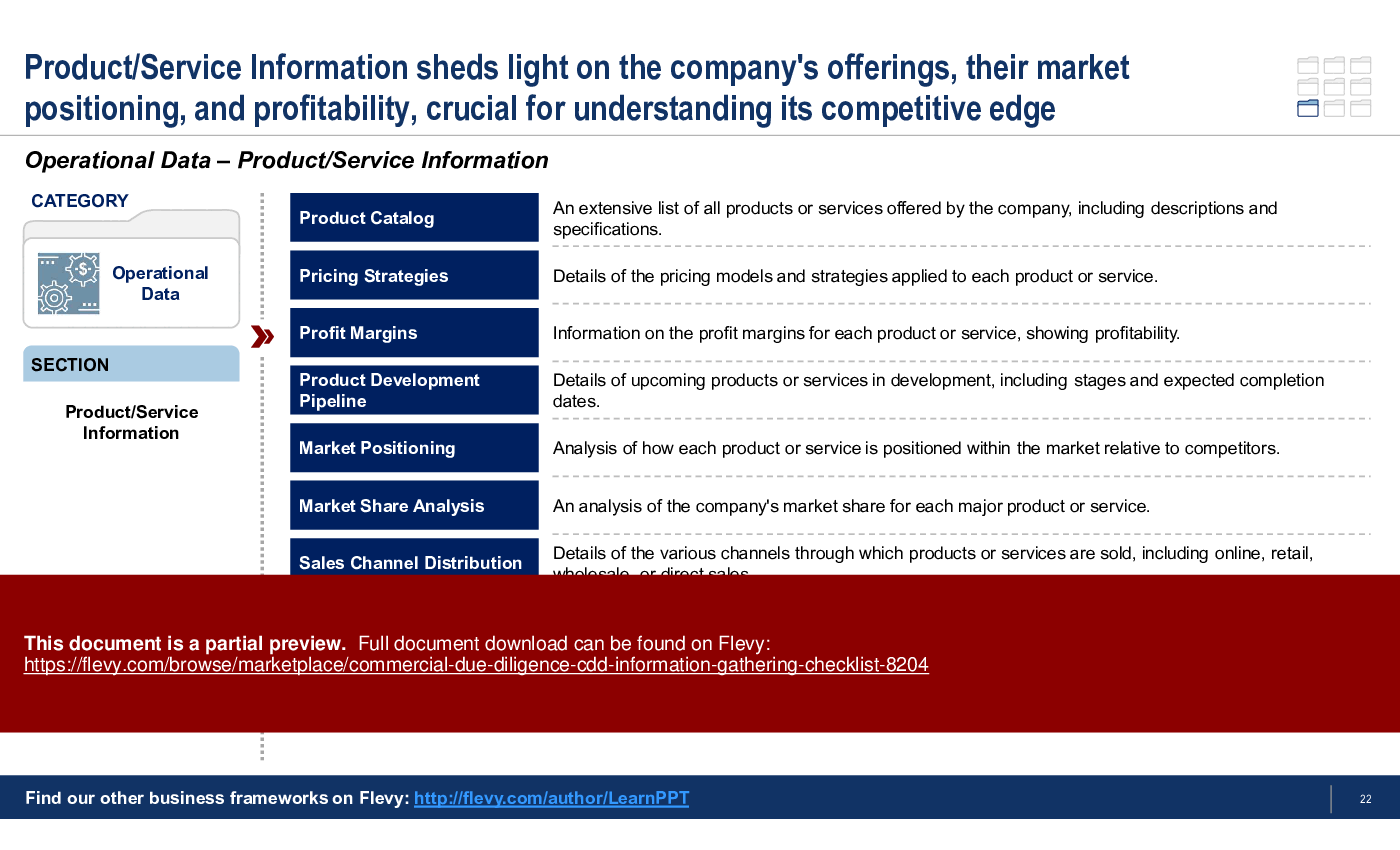
• Operational Data - Examines product/service information, supplier relationships, and customer contracts, crucial for understanding operational effectiveness.
• Risk Management - Discusses policies and frameworks for identifying and mitigating various business risks, ensuring operational robustness.
• Human Resources Information - Analyzes workforce composition, management profiles, and employee contracts, impacting organizational culture.
• Future Plans and Strategies - Highlights the company's strategic direction, including market expansion plans and product development roadmaps.
• Legal and Compliance Documents - Reviews legal disputes, compliance records, and intellectual property, critical for assessing potential liabilities.
Deliverables, Templates, and Tools
• Comprehensive CDD Information Gathering Checklist
• Excel version of the CDD Information Gathering Checklist
• Templates for financial record analysis and market assessments
• Guidelines for risk management and compliance verification
• Frameworks for evaluating operational data and governance structures
• Models for strategic planning and future growth initiatives
Slide Highlights
• Overview of the CDD process and its significance in investment decisions
• Detailed breakdown of the nine collection categories for CDD
• Visual representations of risk management frameworks and compliance standards
• Insights into market and industry trends affecting target companies
• Profiles of key management personnel and their roles in governance
Potential Workshop Agenda
CDD Overview Session (60 minutes)
• Introduction to Commercial Due Diligence and its importance
• Overview of the CDD Information Gathering Checklist
• Discussion on the nine collection categories
Information Gathering Workshop (90 minutes)
• Hands-on session to identify key information items for specific industries
• Group activities to analyze financial records and operational data
• Strategies for effective stakeholder engagement during the CDD process
Risk Management and Compliance Session (60 minutes)
• Overview of risk management policies and compliance requirements
• Case studies on managing legal disputes and regulatory challenges
• Best practices for ensuring thoroughness in information gathering
Customization Guidance
• Tailor the checklist to specific industries by adjusting the information items based on sector requirements
• Update the CDD framework with company-specific terminology and metrics
• Incorporate organizational governance structures and stakeholder roles into the checklist
Secondary Topics Covered
• Environmental and social governance (ESG) considerations in due diligence
• Analysis of competitive landscape and market positioning
• Assessment of supply chain dependencies and risks
• Evaluation of customer demographics and retention strategies
• Insights into technological innovations impacting the industry
Topic FAQ
Document FAQ
These are questions addressed within this presentation.
What is Commercial Due Diligence (CDD)?
CDD is a comprehensive analysis of a target company's business, market position, and commercial prospects, typically conducted by potential investors or acquirers.
How many items are included in the CDD Information Gathering Checklist?
The checklist includes over 200 essential items categorized across nine key areas relevant to the due diligence process.
What are the key categories covered in the CDD checklist?
The checklist covers General Information, Market and Industry Information, Financial Records, Corporate Governance, Operational Data, Risk Management, Human Resources Information, Future Plans and Strategies, and Legal and Compliance Documents.
How can this checklist help in investment decisions?
The checklist provides a structured approach to gathering critical information, enabling informed decision-making and strategic insights that can uncover hidden value and potential synergies.
Is there a template available for the CDD Information Gathering Checklist?
Yes, an Excel version of the CDD Information Gathering Checklist is included for ease of use and customization.
What is the importance of risk management in the CDD process?
Risk management is crucial for identifying potential risks in financial, legal, operational, or market-related areas, ensuring comprehensive due diligence.
How can I customize the CDD checklist for my organization?
You can tailor the checklist by adjusting the information items based on your industry, incorporating specific terminology, and aligning it with your organizational governance structure.
What role does stakeholder engagement play in the CDD process?
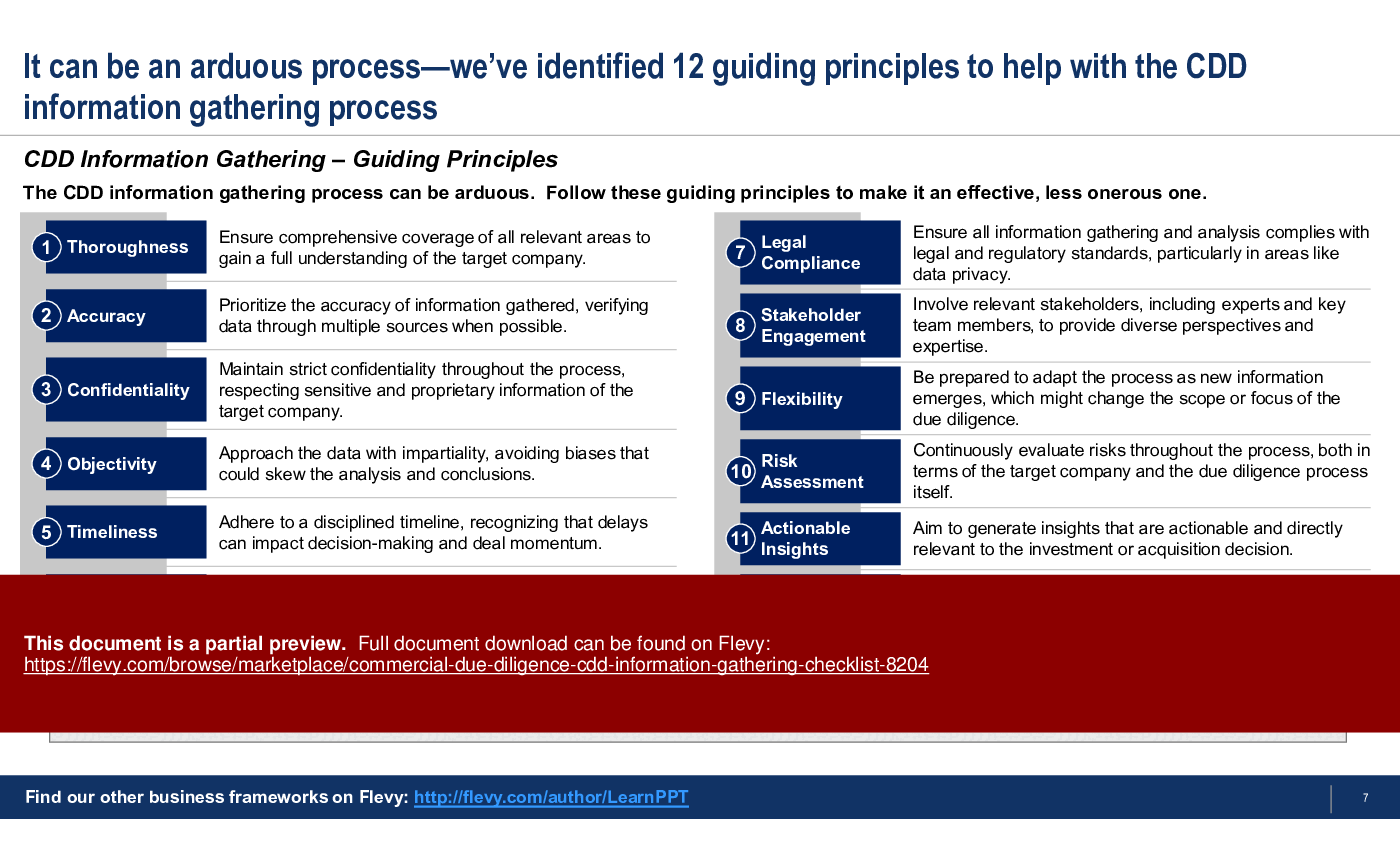
Engaging relevant stakeholders ensures diverse perspectives and expertise are included in the information gathering process, enhancing the thoroughness and accuracy of the analysis.
What are the potential challenges in the CDD information gathering process?
Challenges may include data confidentiality, ensuring accuracy, managing timelines, and adapting to new information as it emerges during the due diligence process.
Glossary
• Commercial Due Diligence (CDD) - A comprehensive analysis of a target company's business and market position.
• Due Diligence - The process of investigating and evaluating a business before a financial transaction.
• Risk Management - The identification and mitigation of potential risks affecting a business.
• Market Positioning - The strategy of positioning a company’s products or services in the market relative to competitors.
• Financial Records - Documents detailing a company's financial performance, including income statements and balance sheets.
• Corporate Governance - The system of rules and practices that direct and control a company.
• Operational Data - Information related to the day-to-day operations of a business, including supply chain and customer data.
• Human Resources Information - Data regarding workforce composition, management, and employee contracts.
• Legal Compliance - Adherence to laws and regulations relevant to business operations.
• Environmental, Social, and Governance (ESG) - Criteria for assessing a company's ethical impact and sustainability practices.
• Intellectual Property (IP) - Legal rights concerning inventions, designs, and artistic works.
• Stakeholder Engagement - The process of involving individuals or groups that have an interest in the business.
• Market Opportunities - Potential areas for growth and expansion within a market.
• Supplier Information - Data related to supplier relationships, contracts, and performance metrics.
• Customer Contracts - Agreements detailing the terms of service provided to customers.
• Audit Reports - Independent assessments of a company's financial statements and compliance with standards.
• Business Continuity Plan - A strategy for maintaining operations during and after a crisis.
• Capital Expenditure - Funds used by a company to acquire or upgrade physical assets.
• Employee Contracts - Agreements outlining the terms of employment between the company and its employees.
• Labor Disputes - Conflicts between employees and employers regarding work conditions or terms of employment.
Source: Best Practices in Due Diligence PowerPoint Slides: Commercial Due Diligence (CDD) Information Gathering Checklist PowerPoint (PPTX) Presentation Slide Deck, LearnPPT Consulting
This document is available as part of the following discounted bundle(s):
Save %!
Commercial Due Diligence (CDD) Frameworks
This bundle contains 2 total documents. See all the documents to the right.
|
Download our FREE Strategy & Transformation Framework Templates
Download our free compilation of 50+ Strategy & Transformation slides and templates. Frameworks include McKinsey 7-S, Balanced Scorecard, Disruptive Innovation, BCG Curve, and many more. |