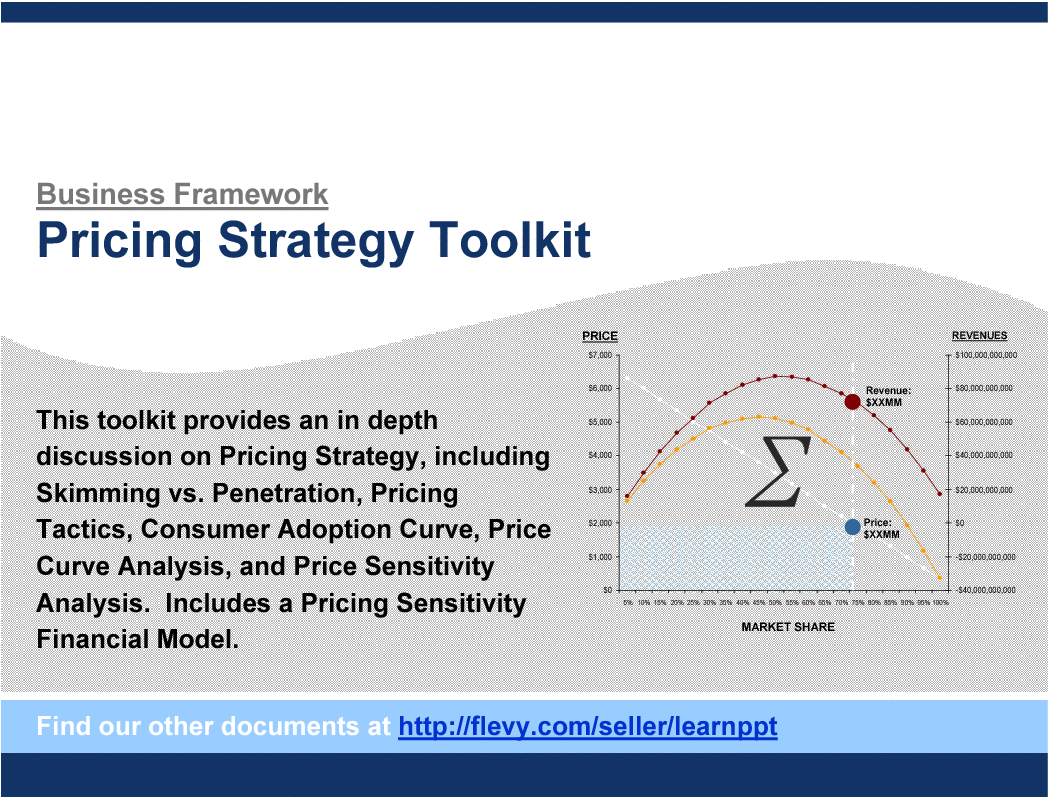

Pricing Strategy is a core pillar of Marketing and Product Strategy. It is 1 of the 4 Ps of Marketing (also known as the Marketing Mix – Product, Price, Placement, and Promotion). As such, knowing how to properly price your product is extremely important to the commercial success and viability of your product offering.
This Pricing Strategy presentation (PowerPoint) provides an in-depth framework on Pricing Strategy; and is organized into the following sections:
1. Pricing Strategy
Price Skimming vs. Penetration Pricing
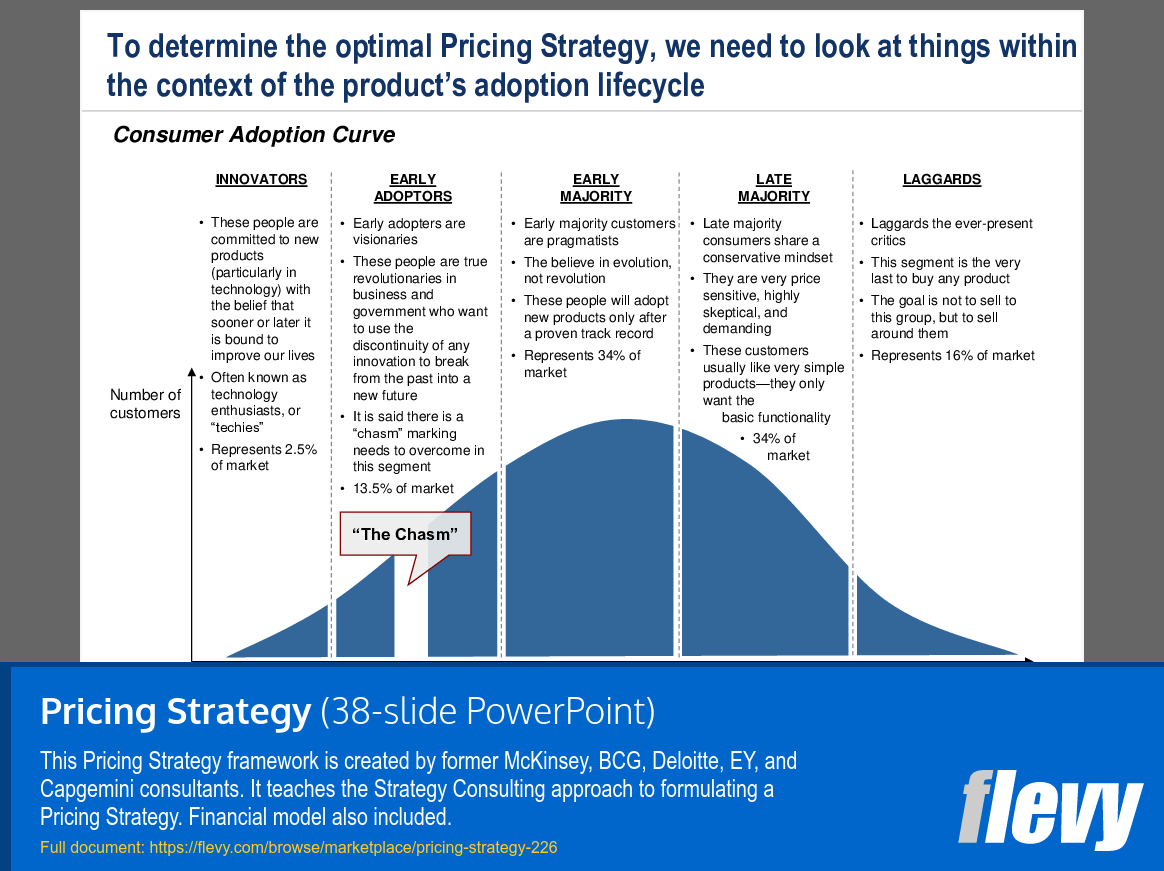
Consumer Adoption Curve
Advantages and Disadvantages
2. Pricing Approach
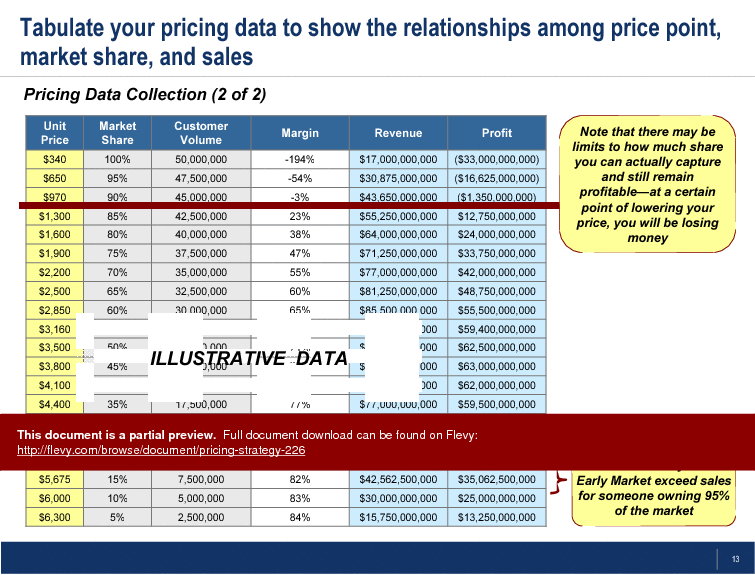
Data Collection
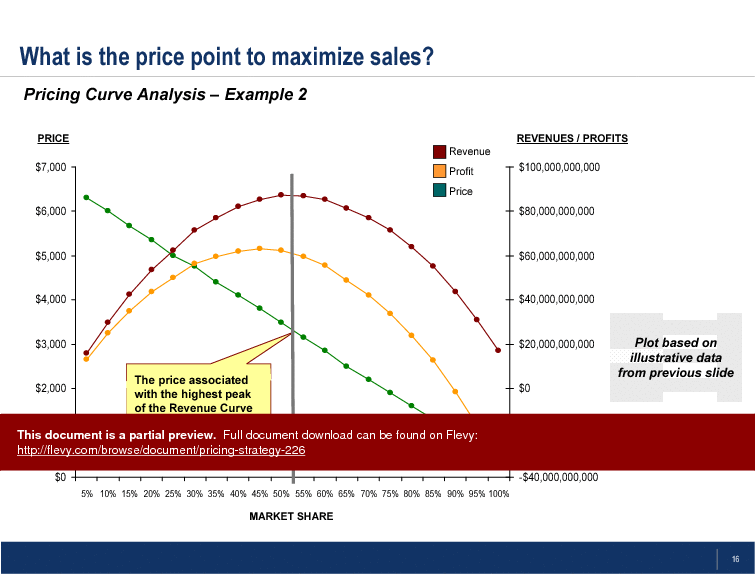
Price Curve Analysis
3. Price Sensitivity Analysis
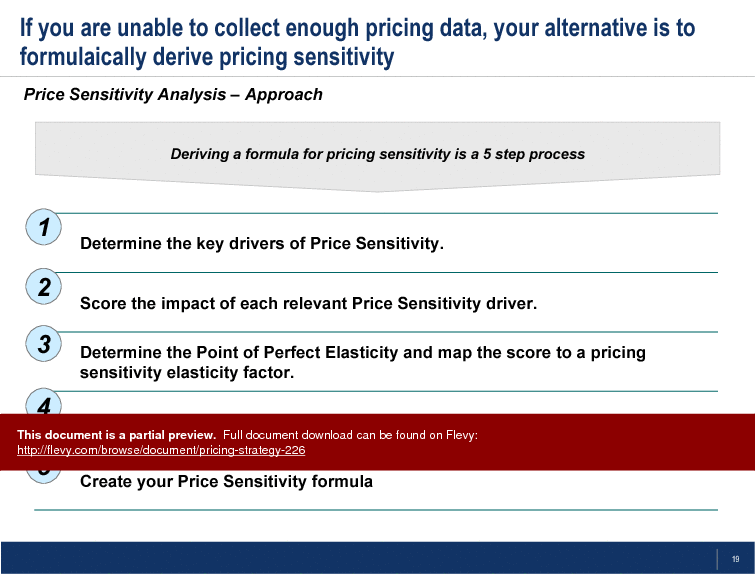
Analysis Approach
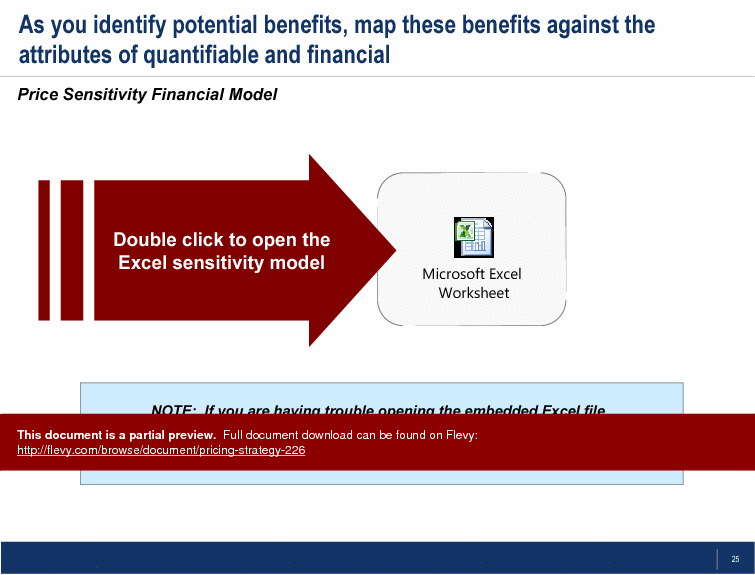
Price Sensitivity Financial Model
4. Pricing Tactics and Terminology
Pricing should be an informed, strategic decision based on data, not a decision made randomly or based on trial-and-error. This Pricing Strategy in Marketing PPT teaches you a framework to do Pricing correctly. In fact, this Pricing Strategy framework is the same developed and used by global strategy consulting firms when conducting Pricing Strategy projects for their clients.

Formulating the optimal Pricing Strategy involves considering and answering critical pricing questions, such as:
• What is the price point to maximize profit?
• What is the price point to maximize share?
• What is the price point to capture the Early Market?
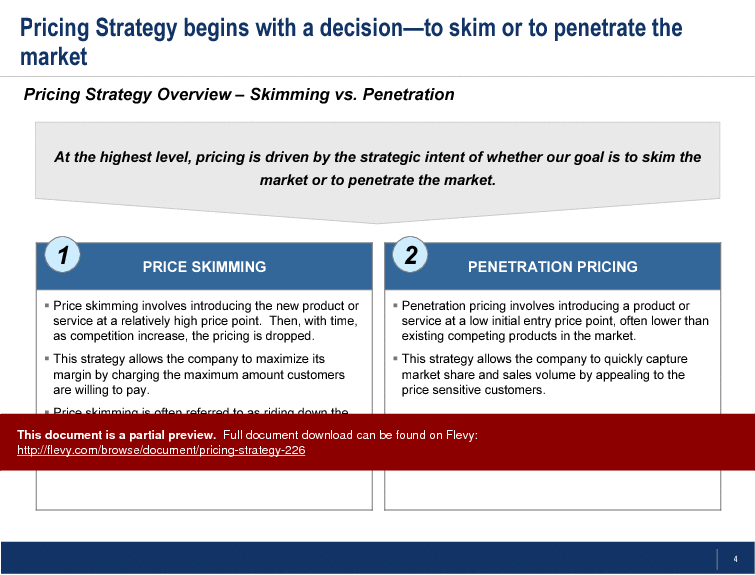
Pricing Strategy begins with a decision—to skim or to penetrate the market. Price skimming involves introducing the new product or service at a relatively high price point. Then, with time, as competition increase, the price is dropped. Penetration pricing involves introducing a product or service at a low initial entry price point, often lower than existing competing products in the market.
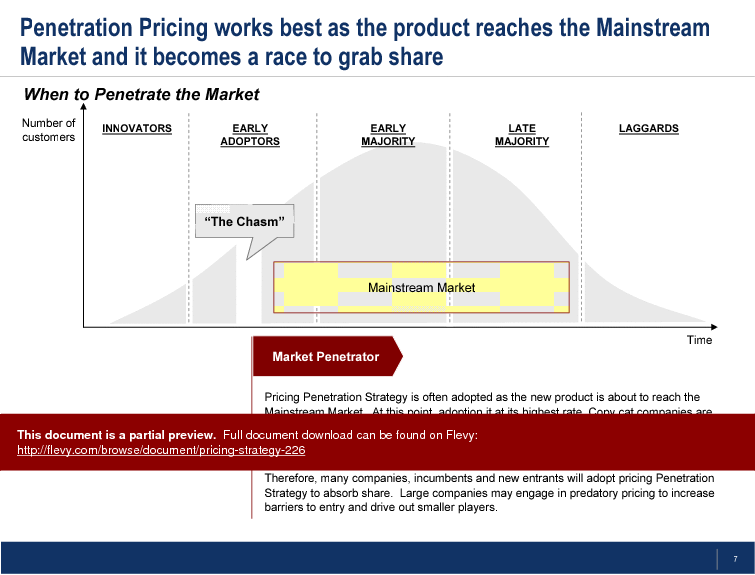
We have several slides explaining the concepts of Price Skimming (and Market Skimmer) vs. Penetration Pricing (and Market Penetrator), under the backdrop of the Consumer Adoption Curve (and with specific consideration for "crossing the chasm").
This Pricing Strategy PPT also presents a 3-phase approach to Pricing:
1. Data Collection – Pricing data is often difficult to gather. Therefore, pricing data may come from a variety of sources.

2. Analysis & Insights – With the gathered pricing data, the next step is to make sense of the numbers. It is critical to document and be rational with any assumptions made.
3. Pricing – The final phase involves setting the final price point.
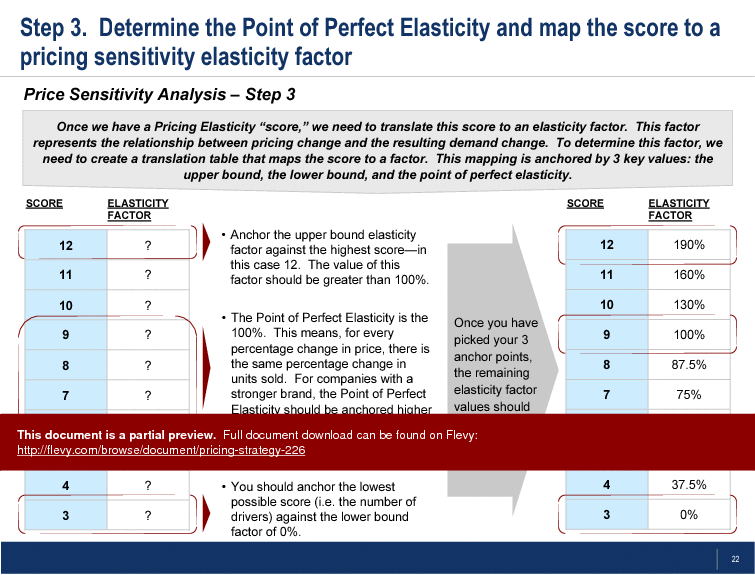
Within this Pricing presentation PowerPoint, there is also a detailed discussion of a 5-phase approach to Price Sensitivity Analysis. Price sensitivity is a measurement of how much the price of the product or service affects customers' willingness to buy the offering. This analysis highlights the 9 drivers to Price Sensitivity (e.g. Reference Price Point, Switching Cost Effect, Expenditure Effect, Fairness Effect, Framing Effect, etc.), Pricing Elasticity Analysis, and the Point of Perfect Elasticity.
A supporting Price Sensitivity Financial Model built in Excel is also included with this purchase.
As this is a fully editable PowerPoint presentation, you can also adapt the slides as templates for your own presentations on Pricing Strategy. The various PowerPoint diagrams (e.g. Consumer Adoption Curve, Price Curve Analysis) can be leveraged for your own Pricing presentations.
Additional Pricing tactics discussed include Loss Leader Pricing, Psychological Pricing, Price Discrimination, Predatory Pricing, Cost-Plus Pricing, among others.
This presentation provides a comprehensive analysis of the Price Sensitivity Financial Model, illustrating how to derive and apply pricing sensitivity formulas. It also includes detailed examples of various pricing tactics such as Psychological Pricing and Price Discrimination, offering practical insights for real-world application.
Got a question about the product? Email us at support@flevy.com or ask the author directly by using the "Ask the Author a Question" form. If you cannot view the preview above this document description, go here to view the large preview instead.
Executive Summary
The Pricing Strategy Toolkit is a comprehensive resource designed for corporate executives and consultants seeking to master pricing strategies. Developed by former consultants from top firms, this toolkit provides a McKinsey, Bain, or BCG-quality framework (consulting-grade; not affiliated) for understanding and implementing effective pricing strategies. Users will learn to navigate key concepts such as skimming vs. penetration pricing, the consumer adoption curve, price sensitivity analysis, and various pricing tactics. This toolkit empowers decision-makers to optimize pricing strategies, enhance market share, and maximize profitability.
Who This Is For and When to Use
• Marketing executives responsible for pricing strategy formulation
• Product managers launching new products into competitive markets
• Business analysts conducting market research and pricing analysis
• Consultants advising clients on pricing strategy and market entry
• Financial analysts assessing pricing impact on revenue and profitability
Best-fit moments to use this toolkit:
• When launching a new product and determining initial pricing strategy
• During market analysis to understand competitive pricing dynamics
• In strategic planning sessions focused on revenue optimization
• When conducting financial modeling for pricing sensitivity scenarios
Learning Objectives
• Define the differences between skimming and penetration pricing strategies
• Analyze the consumer adoption curve to identify optimal pricing points
• Build a pricing sensitivity financial model to assess revenue impacts
• Establish effective pricing tactics based on market research and data analysis
• Create actionable insights from price curve analysis to maximize profits
• Evaluate advantages and disadvantages of various pricing strategies
Table of Contents
• Pricing Strategy (page 3)
• Skimming vs. Penetration (page 4)
• Consumer Adoption Curve (page 5)
• Advantages and Disadvantages (page 8)
• Pricing Approach (page 10)
• Data Collection (page 12)
• Price Curve Analysis (page 14)
• Price Sensitivity Analysis (page 18)
• Analysis Approach (page 19)
• Price Sensitivity Financial Model (page 25)
• Pricing Tactics and Terminology (page 28)
Primary Topics Covered
• Pricing Strategy - An overview of pricing strategies, focusing on skimming versus penetration approaches to market entry.
• Consumer Adoption Curve - A framework illustrating how different consumer segments adopt products over time, influencing pricing decisions.
• Pricing Approach - A structured method for gathering data and analyzing pricing strategies to inform decision-making.
• Price Sensitivity Analysis - Techniques for assessing how changes in price affect consumer demand and overall revenue.
• Price Curve Analysis - Visual representations of the relationship between price, revenue, and market share to identify optimal pricing points.
• Pricing Tactics and Terminology - A glossary of essential pricing tactics and terms relevant to pricing strategy formulation.
Deliverables, Templates, and Tools
• Pricing sensitivity financial model template for analyzing price elasticity
• Consumer adoption curve framework for visualizing market penetration
• Price curve analysis charts to illustrate revenue and profit relationships
• Data collection templates for gathering competitive pricing intelligence
• Pricing strategy decision matrix for evaluating skimming vs. penetration
• Pricing tactics glossary to ensure consistent terminology across teams
Slide Highlights
• Visual representation of the consumer adoption curve, highlighting key market segments
• Comparative analysis of skimming vs. penetration pricing strategies with pros and cons
• Graphical depiction of price sensitivity analysis and its impact on revenue
• Detailed pricing curve analysis showcasing revenue and profit peaks
• Interactive pricing sensitivity financial model embedded for real-time analysis
Potential Workshop Agenda
Pricing Strategy Overview Session (60 minutes)
• Introduce key concepts of pricing strategy
• Discuss skimming vs. penetration pricing with case studies
• Explore the consumer adoption curve and its implications
Data Collection and Analysis Workshop (90 minutes)
• Review methods for gathering pricing data
• Conduct hands-on price curve analysis using real-world examples
• Develop pricing sensitivity models based on collected data
Pricing Tactics and Implementation Session (60 minutes)
• Discuss various pricing tactics and their applications
• Create actionable plans for implementing pricing strategies
• Evaluate potential challenges and solutions in pricing execution
Customization Guidance
• Tailor the pricing sensitivity financial model to reflect specific market conditions
• Adjust the consumer adoption curve framework to align with product categories
• Modify pricing tactics terminology to fit organizational language and culture
Secondary Topics Covered
• Value pricing and its relevance in luxury markets
• Loss leader pricing strategies for driving ancillary sales
• Psychological pricing effects on consumer perception
• Price discrimination tactics across different market segments
• Predatory pricing implications and legal considerations
FAQ
What is the difference between skimming and penetration pricing?
Skimming involves setting a high initial price to maximize margins from early adopters, while penetration pricing sets a low price to quickly capture market share.
How can I assess price sensitivity for my products?
Utilize the pricing sensitivity financial model included in the toolkit to analyze how price changes impact demand and revenue.
What is the consumer adoption curve?
The consumer adoption curve illustrates the stages through which consumers progress when adopting a new product, including innovators, early adopters, early majority, late majority, and laggards.
What are some common pricing tactics?
Common tactics include value pricing, loss leader pricing, psychological pricing, and price discrimination.
How do I determine the optimal price point for my product?
Conduct a price curve analysis to visualize the relationship between price, revenue, and market share, identifying the price point that maximizes profit.
Can this toolkit be customized for specific industries?
Yes, the toolkit provides guidance on how to tailor frameworks and models to fit specific market conditions and industry requirements.
What resources are included in the toolkit?
The toolkit includes templates, models, and charts for pricing analysis, along with a glossary of pricing terminology.
How do I implement the pricing strategies outlined in the toolkit?
Use the workshop agenda provided to facilitate discussions and planning sessions focused on pricing strategy implementation.
Glossary
• Price Skimming - Setting a high initial price to maximize margins from early adopters.
• Penetration Pricing - Introducing a product at a low price to quickly gain market share.
• Consumer Adoption Curve - A model illustrating the stages of consumer acceptance of new products.
• Price Sensitivity - The degree to which demand for a product changes in response to price changes.
• Pricing Tactics - Strategies used to set prices based on market conditions and consumer behavior.
• Value Pricing - Setting prices based on perceived value to the customer.
• Loss Leader Pricing - Pricing a product below cost to drive sales of related products.
• Psychological Pricing - Pricing strategies that consider the psychological impact on consumers.
• Price Discrimination - Charging different prices for the same product in different markets.
• Predatory Pricing - Setting prices low to eliminate competition.
• Cost-Plus Pricing - Setting prices by adding a markup to the cost of production.
• Marginal Cost Pricing - Pricing based on the incremental cost of producing one additional unit.
• Absorption Pricing - Sharing fixed costs across multiple products sold.
• Going Rate Pricing - Setting prices based on competitors' pricing.
• Tender Pricing - Pricing based on formal bids submitted for contracts.
• Expenditure Effect - The relationship between the price of a product and the buyer's overall budget.
• Fairness Effect - Buyers' sensitivity to prices perceived as unfair.
• Switching Costs Effect - The impact of costs incurred when changing suppliers on price sensitivity.
• Reference Price Effect - The influence of perceived alternatives on price sensitivity.
Source: Best Practices in Pricing Strategy, Product Strategy, Product Launch Strategy PowerPoint Slides: Pricing Strategy PowerPoint (PPT) Presentation Slide Deck, LearnPPT Consulting
|
Download our FREE Strategy & Transformation Framework Templates
Download our free compilation of 50+ Strategy & Transformation slides and templates. Frameworks include McKinsey 7-S, Balanced Scorecard, Disruptive Innovation, BCG Curve, and many more. |