
This framework is developed by a team of former McKinsey and Big 4 consultants. The presentation follows the headline-body-bumper slide format used by global consulting firms.
Customer segmentation and targeting PPT: Learn market segmentation, customer profiling, analysis models, and targeting strategies. Download this ready-to-use presentation now. Customer Segmentation and Targeting is a 27-slide PPT PowerPoint presentation slide deck (PPT) available for immediate download upon purchase.
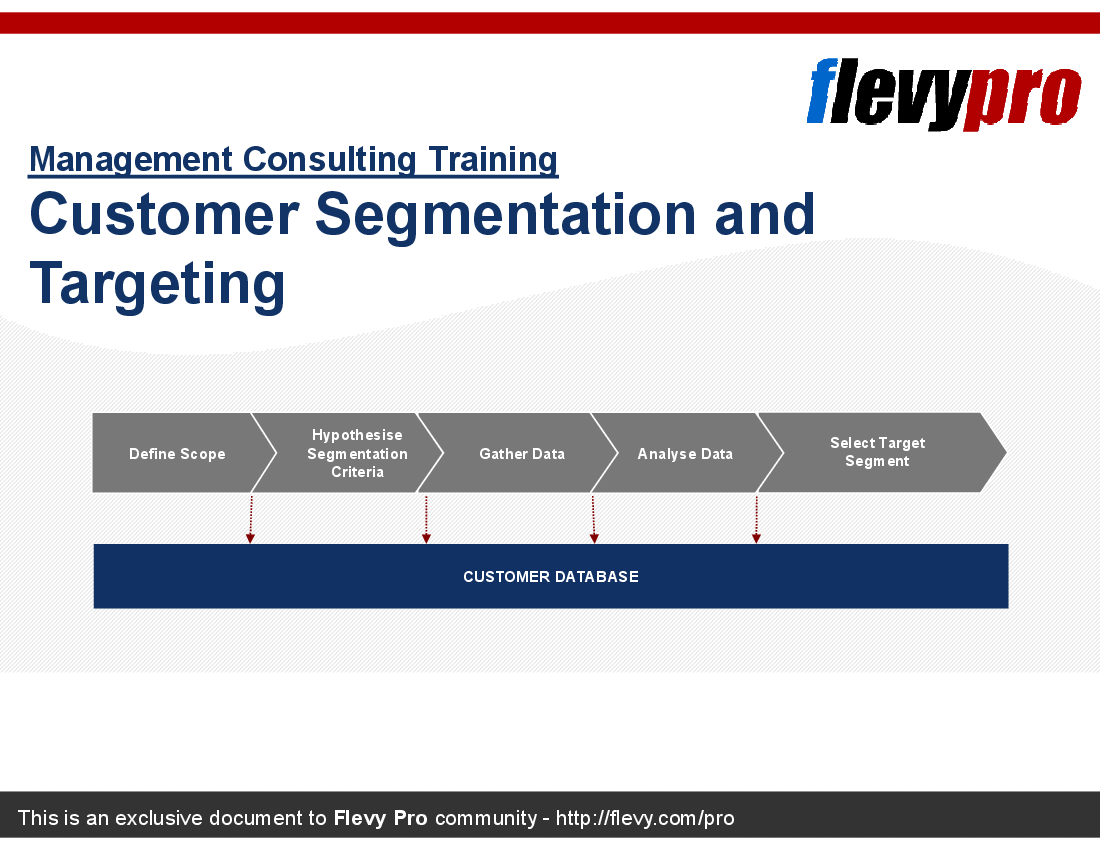
This presentation will focus on the second phase of the Customer Analysis process: Segment Customers and Derive Insight.
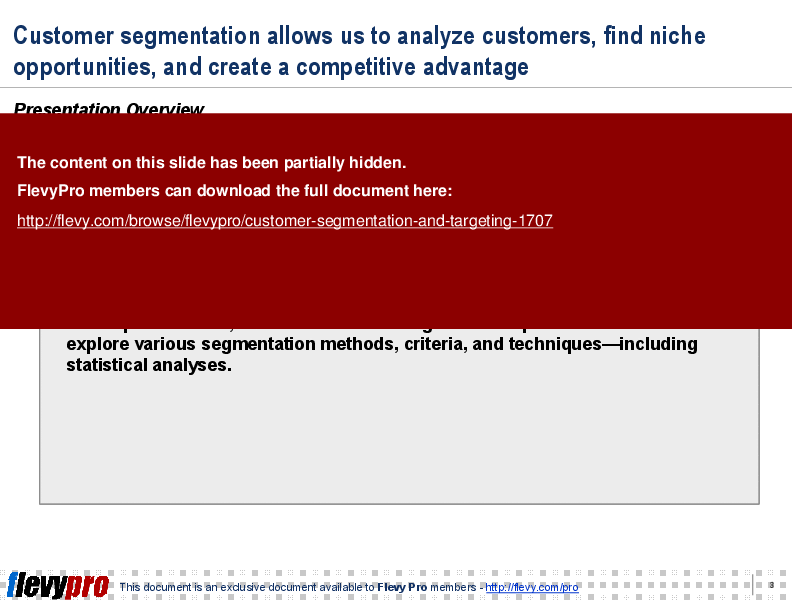
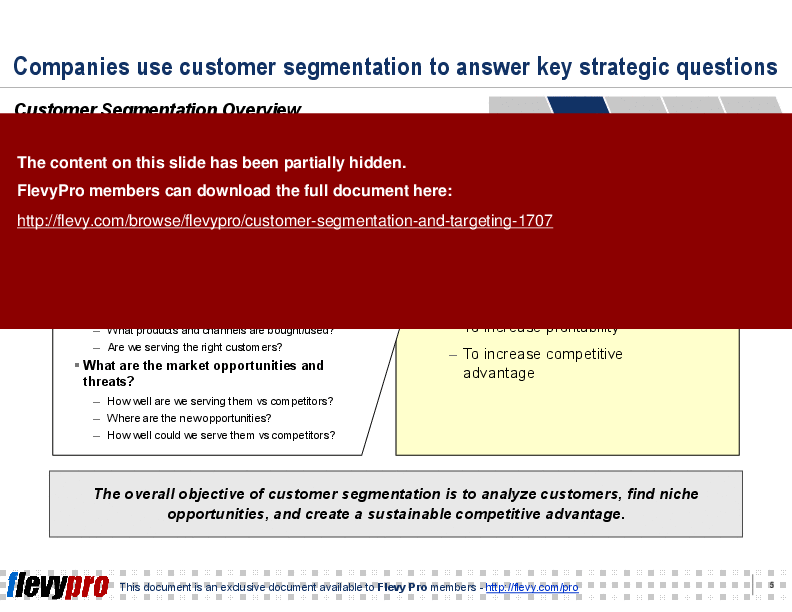
Customers segment their customer base to better understand their customers. The overall objective of customer segmentation is to analyze customers, find niche opportunities, and create a sustainable competitive advantage.
In this presentation, we will discuss the segmentation process. We will also explore various segmentation methods, criteria, and techniques—including statistical analyses.
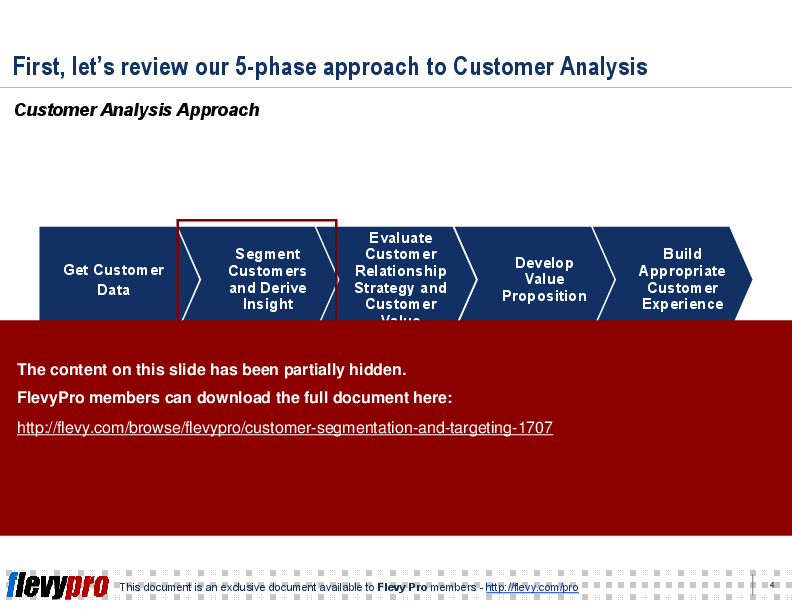
This PPT delves into a comprehensive 5-phase approach to Customer Analysis. It starts with gathering customer data, then moves into segmenting customers to derive actionable insights. The process continues with evaluating customer relationship strategies, developing value propositions, and finally, building an appropriate customer experience. Each phase is meticulously detailed to ensure you can apply these strategies effectively within your organization.
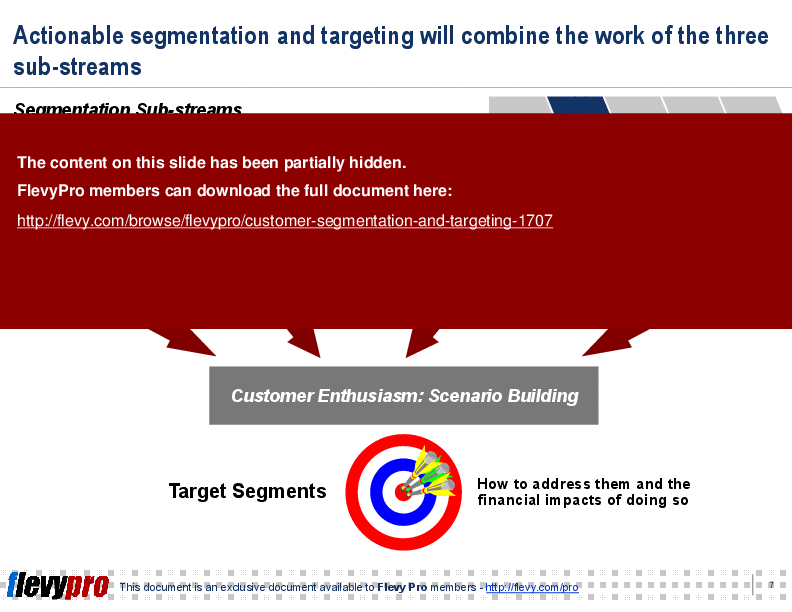
The presentation also covers the high-level approach to improved customer relationships, emphasizing the importance of ongoing prioritization of customers for specific actions. It highlights how actionable segmentation and targeting combine the work of three sub-streams: customer enthusiasm, target segments, and scenario building. This integrated approach ensures that you can address customer needs and understand the financial impacts of your strategies.
Segmentation techniques are explored in depth, including both deductive and inductive methods. The document provides insights into statistical approaches like cluster analysis and factor analysis, which are essential for identifying, characterizing, and sizing segments. The presentation also includes practical tips and pitfalls to avoid when conducting customer segmentation, ensuring you can navigate this complex process with confidence.
This PPT slide outlines customer segmentation methods based on tangible and intangible criteria. Tangible criteria include geographic, demographic, socio-economic, geo-demographic, product usage, and profitability factors, which are straightforward to implement and linked to existing customer data. Intangible criteria focus on psychographic factors such as lifestyle, behavioral tendencies, needs-based segmentation, perceived benefits, and attitudes, offering deeper insights, but requiring more resources. An integrated approach that combines needs-based segmentation with tangible variables enhances segmentation effectiveness, creating nuanced customer profiles for better alignment of products and services with customer expectations. Traditional methods may lack depth, while a comprehensive approach yields actionable intelligence for improved business outcomes.
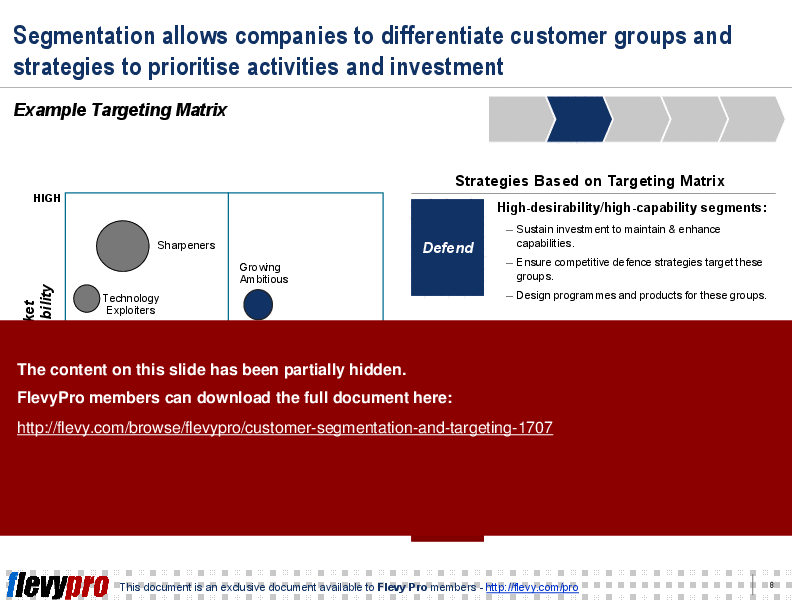
This PPT slide presents a targeting matrix for customer segmentation based on market desirability and capability to meet segment needs. It categorizes segments into 4 quadrants:
1. Defend (high-desirability/high-capability): Focus on sustaining investments and enhancing capabilities while tailoring products for these segments.
2. Develop (high-desirability/low-capability): Invest significantly to improve capabilities or desirability and design targeted programs to retain these segments.
3. Harvest (low-desirability/low-capability): Implement tactical marketing strategies and reduce costs to serve these segments effectively.
This structured approach guides strategic decisions, enabling efficient resource allocation and alignment of offerings with market demands.
This PPT slide outlines 2 primary market segmentation techniques: A Priori and Cluster. The A Priori method uses pre-determined criteria, such as market size or age demographics, allowing organizations to leverage existing data for quicker decision-making. However, its predetermined nature may lead to inaccurate consumer behavior groupings. In contrast, the Cluster technique employs a statistical approach based on customer-driven data, focusing on benefits, needs, and attitudes. This method can reveal genuine insights, but may introduce complexity and require new data sets. The choice between A Priori and Cluster segmentation impacts market strategies and customer targeting efforts.
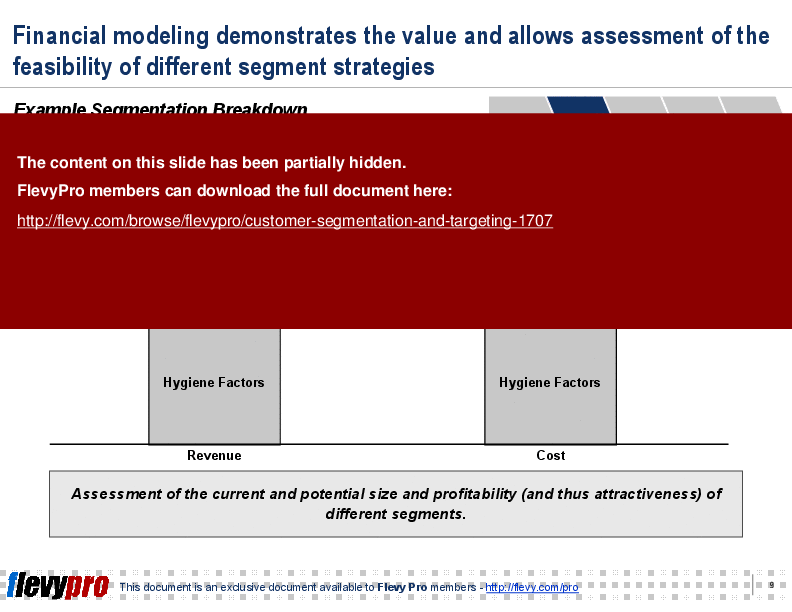
This PPT slide presents a framework for customer segmentation through financial modeling, focusing on the price customers are willing to pay based on their key criteria. It categorizes influencing factors into 3 levels: hygiene factors, secondary factors, and a key criterion. Hygiene factors are essential for customer satisfaction, while secondary factors and the key criterion can drive premium pricing. Essential elements for excelling in offerings include technology, comfort, and performance, which incur costs that affect competitive advantage. The slide summarizes the assessment of market sizes, profitability, and segment attractiveness, aiding strategic decision-making and allowing executives to prioritize segments aligned with their capabilities and market opportunities.
This PPT slide provides an overview of customer segmentation, detailing its practical applications in defining strategic propositions, evaluating target groups, and tailoring products and marketing strategies. Segmentation enhances customer focus, leading to a clearer understanding of segment needs, potentially increasing revenue and margins. However, challenges include defining actionable customer needs that align with existing products, the significant corporate commitment required, and costs that may surpass general marketing strategies. Over-reliance on statistically significant segments can undermine industry experience, and accessing timely customer needs data can be time-consuming. Careful consideration of these limitations is essential for effective segmentation implementation.
This PPT slide outlines a structured approach to customer segmentation and targeting, integrating 3 key sub-streams: Market Research, Financial Model, and Capabilities. Market Research focuses on segment descriptions and customer decision levers, essential for identifying customer segment characteristics and behaviors. The Financial Model assesses segment sizes and the client’s market share, enabling prioritization based on potential value. Capabilities evaluate client strengths to enhance positioning and effectively engage target segments. The central theme, "Customer Enthusiasm: Scenario Building," aims to create scenarios that resonate with customers, driving engagement and loyalty. This comprehensive approach aligns data-driven decisions with strategic objectives, optimizing resource allocation through synthesized insights from all 3 sub-streams.
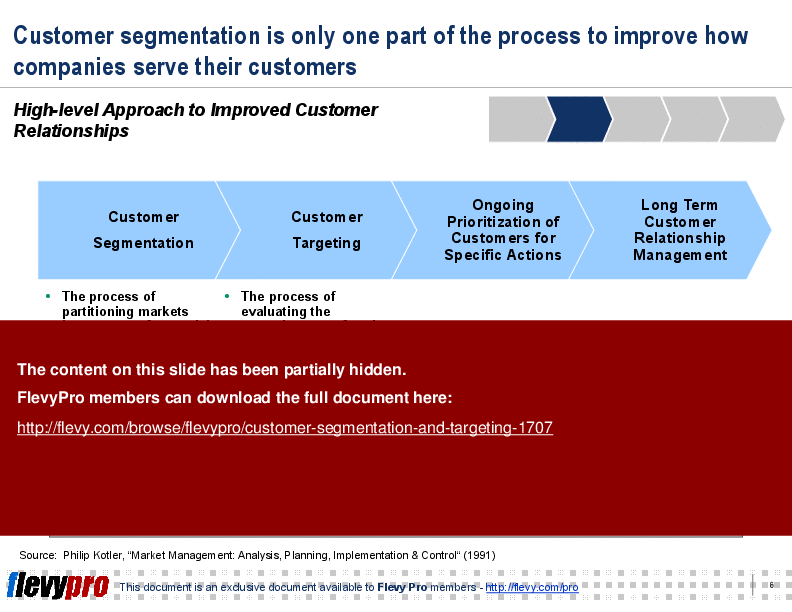
This PPT slide outlines a structured approach to enhancing customer relationships through 4 key components: Customer Segmentation, Customer Targeting, Ongoing Prioritization, and Long Term Customer Relationship Management. Customer Segmentation involves dividing markets into distinct groups based on shared needs and characteristics to identify potential customers. Customer Targeting assesses the appeal of each segment, ensuring effective resource allocation for targeted marketing. Ongoing Prioritization emphasizes the need for continuous evaluation of customer segments based on market changes and behaviors. Long Term Customer Relationship Management highlights the necessity of nurturing relationships over time, indicating that successful engagement requires sustained attention and strategy refinement. The framework illustrates that segmentation must be followed by targeted actions and ongoing management to foster meaningful customer relationships.
Source: Best Practices in Customer Analysis, Customer Segmentation PowerPoint Slides: Customer Segmentation and Targeting PowerPoint (PPT) Presentation Slide Deck, LearnPPT Consulting
This framework is developed by a team of former McKinsey and Big 4 consultants. The presentation follows the headline-body-bumper slide format used by global consulting firms.
For $10.00 more, you can download this document plus 2 more FlevyPro documents. That's just $13 each.
ABOUT FLEVYPRO
This document is part of the FlevyPro Library, a curated knowledge base of documents for our FlevyPro subscribers.

FlevyPro is a subscription service for on-demand business frameworks and analysis tools. FlevyPro subscribers receive access to an exclusive library of curated business documents—business framework primers, presentation templates, Lean Six Sigma tools, and more—among other exclusive benefits.
Since 2012, we have provided business templates to over 10,000 businesses and organizations of all sizes, from startups and small businesses to the Fortune 100, in over 130 countries.
"FlevyPro has been a brilliant resource for me, as an independent growth consultant, to access a vast knowledge bank of presentations to support my work with clients. In terms of RoI, the value I received from the very first presentation I downloaded paid for my subscription many times over! The
quality of the decks available allows me to punch way above my weight – it's like having the resources of a Big 4 consultancy at your fingertips at a microscopic fraction of the overhead.
"
– Roderick Cameron, Founding Partner at SGFE Ltd
"As an Independent Management Consultant, I find Flevy to add great value as a source of best practices, templates and information on new trends. Flevy has matured and the quality and quantity of the library is excellent. Lastly the price charged is reasonable, creating a win-win value for
the customer, Flevy and the various authors. This is truly a service that benefits the consulting industry and associated clients. Thanks for providing this service.
"
– Jim Schoen, Principal at FRC Group
"If you are looking for great resources to save time with your business presentations, Flevy is truly a value-added resource. Flevy has done all the work for you and we will continue to utilize Flevy as a source to extract up-to-date information and data for our virtual and onsite presentations!"
– Debbi Saffo, President at The NiKhar Group
"I have used FlevyPro for several business applications. It is a great complement to working with expensive consultants. The quality and effectiveness of the tools are of the highest standards."
– Moritz Bernhoerster, Global Sourcing Director at Fortune 500
"As a consultant requiring up to date and professional material that will be of value and use to my clients, I find Flevy a very reliable resource.
The variety and quality of material available through Flevy offers a very useful and commanding source for information. Using Flevy saves me time, enhances my expertise and ends up being a good decision."
– Dennis Gershowitz, Principal at DG Associates
"The wide selection of frameworks is very useful to me as an independent consultant. In fact, it rivals what I had at my disposal at Big 4 Consulting firms in terms of efficacy and organization."
– Julia T., Consulting Firm Owner (Former Manager at Deloitte and Capgemini)
"My FlevyPro subscription provides me with the most popular frameworks and decks in demand in today’s market. They not only augment my existing consulting and coaching offerings and delivery, but also keep me abreast of the latest trends, inspire new products and service offerings for my practice, and educate me
in a fraction of the time and money of other solutions. I strongly recommend FlevyPro to any consultant serious about success.
"
– Bill Branson, Founder at Strategic Business Architects
"Flevy is our 'go to' resource for management material, at an affordable cost. The Flevy library is comprehensive and the content deep, and typically provides a great foundation for us to further develop and tailor our own service offer."
– Chris McCann, Founder at Resilient.World
Save with Bundles
This document is available as part of the following discounted bundle(s):
Download our free compilation of 50+ Strategy & Transformation slides and templates. Frameworks include McKinsey 7-S, Balanced Scorecard, Disruptive Innovation, BCG Curve, and many more.