
This document acts as high-level training guide on developing consulting project proposals. It covers the basics of consulting proposal development. Topics include the following:

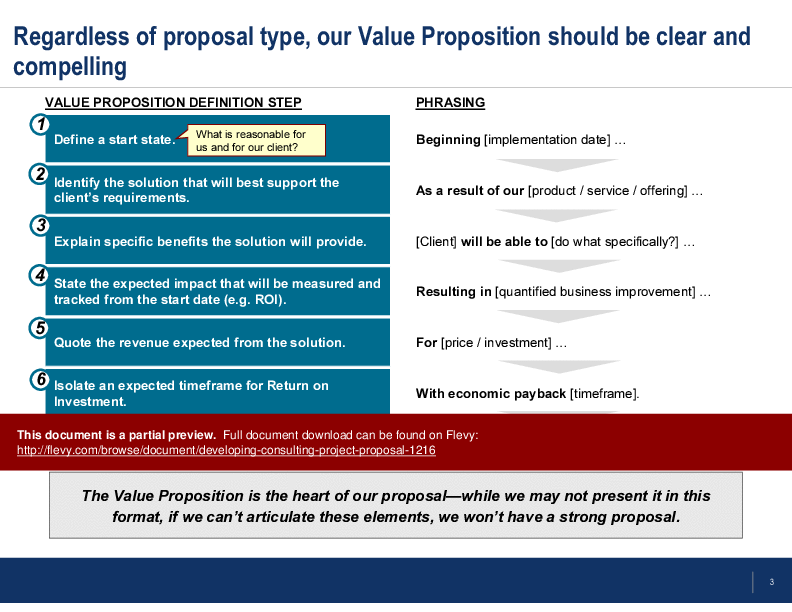
• Structuring our Value Proposition
• Types of Proposals
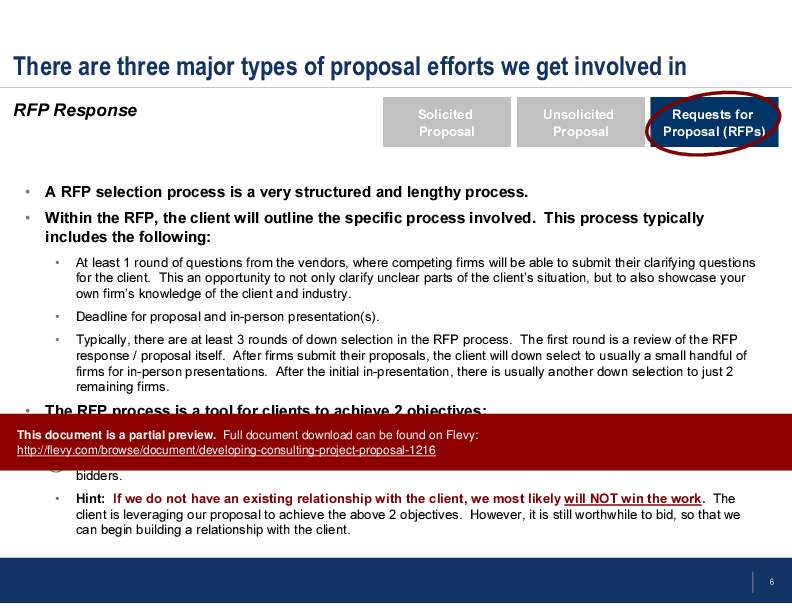
• RFP Response / Proposal
• Non-RFP Proposals
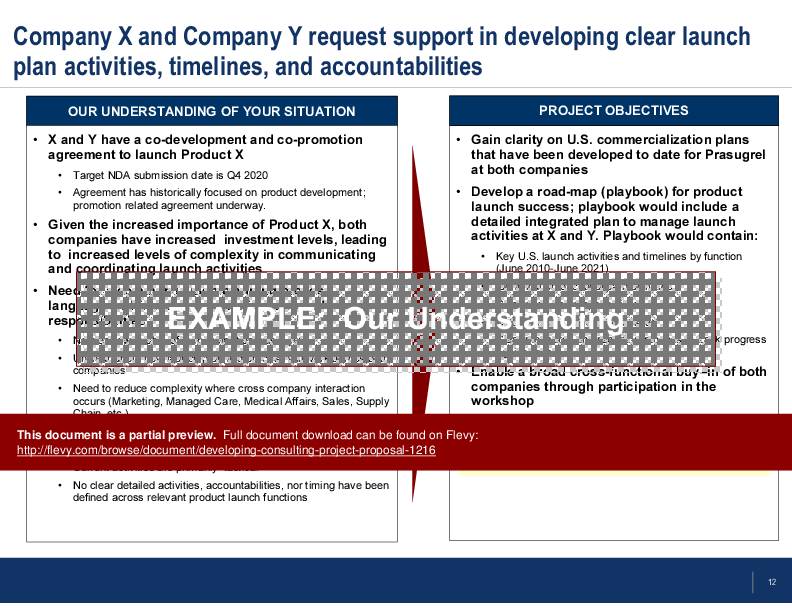
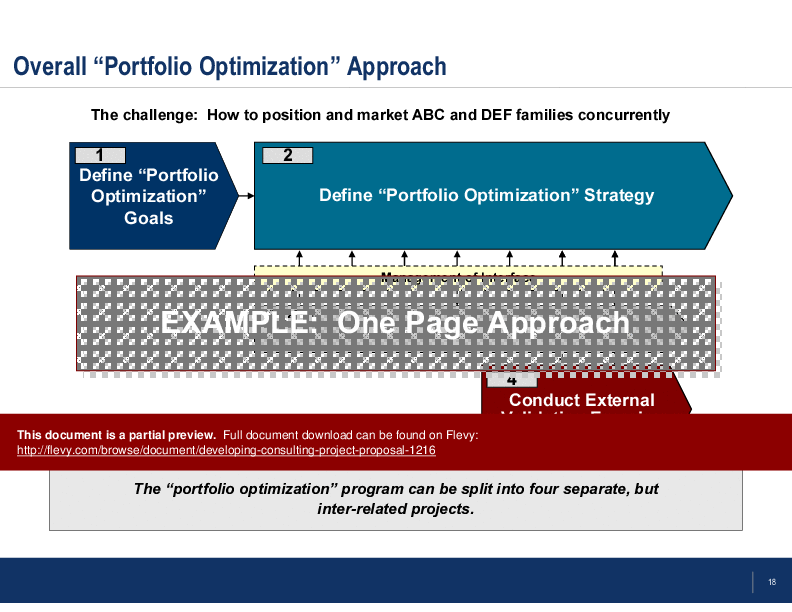
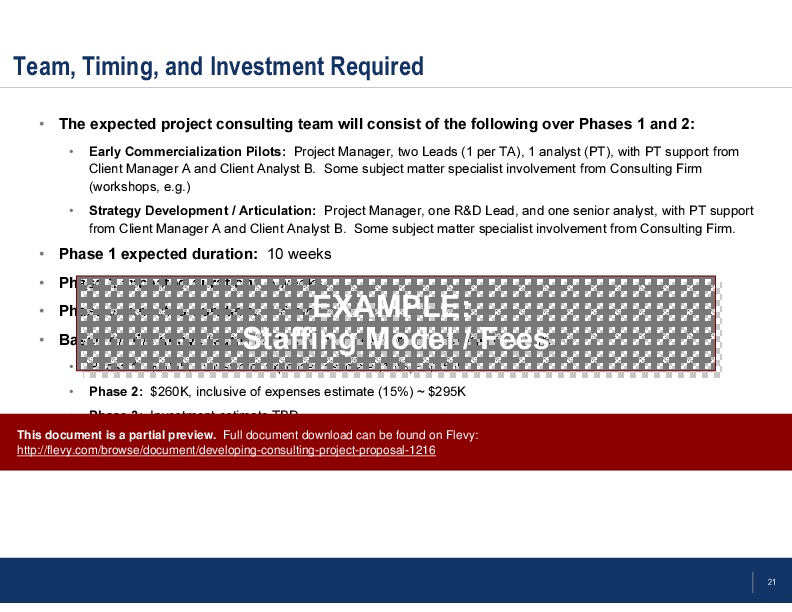
This deck also includes several examples of slides that would go into a typical non-RFP proposal deck.
This document provides a comprehensive framework for crafting consulting project proposals that resonate with clients. It delves into the intricacies of defining a compelling value proposition, ensuring your proposal stands out. You will learn to articulate the client's needs, outline the solution, and present measurable benefits. The guide emphasizes the importance of setting clear expectations on ROI and timelines, making your proposal both persuasive and credible.
The section on RFP responses is particularly valuable, detailing the structured process and multiple rounds of selection. It highlights the necessity of understanding the client's specific requirements and leveraging your firm's expertise to address them. This part of the document is crucial for firms aiming to win competitive bids, offering insights into how to navigate the RFP process effectively.
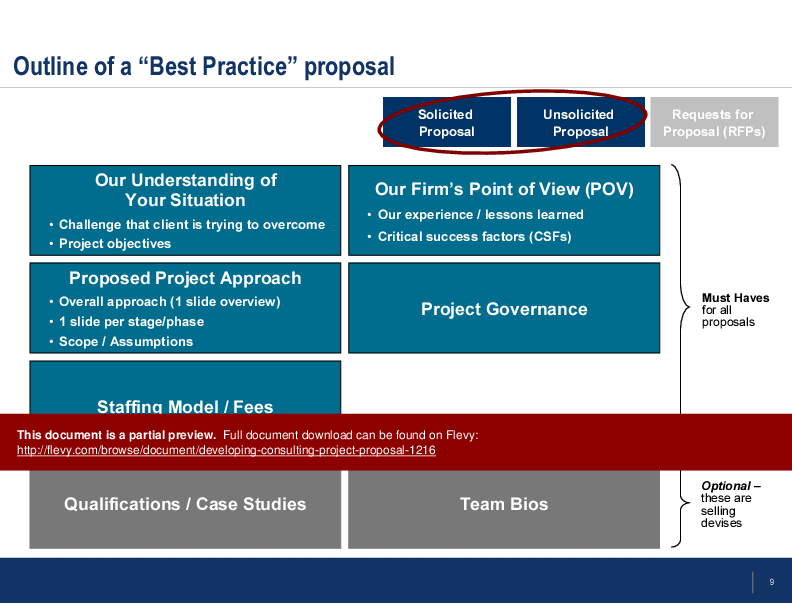
The document also outlines best practices for unsolicited and solicited proposals. It covers essential components such as understanding the client's situation, presenting your firm's point of view, and proposing a structured project approach. The inclusion of project governance, staffing models, and fee structures ensures that your proposal is comprehensive and addresses all client concerns.
Real-world examples and case studies are integrated throughout the document, providing practical insights and illustrating successful proposal elements. These examples serve as a valuable reference, helping you to refine your proposals and increase your chances of securing consulting engagements.
Got a question about the product? Email us at support@flevy.com or ask the author directly by using the "Ask the Author a Question" form. If you cannot view the preview above this document description, go here to view the large preview instead.
Executive Summary
This presentation serves as a high-level training guide for developing consulting project proposals, structured to meet McKinsey, Bain, or BCG-quality standards (consulting-grade; not affiliated). It equips consultants with the essential skills to craft compelling proposals, whether responding to Requests for Proposals (RFPs) or creating unsolicited proposals. Buyers will learn to articulate a clear value proposition, understand various proposal types, and utilize best practices for proposal structure and content. This guide emphasizes collaboration, ensuring that all team members contribute effectively to the proposal development process.
Who This Is For and When to Use
• Consultants involved in proposal development across various industries
• Business development teams seeking to enhance proposal quality and effectiveness
• Project managers responsible for coordinating proposal efforts
• Senior executives looking to understand the nuances of proposal submissions
Best-fit moments to use this deck:
• When preparing responses to RFPs to ensure compliance with client requirements
• During the development of unsolicited proposals to showcase expertise and insights
• For training sessions aimed at enhancing proposal writing skills within consulting teams
Learning Objectives
• Define the components of a compelling value proposition for consulting proposals
• Build structured proposals that align with client expectations and requirements
• Establish best practices for responding to RFPs and unsolicited proposals
• Identify critical success factors in proposal development
• Develop a clear project approach that articulates timelines and accountabilities
• Create effective communication strategies for stakeholder engagement
Table of Contents
• Overview (page 1)
• Developing RFP Proposals (page 2)
• Developing Non-RFP Proposals (page 5)
• Non-RFP Proposal Example Slides (page 12)
Primary Topics Covered
• Value Proposition - The core of any proposal, articulating the unique benefits and expected outcomes for the client, including ROI and measurable success metrics.
• Proposal Types - Understanding the distinctions between solicited, unsolicited, and RFP proposals, each requiring different approaches and strategies.
• RFP Response Process - A structured approach to responding to RFPs, including key elements such as proposal evaluation criteria and required responses.
• Best Practices for Proposals - Guidelines for structuring proposals, including understanding client challenges, presenting the firm’s point of view, and outlining project governance.
• Key Input Elements - Essential considerations for project proposals, such as project start dates, pricing models, and team composition.
• Project Objectives - Clear articulation of project goals and deliverables that align with client expectations and strategic priorities.
Deliverables, Templates, and Tools
• Value proposition template that outlines expected outcomes and ROI
• RFP response template with structured sections for required information
• Unsolicited proposal framework to guide proposal development
• Project governance model template to clarify roles and responsibilities
• Example slides for non-RFP proposals showcasing best practices
• Stakeholder interview guide to gather insights and inform proposal content
Slide Highlights
• Overview of the value proposition and its critical role in proposal success
• Breakdown of the RFP response process, highlighting key steps and timelines
• Example of a well-structured unsolicited proposal, demonstrating effective communication
• Visual representation of project objectives and timelines for clarity
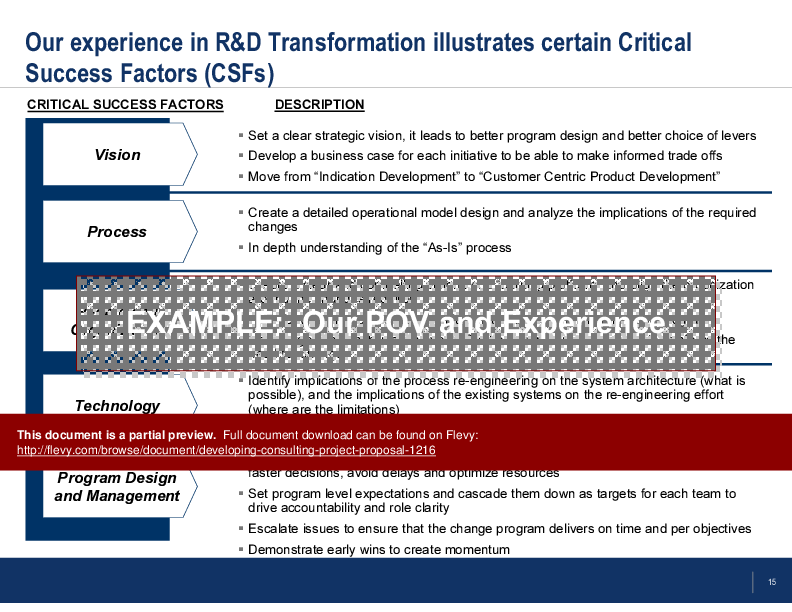
• Critical success factors in R&D transformation, illustrating lessons learned
Potential Workshop Agenda
Proposal Development Workshop (90 minutes)
• Discuss the importance of a strong value proposition and how to articulate it
• Review the different types of proposals and their unique requirements
• Collaborate on developing a sample RFP response
Best Practices in Proposal Writing (60 minutes)
• Identify common pitfalls in proposal development and how to avoid them
• Explore case studies of successful proposals and lessons learned
• Engage in group exercises to refine proposal writing skills
Customization Guidance
• Tailor the value proposition to align with specific client needs and industry contexts
• Adjust the proposal structure to reflect the client's preferred format and requirements
• Incorporate client-specific metrics and success measures into the proposal
Secondary Topics Covered
• Techniques for effective stakeholder engagement during proposal development
• Strategies for enhancing proposal visibility and differentiation in competitive environments
• Insights into the RFP evaluation criteria and how to align proposals accordingly
• Importance of collaboration among team members in proposal preparation
FAQ
What is a value proposition?
A value proposition is a clear statement that explains how a product or service solves a problem or improves a situation for the client, including the benefits and expected outcomes.
What are the main types of proposals?
The main types of proposals are solicited proposals, unsolicited proposals, and responses to Requests for Proposals (RFPs), each requiring different strategies and approaches.
How do I structure an RFP response?
An RFP response should include a background/objective section, scope of work, project deliverables, and a detailed proposal evaluation procedure, ensuring compliance with client requirements.
What are critical success factors in proposal development?
Critical success factors include having a clear strategic vision, understanding the client’s needs, and ensuring strong governance and accountability throughout the proposal process.
How can I ensure my proposal stands out?
To make your proposal stand out, focus on articulating a compelling value proposition, demonstrating relevant experience, and clearly outlining project objectives and deliverables.
What is the importance of stakeholder engagement in proposals?
Engaging stakeholders ensures that the proposal addresses their concerns and expectations, fostering collaboration and buy-in, which can enhance the proposal's effectiveness.
How do I determine the pricing model for a proposal?
The pricing model should align with project scope and client expectations, considering options such as fixed fee, time and materials, or a combination, based on what is most suitable for the engagement.
What should be included in the project governance section?
The project governance section should outline roles, responsibilities, decision-making processes, and accountability measures to ensure successful project execution.
Glossary
• Value Proposition - A clear statement of the unique benefits and expected outcomes of a proposal.
• RFP - Request for Proposal; a document soliciting proposals from potential vendors.
• Solicited Proposal - A proposal submitted in response to a client’s request.
• Unsolicited Proposal - A proposal offered to a client without a prior request.
• Critical Success Factors (CSFs) - Key areas that must be managed effectively for a project to succeed.
• Stakeholder Engagement - The process of involving individuals or groups who may be affected by or can affect a project.
• Project Governance - The framework for decision-making and accountability in project management.
• Proposal Evaluation Criteria - Standards used by clients to assess submitted proposals.
• Project Objectives - Specific goals that a project aims to achieve.
• Pricing Model - The method used to determine the costs associated with a project.
• Scope of Work - A detailed description of the work required for a project.
• Deliverables - Specific outputs or results expected from a project.
• Team Composition - The structure and roles of individuals involved in a project.
• Market Analysis - The assessment of market conditions and trends relevant to a proposal.
• Return on Investment (ROI) - A measure of the profitability of an investment relative to its cost.
• Project Timeline - A schedule outlining the expected duration of project activities.
• Governance Structure - The organization of roles and responsibilities for project oversight.
• Proposal Framework - A structured outline guiding the development of a proposal.
• Stakeholder Interview Guide - A tool for gathering insights from key individuals involved in a project.
• Best Practices - Established methods that are widely accepted as superior to alternatives.
• Case Studies - Detailed analyses of previous projects used to illustrate successful practices.
Source: Best Practices in Consulting Proposal Development PowerPoint Slides: Developing Consulting Project Proposals PowerPoint (PPT) Presentation Slide Deck, Process Consulting
|
Receive our FREE whitepaper on the Top 101 Consulting Frameworks
Download our 200+ page guide summarizing the Top 101 Management Consulting Frameworks. Each framework provides a structured approach to analyzing and solving a common business problem. |