Your AI assistant becomes a Flevy-powered consultant, with direct access to our full library of frameworks, templates, and case studies. Free to connect. No account, sign-in, or API key required.
STEP 1 · CHOOSE YOUR ASSISTANT
STEP 2 · CONNECT
1
No copying needed. Flevy is in the official Claude Connectors Directory.
2
Click the button below, then click Connect on the Flevy listing.
This framework is developed by a team of former McKinsey and Big 4 consultants. The presentation follows the headline-body-bumper slide format used by global consulting firms.
Editor Summary
Capabilities-driven M&A is a 34-slide PowerPoint (PPTX) by LearnPPT Consulting that explains an M&A approach focusing on leveraging and enhancing a firm’s existing capabilities.
Read moreThe deck presents a nine‑year study of 320 deals (2001–2009) across eight industry sectors and categorizes transactions into Enhancement, Leverage, and Limited Fit deals. It highlights that enhancement and leverage deals tended to outperform and increase shareholder value, including during economic downturns, and includes slide templates for classifying deals. Sold as a digital download on Flevy with immediate delivery.
Use this slide deck when leadership must assess and prioritize acquisition targets according to how well they align with the buyer’s core capabilities — for example during strategic portfolio reviews, target screening, or decision-making in volatile markets.
Corporate development leaders building an acquisition shortlist by classifying targets as Enhancement, Leverage, or Limited Fit.
M&A teams preparing board or investor-facing materials using slide templates to present capability-fit evidence.
Strategy executives justifying acquisition priorities with historical shareholder‑value data from cross‑industry studies.
The capability-fit classification provides a structured, capability‑focused M&A evaluation consistent with strategic advisory practice.
The constant question across all industries, as far as Mergers and Acquisitions (M&A) are concerned, pertains to the factors that differentiate organizations with successful histories.
A 2011 study scrutinized 320 deals over a time span of 9 years starting from year 2001 to the year 2009, spread across 8 industry sectors.
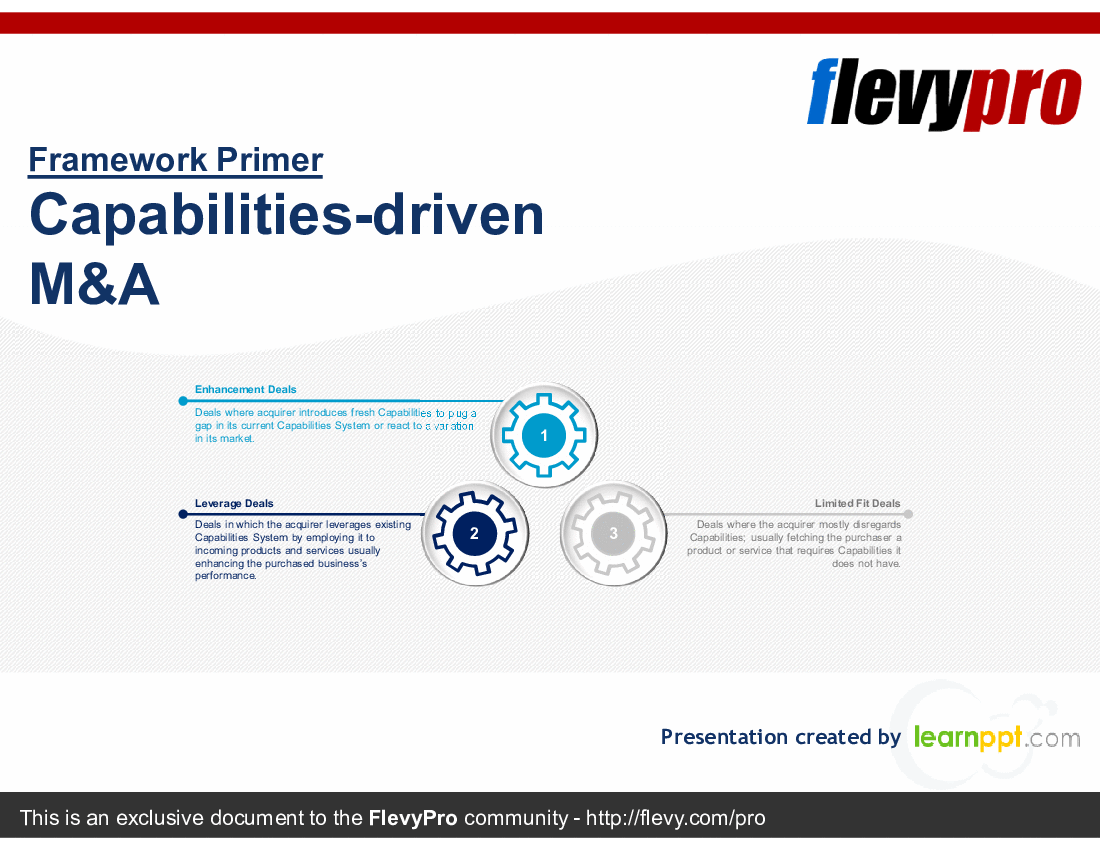
Companies employing the Capabilities-driven Strategy had phenomenal inorganic growth. The study cross-categorized the deals by their Capabilities System Fit, into the following 3 categories:
1. Enhancement Deals
2. Leverage Deals
3. Limited Fit Deals
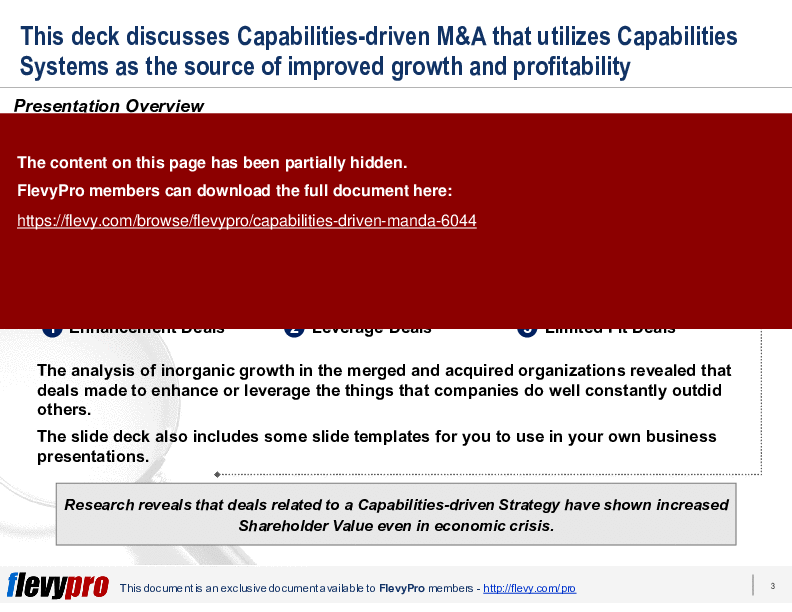
The analysis of inorganic growth in the merged and acquired organizations revealed that deals made to enhance or leverage the things that companies do well constantly outdid others. Research reveals that deals related to a Capabilities-driven Strategy have shown increased Shareholder Value even in economic crisis.
The slide deck also includes some slide templates for you to use in your own business presentations.
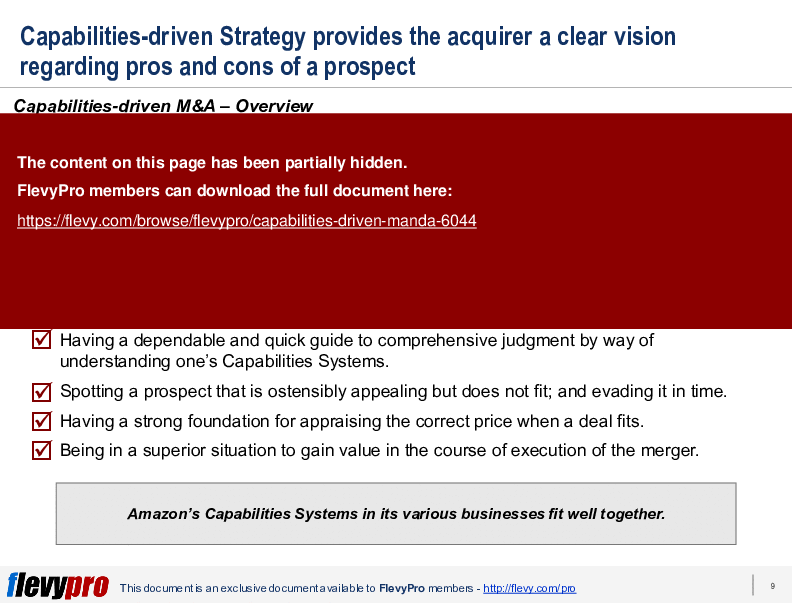
Capabilities-driven M&A is a strategic approach that focuses on leveraging and enhancing a company's existing capabilities to drive growth and profitability. This PPT delves into the intricacies of how companies can utilize their unique capabilities systems to outperform competitors in the M&A landscape. The presentation covers various types of deals, including enhancement, leverage, and limited fit deals, providing a comprehensive understanding of each category and its impact on shareholder value.
The study included in this document spans nine years and eight industry sectors, offering a robust analysis of 320 deals. It highlights the significant returns achieved through capabilities-driven strategies, especially during economic downturns. The data underscores the importance of aligning M&A activities with a company's core strengths to maximize value creation and sustain competitive advantage.
This slide deck also provides practical templates for classifying M&A deals based on intent and capabilities fit. These tools are designed to help executives make informed decisions, ensuring that each acquisition aligns with their strategic objectives. By focusing on capabilities, companies can mitigate risks and enhance the overall success rate of their M&A endeavors.
What is capabilities-driven M&A and how does it differ from other M&A approaches?
Capabilities-driven M&A focuses on acquiring or combining organizations to enhance or leverage the buyer’s existing capabilities rather than pursuing deals for unrelated reasons. The approach emphasizes aligning acquisitions with core strengths and measures outcomes such as shareholder value, using classifications like Enhancement, Leverage, and Limited Fit.
How are M&A deals categorized in a capabilities-driven framework?
Deals are classified by their fit with the buyer’s capabilities system into 3 categories: Enhancement deals (to strengthen existing capabilities), Leverage deals (to apply existing capabilities in new contexts), and Limited Fit deals (low capability alignment). The framework uses those 3 categories for assessment.
What empirical evidence supports using a capabilities-driven M&A strategy?
A 2011 analysis covered 320 deals spanning 2001–2009 across eight industry sectors and found that transactions aimed at enhancing or leveraging capabilities outperformed other deals and were associated with increased shareholder value, including during economic downturns.
Which deal types have historically produced better shareholder outcomes?
According to the cited study, Enhancement and Leverage deals consistently outperformed other transaction types and were linked to increased shareholder value, including resilience during economic crises, based on analysis of 320 deals.
What should I look for when buying an M&A slide deck focused on capabilities-driven strategy?
Look for decks that present empirical evidence, clear capability-fit categories, and ready-to-use templates for classifying and presenting deals. Also check slide count and format to match your needs; for example, Flevy's Capabilities-driven M&A is a 34-slide PPTX with classification templates.
How can executives present capability-fit assessments to a board or investors?
Executives can use a concise classification (Enhancement, Leverage, Limited Fit), accompany it with historical performance evidence, and display results on presentation-friendly slides. Flevy's Capabilities-driven M&A provides slide templates and study data suitable for board-level materials.
I need to prioritize potential acquisition targets during a strategy review — how does a capabilities-driven approach help?
The approach prioritizes targets that enhance or allow leverage of existing capabilities, because those categories have shown better performance historically. Applying the classification helps rank targets and focus resources on Enhancement and Leverage opportunities.
What should I be cautious about with Limited Fit deals?
Limited Fit transactions exhibit low alignment with the buyer’s capability system and, per the referenced study, tend to underperform relative to Enhancement and Leverage deals. The 320-deal analysis identified Limited Fit as a distinct, lower-performing category.
This PPT slide template analyzes mergers and acquisitions (M&A) with limited capabilities fit, highlighting case studies that illustrate the pitfalls of such deals. While these transactions may seem to offer diversification benefits, they often lack alignment in capabilities, leading to suboptimal outcomes. Notable examples include Kmart's merger with Sears, where format differences hindered effective integration and financial performance; Sara Lee's acquisition of Earth Grains, which lacked coherence with existing product lines, resulting in divestment; and eBay's purchase of Skype, which faltered due to mismatched capabilities, leading to significant financial loss. Deals that overlook capability alignment tend to fail dramatically, underscoring the importance of compatibility in M&A strategies.
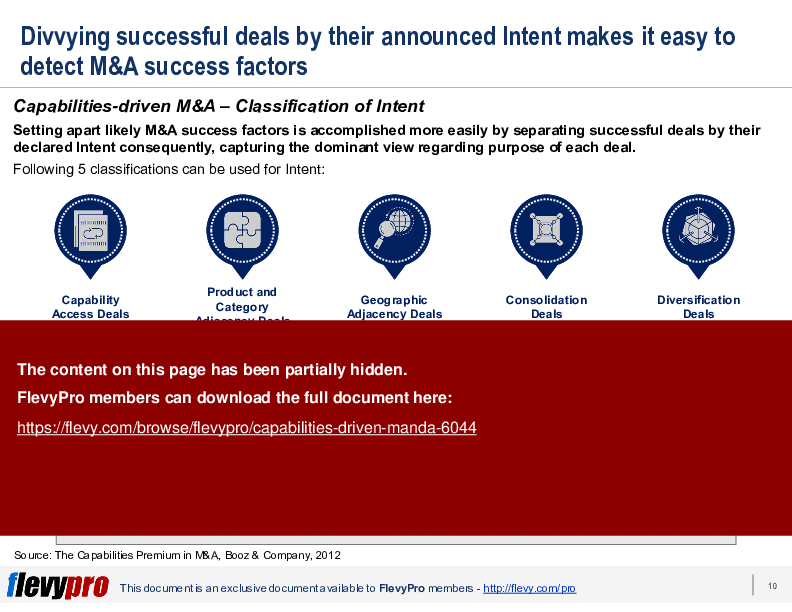
This PPT slide template analyzes leverage deals in capabilities-driven mergers and acquisitions (M&A). Leverage deals are defined as transactions where the acquiring company uses its established capabilities to enhance the performance of the acquired entity. A study of 320 deals shows that leverage deals yield the highest premiums, indicating a strong correlation between existing capabilities and improved financial outcomes. Purchasers leverage successful capabilities to integrate products and services, leading to performance increases and greater profitability. The largest number of deals falls under "Product and Category Adjacency" (69 deals), followed by geographic adjacency (31 deals) and consolidation (44 deals). Diversification is minimal with only 2 deals. The average premium for leverage deals is 3.9%, highlighting the financial incentive for firms to adopt this approach. Leveraging existing capabilities in M&A drives growth and enhances shareholder value.
This PPT slide template presents a framework for categorizing mergers and acquisitions (M&A) based on alignment with company capabilities, emphasizing the critical concept of "Fit." Fit goes beyond geographical expansion or filling product gaps; it focuses on the integration of capabilities between the acquiring and target companies.
Three M&A categories are defined: Enhancement Deals, where acquirers introduce new capabilities to strengthen existing systems; Leverage Deals, which utilize existing capabilities to enhance acquired business performance through operational synergies; and Limited Fit Deals, characterized by misalignment between acquirer and target capabilities, leading to integration challenges.
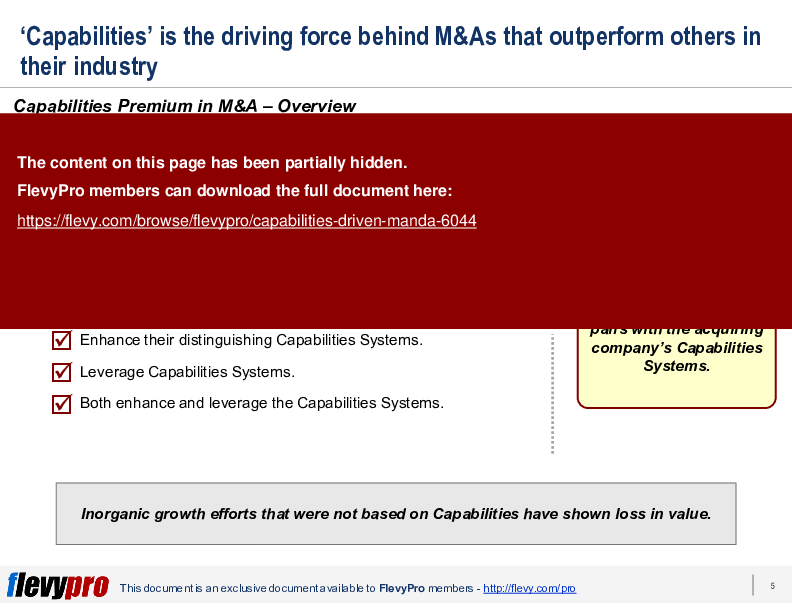
Successful M&A transactions align closely with the capabilities system, increasing the likelihood of positive integration outcomes.
This PPT slide template analyzes capabilities-driven mergers and acquisitions (M&A) through notable enhancement deals: Google’s $3.1 billion acquisition of DoubleClick, Disney’s $7.7 billion purchase of Pixar, and Altria Group’s $11.8 billion acquisition of UST Inc. Google enhanced its digital advertising effectiveness by acquiring DoubleClick, gaining a leading display ad platform that improved measurability and performance for publishers and advertisers. Disney expanded its animation capabilities with Pixar, reinforcing its expertise and enhancing marketing strategies for theme parks and merchandise through synergy. Altria entered the smokeless tobacco market with UST Inc., gaining essential production capabilities and access to specific tobacco forms. These deals require significant investment and carry market risks, impacting the maturity period for returns.
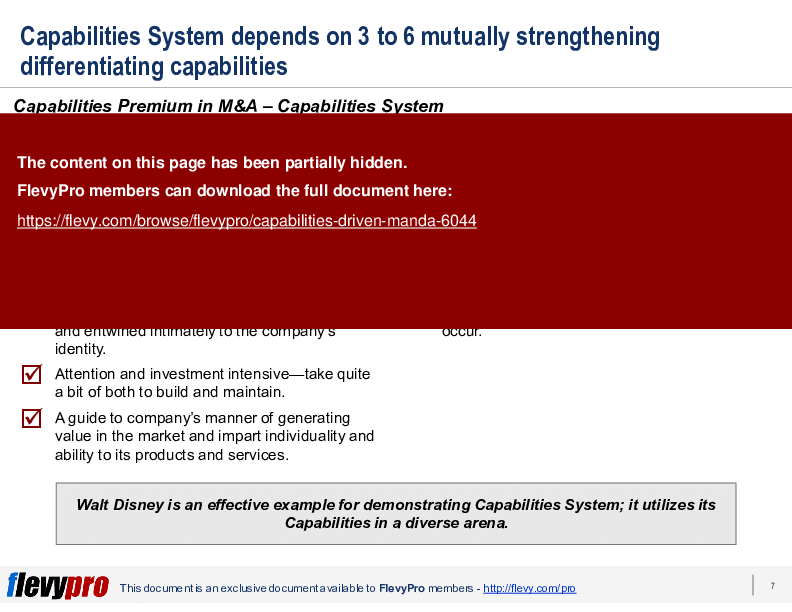
Capabilities Systems in mergers and acquisitions comprise 3 to 6 interrelated capabilities that enhance market position and long-term strategy. These capabilities must align to achieve reliable outcomes, requiring significant investment and attention. They serve as a framework for generating market value and differentiating a company's offerings. Capabilities Systems exclude basic operational necessities like legal, tax, and facilities management, which are essential for survival, but not differentiation. Competitive essentials tied to specific industries are also not included, highlighting the focus on strategic differentiation. An example of Walt Disney illustrates the successful application of a Capabilities System across diverse areas, reinforcing its relevance to organizational success.
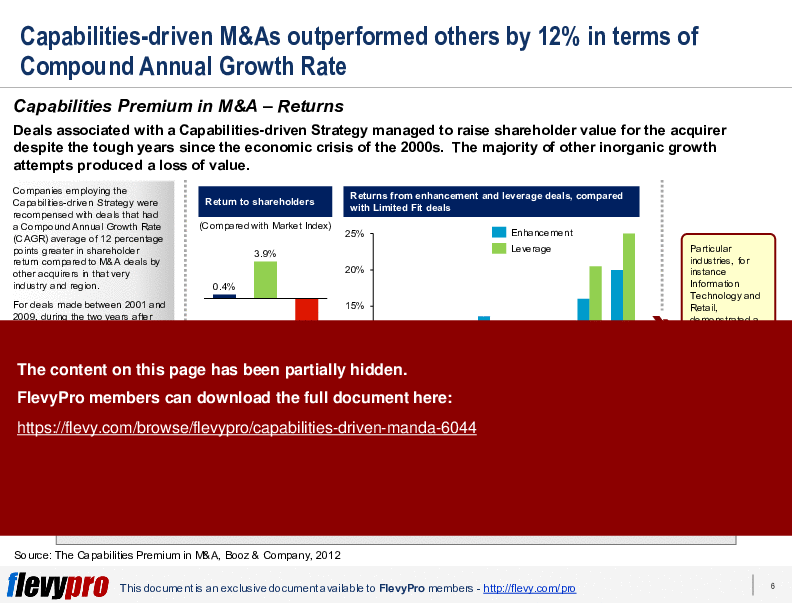
The analysis reveals that mergers and acquisitions (M&As) driven by a Capabilities-driven Strategy outperform others, achieving a Compound Annual Growth Rate (CAGR) 12 percentage points higher than competitors' M&As. From 2001 to 2009, enhancement or leverage transactions aligned with capabilities yielded positive returns, while deals with limited fit resulted in a -9.1% return compared to the market index. This highlights the necessity of aligning M&A strategies with core capabilities to drive shareholder returns. A breakdown of returns across industries shows that Information Technology and Retail sectors benefited most,, but all industries reflected a consistent Capabilities Premium, indicating that enhancing or leveraging capabilities leads to superior outcomes.
This framework is developed by a team of former McKinsey and Big 4 consultants. The presentation follows the headline-body-bumper slide format used by global consulting firms.
For $10.00 more, you can download this document plus 2 more FlevyPro documents. That's just $13 each.
ABOUT FLEVYPRO
This document is part of the FlevyPro Library, a curated knowledge base of documents for our FlevyPro subscribers.
FlevyPro is a subscription service for on-demand business frameworks and analysis tools. FlevyPro subscribers receive access to an exclusive library of curated business documents—business framework primers, presentation templates, Lean Six Sigma tools, and more—among other exclusive benefits.
The average daily rate of a McKinsey consultant is $6,625 (not including expenses). The average price of a Flevy document is $65.
Trusted by over 10,000+ Client Organizations
Since 2012, we have provided business templates to over 10,000 businesses and organizations of all sizes, from startups and small businesses to the Fortune 100, in over 130 countries.
"As a consulting firm, we had been creating subject matter training materials for our people and found the excellent materials on Flevy, which saved us 100's of hours of re-creating what already exists on the Flevy materials we purchased."
– Michael Evans, Managing Director at Newport LLC
"Flevy is our 'go to' resource for management material, at an affordable cost. The Flevy library is comprehensive and the content deep, and typically provides a great foundation for us to further develop and tailor our own service offer."
– Chris McCann, Founder at Resilient.World
"As an Independent Management Consultant, I find Flevy to add great value as a source of best practices, templates and information on new trends. Flevy has matured and the quality and quantity of the library is excellent. Lastly the price charged is reasonable, creating a win-win value for
the customer, Flevy and the various authors. This is truly a service that benefits the consulting industry and associated clients. Thanks for providing this service.
"
– Jim Schoen, Principal at FRC Group
"My FlevyPro subscription provides me with the most popular frameworks and decks in demand in today’s market. They not only augment my existing consulting and coaching offerings and delivery, but also keep me abreast of the latest trends, inspire new products and service offerings for my practice, and educate me
in a fraction of the time and money of other solutions. I strongly recommend FlevyPro to any consultant serious about success.
"
– Bill Branson, Founder at Strategic Business Architects
"Last Sunday morning, I was diligently working on an important presentation for a client and found myself in need of additional content and suitable templates for various types of graphics. Flevy.com proved to be a treasure trove for both content and design at a reasonable price, considering the time I
saved. I encountered a download issue during the ordering process. However, a quick email to Flevy's support team, even on a Sunday (!!!), resulted in assistance within less than an hour, allowing me to download the content I needed. Fantastic job, Flevy! I give 5 stars for both content/price and customer service. Thank you!
"
– M. E., Chief Commercial Officer, International Logistics Service Provider
"FlevyPro has been a brilliant resource for me, as an independent growth consultant, to access a vast knowledge bank of presentations to support my work with clients. In terms of RoI, the value I received from the very first presentation I downloaded paid for my subscription many times over! The
quality of the decks available allows me to punch way above my weight – it's like having the resources of a Big 4 consultancy at your fingertips at a microscopic fraction of the overhead.
"
– Roderick Cameron, Founding Partner at SGFE Ltd
"Flevy.com has proven to be an invaluable resource library to our Independent Management Consultancy, supporting and enabling us to better serve our enterprise clients.
The value derived from our [FlevyPro] subscription in terms of the business it has helped to gain far exceeds the investment made, making a subscription a no-brainer for any growing consultancy – or in-house strategy team."
– Dean Carlton, Chief Transformation Officer, Global Village Transformations Pty Ltd.
"I have used Flevy services for a number of years and have never, ever been disappointed. As a matter of fact, David and his team continue, time after time, to impress me with their willingness to assist and in the real sense of the word. I have concluded in fact
that it is not at all just a repository of documents/resources but, in the way that David and his team manage the firm, it is like dealing with consultants always ready to assist, advise and direct you to what you really need, and they always get it right.
I am an international hospitality accomplished senior executive who has worked and lived during the past 35 years in 23 countries in 5 continents and I can humbly say that I know what customer service is, trust me.
Aside from the great and professional service that Flevy's team provide, their wide variety of material is of utmost great quality, professionally put together and most current.
Well done Flevy, keep up the great work and I look forward to continue working with you in the future and to recommend you to a variety of colleagues around the world.
"
– Roberto Pelliccia, Senior Executive in International Hospitality


 Click main image to view in full screen. Unlock all 12 preview images: