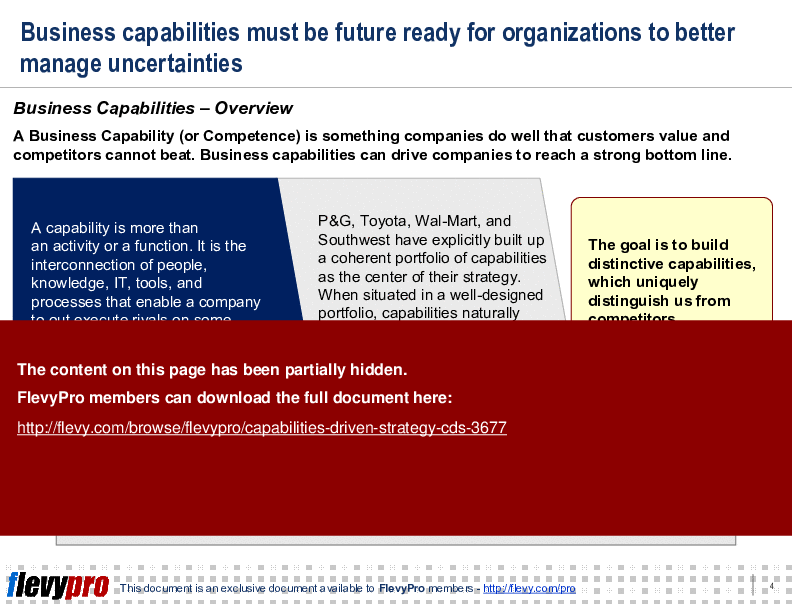

Formulating a Capabilities-Driven Strategy (CDS) is easy but execution is difficult, especially in turbulent times. This is not the time to find a cave and hibernate until the economic storm passes. It is unlikely that the storm will pass anytime soon. Capabilities-Driven Strategy is the only way to remain equipped for perpetually stormy weather.
Companies need to take care or build those capabilities that are genuinely needed and not those that do not serve our customers. Capabilities do not manifest themselves overnight. They take time to grow. But companies who have mastered the art of developing and implementing a Capabilities-Driven Strategy have grown to develop world's leading brands. Distinctive capabilities have been used to propel them to reach Operational and Organizational Excellence.
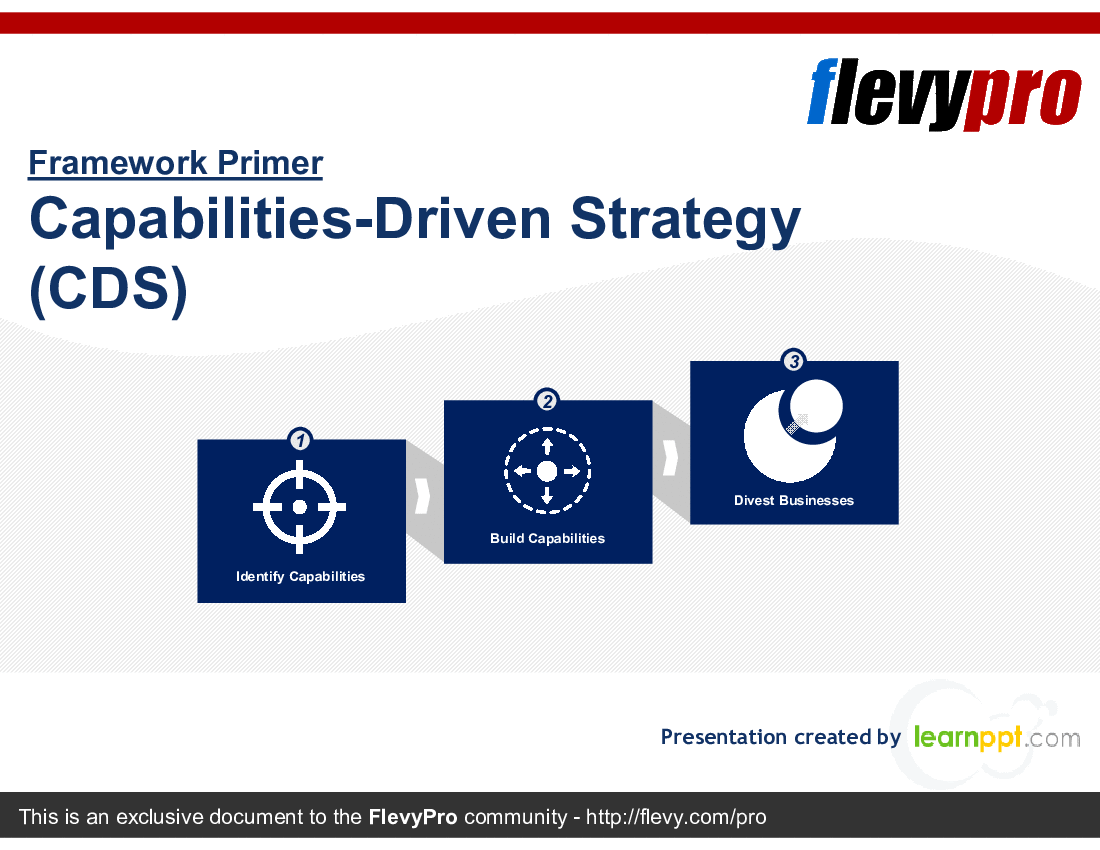
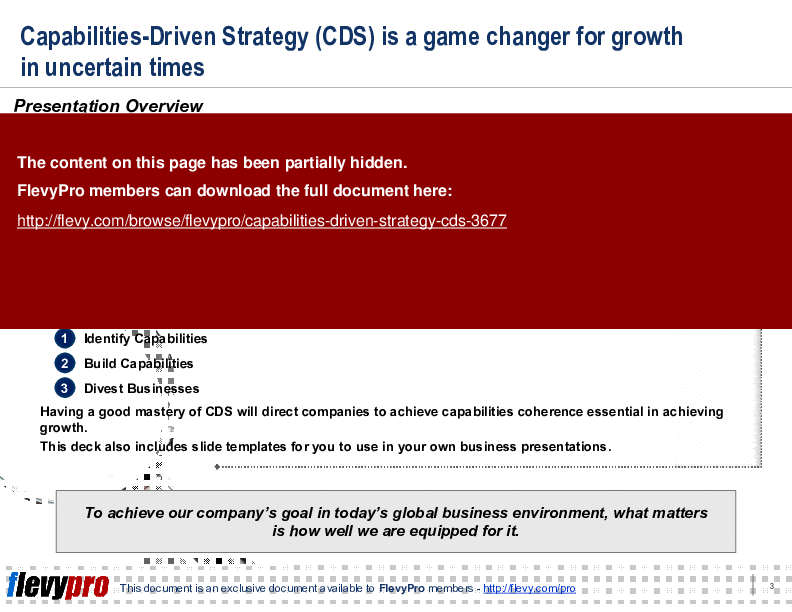
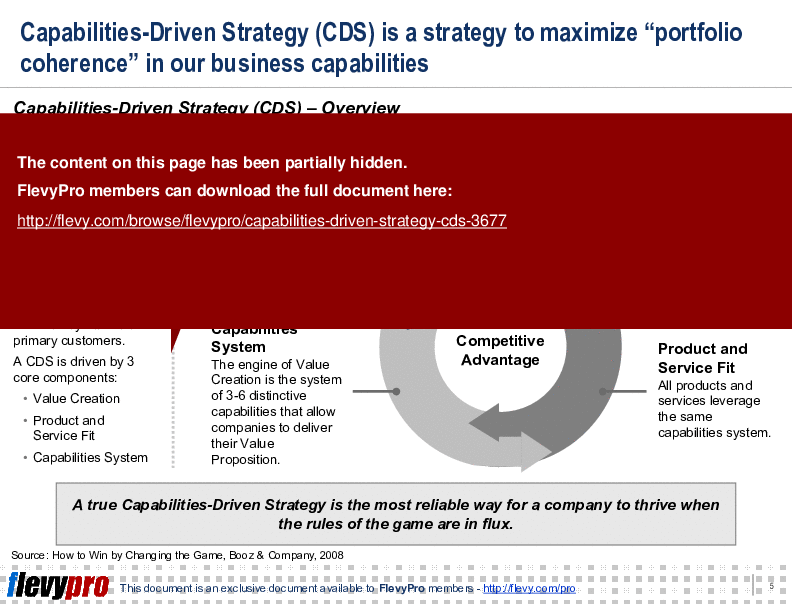
There is a 3-phase approach to CDS that organizations can master. This framework discusses the importance of CDS and its 3-phase approach:
1. Identify Capabilities
2. Build Capabilities
3. Divest Businesses
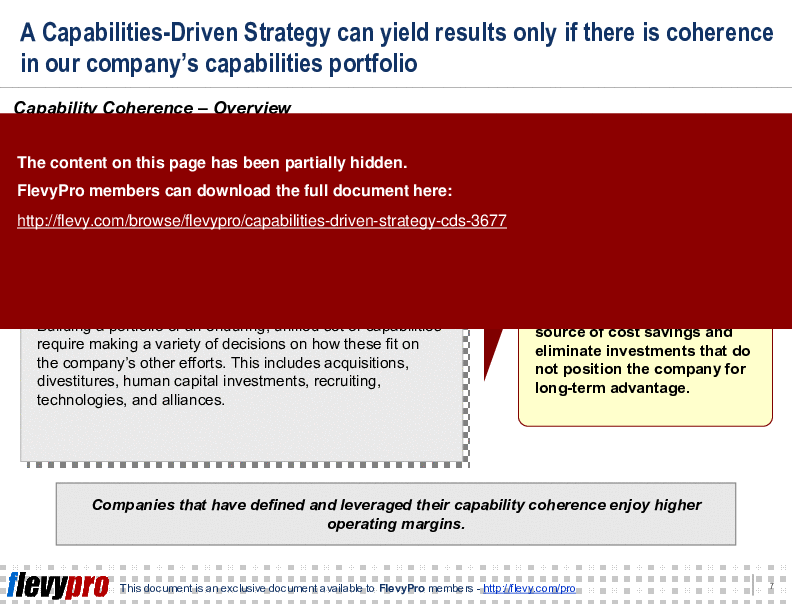
Having a good mastery of CDS will direct companies to achieve capabilities coherence essential in achieving growth.
This deck also includes slide templates for you to use in your own business presentations.
The Capabilities-Driven Strategy (CDS) framework is an essential tool for organizations aiming to achieve coherence in their capabilities portfolio. This PPT delves into the intricacies of building distinctive capabilities that set your company apart from competitors. It emphasizes the importance of aligning business capabilities with strategic goals to drive profitability and operational excellence. The framework is backed by examples from leading companies like P&G, Toyota, and Wal-Mart, showcasing how a coherent capabilities system can lead to sustained competitive advantage.
This deck provides a comprehensive overview of the 3-phase approach to CDS, including identifying, building, and divesting capabilities. It includes practical templates for immediate application in your business strategy sessions. The insights and strategies presented are designed to help companies navigate uncertainties and achieve long-term success. By leveraging this framework, your organization can ensure that its capabilities are not only aligned with market demands, but also optimized for future growth.
Got a question about this document? Email us at flevypro@flevy.com.
Executive Summary
The Capabilities-Driven Strategy (CDS) presentation provides a structured framework for organizations to navigate growth in uncertain environments. Developed by ex-McKinsey consultants, this framework emphasizes the importance of aligning capabilities with strategic objectives to achieve operational excellence. The presentation outlines a three-phase approach: identifying capabilities, building them, and divesting non-essential businesses. By mastering CDS, companies can enhance their capability coherence, leading to sustained growth and competitive advantage.
Who This Is For and When to Use
• Corporate executives seeking to refine strategic direction and operational capabilities
• Integration leaders managing capability alignment during mergers or acquisitions
• Business consultants advising clients on strategic growth and operational efficiency
• Teams focused on innovation and capability development within their organizations
Best-fit moments to use this deck:
• During strategic planning sessions to align capabilities with business goals
• In workshops aimed at identifying and prioritizing core competencies
• When assessing potential divestitures or restructuring initiatives
Learning Objectives
• Define the Capabilities-Driven Strategy and its relevance in today's business landscape
• Identify key capabilities that align with organizational goals and customer needs
• Build a coherent portfolio of capabilities that drive competitive advantage
• Develop a structured approach to divest non-essential business units
• Establish metrics for tracking capability development and performance
• Create actionable plans for capability enhancement and alignment
Table of Contents
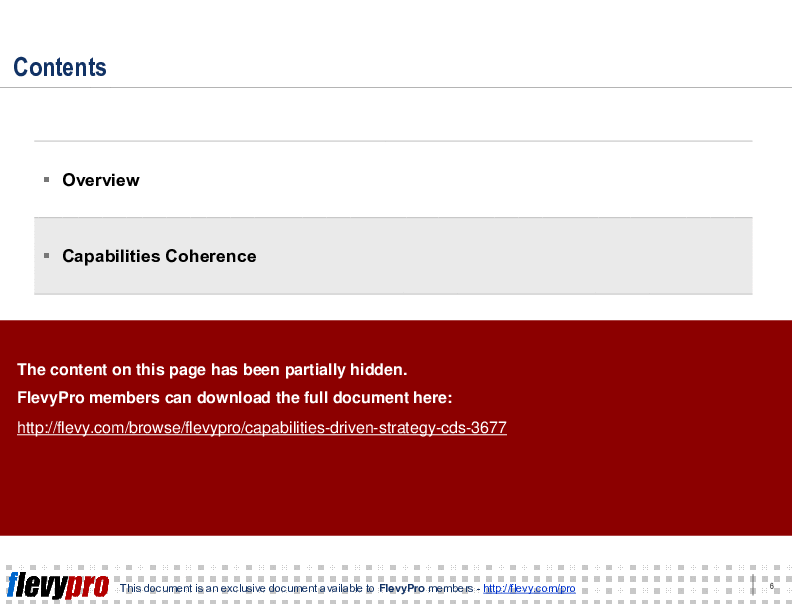
• Overview (page 3)
• Capabilities Coherence (page 7)
• Approach to Capabilities-Driven Strategy (page 10)
• Case Examples (page 15)
• Templates (page 18)
Primary Topics Covered
• Overview of Capabilities-Driven Strategy - An introduction to the CDS framework, emphasizing its importance for growth in uncertain times.
• Capabilities Coherence - The alignment of a company’s capabilities with its strategic purpose and product portfolio to enhance operational efficiency.
• Three-Phase Approach - A structured methodology consisting of identifying capabilities, building them, and divesting non-essential businesses.
• Identifying Capabilities - Steps to determine market demand drivers and prioritize enterprise-wide capabilities.
• Building Capabilities - Focus on investments and acquisitions that enhance core competencies while filling capability gaps.
• Divesting Businesses - Strategies for streamlining operations by selling or discontinuing non-essential business units.
Deliverables, Templates, and Tools
• Capability identification framework to assess market drivers and customer needs
• Portfolio coherence strategy template for aligning capabilities with business objectives
• Action plan template for building and enhancing capabilities
• Divestiture assessment tool to evaluate non-essential business units
• Metrics dashboard for tracking capability development and performance
• Case study examples illustrating successful implementation of CDS
Slide Highlights
• Overview slide detailing the importance of a Capabilities-Driven Strategy
• Capabilities Coherence slide showing the relationship between capability alignment and operational efficiency
• Three-Phase Approach diagram outlining the steps for implementing CDS
• Case Examples showcasing leading companies that successfully leveraged distinctive capabilities
• Template slides for practical application of the CDS framework in business presentations
Potential Workshop Agenda
Identifying Capabilities Session (90 minutes)
• Discuss market demand drivers and customer engagement
• Identify enterprise-wide capabilities that distinguish the organization
• Develop a prioritized list of capabilities
Building Capabilities Session (90 minutes)
• Review current capabilities and identify gaps
• Discuss investment strategies for capability enhancement
• Create an action plan for capability development
Divesting Businesses Session (60 minutes)
• Evaluate non-essential business units
• Discuss criteria for divestiture decisions
• Develop a roadmap for executing divestitures
Customization Guidance
• Tailor the capability identification framework to reflect industry-specific market dynamics
• Adjust the investment strategies based on organizational resources and market conditions
• Modify the divestiture assessment criteria to align with corporate goals and risk tolerance
Secondary Topics Covered
• The role of leadership in driving capability development
• Best practices for maintaining capability coherence across business units
• The impact of technology on capability enhancement
• Strategies for fostering a culture of continuous improvement
Topic FAQ
Document FAQ
These are questions addressed within this presentation.
What is the Capabilities-Driven Strategy?
The Capabilities-Driven Strategy (CDS) is a framework that helps organizations align their capabilities with strategic objectives to achieve operational excellence and sustained growth.
How can this framework help in uncertain times?
CDS provides a structured approach to identify and build essential capabilities, enabling organizations to navigate challenges and capitalize on opportunities effectively.
What are the 3 phases of the CDS approach?
The 3 phases are: Identify Capabilities, Build Capabilities, and Divest Businesses.
How do I identify the right capabilities for my organization?
Focus on understanding market demand drivers and customer needs, then prioritize capabilities that can distinguish your organization in the marketplace.
What should I consider when building capabilities?
Invest in product development and acquisitions that complement existing capabilities while addressing identified gaps.
When is it appropriate to divest a business unit?
Consider divesting when a business unit does not align with your strategic capabilities or does not contribute to overall organizational goals.
What metrics should I track for capability development?
Establish metrics that measure performance, alignment with strategic objectives, and the impact of capabilities on customer satisfaction and operational efficiency.
Can this framework be applied across different industries?
Yes, the Capabilities-Driven Strategy is adaptable and can be tailored to fit the specific needs and dynamics of various industries.
Glossary
• Capabilities-Driven Strategy (CDS) - A framework for aligning organizational capabilities with strategic objectives.
• Capabilities Coherence - The alignment of capabilities with strategic purpose and product portfolio.
• Core Competencies - Distinctive capabilities that provide competitive advantage.
• Divestiture - The process of selling or discontinuing non-essential business units.
• Market Demand Drivers - Factors influencing customer needs and preferences.
• Portfolio Coherence Strategy - A strategy for aligning capabilities across business units.
• Investment Strategy - A plan for allocating resources to enhance capabilities.
• Performance Metrics - Measurements used to assess capability development and effectiveness.
• Capability Gaps - Areas where the organization lacks essential capabilities.
• Customer Engagement - The level of interaction and connection between a company and its customers.
• Operational Excellence - The execution of business strategies with efficiency and effectiveness.
• Strategic Objectives - Goals that guide an organization's direction and decision-making.
• Enterprise-Wide Capabilities - Capabilities that span across the entire organization.
• Sustained Growth - Continuous improvement and expansion of a business over time.
• Investment in Capabilities - Allocating resources to develop and enhance organizational capabilities.
Source: Best Practices in Strategy Development, Competitive Advantage, Core Competences, Distinctive Capabilities PowerPoint Slides: Capabilities-Driven Strategy (CDS) PowerPoint (PPT) Presentation Slide Deck, LearnPPT Consulting
Did you need more documents?
Consider a FlevyPro subscription from $39/month. View plans here.
For $10.00 more, you can download this document plus 2 more FlevyPro documents. That's just $13 each.
|
Download our FREE Strategy & Transformation Framework Templates
Download our free compilation of 50+ Strategy & Transformation slides and templates. Frameworks include McKinsey 7-S, Balanced Scorecard, Disruptive Innovation, BCG Curve, and many more. |