
5 Leadership Practices of Capabilities-Driven Strategy (CDR)   25-slide PPT PowerPoint presentation slide deck (PPT)
$29.00

5 Leadership Practices of Capabilities-Driven Strategy (CDR) (25-slide PPT PowerPoint presentation slide deck (PPT)) Preview Image
Log in to unlock full preview.
5 Leadership Practices of Capabilities-Driven Strategy (CDR) (25-slide PPT PowerPoint presentation slide deck (PPT)) Preview Image
Arrow   Click main image to view in full screen.

5 Leadership Practices of Capabilities-Driven Strategy (CDR) (PowerPoint PPT Slide Deck)

PowerPoint (PPT) 25 Slides FlevyPro Document

Top 500 Best Practice $29.00
FlevyPro price: FREE (included in subscription)
This framework is developed by a team of former McKinsey and Big 4 consultants. The presentation follows the headline-body-bumper slide format used by global consulting firms.
Add to Cart


Immediate download
Free lifetime updates

LEADERSHIP PPT DESCRIPTION

Editor Summary 25-slide PowerPoint presentation outlining the 5 Leadership Practices of Capabilities-Driven Strategy (CDS), developed by ex-McKinsey consultants to bridge strategy and execution. Read more

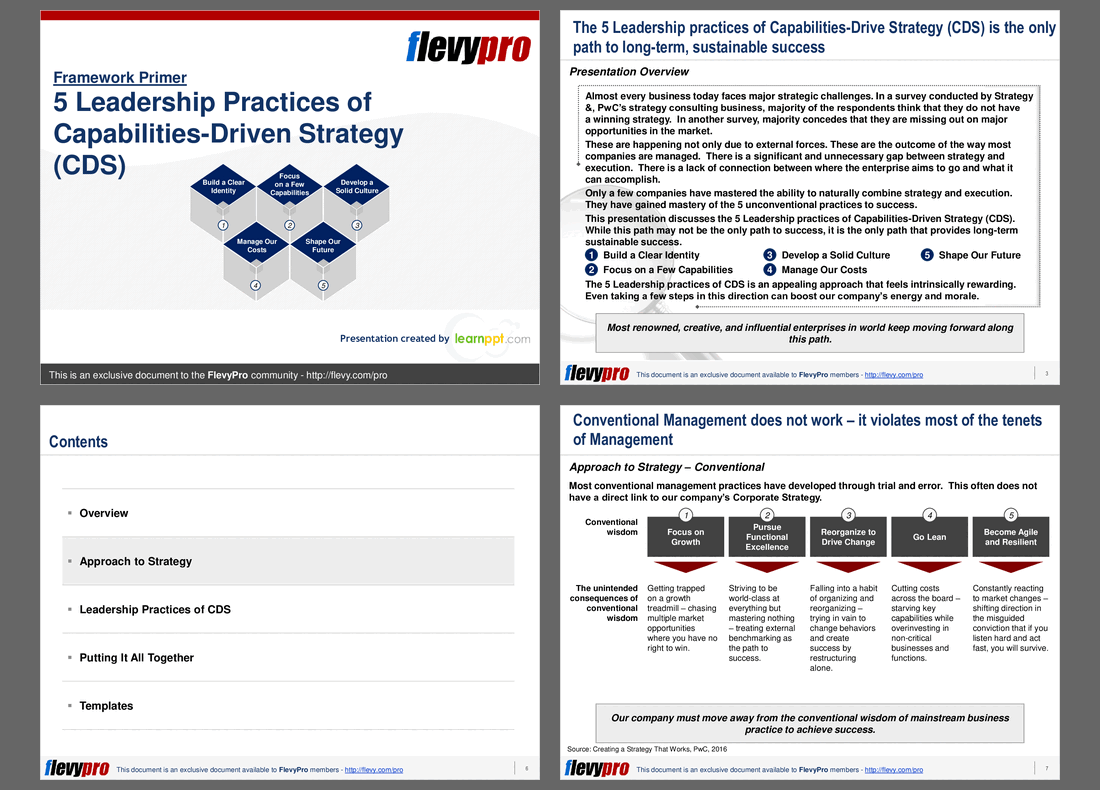
Almost every business today faces major strategic challenges. Numerous leadership surveys conducted by consulting firms have revealed leaders themselves do not believe they have a winning strategy—and that they believe they are missing out on major opportunities in the market.

These are happening not only due to external forces. These are the outcome of the way most companies are managed. There is a significant and unnecessary gap between strategy and execution. There is a lack of connection between where the enterprise aims to go and what it can accomplish.

Only a few companies have mastered the ability to naturally combine strategy and execution. They have gained mastery of the 5 unconventional practices to success.

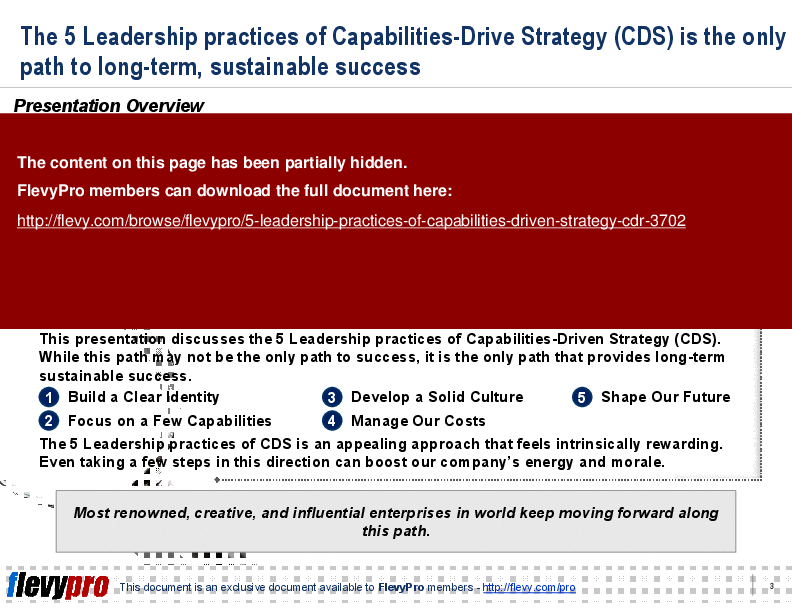
This presentation discusses the 5 Leadership practices of Capabilities-Driven Strategy (CDR). While this path may not be the only path to success, it is the only path that provides long-term sustainable success.

1. Build a Clear Identity
2. Focus on a Few Capabilities
3. Develop a Solid Culture
4. Manage Our Costs
5. Shape Our Future

The 5 Leadership practices of CDR is an appealing approach that feels intrinsically rewarding. Even taking a few steps in this direction can boost our company's energy and morale.

This PPT provides a comprehensive overview of how to align business capabilities with strategic objectives. By focusing on building a clear identity and leveraging a few key capabilities, companies can differentiate themselves in the market. The presentation emphasizes the importance of developing a solid corporate culture that reinforces the company’s strengths and drives performance. Managing costs effectively is highlighted as a critical practice, ensuring that resources are allocated to support strategic priorities.

The approach outlined in this presentation is not just theoretical, but highly actionable. It includes practical guidelines for implementing each of the 5 leadership practices. From blueprinting capabilities to fostering a culture of accountability, the document offers a roadmap for achieving competitive advantage. This resource is essential for executives looking to bridge the gap between strategy and execution, ensuring long-term sustainable success.

Got a question about this document? Email us at flevypro@flevy.com.

MARCUS OVERVIEW

This synopsis was written by Marcus [?] based on the analysis of the full 25-slide presentation.


Executive Summary
The "5 Leadership Practices of Capabilities-Driven Strategy (CDS)" presentation offers a strategic framework designed to bridge the gap between strategy and execution, enabling organizations to achieve long-term, sustainable success. Developed by ex-McKinsey consultants, this presentation outlines 5 key leadership practices that help organizations align their capabilities with strategic goals. By implementing these practices, leaders can foster a culture of accountability, enhance operational effectiveness, and drive value creation. This resource is essential for executives seeking to navigate complex business environments and capitalize on market opportunities.

Who This Is For and When to Use
•  Corporate executives aiming to refine their strategic approach
•  Integration leaders responsible for aligning capabilities with business objectives
•  Consultants advising organizations on strategic execution
•  Change management teams focused on cultural transformation

Best-fit moments to use this deck:
•  During strategic planning sessions to align leadership practices with organizational goals
•  When assessing gaps between strategy and execution in business operations
•  In workshops aimed at developing a capabilities-driven culture

Learning Objectives
•  Define the concept of Capabilities-Driven Strategy (CDS) and its significance
•  Build a clear organizational identity that resonates with stakeholders
•  Focus on a few key capabilities to drive operational excellence
•  Develop a solid corporate culture that reinforces strategic objectives
•  Manage costs effectively to support strategic priorities
•  Shape the future by leveraging capabilities for market expansion

Table of Contents
•  Overview (page 1)
•  Approach to Strategy (page 7)
•  Leadership Practices of CDS (page 10)
•  Putting It All Together (page 17)
•  Templates (page 20)

Primary Topics Covered
•  Overview of CDS - An introduction to the Capabilities-Driven Strategy framework and its relevance in today’s business landscape.
•  Leadership Practices - A detailed exploration of the 5 leadership practices essential for implementing CDS effectively.
•  Strategic Alignment - Insights into aligning organizational capabilities with strategic objectives for enhanced performance.
•  Cultural Transformation - Strategies for fostering a corporate culture that supports the implementation of CDS.
•  Cost Management - Techniques for managing costs as a strategic investment rather than a mere expense.
•  Future Shaping - Approaches to leveraging capabilities for future growth and market leadership.

Deliverables, Templates, and Tools
•  CDS framework template for strategic planning sessions
•  Leadership practice guidelines for implementation
•  Cost management assessment tool
•  Cultural assessment framework to evaluate organizational readiness
•  Future shaping roadmap for strategic initiatives
•  Capability development blueprint for focused execution

Slide Highlights
•  Overview slide outlining the 5 leadership practices of CDS
•  Detailed slides for each leadership practice, including guidelines and best practices
•  Visual representation of the interconnections between leadership practices
•  Case studies illustrating successful implementation of CDS in leading organizations
•  Summary slide emphasizing the importance of integrating all 5 practices

Potential Workshop Agenda
Introduction to Capabilities-Driven Strategy (30 minutes)
•  Overview of CDS and its significance
•  Discussion on the current state of organizational strategy

Leadership Practices Deep Dive (90 minutes)
•  Exploration of each leadership practice
•  Group activities to identify gaps and opportunities

Action Planning Session (60 minutes)
•  Development of a tailored action plan for implementing CDS
•  Assigning responsibilities and setting timelines

Customization Guidance
•  Tailor the identity framework to reflect your organization’s unique value proposition
•  Adjust capability focus areas based on current market dynamics and organizational strengths
•  Incorporate specific cultural elements that resonate with your workforce
•  Modify cost management strategies to align with strategic priorities
•  Adapt future shaping initiatives to reflect industry trends and customer needs

Secondary Topics Covered
•  The role of leadership in driving cultural change
•  Techniques for effective communication of strategic goals
•  Best practices for stakeholder engagement during strategy execution
•  Methods for measuring the impact of CDS implementation
•  Case studies of organizations successfully leveraging capabilities for growth

Topic FAQ

What are the core elements of Capabilities-Driven Strategy (CDS)?

Capabilities-Driven Strategy centers on aligning organizational capabilities with strategic objectives to achieve sustainable performance. The approach emphasizes 5 leadership practices: Build a Clear Identity; Focus on a Few Capabilities; Develop a Solid Culture; Manage Our Costs; Shape Our Future, organized around those 5 leadership practices.

How do you choose which capabilities to focus on?

Select a small set of capabilities that provide strategic leverage and efficient resource allocation, prioritizing those that drive differentiation and operational excellence. Use gap analysis to compare current capability strength to strategic needs; the Flevy product supplies a capability development blueprint and templates to support prioritization.

What role does corporate culture play in a capability-driven strategy?

Corporate culture reinforces strategic objectives, creates accountability, and boosts employee engagement necessary for capability shifts. Assess cultural readiness before redesigning processes and embed behavioral interventions to sustain change. The presentation includes a cultural assessment framework and related implementation guidelines.

How should cost management be treated within a capabilities-driven approach?

Cost management is framed as strategic investment: reallocate spending toward building and sustaining prioritized capabilities rather than across-the-board cuts. Use cost assessment to identify where funding enables differentiation and where to constrain spending; the deck includes a cost management assessment tool to guide those decisions.

What should I look for when buying a CDS presentation or toolkit?

Look for a clear description of the leadership practices, practical implementation guidance, and templates you can use in workshops or planning cycles. Check for tools that support capability focus, cultural readiness assessment, and cost management as a strategic investment. This category often includes a future-shaping roadmap and a capability development blueprint.

What phases do capability-driven execution workshops usually follow?

A typical workshop sequence starts with an introduction to the Capabilities-Driven Strategy concept, then a deep dive into the leadership practices, and ends with action planning that assigns responsibilities and timelines. The sample agenda in this category uses 30 minutes for overview, 90 minutes for practice deep dive, and 60 minutes for action planning.

I’m running a strategy offsite and leaders can’t align on priorities—what framework helps connect goals to execution?

Use a capabilities-driven approach that forces explicit choices about organizational identity, a small set of priority capabilities, the culture required to sustain them, cost allocation to fund them, and the future-shaping moves to pursue. Flevy’s 5 Leadership Practices of Capabilities-Driven Strategy (CDR) deck frames this as 5 linked leadership practices starting with Build a Clear Identity.

How do I assess whether our culture will support strategy execution during a transformation?

Start by evaluating cultural readiness against the behaviors and accountability mechanisms required to deliver the strategy. Use a structured cultural assessment to identify strengths and gaps, then design interventions that reinforce strategic objectives through leadership communication and stakeholder engagement. This category commonly uses a cultural assessment framework tied to Corporate Culture.

What’s the practical value of buying strategy execution templates versus creating your own slides?

Templates reduce setup time for planning sessions and workshops by providing ready structures for identity articulation, capability focus, cultural assessment, cost management assessment, and future-shaping roadmaps. The value comes from reuse across cycles and consistent terminology across teams. A typical deliverable set includes a cost management assessment tool.

How do I measure whether capabilities-driven strategy implementation is working?

Use Performance Indicators (KPIs) tied to the outcomes the leadership practices target, then track progress through ongoing assessments of capabilities and culture. The measurement focus stays on operational efficiency, market share growth, and employee engagement levels, with KPIs used as the ongoing feedback mechanism.

Document FAQ
These are questions addressed within this presentation.

What is Capabilities-Driven Strategy (CDS)?
CDS is a strategic framework that emphasizes the alignment of organizational capabilities with strategic objectives to achieve sustainable success.

How can the leadership practices be implemented?
The practices can be implemented through workshops, strategic planning sessions, and ongoing assessments of organizational capabilities.

What are the benefits of focusing on a few capabilities?
Focusing on a few key capabilities allows organizations to allocate resources effectively, drive operational excellence, and differentiate themselves in the market.

How does cost management fit into the CDS framework?
Cost management is viewed as an investment strategy that supports the development of distinctive capabilities rather than merely reducing expenses.

What role does corporate culture play in CDS?
A strong corporate culture reinforces strategic objectives, fosters accountability, and enhances employee engagement, making it essential for successful implementation.

How can organizations shape their future using CDS?
Organizations can shape their future by leveraging their capabilities to create demand, anticipate market changes, and pursue growth opportunities through strategic initiatives.

What tools are available for implementing CDS?
The presentation includes templates and frameworks for strategic planning, capability assessment, and cultural evaluation to facilitate the implementation of CDS.

How can I measure the success of CDS implementation?
Success can be measured through key performance indicators (KPIs) related to operational efficiency, market share growth, and employee engagement levels.

What are the common challenges in adopting CDS?
Common challenges include resistance to change, misalignment between strategy and execution, and lack of clarity in organizational identity.

Glossary
•  Capabilities-Driven Strategy (CDS) - A strategic approach focusing on aligning capabilities with business objectives.
•  Leadership Practices - The 5 key practices that guide organizations in implementing CDS effectively.
•  Corporate Culture - The shared values, beliefs, and behaviors within an organization that influence its operations.
•  Cost Management - The process of planning and controlling the budget of a business.
•  Value Proposition - The promise of value to be delivered to customers, highlighting the benefits of a product or service.
•  Strategic Alignment - The process of aligning an organization’s resources and actions with its strategic objectives.
•  Capability Development - The process of enhancing an organization’s abilities to perform specific tasks effectively.
•  Future Shaping - Strategies aimed at leveraging capabilities to create new market opportunities.
•  Stakeholder Engagement - The process of involving individuals or groups who have an interest in the organization’s activities.
•  Performance Indicators (KPIs) - Metrics used to evaluate the success of an organization in achieving its objectives.
•  Cultural Assessment - An evaluation of the organizational culture to identify strengths and areas for improvement.
•  Action Plan - A detailed plan outlining the steps needed to achieve specific goals or objectives.

LEADERSHIP PPT SLIDES

Strategic Framework for Future Capability Development

Integrating Leadership Practices for Strategic Execution

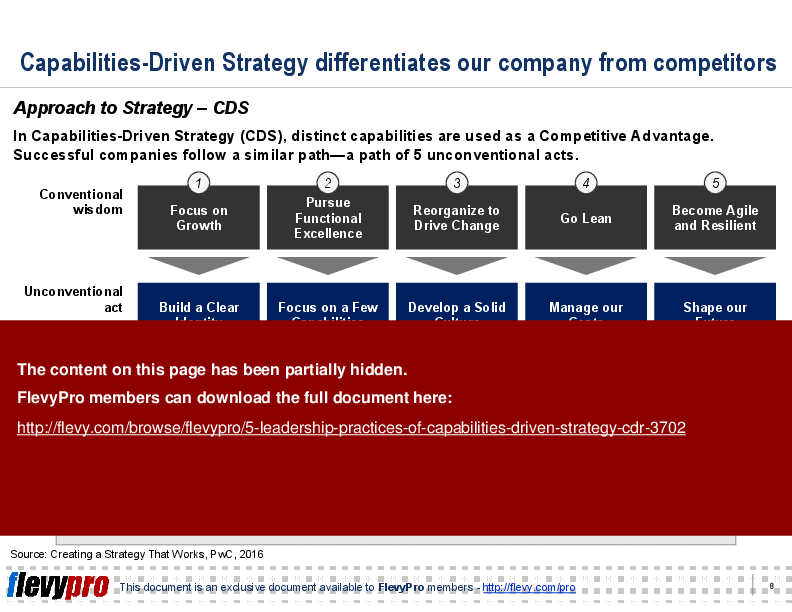
Five Unconventional Acts for Strategic Differentiation

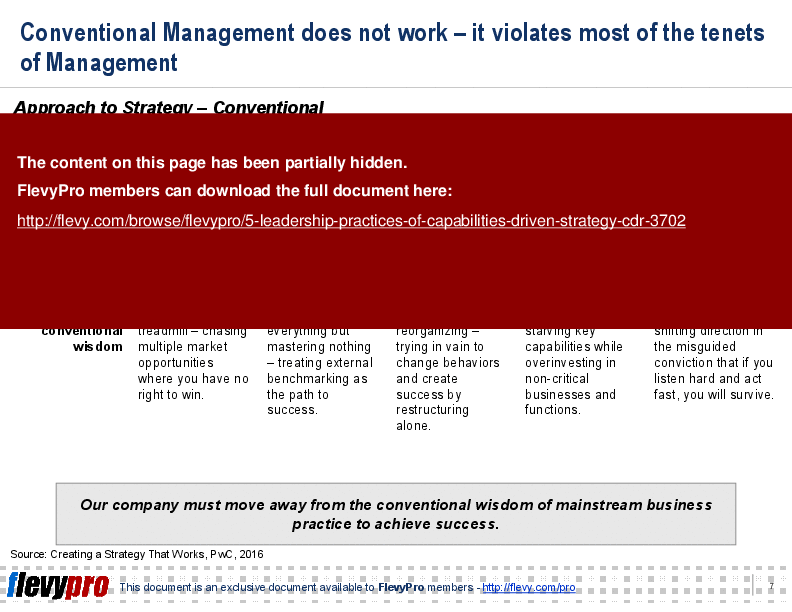
Rethinking Conventional Management Practices for Success

Establishing a Strong Organizational Identity

Source: Best Practices in Strategy Development, Leadership, Core Competences PowerPoint Slides: 5 Leadership Practices of Capabilities-Driven Strategy (CDR) PowerPoint (PPT) Presentation Slide Deck, LearnPPT Consulting


$29.00
FlevyPro price: FREE (included in subscription)
This framework is developed by a team of former McKinsey and Big 4 consultants. The presentation follows the headline-body-bumper slide format used by global consulting firms.
Add to Cart
  

Did you need more documents?

Consider a FlevyPro subscription from $39/month. View plans here.

For $10.00 more, you can download this document plus 2 more FlevyPro documents. That's just $13 each.

ABOUT FLEVYPRO

This document is part of the FlevyPro Library, a curated knowledge base of documents for our FlevyPro subscribers.

FlevyPro is a subscription service for on-demand business frameworks and analysis tools. FlevyPro subscribers receive access to an exclusive library of curated business documents—business framework primers, presentation templates, Lean Six Sigma tools, and more—among other exclusive benefits.

Click here to learn more about FlevyPro and its benefits.

Did you know?
The average daily rate of a McKinsey consultant is $6,625 (not including expenses). The average price of a Flevy document is $65.


Trusted by over 10,000+ Client Organizations
Since 2012, we have provided business templates to over 10,000 businesses and organizations of all sizes, from startups and small businesses to the Fortune 100, in over 130 countries.
AT&T GE Cisco Intel IBM Coke Dell Toyota HP Nike Samsung Microsoft Astrazeneca JP Morgan KPMG Walgreens Walmart 3M Kaiser Oracle SAP Google E&Y Volvo Bosch Merck Fedex Shell Amgen Eli Lilly Roche AIG Abbott Amazon PwC T-Mobile Broadcom Bayer Pearson Titleist ConEd Pfizer NTT Data Schwab


Read Customer Testimonials

 
"As a young consulting firm, requests for input from clients vary and it's sometimes impossible to provide expert solutions across a broad spectrum of requirements. That was before I discovered Flevy.com.

Through subscription to this invaluable site of a plethora of topics that are key and crucial to consulting, I "

– Nishi Singh, Strategist and MD at NSP Consultants
 
"[Flevy] produces some great work that has been/continues to be of immense help not only to myself, but as I seek to provide professional services to my clients, it gives me a large "tool box" of resources that are critical to provide them with the quality of service and outcomes they are expecting."

– Royston Knowles, Executive with 50+ Years of Board Level Experience
 
"FlevyPro provides business frameworks from many of the global giants in management consulting that allow you to provide best in class solutions for your clients."

– David Harris, Managing Director at Futures Strategy
 
"As an Independent Management Consultant, I find Flevy to add great value as a source of best practices, templates and information on new trends. Flevy has matured and the quality and quantity of the library is excellent. Lastly the price charged is reasonable, creating a win-win value for "

– Jim Schoen, Principal at FRC Group
 
"Flevy is our 'go to' resource for management material, at an affordable cost. The Flevy library is comprehensive and the content deep, and typically provides a great foundation for us to further develop and tailor our own service offer."

– Chris McCann, Founder at Resilient.World
 
"As a consultant requiring up to date and professional material that will be of value and use to my clients, I find Flevy a very reliable resource.

The variety and quality of material available through Flevy offers a very useful and commanding source for information. Using Flevy saves me time, enhances my expertise and ends up being a good decision."

– Dennis Gershowitz, Principal at DG Associates
 
"Last Sunday morning, I was diligently working on an important presentation for a client and found myself in need of additional content and suitable templates for various types of graphics. Flevy.com proved to be a treasure trove for both content and design at a reasonable price, considering the time I "

– M. E., Chief Commercial Officer, International Logistics Service Provider
 
"I have found Flevy to be an amazing resource and library of useful presentations for lean sigma, change management and so many other topics. This has reduced the time I need to spend on preparing for my performance consultation. The library is easily accessible and updates are regularly provided. A wealth of great information."

– Cynthia Howard RN, PhD, Executive Coach at Ei Leadership


Customers Also Bought These Documents


Customers Also Like These Documents

Explore Templates on Related Management Topics


Your Recently Viewed Documents
Download our FREE Organization, Change, & Culture, Templates

Download our free compilation of 50+ slides and templates on Organizational Design, Change Management, and Corporate Culture. Methodologies include ADKAR, Burke-Litwin Change Model, McKinsey 7-S, Competing Values Framework, etc.