
This framework is developed by a team of former McKinsey and Big 4 consultants. The presentation follows the headline-body-bumper slide format used by global consulting firms.
Explore the 4 Stages of Disruption framework by ex-McKinsey consultants. Gain insights into market evolution, strategic decision-making, and innovation dynamics. 4 Stages of Disruption is a 27-slide PPT PowerPoint presentation slide deck (PPTX) available for immediate download upon purchase.
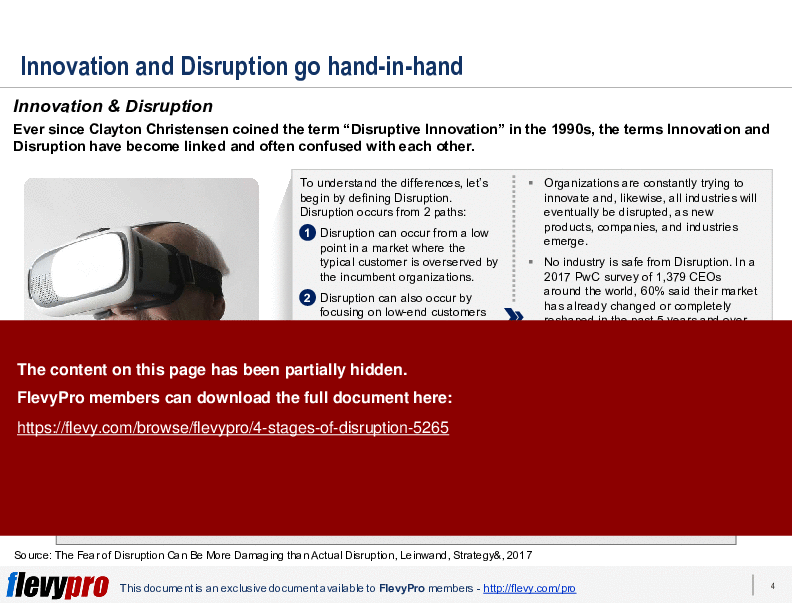
Organizations are constantly trying to innovate and, likewise, all industries will eventually be disrupted, as new products, businesses, and industries emerge.
No industry is safe from Disruption. In a 2017 PwC survey of 1,379 CEOs around the world, 60% said their market has already changed or completely reshaped in the past 5 years and over 75% anticipate they would by 2022.
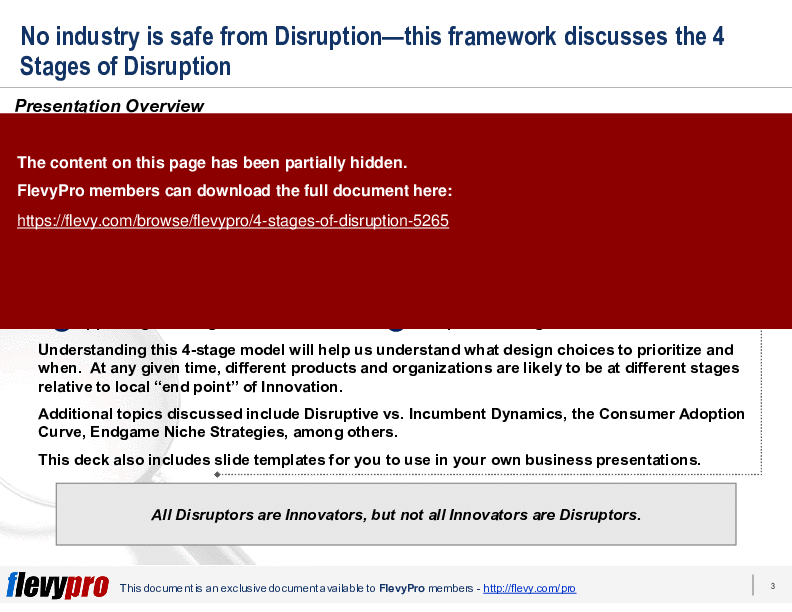
This presentation discusses the 4 Stages of Disruption. Research has found Innovation that eventually leads to Disruption follows a 4-stage evolution:
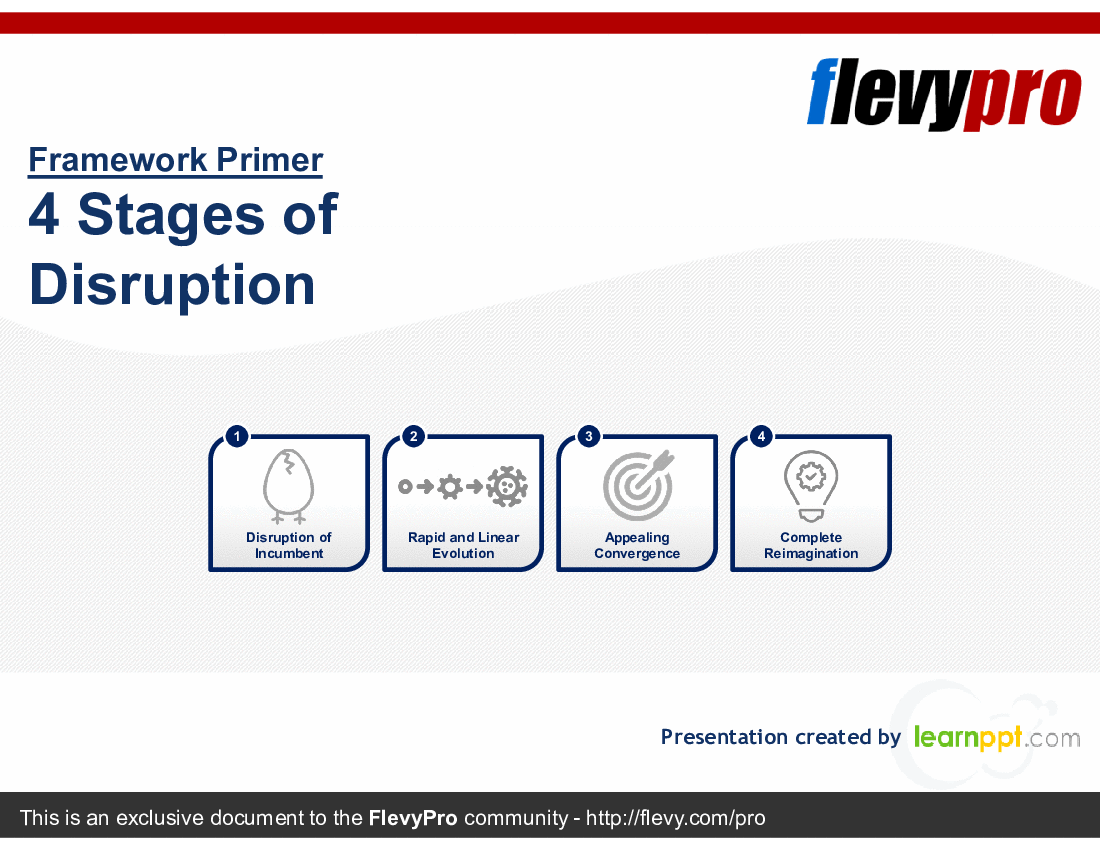
1. Disruption of Incumbent
2. Rapid and Linear Evolution
3. Appealing Convergence
4. Complete Reimagination
Understanding this 4-stage model will help us understand what design choices to prioritize and when. At any given time, different products and organizations are likely to be at different stages relative to local end point of Innovation.
Additional topics discussed include Disruptive vs. Incumbent Dynamics, the Consumer Adoption Curve, Endgame Niche Strategies, among others.
This deck also includes slide templates for you to use in your own business presentations.
This PPT provides a comprehensive breakdown of the 4 Stages of Disruption, offering a clear roadmap for navigating the complexities of market changes. It delves into the specific actions and reactions of both disruptors and incumbents at each stage, providing actionable insights for strategic decision-making. The presentation also includes detailed explanations of key concepts such as the Consumer Adoption Curve and Endgame Niche Strategies, equipping you with the tools to anticipate and respond to market shifts effectively.
The deck is designed to be highly practical, featuring slide templates that can be directly incorporated into your own business presentations. This allows you to communicate the nuances of disruption theory to your team or stakeholders with ease. By understanding the dynamics outlined in this presentation, you can better position your organization to either lead or adapt to disruption, ensuring long-term success in an ever-evolving market landscape.
This framework outlines the 4 stages of disruption:
1. Disruption of Incumbent: A disruptor introduces a new offering that, while not fully addressing market needs, presents a superior solution. Incumbents often dismiss this innovation, reflecting a reluctance to recognize existential threats.
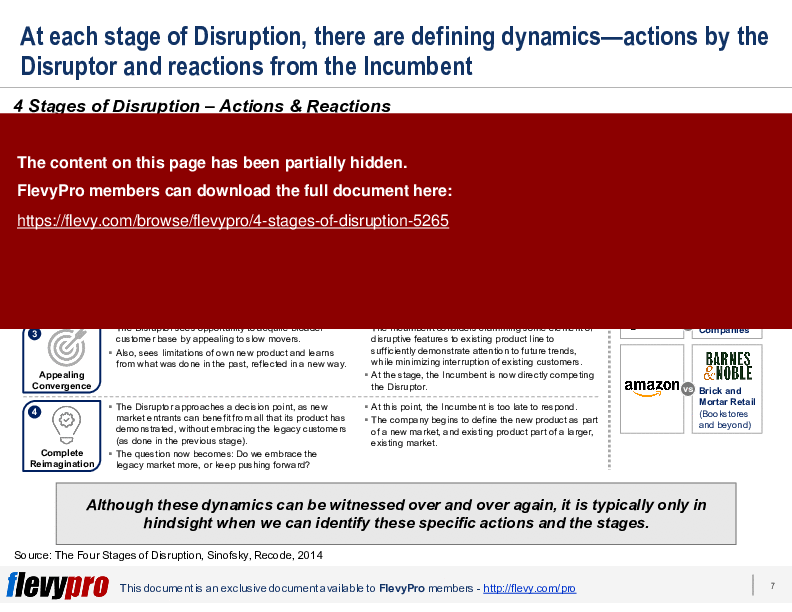
2. Rapid Linear Evolution: The disruptor enhances features and capabilities based on customer feedback, solidifying its value proposition. Incumbents begin to compare their offerings to the disruptor's, identifying deficiencies.
3. Appealing Convergence: The disruptor targets a broader customer base, learning from past limitations. Incumbents attempt to integrate disruptive elements into their products, signaling a shift from denial to acknowledgment.
4. Complete Reimagination: The disruptor reaches a critical decision point, leveraging insights from its success while not fully embracing legacy customers. Incumbents struggle to redefine their products in the evolving market landscape.
This structured understanding of disruption stages aids strategic decision-making and helps companies navigate market changes effectively.
This PPT slide outlines a four-stage disruption framework for technology products. The first stage, "Disruption of Incumbent," occurs when a disruptor introduces a new offering that established players initially dismiss. The second stage, "Rapid and Linear Evolution," sees incumbents innovating their products to regain market traction in response to the disruptor's success. In the third stage, "Appealing Convergence," incumbents integrate disruptive features into their offerings, indicating a strategic shift to compete effectively. The final stage, "Complete Reimagination," marks the creation of a fully disruptive innovation that transforms the market landscape. This model aids organizations in prioritizing design choices and strategic decisions throughout the innovation process, informing better decision-making and resource allocation.
The Disruptive Innovation Model highlights the Innovator's Dilemma, where established organizations overlook emerging market segments, leading to decline. The graph illustrates 2 trajectories: the Incumbent’s Sustaining Trajectory and the Entrant’s Disruptive Trajectory, plotted against product performance and time. The upper red line shows incumbents focusing on high-end market segments for profitability, neglecting lower-end customer needs. This creates opportunities for new entrants, represented by the lower red line, who target these segments and can gradually move up-market, challenging incumbents. This model underscores the importance of recognizing shifts in customer demand across market segments to avoid disruption.
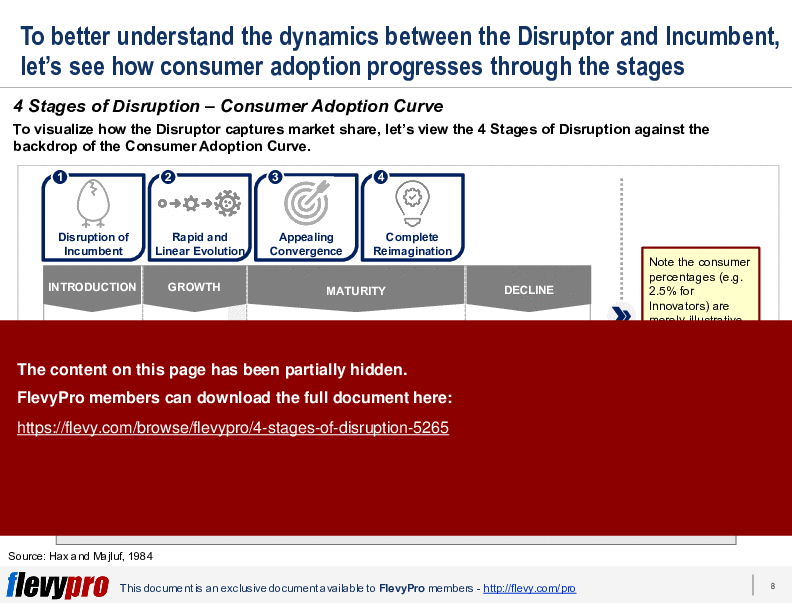
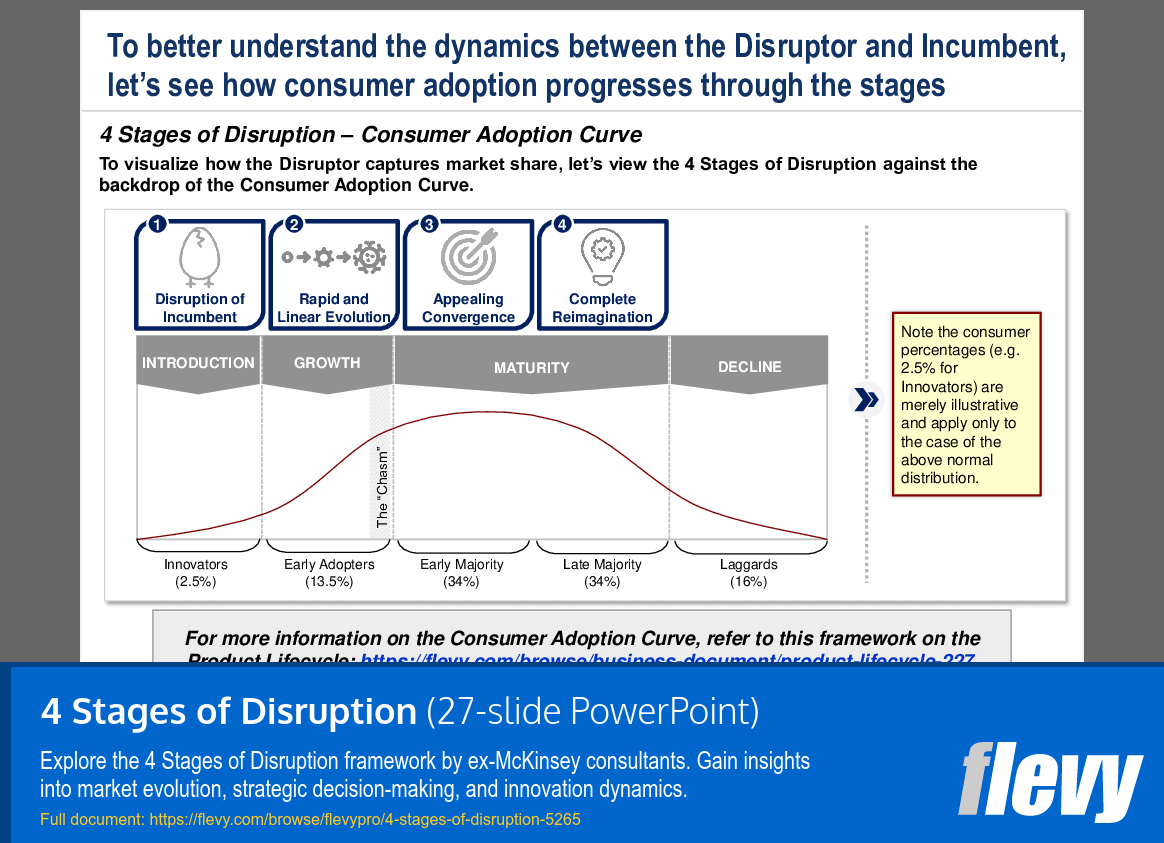
This PPT slide illustrates the 4 stages of disruption within the Consumer Adoption Curve: Disruption of Incumbent, Rapid and Linear Evolution, Appealing Convergence, and Complete Reimagination. Each stage aligns with a phase in the consumer adoption process, beginning with innovators (2.5% of the market) and progressing to early adopters (13.5%). A critical transition point, "The Chasm," highlights challenges in moving from early adopters to the early majority (34%). In the maturity phase, the product reaches the late majority (34%) and laggards (16%), followed by a decline phase due to market saturation or shifts in consumer preferences. The consumer percentages illustrate the normal distribution of adoption, providing a framework for evaluating market positioning and anticipating consumer behavior during disruption.
This PPT slide outlines Stage 3 of the disruption framework, "Appealing Convergence," where the disruptor enters the Early Majority segment of the Consumer Adoption Curve, prompting increased competition from incumbents. The disruptor broadens its customer base by targeting slower-moving consumers, while the market begins to recognize the new product's capabilities. The disruptor learns from product limitations, leading to a redefinition of its offering based on market feedback. Incumbents may integrate disruptive features into their products to capture attention, risking being leapfrogged by newer technologies. As innovators and early adopters mature, market stability emerges, highlighting the need for strategic adaptation and awareness of evolving customer perceptions.
Source: Best Practices in Maturity Model, Innovation, Disruptive Innovation, Disruption PowerPoint Slides: 4 Stages of Disruption PowerPoint (PPTX) Presentation Slide Deck, LearnPPT Consulting
This framework is developed by a team of former McKinsey and Big 4 consultants. The presentation follows the headline-body-bumper slide format used by global consulting firms.
For $10.00 more, you can download this document plus 2 more FlevyPro documents. That's just $13 each.
ABOUT FLEVYPRO
This document is part of the FlevyPro Library, a curated knowledge base of documents for our FlevyPro subscribers.
FlevyPro is a subscription service for on-demand business frameworks and analysis tools. FlevyPro subscribers receive access to an exclusive library of curated business documents—business framework primers, presentation templates, Lean Six Sigma tools, and more—among other exclusive benefits.
Since 2012, we have provided business templates to over 10,000 businesses and organizations of all sizes, from startups and small businesses to the Fortune 100, in over 130 countries.
"Last Sunday morning, I was diligently working on an important presentation for a client and found myself in need of additional content and suitable templates for various types of graphics. Flevy.com proved to be a treasure trove for both content and design at a reasonable price, considering the time I
saved. I encountered a download issue during the ordering process. However, a quick email to Flevy's support team, even on a Sunday (!!!), resulted in assistance within less than an hour, allowing me to download the content I needed. Fantastic job, Flevy! I give 5 stars for both content/price and customer service. Thank you!
"
– M. E., Chief Commercial Officer, International Logistics Service Provider
"If you are looking for great resources to save time with your business presentations, Flevy is truly a value-added resource. Flevy has done all the work for you and we will continue to utilize Flevy as a source to extract up-to-date information and data for our virtual and onsite presentations!"
– Debbi Saffo, President at The NiKhar Group
"As a consultant requiring up to date and professional material that will be of value and use to my clients, I find Flevy a very reliable resource.
The variety and quality of material available through Flevy offers a very useful and commanding source for information. Using Flevy saves me time, enhances my expertise and ends up being a good decision."
– Dennis Gershowitz, Principal at DG Associates
"Flevy is now a part of my business routine. I visit Flevy at least 3 times each month.
Flevy has become my preferred learning source, because what it provides is practical, current, and useful in this era where the business world is being rewritten.

many challenges and there is the need to make the right decisions in a short time, with so much scattered information, we are fortunate to have Flevy. Flevy investigates, selects, and puts at our disposal the best of the best to help us be successful in our work.
"
– Omar Hernán Montes Parra, CEO at Quantum SFE
"One of the great discoveries that I have made for my business is the Flevy library of training materials.
As a Lean Transformation Expert, I am always making presentations to clients on a variety of topics: Training, Transformation, Total Productive Maintenance, Culture, Coaching, Tools, Leadership Behavior, etc. Flevy
It is well worth the money to purchase these presentations. Sure, I have the knowledge and information to make my point. It is another thing to create a presentation that captures what I want to say. Flevy has saved me countless hours of preparation time that is much better spent with implementation that will actually save money for my clients.
"
– Ed Kemmerling, Senior Lean Transformation Expert at PMG
"As an Independent Management Consultant, I find Flevy to add great value as a source of best practices, templates and information on new trends. Flevy has matured and the quality and quantity of the library is excellent. Lastly the price charged is reasonable, creating a win-win value for
the customer, Flevy and the various authors. This is truly a service that benefits the consulting industry and associated clients. Thanks for providing this service.
"
– Jim Schoen, Principal at FRC Group
"I have found Flevy to be an amazing resource and library of useful presentations for lean sigma, change management and so many other topics. This has reduced the time I need to spend on preparing for my performance consultation. The library is easily accessible and updates are regularly provided. A wealth of great information."
– Cynthia Howard RN, PhD, Executive Coach at Ei Leadership
"My FlevyPro subscription provides me with the most popular frameworks and decks in demand in today’s market. They not only augment my existing consulting and coaching offerings and delivery, but also keep me abreast of the latest trends, inspire new products and service offerings for my practice, and educate me
Download our free compilation of 50+ slides and templates on Organizational Design, Change Management, and Corporate Culture. Methodologies include ADKAR, Burke-Litwin Change Model, McKinsey 7-S, Competing Values Framework, etc.