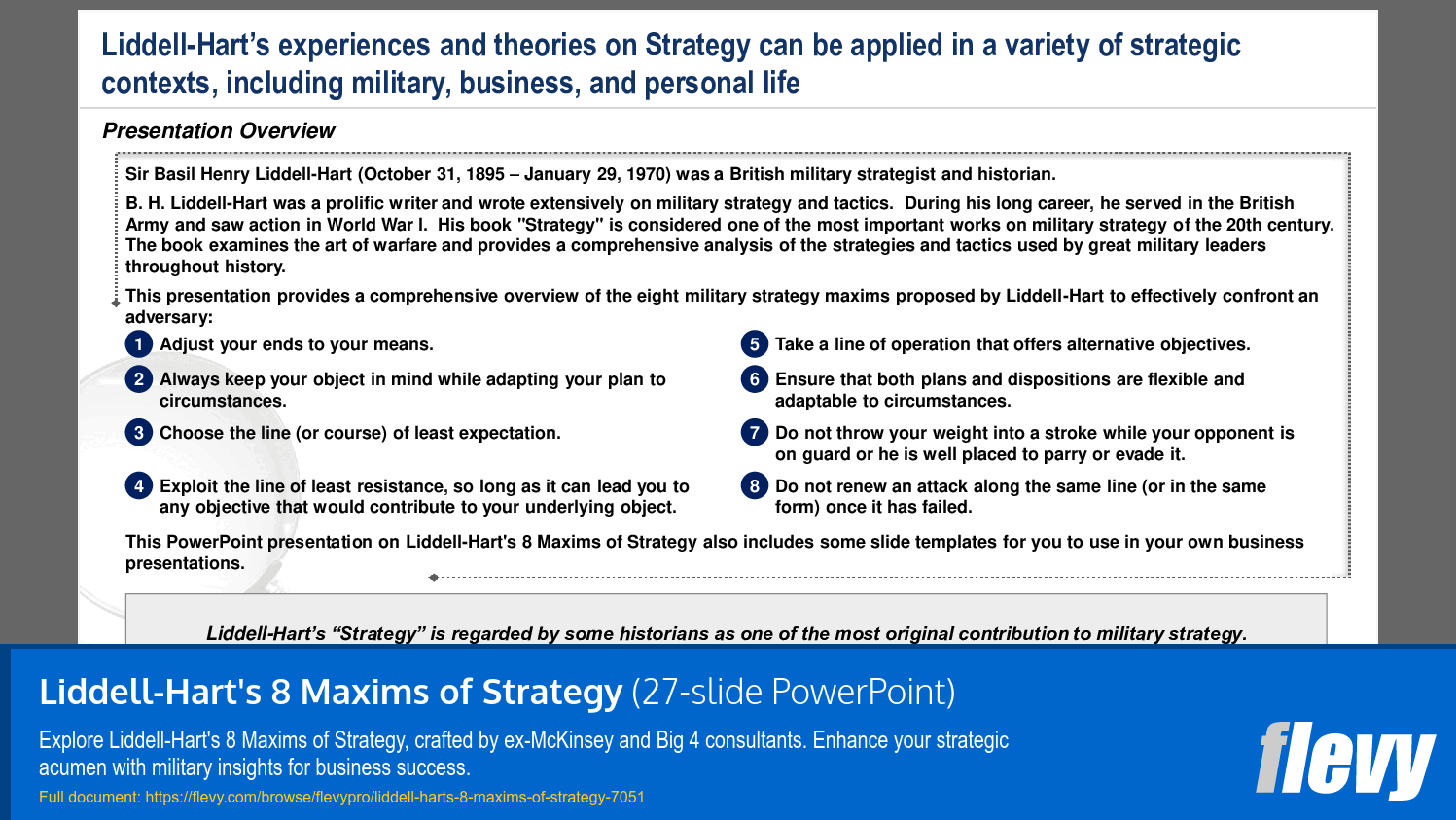
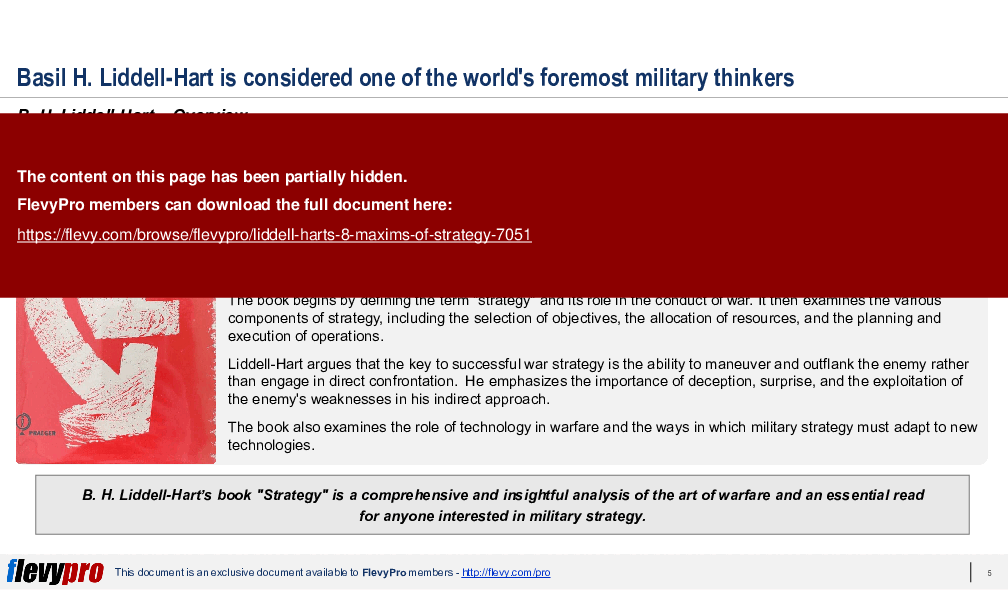

Sir Basil Henry Liddell-Hart (October 31, 1895 – January 29, 1970) was a British military strategist and historian.
B. H. Liddell-Hart was a prolific writer and wrote extensively on military strategy and tactics. During his long career, he served in the British Army and saw action in World War I. His book "Strategy" is considered one of the most important works on military strategy of the 20th century. The book examines the art of warfare and provides a comprehensive analysis of the strategies and tactics used by great military leaders throughout history.
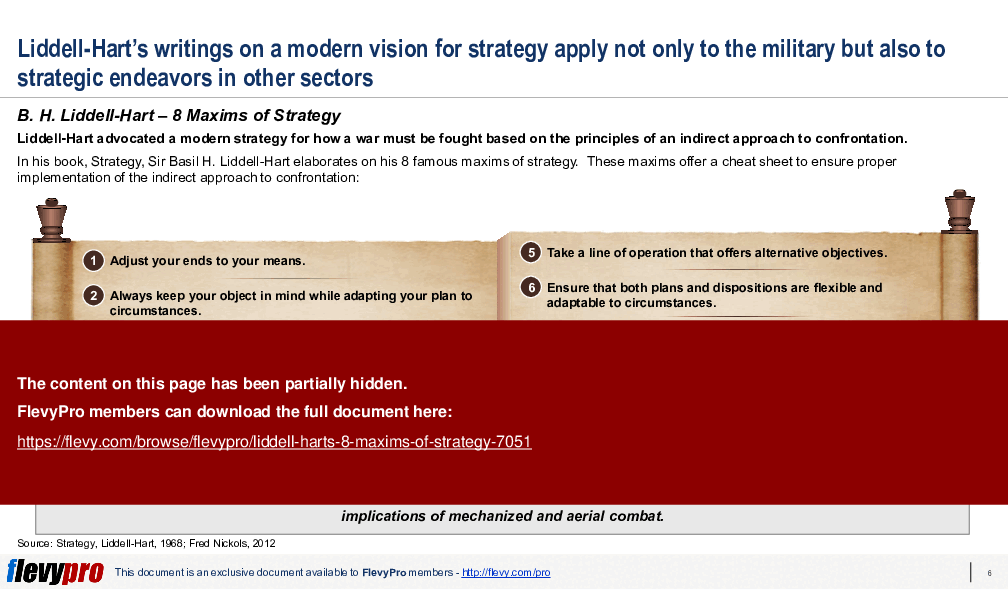
This PowerPoint presentation provides a comprehensive overview of the eight military strategy maxims proposed by Liddell-Hart to effectively confront an adversary:
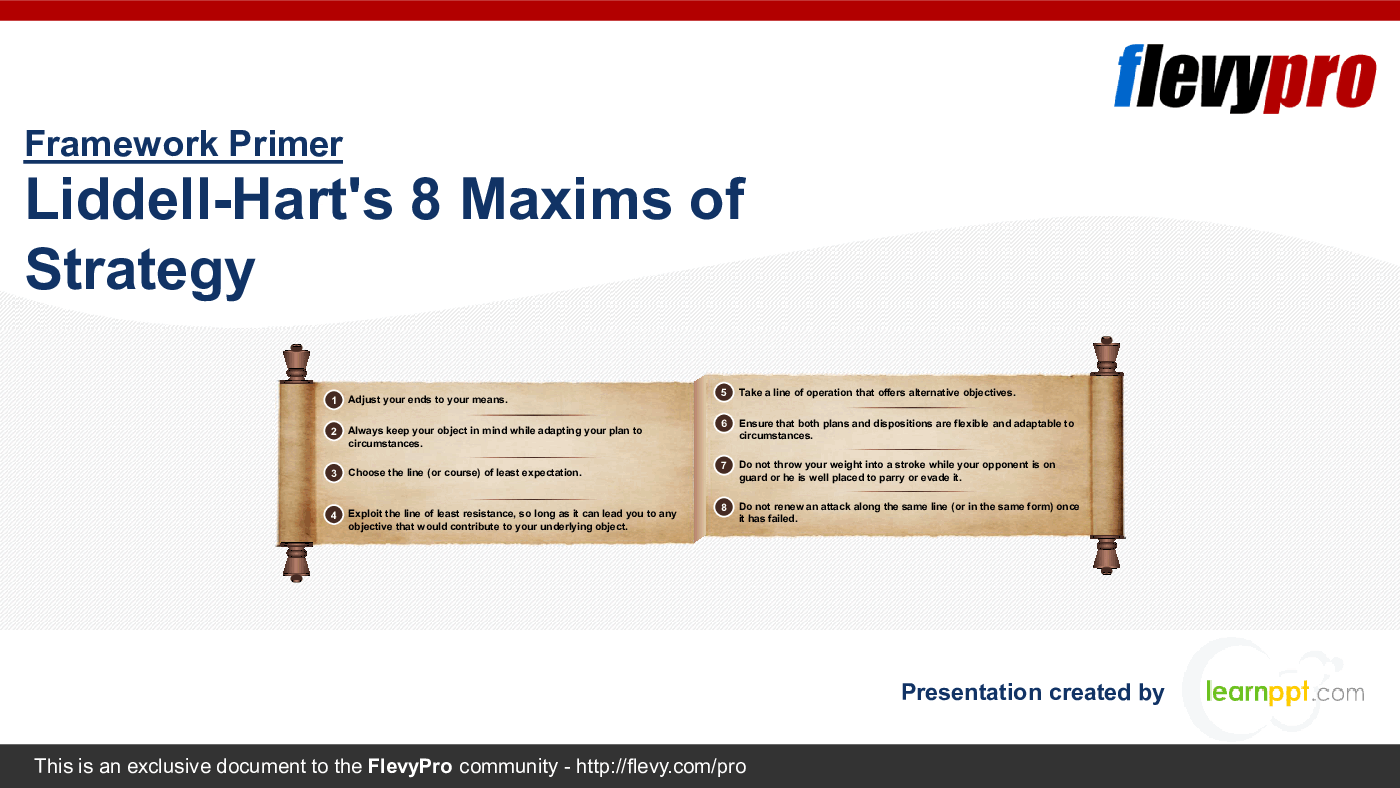
1. Adjust your ends to your means.
2. Always keep your object in mind while adapting your plan to circumstances.
3. Choose the line (or course) of least expectation.
4. Exploit the line of least resistance, so long as it can lead you to any objective that would contribute to your underlying object.
5. Take a line of operation that offers alternative objectives.
6. Ensure that both plans and dispositions are flexible and adaptable to circumstances.
7. Do not throw your weight into a stroke while your opponent is on guard or he is well placed to parry or evade it.
8. Do not renew an attack along the same line (or in the same form) once it has failed.
Liddell-Hart's experiences and theories on Strategy can be applied in a variety of strategic contexts, including military, business, and personal life.
This PowerPoint presentation on Liddell-Hart's 8 Maxims of Strategy also includes some slide templates for you to use in your own business presentations.
This presentation includes a detailed slide design guide and templates to enhance your own strategic presentations. It is an essential resource for executives looking to apply proven military strategies to business challenges.
Got a question about this document? Email us at flevypro@flevy.com.
Executive Summary
This presentation on Liddell-Hart's 8 Maxims of Strategy offers a comprehensive exploration of military strategy principles that can be applied in various strategic contexts, including business. Developed by Sir Basil Henry Liddell-Hart, a prominent military strategist, these maxims provide actionable insights for executives and consultants seeking to enhance their strategic planning and execution. The presentation not only outlines the maxims, but also includes slide templates for practical application in business settings.
Who This Is For and When to Use
• Corporate strategists looking to integrate military strategy principles into business planning
• Consultants seeking frameworks for advising clients on strategic decision-making
• Business leaders aiming to enhance their operational strategies with proven military insights
• Project managers needing adaptable frameworks for navigating complex project landscapes
Best-fit moments to use this deck:
• During strategic planning sessions to align objectives with available resources
• In workshops focused on adapting strategies to changing market conditions
• When developing contingency plans that require flexibility and adaptability
Learning Objectives
• Define Liddell-Hart's 8 maxims and their relevance to modern strategic planning
• Build adaptable strategies that align objectives with available resources
• Establish frameworks for evaluating and adjusting plans based on real-time data
• Identify and exploit opportunities by understanding competitor vulnerabilities
• Create flexible operational plans that can pivot in response to unforeseen challenges
• Foster a culture of learning from failures to enhance future strategic initiatives
Table of Contents
• Overview (page 3)
• B. H. Liddell-Hart (page 5)
• Maxims of Strategy (page 6)
• Slide Design Guide & Templates (page 17)
Primary Topics Covered
• Overview of Liddell-Hart's Strategy - An introduction to the principles of military strategy and their applicability in business contexts.
• Maxim 1: Adjust Your Ends to Your Means - Emphasizes the importance of aligning political objectives with available military resources to avoid unnecessary conflict.
• Maxim 2: Always Keep Your Object in Mind - Advocates for maintaining clarity of objectives while remaining flexible in strategy.
• Maxim 3: Choose the Line of Least Expectation - Highlights the value of surprise and indirect approaches in achieving strategic goals.
• Maxim 4: Exploit the Line of Least Resistance - Encourages taking the easiest path towards objectives that align with overall goals.
• Maxim 5: Take a Line of Operation That Offers Alternative Objectives - Suggests pursuing multiple potential objectives to enhance adaptability.
• Maxim 6: Ensure Plans Are Flexible and Adaptable - Stresses the need for both strategic and tactical flexibility in execution.
• Maxim 7: Timing and Psychological Warfare - Discusses the importance of timing in strategic actions to gain advantages over opponents.
• Maxim 8: Learn from Failures - Encourages analyzing past failures to inform future strategies and avoid repeating mistakes.
Deliverables, Templates, and Tools
• Slide templates for presenting Liddell-Hart's maxims in various strategic contexts
• Frameworks for aligning objectives with available resources
• Checklists for evaluating strategic flexibility and adaptability
• Guidelines for conducting strategic workshops based on military principles
Slide Highlights
• Introduction to Liddell-Hart’s 8 Maxims with visual representations
• Detailed breakdown of each maxim with practical applications
• Examples of how military strategy can inform business decision-making
• Templates for creating adaptable strategic plans
Potential Workshop Agenda
Introduction to Liddell-Hart's Maxims (30 minutes)
• Overview of the maxims and their relevance to business
• Discussion on the application of military strategy in corporate settings
Maxim Application Session (60 minutes)
• Breakout groups to explore each maxim in detail
• Development of case studies illustrating practical applications
Strategic Planning Workshop (90 minutes)
• Hands-on session to create flexible strategic plans
• Review and feedback on proposed strategies
Customization Guidance
• Tailor the maxims to fit specific organizational contexts and strategic goals
• Adjust templates to reflect industry-specific challenges and opportunities
• Incorporate organizational terminology and metrics into the frameworks
Secondary Topics Covered
• Historical context of military strategy and its evolution
• The role of technology in modern warfare and strategic planning
• Psychological aspects of strategy and decision-making
Topic FAQ
Document FAQ
These are questions addressed within this presentation.
What are Liddell-Hart's 8 Maxims?
Liddell-Hart's 8 Maxims are strategic principles that guide military and business leaders in effective planning and execution.
How can these maxims be applied in business?
The maxims can be adapted to enhance strategic planning, improve decision-making, and foster flexibility in business operations.
What is the significance of flexibility in strategy?
Flexibility allows organizations to adapt to changing circumstances and seize opportunities as they arise, increasing the likelihood of success.
Can these principles be used in project management?
Yes, the maxims provide valuable insights for project managers in navigating complexities and ensuring alignment with broader objectives.
How do I customize the templates provided?
Templates can be tailored by incorporating specific organizational goals, terminology, and metrics relevant to your industry.
What is the importance of learning from failures?
Learning from failures enables organizations to refine their strategies and avoid repeating mistakes, ultimately leading to better outcomes.
How can I implement these strategies in my organization?
Begin by introducing the maxims in strategic discussions and workshops, encouraging teams to integrate them into their planning processes.
Are there any case studies available?
The presentation includes examples and case studies that illustrate the application of Liddell-Hart's maxims in various contexts.
Glossary
• Maxim - A general truth or principle that serves as a guide to action.
• Strategy - A plan of action designed to achieve a long-term or overall aim.
• Flexibility - The ability to adapt to new, different, or changing requirements.
• Tactics - The specific actions or steps taken to achieve a strategy.
• Indirect Approach - A strategy that seeks to avoid direct confrontation and instead exploit the enemy's weaknesses.
• Psychological Warfare - The use of psychological tactics to influence the perceptions and behavior of opponents.
• Operational Plan - A detailed plan outlining how an organization will achieve its strategic goals.
• Contingency Plan - A plan designed to take a possible future event or circumstance into account.
• Objectives - Specific results that a person or system aims to achieve within a time frame and with available resources.
• Adaptability - The quality of being able to adjust to new conditions.
• Surprise - An unexpected event that can provide a tactical advantage.
• Learning Organization - An organization that actively seeks to learn and adapt from its experiences.
• Resource Allocation - The process of assigning and managing assets in a manner that supports an organization's strategic goals.
• Competitive Advantage - A condition or circumstance that puts a company in a favorable or superior business position.
• Strategic Planning - The process of defining a strategy or direction and making decisions on allocating resources to pursue this strategy.
• Execution - The act of carrying out or putting into effect a plan or course of action.
• Business Strategy - A plan for how a business will achieve its goals and objectives.
• Operational Strategy - A plan that outlines how the operational aspects of a business will support its overall strategy.
• War Strategy - A plan for the conduct of warfare that considers the political, economic, and social factors involved.
• Military Tactics - The specific methods employed to achieve military objectives.
• Indirect Warfare - A strategy that avoids direct confrontation and focuses on undermining the enemy's capabilities.
Source: Best Practices in Strategy Development, Decision Making PowerPoint Slides: Liddell-Hart's 8 Maxims of Strategy PowerPoint (PPTX) Presentation Slide Deck, LearnPPT Consulting
Did you need more documents?
Consider a FlevyPro subscription from $39/month. View plans here.
For $10.00 more, you can download this document plus 2 more FlevyPro documents. That's just $13 each.
|
Download our FREE Strategy & Transformation Framework Templates
Download our free compilation of 50+ Strategy & Transformation slides and templates. Frameworks include McKinsey 7-S, Balanced Scorecard, Disruptive Innovation, BCG Curve, and many more. |










