
 Click main image to view in full screen.


STRATEGY DEVELOPMENT PPT DESCRIPTION
This presentation introduces the evolution of strategy and management thinking since 1930s. It provides an overview of key strategy schools of thoughts and breaks them into two broad categories:
• Outside-in strategy schools
• Inside-out strategy schools
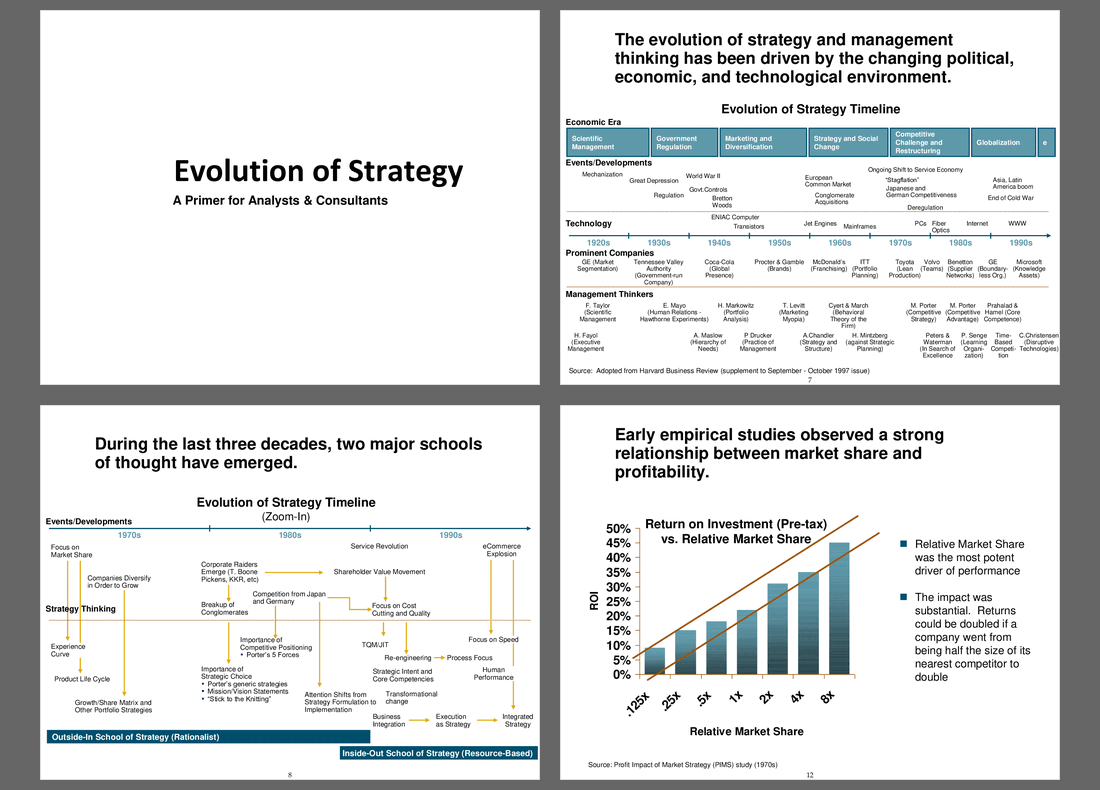
It then elaborates on the key characteristics of various strategy thinking under each strategy schools. Included in the presentation are two most valuable slides that illustrates the evolution of strategy timeline since 1920s. This is a very useful reference for beginners as well as veterans in the strategy field.
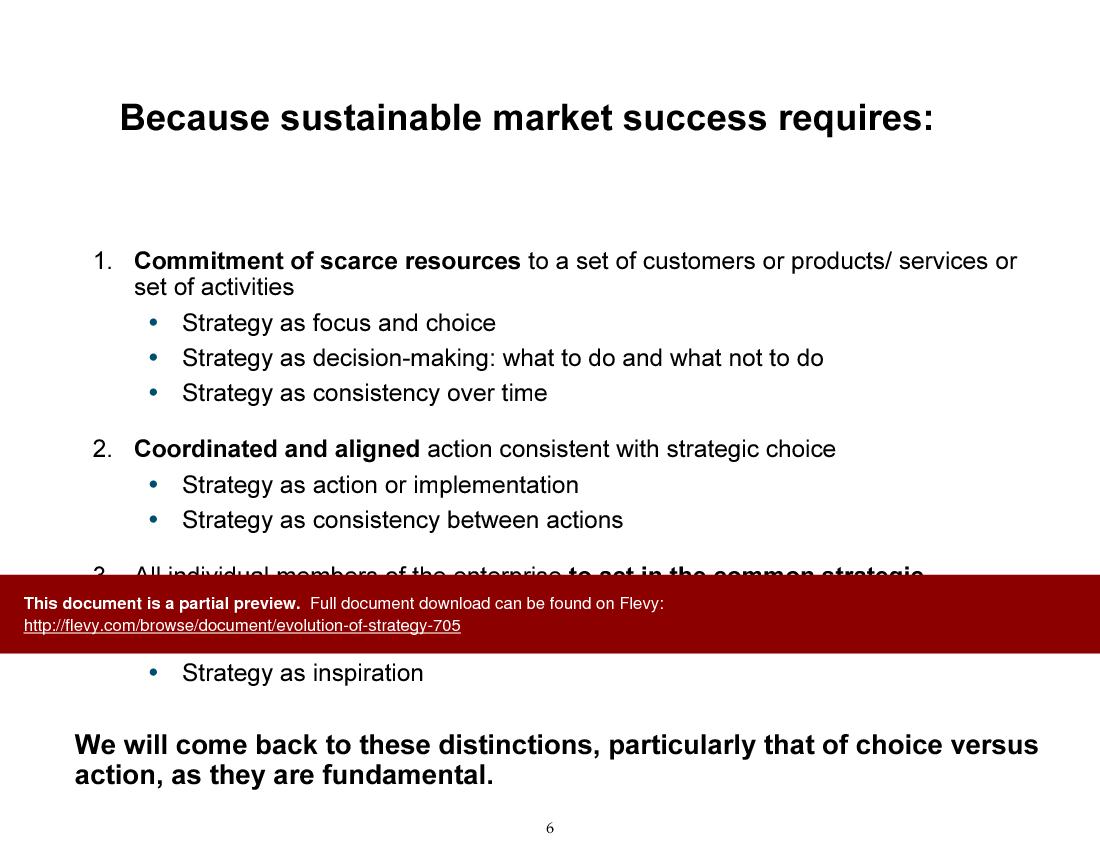
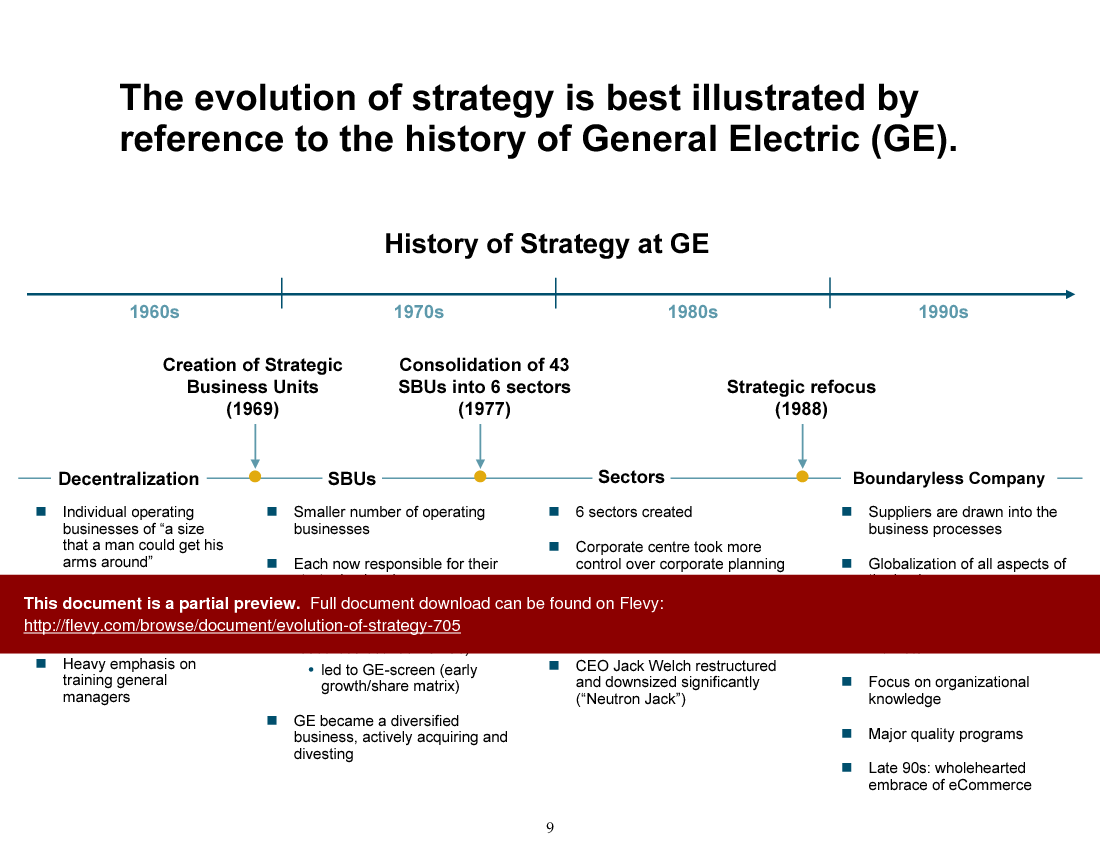
This document delves into the critical elements required for sustainable market success, emphasizing the commitment of scarce resources and the alignment of actions with strategic choices. It highlights the importance of consistency in decision-making and the need for coordinated actions across the organization. The presentation also explores the evolution of strategy through the lens of General Electric, showcasing key milestones such as decentralization, the creation of strategic business units, and the shift towards a boundaryless company model.
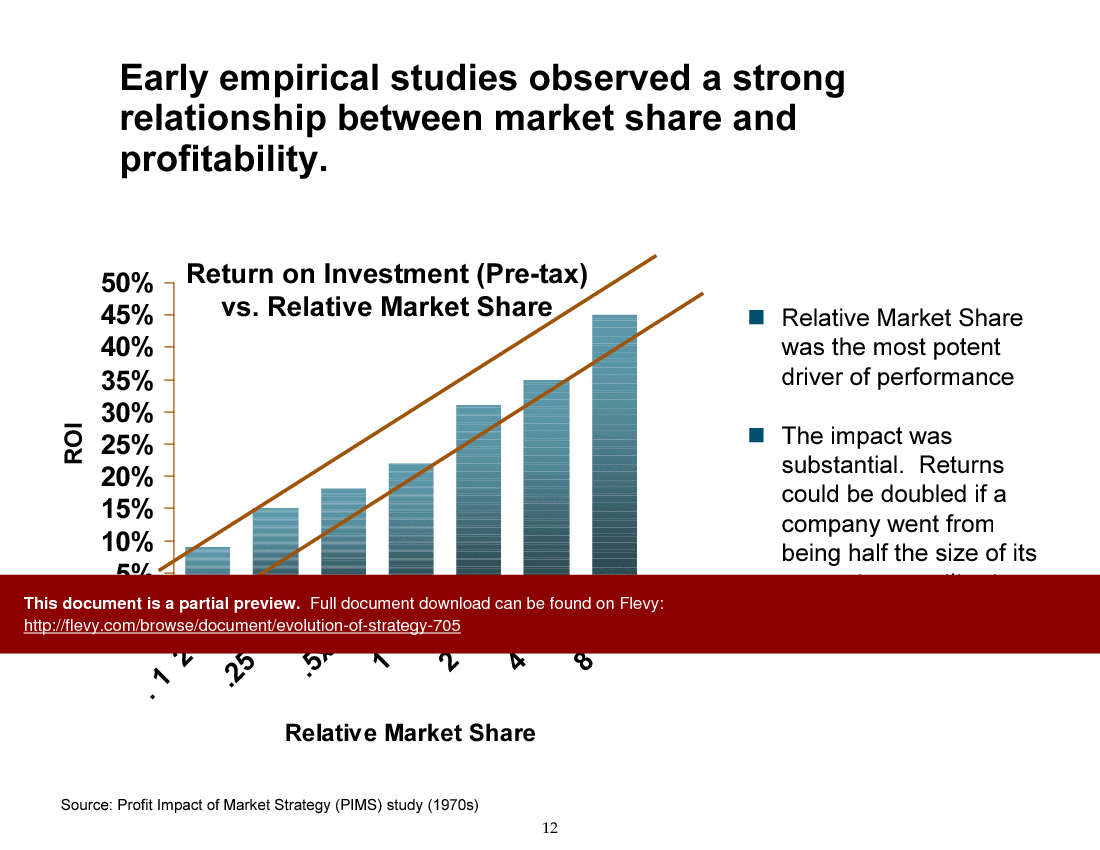
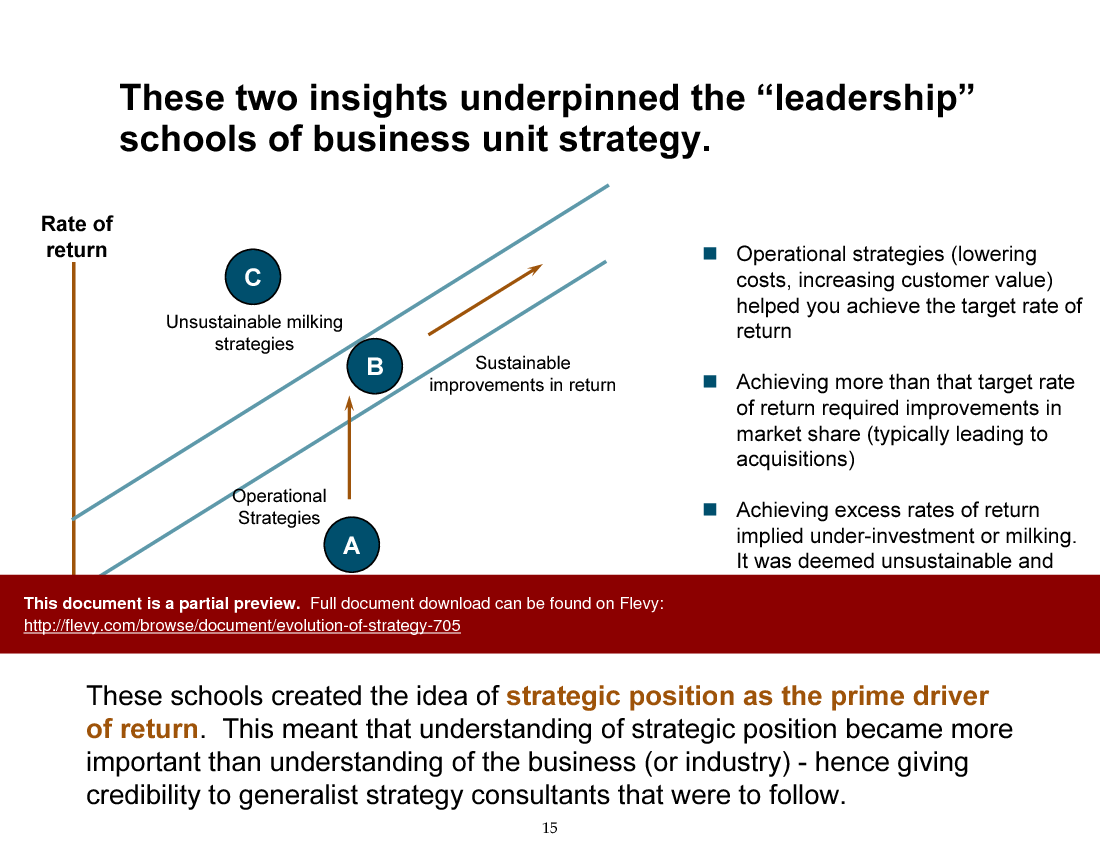
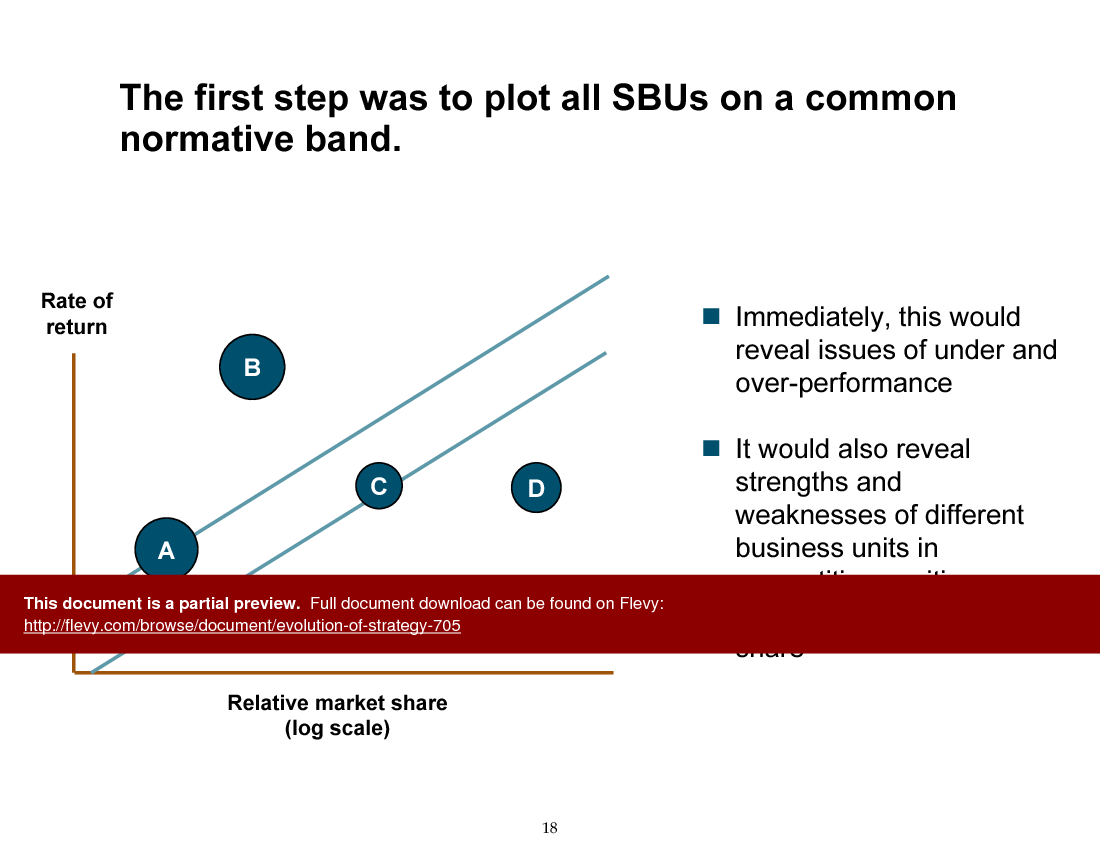
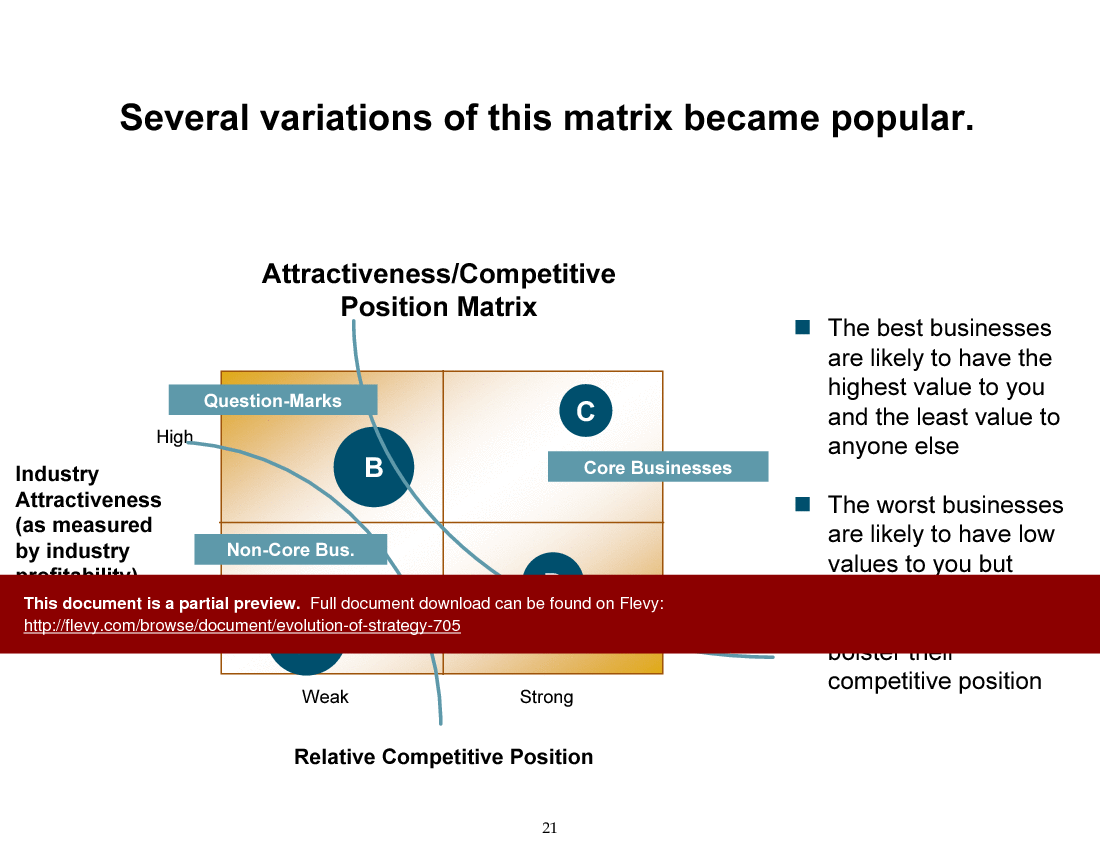
The analysis includes empirical studies that demonstrate the strong relationship between market share and profitability. It underscores the significance of strategic positioning as a primary driver of return, which has led to the development of various strategic matrices and models. These insights are crucial for understanding how businesses can achieve sustainable improvements in return and avoid unsustainable strategies.
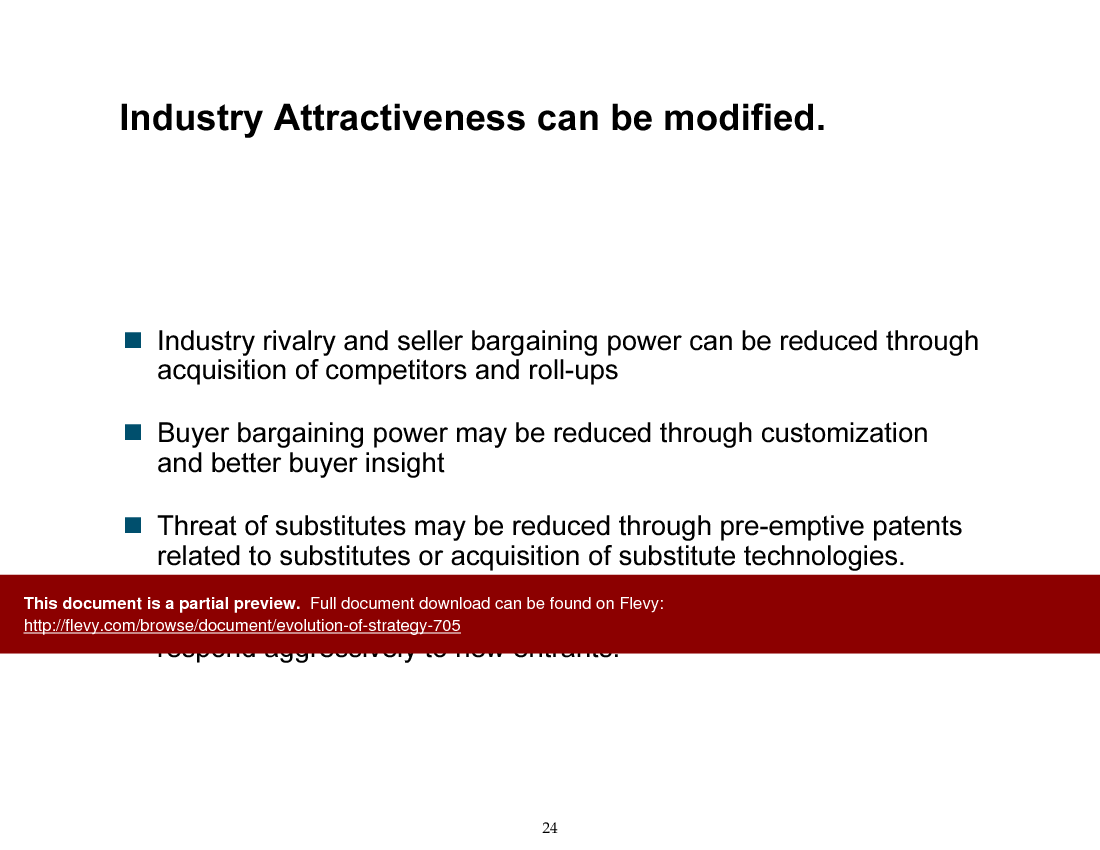
Additionally, the document covers the concept of industry attractiveness and how it can be modified through strategic actions such as acquisitions and customization. It discusses the criticism of strategic planning and the role of value chain analysis in bringing the firm back into the strategy. The presentation concludes with a forward-looking perspective on competing for the future, stressing the need for innovation, venturing, and value networks in the rapidly changing business environment.
Got a question about the product? Email us at support@flevy.com or ask the author directly by using the "Ask the Author a Question" form. If you cannot view the preview above this document description, go here to view the large preview instead.
MARCUS OVERVIEW
This synopsis was written by Marcus [?] based on the analysis of the full 50-slide presentation.
Executive Summary
The "Evolution of Strategy" presentation provides a comprehensive overview of strategic thought development from the 1930s to the present, showcasing insights from leading consultants. This McKinsey, Bain, or BCG-quality (consulting-grade; not affiliated) deck equips analysts and consultants with a deep understanding of various strategic frameworks, including Inside-Out and Outside-In schools of thought. Users will learn to analyze market positioning, make informed strategic choices, and implement sustainable practices that align with evolving market demands.
Who This Is For and When to Use
• Corporate strategists and analysts focused on developing competitive strategies
• Consultants advising clients on strategic planning and execution
• Business leaders seeking to understand historical and contemporary strategic frameworks
• Academic professionals teaching strategy courses in business schools
Best-fit moments to use this deck:
• During strategic planning sessions to inform decision-making
• In workshops aimed at aligning teams on strategic direction
• For educational purposes in strategy courses or training programs
Learning Objectives
• Define the evolution of strategy and its significance in today’s business landscape
• Analyze the distinctions between Inside-Out and Outside-In strategy schools
• Build frameworks for assessing market positioning and competitive advantage
• Establish guidelines for implementing strategic choices effectively
• Identify key historical events that have shaped strategic thinking
• Evaluate the impact of technological advancements on strategic development
Table of Contents
• Introduction to Strategy (page 3)
• Inside-Out Strategy Schools (page 4)
• Outside-In Strategy Schools (page 5)
• Evolution of Strategy Timeline (page 6)
• Winning Strategies (page 11)
• Portfolio Strategies (page 17)
• Porter’s Positioning-based School (page 23)
• Value Chain Analysis (page 33)
• Core Competencies (page 40)
• Strategy as Execution (page 46)
• Summary of Inside-Out Perspective (page 47)
Primary Topics Covered
• What is Strategy? - Strategy is defined as a careful plan or method, emphasizing the importance of differentiation and unique value delivery to customers.
• Inside-Out Strategy Schools - Focus on leveraging internal resources and capabilities to gain competitive advantage.
• Outside-In Strategy Schools - Emphasize market positioning and external competitive factors as primary drivers of strategy.
• Evolution of Strategy Timeline - A historical overview of key events and developments that have influenced strategic thought.
• Winning Strategies - Strategies that consistently yield super-normal returns for shareholders through effective market share management.
• Portfolio Strategies - Frameworks for analyzing business units based on market share and growth potential.
Deliverables, Templates, and Tools
• Strategic framework templates for analyzing Inside-Out and Outside-In strategies
• Portfolio analysis models for assessing business unit performance
• Value chain analysis templates for identifying competitive advantages
• Guidelines for developing winning strategies based on market share
• Frameworks for evaluating core competencies and strategic intent
• Execution plans for implementing strategic initiatives effectively
Slide Highlights
• Overview of the evolution of strategy, highlighting key thinkers and their contributions
• Visual representation of the Growth/Share Matrix and its implications for cash flow planning
• Insights into Michael Porter’s Five Forces framework for industry analysis
• Discussion of the Experience Curve and its impact on cost management
• Summary slide encapsulating the evolution of strategic thought and its relevance today
Potential Workshop Agenda
Understanding Strategy Evolution (90 minutes)
• Discuss the historical context of strategic thought
• Analyze key contributions from prominent strategists
• Explore the implications of the Inside-Out and Outside-In schools
Practical Application of Strategy (60 minutes)
• Break into groups to develop strategic frameworks
• Present findings and discuss implementation strategies
• Identify potential challenges and solutions
Customization Guidance
• Tailor the strategic frameworks to align with specific industry contexts
• Adjust the portfolio analysis models to reflect unique business unit characteristics
• Incorporate company-specific data into the value chain analysis templates
Secondary Topics Covered
• The role of technology in shaping strategic evolution
• The impact of globalization on strategic frameworks
• Trends in strategic planning methodologies
• The importance of organizational culture in strategy execution
• The shift from traditional to agile strategic approaches
Topic FAQ
What are the main differences between Inside-Out and Outside-In strategy schools?
Inside-Out strategy schools prioritize leveraging a firm’s internal resources and capabilities to build advantage, while Outside-In schools prioritize market positioning and external competitive factors as primary drivers of strategy. The distinction is between an internal-resources focus and a market-positioning focus, i.e., Inside-Out versus Outside-In.What frameworks are commonly used for portfolio analysis of business units?
Common portfolio frameworks analyze business units by market share and growth potential; the Growth/Share Matrix is a frequent example, and broader portfolio analysis models support resource allocation and investment decisions. A typical named framework used is the Growth/Share Matrix.How does value chain analysis help identify competitive advantage?
Value chain analysis breaks down firm activities to pinpoint where unique value is created and where cost or differentiation advantages can be developed, helping align actions with strategic choices. Practically, organizations use value chain analysis templates to identify sources of competitive advantage.What is the Experience Curve and why does it matter for strategy?
The Experience Curve describes how unit costs tend to decline as cumulative production experience increases, affecting pricing, scale, and cost-management strategies. Firms use the Experience Curve concept to inform cost leadership and capacity decisions, referencing the Experience Curve in cost-management analysis.What should I look for when choosing a strategy deck or toolkit for a planning workshop?
Seek a deck that provides historical context and timelines, clear Inside-Out and Outside-In frameworks, portfolio and value chain tools, execution planning guidance, and customization instructions for industry context. A suitable toolkit will include portfolio analysis models and execution plans.How can I judge the cost versus value of buying strategy templates?
Assess value by slide count, inclusion of named frameworks and templates (e.g., portfolio models, value chain), customization guidance, and workshop facilitation materials; these features indicate usability for planning and training. One concrete attribute to check is slide count, such as 50 slides.After a merger, which frameworks help decide which business units to keep or divest?
Portfolio strategies that evaluate market share and growth—such as the Growth/Share Matrix and portfolio analysis models—are used to prioritize units for investment, retention, or divestment. Templates for portfolio analysis support these decisions, including the Growth/Share Matrix.How can I teach the historical development of strategic thought in a business course?
Structure lessons around a chronological evolution timeline, introduce key thinkers and the Inside-Out vs Outside-In schools, and pair theory with applied exercises using value chain and portfolio tools; consider the provided workshop agenda split into a 90-minute history session and a 60-minute practical application.Document FAQ
These are questions addressed within this presentation.
What is the significance of understanding the evolution of strategy?
Understanding the evolution of strategy provides context for current practices and helps identify effective frameworks for future challenges.
How do Inside-Out and Outside-In strategies differ?
Inside-Out strategies focus on leveraging internal resources, while Outside-In strategies prioritize market positioning and external competitive factors.
What frameworks are essential for analyzing business units?
Key frameworks include the Growth/Share Matrix, portfolio analysis models, and value chain analysis.
How can I apply the concepts from this presentation to my organization?
Utilize the strategic frameworks and templates provided to assess your organization’s current strategy and identify areas for improvement.
What role does technology play in strategic evolution?
Technology has been a significant driver of change, influencing how strategies are formulated and executed in response to market dynamics.
Why is strategic execution critical?
Effective execution ensures that strategic plans translate into actionable outcomes, driving organizational success and competitive advantage.
How can I measure the success of a strategic initiative?
Success can be measured through key performance indicators (KPIs) aligned with strategic objectives, including market share growth and profitability.
What are core competencies, and why are they important?
Core competencies are unique strengths that provide competitive advantage. They are essential for sustaining long-term success and innovation.
How can I foster a culture of strategic thinking in my organization?
Encourage open communication, collaboration, and continuous learning to promote a culture that values strategic thinking and adaptability.
Glossary
• Strategy - A careful plan or method aimed at achieving specific goals.
• Inside-Out Strategy - A strategic approach focusing on leveraging internal resources for competitive advantage.
• Outside-In Strategy - A strategic approach emphasizing market positioning and external factors.
• Growth/Share Matrix - A portfolio analysis tool that categorizes business units based on market share and growth potential.
• Value Chain - A model for analyzing firm activities to identify sources of competitive advantage.
• Core Competencies - Unique strengths and skills that enable a firm to outperform competitors.
• Strategic Intent - A clear and compelling vision that guides an organization’s strategic direction.
• Experience Curve - A concept indicating that unit costs decrease as production experience increases.
• Competitive Advantage - The attributes that allow an organization to outperform its competitors.
• Market Share - The percentage of an industry or market's total sales that is earned by a particular company.
• Execution - The process of implementing a strategic plan effectively.
• Portfolio Analysis - The assessment of a company's business units to inform investment and resource allocation decisions.
• Strategic Planning - The process of defining an organization's strategy and making decisions on allocating resources.
• Emergent Strategy - A strategy that develops over time in response to internal and external factors.
• Operational Strategy - A plan for how to deliver the organization's products or services efficiently.
• Competitive Positioning - The process of establishing a brand or product in a particular market segment.
• Market Position - The perception of a brand or product relative to competitors in the market.
• Sustainable Competitive Advantage - An advantage that allows a company to maintain its market position over time.
• Strategic Choice - The decisions made regarding the direction and scope of an organization.
• Implementation - The process of executing a strategic plan to achieve desired outcomes.
• Strategic Framework - A structured approach to developing and implementing strategies.
STRATEGY DEVELOPMENT PPT SLIDES
Source: Best Practices in Strategy Development PowerPoint Slides: Evolution of Strategy PowerPoint (PPT) Presentation Slide Deck, Documents & Files




























