
This product (Common Consulting Frameworks [How and When to Use]) is a 43-slide PPT PowerPoint presentation slide deck (PPTX), which you can download immediately upon purchase.
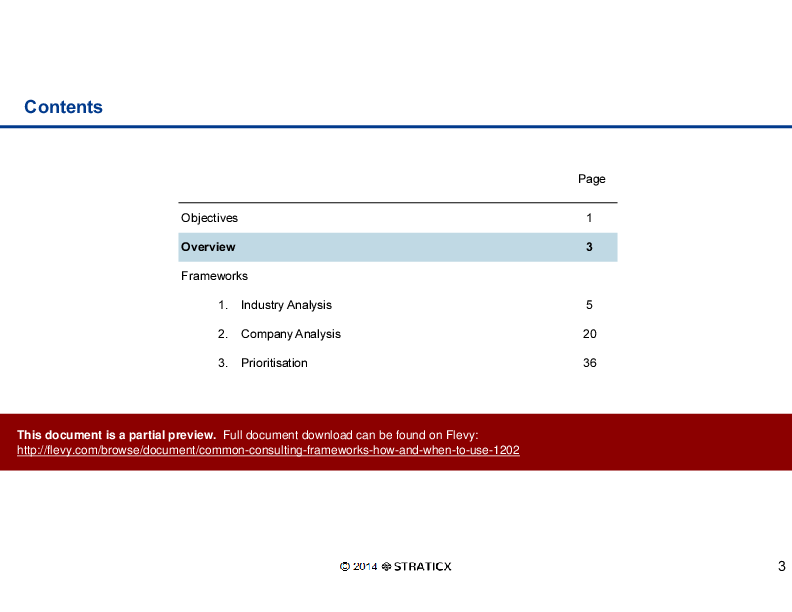
This document provides and overview of over 20 commonly used consulting frameworks. Divided into three sections:
1. Industry Analysis
2. Company Analysis
3. Prioritisation
The objectives of this document are to:
Develop familiarity with common industry / business analysis frameworks
Generate an understanding of advantages / disadvantages of each framework
Provide a starting point for a reference library of commonly used frameworks
This document is equally suitable for those looking to move into consulting, consultants or those in corporate strategy roles.
This PPT delves into the intricacies of industry analysis, utilizing frameworks like the Five Forces Analysis to pinpoint sources of competitive pressure and strategic advantage. It provides a comprehensive template to assess supplier power, threat of substitutes, and barriers to entry, among other factors. This analysis is crucial for understanding market dynamics and positioning your company to defend against competitive forces effectively.
The document also explores the Industry Era Analysis, with a detailed case study on the US airline industry. It examines strategic paradigms, key events, and major players across different regulatory periods. This historical perspective is invaluable for understanding how industry shifts impact competitive strategies and market positioning over time. The inclusion of cost curve analysis further aids in explaining price competitiveness and production cost structures.
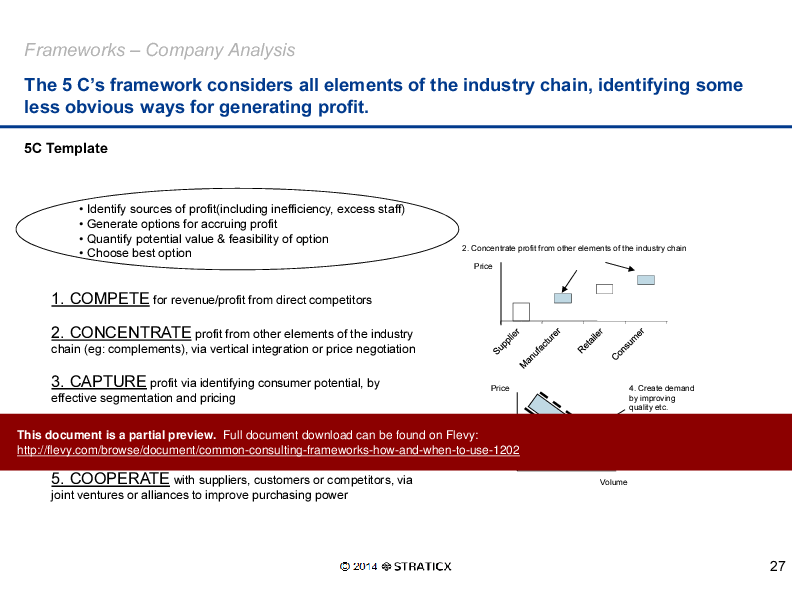
For company analysis, the document introduces frameworks like the AcdB template for strategic planning and the 7S template for organizational alignment. These tools help in defining current status, setting future goals, and devising actionable plans. The 5C's framework is particularly useful for identifying profit generation opportunities across the industry chain. Stakeholder analysis is also covered, providing insights into managing pressures from various constituents and leveraging degrees of freedom available to the company.
Got a question about the product? Email us at support@flevy.com or ask the author directly by using the "Ask the Author a Question" form. If you cannot view the preview above this document description, go here to view the large preview instead.
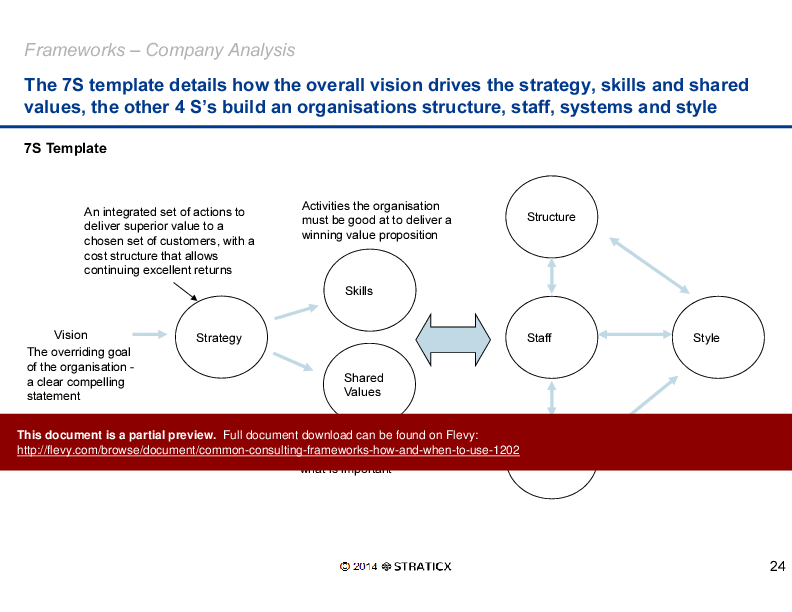
This PPT slide presents the 7S framework, a strategic model that illustrates how an organization's vision influences its overall strategy and operational elements. At the center is "Strategy," which is defined as an integrated set of actions aimed at delivering exceptional value to a specific customer base while maintaining a sustainable cost structure. This highlights the importance of aligning strategic objectives with customer needs.
Surrounding the central strategy are 5 interconnected components: Skills, Shared Values, Structure, Staff, and Systems. Each of these elements plays a critical role in shaping the organization. "Skills" refers to the essential activities the organization must excel at to provide a compelling value proposition. This suggests that identifying and developing core competencies is vital for success.
"Shared Values" encapsulates the fundamental beliefs that guide the organization, emphasizing the importance of a cohesive culture. These values serve as the foundation for decision-making and behavior within the company. The "Structure" element pertains to the organizational design, which must support the strategy and facilitate effective communication and workflow.
"Staff" highlights the human resources aspect, indicating that the right people in the right roles are crucial for executing the strategy. Finally, "Systems" encompasses the processes and technologies that support operations, ensuring that the organization functions efficiently.
The arrows connecting these elements suggest a dynamic interplay, indicating that changes in one area can impact others. This framework serves as a valuable tool for organizations looking to align their vision with practical execution, making it relevant for executives seeking to enhance organizational effectiveness.
The Directional Policy Matrix (DPM) serves as a strategic tool for evaluating business segments or industries, offering a more detailed analysis compared to the BCG matrix. Originally developed by Shell, the DPM incorporates a manufacturing perspective, which may influence its applicability across different sectors. The framework aligns with principles from Porter's analysis, focusing on long-term profitability and market positioning.
This PPT slide outlines how the DPM categorizes market sectors based on 2 axes: market attractiveness and competitive position. The matrix is divided into quadrants that suggest specific strategic actions. For segments deemed unattractive and weak, the recommendation is to divest or consider a phased withdrawal. This indicates a cautious approach, suggesting that resources should be reallocated to more promising areas.
In contrast, segments that are attractive and strong are categorized as leaders, where growth strategies are encouraged. The slide emphasizes that investment should be prioritized in these areas to maximize returns. It also notes that businesses in the average category should proceed with care, balancing risk and opportunity.
The DPM's structured approach allows for a quantifiable assessment of market potential, guiding executives in making informed decisions about resource allocation. By weighting and ranking criteria, organizations can better understand where to focus their efforts for optimal growth. This slide provides valuable insights for decision-makers looking to prioritize investments and strategically manage their portfolios.
This PPT slide presents a life cycle analysis specifically for the U.S. airline industry, emphasizing the significance of product lifecycle in assessing profitability and growth trends. The vertical axis represents sales, while the horizontal axis indicates time, illustrating the evolution of various aircraft models over the years.
Key milestones are marked, such as the 1978 deregulation, which appears to have had a substantial impact on the industry's growth trajectory. The graph indicates that following deregulation, there was a notable increase in sales, likely due to heightened competition and expanded market access. The mention of "Increased Plane Capacity" suggests that advancements in technology and operational efficiencies contributed to this growth phase.
The slide also highlights specific aircraft models, including the 707, DC-8, 727, 737, and DC-9, each representing different phases in the lifecycle. The peaks and troughs in the graph illustrate how demand for these models fluctuated over time, reflecting broader trends in consumer preferences and technological advancements. The section labeled "Demand Life Cycles" indicates that as certain models reached maturity, others began to emerge, showcasing the cyclical nature of the industry.
The analysis underscores the importance of understanding these life cycles when making strategic decisions. Companies can better position themselves by recognizing when to innovate or phase out older models. This insight can lead to improved resource allocation and enhanced market responsiveness. The slide serves as a valuable tool for executives looking to navigate the complexities of the airline sector and optimize their strategic planning.
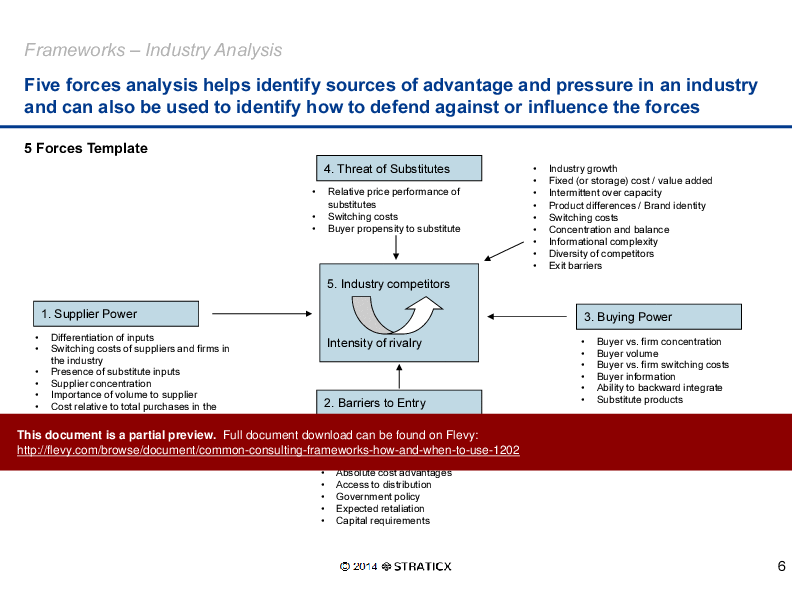
This PPT slide presents a framework for industry analysis known as the "Five Forces Analysis." This model is instrumental in identifying various dynamics that shape competition within an industry. Each of the 5 forces is outlined, providing a structured approach to assess the competitive environment.
The first force, "Supplier Power," emphasizes the influence suppliers have on pricing and quality. Factors such as the differentiation of inputs and the concentration of suppliers are critical. A high supplier concentration can lead to increased costs for firms, impacting their overall profitability.
Next is "Barriers to Entry," which highlights the challenges new entrants face when trying to penetrate an industry. Elements like economies of scale and brand identity play a significant role in determining how easily new competitors can enter the market. High barriers typically protect existing firms from new competition.
The third force, "Buying Power," examines the leverage customers have over suppliers. This includes considerations like buyer concentration and the ability to switch suppliers. High buyer power can pressure firms to lower prices or enhance service offerings.
"Threat of Substitutes" is the fourth force, focusing on the availability of alternative products that can fulfill the same need. The relative price performance of substitutes and switching costs are key factors that influence this dynamic.
Finally, "Industry Competitors" looks at the intensity of rivalry among existing firms. Factors such as industry growth and product differentiation contribute to the level of competition. Understanding these forces allows firms to strategize effectively, ensuring they can defend their position or influence market dynamics.
This PPT slide focuses on the challenge of creating demand for mobile phones by identifying barriers to purchase. It highlights that the primary obstacle is a perceived lack of need among potential customers. This insight is crucial for strategizing how to stimulate demand effectively.
The slide presents a breakdown of reasons why consumers do not purchase mobile phones, with a significant 65% indicating low need as the main factor. Other reasons include perceptions of high cost (26%) and the weight of the device (19%). This data suggests that addressing the perceived need is essential for increasing market penetration.
The strategic challenge outlined is to circumvent and neutralize these barriers. The option matrix provides a framework for evaluating different strategic options based on their potential to increase demand. Three options are presented: a customer education program, a loyalty program, and the addition of product features. Each option is associated with projected costs and potential increases in demand over the current year and over 5 years.
The option matrix indicates that adding product features is the most attractive strategy, with the highest potential for new business and a favorable return on investment. This suggests that enhancing product offerings could be a key driver in shifting consumer perceptions and ultimately increasing sales.
Overall, the slide serves as a strategic tool for executives looking to understand and address the barriers to mobile phone purchases, emphasizing the importance of perceived need and the potential impact of product enhancements.
This PPT slide presents a cost curve analysis specific to the copper industry, illustrating the relationship between cumulative production output and full cost per pound. The graph features 2 demand lines: the older demand curve labeled "Demand_old" and a new demand curve labeled "Demand_new." The increase in copper demand is highlighted as a key factor that has facilitated the entry of new players into the market, who tend to have higher costs associated with their operations.
The vertical axis indicates the full cost in cents per pound, ranging from 42 to 85 cents, while the horizontal axis represents cumulative production output, with values marked at various intervals. The cost structure is depicted through a series of bars, each corresponding to different output levels, showing how costs evolve as production increases. The bars indicate that as cumulative output rises, the full cost initially decreases, reflecting economies of scale, before leveling off or increasing at higher output levels.
The graph suggests that the new demand has shifted the cost dynamics, allowing entrants with higher operational costs to participate in the market. This shift implies a transformation in the industry, where traditional cost structures may no longer apply, and new strategies may be necessary for existing players to remain competitive. The visual representation effectively communicates the impact of demand fluctuations on cost structures, providing valuable insights for stakeholders considering their positioning in the copper market.
This PPT slide presents a framework for supply chain analysis, focusing on the degree of vertical integration and market concentration among various players. The structure is divided into distinct stages: Suppliers, Manufacturers, Distributors, Retailers, and Consumers. Each stage is represented in a way that allows for a clear visual representation of market share distribution.
The text highlights that this technique enables a detailed examination of how concentrated the market is at each stage of the supply chain. It emphasizes the importance of understanding the relative positions of different entities, which can influence strategic decision-making. The company in question is noted to be heavily involved in 2 stages of the supply chain, although its market position varies significantly across these stages. This suggests that while the company may have a strong presence, its influence and operational dynamics can differ based on the specific context of each stage.
The slide also indicates that various players are represented within the supply chain, with specific references to market share percentages. This level of detail can help executives identify potential areas for growth or consolidation. By analyzing the positions of competitors and partners, executives can make informed decisions about resource allocation, partnership opportunities, and strategic initiatives.
Overall, the slide serves as a valuable tool for executives looking to understand the complexities of their supply chain and the implications of market dynamics on their business strategy.
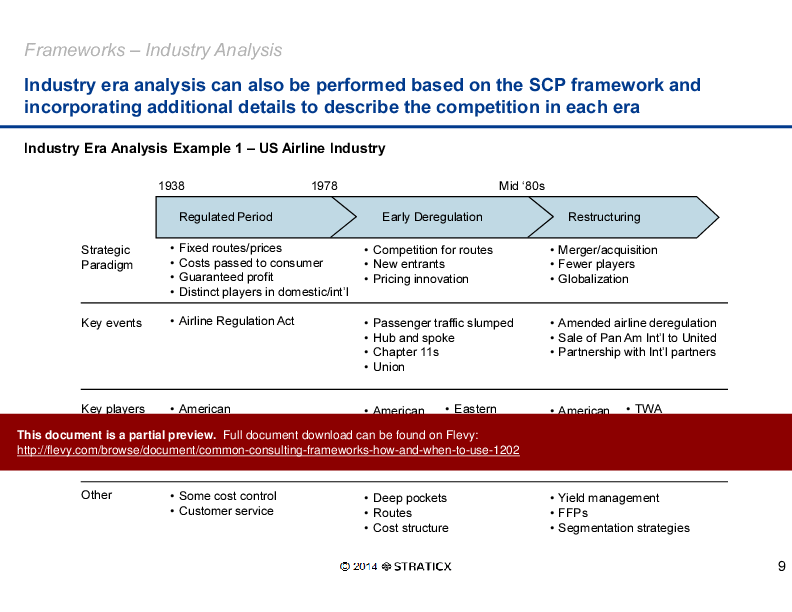
This PPT slide presents an analysis of the U.S. airline industry through the lens of the SCP (Structure-Conduct-Performance) framework, detailing the evolution of the industry across different periods. It is structured into 4 main eras: the Regulated Period, Deregulation, Market Expansion, Price War, and Consolidation. Each era highlights the strategic paradigms, key events, key players, and other relevant factors that shaped the industry.
During the Regulated Period, the focus was on service and passing costs to customers, with significant players including the government and major airlines. Key events like the introduction of the propeller to jet technology and oil shocks were pivotal. As the industry transitioned to Deregulation, the paradigm shifted to route acquisition and price competition, leading to an influx of new entrants and a focus on marketing strategies.
The Market Expansion phase saw an increase in travel, while the Price War emphasized competitive pricing among airlines, including the rise of discount airlines. The slide notes that major airlines had to adapt to these changes, often leading to bankruptcies and alliances during the Consolidation phase. This final phase reflects a trend towards larger entities concentrating on core business operations.
The slide effectively encapsulates the dynamic nature of the airline industry, illustrating how external events and strategic decisions influence market behavior. For potential customers, this analysis serves as a comprehensive overview of the industry's historical context and competitive dynamics, providing valuable insights for strategic decision-making. Understanding these shifts can guide future investments and operational strategies in the airline sector.
MARCUS OVERVIEW
This synopsis was written by Marcus [?] based on the analysis of the full 43-slide presentation.
Executive Summary
This presentation titled "Common Consulting Frameworks (How and When to Use)" provides a detailed exploration of over 20 essential consulting frameworks for industry and company analysis, structured in a manner reflective of McKinsey, Bain, or BCG-quality presentations (consulting-grade; not affiliated). It equips corporate executives, integration leaders, and consultants with the tools necessary for strategic decision-making. Users will gain insights into various frameworks, their advantages and disadvantages, and practical applications for enhancing business analysis and strategic planning.
Who This Is For and When to Use
• Corporate executives seeking to enhance strategic decision-making capabilities.
• Integration leaders responsible for aligning business strategies across teams.
• Consultants aiming to provide structured analysis and recommendations.
• Business analysts looking to deepen their understanding of analytical frameworks.
Best-fit moments to use this deck:
• During strategic planning sessions to identify the most suitable frameworks for analysis.
• When conducting industry or company assessments to inform decision-making.
• In workshops aimed at enhancing team capabilities in strategic analysis.
Learning Objectives
• Define key consulting frameworks and their applications in business analysis.
• Analyze the advantages and disadvantages of each framework for informed decision-making.
• Develop familiarity with industry and company analysis methodologies.
• Generate actionable insights from framework applications to drive strategic initiatives.
• Establish a reference library of commonly used frameworks for ongoing use.
• Create tailored strategies based on framework insights to address specific business challenges.
• Industry Analysis - A collection of frameworks designed to evaluate industry dynamics, including Five Forces, SCP, and Market Attractiveness.
• Company Analysis - Frameworks such as SWOT, 7S, and Value Chain that facilitate internal assessments and strategic planning.
• Prioritisation - Tools like the BCG Matrix and Directional Policy Matrix that assist in evaluating and prioritizing business units or projects.
Deliverables, Templates, and Tools
• Five Forces analysis template for assessing industry competition.
• SCP model to illustrate the relationship between industry structure, conduct, and performance.
• SWOT analysis template for identifying strengths, weaknesses, opportunities, and threats.
• 7S framework for evaluating organizational alignment and effectiveness.
• BCG Matrix for categorizing business units based on market share and growth potential.
• Directional Policy Matrix for prioritizing strategic initiatives based on market attractiveness and competitive position.
Slide Highlights
• Overview of the Five Forces framework, illustrating competitive pressures in an industry.
• SCP model slide detailing how industry structure influences conduct and performance.
• SWOT analysis example featuring Coca-Cola's strategic challenges and opportunities.
• 7S framework slide showcasing the interrelationship between strategy, structure, and culture.
• BCG Matrix slide categorizing business units into Stars, Cash Cows, Question Marks, and Dogs.
Potential Workshop Agenda
Introduction to Consulting Frameworks (30 minutes)
• Overview of the importance of consulting frameworks in strategic analysis.
• Discussion of key frameworks and their applications.
Framework Application Session (60 minutes)
• Breakout groups to apply selected frameworks to real-world business scenarios.
• Presentation of group findings and recommendations.
Framework Prioritization Workshop (45 minutes)
• Interactive session to prioritize frameworks based on organizational needs.
• Development of action plans for implementing selected frameworks.
Customization Guidance
• Tailor the framework examples to align with specific industry contexts or business challenges.
• Adjust the prioritization criteria based on organizational goals and resource availability.
• Incorporate company-specific data into the analysis templates for more relevant insights.
Secondary Topics Covered
• Market Attractiveness analysis and its impact on strategic positioning.
• Segmentation frameworks for identifying target markets and customer needs.
• Stakeholder analysis for understanding external pressures and influences.
• Product lifecycle considerations in strategic planning.
• Supply chain analysis for evaluating operational efficiencies.
FAQ
What are the key frameworks included in this presentation?
The presentation covers various frameworks, including Five Forces, SCP, SWOT, 7S, BCG Matrix, and Directional Policy Matrix, among others.
How can these frameworks be applied in practice?
These frameworks can be utilized for industry analysis, company assessments, strategic planning, and prioritization of initiatives.
What is the benefit of using consulting frameworks?
Consulting frameworks provide structured methodologies for analyzing complex business situations, facilitating informed decision-making.
Can the frameworks be customized for specific industries?
Yes, the frameworks can be tailored to fit the unique characteristics and challenges of different industries.
How do I choose the right framework for my analysis?
Consider the specific business challenge, the context of the analysis, and the strengths of each framework to determine the most appropriate choice.
Are there any examples of successful framework applications?
Yes, the presentation includes case studies and examples, such as Coca-Cola's SWOT analysis, illustrating practical applications.
What resources are available for further learning?
The presentation serves as a starting point for a reference library of commonly used frameworks, with additional resources available upon request.
How can I ensure effective implementation of these frameworks?
Engage stakeholders, customize the frameworks to fit your organization's needs, and develop clear action plans for implementation.
Glossary
• Five Forces - A framework for analyzing industry competition and dynamics.
• SCP Model - Structure-Conduct-Performance model illustrating industry relationships.
• SWOT - A strategic planning tool for identifying strengths, weaknesses, opportunities, and threats.
• 7S Framework - A model for evaluating organizational alignment across 7 elements.
• BCG Matrix - A tool for categorizing business units based on market share and growth potential.
• Directional Policy Matrix - A framework for prioritizing business segments based on attractiveness and competitive position.
• Market Attractiveness - Factors influencing the desirability of an industry for investment.
• Segmentation - The process of dividing a market into distinct groups for targeted strategies.
• Stakeholder Analysis - An assessment of the influence and impact of various stakeholders on a business.
• Product Lifecycle - The stages a product goes through from introduction to decline.
• Supply Chain Analysis - An evaluation of the flow of goods and services from suppliers to customers.
• Value Chain - A model for analyzing the specific activities through which firms create value.
Source: Best Practices in Strategy Frameworks, Consulting Training, Company Analysis, Bain PowerPoint PowerPoint Slides: Common Consulting Frameworks (How and When to Use) PowerPoint (PPTX) Presentation Slide Deck, STRATICX
Straticx is redefining strategy and innovation consulting through online access to high value consulting partners, who work with senior executives and boards of corporations to frame key business issues, develop hypothesis, apply structured problem solving and commercial acumen to drive development of solutions. The partners all have 10+ consulting experience covering a broad range of sectors and
... [read more] have delivered a range of engagements such as corporate and business unit strategy, business transformation, business case development, M&A, and operational improvement.
Since 2012, we have provided best practices to over 10,000 businesses and organizations of all sizes, from startups and small businesses to the Fortune 100, in over 130 countries.
"FlevyPro has been a brilliant resource for me, as an independent growth consultant, to access a vast knowledge bank of presentations to support my work with clients. In terms of RoI, the value I received from the very first presentation I downloaded paid for my subscription many times over! The
quality of the decks available allows me to punch way above my weight – it's like having the resources of a Big 4 consultancy at your fingertips at a microscopic fraction of the overhead.
"
– Roderick Cameron, Founding Partner at SGFE Ltd
"As a small business owner, the resource material available from FlevyPro has proven to be invaluable. The ability to search for material on demand based our project events and client requirements was great for me and proved very beneficial to my clients. Importantly, being able to easily edit and tailor
the material for specific purposes helped us to make presentations, knowledge sharing, and toolkit development, which formed part of the overall program collateral. While FlevyPro contains resource material that any consultancy, project or delivery firm must have, it is an essential part of a small firm or independent consultant's toolbox.
"
– Michael Duff, Managing Director at Change Strategy (UK)
"[Flevy] produces some great work that has been/continues to be of immense help not only to myself, but as I seek to provide professional services to my clients, it gives me a large "tool box" of resources that are critical to provide them with the quality of service and outcomes they are expecting."
– Royston Knowles, Executive with 50+ Years of Board Level Experience
"Flevy.com has proven to be an invaluable resource library to our Independent Management Consultancy, supporting and enabling us to better serve our enterprise clients.
The value derived from our [FlevyPro] subscription in terms of the business it has helped to gain far exceeds the investment made, making a subscription a no-brainer for any growing consultancy – or in-house strategy team."
– Dean Carlton, Chief Transformation Officer, Global Village Transformations Pty Ltd.
"The wide selection of frameworks is very useful to me as an independent consultant. In fact, it rivals what I had at my disposal at Big 4 Consulting firms in terms of efficacy and organization."
– Julia T., Consulting Firm Owner (Former Manager at Deloitte and Capgemini)
"As a young consulting firm, requests for input from clients vary and it's sometimes impossible to provide expert solutions across a broad spectrum of requirements. That was before I discovered Flevy.com.
Through subscription to this invaluable site of a plethora of topics that are key and crucial to consulting, I
have been able to exceed expectations and deliver quality advice and solutions to my clients. The quality and expertise of the authors are exemplary and gives me great confidence to use as part of my service offerings.
I highly recommend this company for any consultant wanting to apply international best practice standards in their service offerings.
"
– Nishi Singh, Strategist and MD at NSP Consultants
"FlevyPro provides business frameworks from many of the global giants in management consulting that allow you to provide best in class solutions for your clients."
– David Harris, Managing Director at Futures Strategy
"I like your product. I'm frequently designing PowerPoint presentations for my company and your product has given me so many great ideas on the use of charts, layouts, tools, and frameworks. I really think the templates are a valuable asset to the job."
– Roberto Fuentes Martinez, Senior Executive Director at Technology Transformation Advisory
Save with Bundles
This document is available as part of the following discounted bundle(s):
Download our free compilation of 50+ Strategy & Transformation slides and templates. Frameworks include McKinsey 7-S, Balanced Scorecard, Disruptive Innovation, BCG Curve, and many more.