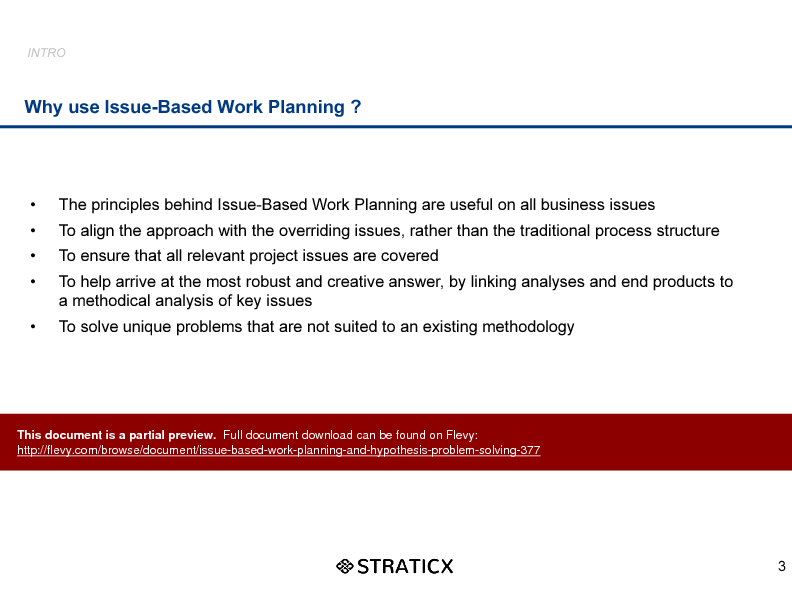
The principles behind Issue-Based Work Planning are a powerful concept for use on all business issues and help to align the approach with the overriding issues, rather than the traditional process structure.
They help ensure that all relevant project issues are covered and to arrive at the most robust and creative answer, by linking analyses and end products to a methodical analysis of key issues.
This powerpoint is suitable for anyone who is looking for a robust methodology to solve the most complex of issues.
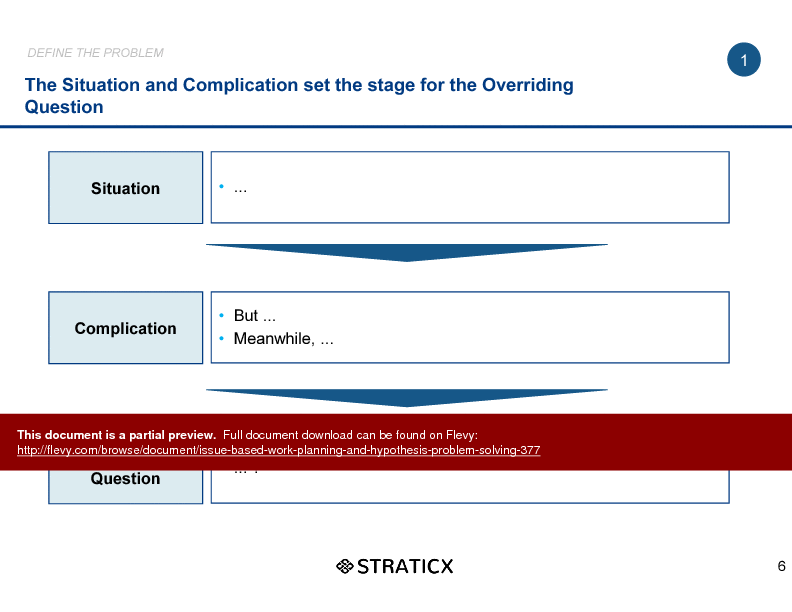
This document provides a structured approach to dissecting complex business problems by breaking them down into manageable components. By defining the situation and identifying complications, it sets the stage for formulating the overriding question that drives the analysis. This method ensures that every angle of the problem is explored, leading to more comprehensive and effective solutions.
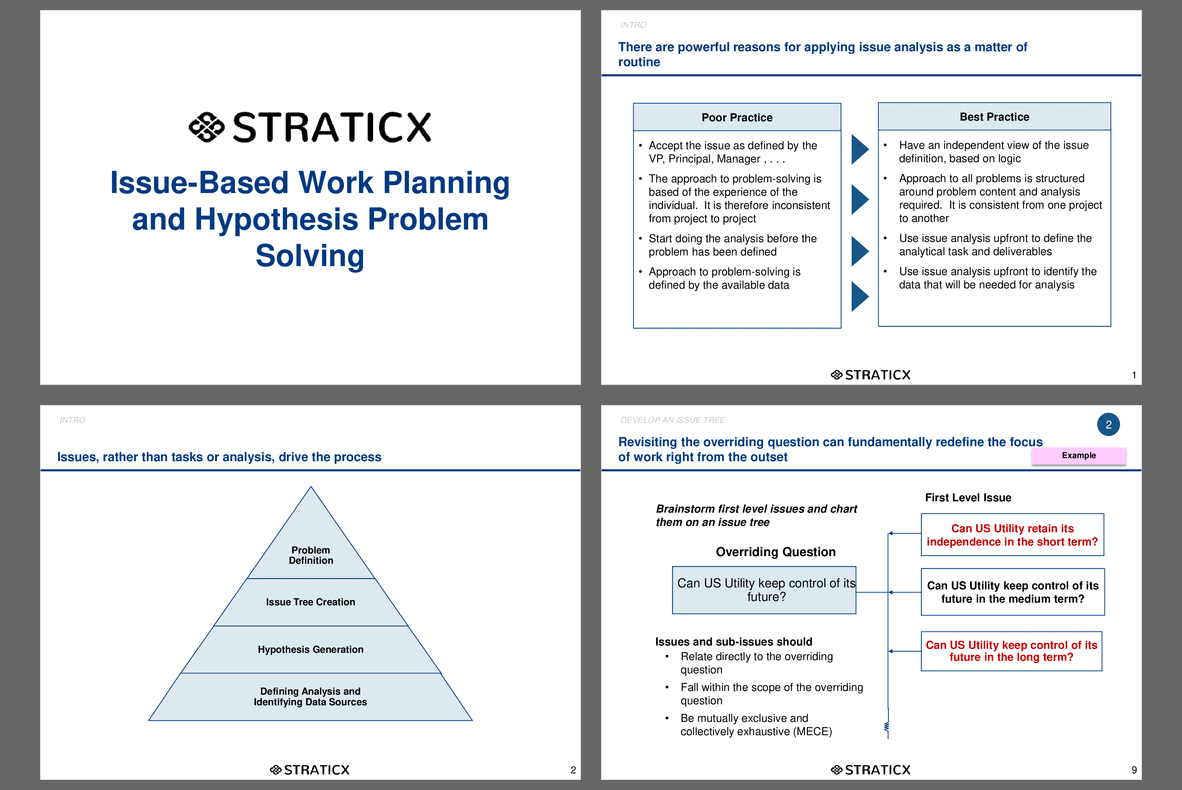
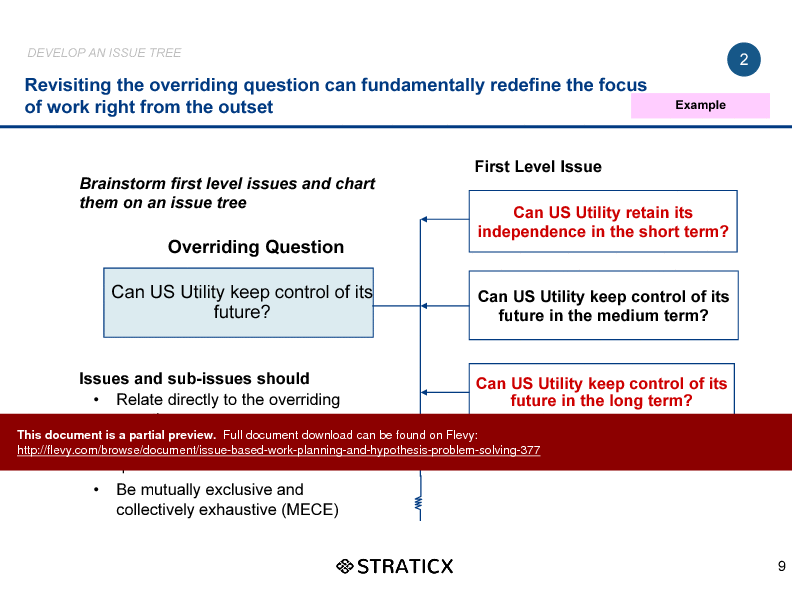
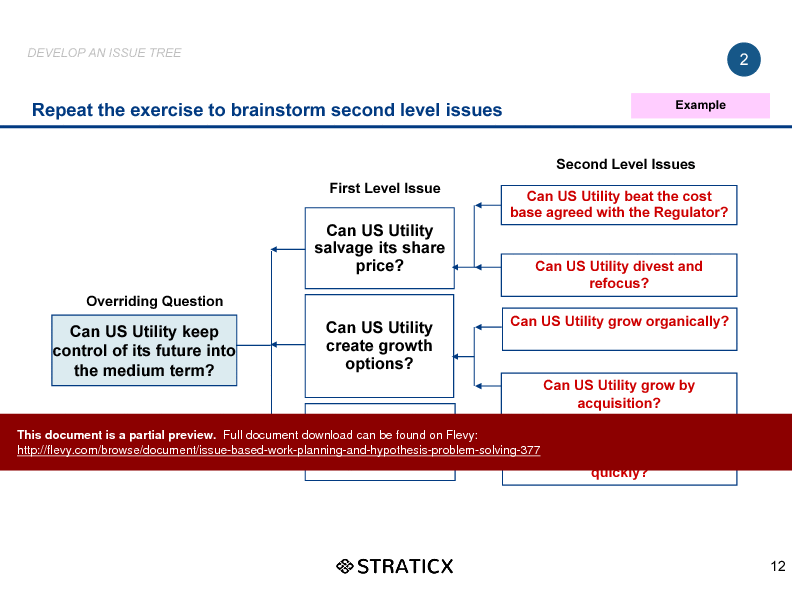
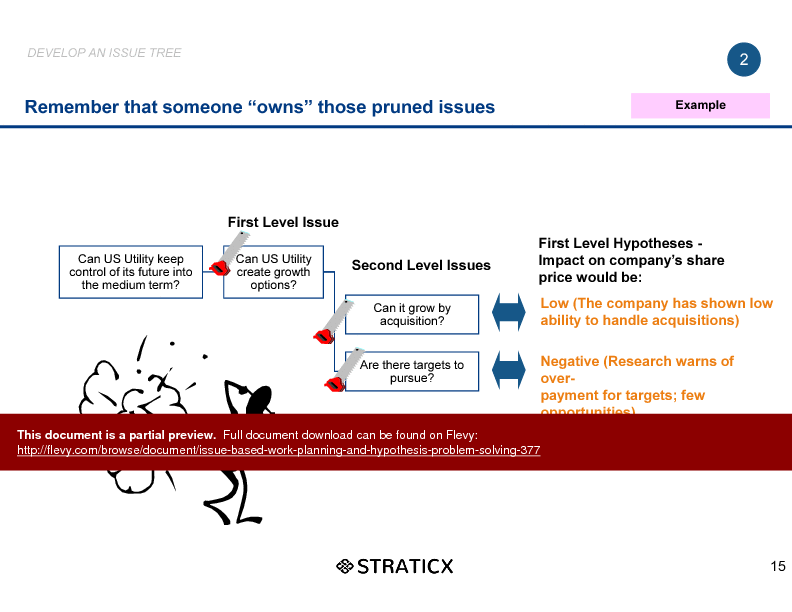
The use of issue trees allows for a systematic exploration of first and second-level issues, ensuring that all potential factors are considered. This hierarchical approach not only clarifies the problem, but also helps in identifying the most critical issues that need immediate attention. The document emphasizes the importance of revisiting the overriding question to refine the focus of the work continuously.
Hypothesis generation and validation are key components of this methodology. By establishing clear, testable hypotheses, the framework ensures that solutions are not only innovative, but also practical and actionable. The matrix of data sources further aids in gathering relevant data efficiently, making the analysis both robust and reliable. This document is an essential tool for executives looking to tackle complex business challenges with a structured, methodical approach.
Got a question about the product? Email us at support@flevy.com or ask the author directly by using the "Ask the Author a Question" form. If you cannot view the preview above this document description, go here to view the large preview instead.
Executive Summary
This presentation on Issue-Based Work Planning and Hypothesis Problem Solving is crafted in a consulting-grade format, akin to McKinsey, Bain, or BCG-quality materials (not affiliated). It provides a structured methodology for tackling complex business issues by emphasizing the importance of defining problems clearly and developing hypotheses to guide analysis. Buyers will learn how to create issue trees, generate actionable hypotheses, and align their analyses with key business questions, ultimately leading to more robust and creative solutions.
Who This Is For and When to Use
• Corporate executives seeking to enhance problem-solving capabilities within their teams
• Consultants aiming to implement a structured approach to complex issues
• Project managers responsible for guiding teams through analytical tasks
• Business analysts focused on defining and addressing critical business challenges
Best-fit moments to use this deck:
• During project kickoff meetings to establish a clear problem definition
• When facing complex business challenges that require structured analysis
• In workshops aimed at developing team problem-solving skills
Learning Objectives
• Define the problem using a clear and actionable overriding question
• Develop an issue tree that breaks down complex problems into manageable components
• Generate testable hypotheses that guide analytical efforts
• Identify necessary data sources to support hypothesis testing
• Create a detailed work plan that outlines project phases and timelines
• Foster a collaborative environment for brainstorming and refining issues
Table of Contents
• Introduction to Issue-Based Work Planning (page 1)
• Importance of Defining the Problem (page 4)
• Developing an Issue Tree (page 8)
• Generating Hypotheses (page 17)
• Defining Analyses and Data Sources (page 20)
• Developing a Workplan (page 23)
Primary Topics Covered
• Problem Definition - Establishing a clear overriding question that guides the analysis and ensures focus on the decision-maker's needs.
• Issue Tree Creation - Structuring complex problems into first and second-level issues that are mutually exclusive and collectively exhaustive (MECE).
• Hypothesis Generation - Formulating testable hypotheses that provide direction for analysis and decision-making.
• Data Sources Identification - Determining relevant data sources needed to validate or invalidate hypotheses.
• Workplan Development - Creating a detailed project timeline that outlines phases, tasks, and responsibilities.
Deliverables, Templates, and Tools
• Issue tree template for visualizing problem breakdown
• Hypothesis generation framework to guide analytical focus
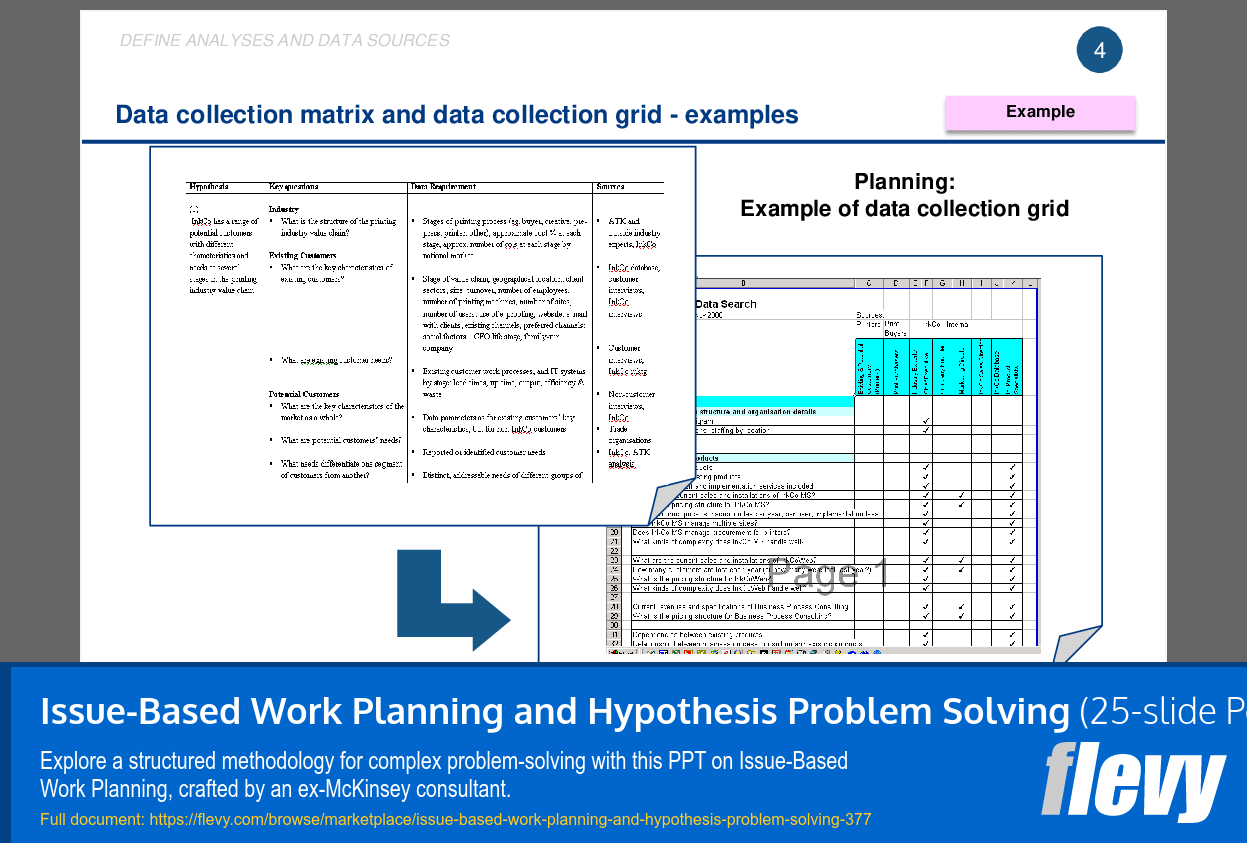
• Data collection matrix for organizing relevant data sources
• Gantt chart template for project planning and tracking
• Brainstorming session guidelines to foster team collaboration
Slide Highlights
• Overview of the Issue-Based Work Planning methodology
• Example of an overriding question and its components
• Visual representation of an issue tree with first and second-level issues
• Criteria for evaluating the quality of hypotheses
• Sample Gantt chart illustrating project phases and timelines
Potential Workshop Agenda
Introduction to Issue-Based Work Planning (30 minutes)
• Overview of the methodology and its importance
• Discussion on the role of problem definition
Developing an Issue Tree (60 minutes)
• Interactive session to create issue trees based on real business challenges
• Group brainstorming to identify first and second-level issues
Hypothesis Generation and Data Sources (45 minutes)
• Workshop on formulating testable hypotheses
• Identification of relevant data sources for analysis
Customization Guidance
• Tailor the overriding question to reflect specific project goals and challenges
• Adjust the issue tree structure to align with the unique context of the business issue
• Modify the Gantt chart to include specific project milestones and deadlines
Secondary Topics Covered
• Best practices for issue analysis in various business contexts
• Techniques for fostering team collaboration during problem-solving
• Strategies for iterative refinement of issue trees and hypotheses
FAQ
What is Issue-Based Work Planning?
Issue-Based Work Planning is a structured methodology that focuses on defining problems clearly and developing hypotheses to guide analysis, ensuring that all relevant issues are addressed.
How do I define a good overriding question?
A good overriding question should be clear, specific, actionable, and focused on what the decision-maker needs to move forward.
What is an issue tree?
An issue tree is a visual representation that breaks down a complex problem into first and second-level issues, ensuring that they are mutually exclusive and collectively exhaustive.
How do I generate testable hypotheses?
Testable hypotheses should address a single issue, be educated guesses, and be structured so they can be proven or disproven through analysis.
What is the purpose of a data collection matrix?
A data collection matrix helps organize relevant data sources needed to validate or invalidate hypotheses, ensuring efficient data gathering.
How can I customize the workplan for my project?
Customize the workplan by adjusting project phases, timelines, and specific tasks to align with your project's unique requirements.
What are the benefits of using an issue-based approach?
An issue-based approach ensures that analyses are aligned with key business questions, leading to more robust and creative solutions.
How can I foster collaboration during the brainstorming process?
Encourage team participation by using structured brainstorming sessions and ensuring that all voices are heard, avoiding the "lone wolf" approach.
Glossary
• Overriding Question - A clear statement of the problem to be solved or issue to be resolved.
• Issue Tree - A visual representation that breaks down complex problems into first and second-level issues.
• Hypothesis - An educated guess that addresses a single issue and can be tested through analysis.
• Data Collection Matrix - A framework for organizing relevant data sources for hypothesis testing.
• Gantt Chart - A visual project management tool that outlines project phases and timelines.
• MECE - An acronym for "Mutually Exclusive, Collectively Exhaustive," a principle for structuring issues.
• Brainstorming - A collaborative technique for generating ideas and solutions.
• Iterative Refinement - The process of continuously improving and adjusting analyses based on new insights.
• Project Phases - Distinct stages in a project, each with specific tasks and objectives.
• Collaboration - Working together as a team to achieve common goals.
• Analytical Task - A specific analysis required to address a defined issue.
• Business Challenge - A complex problem that requires structured analysis to resolve.
• Actionable - Capable of being acted upon or implemented.
• Data Sources - The origins of information needed for analysis.
• Operational Efficiency - The ability to deliver services effectively while minimizing costs.
• Asset Management - The management of a company's investments and resources.
• Regulator - An authority that oversees and enforces compliance within an industry.
• Stakeholder - An individual or group with an interest in the outcome of a project or decision.
• Decision Maker - An individual responsible for making final decisions based on analyses and recommendations.
• Creative Solution - An innovative approach to solving a problem.
• Methodical Analysis - A systematic approach to examining issues and data.
Source: Best Practices in Problem Solving, Work Management, Hypothesis Generation, Bain PowerPoint PowerPoint Slides: Issue-Based Work Planning and Hypothesis Problem Solving PowerPoint (PPTX) Presentation Slide Deck, STRATICX
This document is available as part of the following discounted bundle(s):
Save %!
Consultant Kit
This bundle contains 8 total documents. See all the documents to the right.
Save %!
Complete Kit
This bundle contains 13 total documents. See all the documents to the right.
|
Receive our FREE whitepaper on the Top 101 Consulting Frameworks
Download our 200+ page guide summarizing the Top 101 Management Consulting Frameworks. Each framework provides a structured approach to analyzing and solving a common business problem. |