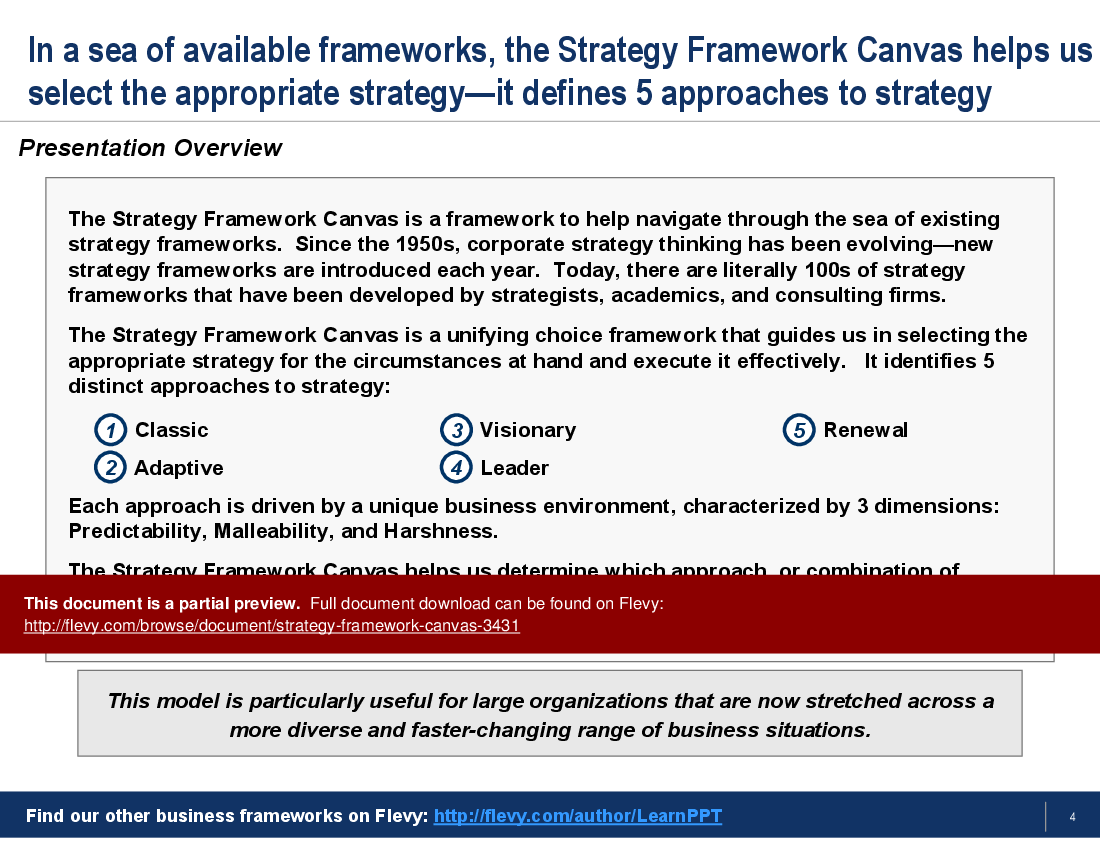
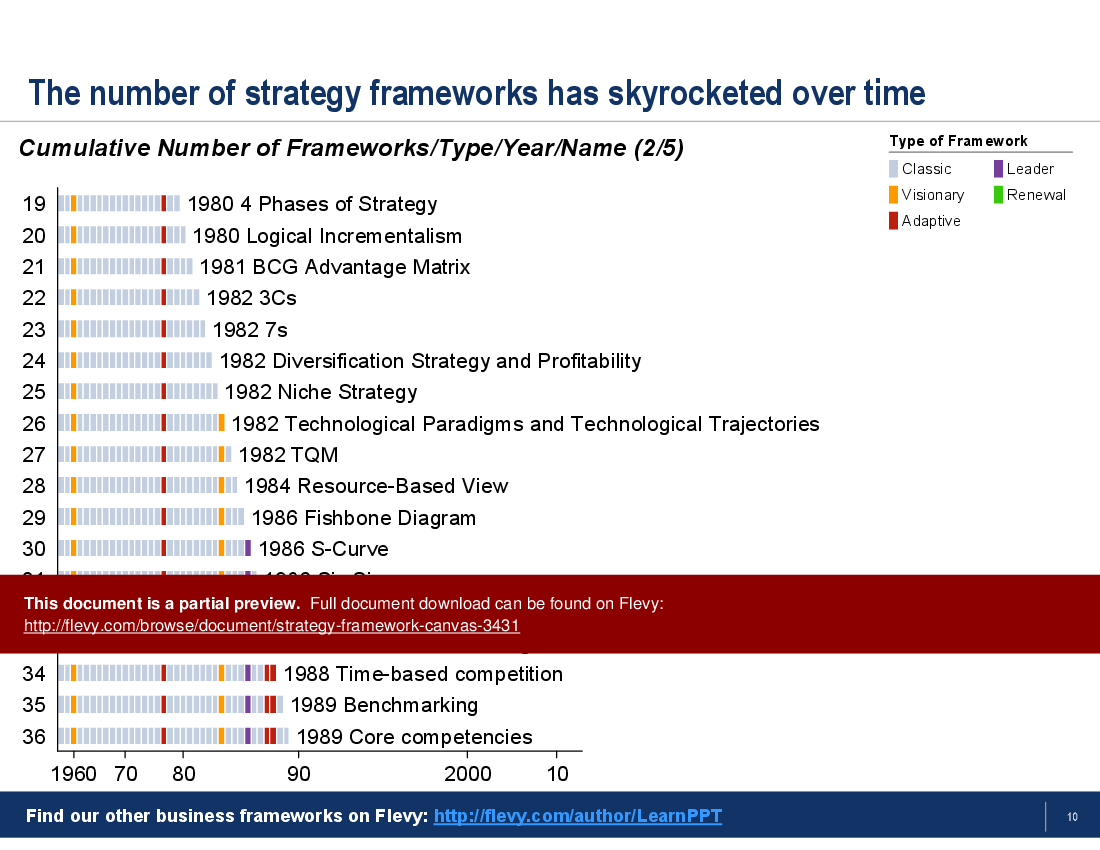
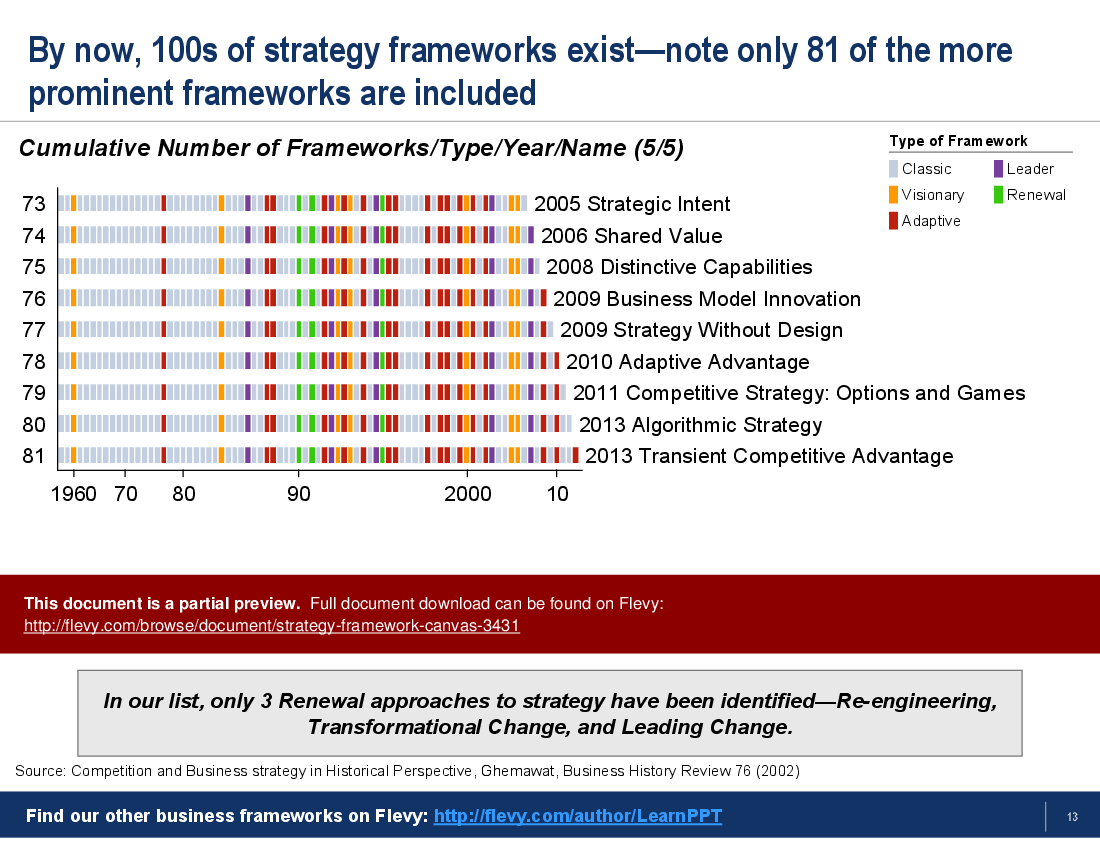
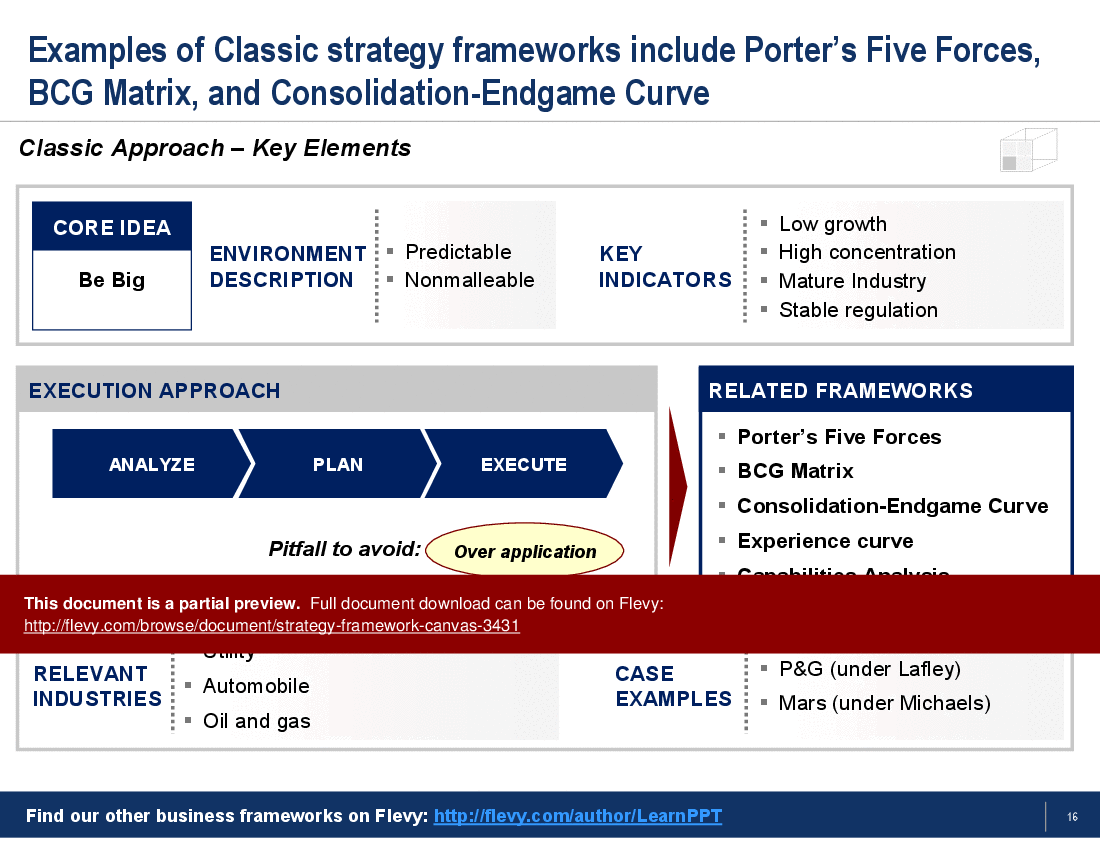
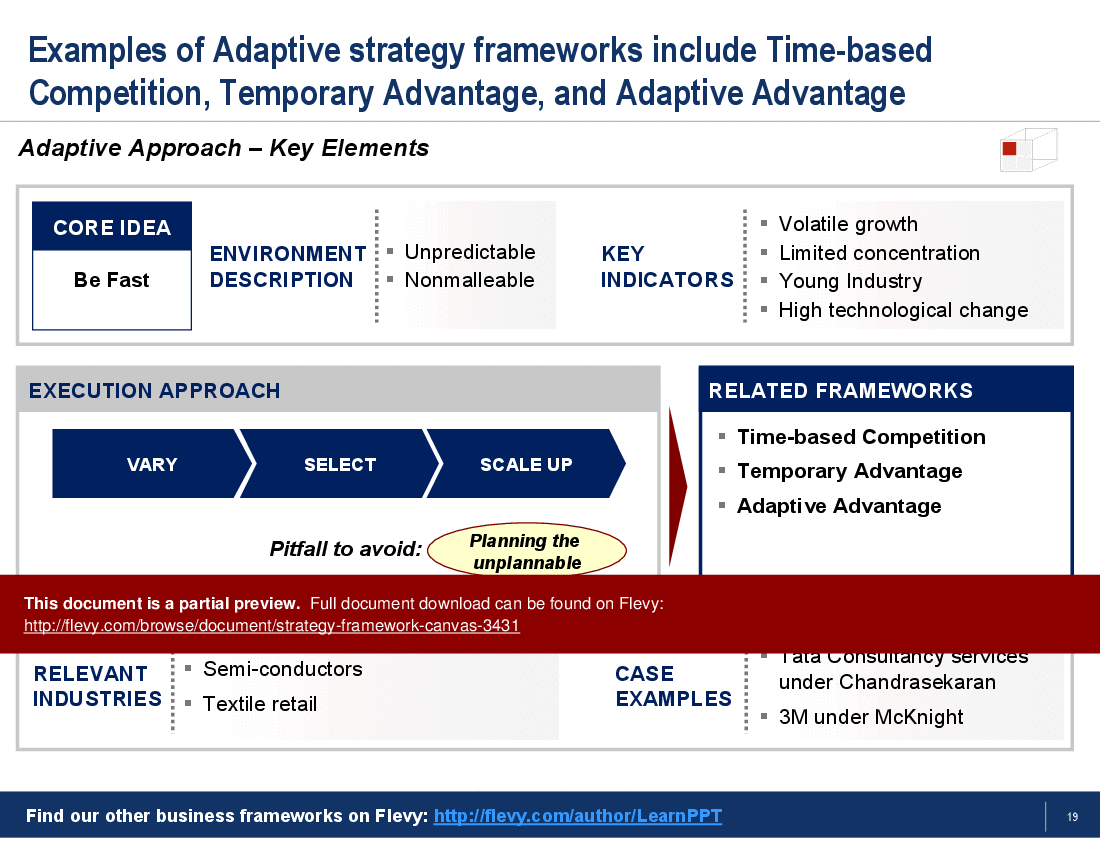
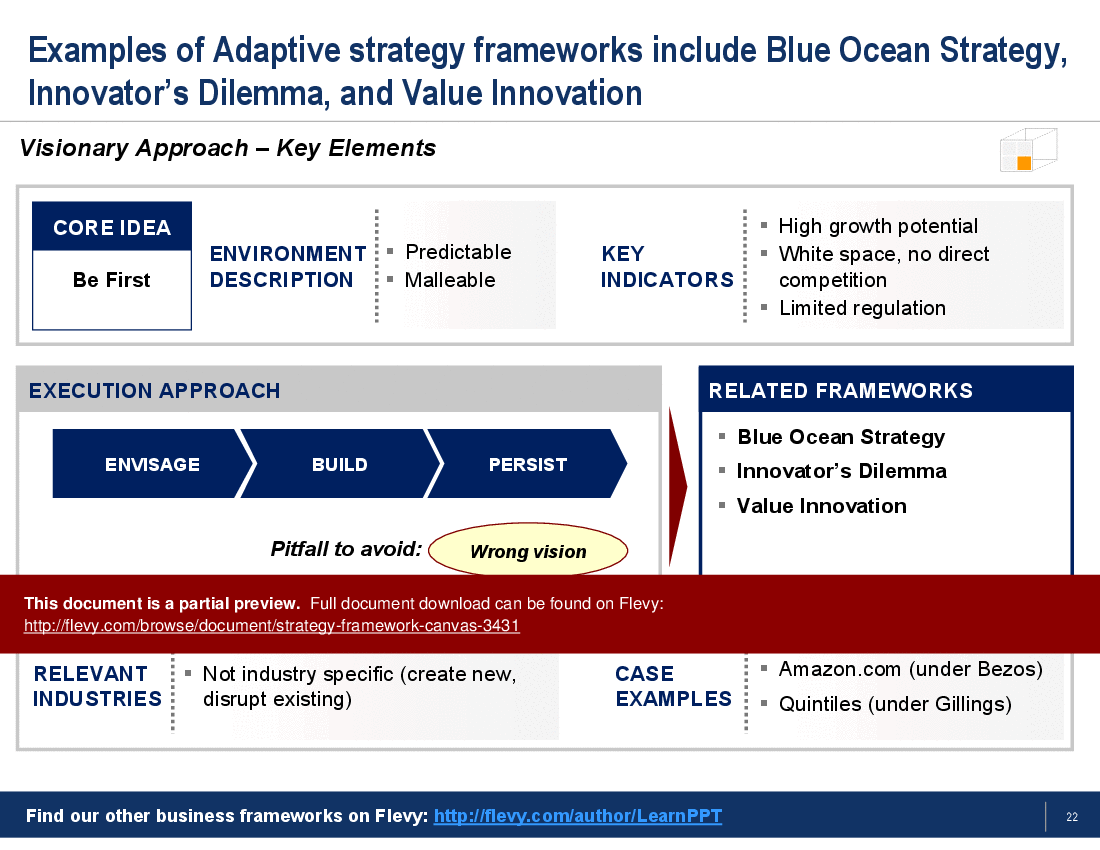

The Strategy Framework Canvas is a tool to help navigate through the sea of existing strategy frameworks. Since the 1950s, corporate strategy thinking has been evolving—new strategy frameworks are introduced each year. Today, there are literally 100s of strategy frameworks that have been developed by strategists, academics, and consulting firms.

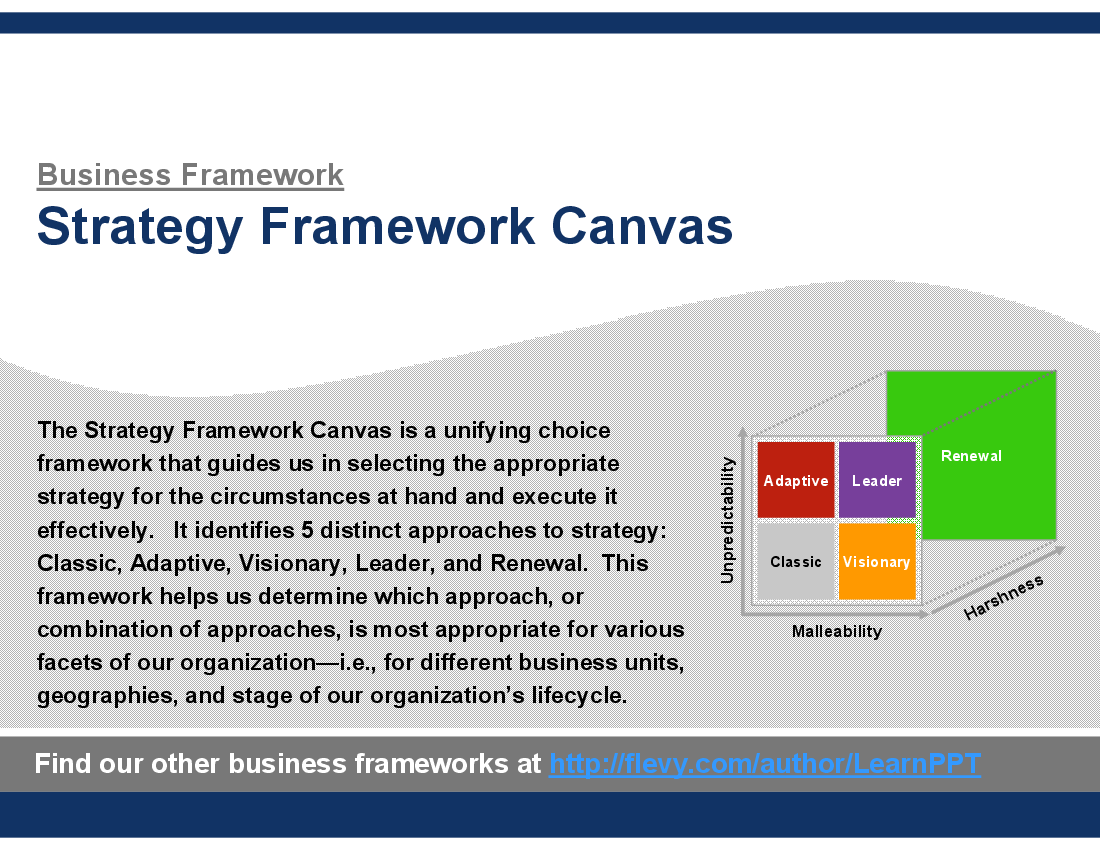
The Strategy Framework Canvas is a unifying choice framework that guides us in selecting the appropriate strategy for the circumstances at hand and execute it effectively. It identifies 5 distinct approaches to strategy:
1. Classic Approach (e.g. Porter's Five Forces, BCG Matrix)
2. Adaptive Approach (e.g. First Mover Advantage, Dynamic Capabilities)
3. Visionary Approach (e.g. Blue Ocean Strategy, Innovator's Dilemma)
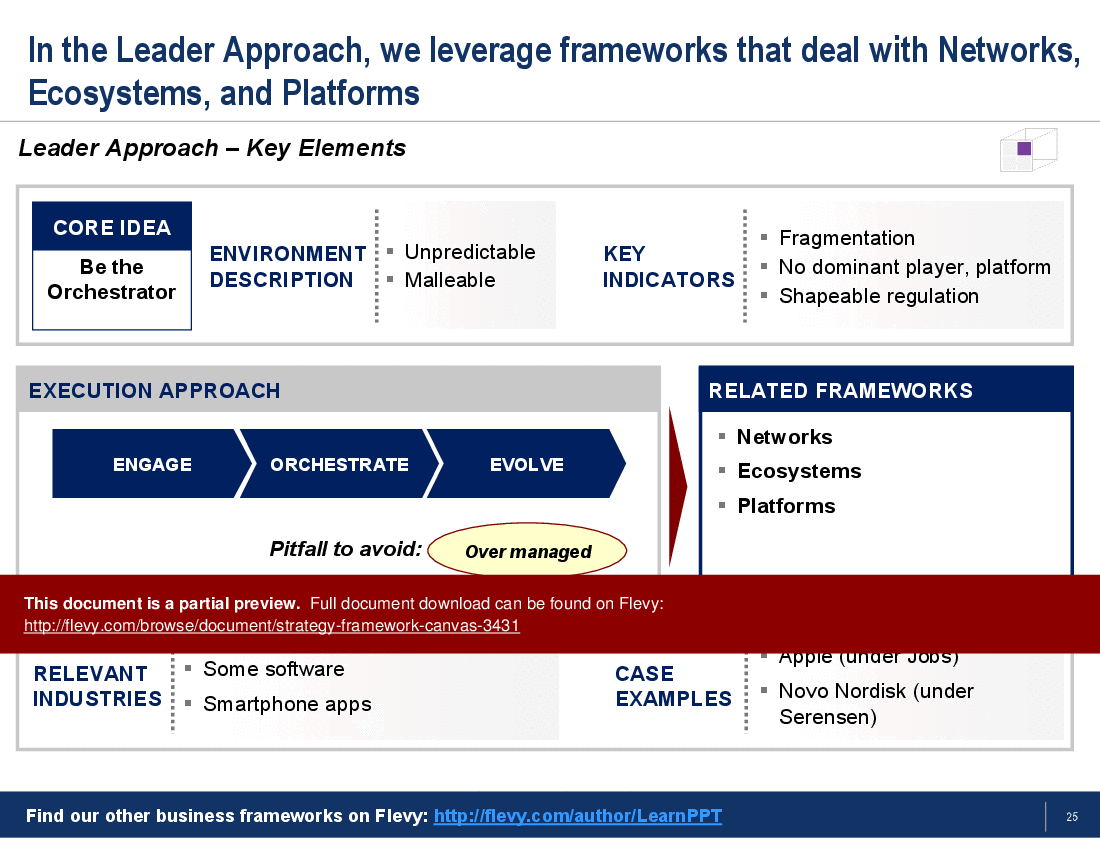
4. Leader Approach (e.g. S-Curve, Ecosystem Strategy)
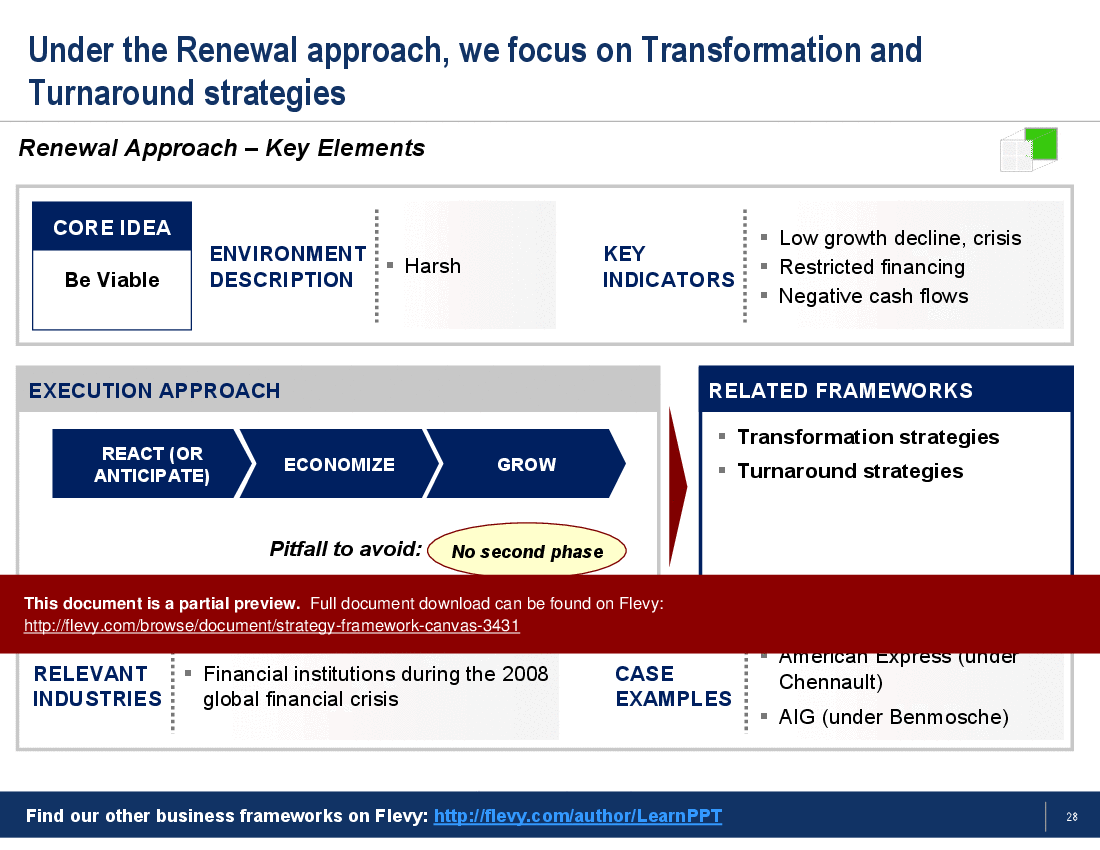
5. Renewal Approach (e.g. Transformation/turnaround strategies)
Each approach is driven by a unique business environment, characterized by 3 dimensions: Predictability, Malleability, and Harshness.
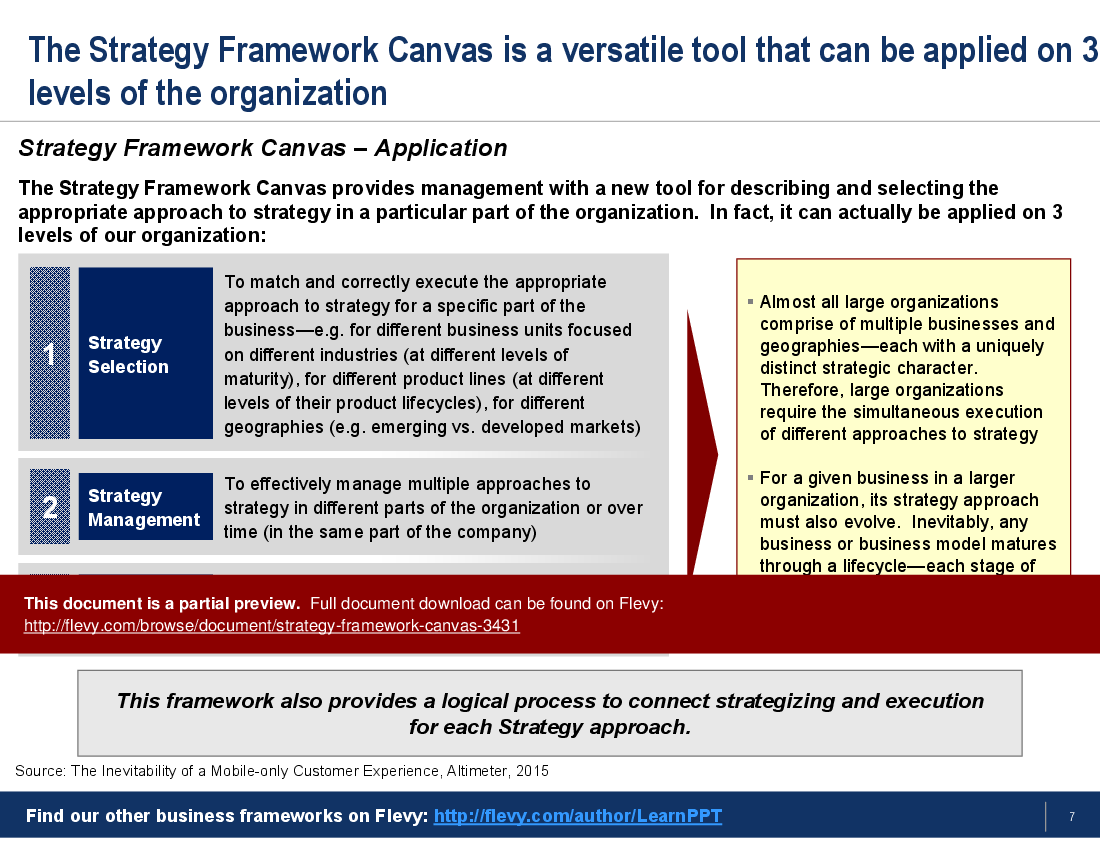
The Strategy Framework Canvas helps us determine which approach, or combination of approaches, is most appropriate for various facets of our organization—i.e., for different business units, geographies, and stage of our organization's lifecycle.
Additional concepts covered include historical chronology of strategy frameworks, pitfalls, case examples, leadership roles, the success trap, ambidexterity, sustainable growth, exploiters vs. explorers, etc.
This deck also slide templates you can use for your own business presentations.
The Strategy Framework Canvas is an indispensable asset for organizations navigating complex strategic landscapes. It provides a structured methodology to align strategy with specific business contexts, ensuring optimal execution. The framework's versatility allows it to be applied across various organizational levels, from individual business units to entire enterprises. It also highlights the evolution of strategy frameworks over decades, offering a comprehensive historical perspective. The inclusion of case examples and industry-specific applications enhances its practical relevance. This tool is particularly valuable for large, diversified organizations facing dynamic market conditions.
Got a question about the product? Email us at support@flevy.com or ask the author directly by using the "Ask the Author a Question" form. If you cannot view the preview above this document description, go here to view the large preview instead.
Executive Summary
The Strategy Framework Canvas (PPT) is a consulting-grade presentation designed by former consultants from top-tier firms such as McKinsey, BCG, and Deloitte. This framework serves as a unifying choice tool that guides organizations in selecting and executing the most suitable strategy for varying circumstances. It identifies 5 distinct strategic approaches—Classic, Adaptive, Visionary, Leader, and Renewal—tailored to different business units, geographies, and lifecycle stages. By employing this framework, corporate executives and consultants can effectively navigate complex strategic environments and enhance organizational performance.
Who This Is For and When to Use
• Corporate executives responsible for strategic planning and execution
• Business unit leaders seeking tailored strategies for specific market conditions
• Consultants advising organizations on strategic alignment and execution
• Change management teams implementing new strategic initiatives
• Leadership teams aiming to foster adaptive and innovative cultures
Best-fit moments to use this deck:
• During strategic planning sessions to align on the appropriate approach
• When assessing the effectiveness of current strategies across business units
• In workshops focused on leadership development and strategic agility
• For organizational assessments to identify areas for strategic improvement
Learning Objectives
• Define the 5 strategic approaches and their applicability to various business environments
• Analyze the dimensions of predictability, malleability, and harshness in strategy selection
• Build a tailored strategy portfolio that aligns with organizational goals and market conditions
• Establish a framework for continuous adaptation and innovation in strategy execution
• Identify leadership roles necessary for effective strategy management and execution
• Create templates for implementing the Strategy Framework Canvas across the organization
Table of Contents
• Overview (page 3)
• History of Strategy Frameworks (page 8)
• Strategy Framework Canvas
• Classic Approach (page 14)
• Adaptive Approach (page 17)
• Visionary Approach (page 20)
• Leader Approach (page 23)
• Renewal Approach (page 26)
• The Success Trap (page 29)
• Leadership Roles (page 34)
• Templates (page 37)
Primary Topics Covered
• Strategy Framework Canvas - A comprehensive tool for selecting and executing appropriate strategies based on specific organizational contexts.
• Classic Approach - A strategy for predictable environments focusing on sustainable competitive advantage through positioning.
• Adaptive Approach - A strategy for unpredictable environments emphasizing continuous experimentation and real-time adjustments.
• Visionary Approach - A proactive strategy for creating new markets or reshaping existing ones through innovation.
• Leader Approach - A collaborative strategy for influencing industry development by orchestrating stakeholder engagement.
• Renewal Approach - A strategy for harsh environments aimed at restoring organizational viability and competitiveness.
Deliverables, Templates, and Tools
• Strategy Framework Canvas template for visualizing strategic approaches
• Analysis and planning templates for each strategic approach
• Leadership role identification and development framework
• Continuous adaptation and innovation tracking tools
• Case studies illustrating successful application of each approach
• Templates for assessing organizational readiness for strategic shifts
Slide Highlights
• Overview of the Strategy Framework Canvas and its significance in strategic planning
• Detailed breakdown of the 5 strategic approaches with visual representations
• Case examples illustrating the application of each approach in real-world scenarios
• Insights into the "Success Trap" and the importance of ambidexterity in strategy
• Leadership roles necessary for effective strategy management and execution
Potential Workshop Agenda
Introduction to Strategy Framework Canvas (30 minutes)
• Overview of the framework and its importance
• Discussion on the 5 strategic approaches
Breakout Session: Strategy Selection (60 minutes)
• Group analysis of current organizational strategies
• Identification of appropriate strategic approaches for different business units
Leadership Roles in Strategy Execution (45 minutes)
• Overview of key leadership roles
• Interactive discussion on aligning leadership capabilities with strategic needs
Wrap-Up and Next Steps (30 minutes)
• Summary of insights gained
• Action planning for implementing the Strategy Framework Canvas
Customization Guidance
• Tailor the Strategy Framework Canvas to reflect specific organizational contexts and strategic goals
• Adjust templates to align with unique industry characteristics and market conditions
• Incorporate organizational terminology and metrics for clarity and relevance
• Update case examples to reflect current market dynamics and organizational experiences
Secondary Topics Covered
• Historical evolution of strategy frameworks and their relevance today
• The impact of the "Success Trap" on long-term organizational performance
• Strategies for fostering ambidexterity within large organizations
• The role of leadership in navigating complex strategic environments
• Techniques for continuous monitoring and adjustment of strategic approaches
FAQ
What is the Strategy Framework Canvas?
The Strategy Framework Canvas is a tool designed to help organizations select and execute appropriate strategies based on their unique circumstances and market conditions.
How do I determine which strategic approach to use?
Evaluate the dimensions of predictability, malleability, and harshness in your business environment to identify the most suitable strategic approach.
Can this framework be applied to different business units?
Yes, the Strategy Framework Canvas is versatile and can be tailored to different business units, geographies, and lifecycle stages within an organization.
What are the key leadership roles needed for effective strategy execution?
Key roles include Diagnostician, Segmenter, Disruptor, Team Coach, Salesperson, Inquisitor, Antenna, and Accelerator, each contributing to the successful implementation of strategies.
How can organizations avoid the Success Trap?
Organizations can avoid the Success Trap by cultivating ambidexterity, balancing exploration and exploitation, and continuously adapting their strategies to changing market conditions.
What types of templates are included in the presentation?
The presentation includes templates for the Strategy Framework Canvas, analysis and planning, leadership role identification, and continuous adaptation tracking.
Is this framework suitable for startups?
Yes, the Strategy Framework Canvas can be beneficial for startups as it helps in navigating early-stage market dynamics and selecting appropriate strategies for growth.
How often should organizations revisit their strategic approaches?
Organizations should regularly assess their strategic approaches, especially in dynamic environments, to ensure alignment with current market conditions and organizational goals.
Glossary
• Strategy Framework Canvas - A tool for selecting and executing strategies based on specific organizational contexts.
• Classic Approach - A strategy for predictable environments focused on sustainable competitive advantage.
• Adaptive Approach - A strategy emphasizing continuous experimentation in unpredictable environments.
• Visionary Approach - A proactive strategy for creating or reshaping markets.
• Leader Approach - A collaborative strategy for influencing industry development.
• Renewal Approach - A strategy aimed at restoring organizational viability in harsh environments.
• Success Trap - The phenomenon where successful organizations fail to adapt to changing market conditions.
• Ambidexterity - The ability to balance exploration and exploitation in strategy.
• Leadership Roles - Key positions necessary for effective strategy management and execution.
• Predictability - The degree to which market conditions can be forecasted.
• Malleability - The ability to shape or influence market conditions.
• Harshness - The severity of market conditions affecting organizational viability.
• Templates - Pre-designed documents for facilitating strategic planning and execution.
Source: Best Practices in Strategy Frameworks, Strategy Development, Strategic Thinking, Bain PowerPoint PowerPoint Slides: Strategy Framework Canvas PowerPoint (PPT) Presentation Slide Deck, LearnPPT Consulting
|
Download our FREE Strategy & Transformation Framework Templates
Download our free compilation of 50+ Strategy & Transformation slides and templates. Frameworks include McKinsey 7-S, Balanced Scorecard, Disruptive Innovation, BCG Curve, and many more. |