
Editor Summary
The Enterprise Cost Reduction Approach is a 36-slide PowerPoint framework that provides a structured, consulting-grade method for identifying, analyzing, and implementing controllable expense savings.
Read moreIt centers on a four-step process (Establish Baseline; Analyze & Validate Expenses; Develop Recommendations; Implement Changes) and includes 6 templates/tools: controllable expense analysis template, baseline data collection framework, financial impact template, recommendation statement format, communication plan template, and the ARCI framework. Target users include corporate executives, consultants, finance teams, and operations managers. Sold as a digital download on Flevy with immediate digital download.
This deck is used when an organization needs to assess and reduce controllable expenses — for example during initial spend reviews, when building sustainable cost-management strategies, or in training and workshop settings.
Corporate executives prioritizing expense levers and approving an implementation roadmap aligned to financial targets.
Consultants conducting baseline data collection, spend analysis, and quantifying savings with the financial impact template.
Finance teams validating baseline figures, tracking performance measures, and ensuring compliance with new policies.
Operations managers implementing demand-management controls and policy changes such as cellular phone reimbursement.
The four-step methodology (Establish Baseline; Analyze & Validate; Develop Recommendations; Implement Changes) follows a data-driven, hypothesis-led consulting approach associated with McKinsey, Bain, and BCG.
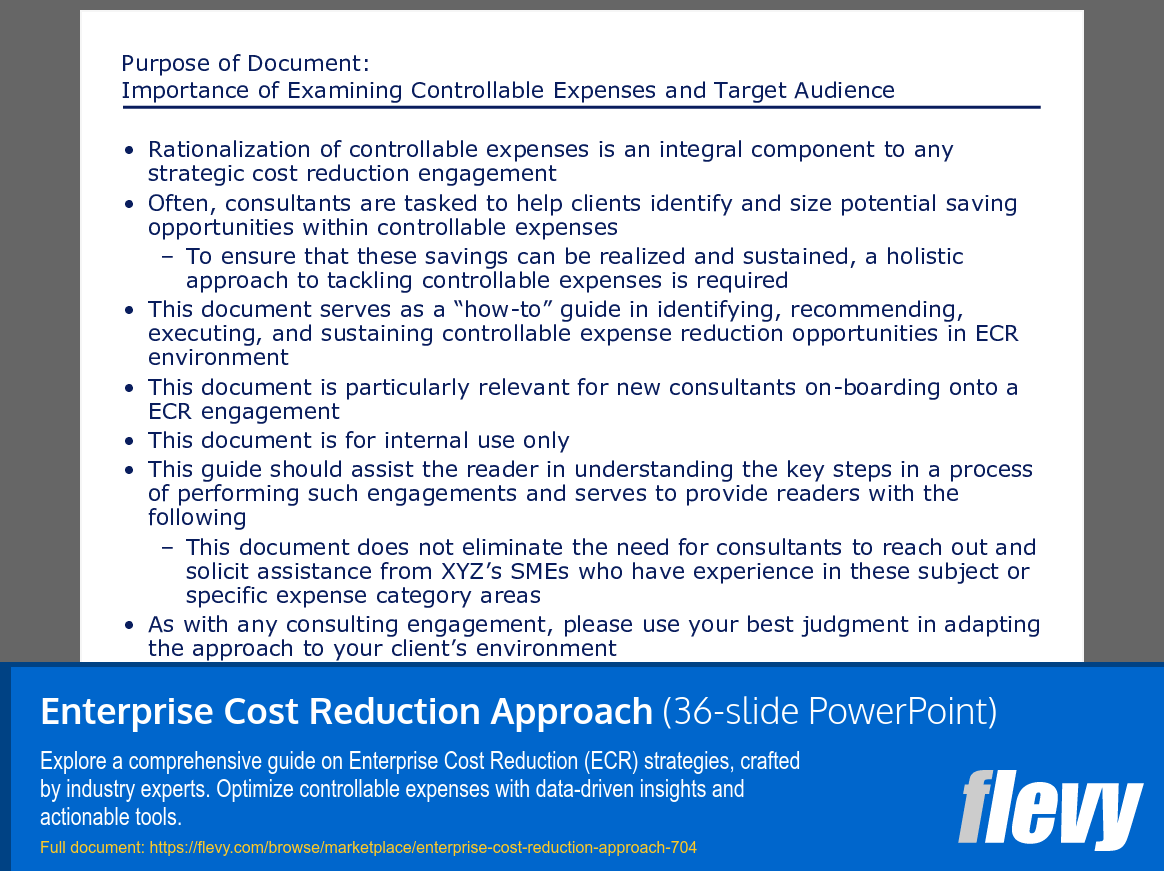
Rationalization of controllable expenses is an integral component to any strategic cost reduction engagement. Often, an organization must identify and size potential saving opportunities within controllable expenses. To ensure that these savings can be realized and sustained, a holistic approach to tackling controllable expenses is required.
This document serves as a "how-to" guide in identifying, recommending, executing, and sustaining controllable expense reduction opportunities in a Enterprise Cost Reduction (ECR) environment. This framework presents a holistic approach to managing controllable expenses.
This document goes beyond just identifying and recommending cost reduction opportunities. It provides a structured approach to establishing a baseline for current expenses, ensuring that all subsequent actions are grounded in accurate data. The baseline establishment phase is critical for setting realistic and achievable targets, making it easier to track progress and measure success.
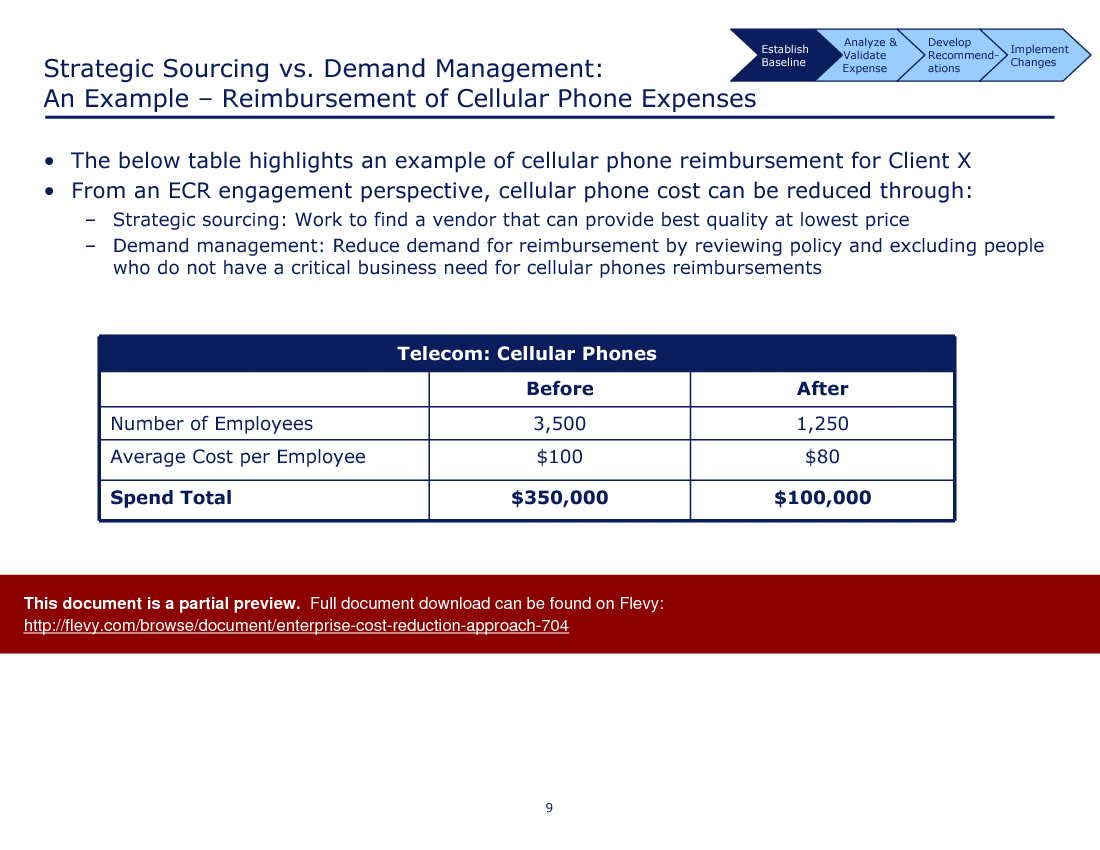
The document also delves into strategic sourcing versus demand management, offering practical examples like cellular phone reimbursement. It highlights how strategic sourcing can help find vendors offering the best quality at the lowest price, while demand management focuses on reducing unnecessary expenses. This dual approach ensures that cost reduction efforts are both comprehensive and sustainable.
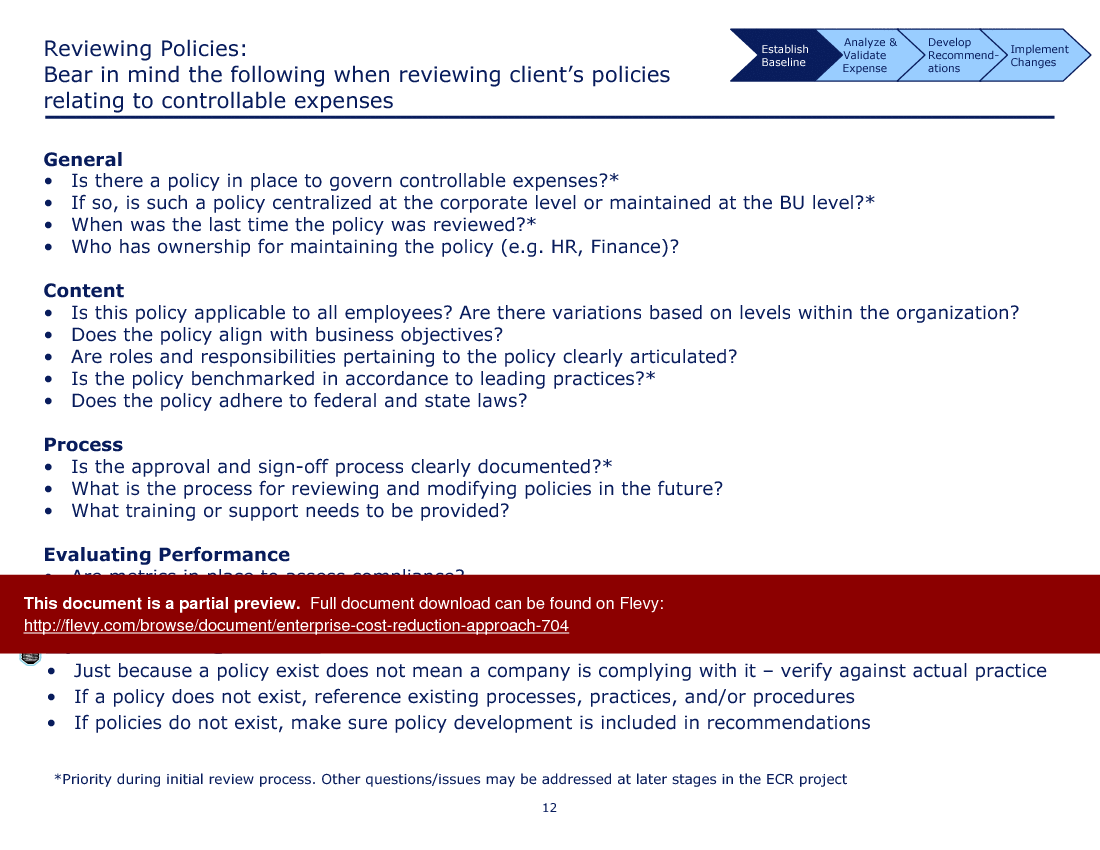
Policy review is another key component covered in this document. It outlines the importance of having clear, well-documented policies governing controllable expenses. The guide provides a checklist for evaluating existing policies, ensuring they are up-to-date, aligned with business objectives, and compliant with federal and state laws. This thorough review process helps identify gaps and areas for improvement, making policy recommendations more effective.
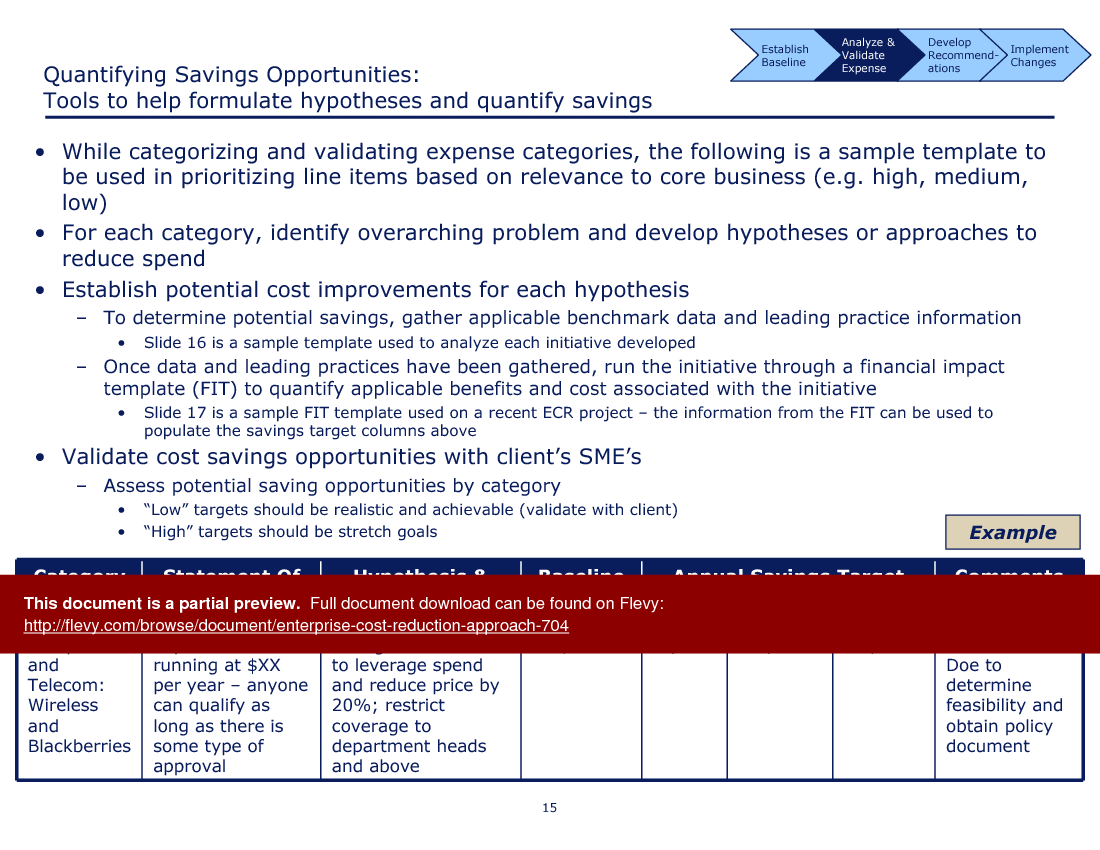
The document also includes tools for quantifying savings opportunities. It offers templates for categorizing and validating expense categories, developing hypotheses for cost reduction, and running financial impact analyses. These tools are designed to help you formulate actionable plans and validate them with subject matter experts, ensuring that your cost reduction initiatives are both data-driven and feasible.
Got a question about the product? Email us at support@flevy.com or ask the author directly by using the "Ask the Author a Question" form. If you cannot view the preview above this document description, go here to view the large preview instead.
MARCUS OVERVIEW
This synopsis was written by Marcus [?] based on the analysis of the full 36-slide presentation.
Executive Summary
The Enterprise Cost Reduction (ECR) presentation provides a structured approach to managing controllable expenses, designed to deliver McKinsey, Bain, or BCG-quality insights (consulting-grade; not affiliated). This document serves as a comprehensive guide for consultants and corporate executives to identify, analyze, and implement cost-saving strategies effectively. By leveraging data-driven methodologies, the ECR framework empowers organizations to rationalize expenses, enhance demand management, and foster a cost-conscious culture. Users will be equipped to execute actionable recommendations that lead to sustainable savings.
Who This Is For and When to Use
• Corporate executives overseeing financial performance and cost management
• Consultants engaged in cost reduction projects for clients
• Finance teams responsible for expense tracking and analysis
• Operations managers focused on optimizing resource allocation
Best-fit moments to use this deck:
• During initial assessments of controllable expenses in a corporate setting
• When developing strategies for sustainable cost management
• In workshops aimed at fostering a culture of cost consciousness
• For training new consultants on ECR methodologies
Learning Objectives
• Define controllable expenses and their significance in cost reduction
• Analyze current spending patterns to identify savings opportunities
• Develop actionable recommendations for expense rationalization
• Implement changes effectively while ensuring compliance and accountability
• Foster a culture of cost consciousness within the organization
• Utilize data-driven insights to validate and sustain cost-saving measures
Table of Contents
• Purpose of Document (page 1)
• Objectives of Evaluating Controllable Expenses (page 2)
• Overall Approach to Tackling Controllable Expenses (page 4)
• Project Timeline (page 5)
• Understanding Total Spend (page 7)
• Levers for Reducing Controllable Expenses (page 8)
• Understanding What Is Controllable (page 10)
• Baseline, Opportunities, and Priorities (page 11)
• Reviewing Policies (page 12)
• Analyzing and Validating Expenses (page 14)
• Quantifying Savings Opportunities (page 16)
• Recommendations (page 19)
• Implementing Changes (page 22)
• Typical Objections and Concerns (page 27)
• Final Thoughts (page 28)
• Appendix (page 30)
Primary Topics Covered
• Purpose of Document - This section outlines the importance of examining controllable expenses and serves as a guide for consultants to identify and execute cost-saving opportunities.
• Objectives of Evaluating Controllable Expenses - Focuses on influencing costs through demand management and fostering a sustainable cost-conscious culture.
• Overall Approach to Tackling Controllable Expenses - Details a four-step process: Establish Baseline, Analyze & Validate Expenses, Develop Recommendations, and Implement Changes.
• Levers for Reducing Controllable Expenses - Discusses strategic sourcing and demand management as key methods for reducing costs.
• Understanding What Is Controllable - Identifies actionable expense categories and their relevance to demand management.
• Quantifying Savings Opportunities - Provides tools and templates to formulate hypotheses and quantify potential savings.
Deliverables, Templates, and Tools
• Controllable expense analysis template for initial assessments
• Baseline data collection framework for expense validation
• Financial impact template for quantifying savings opportunities
• Recommendation statement format outlining costs and benefits
• Communication plan template for stakeholder engagement
• ARCI framework for establishing accountability in implementation
Slide Highlights
• Overview of the four-step approach to managing controllable expenses
• Example of a spend analysis illustrating total spend breakdown
• Comparison of pre- and post-implementation scenarios for cellular phone expenses
• Sample templates for quantifying savings opportunities and developing recommendations
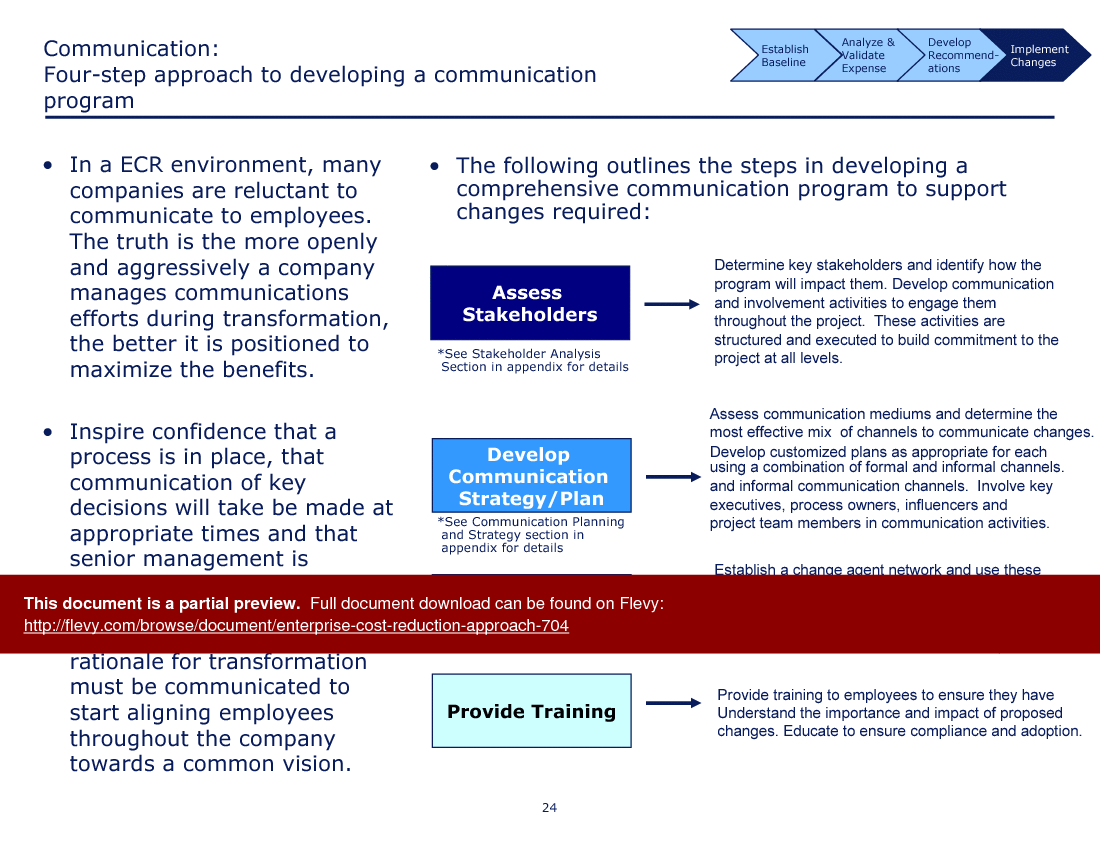
• Communication strategy framework to engage stakeholders effectively
Potential Workshop Agenda
ECR Overview and Objectives (60 minutes)
• Introduce the ECR framework and its significance
• Discuss objectives of evaluating controllable expenses
• Outline the four-step approach to cost reduction
Data Analysis and Validation Session (90 minutes)
• Review baseline data collection methods
• Analyze current spending patterns and identify opportunities
• Validate findings with client stakeholders
Recommendations and Implementation Planning (90 minutes)
• Develop actionable recommendations based on analysis
• Create an implementation roadmap with timelines and responsibilities
• Discuss strategies for sustaining cost savings
Customization Guidance
• Tailor the baseline data collection period to align with the client’s fiscal year
• Adjust the communication plan to fit the organizational culture and stakeholder preferences
• Modify the ARCI framework to reflect the client’s existing roles and responsibilities
• Customize templates to incorporate client-specific expense categories and metrics
Secondary Topics Covered
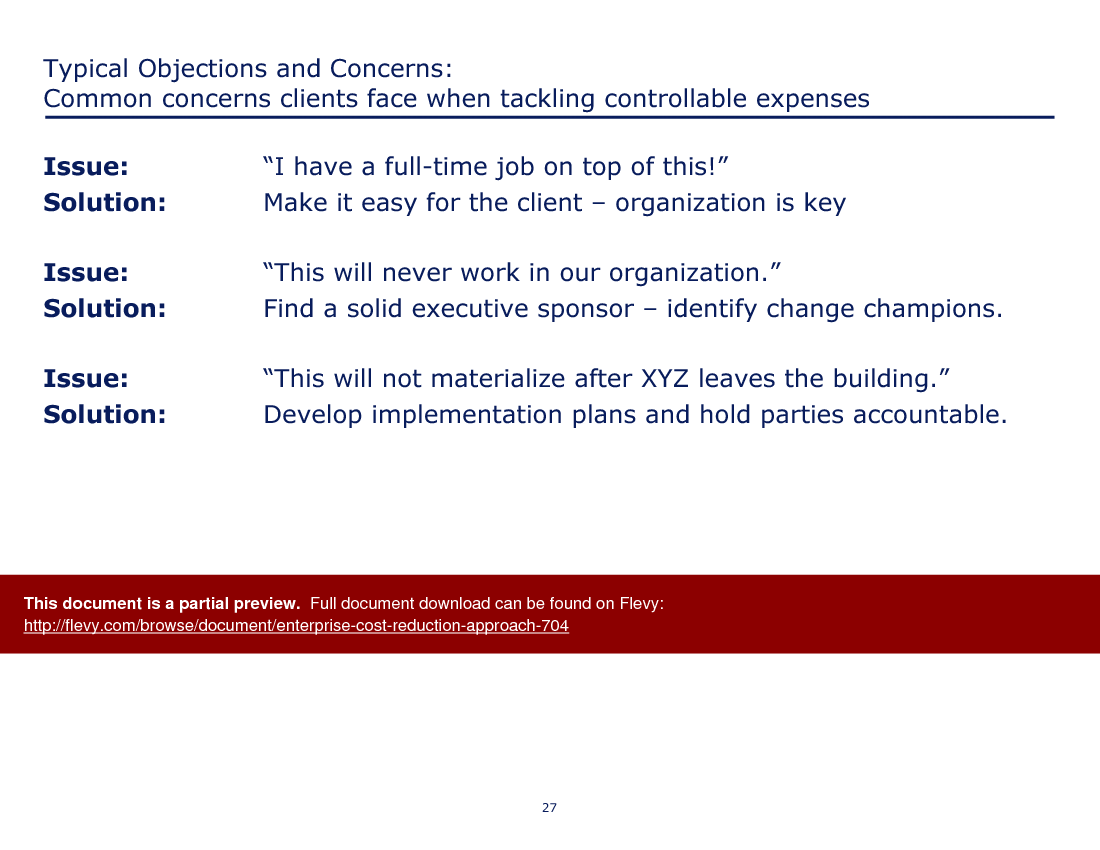
• Common objections and concerns regarding cost reduction initiatives
• Strategies for fostering a cost-conscious culture within organizations
• Importance of compliance and accountability in sustaining savings
• Role of incentives in aligning employee performance with cost management goals
Topic FAQ
What are the typical phases in a controllable-expense reduction project?
A typical controllable-expense reduction engagement follows a four-step approach: Establish Baseline, Analyze & Validate Expenses, Develop Recommendations, and Implement Changes. This sequence is designed to ground actions in accurate data before sizing opportunities and executing implementation, ending with the Implement Changes phase.
How are controllable expenses defined and which categories are included?
Controllable expenses are costs an organization can influence, typically discretionary spend such as travel, entertainment, supplies, and similar items. The framework emphasizes identifying actionable expense categories relevant to demand management and strategic sourcing, for example travel and cellular phone reimbursement as controllable expense categories.
What is demand management and how does it help reduce costs?
Demand management encompasses strategies to control and reduce the need for certain expenditures by changing usage patterns, approval rules, or policies. In the ECR approach it complements strategic sourcing by reducing unnecessary consumption, illustrated with examples like cellular phone reimbursement and other demand-reduction levers.
What is the ARCI framework and when should it be used in cost programs?
The ARCI framework defines project roles as Accountability, Responsibility, Consultation, and Information to ensure clarity of ownership. In cost reduction programs it is used to establish accountability for implementing recommendations and sustaining compliance during the Implement Changes phase, referenced as the ARCI framework.
What should I look for when choosing a controllable-expense toolkit for a client?
Select a toolkit that provides baseline data collection templates, spend analysis tools, quantification templates (financial impact), recommendation statement formats, communication plans, and role/accountability frameworks. Also check for guidance on customizing templates and realistic timelines, such as the initial 3-step timeline guidance of 8 to 11 weeks and a baseline data collection framework.
How should I evaluate the cost versus value of expense-reduction templates?
The document does not list pricing; evaluate value by whether templates enable baseline establishment, hypothesis-driven quantification, stakeholder communication, and implementation accountability. The Enterprise Cost Reduction Approach supplies tools that specifically address these needs, including a financial impact template and spend categorization templates.
I need to run a kickoff workshop on cost reduction — what agenda structure works?
The provided workshop agenda splits sessions into ECR Overview and Objectives (60 minutes), Data Analysis and Validation (90 minutes), and Recommendations & Implementation Planning (90 minutes). This sequence introduces the approach, validates baseline data with stakeholders, then develops actionable recommendations and an implementation roadmap, beginning with the 60-minute overview.
How long does it typically take to reach initial recommendations in an ECR engagement?
The document notes the initial 3 steps — Establish Baseline, Analyze & Validate Expenses, and Develop Recommendations — typically require 8 to 11 weeks, depending on engagement complexity, before moving into implementation and sustainment work.
Document FAQ
These are questions addressed within this presentation.
What are controllable expenses?
Controllable expenses are costs that can be influenced or managed by the organization, such as discretionary spending on travel, entertainment, and supplies.
How can we validate savings opportunities?
Validation involves analyzing baseline data, comparing it against benchmarks, and engaging with subject matter experts to ensure proposed savings are realistic and achievable.
What is the ARCI framework?
The ARCI framework defines roles and responsibilities in a project: Accountability, Responsibility, Consultation, and Information, ensuring clarity in task ownership.
How long does the ECR process typically take?
The initial 3 steps of the ECR process usually require 8 to 11 weeks, depending on the complexity of the engagement.
What tools are available for quantifying savings?
Templates for financial impact analysis and spend categorization are provided to help quantify potential savings and validate recommendations.
How do we ensure compliance with new policies?
Establishing clear policies, performance measures, and accountability structures is essential for ensuring compliance with new cost management initiatives.
What are the key levers for reducing controllable expenses?
Strategic sourcing and demand management are the primary levers, focusing on optimizing procurement processes and controlling usage.
How can we foster a cost-conscious culture?
Developing training programs, aligning incentives with cost management goals, and communicating the importance of cost savings can help instill a cost-conscious culture.
Glossary
• Controllable Expenses - Costs that can be managed or influenced by the organization.
• Demand Management - Strategies aimed at controlling and reducing demand for certain expenses.
• Strategic Sourcing - The process of identifying and engaging suppliers to optimize procurement.
• Baseline Data - Initial data used to measure performance and identify savings opportunities.
• ARCI Framework - A tool for defining roles and responsibilities in project management.
• Financial Impact Template - A tool for quantifying potential savings and costs associated with initiatives.
• Communication Plan - A strategy for engaging stakeholders and disseminating information.
• Compliance - Adherence to established policies and procedures.
• Incentives - Rewards designed to align employee performance with organizational goals.
• Stakeholder Analysis - A process for identifying and understanding the needs of key audiences.
• Performance Measures - Metrics used to assess effectiveness and drive improvement.
• Cost-Conscious Culture - An organizational mindset focused on managing and reducing expenses.
This PPT slide template outlines a structured project timeline for enterprise cost reduction, consisting of 4 phases: "Establish Baseline," "Analyze and Validate Expenses," "Develop Recommendations," and "Implement Changes." The first phase involves gathering expense data from the General Ledger and Accounts Payable to identify controllable expenses and baseline opportunities. The second phase requires collaboration with subject matter experts (SMEs) to validate expenses and prioritize cost-saving opportunities. The third phase focuses on crafting actionable insights to rationalize and reduce expenses. Finally, the fourth phase develops policies and mandates to ensure effective integration of recommendations. This timeline serves as a roadmap for a systematic approach to cost reduction.
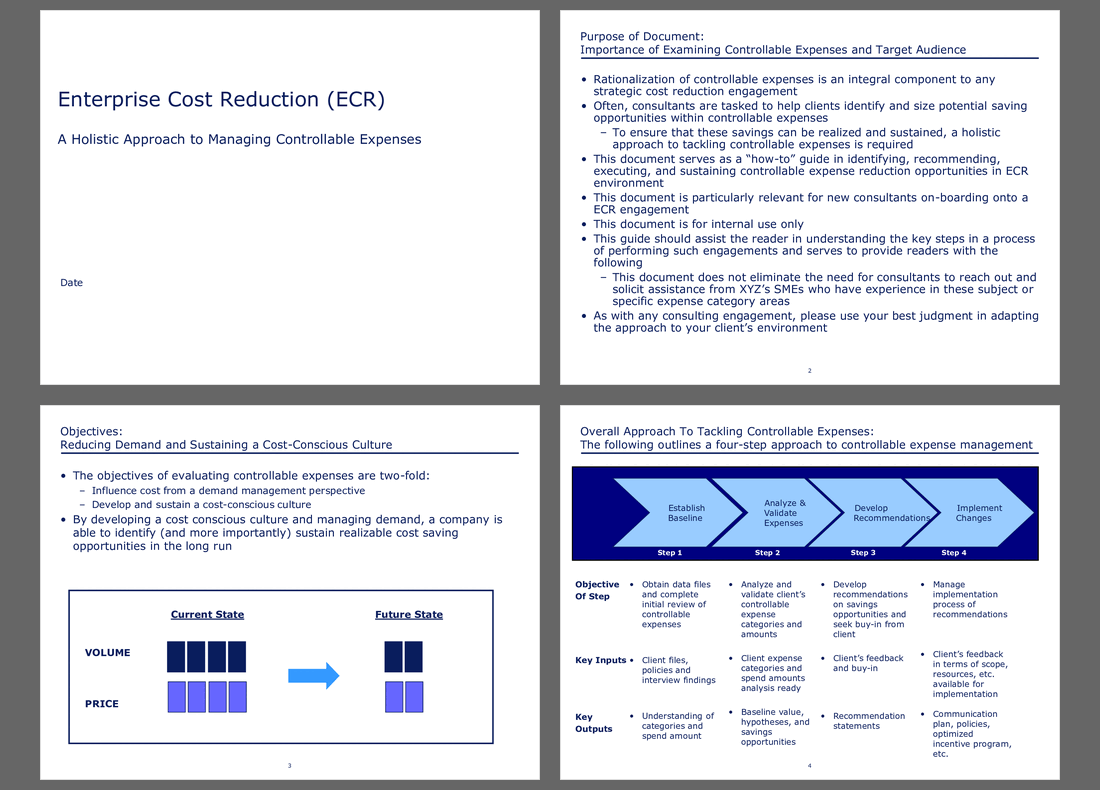
This PPT slide template outlines a four-step approach to managing controllable expenses.
Step 1, "Establish Baseline," focuses on gathering data files and reviewing controllable expenses to understand the current expense landscape. Key inputs include client files, policies, and interview findings, leading to an understanding of expense categories.
Step 2, "Analyze & Validate Expenses," involves validating data from Step 1 and analyzing expense categories to identify potential savings. The output includes baseline values and hypotheses for recommendations.
Step 3, "Develop Recommendations," crafts actionable recommendations based on analysis, requiring client engagement for buy-in.
Step 4, "Implement Changes," manages the execution of recommendations, gathering client feedback on scope and resources, resulting in a communication plan and policies for change.
This structured approach enhances client involvement and effectiveness in expense management.
This PPT slide template outlines 6 types of incentive programs:
1. Cash Profit Sharing shares a percentage of profits among employees based on organizational profitability, with annual payouts and equal distribution.
2. Business Incentives utilize various financial and operational measures, enhancing motivation by recognizing both non-financial and financial contributions.
3. Gainsharing focuses on improved productivity, using a single measure at the plant level to encourage common productivity goals.
4. Team or Group Incentives reward collective performance through multiple measures, with payouts based on teamwork and problem-solving.
5. Individual Incentives recognize personal performance, often involving multiple measures and annual payouts, primarily for managers and executives.
6. Special Incentives reward unanticipated contributions, offering flexibility in employee recognition.
Key performance indicators (KPIs) related to controllable expenses are essential for assessing the effectiveness of these programs, necessitating discussions with management to determine accountability and reward structures.
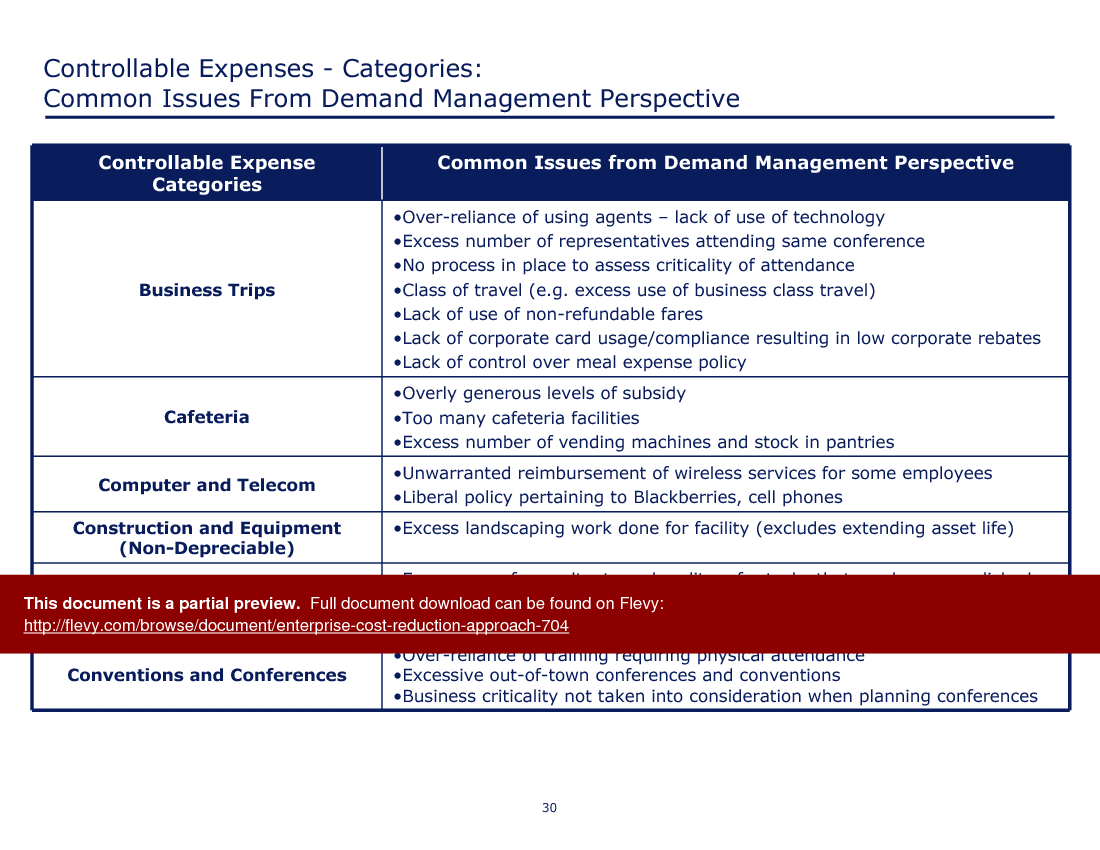
This PPT slide template outlines controllable expense categories and common issues from a demand management perspective, highlighting inefficiencies and overspending. In "Education and Training," lax reimbursement policies and excessive budgets indicate a need for clearer guidelines and cost optimization. The "Employee Recreation" category reveals overly generous programs, questioning the return on investment in engagement initiatives. "Hiring and Headcount" shows continuous personnel increases during downturns, suggesting tighter hiring controls. The "Legal Fees" section points to broad membership reimbursement policies leading to excessive costs and a lack of strategic oversight. "Rent" addresses inflated operational costs from luxurious office spaces, while "Reproduction and Supplies" indicates a need for better tracking to mitigate waste. "Special Events" highlights excessive spending on office activities, detracting from critical business investments. This serves as a diagnostic tool for organizations to streamline expenses and enhance financial discipline.
This PPT slide template outlines a structured approach to identifying and validating cost savings opportunities within an organization. It emphasizes categorizing expenses to prioritize line items relevant to core business operations, facilitating focused spending analysis essential for financial management. For each expense category, teams should identify overarching problems and develop hypotheses aimed at reducing expenditures, establishing potential cost improvements for each hypothesis. The slide references 2 templates: one for analyzing initiatives and another for quantifying associated benefits and costs. Validation of savings opportunities with subject matter experts (SMEs) is crucial, assessing potential savings by categorizing targets as "low" or "high." This dual-target approach sets realistic expectations while encouraging ambitious savings initiatives. A table provides a framework for documenting categories, problems, hypotheses, baseline figures, and annual savings targets, ensuring accountability throughout the cost reduction process.
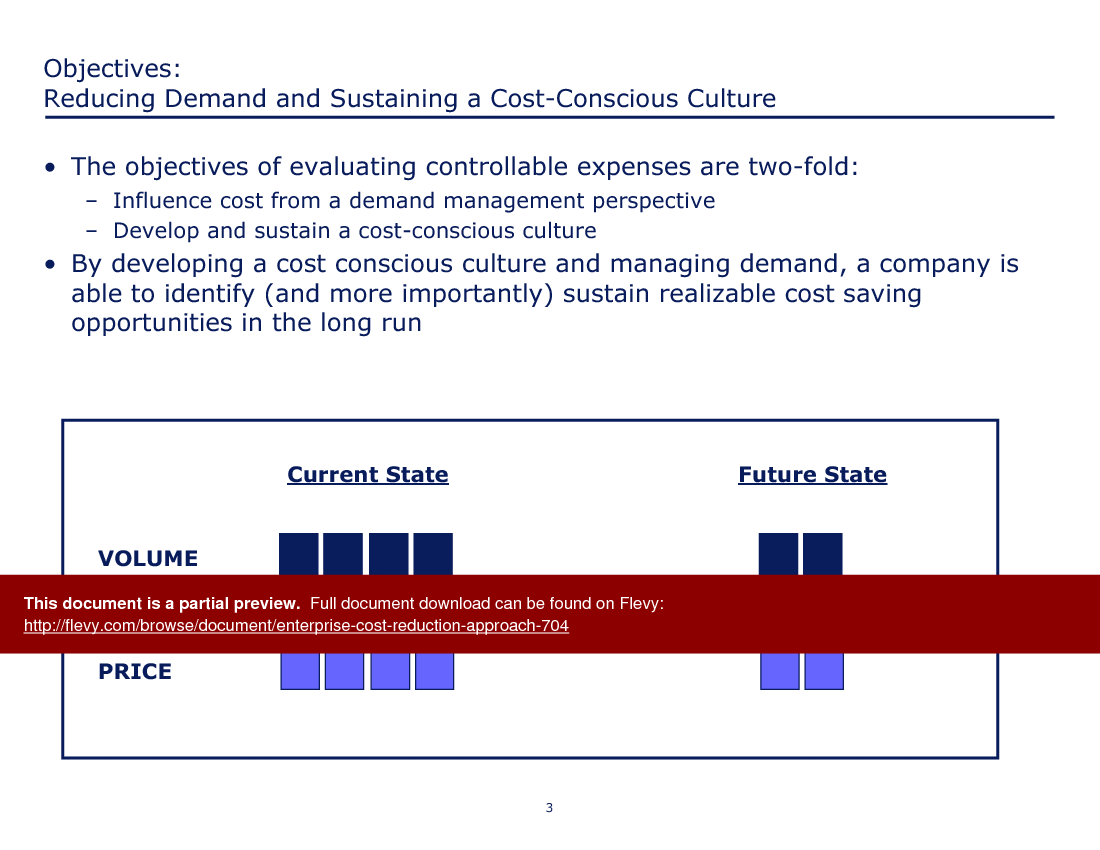
This PPT slide template outlines objectives for managing controllable expenses within an organization, focusing on 2 primary goals: influencing costs through demand management and cultivating a cost-conscious culture. The visual representation distinguishes between "Current State" and "Future State," indicating a transition towards improved management of volume and price. By fostering a cost-conscious culture and actively managing demand, companies can identify and sustain long-term cost-saving opportunities, essential for financial health and competitiveness. This cultural shift emphasizes that effective cost management requires more than immediate reductions; it necessitates a framework for ongoing efficiency and employee awareness, leading to sustainable practices and better financial outcomes.
This PPT slide template outlines a structured approach to validating expense categories and associated costs through a three-step process. The first step involves systematically categorizing expenses to facilitate focused analysis. The next phase includes creating an initial list of focus areas, such as tightening expense reimbursement policies and promoting economical travel options like economy class flights and non-refundable fares. The final step is validating hypotheses with data through a viability analysis that benchmarks average costs, such as economy class ticket prices, against internal performance metrics. Key activities include understanding specific spend requirements, defining category drivers, and identifying cost-saving opportunities. Collaboration between the consulting team and the client is essential for ensuring relevant and actionable analysis, ultimately aiding in establishing a baseline for future expense management strategies.
This PPT slide template outlines a framework for analyzing organizational spending from a demand management perspective, emphasizing the establishment of a baseline total spend of $1.1 billion. It identifies the controllable portion of this spend, with transportation as the largest category at 28%, followed by utilities and direct materials at 12% each, and packaging and outsourcing at 11% and 5%, respectively. The slide distinguishes between controllable and actionable expenses, highlighting that not all controllable spend is equally actionable. This structured approach enables organizations to prioritize initiatives for cost reduction and enhance demand management capabilities.

Since 2012, we have provided business templates to over 10,000 businesses and organizations of all sizes, from startups and small businesses to the Fortune 100, in over 130 countries.

"Flevy is our 'go to' resource for management material, at an affordable cost. The Flevy library is comprehensive and the content deep, and typically provides a great foundation for us to further develop and tailor our own service offer."
– Chris McCann, Founder at Resilient.World
"I like your product. I'm frequently designing PowerPoint presentations for my company and your product has given me so many great ideas on the use of charts, layouts, tools, and frameworks. I really think the templates are a valuable asset to the job."
– Roberto Fuentes Martinez, Senior Executive Director at Technology Transformation Advisory
"As a small business owner, the resource material available from FlevyPro has proven to be invaluable. The ability to search for material on demand based our project events and client requirements was great for me and proved very beneficial to my clients. Importantly, being able to easily edit and tailor
the material for specific purposes helped us to make presentations, knowledge sharing, and toolkit development, which formed part of the overall program collateral. While FlevyPro contains resource material that any consultancy, project or delivery firm must have, it is an essential part of a small firm or independent consultant's toolbox.
"
– Michael Duff, Managing Director at Change Strategy (UK)
"As a consulting firm, we had been creating subject matter training materials for our people and found the excellent materials on Flevy, which saved us 100's of hours of re-creating what already exists on the Flevy materials we purchased."
– Michael Evans, Managing Director at Newport LLC
"If you are looking for great resources to save time with your business presentations, Flevy is truly a value-added resource. Flevy has done all the work for you and we will continue to utilize Flevy as a source to extract up-to-date information and data for our virtual and onsite presentations!"
– Debbi Saffo, President at The NiKhar Group
"As a young consulting firm, requests for input from clients vary and it's sometimes impossible to provide expert solutions across a broad spectrum of requirements. That was before I discovered Flevy.com.
Through subscription to this invaluable site of a plethora of topics that are key and crucial to consulting, I
have been able to exceed expectations and deliver quality advice and solutions to my clients. The quality and expertise of the authors are exemplary and gives me great confidence to use as part of my service offerings.
I highly recommend this company for any consultant wanting to apply international best practice standards in their service offerings.
"
– Nishi Singh, Strategist and MD at NSP Consultants
"FlevyPro provides business frameworks from many of the global giants in management consulting that allow you to provide best in class solutions for your clients."
– David Harris, Managing Director at Futures Strategy
"As a consultant requiring up to date and professional material that will be of value and use to my clients, I find Flevy a very reliable resource.
The variety and quality of material available through Flevy offers a very useful and commanding source for information. Using Flevy saves me time, enhances my expertise and ends up being a good decision."
– Dennis Gershowitz, Principal at DG Associates
Save with Bundles
This document is available as part of the following discounted bundle(s):
Receive our FREE presentation on Operational Excellence
This 50-slide presentation provides a high-level introduction to the 4 Building Blocks of Operational Excellence. Achieving OpEx requires the implementation of a Business Execution System that integrates these 4 building blocks.
Receive our FREE presentation on Operational Excellence
Get Our FREE Product.
This 50-slide presentation provides a high-level introduction to the 4 Building Blocks of Operational Excellence. Achieving OpEx requires the implementation of a Business Execution System that integrates these 4 building blocks.