
Explore our PMI Handbook, crafted by ex-BCG, McKinsey, and Bain consultants. Gain insights on integration strategies, best practices, and project management excellence. Post Merger Integration is a 157-slide PPT PowerPoint presentation slide deck (PPTX) available for immediate download upon purchase.
The invaluable insights presented in this comprehensive PowerPoint deck are the culmination of the vast expertise and experience of over 30 former senior management consultants from renowned firms such as BCG, McKinsey, Bain, Accenture, and Deloitte. With a collective background in tier 1 management consulting, these seasoned professionals have actively participated in more than 50 global engagements across diverse industries and sectors. Their hands-on involvement in challenging real-world projects has provided them with a deep understanding of the complexities and intricacies of post-merger integration and large-scale global projects. Drawing from their extensive experiences and leveraging their profound knowledge, these experts have meticulously compiled these insights to offer pragmatic and actionable guidance for successful PMI and project management endeavors. As a result, this resource stands as a testament to the collective wisdom and expertise of a highly accomplished team, ensuring its value and relevance for organizations navigating the dynamic landscape of transformative business initiatives.
The core objectives of this resource are threefold:
Providing an Informative Overview of PMI: Gain a comprehensive understanding of the intricacies of the PMI process, exploring its strategic importance and potential impact on organizational success.
Implementing Best Practices in PMI: Acquire valuable insights into proven methodologies and industry-leading strategies for successful PMI execution. This deck offers guidance to navigate the complexities of integration with precision and efficiency.
Empowering Project Management: While the primary focus is on PMI projects, this resource serves as a valuable reference for larger initiatives that require a program management office (PMO) component. Discover guiding principles that extend beyond PMI, enhancing communication and governance practices in diverse projects.
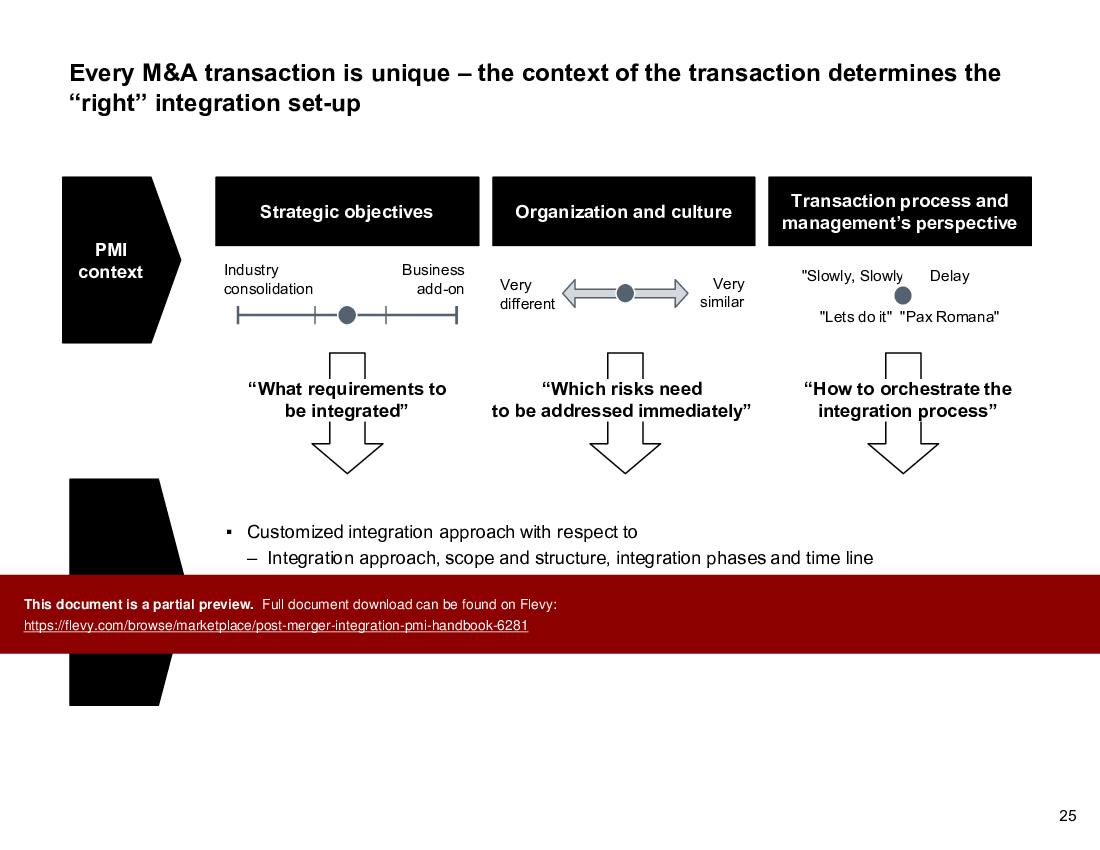
Successful PMI projects necessitate careful alignment of project structure, setup, integration strategy, and processes to the unique characteristics of each case. Elements such as transaction structure, corporate strategy, organization, and cultural context significantly influence the PMI landscape.
Beyond PMI endeavors, this deck proves beneficial for projects of substantial scale, offering timeless principles applicable to various contexts. By embracing effective communication and governance practices, project management can elevate to greater heights.
Drawing from real-world experiences in large-scale global integration projects, this deck embodies professionalism and expertise. It equips organizations to execute PMI and projects with agility, strategic planning, and a resolute approach.
This resource aims to revolutionize the approach to PMI and project management, empowering organizations to achieve seamless integration and navigate complexities with confidence. Utilize this PowerPoint deck to unlock the true potential of your integration endeavors and facilitate successful project management initiatives.
This handbook delves into the critical phases of PMI, from pre-transaction due diligence to integration strategy and risk management. It highlights the importance of structured sub-teams and robust oversight to ensure seamless execution and alignment with strategic objectives.
Got a question about the product? Email us at support@flevy.com or ask the author directly by using the "Ask the Author a Question" form. If you cannot view the preview above this document description, go here to view the large preview instead.
MARCUS OVERVIEW
This synopsis was written by Marcus [?] based on the analysis of the full 157-slide presentation.
Executive Summary
The Post Merger Integration (PMI) Handbook by Affinity Consulting Partners is a meticulously crafted resource designed to guide organizations through the complexities of post-merger integration. Developed by seasoned consultants from top firms like McKinsey, Bain, and BCG, this handbook provides a structured approach to PMI, emphasizing best practices and tailored strategies for various transaction types. It equips integration leaders with the tools to effectively manage the integration process, ensuring alignment with corporate strategy and cultural contexts. Users will gain insights into critical success factors, common pitfalls, and actionable frameworks to facilitate a smooth transition and maximize synergies.
Who This Is For and When to Use
• Corporate executives overseeing merger and acquisition activities
• Integration leaders responsible for executing PMI strategies
• Project Management Office (PMO) teams coordinating integration efforts
• Human Resources leaders focused on cultural integration and staff retention
• Finance teams managing synergy tracking and financial integration
Best-fit moments to use this deck:
• During pre-merger planning to establish integration frameworks
• In the initial phases post-merger to define Day 1 objectives
• Throughout the integration process to monitor progress and adjust strategies
Learning Objectives
• Define the key phases of the PMI process and their significance
• Develop a comprehensive integration plan that aligns with corporate strategy
• Identify and mitigate common challenges faced during PMI
• Establish effective communication strategies to engage stakeholders
• Create a framework for tracking and realizing synergies post-merger
• Foster a culture of collaboration and shared values between merging entities
Table of Contents
• Introduction to PMI (page 2)
• Success Factors for PMI (page 4)
• Common Challenges and Pitfalls (page 5)
• Critical Success Factors (page 9)
• Due Diligence in PMI (page 11)
• Integration Planning Process (page 34)
• Risk Management in PMI (page 76)
• Cultural Integration Strategies (page 144)
• Communication Framework (page 102)
• Assessment of Synergies (page 114)
Primary Topics Covered
• PMI Process Overview - An outline of the essential phases in the PMI process, including pre-transaction, transaction, and post-transaction activities.
• Success Factors - Key elements that contribute to successful PMI, such as rapid project setup and effective communication.
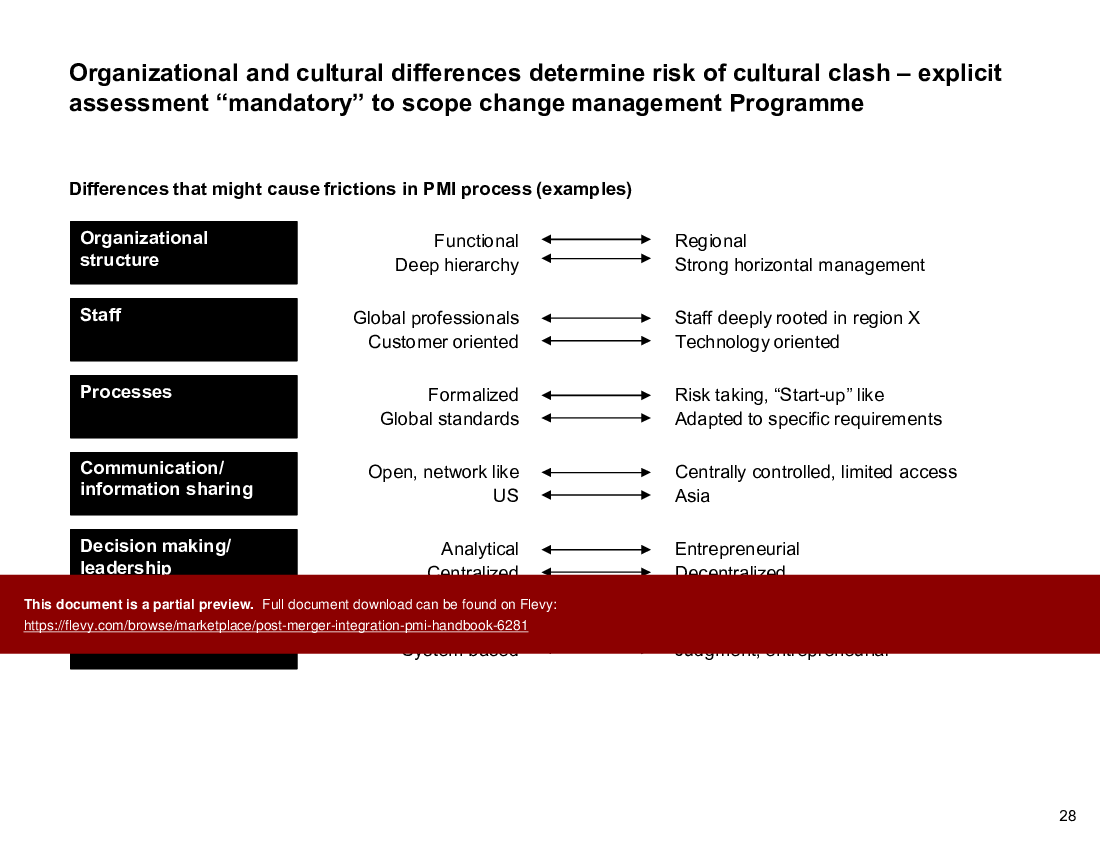
• Common Challenges - Insights into frequent pitfalls in PMI, including cultural clashes and inadequate planning.
• Due Diligence - A comprehensive approach to conducting due diligence to identify risks and opportunities.
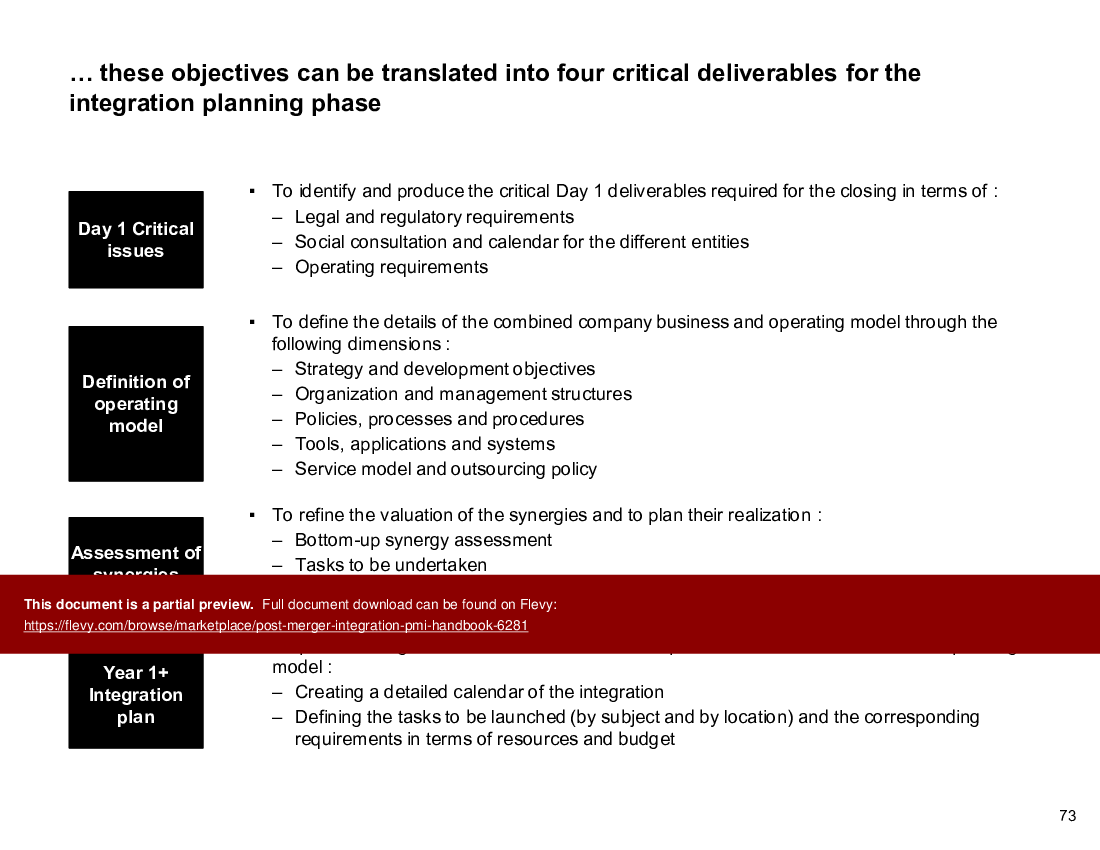
• Integration Planning - Strategies for developing a robust integration plan that aligns with business objectives.
• Cultural Integration - Techniques for managing cultural differences and fostering a unified organizational culture.
Deliverables, Templates, and Tools
• Integration planning templates for defining Day 1 objectives and milestones
• Communication plans to engage stakeholders and manage expectations
• Risk assessment frameworks to identify and mitigate potential integration challenges
• Synergy tracking tools to monitor financial and operational synergies
• Cultural assessment tools to evaluate and integrate diverse organizational cultures
Slide Highlights
• Overview of the PMI process, emphasizing the importance of early planning
• Key success factors for effective integration management
• Common pitfalls in PMI and strategies to avoid them
• Frameworks for conducting thorough due diligence
• Tools and templates for tracking synergies and managing risks
Potential Workshop Agenda
Integration Strategy Workshop (90 minutes)
• Discuss the strategic vision and objectives for the integration
• Identify key stakeholders and their roles in the integration process
• Develop a preliminary integration plan outlining critical tasks and timelines
Risk Management Session (60 minutes)
• Review potential risks associated with the integration
• Develop a risk mitigation strategy to address identified challenges
• Assign ownership for monitoring and managing risks
Cultural Integration Planning (90 minutes)
• Assess cultural differences between merging entities
• Develop strategies for fostering a unified organizational culture
• Create a communication plan to engage employees during the transition
Customization Guidance
• Tailor the integration plan to reflect the specific transaction structure and corporate strategy
• Adjust communication strategies to align with the cultural context of both organizations
• Modify risk management frameworks to address unique challenges associated with the merger
Secondary Topics Covered
• Governance structures for overseeing the integration process
• Best practices for stakeholder engagement and communication
• Techniques for measuring and tracking integration success
• Strategies for managing employee retention during the transition
FAQ What is the purpose of the PMI Handbook?
The PMI Handbook serves as a comprehensive guide for organizations navigating the complexities of post-merger integration, providing best practices and structured approaches to ensure successful outcomes.
Who should use this handbook?
This handbook is designed for corporate executives, integration leaders, PMO teams, HR leaders, and finance teams involved in merger and acquisition activities.
What are the key phases of the PMI process?
The PMI process consists of 3 key phases: pre-transaction, transaction, and post-transaction, each with specific objectives and deliverables.
How can we measure the success of our integration efforts?
Success can be measured through established KPIs related to financial performance, operational efficiency, and cultural alignment post-merger.
What tools are included in the handbook?
The handbook includes templates for integration planning, communication strategies, risk management frameworks, and synergy tracking tools.
How do we address cultural differences during integration?
Cultural integration strategies focus on assessing differences, fostering dialogue, and creating a unified organizational culture through shared values and practices.
What common pitfalls should we avoid during PMI?
Common pitfalls include inadequate planning, poor communication, and neglecting cultural integration, which can lead to integration failures.
How can we ensure effective communication throughout the PMI process?
Establishing a clear communication framework that engages all stakeholders and provides regular updates on integration progress is essential for success.
Glossary
• PMI - Post Merger Integration, the process of combining 2 organizations after a merger or acquisition.
• Synergy - The potential financial benefit achieved through the integration of 2 companies.
• Due Diligence - The investigation and evaluation of a business prior to a merger or acquisition.
• Cultural Integration - The process of aligning the cultures of 2 merging organizations to create a cohesive work environment.
• Stakeholders - Individuals or groups with an interest in the outcome of the merger or acquisition.
• Integration Plan - A detailed strategy outlining the steps and actions needed to successfully integrate 2 organizations.
• Risk Management - The identification, assessment, and prioritization of risks followed by coordinated efforts to minimize, monitor, and control the probability of unfortunate events.
• Communication Plan - A strategy for delivering information to stakeholders throughout the integration process.
• KPI - Key Performance Indicator, a measurable value that demonstrates how effectively a company is achieving key business objectives.
• Governance - The framework of rules and practices by which a company is directed and controlled.
• Change Management - The process of managing the transition of individuals, teams, and organizations to a desired future state.
• Integration Management Office (IMO) - A dedicated team responsible for overseeing the integration process and ensuring alignment with strategic objectives.
The House of Cultural Integration framework outlines essential dimensions for effective cultural integration during mergers. The foundational "Organization model" emphasizes the importance of organizational structure in guiding integration. Key dimensions include Governance, which focuses on decision-making processes; Culture & management style, which aligns organizational cultures; Leadership, crucial for fostering collaboration; and Staff management, addressing talent integration. Supporting elements include Work council management and Change management and communication, highlighting the need for effective employee relations and communication during transitions. This holistic approach underscores the interconnectedness of these dimensions, essential for successful post-merger integration.
This PPT slide outlines the role of synergy tools in assessing revenue and cost synergies during merger integration. These tools standardize reporting processes, enabling sub project teams to consolidate results effectively. They facilitate regular monitoring of synergy realization post-legal closing, ensuring the integration process remains on track. The "combined company definition programme" serves as a framework for consolidating savings assessments and planning for realization, allowing sub teams to update synergy tools and provide insights to leadership. The consultant supports the program management office by updating synergy tools and analyzing revenue and cost synergies, including evaluations by product and region. This structured approach ensures thorough assessments and effective decision-making in achieving integration goals.
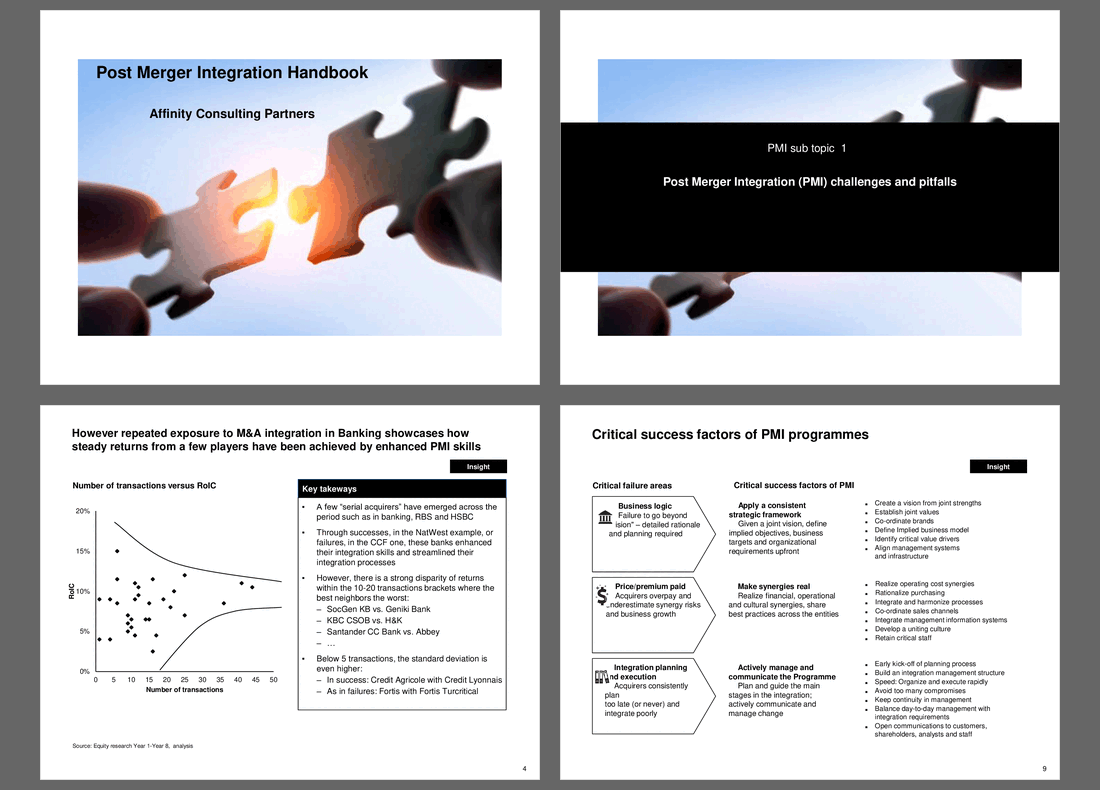
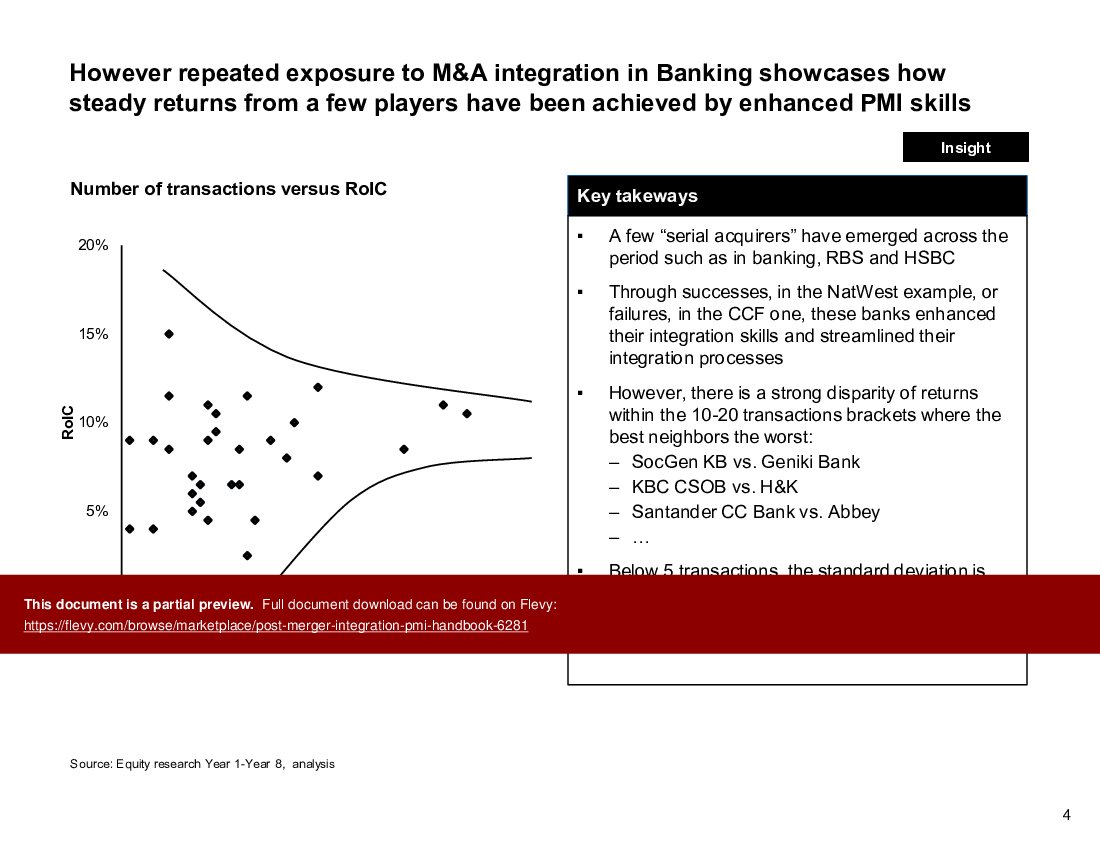
This PPT slide illustrates the correlation between mergers and acquisitions (M&A) transactions in the banking sector and return on invested capital (RoIC). It identifies "serial acquirers," such as RBS and HSBC, that achieve favorable outcomes through effective post-merger integration (PMI). A downward trend in the scatter plot indicates that increased transaction volume often leads to declining RoIC, highlighting that success in M&A varies significantly among banks. For example, comparisons between SocGen KB and Geniki Bank reveal stark differences in integration effectiveness. Banks with fewer than 5 transactions show even greater variability in outcomes, as seen in Credit Agricole's success with Credit Lyonnais versus Fortis's failure with Fortis Turctricial. Effective integration processes are crucial for maximizing M&A potential.
This PPT slide outlines comprehensive communication strategies for mergers, targeting various stakeholder groups including the marketplace, financial community, client team, and others. Key objectives include avoiding short-term thinking in the marketplace, demonstrating merger value to owners, and reducing employee uncertainty through internal communication. Internal strategies focus on motivating employees and addressing personal and group implications of the merger to foster a smooth transition. Communication with external stakeholders, such as government entities and local communities, must comply with regulatory requirements while ensuring consistent messaging. This strategic approach is essential for maintaining trust and facilitating successful integration throughout the merger process.
The evolving role of the Project Management Office (PMO) spans 3 integration phases. In Phase 1, the PMO focuses on information gathering and analysis, including external benchmarking and market observation. Responsibilities include planning programs and sub-projects, with client interaction involving quantitative data collection and stakeholder interviews. Phase 2 shifts to defined project management activities, emphasizing business plan definition, target operating model, and ongoing program management. Client engagement includes regular reviews with business leaders and joint-staffed working groups. By Phase 3, the PMO integrates into project operations, coordinating and managing working groups, addressing problem resolution, and enhancing communication channels. Change management and cultural integration are prioritized, with refined tools and processes to ensure transparency and effective decision-making throughout the integration journey.
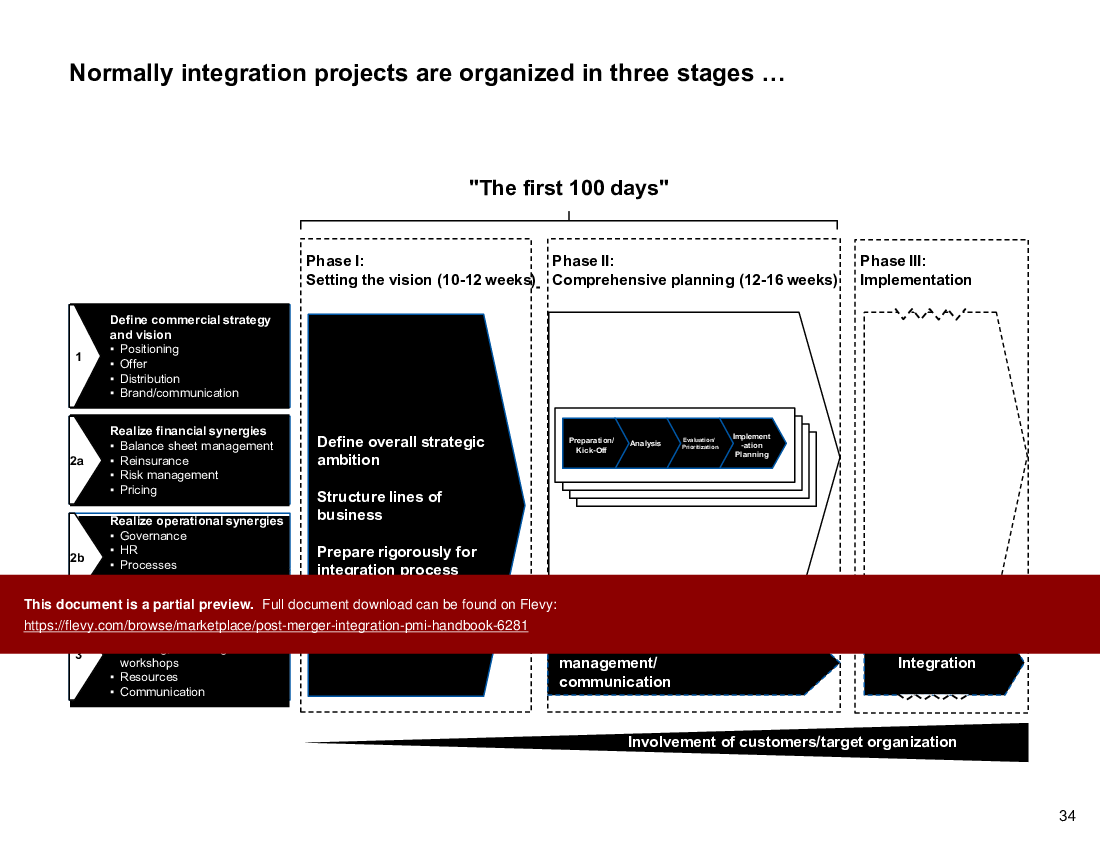
This PPT slide outlines a structured approach to integration projects through a three-phase process. The first phase, "Setting the vision," lasts 10 to 12 weeks and focuses on defining strategic ambition, structuring lines of business, and preparing for integration. Key tasks include defining the commercial strategy, positioning, offer, distribution, and brand communication.
The second phase, "Comprehensive planning," spans 12 to 16 weeks and involves detailed preparation, analysis, and developing a comprehensive implementation plan. It emphasizes realizing financial and operational synergies, covering aspects such as balance sheet management, reinsurance, risk management, governance, human resources, and purchasing.
The final phase, "Implementation," executes the plans from earlier phases to ensure effective integration and realization of synergies. Program management and clear communication are essential throughout the integration process for success.
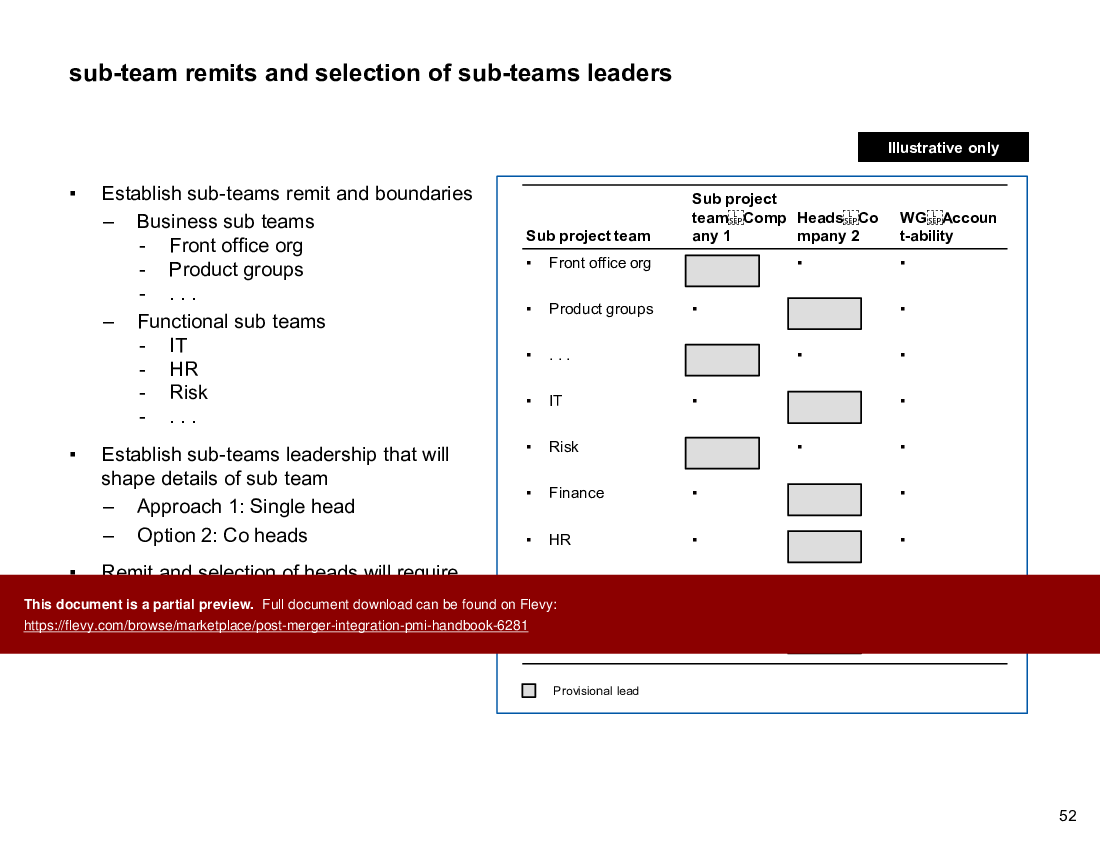
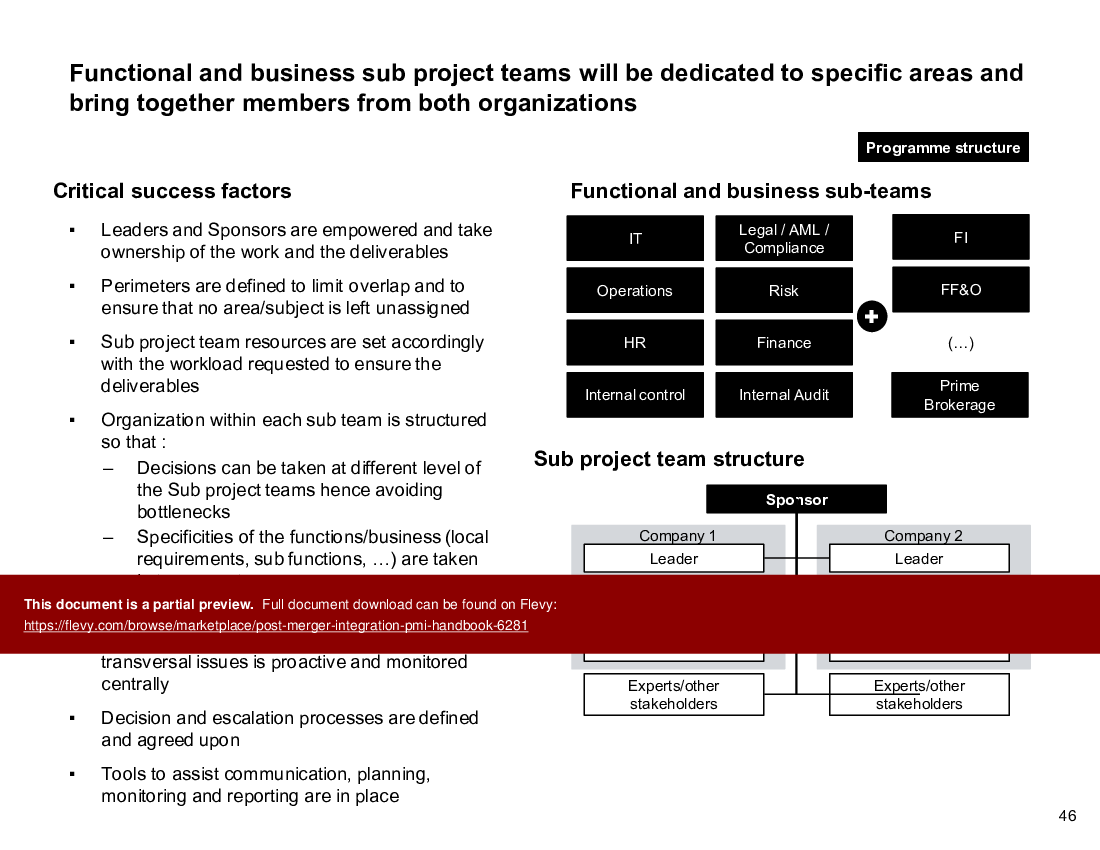
This PPT slide outlines the roles of executive sponsors and leaders in post-merger integration. Executive sponsors are ultimately accountable for their sub-teams' success, including ownership of integration deliverables to the board. Key components of the sub-team's charter include scope, critical tasks, and deliverables from Day 1 post-closing, aligned with the strategic and operational model of the new organization. Resource allocation should involve contributions from existing teams, with alternative staffing solutions for specific needs. Decision-making processes may require escalation to a steering committee. Validation of deliverables is essential for alignment with the integration strategy, and realizing synergies must be planned within the sub-team's scope. Leaders manage sub-teams daily, validating work streams and addressing bottlenecks while facilitating decision-making and integration support.
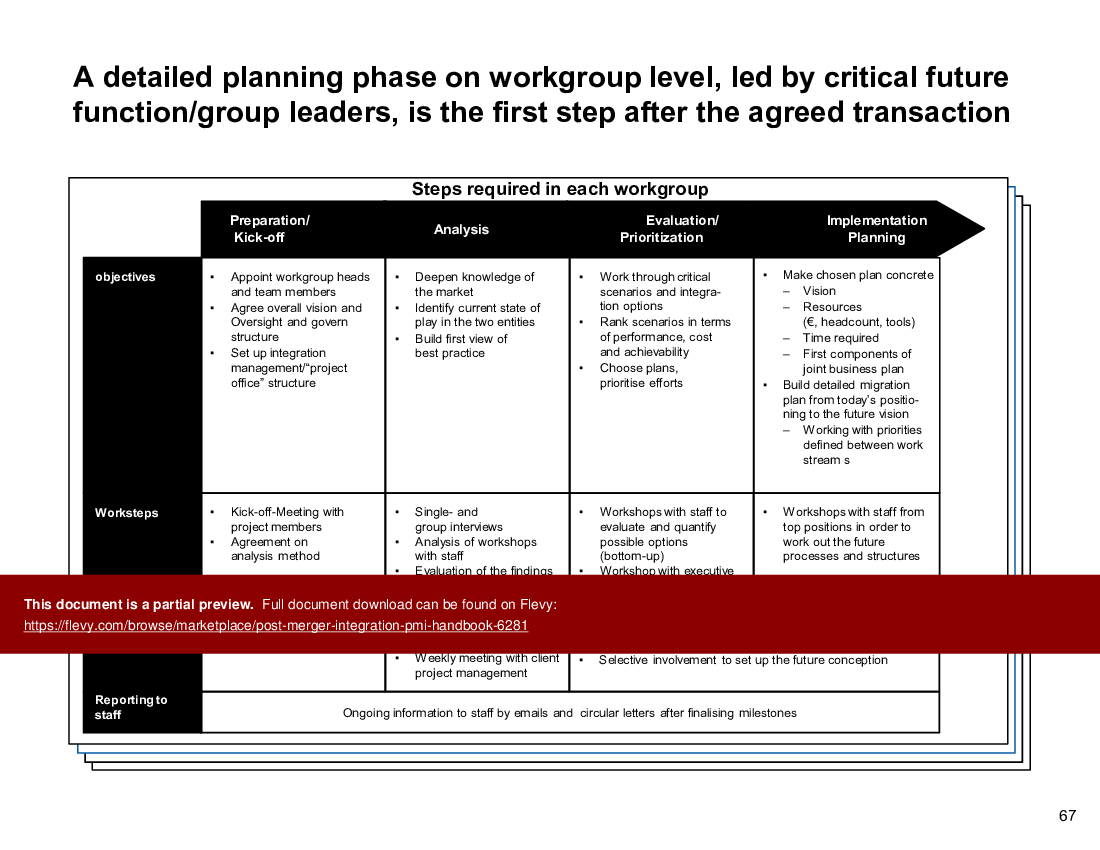
This PPT slide outlines a structured approach to the analysis phase of post-merger integration, detailing 4 sequential activities. The "Preparation/kick-off" phase sets the stage for analysis. The first component, "Analysis of structures and processes," focuses on understanding the operational organization and structure of merging entities through interviews and document reviews. Key areas include operational systems, process frequencies, quality standards, capacity, skills, and competencies to identify strengths and weaknesses for integration strategy. The second component, "Strategic analysis," examines market dynamics from customer and competitor perspectives, including sales analysis and risk-return positioning, while exploring leveraging opportunities through benchmarking for earnings and savings potential. This approach ensures a comprehensive understanding of internal capabilities and external market conditions for effective integration planning.
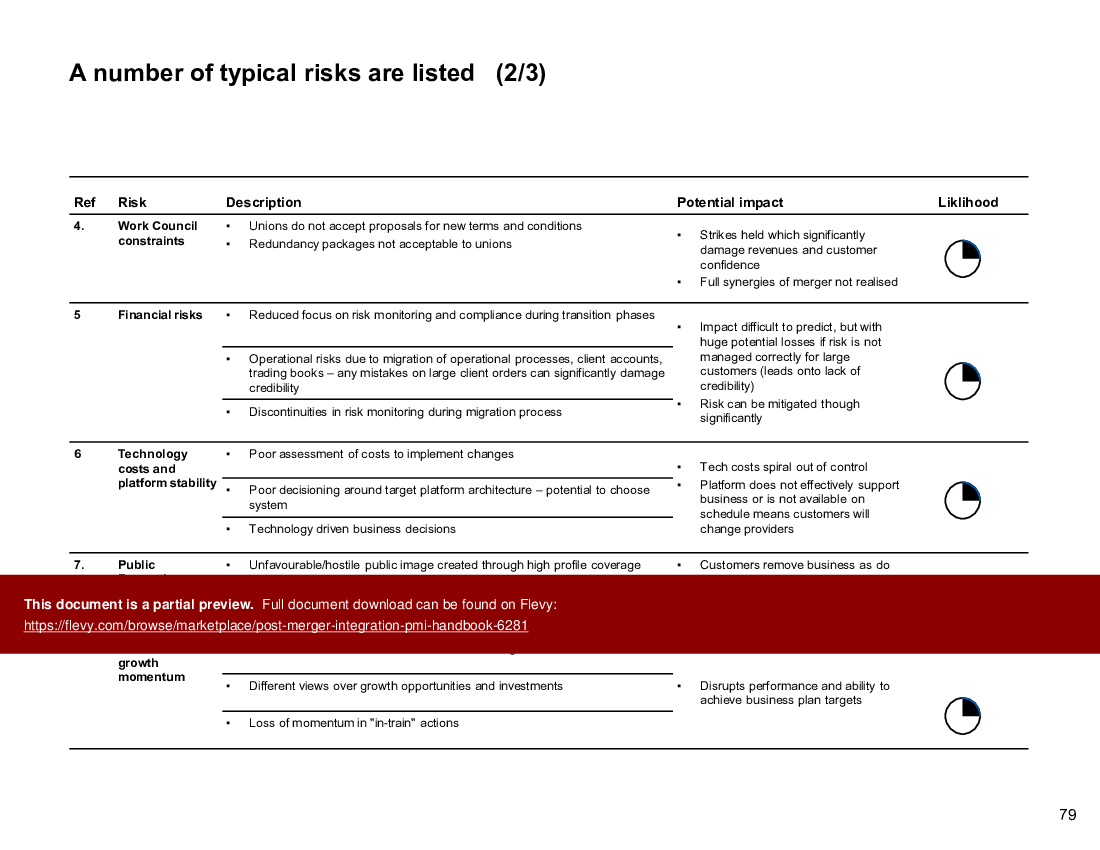
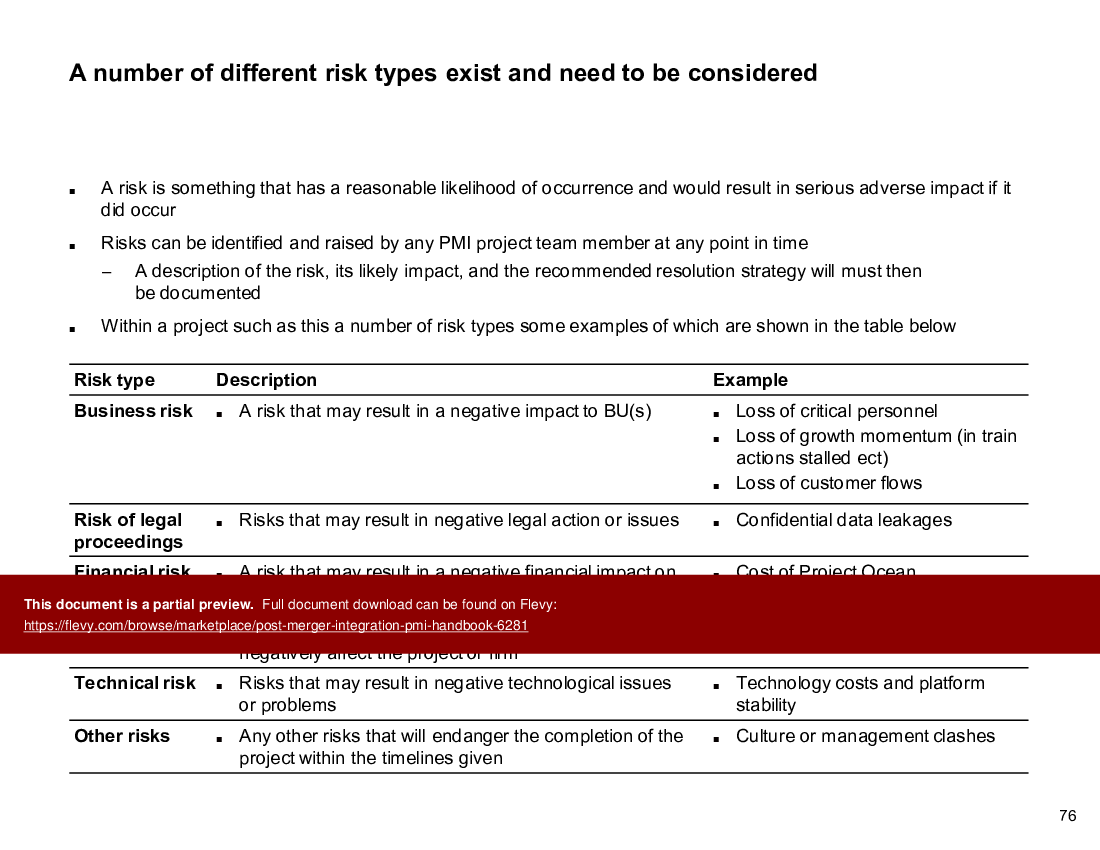
This PPT slide outlines typical risks in post-merger integration:
1. Work Council Constraints: Challenges with unions rejecting new terms can lead to strikes, damaging revenues and customer confidence, hindering merger synergies.
2. Financial Risks: Reduced focus on risk monitoring during transitions can lead to operational errors, significantly damaging credibility with large customers and resulting in substantial losses.
3. Technology Costs and Platform Stability: Poor implementation cost assessments and inadequate platform architecture decisions can escalate tech costs and lead to customer attrition if the platform fails to meet business needs.
4. Public Perception: An unfavorable public image, worsened by inaccurate press coverage, can drive customer attrition as businesses distance themselves from perceived internal conflicts.
5. Loss of Growth Momentum: Conflicting views on growth opportunities can create confusion about the merger's rationale, disrupting performance and hindering business target achievement.
This PPT slide outlines deliverables from an executive workshop structured into 5 workstreams (WS1 to WS5) for project integration. WS1 focuses on foundational activities, including setting up sub-teams, agreeing on team charters, defining the work plan, and identifying Day 1 critical processes. WS2 emphasizes detailed planning with deliverables such as the target structure, the first draft of the integration plan and budget, and bottom-up synergy calculations for potential benefits. WS3 requires a signed-off comprehensive target structure, a refined draft of the integration plan, and a review of Day 1 critical processes. WS4 finalizes deliverables for validation, including updated synergies and bottom-up reconciliation with top-down targets. WS5 centers on execution, delivering finalized synergy calculations, implementation of Day 1 critical processes, and a detailed integration plan to ensure project success.
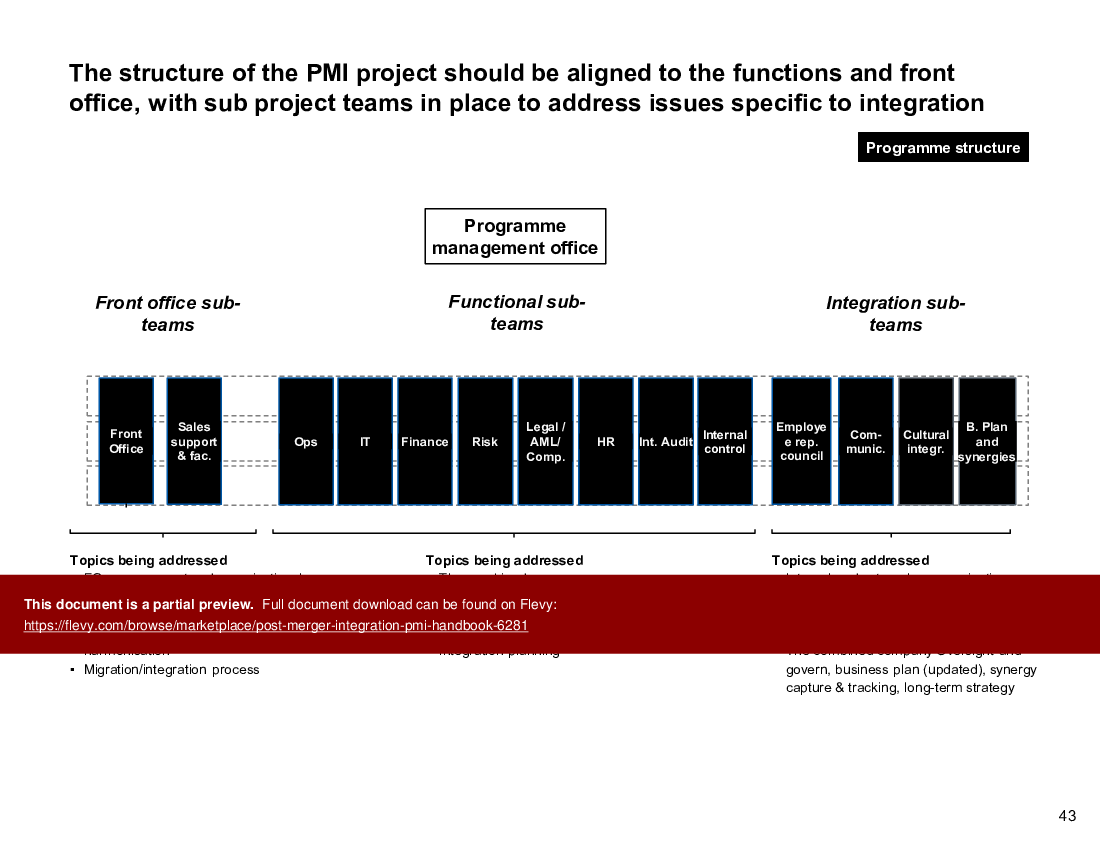
This PPT slide outlines a planning tool for standardizing task documentation in phase 2 of project management. It provides a uniform format for subteams to record tasks, ensuring consistency and facilitating the development of sub-team work plans. These validated plans will be used by the Programme Management Office to track sub-team progress, maintaining alignment across teams. Clear ownership for each deliverable is emphasized to ensure accountability, alongside adherence to a defined planning hierarchy of sub-team, workstream, deliverable, and task levels. This structured approach enhances connections between tasks and deliverables, improving overall project coherence. The visual representation illustrates the hierarchical structure of sub-project teams, aiding stakeholder understanding of project scope and progress.
This PPT slide outlines 4 types of integration processes based on transaction timing and management perspective. The "Let's do it" category emphasizes immediate action, initiating integration right after signing for open information exchange. "Slowly, Slowly" represents a cautious strategy with a significant time lag between signing and closing, limiting sensitive information exchange and hindering decision-making. The "Pax Romana" approach also requires immediate action, but includes a structured pre-integration phase to establish mutual understanding and business guidelines, with leadership playing a critical role. Lastly, the "Suspicion" category adopts a defensive stance, avoiding integration planning and focusing on rigid guidelines to stabilize the business and address transaction-related insecurities. Understanding these integration types helps organizations tailor strategies to enhance integration success.
This PPT slide outlines critical deliverables and risks for Finance Sub project teams during mergers and acquisitions. Establishing a clear finance structure includes defining the finance "charter," scope, and detailing the target organization at global, regional, and local levels. Comprehensive job descriptions for key finance roles—controllers, financial analysts, and accountants—are essential for clarity in responsibilities. Documenting finance processes is crucial for global and regional consolidation, assessing technological requirements, and selecting platforms for management and accounting systems. Pro-forma integration must consider integration costs and potential synergies in next year's budgets. Aligning finance policies across merged entities, including capital requirements and cash management strategies, is necessary. Critical risks include compliance with country-specific reporting requirements, timing of budget approvals, and the complexities of creating new activities in certain locations.
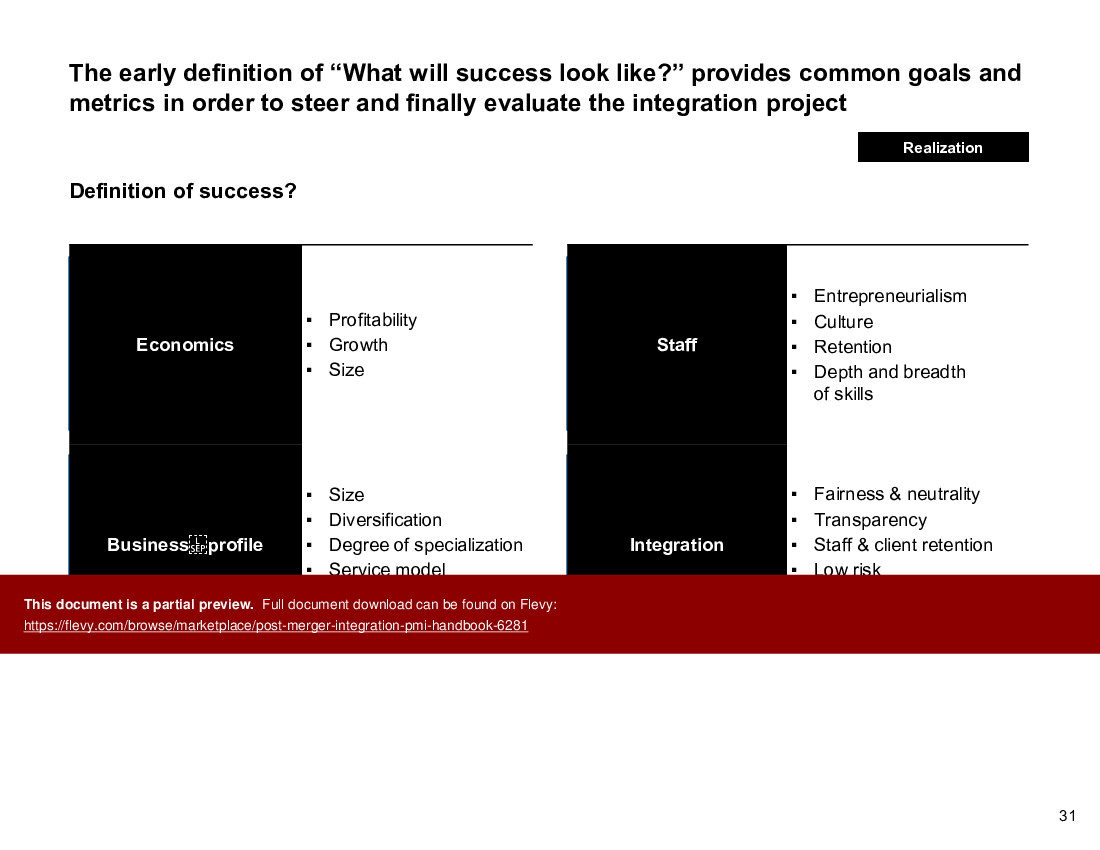
This PPT slide outlines critical success factors for effective Post Merger Integration (PMI). Key areas include the integrative process, transaction preparation, negotiation, and PMI execution. The integrative process requires a continuous approach, avoiding fragmentation between preparation, transaction, and PMI phases to ensure alignment. Preparation involves establishing strategic fit and direction before due diligence, defining business model cornerstones, and estimating potential synergies for value creation. The negotiation phase emphasizes quantitative and qualitative due diligence, assessing valuation, risk profile, and softer factors like organizational culture. The PMI section stresses the need for clear objectives, integration models, proactive preparation, and customized communication strategies to facilitate smoother integration post-transaction.
This PPT slide outlines a structured approach to value creation during post-merger integration, divided into 2 sections: "Achieve operational targets" and "Create one company."
In "Achieve operational targets," key activities include setting goals, creating an integration framework, optimizing resources, and developing a joint go-to-market mechanism to enhance market penetration. Reducing overlaps and integrating programs streamline operations and eliminate redundancies.
The "Create one company" section emphasizes cultural and strategic alignment through implementing a global vision, fostering a shared organizational culture, and managing change effectively to navigate integration complexities.
This approach aligns operational goals with cultural integration, engaging all organizational levels for long-term success.
This PPT slide outlines the "Integration Programme" essential for the conclusion of phase one in mergers and acquisitions. The "Consolidated" section connects the Group's overarching objectives with specific business goals, emphasizing alignment across the organization. The "Exhaustive" section highlights the need for a formalized integration plan, detailing projects, strategic choices, and prioritizing actions for clarity. The "Changing" section addresses the dynamic nature of integration, stressing the importance of updating actions based on progress and trade-offs, indicating that flexibility is crucial. The "Binding" section underscores the collaborative effort of business heads and project managers in producing the integration plan, ensuring stakeholder commitment to defined objectives. This framework emphasizes alignment, detailed planning, adaptability, and collaboration for successful integration outcomes.
This PPT slide outlines critical success factors for Post Merger Integration (PMI) programs, contrasting them with common failure areas. A key risk is the failure to establish a robust business rationale, necessitating a consistent strategic framework that includes creating a joint vision, defining objectives, and aligning business targets. Financial considerations highlight the risks of overpaying for acquisitions, emphasizing the need to realize tangible synergies through best practices and process integration. Lastly, effective integration planning and execution are crucial, as poor planning often leads to failures. Success factors include managing and communicating the integration program, planning integration stages, and maintaining clear communication to mitigate risks and enhance integration success.
The transaction lifecycle includes distinct phases: Idea Generation, Sourcing, Analysis/Due Diligence/Decision Making, Structure and Execution, Post Merger Integration (PMI), Post Acquisition & Portfolio Value Enhancement, and Exit/Portfolio Management.
In Idea Generation, activities involve industry selection, observing industry evolution, and identifying emerging ideas, which set the foundation for future transactions by screening potential acquisitions and understanding value migration.
Sourcing focuses on proactively identifying opportunities through networking and introductions.
The Analysis phase includes competitor analysis, stakeholder assessment, and evaluating business models and profitability, with due diligence as a critical step for informed decision-making.
Structure and Execution cover deal-making aspects, including program management and integrating IT and operations processes.
Post Merger Integration is essential for realizing synergies and managing organizational models to achieve merger goals.
Post Acquisition & Portfolio Value Enhancement emphasizes turnaround strategies and new value propositions.
Finally, Exit/Portfolio Management involves finding strategic buyers and articulating transaction rationale.
This PPT slide highlights the significance of weekly issue log submissions by sub-teams within a program management framework. Key objectives include providing standardized templates for reporting issues, which ensures clarity and consistency. Consolidating information allows the program management office to maintain a comprehensive view of reported issues, essential for informed decision-making and prioritization. Uniform monitoring of sub-teams enhances resource management and expedites issue resolution. Tracking outstanding, in-progress, and resolved issues, along with proposed solutions and assigned owners, fosters accountability and follow-up. An example tool, likely a template or spreadsheet, visually represents a structured approach to logging issues, facilitating communication among teams and the program management office, critical for effective issue management.
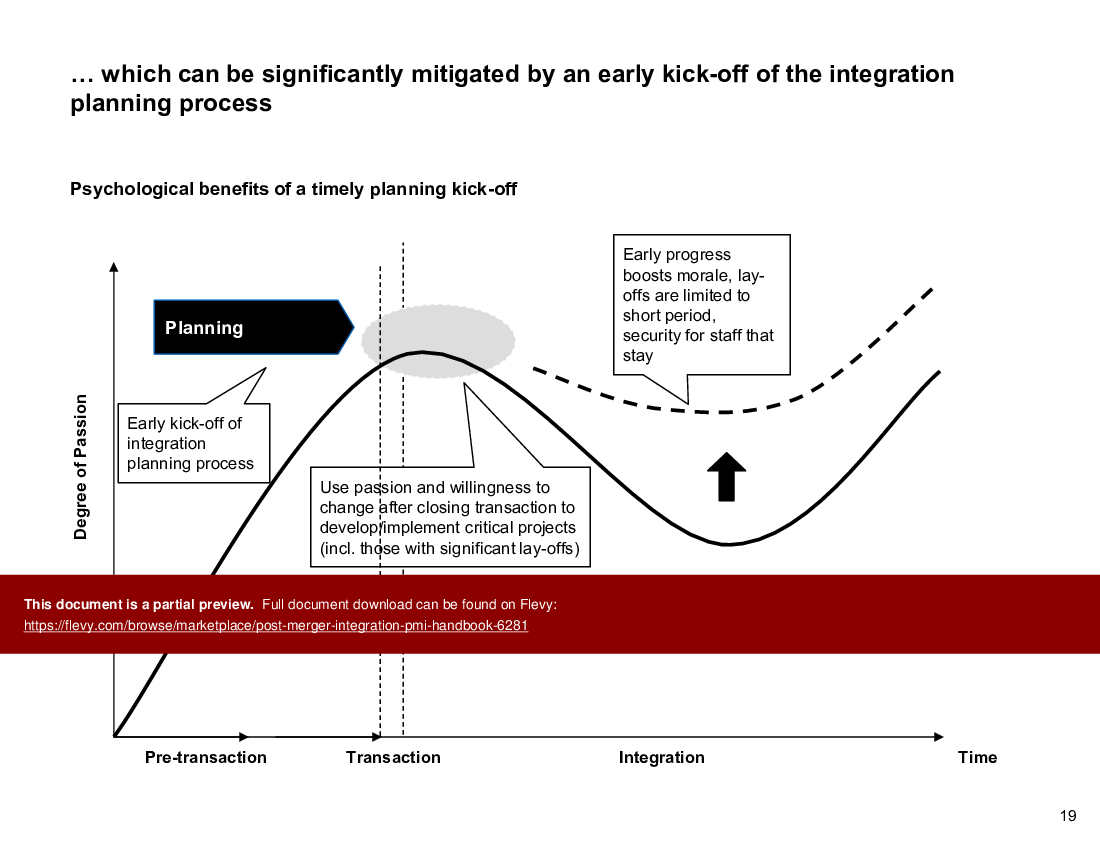
This PPT slide discusses the integration planning process following a merger or acquisition. It presents a graph showing the relationship between planning timing (x-axis) and team passion (y-axis). Early integration planning correlates positively with increased employee enthusiasm and commitment. Prompt planning boosts morale and reduces the duration of layoffs, providing security for remaining staff. Harnessing initial passion post-transaction can facilitate critical projects, including difficult decisions like layoffs. The upward arrow in the visual reinforces that timely planning improves psychological and operational outcomes. Proactive integration planning mitigates negative impacts on employee morale and engagement, leading to a smoother transition and effective integration process.
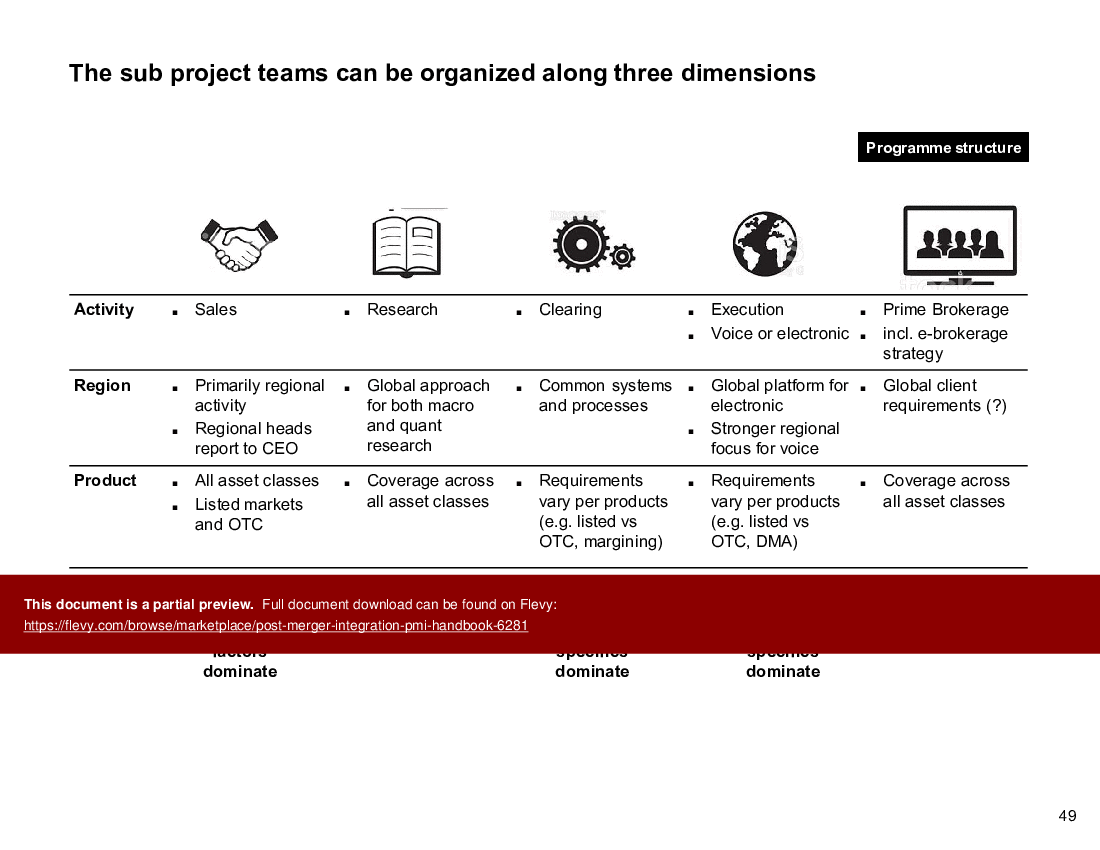
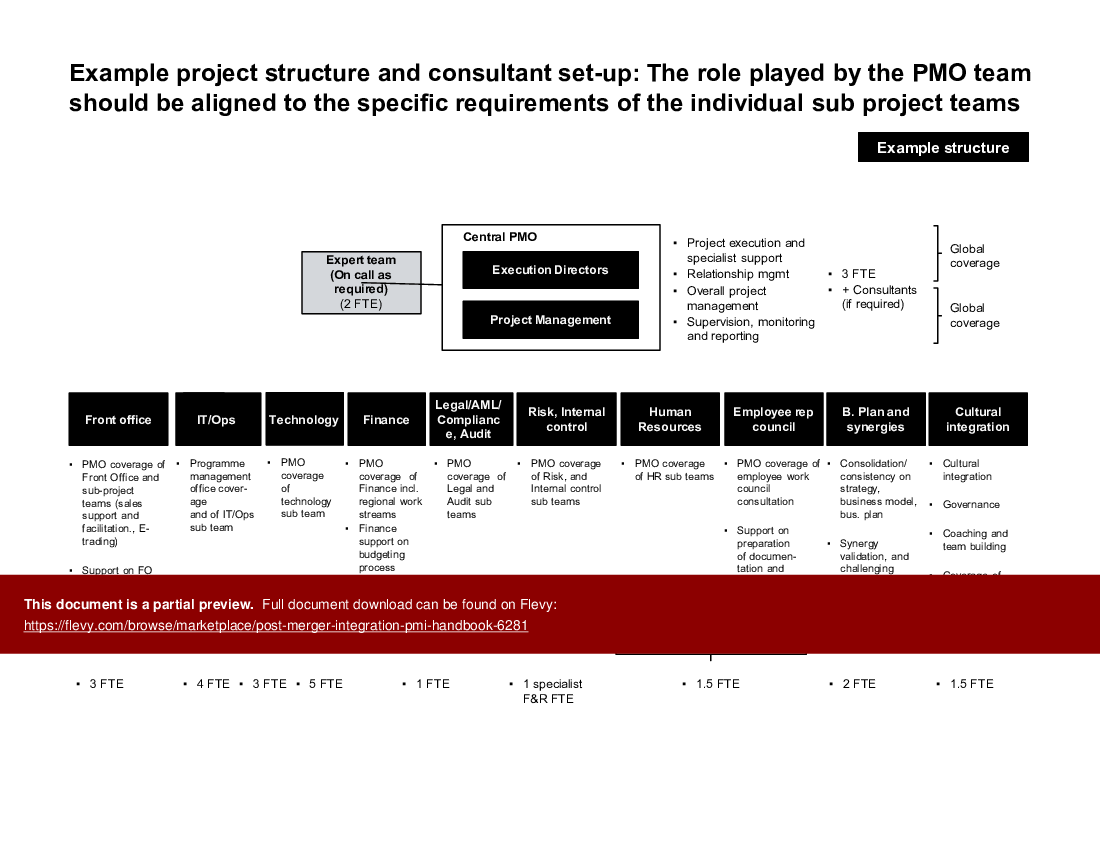
This PPT slide outlines a framework for organizing sub-project teams across 3 dimensions: Activity, Region, and Product. The Activity dimension includes functions such as Sales, Research, Clearing, Execution, and Prime Brokerage, with specific roles that contribute to project objectives. The Region dimension emphasizes local management of regional activities, suggesting a decentralized approach with regional heads reporting to the CEO. This structure balances local insights with global strategic goals. The Product dimension covers all asset classes, focusing on listed markets and over-the-counter (OTC) products, requiring specialized knowledge to meet diverse market needs. The hierarchy indicates that regional factors dominate decision-making, while product specifics are prioritized further down.
This PPT slide outlines a structured framework for managing work streams in post-merger integration. It features a Programme Manager overseeing integrated information across key areas: IT and Operations, Management and Control, Data and Reporting, and Operations. Each area has designated owners to ensure accountability. The IT and Operations section includes 2 layers for overall integration and detailed sub-projects, allowing for both broad oversight and focused attention. The Management and Control segment highlights the importance of accurate data tracking and analysis during integration. The Operations section indicates the use of various formats, such as MS Project, suggesting an adaptive strategy for project needs. This framework ensures alignment with overarching integration goals.
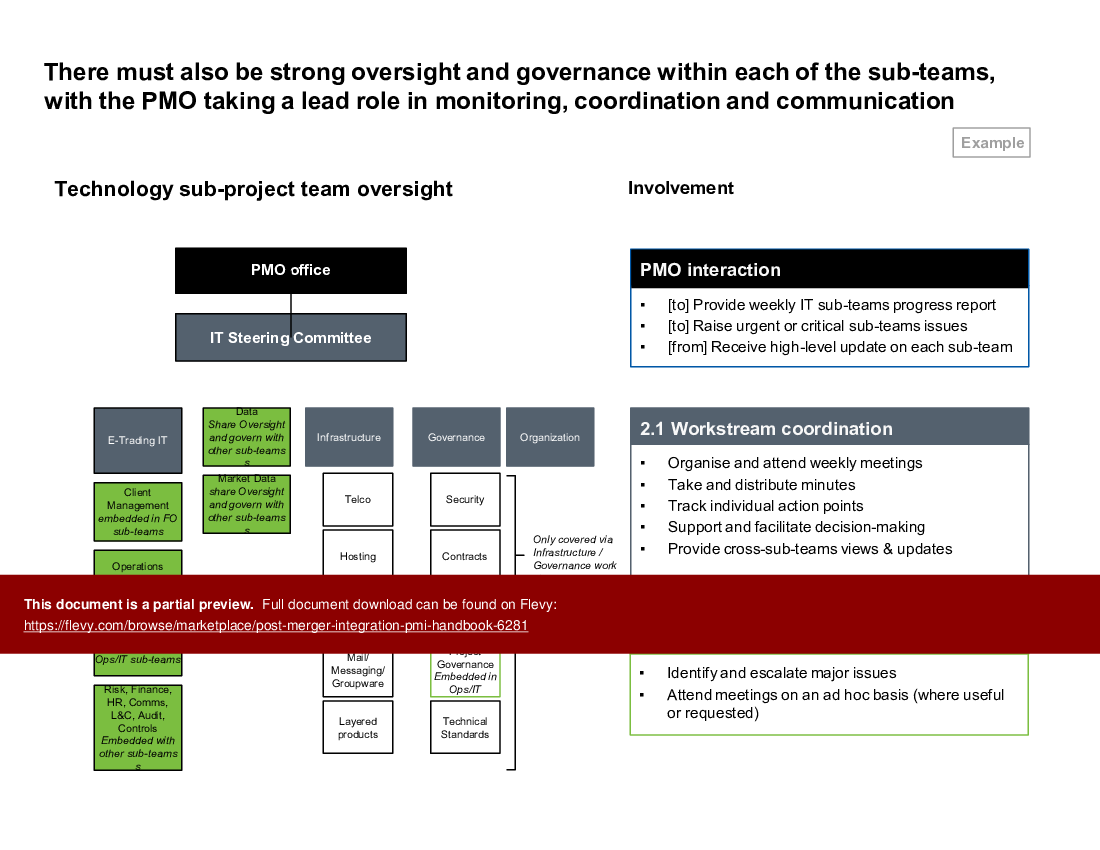
This PPT slide outlines a governance framework for technology sub-project teams, emphasizing the PMO's (Project Management Office) role in monitoring and coordinating activities. The PMO collaborates with the IT Steering Committee to ensure alignment across sub-teams, such as E-Trading IT and Infrastructure, which share oversight responsibilities. The E-Trading IT team integrates client management and operations, covering all aspects of trading technology. The PMO provides weekly progress reports, raises urgent issues, and receives high-level updates, facilitating communication and timely decision-making. Workstream coordination includes organizing weekly meetings, distributing minutes, and tracking action points to support project alignment. The slide also highlights the importance of promptly identifying and escalating major workstream issues to mitigate risks and keep the project on track.
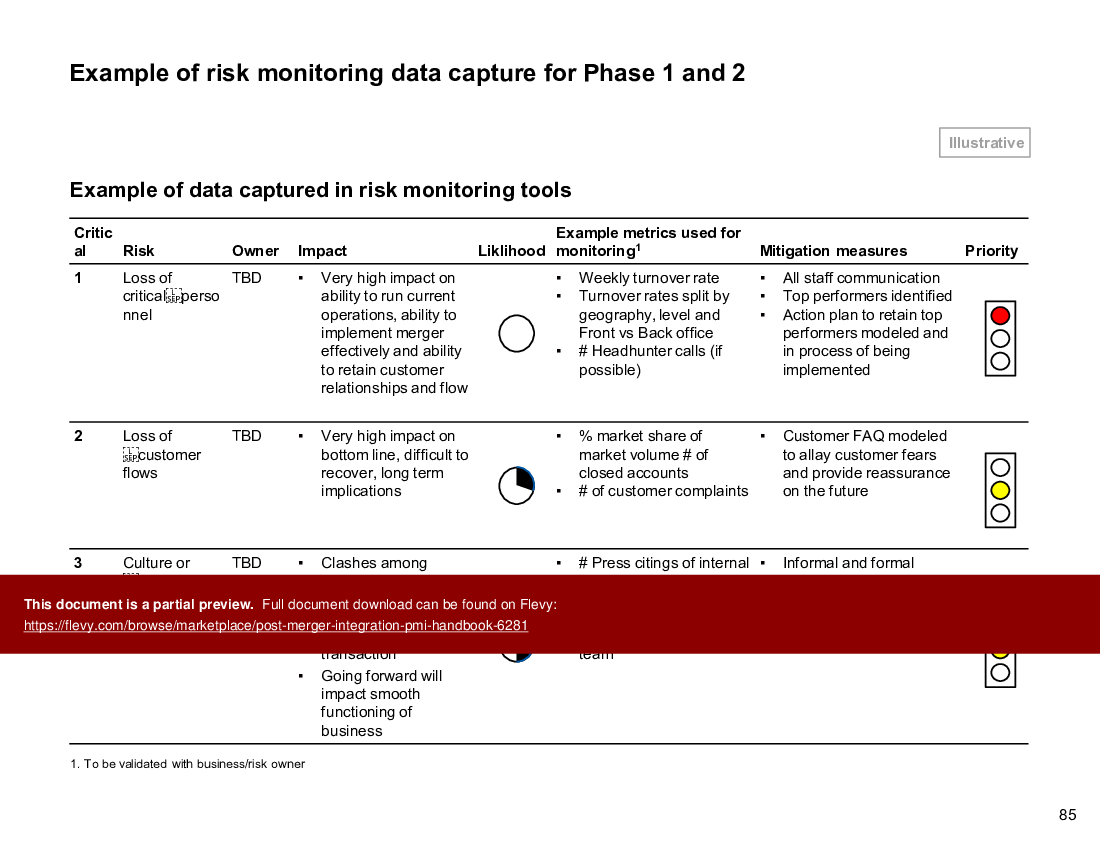
This PPT slide outlines the financial impact of losing key sales personnel during a merger, emphasizing that the departure of top producers directly affects revenues through lost client relationships and business disruption. Retention strategies are essential to mitigate the "sales dip" post-merger, as isolated efforts like salary increases may be insufficient; for example, an 80% salary increase offered to retain a specialized salesperson is reactive. The competitive landscape poses risks of poaching by competitors, illustrated by a company attracting talent due to an upcoming IPO. Retention mechanisms should be strategically linked to sales targets, utilizing staggered payments to incentivize long-term performance, indicating a shift towards structured, performance-based retention strategies to protect revenue streams during transitions.
This PPT slide outlines the critical role of synergies in value creation, focusing on operational and cultural elements. The left branch, "Achieve operational targets," includes financial synergies, optimal organization and structure, and world-class processes, which ensure operational alignment and efficiency. The right branch emphasizes a unified company culture with points such as "One firm, one look" for cohesive brand identity, "One global strategy: Vision-values-mission" for shared strategic direction, and "Common and combined culture" for integrating diverse cultural elements post-merger. Additionally, "Synergy realization progress and monitoring of status" highlights the importance of tracking synergy effectiveness for sustained success. This framework aids executives in navigating post-merger integration complexities, prioritizing operational efficiencies and cultural alignment for sustainable value creation.
This PPT slide outlines the parties involved in the post-merger integration process, categorized into internal and external groups. Executive management includes Finance, Accounting and Tax, Legal, Marketing and Sales, Operations, HR, and Corporate Development, emphasizing leadership's role in integration. A process coordinator and joint project execution committee drive the integration and delegate tasks to specialized teams, ensuring smooth execution. External parties include investment bankers, lawyers, auditors/accountants, management consultants, pension consultants, and investors/asset specialists. Investment bankers act as intermediaries, lawyers identify legal risks, auditors focus on compliance, management consultants assist with strategic due diligence, pension consultants evaluate pension plans, and investors reassess portfolios. This overview highlights the collaborative nature of post-merger integration and the contributions of various experts.
Source: Best Practices in Post-merger Integration PowerPoint Slides: Post Merger Integration (PMI) Handbook PowerPoint (PPTX) Presentation Slide Deck, Affinity Consulting Partners
The Affinity Consulting Partnership is a global powerhouse of experienced consultants, specializing in technology and digital-driven change.
Our team is comprised of individuals across the globe who have extensive expertise and a proven track record in guiding large corporations across the globe through complex business transformations. Our partners were all at some stage senior consulting
... [read more] professionals at tier 1 global consulting firms over half our staff have been equity partners in the past at these firms.
With a combined experience of over 120 years, our partners bring a wealth of knowledge and insights to the table. Each member of our team has a distinguished background, having served as a top-level executive and trusted advisor to the C-suite of major corporations. Our partners have honed their skills and expertise through years of hands-on experience, leading successful consulting engagements across a wide range of industries, including finance, healthcare, retail, manufacturing, and more.
Our partners have a keen eye for identifying emerging trends and disruptions in the business landscape and are adept at developing innovative strategies to help our clients stay ahead of the curve.

As a team, we are dedicated to driving meaningful results for our clients, helping them navigate the complexities of technology and digital-driven change, and unlocking new opportunities for growth and success. Our partners are trusted advisors and thought leaders in the industry, and we are committed to providing exceptional service and creating lasting partnerships with our clients.

Since 2012, we have provided business templates to over 10,000 businesses and organizations of all sizes, from startups and small businesses to the Fortune 100, in over 130 countries.
"[Flevy] produces some great work that has been/continues to be of immense help not only to myself, but as I seek to provide professional services to my clients, it gives me a large "tool box" of resources that are critical to provide them with the quality of service and outcomes they are expecting."
– Royston Knowles, Executive with 50+ Years of Board Level Experience
"My FlevyPro subscription provides me with the most popular frameworks and decks in demand in today’s market. They not only augment my existing consulting and coaching offerings and delivery, but also keep me abreast of the latest trends, inspire new products and service offerings for my practice, and educate me
in a fraction of the time and money of other solutions. I strongly recommend FlevyPro to any consultant serious about success.
"
– Bill Branson, Founder at Strategic Business Architects
"Flevy is our 'go to' resource for management material, at an affordable cost. The Flevy library is comprehensive and the content deep, and typically provides a great foundation for us to further develop and tailor our own service offer."
– Chris McCann, Founder at Resilient.World
"The wide selection of frameworks is very useful to me as an independent consultant. In fact, it rivals what I had at my disposal at Big 4 Consulting firms in terms of efficacy and organization."
– Julia T., Consulting Firm Owner (Former Manager at Deloitte and Capgemini)
"As a consulting firm, we had been creating subject matter training materials for our people and found the excellent materials on Flevy, which saved us 100's of hours of re-creating what already exists on the Flevy materials we purchased."
– Michael Evans, Managing Director at Newport LLC
"Last Sunday morning, I was diligently working on an important presentation for a client and found myself in need of additional content and suitable templates for various types of graphics. Flevy.com proved to be a treasure trove for both content and design at a reasonable price, considering the time I
saved. I encountered a download issue during the ordering process. However, a quick email to Flevy's support team, even on a Sunday (!!!), resulted in assistance within less than an hour, allowing me to download the content I needed. Fantastic job, Flevy! I give 5 stars for both content/price and customer service. Thank you!
"
– M. E., Chief Commercial Officer, International Logistics Service Provider
"If you are looking for great resources to save time with your business presentations, Flevy is truly a value-added resource. Flevy has done all the work for you and we will continue to utilize Flevy as a source to extract up-to-date information and data for our virtual and onsite presentations!"
– Debbi Saffo, President at The NiKhar Group
"FlevyPro provides business frameworks from many of the global giants in management consulting that allow you to provide best in class solutions for your clients."
– David Harris, Managing Director at Futures Strategy
Save with Bundles
This document is available as part of the following discounted bundle(s):
Receive our FREE presentation on Operational Excellence
This 50-slide presentation provides a high-level introduction to the 4 Building Blocks of Operational Excellence. Achieving OpEx requires the implementation of a Business Execution System that integrates these 4 building blocks.