
ITIL Service Level Agreement Template   27-page Word document
$30.00

ITIL Service Level Agreement Template (27-page Word document) Preview Image
Log in to unlock full preview.
ITIL Service Level Agreement Template (27-page Word document) Preview Image
Arrow   Click main image to view in full screen.

ITIL Service Level Agreement Template (Word DOC)

Word (DOC) 27 Pages

Top 1,000 Best Practice $30.00

Add to Cart


Immediate download
Fully editable Word
Free lifetime updates

ITIL WORD DESCRIPTION

Editor Summary The ITIL Service Level Agreement Template is a 27-page DOC by Dartview Consulting providing an ITIL V3–based SLA document to define services, committed service level targets, roles, responsibilities, and performance metrics. Read more

This document is an ITIL V3 based Service Level Agreement Template.

A Service Level Agreement is an agreement between an IT Service Provider and a Customer. It describes the Services being provided, the committed Service Level Targets, and the responsibilities of both IT Service Provider and Customer. It is the 'contract' between both parties and as such it must be signed by both, and then be subject to formal Change Control.

Typical contents: Service Description, Availability, Pricing, KPI's, Reporting, Review Meeting Frequency, Escalation Procedures, Key Stakeholder Contact Details, etc.

This ITIL Service Level Agreement Template by Dartview Consulting Limited is meticulously structured to cover all critical aspects of service management. The document includes a comprehensive Introduction, detailing the scope and objectives of the SLA, ensuring both parties have a clear understanding from the outset. The Business Functions section outlines the key operational areas impacted by the SLA, providing a clear framework for service delivery.

Service Levels are clearly defined, with specific KPIs for Availability and Reliability, ensuring measurable performance standards. The Service Continuity section addresses contingency planning, ensuring minimal disruption in case of unforeseen events. Charges are transparently outlined, ensuring no hidden costs, and the Service Reporting and Reviewing section ensures regular performance assessments and continuous improvement.

The Amendment Sheet at the end of the document ensures that any changes to the SLA are documented and tracked, providing a clear audit trail. This template is designed to facilitate a seamless, professional agreement between IT service providers and their customers, ensuring clarity, accountability, and high standards of service delivery.

Got a question about the product? Email us at support@flevy.com or ask the author directly by using the "Ask the Author a Question" form. If you cannot view the preview above this document description, go here to view the large preview instead.

MARCUS OVERVIEW

This synopsis was written by Marcus [?] based on the analysis of the full 27-slide presentation.


Executive Summary
The ITIL Service Level Agreement Template (DOC) is a structured document designed to assist organizations in defining the terms, roles, and metrics associated with Service Level Agreements (SLAs). This template provides a comprehensive framework that aligns with ITIL best practices, ensuring compliance and effective service management. Users can leverage this ready-to-use document to establish clear expectations, responsibilities, and performance metrics, facilitating improved service delivery and accountability across business functions.

Who This Is For and When to Use

•  IT Service Managers responsible for SLA development and management
•  Business Service Owners overseeing service delivery and performance
•  Change Management teams coordinating service modifications and updates
•  Configuration Management teams ensuring service alignment with business needs

Best-fit moments to use this deck:

•  During the initial setup of new IT services to define SLAs
•  When reviewing or updating existing SLAs to ensure relevance and accuracy
•  In service management meetings to clarify roles and responsibilities
•  For training sessions on SLA best practices and compliance

Learning Objectives

•  Define the purpose and scope of SLAs within IT service management
•  Establish clear roles and responsibilities for service owners and managers
•  Identify key performance indicators (KPIs) for monitoring service delivery
•  Develop a comprehensive service description that outlines service attributes
•  Create a structured approach for incident response and escalation procedures
•  Implement effective reporting and review processes for continuous improvement

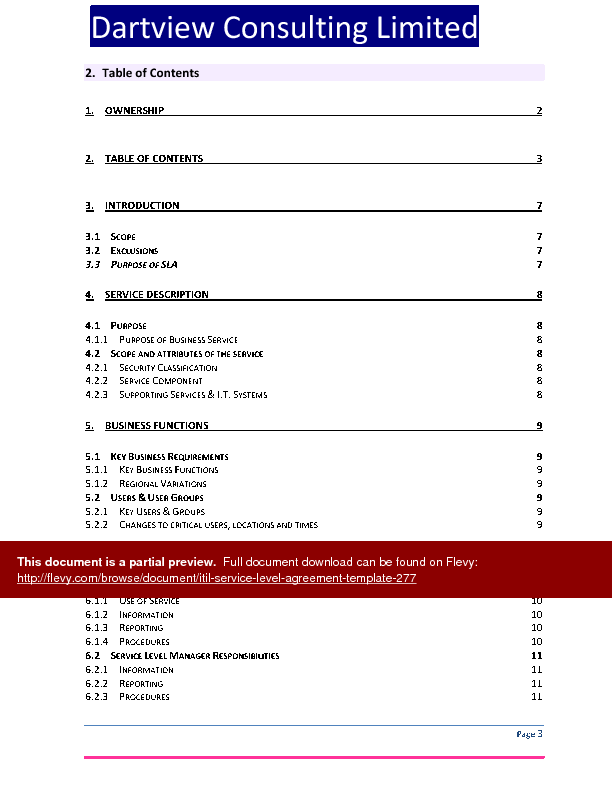
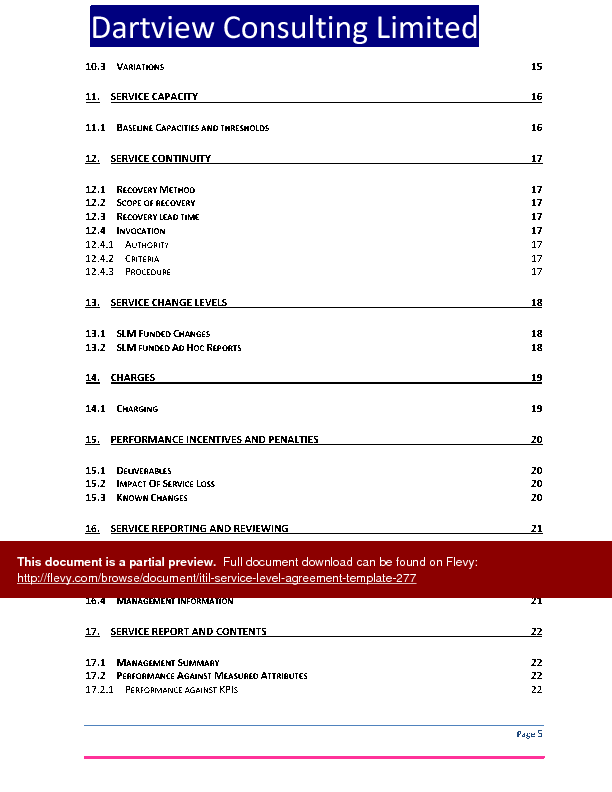
Table of Contents

•  Ownership (page 2)
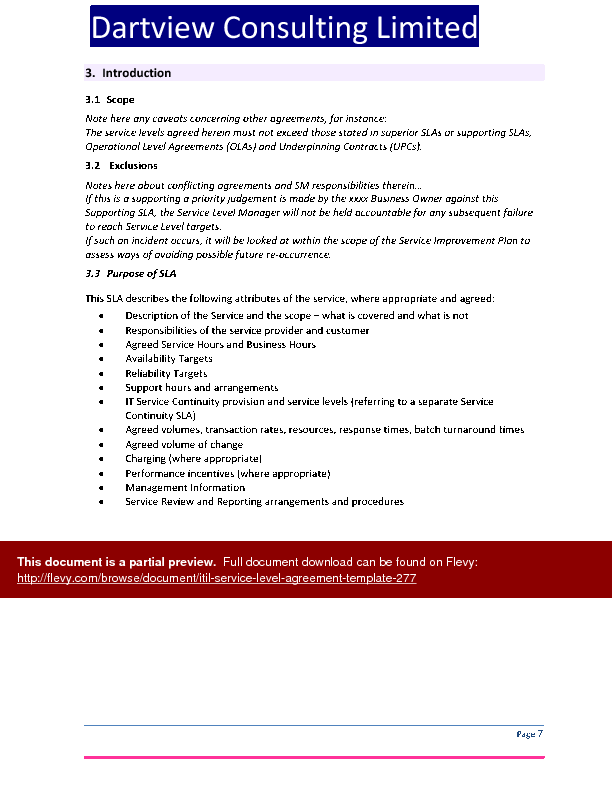
•  Introduction (page 7)
•  Service Description (page 8)
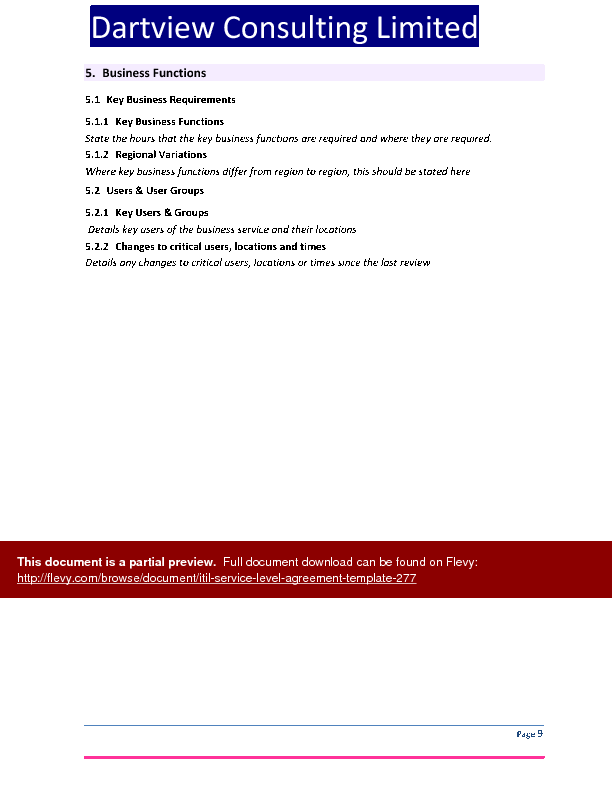
•  Business Functions (page 9)
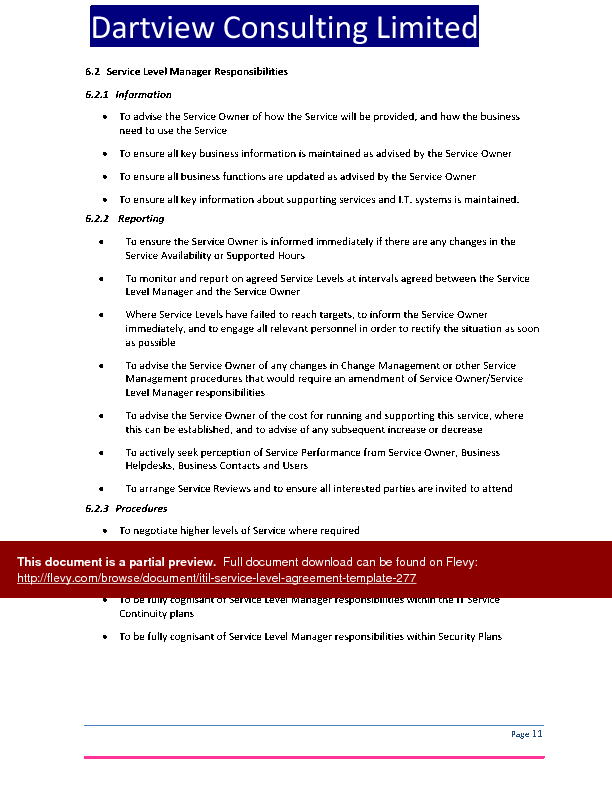
•  Responsibilities (page 10)
•  Business Hours (page 12)
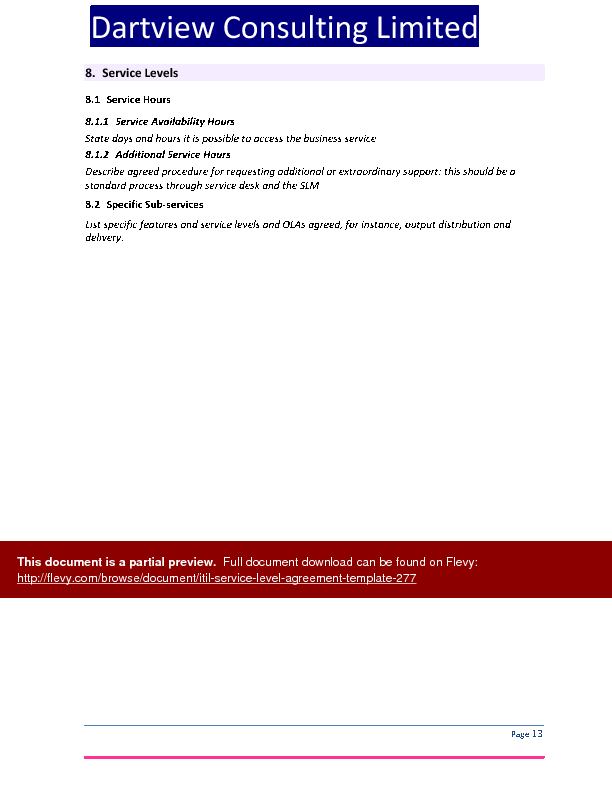
•  Service Levels (page 13)
•  Support Hours and Arrangements (page 14)
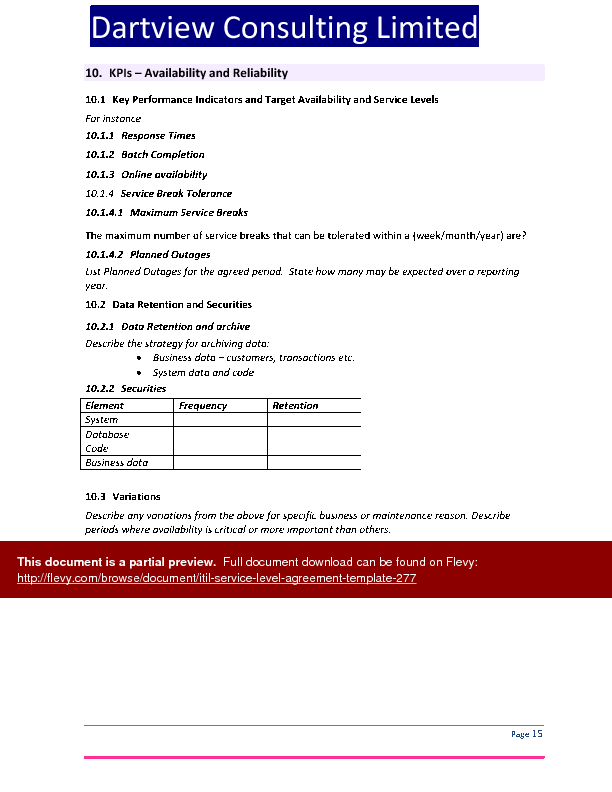
•  KPIs – Availability and Reliability (page 15)
•  Service Capacity (page 16)
•  Service Continuity (page 17)
•  Service Change Levels (page 18)
•  Charges (page 19)
•  Performance Incentives and Penalties (page 20)
•  Service Reporting and Reviewing (page 21)
•  Service Report and Contents (page 22)
•  Glossary (page 26)

Primary Topics Covered

•  Ownership - Defines the parties responsible for the SLA, including the Service Level Manager and Business Service Owner, ensuring accountability and clarity in service management.
•  Service Description - Outlines the purpose, scope, and attributes of the service, including security classifications and supporting IT systems, to provide a clear understanding of service offerings.
•  Responsibilities - Details the specific responsibilities of service owners and service level managers, emphasizing the importance of communication and adherence to procedures.
•  Business Hours - Specifies the operational hours for the service, including peak times and critical business periods, to ensure service availability aligns with business needs.
•  Service Levels - Establishes service availability hours and additional service hours, defining the expected performance standards for service delivery.
•  KPIs - Availability and Reliability - Identifies key performance indicators for measuring service effectiveness, including response times and service break tolerances.

Deliverables, Templates, and Tools

•  SLA ownership documentation template for defining roles and responsibilities
•  Service description template outlining service attributes and security classifications
•  Business hours documentation template for specifying operational and peak times
•  KPI tracking template for monitoring service performance against agreed targets
•  Incident response and escalation procedure template to manage service disruptions
•  Service reporting template for summarizing performance and improvement actions

Slide Highlights

•  Overview of SLA ownership and responsibilities, clarifying roles within the service management framework
•  Detailed service description slide, illustrating the scope and attributes of the service
•  Business hours and peak times visual, highlighting operational availability and critical periods
•  KPI metrics slide, showcasing performance indicators for service reliability and availability
•  Incident response process flowchart, outlining escalation paths and resolution timelines

Potential Workshop Agenda

SLA Development Workshop (90 minutes)
•  Review the purpose and scope of SLAs within the organization
•  Define roles and responsibilities for service owners and managers
•  Develop a draft service description and outline service attributes

KPI Setting Session (60 minutes)
•  Identify key performance indicators for service monitoring
•  Establish targets for response times and service availability
•  Discuss reporting mechanisms for tracking performance

Service Review and Improvement Meeting (90 minutes)
•  Analyze current SLA performance against established KPIs
•  Identify areas for service improvement and develop action plans
•  Review incident response effectiveness and update procedures as needed

Customization Guidance

•  Tailor the service description to reflect specific business needs and service attributes
•  Adjust business hours to align with organizational operational schedules and peak times
•  Modify KPIs to suit the unique performance metrics relevant to the service being managed
•  Update incident response procedures to reflect the organization's escalation paths and timelines
•  Include specific charges and performance incentives relevant to the service context

Secondary Topics Covered

•  Exclusions and limitations of the SLA
•  Service continuity planning and recovery methods
•  Procedures for service changes and updates
•  Reporting frequency and review processes for ongoing service evaluation
•  Management information requirements for effective service oversight

Topic FAQ

What are the core sections I should expect in an IT service SLA?

A typical IT service SLA documents ownership, an introduction, service description, business functions, responsibilities, business and support hours, defined service levels, KPIs for availability and reliability, capacity and continuity, change levels, charges, incentives/penalties, and reporting and review processes, as shown in the Table of Contents of this template.

Which KPIs are commonly tracked in an SLA to measure service performance?

SLAs commonly track availability and reliability KPIs, including response times and service break tolerances, to demonstrate service effectiveness and compliance with targets. The template provides a KPI tracking template to record and monitor these Availability and Reliability metrics.

How should incident response and escalation be structured within an SLA?

Incident response and escalation sections should define roles, response timelines, escalation paths, and resolution responsibilities to minimize disruptions. Formal procedures and timelines clarify expectations; Flevy's ITIL Service Level Agreement Template includes an incident response and escalation procedure template to document those processes.

What features should I check when selecting an SLA template for my organization?

Look for alignment with IT service management best practices (such as ITIL V3), clear ownership and roles, service descriptions, KPI tracking, incident escalation procedures, reporting templates, amendment/change control, and usable file format and length—for example, a 27-page DOC with an Amendment Sheet.

How does using a prebuilt SLA template affect customization needs and time to deploy?

A prebuilt SLA provides standard sections and templates—ownership, service description, KPIs, incident procedures and reporting—that teams can tailor to specific business hours, charges, and escalation paths. This reduces authoring from scratch and focuses effort on customization, such as adjusting KPIs and business hours templates.

What practical steps should a team follow when creating SLAs for a new service?

Begin by defining purpose and scope, assign ownership (Service Owner and Service Level Manager), draft a service description and business hours, set KPIs and targets, document incident escalation and recovery, and establish reporting and review cadence. Flevy's ITIL Service Level Agreement Template maps these steps into an SLA Development Workshop and KPI Setting Session.

How often should SLAs be reviewed to remain aligned with business needs?

SLAs should be reviewed regularly to ensure ongoing relevance; typical review frequency cited is annual or bi-annual, with reporting and review processes documented to capture performance and initiate updates as needed during formal review cycles.

In what ways do business hours and support hours influence SLA availability and pricing?

Business hours and support hours define when services must be available, identify peak and critical periods, and thereby shape service level targets, response obligations, and any charges or incentives. An SLA should document these in a Business Hours template and a Charges section for transparency.

Document FAQ
These are questions addressed within this presentation.


What is the purpose of an SLA?
An SLA defines the expected service levels, responsibilities, and performance metrics between service providers and customers, ensuring clarity and accountability in service delivery.

Who is responsible for managing the SLA?
The Service Level Manager oversees the SLA, ensuring that service levels are met and that communication between service owners and users is maintained.

What are KPIs in the context of an SLA?
KPIs, or Key Performance Indicators, are measurable values that demonstrate how effectively a service is performing against agreed-upon standards.

How often should SLAs be reviewed?
SLAs should be reviewed regularly, typically annually or bi-annually, to ensure they remain relevant and aligned with business needs.

What happens if service levels are not met?
If service levels are not met, the SLA outlines the escalation procedures and potential penalties or performance incentives to address the issue.

Can SLAs be customized for different services?
Yes, SLAs can and should be customized to reflect the specific requirements and characteristics of each service being managed.

What is the importance of defining business hours in an SLA?
Defining business hours ensures that service availability aligns with organizational needs and helps set expectations for users regarding when services can be accessed.

How do incident response times affect service delivery?
Incident response times are critical for minimizing service disruptions and ensuring that issues are resolved promptly, maintaining service reliability.

Glossary

•  SLA - Service Level Agreement, a contract defining service expectations and performance metrics
•  KPI - Key Performance Indicator, a measurable value for assessing service performance
•  Service Owner - The individual responsible for the overall management of a service
•  Service Level Manager - The person ensuring that service levels are met and maintained
•  Business Hours - The operational hours during which services are available to users
•  Incident - An unplanned interruption or reduction in the quality of a service
•  Service Continuity - The ability to maintain service delivery during disruptions
•  Change Management - The process of managing changes to services and systems
•  Configuration Management - The discipline of managing service components and their relationships
•  Performance Incentives - Rewards or penalties related to service performance against KPIs
•  Support Hours - The hours during which support services are available to users
•  Recovery Method - The approach for restoring service after a disruption

Source: Best Practices in ITIL, Contract Word: ITIL Service Level Agreement Template Word (DOC) Document, Dartview Consulting


$30.00

Add to Cart
  

ABOUT THE AUTHOR

Additional documents from author: 19

Dartview Consulting, founded by Paul Smith-Allen, specializes in industry best practice frameworks, including ITIL, PRINCE2, and MOR.

Paul is a seasoned Change Professional certified in ITIL, PRINCE2, MSP, Lean 6 Sigma, Business Relationship Management and MOR with knowledge and experience established within the Construction, Utilities, Oil & Gas, Building Services, Facilities Management, and ... [read more]

Ask the Author a Question

You must be logged in to contact the author.

Click here to log in Click here register

Did you know?
The average daily rate of a McKinsey consultant is $6,625 (not including expenses). The average price of a Flevy document is $65.
Bundle and save! You can save up to % with bundles!

View bundle(s)


Trusted by over 10,000+ Client Organizations
Since 2012, we have provided business templates to over 10,000 businesses and organizations of all sizes, from startups and small businesses to the Fortune 100, in over 130 countries.
AT&T GE Cisco Intel IBM Coke Dell Toyota HP Nike Samsung Microsoft Astrazeneca JP Morgan KPMG Walgreens Walmart 3M Kaiser Oracle SAP Google E&Y Volvo Bosch Merck Fedex Shell Amgen Eli Lilly Roche AIG Abbott Amazon PwC T-Mobile Broadcom Bayer Pearson Titleist ConEd Pfizer NTT Data Schwab


Read Customer Testimonials

 
"[Flevy] produces some great work that has been/continues to be of immense help not only to myself, but as I seek to provide professional services to my clients, it gives me a large "tool box" of resources that are critical to provide them with the quality of service and outcomes they are expecting."

– Royston Knowles, Executive with 50+ Years of Board Level Experience
 
"As a young consulting firm, requests for input from clients vary and it's sometimes impossible to provide expert solutions across a broad spectrum of requirements. That was before I discovered Flevy.com.

Through subscription to this invaluable site of a plethora of topics that are key and crucial to consulting, I "

– Nishi Singh, Strategist and MD at NSP Consultants
 
"The wide selection of frameworks is very useful to me as an independent consultant. In fact, it rivals what I had at my disposal at Big 4 Consulting firms in terms of efficacy and organization."

– Julia T., Consulting Firm Owner (Former Manager at Deloitte and Capgemini)
 
"Last Sunday morning, I was diligently working on an important presentation for a client and found myself in need of additional content and suitable templates for various types of graphics. Flevy.com proved to be a treasure trove for both content and design at a reasonable price, considering the time I "

– M. E., Chief Commercial Officer, International Logistics Service Provider
 
"Flevy.com has proven to be an invaluable resource library to our Independent Management Consultancy, supporting and enabling us to better serve our enterprise clients.

The value derived from our [FlevyPro] subscription in terms of the business it has helped to gain far exceeds the investment made, making a subscription a no-brainer for any growing consultancy – or in-house strategy team."

– Dean Carlton, Chief Transformation Officer, Global Village Transformations Pty Ltd.
 
"As an Independent Management Consultant, I find Flevy to add great value as a source of best practices, templates and information on new trends. Flevy has matured and the quality and quantity of the library is excellent. Lastly the price charged is reasonable, creating a win-win value for "

– Jim Schoen, Principal at FRC Group
 
"Flevy is our 'go to' resource for management material, at an affordable cost. The Flevy library is comprehensive and the content deep, and typically provides a great foundation for us to further develop and tailor our own service offer."

– Chris McCann, Founder at Resilient.World
 
"As a small business owner, the resource material available from FlevyPro has proven to be invaluable. The ability to search for material on demand based our project events and client requirements was great for me and proved very beneficial to my clients. Importantly, being able to easily edit and tailor "

– Michael Duff, Managing Director at Change Strategy (UK)


Save with Bundles

This document is available as part of the following discounted bundle(s):

Save %!
Service Catalogue, SLA's and Service Desk

This bundle contains 3 total documents. See all the documents to the right.

$50.00


Add Bundle & Save

Save %!
Best Practice (ITIL, Prince2, Risk)

This bundle contains 9 total documents. See all the documents to the right.

$50.00


Add Bundle & Save


Customers Also Bought These Documents


Customers Also Like These Documents

Explore Templates on Related Management Topics


Your Recently Viewed Documents
Download our FREE Digital Transformation Templates

Download our free compilation of 50+ Digital Transformation slides and templates. DX concepts covered include Digital Leadership, Digital Maturity, Digital Value Chain, Customer Experience, Customer Journey, RPA, etc.








