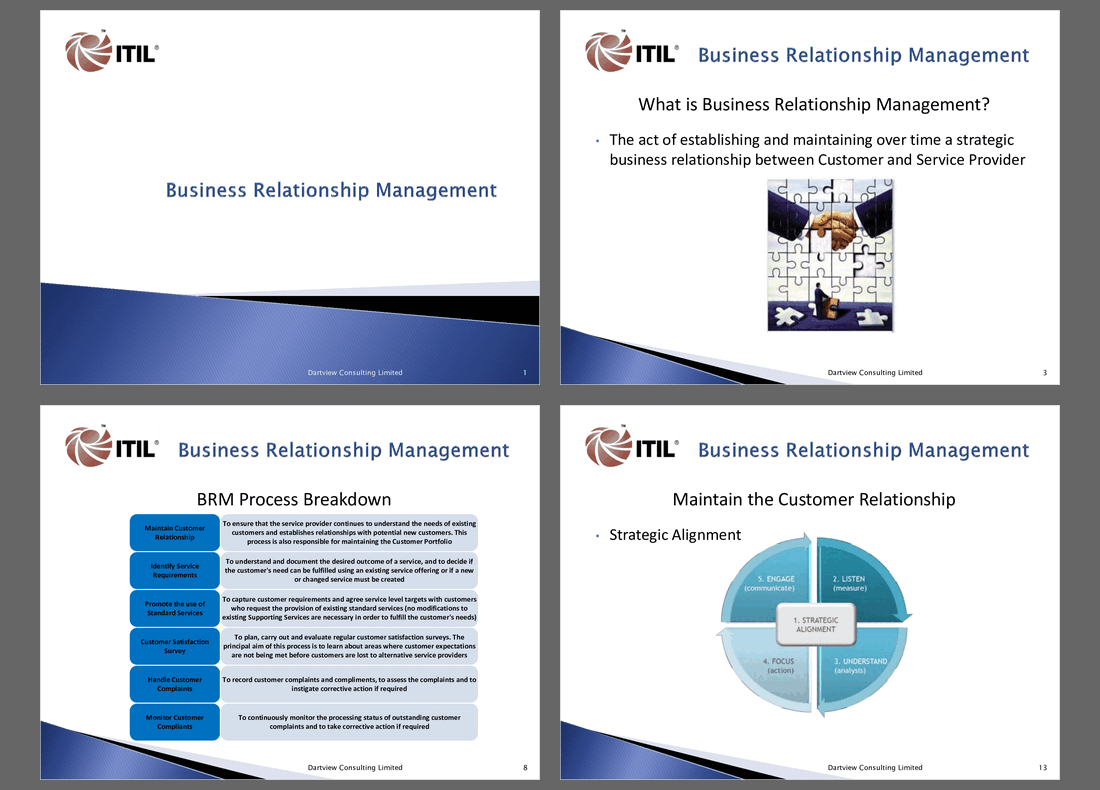

This document is a 50-slide PowerPoint presentation that provides an overview of the Business Relationship Management process/role within the ITIL V3 Best Practice Framework.
BRM has become an increasingly important process/role as Service Provider's seek to establish closer and more detailed relationships with their Customers.
Includes many illustrations and is very easy to customise!!!!
The ITIL v3 Business Relationship Management Overview presentation delves into the strategic alignment of BRM within the ITIL framework. It emphasizes the importance of maintaining a robust customer relationship through the creation and upkeep of a comprehensive Customer Portfolio. This portfolio acts as a central repository for all customer-related data, ensuring that service providers have a clear view of their customer base and can verify information efficiently.
This document outlines the objectives of BRM, focusing on anticipating future changes and ensuring that the service provider meets the evolving business needs of the customer. It highlights the necessity of identifying technological advancements and trends that can enhance existing services or create new ones. The presentation also underscores the role of BRM in arbitration during disputes and in learning from customer satisfaction exercises to improve service delivery.
The presentation covers the importance of a well-structured communications plan, detailing the frequency and format of meetings and reports. It also addresses the customer complaints process, ensuring that feedback is systematically managed and used to drive improvements. The value of a service is dissected through the concepts of utility and warranty, providing a clear framework for assessing service quality. The document concludes with a discussion on managing service demand and the key performance indicators for BRM, ensuring that service providers can measure and enhance their performance effectively.
Please take a look at the other documents that we have available.
There are documents available on Project Management, Portfolio Management, Benefits Management, the ITIL (Information Technology Infrastructure Library) framework and a number of others topics. Each provides plenty of detail and all are fully editable.
Got a question about the product? Email us at support@flevy.com or ask the author directly by using the "Ask the Author a Question" form. If you cannot view the preview above this document description, go here to view the large preview instead.
Executive Summary
The ITIL v3 Business Relationship Management (BRM) Overview presentation provides a comprehensive framework for establishing and maintaining strategic relationships between customers and service providers. This deck outlines the purpose and objectives of BRM, its integration within the ITIL framework, and the processes involved in managing customer relationships effectively. By utilizing this presentation, corporate executives and consultants will gain insights into customer satisfaction, service demand management, and the value of services, ultimately enhancing service delivery and customer engagement.
Who This Is For and When to Use
• IT Service Managers responsible for customer engagement and satisfaction
• Business Relationship Managers focused on aligning services with customer needs
• ITIL Consultants advising organizations on service management best practices
• Executives seeking to improve customer relationships and service delivery
Best-fit moments to use this deck:
• During strategic planning sessions to align IT services with business objectives
• When conducting customer satisfaction surveys to assess service performance
• In workshops aimed at enhancing service delivery and customer relationship strategies
Learning Objectives
• Define Business Relationship Management within the ITIL framework
• Establish effective communication channels between customers and service providers
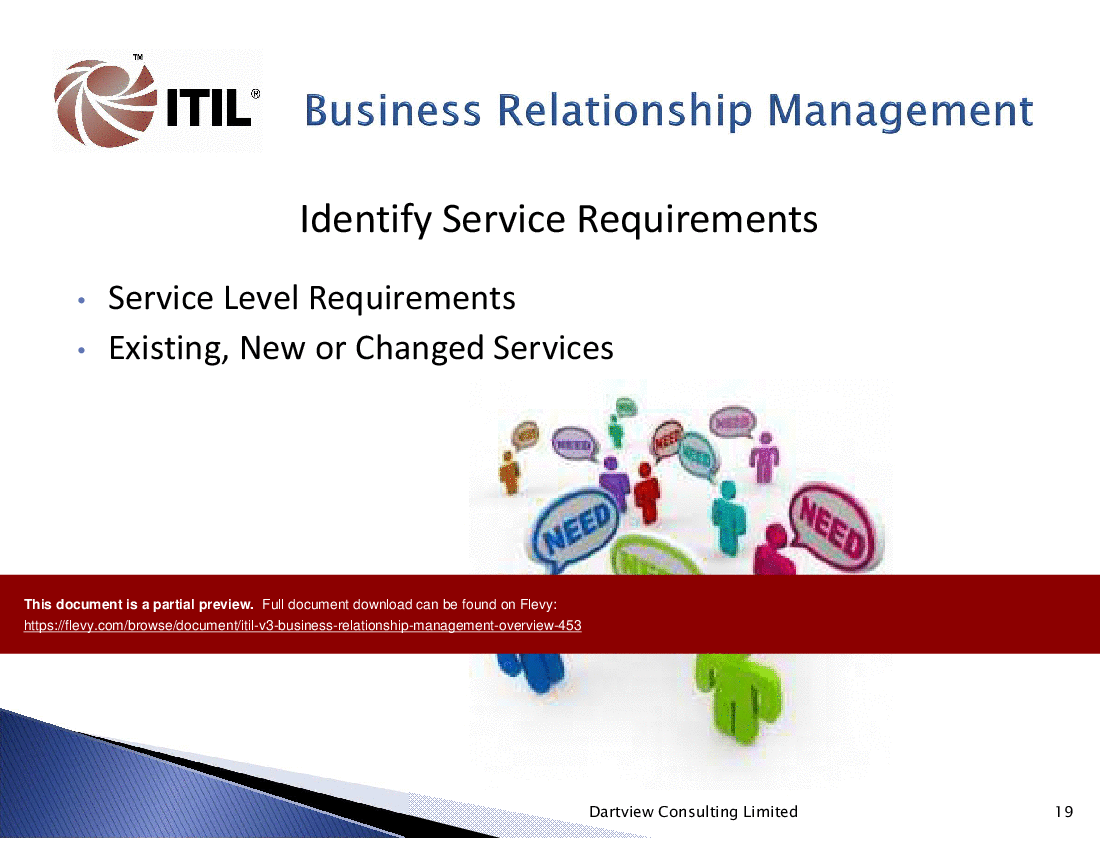
• Identify and document customer service requirements and expectations
• Analyze customer satisfaction data to drive service improvements
• Manage customer complaints and feedback effectively
• Understand the value of services through utility and warranty concepts
Table of Contents
• What is Business Relationship Management (BRM) (page 3)
• Where does BRM fit within the ITIL framework (page 4)
• Purpose & Objectives of BRM (page 5)
• BRM Process Breakdown (page 8)
• Customer Relationship Management (page 9)
• Value of a Service (page 30)
• Managing Service Demand (page 35)
• Service Reporting (page 39)
• BRM versus SDM/SLM (page 42)
• Interfaces and Dependencies (page 44)
• Further Learning (page 48)
• Accreditation (page 49)
Primary Topics Covered
• Business Relationship Management Definition - BRM is the act of establishing and maintaining a strategic relationship between the customer and service provider, aimed at understanding customer needs.
• ITIL Framework Integration - BRM was introduced in ITIL v3 as part of the Service Strategy stage, influencing the entire service lifecycle.
• Purpose of BRM - The primary goal is to manage customer expectations and ensure high levels of satisfaction while aligning services with business needs.
• Objectives of BRM - Focus on anticipating changes in customer needs and ensuring service providers meet those needs effectively.
• Customer Satisfaction Surveys - Regularly conducted to assess service delivery and identify areas for improvement.
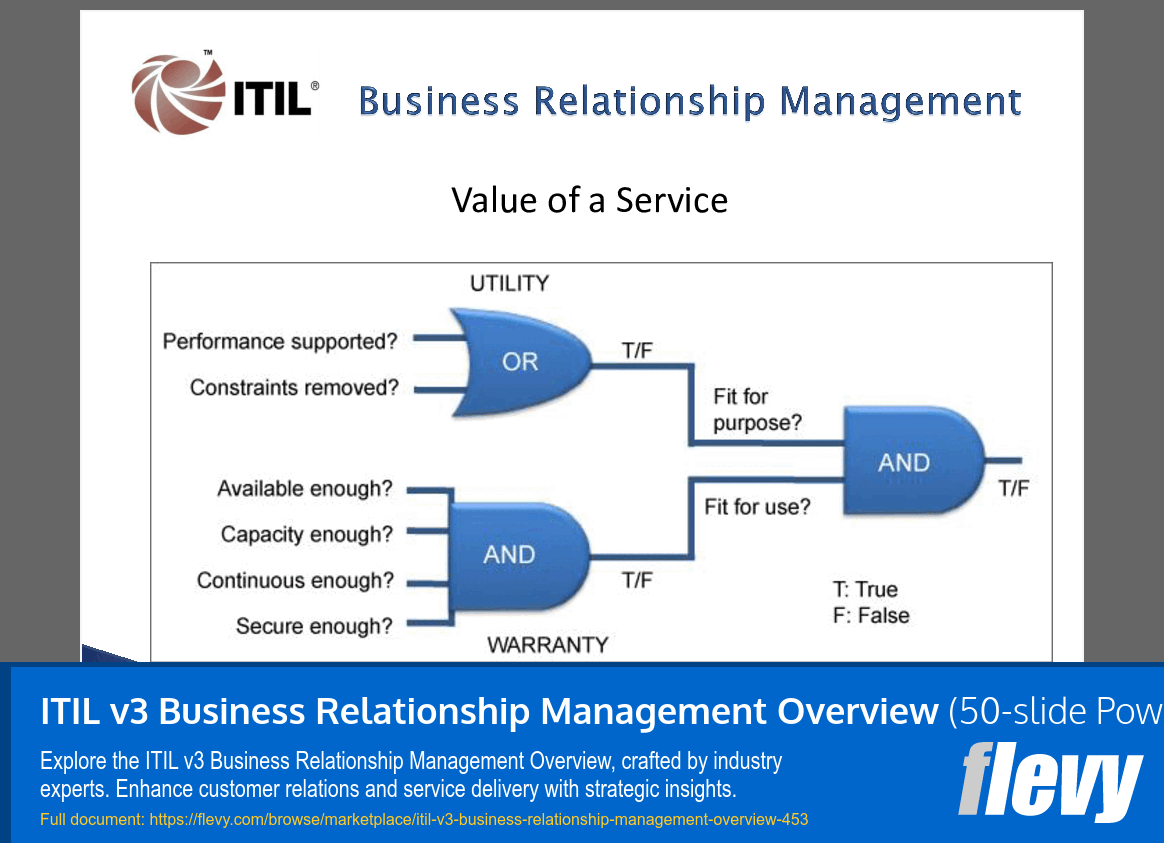
• Value of a Service - Defined through utility (fit for purpose) and warranty (fit for use), both essential for creating customer value.
Deliverables, Templates, and Tools
• Customer Portfolio template for documenting customer details and service agreements
• Customer Agreement Portfolio for managing formal contracts with customers
• Service Level Requirements documentation to capture customer expectations
• Customer Satisfaction Survey framework for assessing service delivery
• Complaint Management Process template for handling customer feedback
• Service Reporting guidelines to communicate service performance to customers
Slide Highlights
• Overview of BRM's role within the ITIL framework and its importance in service strategy
• Breakdown of the BRM process, including maintaining customer relationships and identifying service requirements
• Visual representation of the value of a service through utility and warranty concepts
• Techniques for managing service demand and ensuring capacity aligns with customer needs
• Comparison of BRM with Service Delivery Management (SDM) and Service Level Management (SLM)
Potential Workshop Agenda
Introduction to Business Relationship Management (60 minutes)
• Overview of BRM and its significance in ITIL
• Discussion on the role of BRM in aligning services with customer needs
Customer Satisfaction and Feedback Session (90 minutes)
• Review of customer satisfaction survey results
• Identification of areas for service improvement based on feedback
Service Demand Management Workshop (60 minutes)
• Techniques for understanding and influencing customer demand
• Strategies for aligning service capacity with demand
Customization Guidance
• Tailor the Customer Portfolio template to include specific customer details relevant to your organization
• Adjust the Customer Satisfaction Survey framework to reflect your unique service offerings and customer demographics
• Modify the Complaint Management Process to align with your organization's escalation procedures
Secondary Topics Covered
• Customer relationship maintenance strategies
• Techniques for promoting standard services to customers
• Understanding the business viewpoint from the customer's perspective
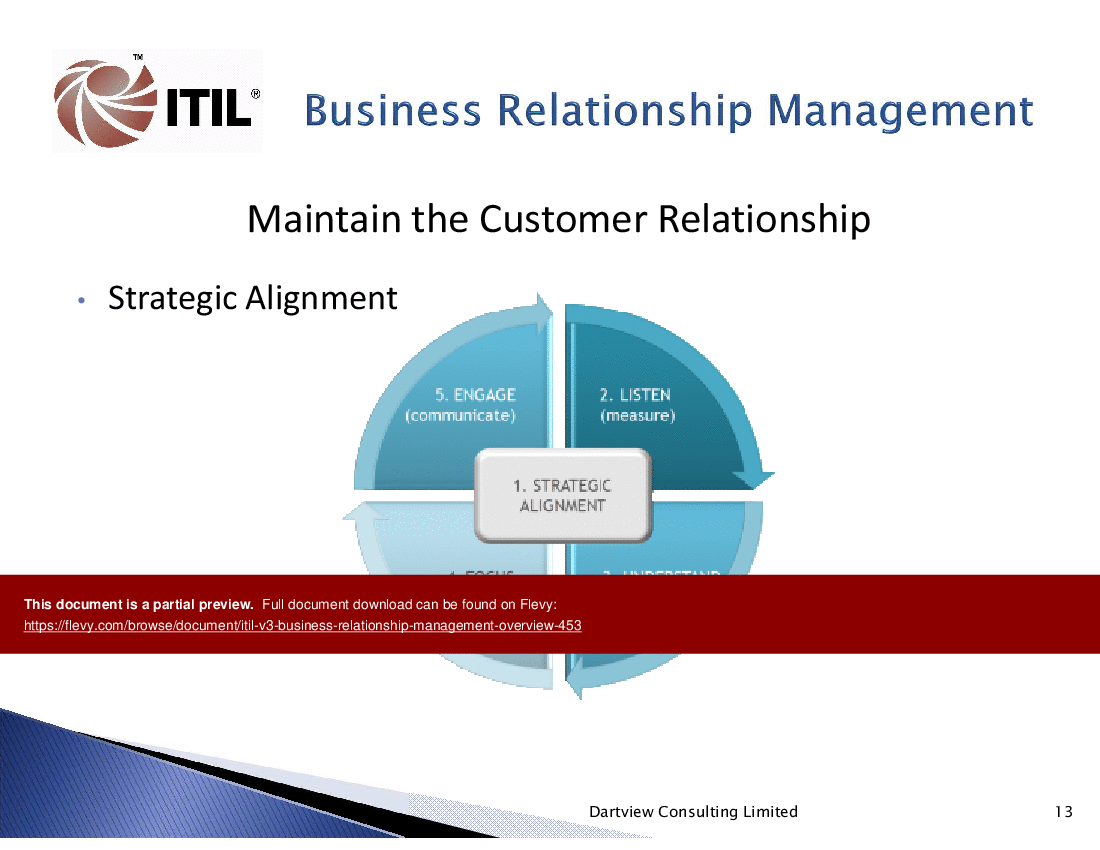
• The role of strategic alignment in service delivery
• Interfaces and dependencies between BRM and other ITIL processesDocument FAQ
What is Business Relationship Management?
BRM is the process of establishing and maintaining a strategic relationship between customers and service providers to understand and meet customer needs effectively.
How does BRM fit within the ITIL framework?
BRM is part of the Service Strategy stage in ITIL v3, influencing the entire service lifecycle to ensure alignment between customer needs and service delivery.
What are the key objectives of BRM?
Key objectives include managing customer expectations, ensuring high levels of satisfaction, and anticipating changes in customer needs to improve service delivery.
How are customer satisfaction surveys conducted?
Surveys are planned and executed regularly to gather feedback on service delivery, with results analyzed to identify areas for improvement.
What is the value of a service in the context of BRM?
The value of a service is determined by its utility (fit for purpose) and warranty (fit for use), both of which must be true for the service to create value for the customer.
How does BRM manage customer complaints?
BRM establishes a formal complaints process that includes submission guidelines, response timelines, and escalation procedures to ensure customer concerns are addressed.
What techniques are used to manage service demand?
Techniques include analyzing patterns of business activity and user profiles to understand and influence customer demand effectively.
What is the difference between BRM and SDM/SLM?
BRM focuses on establishing and maintaining customer relationships, while SDM and SLM are more tactical, focusing on service delivery and managing service levels.
Glossary
• Business Relationship Management (BRM) - The process of establishing and maintaining strategic relationships between customers and service providers.
• Utility - The aspect of a service that reflects whether it is fit for purpose.
• Warranty - The aspect of a service that reflects whether it is fit for use.
• Service Level Agreement (SLA) - A formal agreement that defines the level of service expected from a service provider.
• Customer Portfolio - A database that records details of all customers and their service agreements.
• Customer Satisfaction Survey - A tool used to assess customer perceptions of service delivery.
• Service Demand Management - The process of understanding and influencing customer demand for services.
• Strategic Alignment - The process of ensuring that service offerings meet customer business needs.
• Complaint Management Process - A formal process for handling customer complaints and feedback.
• Service Reporting - The practice of communicating service performance information to customers.
• Value Chain - A sequence of processes that create value for the customer through service delivery.
• Value Network - A complex set of relationships that generate value through the exchange of services and information.
Source: Best Practices in ITIL PowerPoint Slides: ITIL v3 Business Relationship Management Overview PowerPoint (PPTX) Presentation Slide Deck, Dartview Consulting
This document is available as part of the following discounted bundle(s):

Save %!
Everything ITIL!
This bundle contains 4 total documents. See all the documents to the right.
Save %!
Best Practice (ITIL, Prince2, Risk)
This bundle contains 9 total documents. See all the documents to the right.
|
Download our FREE Digital Transformation Templates
Download our free compilation of 50+ Digital Transformation slides and templates. DX concepts covered include Digital Leadership, Digital Maturity, Digital Value Chain, Customer Experience, Customer Journey, RPA, etc. |









