
Design Thinking Frameworks Reference Guide   324-slide PPT PowerPoint presentation slide deck (PPTX)
$149.00

Design Thinking Frameworks Reference Guide (324-slide PPT PowerPoint presentation slide deck (PPTX)) Preview Image
Log in to unlock full preview.
Design Thinking Frameworks Reference Guide (324-slide PPT PowerPoint presentation slide deck (PPTX)) Preview Image
Arrow   Click main image to view in full screen.

Design Thinking Frameworks Reference Guide (PowerPoint PPTX Slide Deck)

PowerPoint (PPTX) 324 Slides

Top 250 Best Practice $149.00
Developed by a Design Thinking Expert with a wealth of experience at industry giants like Microsoft and IBM, this presentation serves as your ultimate guide to leveraging Design Thinking Frameworks for enhanced customer experiences.
Add to Cart


Immediate download
Fully editable PowerPoint
Free lifetime updates

BENEFITS OF THIS POWERPOINT DOCUMENT

  1. Provides 36 common design thinking frameworks and methodologies for customer experience improvement and reinvention.
  2. Serves as a quick reference guide.
  3. Includes examples and templates.

SERVICE DESIGN PPT DESCRIPTION

Editor Summary 324-slide PowerPoint Design Thinking Frameworks Reference Guide presents 36 design-thinking frameworks, mindsets, and methods for customer-experience innovation, developed by a Design Thinking expert with experience at Microsoft and IBM. Read more

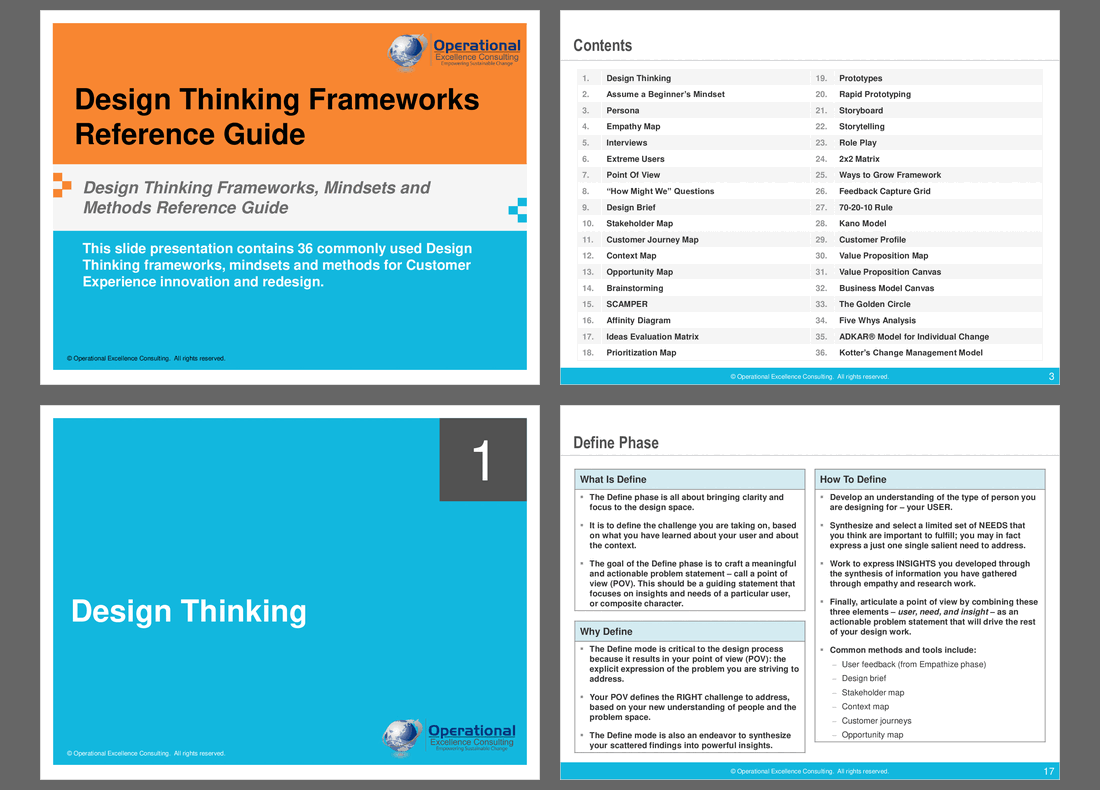
This comprehensive presentation covers 36 common Design Thinking frameworks, mindsets and methods for Customer Experience innovation and redesign.

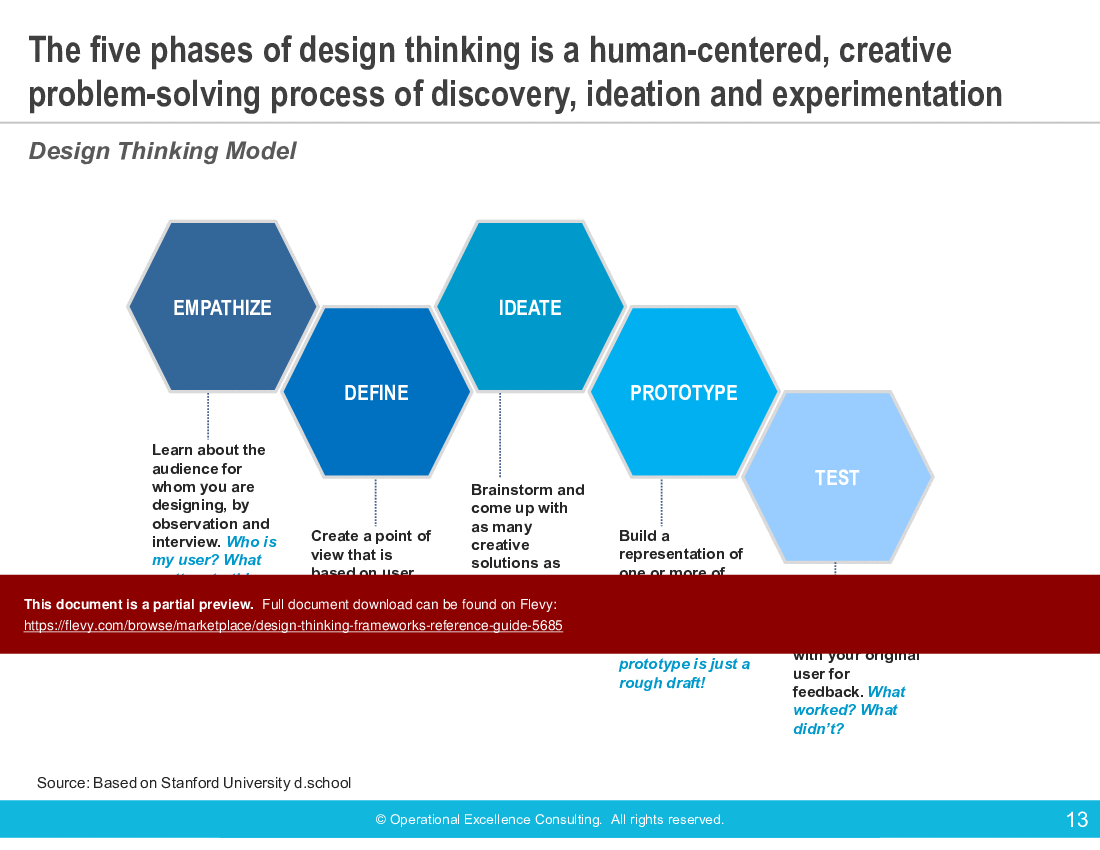
Each design framework in this deck covers the five phases of Design Thinking: Empathize, Define, Ideate, Prototype, and Test.

INCLUDED FRAMEWORKS & METHODOLOGIES

1. Design Thinking
2. Assume a Beginner's Mindset
3. Persona
4. Empathy Map
5. Interviews
6. Extreme Users
7. Point Of View
8. "How Might We" Questions
9. Design Brief
10. Stakeholder Map
11. Customer Journey Map
12. Context Map
13. Opportunity Map
14. Brainstorming
15. SCAMPER
16. Affinity Diagram
17. Ideas Evaluation Matrix
18. Prioritization Map
19. Prototypes
20. Rapid Prototyping
21. Storyboard
22. Storytelling
23. Role Play
24. 2x2 Matrix
25. Ways to Grow Framework
26. Feedback Capture Grid
27. 70-20-10 Rule
28. Kano Model
29. Customer Profile
30. Value Proposition Map
31. Value Proposition Canvas
32. Business Model Canvas
33. The Golden Circle
34. Five Whys Analysis
35. ADKAR Model for Individual Change
36. Kotter's Change Management Model

These frameworks and templates are used in many design firms. With this comprehensive document in your back pocket, you can find a way to address just about any problem or design challenge that can arise in your organization.

The level of detail varies by framework, depending on the nature of the model. Examples and templates are provided.

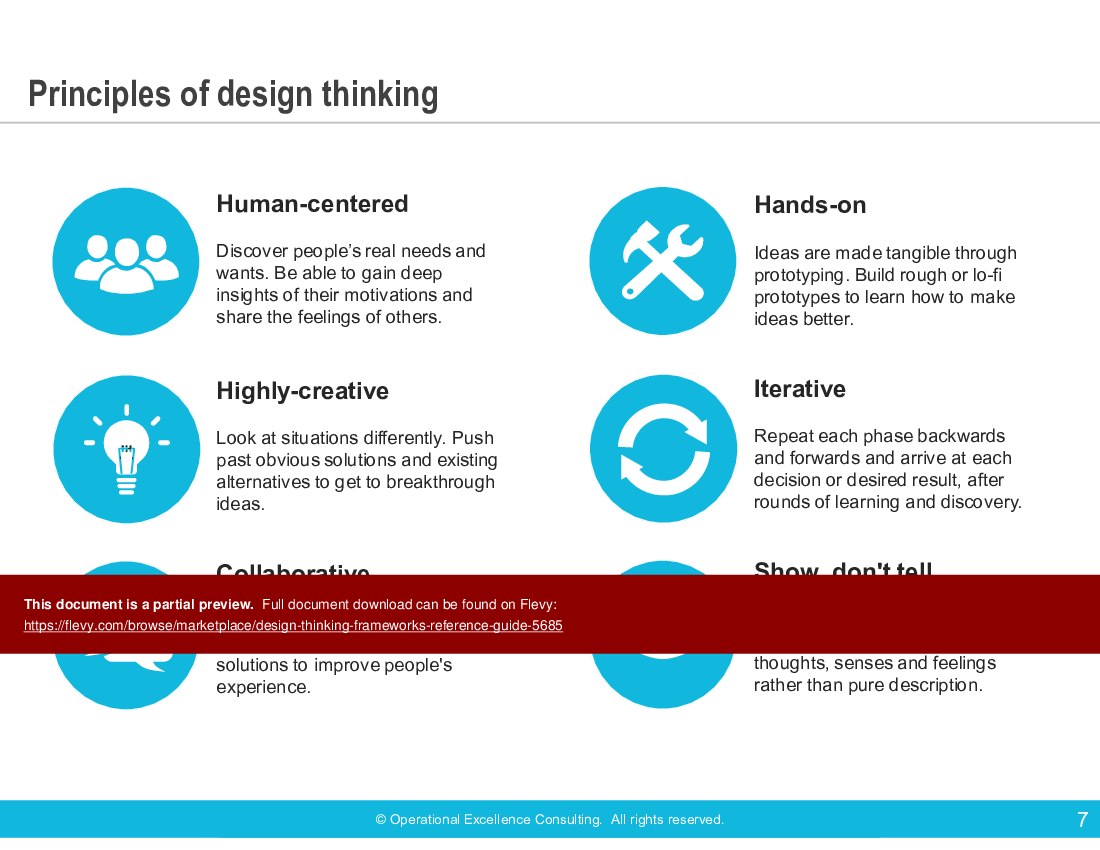
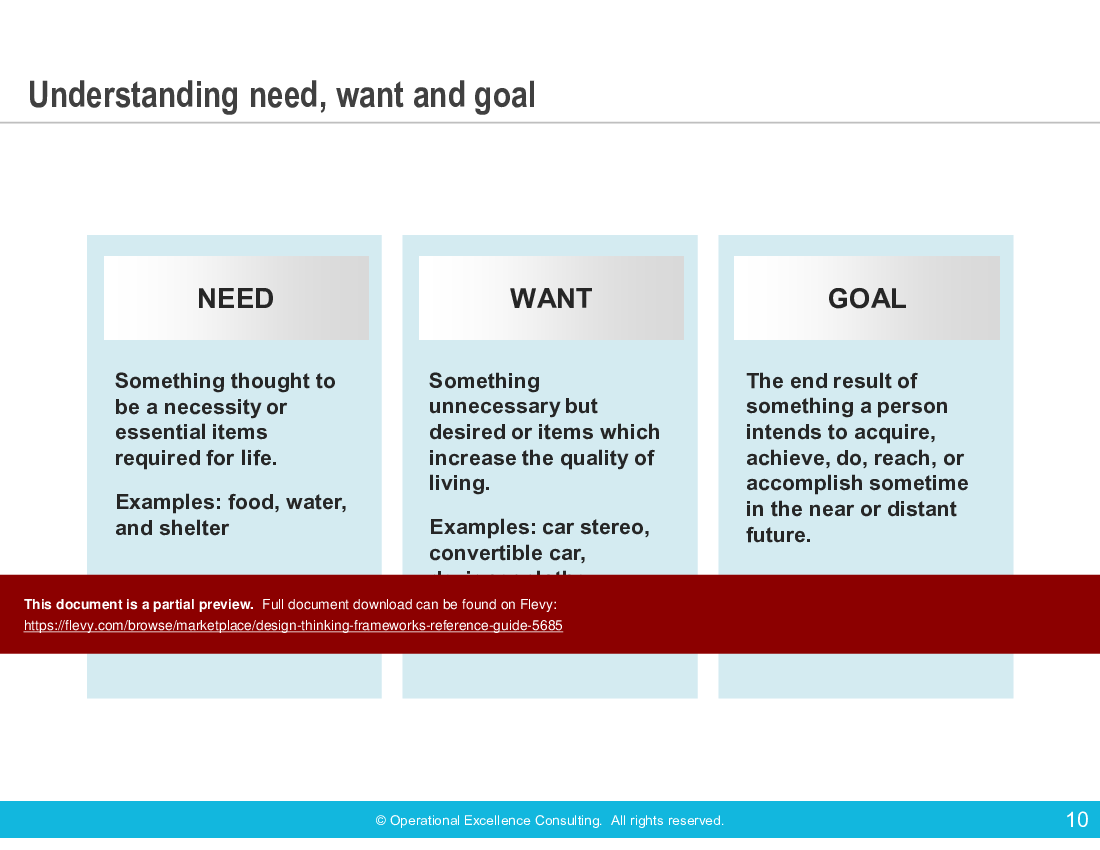
The guide delves into the principles of design thinking, emphasizing a human-centered, hands-on, and iterative approach. It encourages looking at situations from new perspectives, pushing past obvious solutions, and fostering collaboration. The PPT also breaks down the concepts of need, want, and goal, providing clear definitions and examples to help you understand and prioritize user requirements.

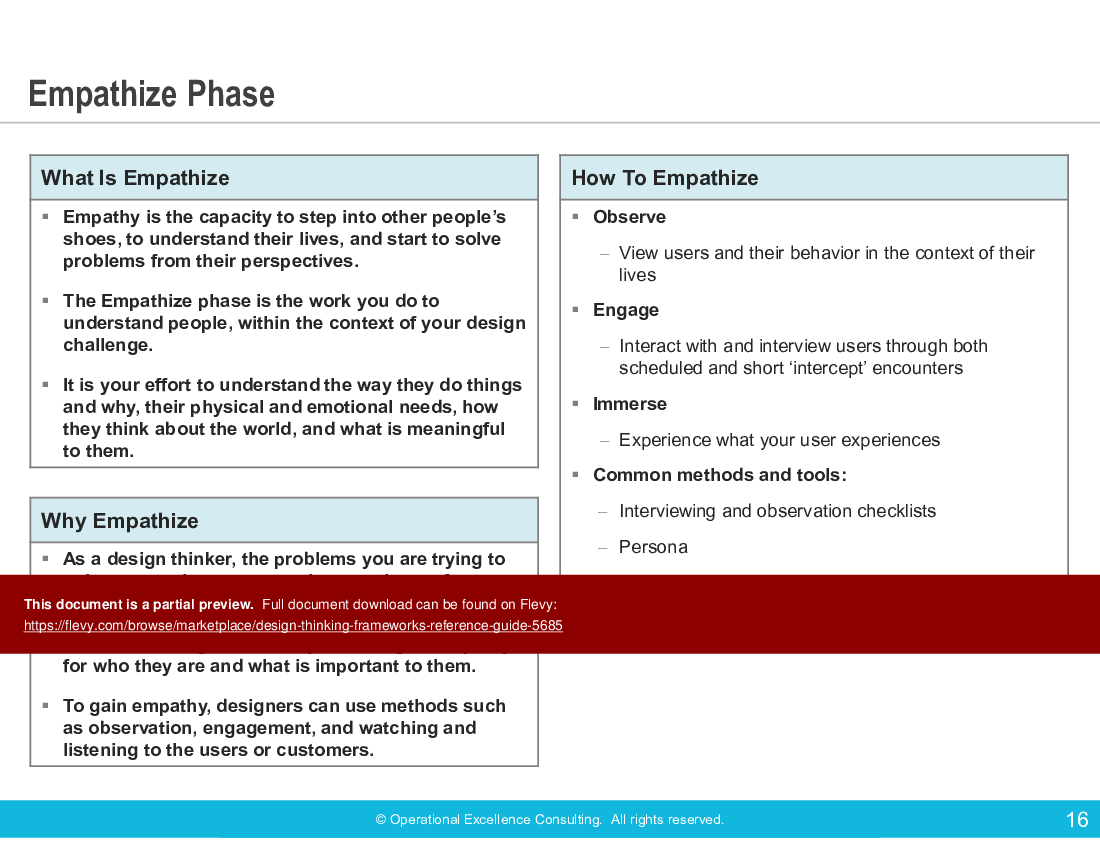
Detailed phases such as Empathize, Define, Ideate, Prototype, and Test are thoroughly explained. Each phase includes practical methods and tools, from empathy maps and personas to brainstorming techniques and prototyping strategies. This guide is designed to equip you with actionable insights and practical frameworks to drive innovation and solve complex problems within your organization.

Got a question about the product? Email us at support@flevy.com or ask the author directly by using the "Ask the Author a Question" form. If you cannot view the preview above this document description, go here to view the large preview instead.

MARCUS OVERVIEW

This synopsis was written by Marcus [?] based on the analysis of the full 324-slide presentation.


Executive Summary
The Design Thinking Frameworks Reference Guide is a comprehensive resource designed to enhance customer experience innovation and redesign. Created by a seasoned Design Thinking expert, this presentation outlines 36 essential frameworks, mindsets, and methods that facilitate a deep understanding of customer needs. Users will learn to apply techniques such as Empathize, Define, Ideate, Prototype, and Test, alongside tools like Customer Journey Maps and the Value Proposition Canvas. This guide empowers organizations to foster innovation and improve customer satisfaction effectively.

Who This Is For and When to Use
•  Product Managers seeking to enhance user experience through structured methodologies
•  UX/UI Designers aiming to integrate customer feedback into design processes
•  Change Management Leaders implementing new strategies for customer engagement
•  Business Analysts focused on identifying customer needs and pain points

Best-fit moments to use this deck:
•  During workshops aimed at redesigning customer experiences
•  In training sessions for teams adopting Design Thinking methodologies
•  When developing new products or services that require a customer-centric approach

Learning Objectives
•  Define the core principles of Design Thinking and its application in various contexts
•  Build empathy with users through effective research techniques
•  Establish actionable problem statements using the Point of View (POV) framework
•  Generate innovative solutions through structured ideation processes
•  Create tangible prototypes to test concepts and gather user feedback
•  Evaluate and refine ideas based on customer insights and feedback

Table of Contents
•  Design Thinking (page 5)
•  Assume a Beginner’s Mindset (page 28)
•  Persona (page 31)
•  Empathy Map (page 42)
•  Interviews (page 53)
•  Extreme Users (page 62)
•  Point Of View (page 66)
•  “How Might We” Questions (page 73)
•  Design Brief (page 82)
•  Stakeholder Map (page 88)
•  Customer Journey Map (page 96)
•  Context Map (page 113)
•  Opportunity Map (page 118)
•  Brainstorming (page 122)
•  SCAMPER (page 126)
•  Affinity Diagram (page 129)
•  Prioritization Map (page 137)
•  Idea Evaluation Matrix (page 141)
•  Prototypes (page 147)
•  Rapid Prototyping (page 156)
•  Storyboard (page 160)
•  Storytelling (page 167)
•  Role Play (page 174)
•  2x2 Matrix (page 177)
•  Ways to Grow Framework (page 189)
•  Feedback Capture Grid (page 193)
•  70-20-10 Rule (page 198)
•  The Kano Model (page 205)
•  Customer Profile (page 214)
•  The Value Proposition Map (page 225)
•  Value Proposition Canvas (page 237)
•  Business Model Canvas (page 258)
•  The Golden Circle (page 281)
•  Five Whys Analysis (page 289)
•  ADKAR® Model (page 301)
•  Kotter’s Eight Phases of Change (page 313)

Primary Topics Covered
•  Design Thinking - A structured approach for creative problem-solving that focuses on understanding customer needs and generating innovative solutions.
•  Empathy Map - A tool for synthesizing user observations to gain deeper insights into customer emotions and behaviors.
•  Customer Journey Map - A visualization of the customer experience that highlights touchpoints and emotional responses throughout the journey.
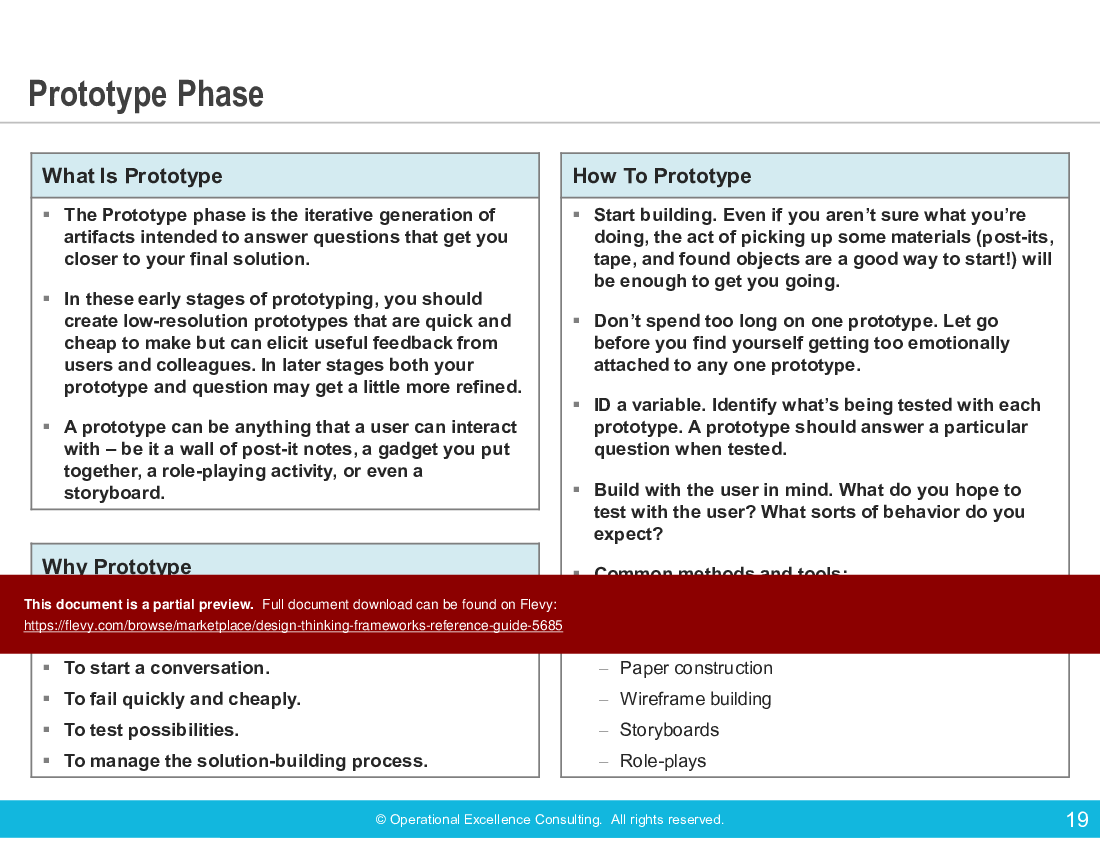
•  Prototypes - Iterative representations of ideas used to communicate concepts and gather user feedback.
•  Kano Model - A framework for prioritizing features based on customer satisfaction and emotional responses.
•  Value Proposition Canvas - A tool to align products and services with customer needs, pains, and gains.

Deliverables, Templates, and Tools
•  Customer Journey Map template for visualizing user interactions
•  Empathy Map template for synthesizing user insights
•  Persona template for defining target customer segments
•  Feedback Capture Grid for organizing user feedback
•  Prioritization Map for assessing ideas based on ease of implementation and user benefit
•  SCAMPER framework for generating innovative ideas

Slide Highlights
•  Overview of Design Thinking principles emphasizing human-centered design
•  Visual representation of the 5 phases of the Design Thinking process
•  Examples of Empathy Maps illustrating customer emotions and behaviors
•  Case studies demonstrating the application of the Kano Model in product development
•  Templates for creating Personas and Customer Journey Maps

Potential Workshop Agenda
Introduction to Design Thinking (30 minutes)
•  Overview of Design Thinking principles and frameworks
•  Discussion on the importance of empathy in design

Empathy and User Research (60 minutes)
•  Hands-on activity: Creating Empathy Maps
•  Group exercise: Conducting user interviews

Ideation and Prototyping (90 minutes)
•  Brainstorming session using “How Might We” questions
•  Rapid prototyping activity with feedback sessions

Evaluating and Refining Ideas (60 minutes)
•  Using the Kano Model to prioritize features
•  Group discussion on refining value propositions

Customization Guidance
•  Tailor the templates to reflect your organization's branding and specific customer segments
•  Adjust the frameworks to align with your industry-specific challenges and goals
•  Incorporate real user feedback into the Empathy Maps and Customer Journey Maps

Secondary Topics Covered
•  Storytelling techniques for effective communication of design concepts
•  Role-playing scenarios to simulate user interactions with products
•  The importance of stakeholder mapping in the design process
•  Strategies for engaging extreme users to uncover unique insights

Topic FAQ

What are the 5 phases of Design Thinking and what does each phase focus on?

The 5 phases are Empathize (understand users and build empathy), Define (translate insights into actionable problem statements such as POVs), Ideate (generate solution concepts using techniques like SCAMPER and brainstorming), Prototype (build tangible representations), and Test (validate with users). These phases are covered as Empathize, Define, Ideate, Prototype, and Test in the guide.

How do Empathy Maps help in user research?

Empathy Maps synthesize observations to reveal user emotions, thoughts, pains, and gains, making behavioral patterns visible for design decisions. They support creating Personas and Customer Journey Maps by organizing qualitative interview data. The guide includes an Empathy Map template and related examples on page 42.

What is the Kano Model and how is it used to prioritize features?

The Kano Model categorizes product attributes into Threshold, Performance, and Excitement types to assess how features affect customer satisfaction. It helps teams prioritize features by balancing necessary basics with differentiators. The guide includes a Kano Model explanation and case studies illustrating its use on page 205.

What should I look for in a Design Thinking frameworks reference guide when buying one?

Buyers should look for coverage of the 5 Design Thinking phases, a broad set of frameworks and mindsets, ready-to-use templates (Personas, Journey Maps, Empathy Maps), examples or case studies, and workshop agendas or customization guidance; Flevy’s Design Thinking Frameworks Reference Guide lists 36 frameworks and provides templates and a sample workshop agenda.

How much time should I budget to run a workshop using these frameworks?

The sample workshop agenda suggests a 4-hour session composed of a 30-minute introduction, 60 minutes for empathy and user research activities, 90 minutes for ideation and rapid prototyping, and 60 minutes for evaluation and refinement—totaling about 240 minutes with a 90-minute ideation/prototyping block.

I need to prioritize product features based on customer satisfaction—what frameworks help with that?

Use the Kano Model to classify attributes by satisfaction impact, then apply a Prioritization Map and Ideas Evaluation Matrix to weigh implementation effort versus user benefit. The guide contains the Kano Model, Prioritization Map, and Idea Evaluation Matrix as explicit tools for feature prioritization.

How can I integrate change management into a design thinking project?

Integrate stakeholder mapping to identify influencers, use ADKAR to manage individual adoption factors, and apply Kotter’s Eight Phases to structure organizational change activities. The guide includes a Stakeholder Map plus ADKAR and Kotter’s models to align design efforts with change planning on pages 301 and 313.

What is the role of prototyping and rapid prototyping in testing concepts?

Prototyping creates tangible representations to communicate ideas and gather user reactions; rapid prototyping accelerates iteration to surface usability issues and feedback quickly. The guide covers Prototypes and Rapid Prototyping with examples and templates to support iterative testing on pages 147 and 156.

Document FAQ
These are questions addressed within this presentation.

What is Design Thinking?
Design Thinking is a human-centered approach to innovation that focuses on understanding user needs and developing creative solutions through iterative processes.

How can I apply the frameworks in my organization?
These frameworks can be customized to fit your organization's specific context and challenges, allowing teams to foster innovation and improve customer experiences.

What tools are included in the guide?
The guide includes templates for Empathy Maps, Customer Journey Maps, Personas, and various brainstorming techniques to facilitate the design process.

How do I ensure stakeholder engagement?
Utilize the Stakeholder Map to identify key players and their interests, ensuring effective communication and collaboration throughout the design process.

What is the Kano Model?
The Kano Model is a framework that categorizes customer preferences into 3 types: Threshold, Performance, and Excitement attributes, helping prioritize product features based on customer satisfaction.

How can I measure the success of my design initiatives?
Establish clear metrics related to customer satisfaction, engagement, and business outcomes to evaluate the effectiveness of your design solutions.

What is the purpose of the Value Proposition Canvas?
The Value Proposition Canvas helps align your products and services with customer needs, ensuring that you create value that resonates with your target audience.

How do I create a Customer Journey Map?
Start by defining the customer persona, then outline the stages of their journey, including goals, actions, thoughts, feelings, and opportunities for improvement.

Glossary
•  Design Thinking - A methodology for solving complex problems through a human-centered approach.
•  Empathy Map - A tool for visualizing user insights and emotions.
•  Customer Journey Map - A representation of the customer experience across various touchpoints.
•  Prototyping - The process of creating tangible representations of ideas for testing and feedback.
•  Kano Model - A framework for prioritizing product features based on customer satisfaction.
•  Value Proposition - The unique value a product or service offers to customers.
•  Persona - A semi-fictional representation of a target customer segment.
•  Stakeholder Map - A visual representation of all stakeholders involved in a project.
•  Feedback Capture Grid - A tool for organizing feedback from users and stakeholders.
•  SCAMPER - A brainstorming technique for generating ideas by modifying existing products or services.
•  Affinity Diagram - A method for organizing ideas and data into related groups.
•  Prioritization Map - A visual tool for assessing ideas based on ease of implementation and user benefit.
•  ADKAR Model - A framework for managing organizational change, focusing on individual outcomes.
•  Kotter’s Eight Phases of Change - A systematic approach to implementing change within organizations.
•  Five Whys - A root cause analysis technique that involves asking "why" multiple times to uncover underlying issues.
•  Opportunity Map - A tool for identifying areas of opportunity in the market.
•  Context Map - A visualization of external factors affecting a product or service.
•  Ways to Grow Framework - A method for assessing the difficulty of implementing design solutions.

Source: Best Practices in Service Design PowerPoint Slides: Design Thinking Frameworks Reference Guide PowerPoint (PPTX) Presentation Slide Deck, Operational Excellence Consulting


$149.00
Developed by a Design Thinking Expert with a wealth of experience at industry giants like Microsoft and IBM, this presentation serves as your ultimate guide to leveraging Design Thinking Frameworks for enhanced customer experiences.
Add to Cart
  

ABOUT THE AUTHOR

Author image
Additional documents from author: 257
Terms of usage (for all documents from this author)

Operational Excellence Consulting, founded in 2009 by Allan Ung, draws from extensive experience at Microsoft, IBM, and Underwriters Laboratories (UL). We specialize in strategy deployment, customer experience design, and operational excellence, applying Design Thinking, Lean, and Systems Thinking to maximize customer value and minimize waste.

Our ... [read more]

Ask the Author a Question

You must be logged in to contact the author.

Click here to log in Click here register

Did you know?
The average daily rate of a McKinsey consultant is $6,625 (not including expenses). The average price of a Flevy document is $65.

Bundle and save! You can save up to % with bundles!

View bundle(s)


Trusted by over 10,000+ Client Organizations
Since 2012, we have provided business templates to over 10,000 businesses and organizations of all sizes, from startups and small businesses to the Fortune 100, in over 130 countries.
AT&T GE Cisco Intel IBM Coke Dell Toyota HP Nike Samsung Microsoft Astrazeneca JP Morgan KPMG Walgreens Walmart 3M Kaiser Oracle SAP Google E&Y Volvo Bosch Merck Fedex Shell Amgen Eli Lilly Roche AIG Abbott Amazon PwC T-Mobile Broadcom Bayer Pearson Titleist ConEd Pfizer NTT Data Schwab


Read Customer Testimonials

 
"I have used FlevyPro for several business applications. It is a great complement to working with expensive consultants. The quality and effectiveness of the tools are of the highest standards."

– Moritz Bernhoerster, Global Sourcing Director at Fortune 500
 
"I have found Flevy to be an amazing resource and library of useful presentations for lean sigma, change management and so many other topics. This has reduced the time I need to spend on preparing for my performance consultation. The library is easily accessible and updates are regularly provided. A wealth of great information."

– Cynthia Howard RN, PhD, Executive Coach at Ei Leadership
 
"One of the great discoveries that I have made for my business is the Flevy library of training materials.

As a Lean Transformation Expert, I am always making presentations to clients on a variety of topics: Training, Transformation, Total Productive Maintenance, Culture, Coaching, Tools, Leadership Behavior, etc. Flevy "

– Ed Kemmerling, Senior Lean Transformation Expert at PMG
 
"Flevy is now a part of my business routine. I visit Flevy at least 3 times each month.

Flevy has become my preferred learning source, because what it provides is practical, current, and useful in this era where the business world is being rewritten.

In today's environment where there are so "

– Omar Hernán Montes Parra, CEO at Quantum SFE
 
"As an Independent Management Consultant, I find Flevy to add great value as a source of best practices, templates and information on new trends. Flevy has matured and the quality and quantity of the library is excellent. Lastly the price charged is reasonable, creating a win-win value for "

– Jim Schoen, Principal at FRC Group
 
"As a young consulting firm, requests for input from clients vary and it's sometimes impossible to provide expert solutions across a broad spectrum of requirements. That was before I discovered Flevy.com.

Through subscription to this invaluable site of a plethora of topics that are key and crucial to consulting, I "

– Nishi Singh, Strategist and MD at NSP Consultants
 
"Flevy is our 'go to' resource for management material, at an affordable cost. The Flevy library is comprehensive and the content deep, and typically provides a great foundation for us to further develop and tailor our own service offer."

– Chris McCann, Founder at Resilient.World
 
"[Flevy] produces some great work that has been/continues to be of immense help not only to myself, but as I seek to provide professional services to my clients, it gives me a large "tool box" of resources that are critical to provide them with the quality of service and outcomes they are expecting."

– Royston Knowles, Executive with 50+ Years of Board Level Experience


Save with Bundles

This document is available as part of the following discounted bundle(s):

Save %!
Business Frameworks Reference Guide

This bundle contains 4 total documents. See all the documents to the right.

$349.00


Add Bundle & Save


Customers Also Bought These Documents


Customers Also Like These Documents

Explore Templates on Related Management Topics


Your Recently Viewed Documents
Download our FREE Strategy & Transformation Framework Templates

Download our free compilation of 50+ Strategy & Transformation slides and templates. Frameworks include McKinsey 7-S, Balanced Scorecard, Disruptive Innovation, BCG Curve, and many more.