
This document provides a detailed step-by-step guide on how to analyse financial statements. Designed for anyone who wants to understand how to review financial data and interpret the findings, the document is split into the following sections:
Introduction to financial statements
1. Income Statement
2. Balance Sheet
3. Cash Flow Statement
4. Linkages between financial statements
Financial analysis
1. DuPont equation
2. Ratio analysis
The document flows in logical manner and offers key points to note throughout to build your knowledge as you work through it.
This guide delves into the intricacies of financial statements, breaking down the Income Statement, Balance Sheet, and Cash Flow Statement with precision. It emphasizes the importance of understanding gross income, operating expenses, and net income, providing clear definitions and examples. The PPT also covers how these elements interconnect, offering insights into the financial health and performance of a business.
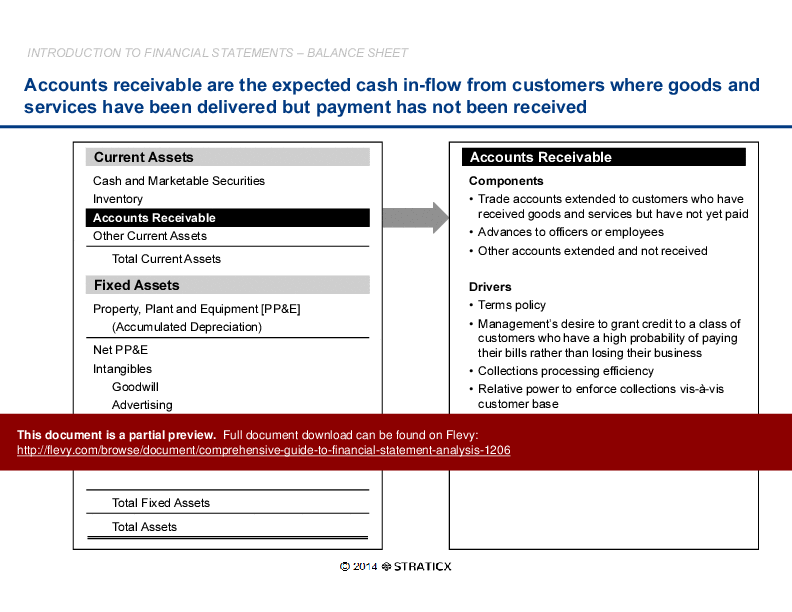
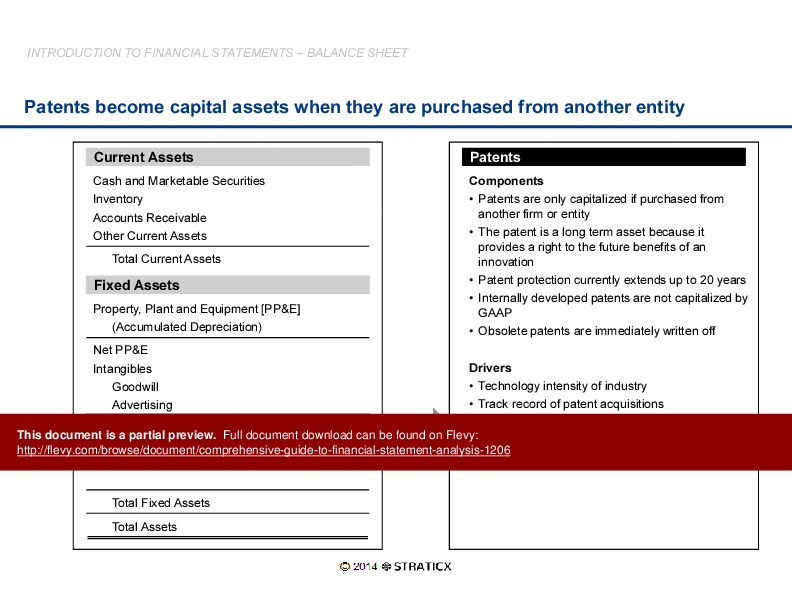
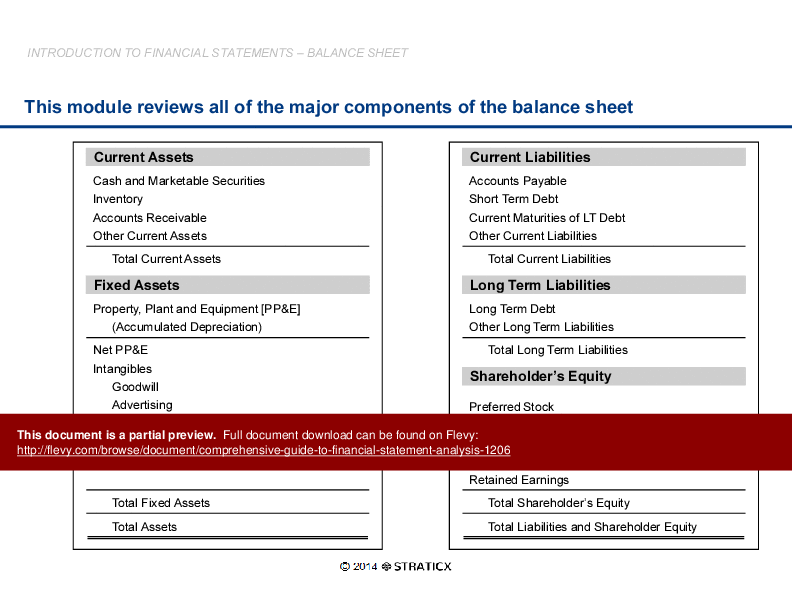
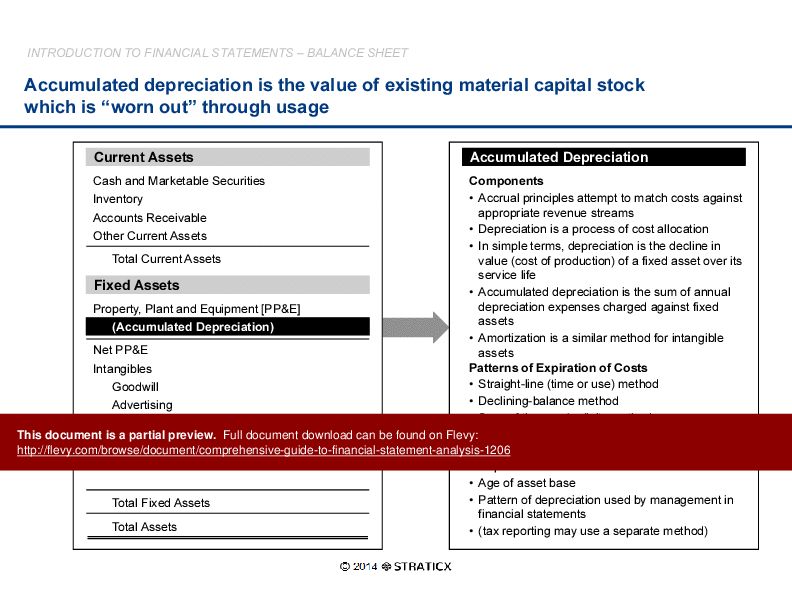
The section on the Balance Sheet is comprehensive, detailing current assets, fixed assets, and various liabilities. It explains the significance of accounts receivable, accumulated depreciation, and patents as capital assets. The guide also highlights the role of short-term and long-term debt, and how these impact the company's financial leverage and overall financial strategy.
In the financial analysis segment, the document introduces the DuPont equation and ratio analysis as essential tools for evaluating a firm's performance. It breaks down key ratios like ROI, ROE, and ROA, and provides practical hints for their calculation. This section is designed to equip executives with the knowledge to make informed decisions based on detailed financial data.
Got a question about the product? Email us at support@flevy.com or ask the author directly by using the "Ask the Author a Question" form. If you cannot view the preview above this document description, go here to view the large preview instead.
Executive Summary
This presentation, titled "Comprehensive Guide to Financial Statement Analysis," is designed to equip corporate executives and consultants with a thorough understanding of key financial statements—namely, the income statement, balance sheet, and cash flow statement. This consulting-grade resource, reflecting the quality of McKinsey, Bain, or BCG, provides actionable insights into evaluating business performance through financial analysis. Users will learn to interpret financial data, apply the DuPont equation, and utilize ratio analysis to assess economic performance and strategic insight effectively.
Who This Is For and When to Use
• Financial analysts seeking to deepen their understanding of financial statements
• Corporate executives responsible for strategic financial decision-making
• Consultants advising clients on financial performance and analysis
• Business students or professionals preparing for roles in finance or accounting
Best-fit moments to use this deck:
• During financial audits or assessments to evaluate company performance
• In strategic planning sessions to align financial objectives with operational goals
• When training teams on financial literacy and analysis techniques
Learning Objectives
• Define the components and significance of the income statement, balance sheet, and cash flow statement
• Build a comprehensive understanding of the linkages between financial statements
• Establish proficiency in using the DuPont equation for performance analysis
• Apply ratio analysis to assess profitability, asset utilization, and liquidity
• Identify key financial metrics that drive business performance
Table of Contents
• Why Review Financial Statements? (page 3)
• Introduction to Financial Statements (page 5)
• Income Statement (page 10)
• Balance Sheet (page 20)
• Cash Flow Statement (page 30)
• Linkages Between Financial Statements (page 40)
• Financial Analysis (page 50)
• DuPont Equation (page 60)
• Ratio Analysis (page 70)
Primary Topics Covered
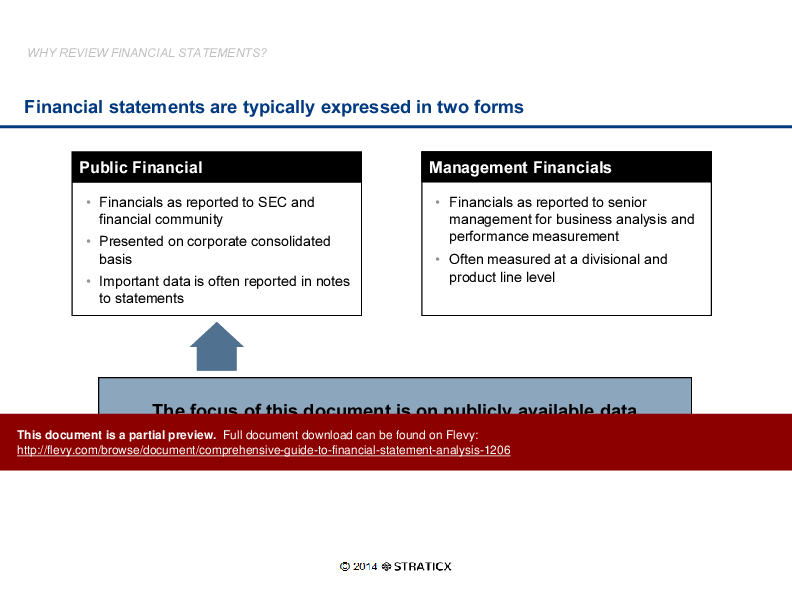
• Why Review Financial Statements? - Understanding the importance of financial statements in evaluating business performance and strategic insight.
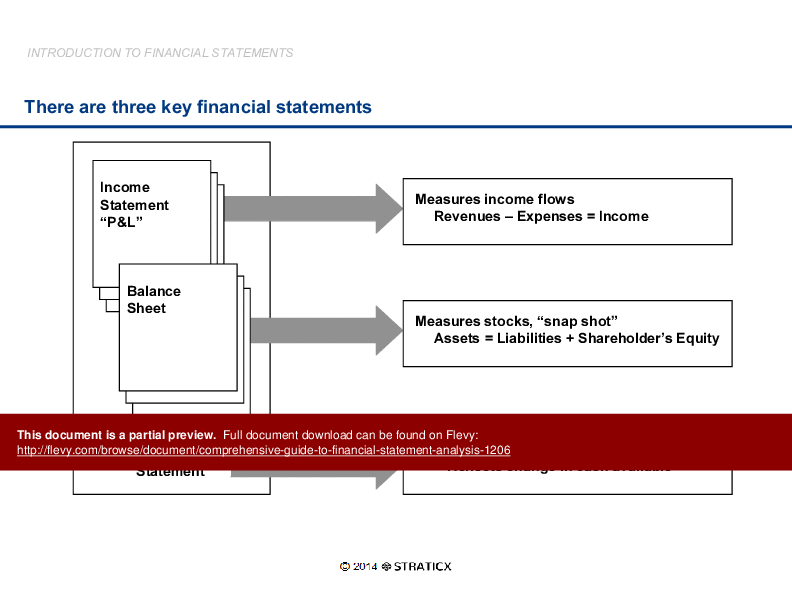
• Introduction to Financial Statements - Overview of the 3 key financial statements and their interconnections.
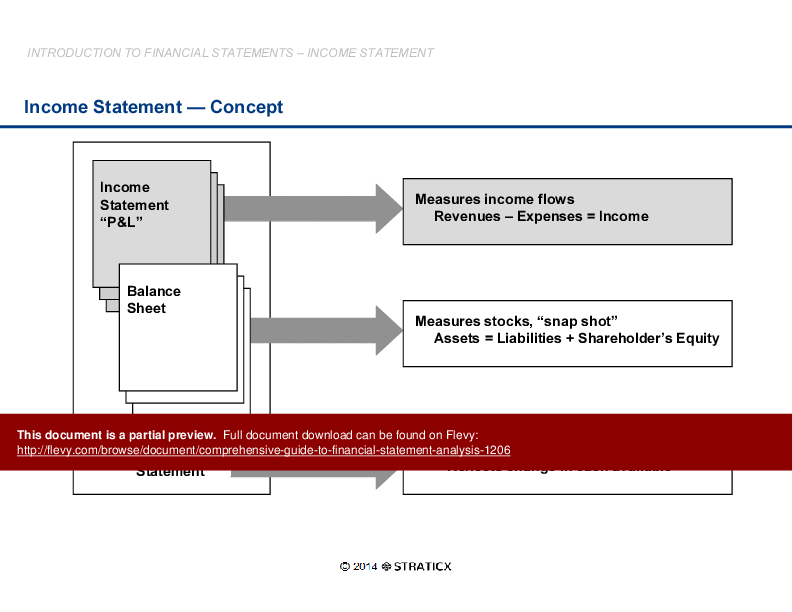
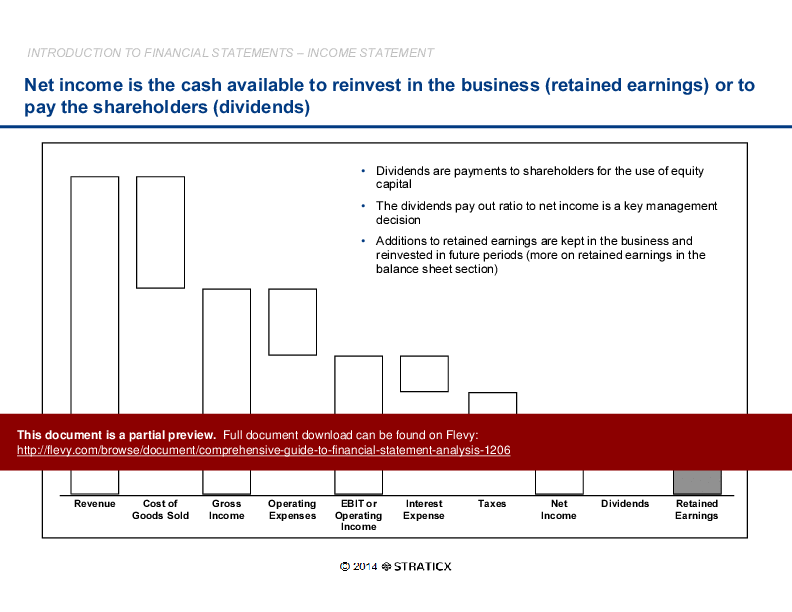
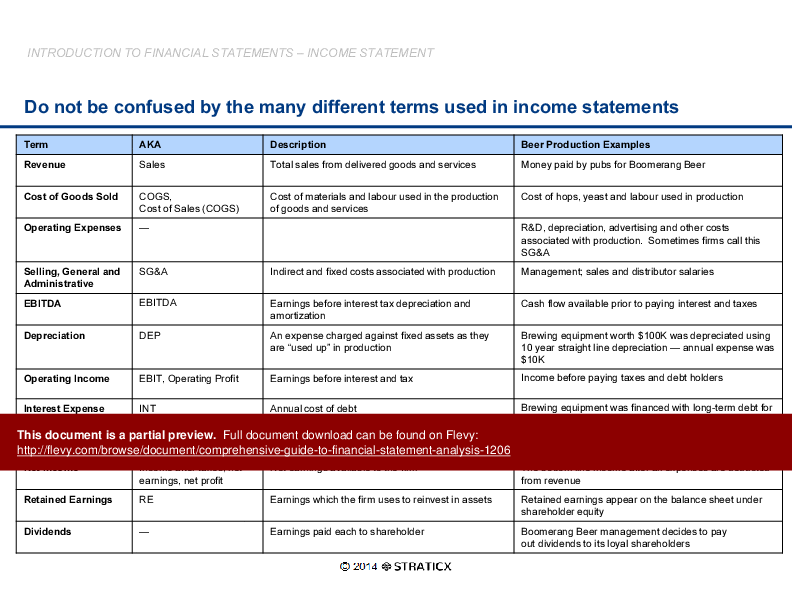
• Income Statement - Detailed examination of revenue, expenses, and net income, including cost structures and revenue drivers.
• Balance Sheet - Analysis of assets, liabilities, and shareholder equity, focusing on working capital and financial structure.
• Cash Flow Statement - Insights into cash sources and uses, emphasizing operational cash flow management.
• Financial Analysis - Application of the DuPont equation and ratio analysis to assess financial performance.
Deliverables, Templates, and Tools
• Financial statement templates for income, balance, and cash flow statements
• Ratio analysis worksheets for profitability and liquidity metrics
• DuPont equation calculation models for performance evaluation
• Cash flow management tools for operational efficiency
Slide Highlights
• Overview of the 3 key financial statements and their roles in business performance
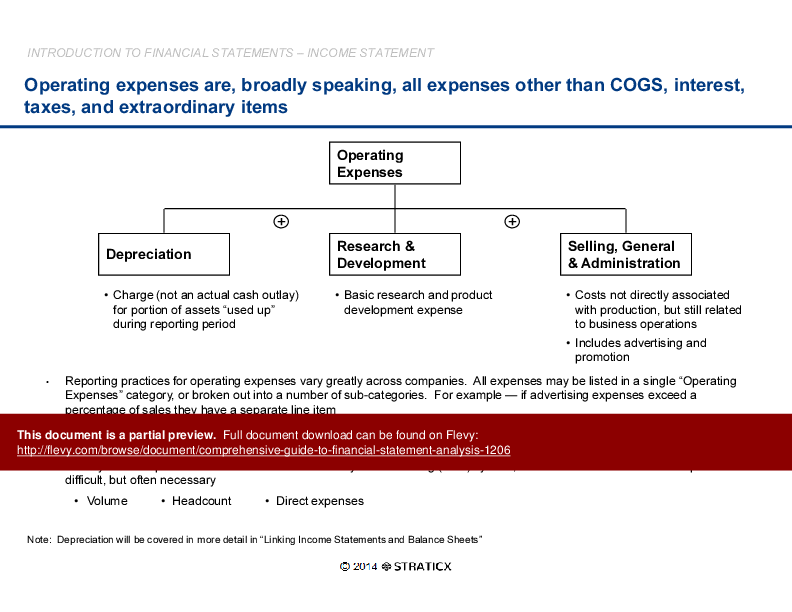
• Detailed breakdown of the income statement components, including revenue and expenses
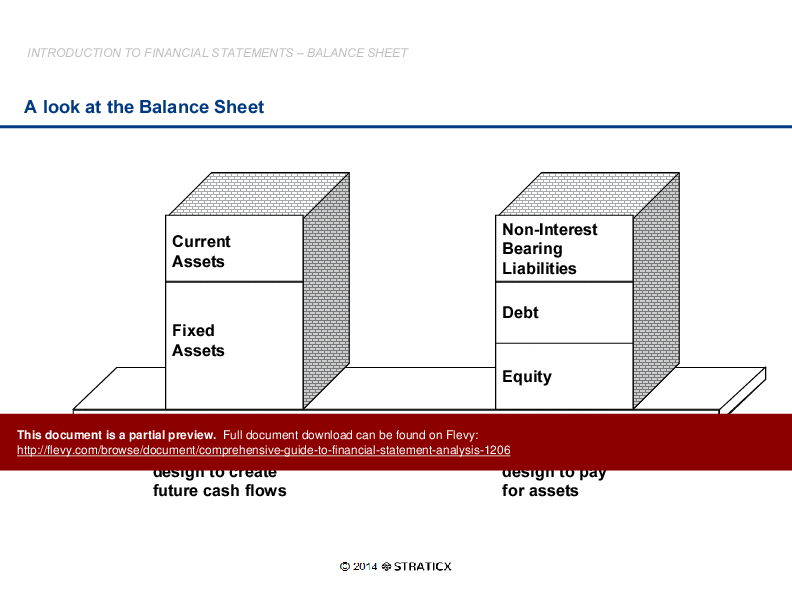
• Visual representation of the balance sheet structure and working capital metrics
• Flowchart illustrating the linkages between the income statement, balance sheet, and cash flow statement
Potential Workshop Agenda
Introduction to Financial Statements (60 minutes)
• Discuss the importance of financial statements
• Review the 3 key financial statements and their components
Income Statement Deep Dive (90 minutes)
• Analyze revenue generation and cost structures
• Explore the significance of gross income and net income
Balance Sheet Analysis (60 minutes)
• Examine asset and liability classifications
• Discuss working capital management and financial structure
Cash Flow Management (60 minutes)
• Review sources and uses of cash
• Discuss strategies for improving cash flow performance
Customization Guidance
• Tailor financial statement templates to reflect specific industry standards
• Adjust ratio analysis metrics based on company-specific financial goals
• Incorporate regional financial terminology and practices as needed
Secondary Topics Covered
• Economic performance indicators and strategic insights
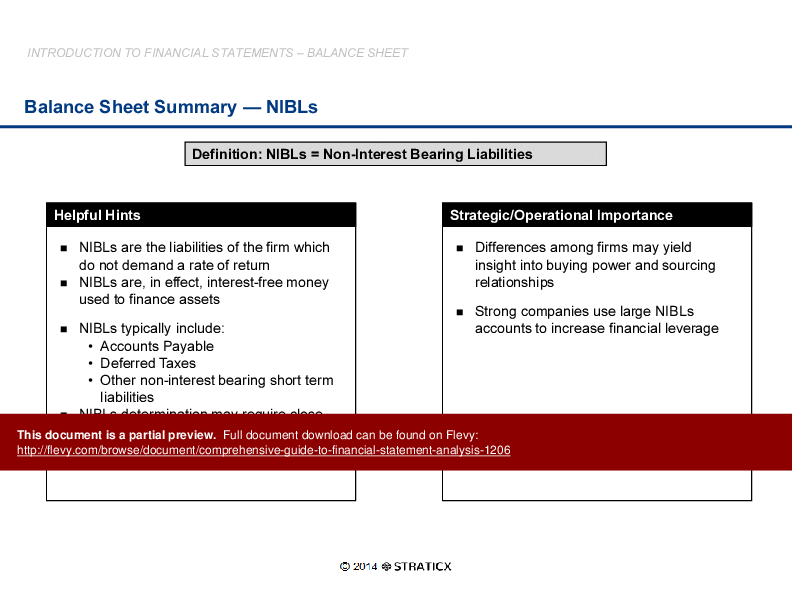
• The role of non-interest bearing liabilities in financial analysis
• Impact of capital structure on financial performance
FAQ
Why are financial statements important?
Financial statements provide critical insights into a company's performance, enabling stakeholders to make informed decisions regarding strategy and operations.
What are the 3 key financial statements?
The 3 key financial statements are the income statement, balance sheet, and cash flow statement, each serving a unique purpose in financial analysis.
How does the DuPont equation assist in financial analysis?
The DuPont equation breaks down return on investment into its components, allowing for a detailed assessment of operational efficiency and financial leverage.
What is the significance of ratio analysis?
Ratio analysis quantifies financial data, providing insights into profitability, asset utilization, and liquidity, which are essential for evaluating business performance.
How can I improve cash flow management?
Effective cash flow management involves minimizing receivables, maximizing payables, and optimizing inventory levels to enhance liquidity.
What are non-interest bearing liabilities?
Non-interest bearing liabilities are obligations that do not incur interest, such as accounts payable, and can be used to finance assets without cost.
How do I interpret the balance sheet?
The balance sheet provides a snapshot of a company's financial position, detailing assets, liabilities, and shareholder equity at a specific point in time.
What factors influence revenue growth?
Revenue growth is influenced by market share, pricing strategies, and sales volume, all of which should be analyzed for strategic planning.
Glossary
• Income Statement - A financial statement that measures income flows, showing revenues minus expenses.
• Balance Sheet - A snapshot of a company's financial position, detailing assets, liabilities, and shareholder equity.
• Cash Flow Statement - A financial statement that measures cash flows, reflecting changes in cash available.
• DuPont Equation - A framework for evaluating a firm's operating and financing performance through return on investment.
• Ratio Analysis - A quantitative method for assessing financial performance through various financial ratios.
• Working Capital - The difference between current assets and current liabilities, indicating a firm's short-term financial health.
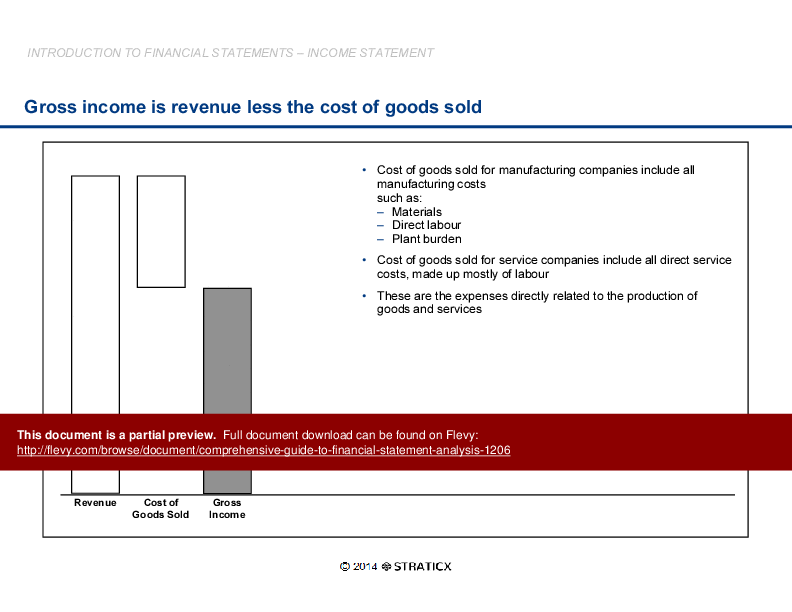
• Gross Income - Revenue minus the cost of goods sold, representing the profit before operating expenses.
• Net Income - The profit remaining after all expenses, including taxes and interest, have been deducted from revenues.
• Liquidity Ratios - Financial metrics used to assess a company's ability to meet its short-term obligations.
• Profitability Ratios - Ratios that measure a company's ability to generate profit relative to its revenue, assets, or equity.
• Asset Turnover - A measure of how efficiently a company uses its assets to generate sales.
• Financial Leverage - The use of debt to acquire additional assets, which can amplify returns, but also increases risk.
Source: Best Practices in Financial Analysis PowerPoint Slides: Comprehensive Guide to Financial Statement Analysis PowerPoint (PPTX) Presentation Slide Deck, STRATICX
This document is available as part of the following discounted bundle(s):
Save %!
Consultant Kit
This bundle contains 8 total documents. See all the documents to the right.
Save %!
Complete Kit
This bundle contains 13 total documents. See all the documents to the right.
|
Download our FREE Strategy & Transformation Framework Templates
Download our free compilation of 50+ Strategy & Transformation slides and templates. Frameworks include McKinsey 7-S, Balanced Scorecard, Disruptive Innovation, BCG Curve, and many more. |