
Organizations turn to different sources of gaining Competitive Advantage and outperforming their rivals. In the past, leading multinationals with diverse portfolio of product or service offerings used to have assets, positions, and economies of scale serve them as sources of sustainable Competitive Advantage.
However, nowadays, leading industry players focus more on developing distinct, sustainable capabilities. They strive to build a single formidable Value Proposition, based on a limited number of supporting competencies.
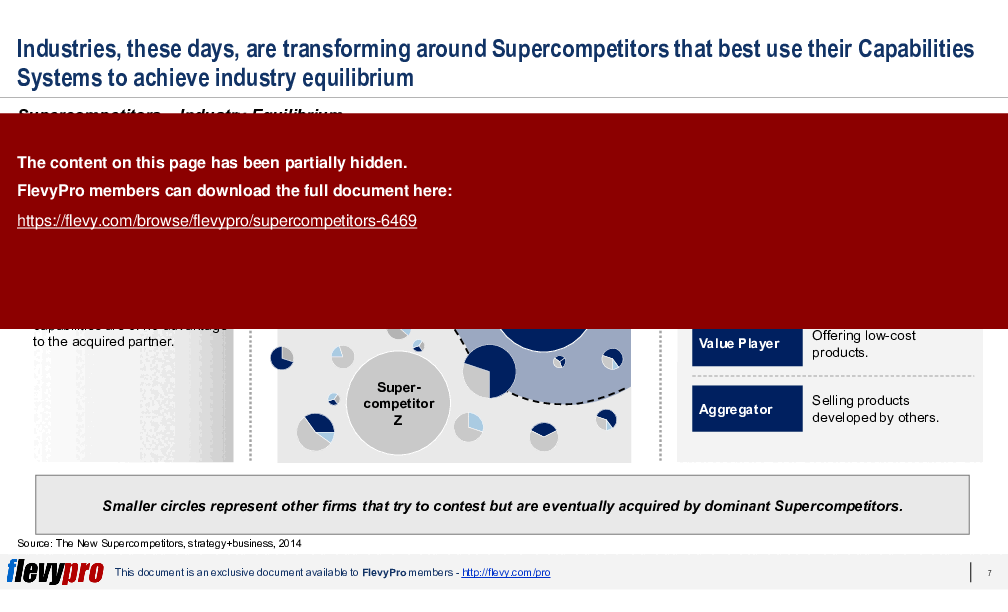
During the course, they essentially transform their entire organizations. These market leaders are dubbed "Supercompetitors," owing to their unique competencies, influence, and the ability to alter the dynamics of their industries. To build unique competencies, Supercompetitors use the right blend of processes, systems, insights, dexterities, and resource configuration spanning multiple units.
Competing with Supercompetitors necessitates other players to reorganize their portfolio, thoroughly evaluate the industry, and focus on the value propositions a particular organization excels in, to achieve growth.
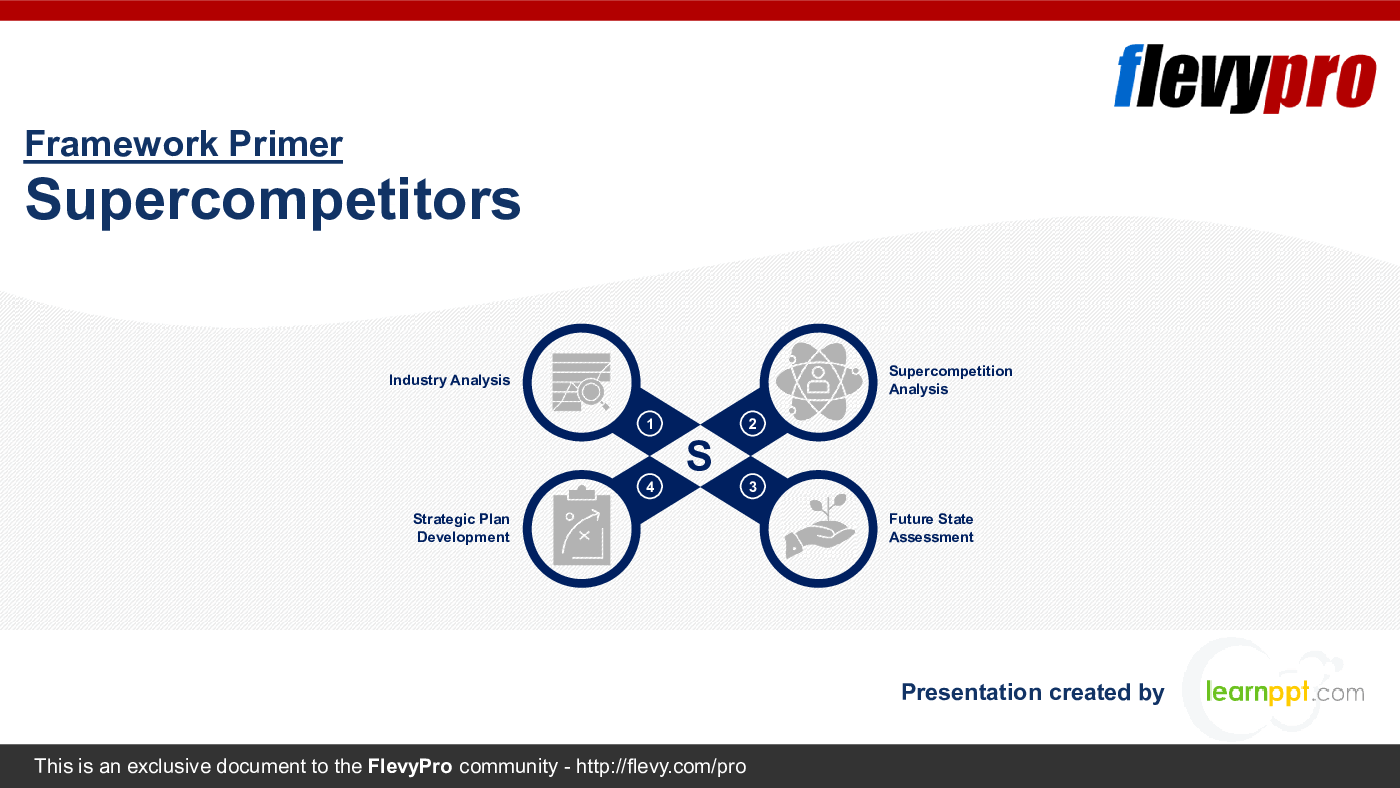
This PowerPoint presentation on Supercompetitors deliberates on the 4 critical elements that leaders need to focus on to conduct a detailed evaluation of the potential of businesses to evolve to Supercompetitors in an industry. These 4 elements are:
1. Industry Analysis – Leaders need to answer some key questions to evaluate their industry and analyze their organization's Supercompetitor potential.
2. Supercompetition Analysis – This element deals with analyzing rivals in terms of their potential to become the next Supercompetitors.
3. Future State Assessment – To become a Supercompetitor, leaders need to determine which model their organization should adopt to unlock maximum potential benefit in future.
4. Strategic Plan Development – When competing with Supercompetitors or aspiring to become one, the last critical element is to develop a strategic plan to invest in building key capabilities required to succeed in future and reinforcing them.
Each element is discussed in detail within this framework. Additional topics discussed include Distinctive Capabilities, Industry Equilibrium, as well as several case studies of Supercompetitors.
This PowerPoint presentation on Supercompetitors also includes some slide templates depicting the Distinctive Capabilities Framework and the 4 Elements of Supercompetitor Evaluation for you to use in your own business presentations.
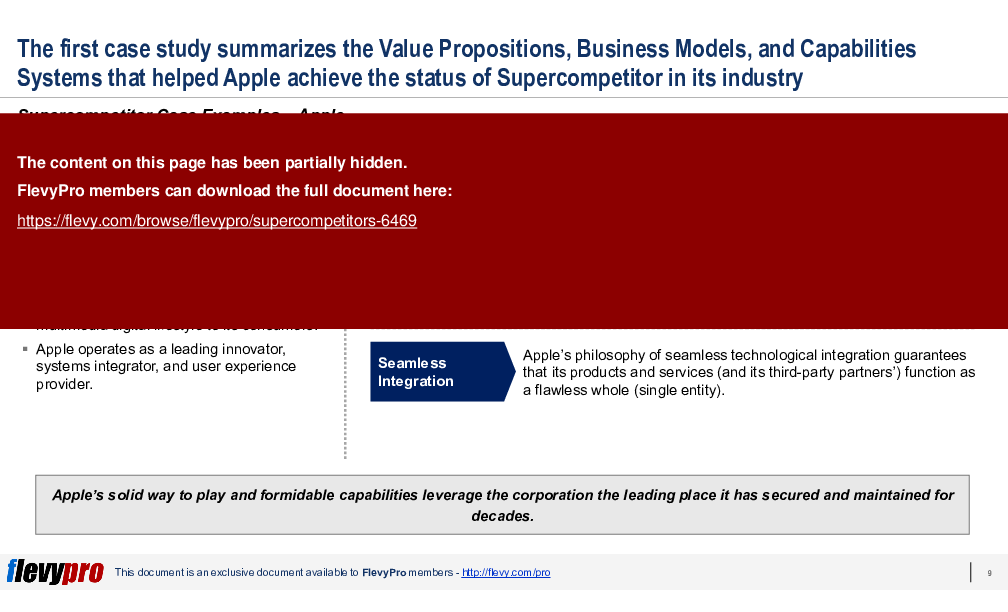
This presentation includes case studies of industry leaders like Apple, Danaher, and IKEA, showcasing their journey to becoming Supercompetitors. The deck also provides practical slide templates for conducting your own Supercompetitor evaluations.
Got a question about this document? Email us at flevypro@flevy.com.
Executive Summary
The "Supercompetitors" presentation provides a strategic framework designed for corporate executives and consultants to analyze industry dynamics and develop actionable plans to outperform rivals. This deck outlines the concept of Supercompetitors—organizations that leverage unique capabilities to create sustainable competitive advantages. It emphasizes the importance of a thorough industry analysis, supercompetition analysis, future state assessment, and strategic plan development. By utilizing this framework, organizations can identify their strengths, evaluate market opportunities, and craft strategies that align with their core competencies.
Who This Is For and When to Use
• Corporate executives seeking to enhance competitive positioning
• Strategy consultants advising clients on market dynamics
• Business leaders focused on innovation and capability development
• Teams involved in strategic planning and execution
Best-fit moments to use this deck:
• During strategic planning sessions to define competitive strategies
• When assessing market positioning and identifying Supercompetitors
• In workshops aimed at capability development and innovation
• For evaluating potential mergers or acquisitions to enhance competitive advantage
Learning Objectives
• Define the concept of Supercompetitors and their impact on industry dynamics
• Analyze industry landscapes to identify potential Supercompetitors
• Develop a strategic plan that reinforces unique capabilities
• Assess future state requirements for achieving competitive advantage
• Evaluate the strengths and weaknesses of competitors in the market
• Create actionable insights for organizational transformation
Table of Contents
• Overview (page 3)
• Supercompetitors (page 5)
• Supercompetitor Case Examples (page 9)
• Supercompetitor Potential (page 13)
• Templates (page 19)
Primary Topics Covered
• Supercompetitors - Organizations that leverage unique capabilities to create sustainable competitive advantages and influence industry dynamics.
• Distinctive Capabilities - Three types of capabilities: Architecture, Reputation, and Innovation that contribute to competitive advantage.
• Industry Equilibrium - The role of Supercompetitors in shaping industry dynamics through mergers, acquisitions, and capability alignment.
• Strategic Plan Development - Framework for creating a strategic plan that integrates capabilities and prevents competitors from gaining an advantage.
• Future State Assessment - Evaluation of the desired capabilities and value propositions necessary for future success.
• Supercompetition Analysis - Assessment of potential rival firms and their capabilities to become future Supercompetitors.
Deliverables, Templates, and Tools
• Distinctive Capabilities Framework template for assessing organizational strengths
• Four Elements of Supercompetitor Evaluation template for strategic planning
• Industry Analysis checklist for evaluating market dynamics
• Supercompetition Analysis framework for competitor assessment
• Future State Assessment guide for defining organizational goals
• Strategic Plan Development outline for integrating capabilities
Slide Highlights
• Overview of Supercompetitors and their impact on industry dynamics
• Case studies showcasing successful Supercompetitors like Apple and Danaher
• Visual frameworks illustrating the Distinctive Capabilities and their components
• Templates for practical application in strategic planning sessions
• Key questions for industry analysis to identify potential Supercompetitors
Potential Workshop Agenda
Supercompetitor Analysis Session (90 minutes)
• Discuss the concept of Supercompetitors and their market influence
• Identify key capabilities that define Supercompetitors
• Analyze case studies of successful Supercompetitors
Strategic Planning Workshop (120 minutes)
• Develop a strategic plan based on unique capabilities
• Assess future state requirements and potential market disruptions
• Create actionable insights for implementation
Customization Guidance
• Tailor the Distinctive Capabilities Framework to reflect your organization’s unique strengths
• Adjust the templates to align with specific industry dynamics and competitive landscapes
• Incorporate organizational terminology and metrics into the strategic plan
Secondary Topics Covered
• The role of mergers and acquisitions in achieving industry equilibrium
• The importance of innovation in maintaining competitive advantage
• Strategies for fostering a culture of continuous improvement
• Evaluation of market trends and their impact on competitive positioning
Topic FAQ
Document FAQ
These are questions addressed within this presentation.
What are Supercompetitors?
Supercompetitors are organizations that leverage unique capabilities to create sustainable competitive advantages and influence industry dynamics.
How can this framework help in strategic planning?
This framework provides structured methodologies for analyzing industry dynamics, assessing competitors, and developing actionable strategic plans.
What are the key elements to assess in an industry analysis?
Key elements include evaluating leadership stability, competitor value propositions, and the scalability of capabilities.
How do I identify potential Supercompetitors in my industry?
Conduct a supercompetition analysis to discern probable future Supercompetitors based on their capabilities and market positioning.
What templates are included in this deck?
Templates include frameworks for Distinctive Capabilities, Supercompetitor Evaluation, and strategic planning outlines.
How can I customize the strategic plan?
Customize the plan by integrating your organization’s specific capabilities, market conditions, and strategic goals.
What is the significance of the Future State Assessment?
The Future State Assessment helps organizations define the capabilities and value propositions necessary for future success.
How can I leverage the case studies provided?
Use the case studies as benchmarks for understanding how successful Supercompetitors operate and the strategies they employ.
Glossary
• Supercompetitors - Organizations that create sustainable competitive advantages.
• Distinctive Capabilities - Unique competencies that provide competitive advantage.
• Industry Equilibrium - The balance of competitive forces within an industry.
• Strategic Plan Development - The process of creating actionable strategies for business success.
• Future State Assessment - Evaluation of desired organizational capabilities for future success.
• Supercompetition Analysis - Assessment of potential rivals and their capabilities.
• Architecture - The structure of relational contacts within an organization.
• Reputation - The perceived quality and reliability of an organization.
• Innovation - The introduction of new ideas or methods to gain competitive advantage.
• Capability Fit - The alignment of organizational capabilities with market opportunities.
• Mergers and Acquisitions - Strategies for growth through combining organizations.
• Continuous Improvement - Ongoing efforts to enhance products, services, or processes.
• Value Proposition - The unique value a company offers to its customers.
• Competitive Advantage - The attributes that allow an organization to outperform its competitors.
• Market Dynamics - The forces that impact the competitive landscape of an industry.
• Corporate Strategy - The overarching strategy that guides an organization’s direction.
• Operational Excellence - The execution of business strategies more consistently and reliably than competitors.
• Scalability - The ability to grow and manage increased demand without compromising performance.
• Customer-Centric - A business approach that prioritizes customer needs and experiences.
• Business Model - The plan implemented by a company to generate revenue and make a profit.
• Capability System - The integration of various capabilities that support strategic objectives.
Source: Best Practices in Competitive Advantage, Core Competences, Distinctive Capabilities PowerPoint Slides: Supercompetitors PowerPoint (PPTX) Presentation Slide Deck, LearnPPT Consulting
Did you need more documents?
Consider a FlevyPro subscription from $39/month. View plans here.
For $10.00 more, you can download this document plus 2 more FlevyPro documents. That's just $13 each.
|
Download our FREE Strategy & Transformation Framework Templates
Download our free compilation of 50+ Strategy & Transformation slides and templates. Frameworks include McKinsey 7-S, Balanced Scorecard, Disruptive Innovation, BCG Curve, and many more. |