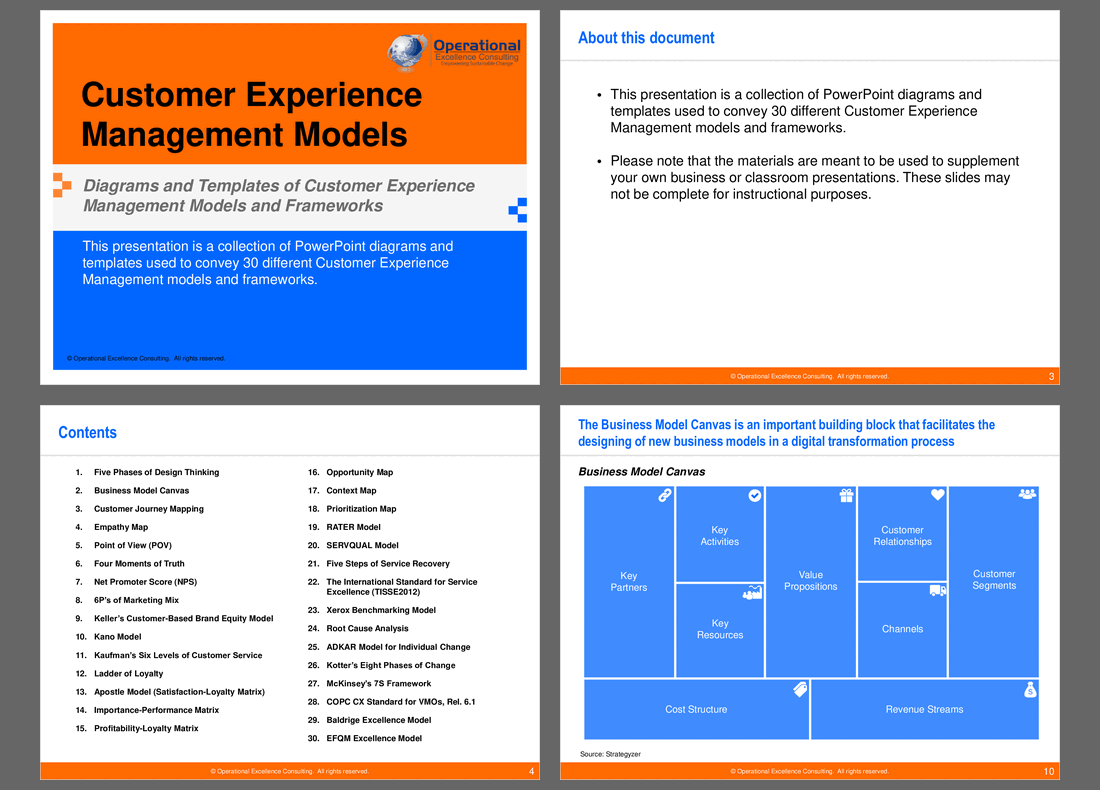

This presentation is a collection of PowerPoint diagrams and templates used to convey 30 different Customer Experience (CX) Management frameworks and models. (Please note that these are diagrams and charts that are to be used in your own business or classroom presentations. These are not instructional slides.)

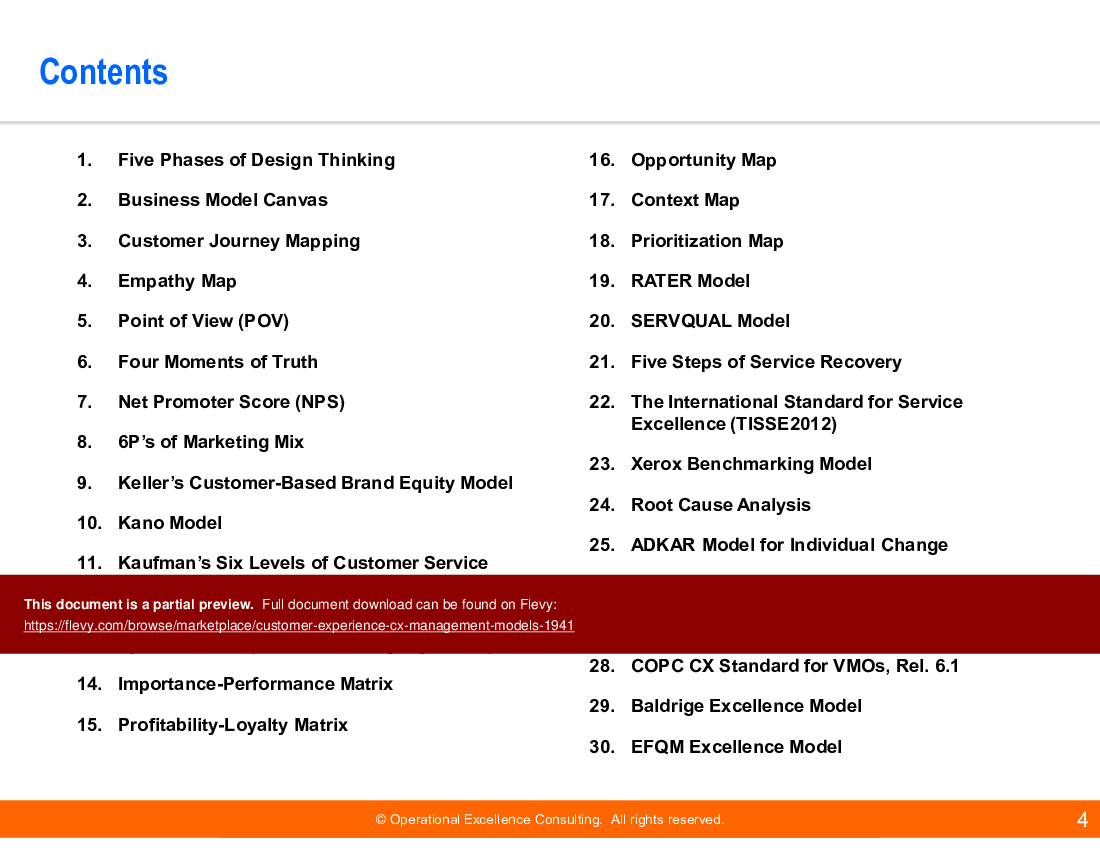
FRAMEWORKS/MODELS INCLUDE THE FOLLOWING:
1. Five Phases of Design Thinking
2. Business Model Canvas
3. Customer Journey Mapping
4. Empathy Map
5. Point of View (POV)
6. Four Moments of Truth
7. Net Promoter Score (NPS)
8. 6P's of Marketing Mix
9. Keller's Customer-Based Brand Equity Model
10. Kano Model
11. Kaufman's Six Levels of Customer Service
12. Ladder of Loyalty
13. Apostle Model (Satisfaction-Loyalty Matrix)
14. Importance-Performance Matrix
15. Profitability-Loyalty Matrix
16. Opportunity Map
17. Context Map
18. Prioritization Map
19. RATER Model
20. SERVQUAL Model
21. Five Steps of Service Recovery
22. The International Standard for Service Excellence (TISSE2012)
23. Xerox's 10-Step Benchmarking Process
24. Root Cause Analysis (RCA)
25. ADKAR Model
26. Kotter's Eight Phases of Change
27. McKinsey's 7-S Framework
28. COPC CX Standard for VMOs, Rel. 6.1
29. Baldrige Excellence Model
30. EFQM Excellence Model
This presentation includes frameworks and models covering: Stanford Design School's Five Modes of Design Thinking, Strategyzer's Business Model Canvas, Xplane's Empathy Map, The Kano Model, McKinsey's 7-S Framework, Fred Reichheld's Net Promoter Score, Christopher, Payne and Ballantyne's 6Ps of Marketing, Kevin Lane Keller's Brand Equity Model, Ron Kaufman's Six Levels of Customer Service, Christopher, Payne & Ballantyne's Ladder of Loyalty, Jones & Sasser's Apostle Model, Reinartz & Kumar's Profitability-Loyalty Matrix, Valarie A. Zeithaml, A. Parasuraman, and Leonard L. Berry's SERVQUAL Model, The International Customer Service Institute's 5P's Service Quality Model, Robert C. Camp's Benchmarking Model, Prosci's ADKAR Change Model, and John Kotter's Eight Step Change Model.
The PPT provides detailed templates for practical application, including the Business Model Canvas and Customer Journey Mapping. These tools are essential for visualizing and optimizing customer interactions and business strategies.
Got a question about the product? Email us at support@flevy.com or ask the author directly by using the "Ask the Author a Question" form. If you cannot view the preview above this document description, go here to view the large preview instead.
Executive Summary
This presentation provides a comprehensive collection of 30 Customer Experience Management (CEM) models and frameworks, designed to enhance understanding and implementation of effective customer experience strategies. Each model is presented through PowerPoint diagrams and templates, allowing organizations to visualize and apply these concepts in their own customer engagement efforts. By utilizing these frameworks, businesses can improve customer satisfaction, loyalty, and overall service quality.
Who This Is For and When to Use
• Customer Experience Managers seeking to enhance their strategies
• Marketing teams focused on improving customer engagement
• Business analysts looking to implement effective CEM practices
• Consultants advising organizations on customer experience improvements
Best-fit moments to use this deck:
• During strategy workshops to align on customer experience initiatives
• In training sessions for teams focused on customer engagement
• For presentations aimed at stakeholders to illustrate CEM frameworks
• When developing or refining customer journey mapping processes
Learning Objectives
• Define key concepts and frameworks in Customer Experience Management
• Build effective customer journey maps using provided templates
• Establish a clear understanding of customer needs through empathy mapping
• Analyze customer satisfaction metrics using models like NPS and SERVQUAL
• Implement service recovery strategies effectively
• Utilize the Business Model Canvas to align customer experience with business goals
Table of Contents
• Five Phases of Design Thinking (page 6)
• Business Model Canvas (page 10)
• Customer Journey Mapping (page 18)
• Empathy Map (page 23)
• Point of View (POV) (page 30)
• Four Moments of Truth (page 33)
• Net Promoter Score (NPS) (page 35)
• 6P’s of Marketing Mix (page 39)
• Keller’s Customer-Based Brand Equity Model (page 43)
• Kano Model (page 50)
• Kaufman’s Six Levels of Customer Service (page 55)
• Ladder of Loyalty (page 60)
• Apostle Model (Satisfaction-Loyalty Matrix) (page 63)
• Importance-Performance Matrix (page 68)
• Profitability-Loyalty Matrix (page 73)
• Opportunity Map (page 78)
• Context Map (page 81)
• Prioritization Map (page 84)
• RATER Model (page 87)
• SERVQUAL Model (page 96)
• Five Steps of Service Recovery (page 100)
• The International Standard for Service Excellence (TISSE2012) (page 104)
• Xerox Benchmarking Model (page 108)
• Root Cause Analysis (page 111)
• ADKAR Change Model (page 116)
• Kotter’s Eight Phases of Change (page 124)
• McKinsey’s 7S Framework (page 129)
• COPC CX Standard for VMOs, Rel. 6.1 (page 136)
• Baldrige Excellence Framework (page 139)
• EFQM Excellence Model (page 142)
Primary Topics Covered
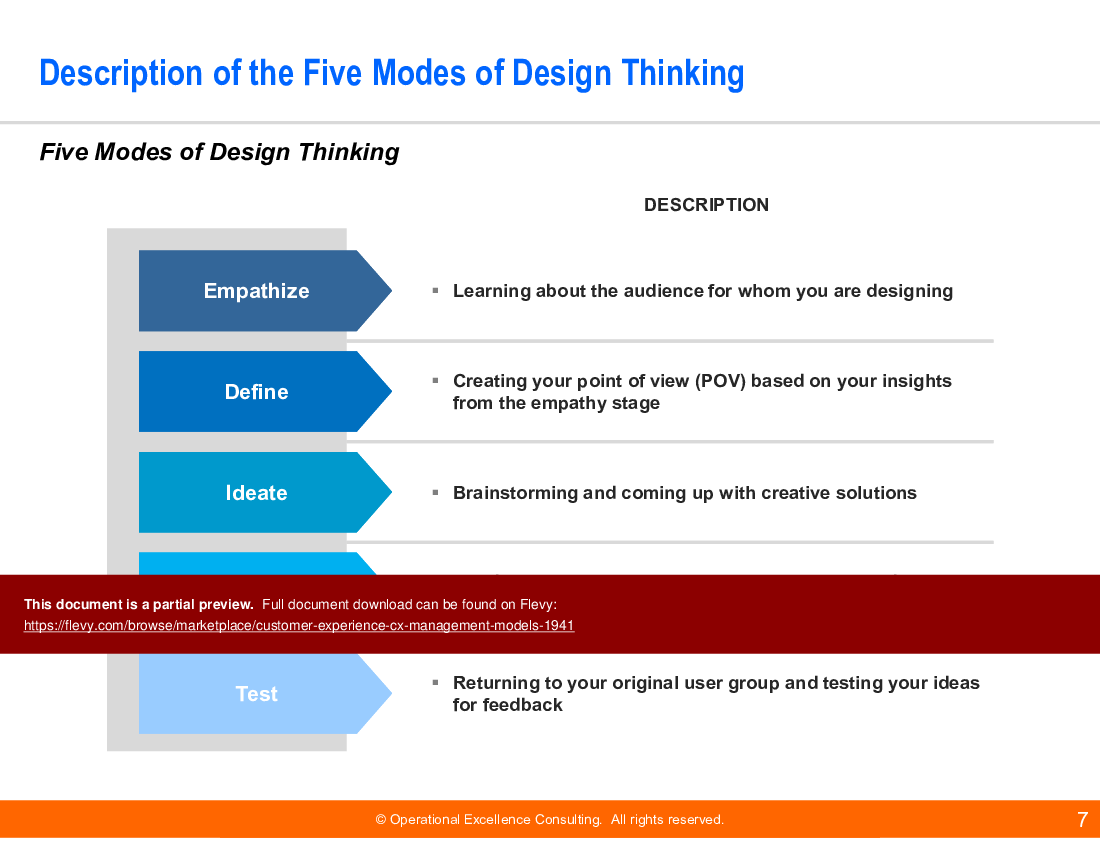
• Design Thinking - A human-centered approach to problem-solving that includes phases such as empathize, define, ideate, prototype, and test.
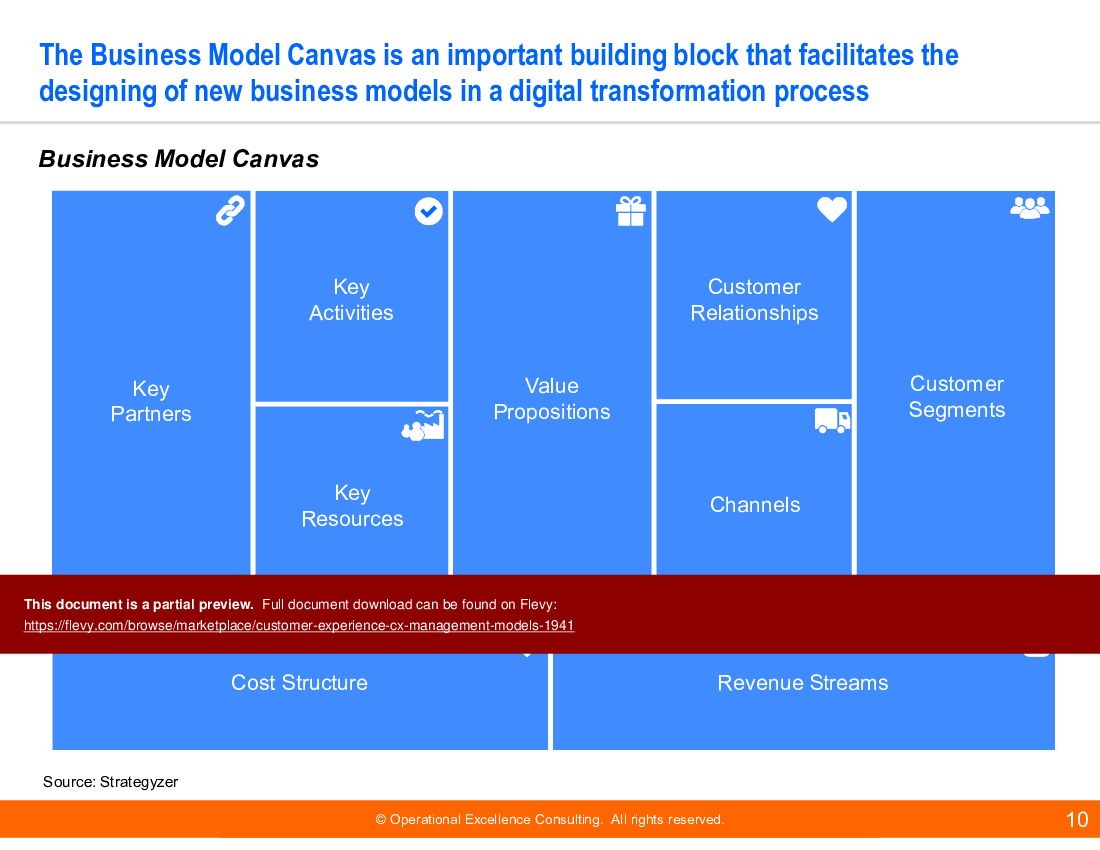
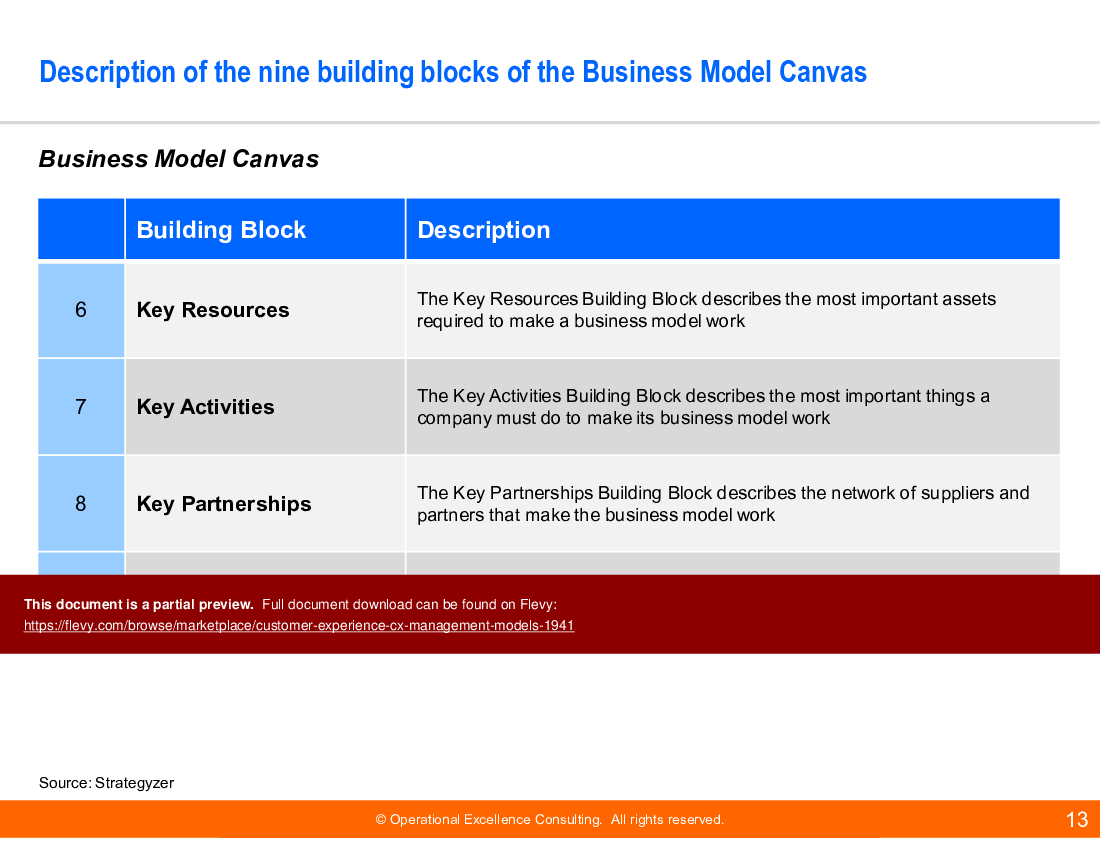
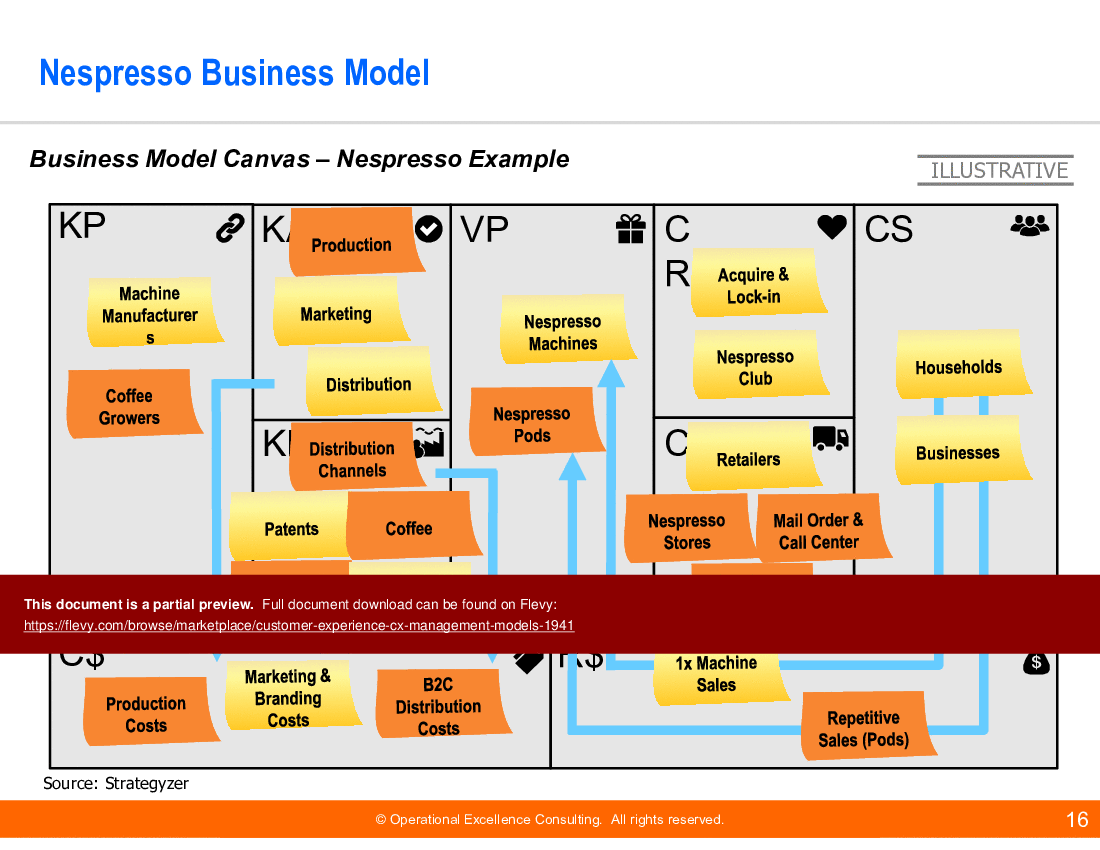
• Business Model Canvas - A strategic management tool that outlines key components of a business model, including customer segments and value propositions.
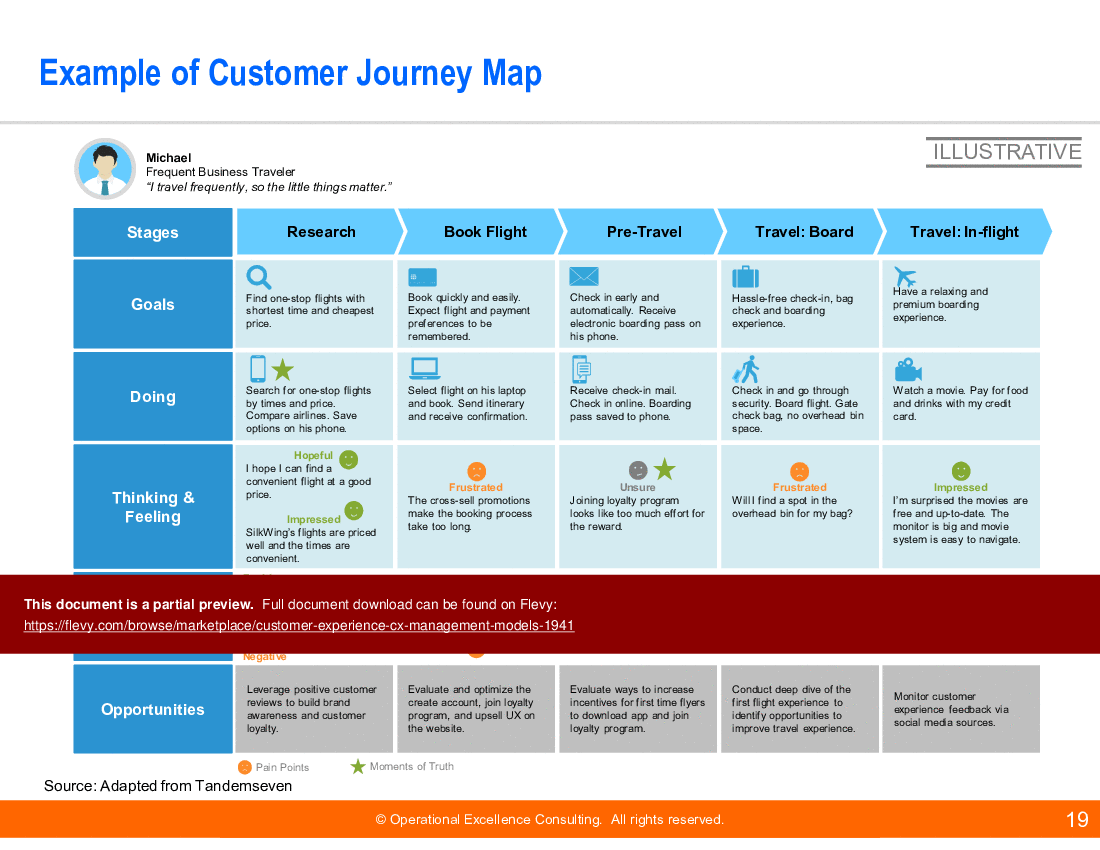
• Customer Journey Mapping - A visual representation of the customer experience, highlighting touchpoints and customer actions.
• Empathy Mapping - A tool for synthesizing customer insights to better understand their needs and motivations.
• Net Promoter Score (NPS) - A metric for gauging customer loyalty and satisfaction through direct feedback.
• Kano Model - A framework for categorizing customer preferences and their impact on satisfaction.
Deliverables, Templates, and Tools
• Customer Journey Map template for visualizing customer interactions
• Empathy Map template for synthesizing customer insights
• Business Model Canvas template for strategic alignment
• NPS calculation template for measuring customer loyalty
• RATER Model for assessing service quality performance
• Service Recovery process template to handle customer complaints
Slide Highlights
• Visual representations of the Five Phases of Design Thinking
• Detailed breakdown of the Business Model Canvas components
• Illustrative examples of Customer Journey Maps
• Empathy Map showcasing customer insights and pain points
• Overview of the Kano Model and its categories of customer needs
Potential Workshop Agenda
Customer Experience Strategy Workshop (90 minutes)
• Introduction to Customer Experience Management models
• Group activity: Create a Customer Journey Map
• Discussion: Key insights from Empathy Maps
Service Recovery Training Session (60 minutes)
• Overview of the Five Steps of Service Recovery
• Role-playing scenarios to practice service recovery techniques
• Group feedback and discussion on best practices
Customization Guidance
• Tailor the Customer Journey Map to reflect specific customer segments and touchpoints
• Modify the Business Model Canvas to align with organizational goals and strategies
• Adapt the Empathy Map to focus on unique customer insights relevant to your industry
Secondary Topics Covered
• Importance-Performance Matrix for prioritizing service attributes
• Profitability-Loyalty Matrix for segmenting customer types
• Context Map for understanding external factors affecting customer experience
• ADKAR Change Model for managing organizational change
Topic FAQ
Source: Best Practices in Business Framework PowerPoint Diagrams, Customer Experience PowerPoint Slides: Customer Experience (CX) Management Models PowerPoint (PPTX) Presentation Slide Deck, Operational Excellence Consulting
|
Receive our FREE Primer on Lean Management
This 32-page presentation from Operational Excellence Consulting explains the Lean Management philosophy, based on the Toyota Production System (TPS). Learn to eliminate waste. |