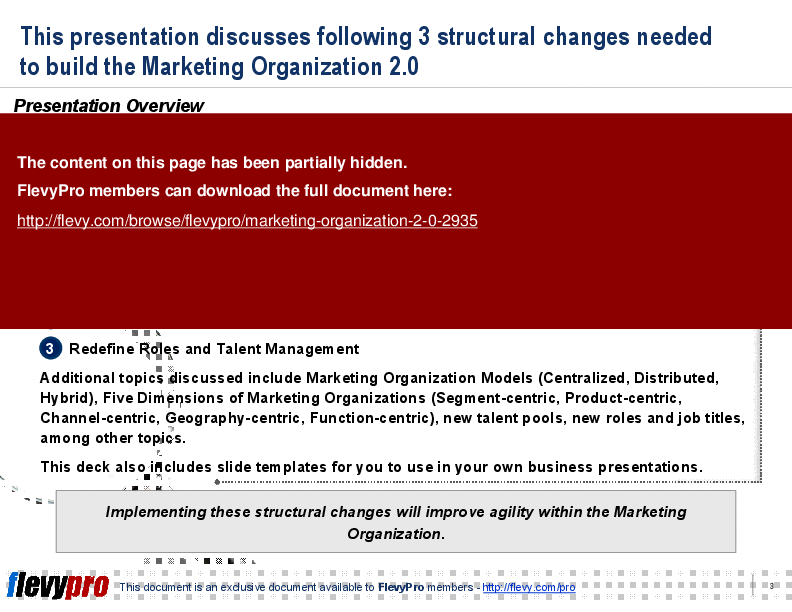
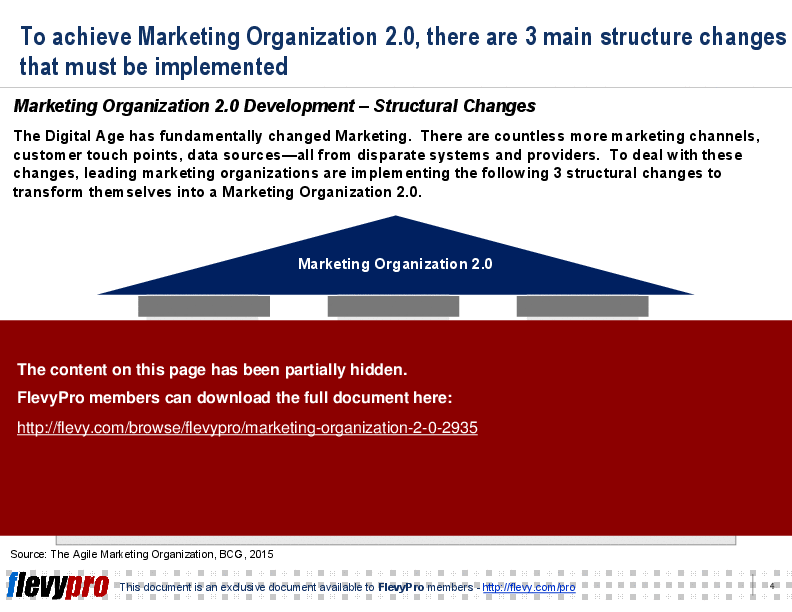

The Digital Age has fundamentally changed Marketing. There are countless more marketing channels, customer touch points, data sources—all from disparate systems and providers. To deal with these changes, we need a new type of Marketing Organization—Marketing Organization 2.0.
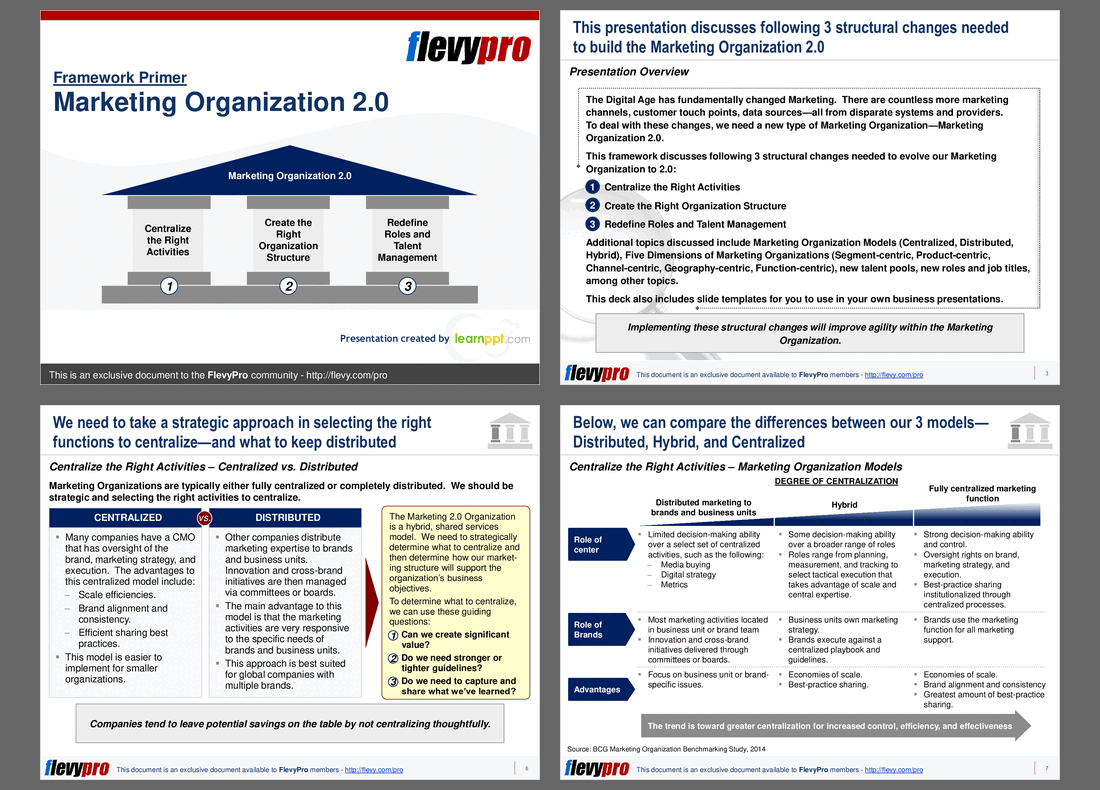
This framework discusses following 3 structural changes needed to evolve our Marketing Organization to 2.0:
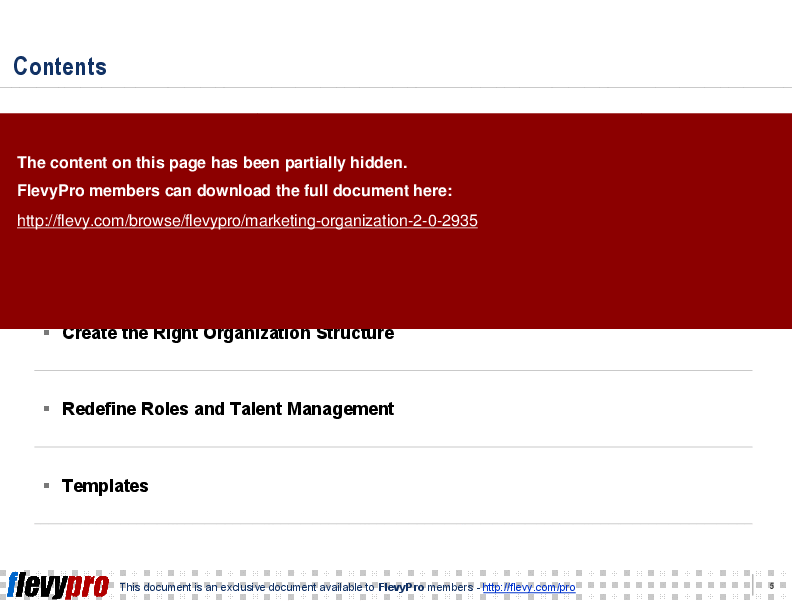
1. Centralize the Right Activities
2. Create the Right Organization Structure
3. Redefine Roles and Talent Management
Implementing these structural changes will improve agility within the Marketing Organization.
Additional topics discussed include Marketing Organization Models (Centralized, Distributed, Hybrid), Five Dimensions of Marketing Organizations (Segment-centric, Product-centric, Channel-centric, Geography-centric, Function-centric), new talent pools, new roles and job titles, among other topics.
This deck also includes slide templates for you to use in your own business presentations.
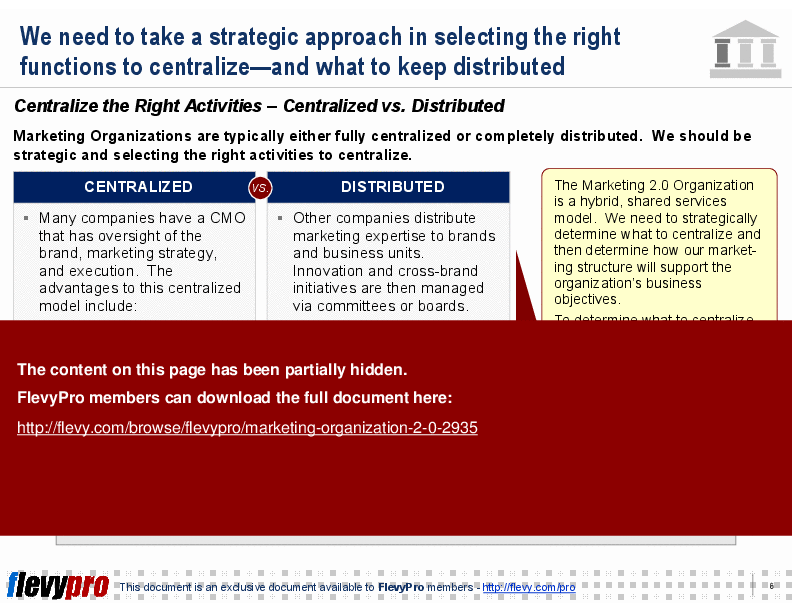
The Marketing Organization 2.0 framework also delves into the strategic decision-making process for centralizing versus distributing marketing activities. It offers a comparative analysis of centralized, distributed, and hybrid models, highlighting the pros and cons of each. This enables organizations to make informed decisions tailored to their unique business needs.
The PPT provides a detailed examination of the five dimensions of marketing organizations: segment-centric, product-centric, channel-centric, geography-centric, and function-centric. Each dimension is explored with its respective trade-offs, allowing executives to understand the implications of different structural choices. This ensures alignment with overarching business objectives.
New roles and talent management strategies are essential components of Marketing Organization 2.0. The presentation outlines emerging roles such as Chief Customer Experience Officer and Data Storyteller, emphasizing the need for diverse skill sets. This focus on talent management ensures that your organization is equipped to handle the complexities of modern marketing.
Got a question about this document? Email us at flevypro@flevy.com.
Executive Summary
The Marketing Organization 2.0 presentation provides a strategic framework for evolving marketing structures in response to the complexities of the digital age. It outlines 3 critical structural changes: centralizing the right activities, creating an optimal organization structure, and redefining roles and talent management. This framework enables organizations to enhance agility, improve operational efficiency, and effectively respond to diverse market demands. By implementing these changes, marketing teams can better align with business objectives and leverage emerging technologies and methodologies.
Who This Is For and When to Use
• Marketing executives and leaders seeking to modernize their organizational structures
• Business strategists focused on enhancing marketing effectiveness
• HR professionals involved in talent acquisition and role definition
• Consultants advising companies on marketing transformation
Best-fit moments to use this deck:
• During strategic planning sessions for marketing transformation
• When assessing current marketing structures and identifying areas for improvement
• In workshops aimed at redefining roles and responsibilities within marketing teams
• For training sessions on implementing agile marketing practices
Learning Objectives
• Define the key components of Marketing Organization 2.0 and its relevance in the digital age
• Build a framework for centralizing marketing activities effectively
• Establish a hybrid organizational structure that aligns with business objectives
• Identify new roles and redefine existing roles to meet modern marketing demands
• Evaluate the 5 dimensions of marketing organizations and their trade-offs
• Develop strategies for talent acquisition from non-traditional talent pools
Table of Contents
• Overview (page 3)
• Centralize the Right Activities (page 6)
• Create the Right Organization Structure (page 10)
• Redefine Roles and Talent Management (page 13)
• Templates (page 18)
Primary Topics Covered
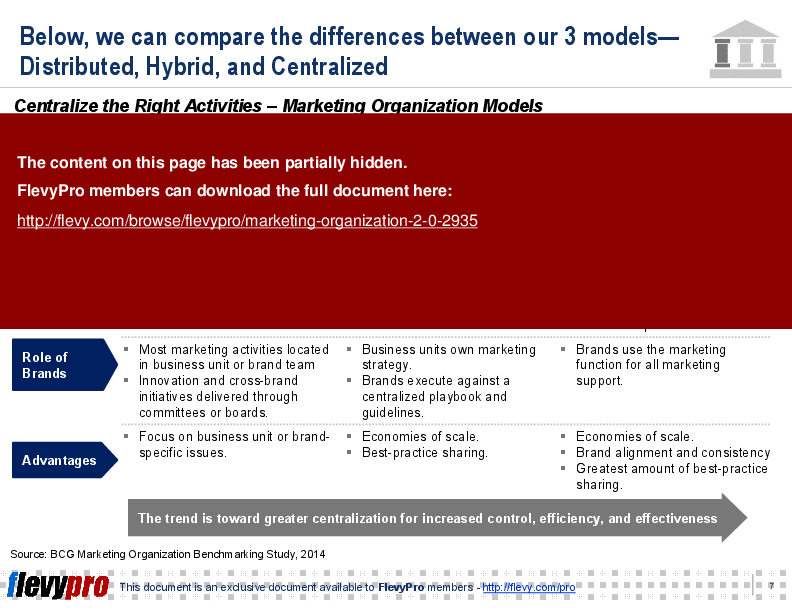
• Centralization of Activities - Discusses the strategic importance of centralizing specific marketing functions to enhance efficiency and brand consistency.
• Organization Structure Models - Explores various organizational structures (centralized, distributed, hybrid) and their implications for marketing effectiveness.
• Redefined Roles - Highlights the need for new and redefined roles within marketing to adapt to technological advancements and changing consumer behaviors.
• Five Dimensions of Marketing Organizations - Analyzes segment-centric, product-centric, channel-centric, geography-centric, and function-centric models to determine optimal organizational alignment.
• Talent Management Strategies - Focuses on sourcing talent from non-traditional backgrounds to fill emerging roles in marketing.
• Agile Marketing Practices - Introduces the concept of agile marketing and its core capabilities to improve responsiveness and adaptability.
Deliverables, Templates, and Tools
• Centralization strategy template for identifying key marketing functions
• Organizational structure framework for assessing and implementing changes
• Role definition templates for new and existing marketing positions
• Five dimensions comparison chart for evaluating organizational models
• Agile marketing implementation checklist
• Presentation templates for internal workshops and training sessions
Slide Highlights
• Overview of Marketing Organization 2.0 and its structural changes
• Comparison of centralized, distributed, and hybrid marketing models
• Visual representation of the 5 dimensions of marketing organizations
• Role definitions for emerging positions in marketing technology and analytics
• Template examples for organizational structure and role definitions
Potential Workshop Agenda
Understanding Marketing Organization 2.0 (60 minutes)
• Overview of the framework and its significance
• Discussion on the need for structural changes in marketing
Centralization Strategies (90 minutes)
• Identify key marketing functions to centralize
• Develop a centralization strategy using provided templates
Defining Roles and Talent Management (90 minutes)
• Explore new roles and responsibilities in marketing
• Create role definitions and talent acquisition strategies
Customization Guidance
• Adjust the centralization strategy based on specific organizational needs and market conditions
• Tailor the organizational structure model to align with existing business objectives
• Modify role definitions to reflect the unique requirements of your marketing team
Secondary Topics Covered
• The impact of digital transformation on marketing practices
• Best practices for implementing agile methodologies in marketing
• Case studies of successful marketing organization transformations
• Metrics for measuring the effectiveness of marketing structures
Topic FAQ
Document FAQ
These are questions addressed within this presentation.
What is Marketing Organization 2.0?
Marketing Organization 2.0 refers to a modernized marketing structure that adapts to the complexities of the digital age, focusing on agility and responsiveness.
Why is centralization important in marketing?
Centralization allows for greater efficiency, brand consistency, and better sharing of best practices across marketing functions.
What are the 5 dimensions of marketing organizations?
The 5 dimensions are segment-centric, product-centric, channel-centric, geography-centric, and function-centric, each with distinct advantages and trade-offs.
How can organizations identify which activities to centralize?
Organizations should assess potential value creation, the need for tighter guidelines, and the importance of capturing and sharing insights.
What roles are emerging in Marketing Organization 2.0?
Emerging roles include Chief Marketing-Technology Officer, Chief Customer Experience Officer, and Chief Data Officer, among others.
How can companies source talent for new marketing roles?
Companies should look beyond traditional marketing backgrounds and consider candidates from data science, technology, and media fields.
What is the significance of agile marketing?
Agile marketing enhances responsiveness and adaptability, allowing teams to quickly adjust strategies based on market feedback and data.
How can this framework be customized for specific organizations?
Customization can be achieved by aligning strategies with organizational goals, adjusting role definitions, and tailoring templates to fit unique needs.
Glossary
• Marketing Organization 2.0 - A modernized marketing structure that enhances agility and responsiveness.
• Centralization - The process of consolidating marketing functions to improve efficiency and consistency.
• Hybrid Model - An organizational structure that combines centralized and distributed marketing functions.
• Segment-centric - An organizational approach focused on customer segments with distinct needs.
• Product-centric - A structure organized around specific products or product lines.
• Channel-centric - An approach that emphasizes distinct purchasing channels for customers.
• Geography-centric - A structure based on regional or local market needs.
• Function-centric - An organization focused on distinct marketing functions such as digital or brand marketing.
• Agile Marketing - A methodology that promotes flexibility and quick adaptation in marketing strategies.
• Talent Acquisition - The process of sourcing and hiring individuals for specific roles within an organization.
• Role Definition - The process of outlining responsibilities and expectations for specific positions.
• Best Practices - Proven methods or techniques that lead to desired outcomes in marketing activities.
• Metrics - Measurements used to assess the effectiveness of marketing strategies and structures.
• Digital Transformation - The integration of digital technology into all areas of a business, fundamentally changing how it operates.
• Customer Experience - The overall perception of a customer’s interactions with a brand across all touchpoints.
• Data-Driven Marketing - Marketing strategies based on data analysis and insights to inform decision-making.
• Marketing Technology - Tools and platforms used to execute marketing strategies effectively.
• Cross-Functional Collaboration - Cooperation between different departments or teams to achieve common goals.
• Innovation - The introduction of new ideas, products, or processes in marketing.
• Brand Alignment - Ensuring that all marketing efforts are consistent with the brand's identity and values.
• Performance Measurement - The process of evaluating the success of marketing activities against set objectives.
Source: Best Practices in Agile Marketing, Marketing 2.0 PowerPoint Slides: Marketing Organization 2.0 PowerPoint (PPT) Presentation Slide Deck, LearnPPT Consulting
Did you need more documents?
Consider a FlevyPro subscription from $39/month. View plans here.
For $10.00 more, you can download this document plus 2 more FlevyPro documents. That's just $13 each.
|
Download our FREE Strategy & Transformation Framework Templates
Download our free compilation of 50+ Strategy & Transformation slides and templates. Frameworks include McKinsey 7-S, Balanced Scorecard, Disruptive Innovation, BCG Curve, and many more. |