
Designed by a firm of ex-consultants from McKinsey, E&Y, and Bearing Point, this is a comprehensive presentation for conducting market analysis and developing a robust marketing plan.
Internet product marketing framework PPT: Get a ready-to-use Marketing Plan Development Framework with slides on strategy comparison, market analysis, and campaign planning. Download now. Marketing Plan Development is a 63-slide PPT PowerPoint presentation slide deck (PPT) available for immediate download upon purchase.
A marketing plan is a comprehensive blueprint, outlining an organization's overall marketing efforts. This PowerPoint presentation is a guide to developing a comprehensive marketing plan.
This presentation includes both instructional slides and PowerPoint diagram templates.
This Marketing Plan Development Framework PPT is designed to provide a robust structure for your marketing strategy. It covers essential elements such as market segmentation, target market identification, and SWOT analysis. With a clear focus on aligning marketing objectives with business goals, this presentation ensures that your marketing efforts are both strategic and effective.
The document delves into the intricacies of market segmentation, offering detailed methods to segment consumer and industrial markets. It emphasizes the importance of understanding customer needs and tailoring your marketing tactics accordingly. The framework also includes comprehensive guidelines on defining market segments, evaluating distribution channels, and identifying key success factors.
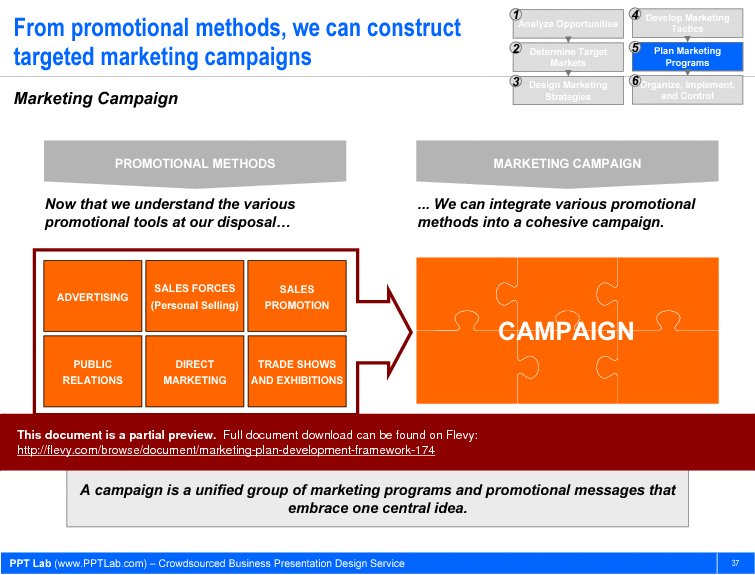
This presentation is not just theoretical; it includes practical templates for developing marketing objectives, strategies, and tactics. It guides you through the process of creating a cohesive marketing campaign by integrating various promotional methods. The inclusion of budgeting techniques and implementation keys ensures that your marketing plan is not only strategic, but also executable and results-driven.
Got a question about the product? Email us at support@flevy.com or ask the author directly by using the "Ask the Author a Question" form. If you cannot view the preview above this document description, go here to view the large preview instead.
MARCUS OVERVIEW
This synopsis was written by Marcus [?] based on the analysis of the full 63-slide presentation.
Executive Summary
This Marketing Plan Development Framework is a comprehensive guide designed to assist organizations in crafting effective marketing strategies. It is structured in a consulting-grade format, akin to McKinsey, Bain, or BCG-quality presentations (not affiliated). The framework enables users to define their marketing management process, conduct market analysis, and develop actionable marketing plans. By utilizing this document, corporate executives and marketing professionals can create a robust marketing plan that aligns with their organizational goals and market needs.
Who This Is For and When to Use
• Marketing executives and managers responsible for developing and implementing marketing strategies
• Business consultants aiding clients in formulating marketing plans
• Product managers seeking to align marketing efforts with product development
• Sales teams looking to understand market dynamics and customer needs
Best-fit moments to use this deck:
• During the initial stages of marketing strategy development
• When conducting market analysis and segmentation
• For aligning marketing objectives with organizational goals
• In workshops focused on marketing program implementation
Learning Objectives
• Define the marketing management process and its significance in strategic planning
• Identify target markets through effective market segmentation
• Analyze market conditions and competitive forces impacting marketing strategies
• Develop comprehensive marketing tactics and promotional methods
• Create a structured marketing budget to support marketing initiatives
• Implement and track the effectiveness of marketing programs
Primary Topics Covered
• Marketing Management Process - A structured approach outlining the steps from market analysis to implementation of marketing strategies.
• Market Segmentation - Techniques for dividing a market into distinct subsets of consumers with common needs or characteristics.
• Market Analysis - A comprehensive evaluation of market conditions, including competitive forces and customer needs.
• Marketing Strategies and Tactics - Framework for developing actionable strategies and specific tactics to achieve marketing objectives.
• Promotional Methods - Overview of various promotional tools available for marketing campaigns.
• Budgeting - Guidelines for creating a marketing budget that encompasses all marketing activities.
Deliverables, Templates, and Tools
• Marketing plan template for structuring marketing strategies and tactics
• SWOT analysis framework for assessing internal and external factors
• Market segmentation analysis template for identifying target markets
• Budgeting spreadsheet for tracking marketing expenses and forecasts
• Implementation checklist to ensure all marketing activities are executed effectively
Slide Highlights
• Overview of the marketing management process, detailing each step from analysis to implementation
• Visual representation of market segmentation strategies and target market identification
• Comprehensive SWOT analysis framework to guide strategic planning
• Budgeting overview slide highlighting key components of a marketing budget
• Promotional methods slide showcasing various tools and techniques for effective marketing
Potential Workshop Agenda
Marketing Strategy Development Session (120 minutes)
• Discuss the marketing management process and its importance
• Identify target markets and conduct market segmentation
• Develop initial marketing strategies and tactics
Market Analysis and Budgeting Workshop (90 minutes)
• Conduct a SWOT analysis to assess market conditions
• Review budgeting techniques and create a preliminary marketing budget
• Establish metrics for tracking marketing program effectiveness
Customization Guidance
• Tailor the marketing plan template to reflect specific organizational goals and market conditions
• Adjust market segmentation criteria based on industry-specific characteristics
• Update budgeting components to align with current financial constraints and objectives
Secondary Topics Covered
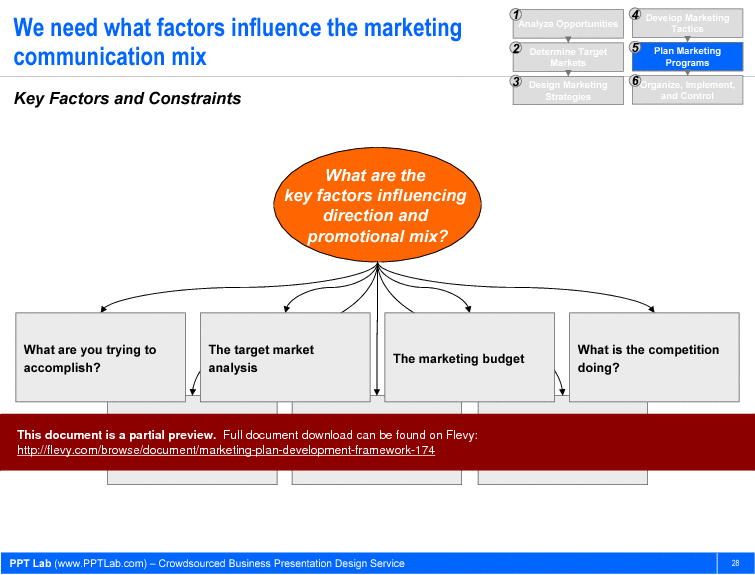
• Key factors influencing promotional mix decisions
• Best practices for implementing marketing programs
• Techniques for measuring marketing effectiveness and ROI
• Insights into customer behavior and buying patterns
• Strategies for aligning marketing efforts with sales objectives
FAQ What is the purpose of a marketing plan?
A marketing plan serves as a comprehensive blueprint outlining an organization’s marketing efforts, helping to align strategies with business objectives.
How do I conduct market segmentation?
Market segmentation involves dividing the market into distinct groups based on characteristics such as demographics, needs, and purchasing behavior.
What are the key components of a marketing budget?
A marketing budget typically includes expenses related to advertising, promotions, public relations, and administrative costs.
How can I measure the effectiveness of my marketing strategies?
Effectiveness can be measured through tracking sales performance, customer engagement metrics, and return on investment (ROI) for marketing initiatives.
What is the significance of a SWOT analysis in marketing?
A SWOT analysis helps identify internal strengths and weaknesses, as well as external opportunities and threats, guiding strategic decision-making.
How do I implement a marketing program?
Implementation involves assigning responsibilities, setting timelines, and tracking progress against established marketing objectives.
What promotional methods should I consider?
Consider a mix of advertising, personal selling, sales promotions, public relations, direct marketing, and participation in trade shows.
How do I align my marketing objectives with business goals?
Ensure that marketing objectives are specific, measurable, and directly tied to broader organizational goals and key performance indicators (KPIs).
Glossary
• Marketing Management Process - A structured approach for developing and implementing marketing strategies.
• Market Segmentation - The process of dividing a market into distinct groups of consumers.
• SWOT Analysis - A strategic planning tool used to identify strengths, weaknesses, opportunities, and threats.
• Marketing Tactics - Specific actions taken to achieve marketing objectives.
• Promotional Methods - Various tools and techniques used to promote products or services.
• Budgeting - The process of allocating financial resources for marketing activities.
• Implementation - The execution of marketing strategies and tactics.
• ROI - Return on Investment, a measure of the profitability of marketing initiatives.
• Target Market - A specific group of consumers identified as the intended audience for marketing efforts.
• Competitive Forces - External factors that influence market dynamics and competition.
• Customer Needs - The requirements and desires of consumers that drive purchasing behavior.
• Marketing Programs - Coordinated efforts to implement marketing strategies and achieve objectives.
This PPT slide outlines the essential components of comprehensive market analysis, identifying 7 key elements:
1. Market Segment Definition - Identifying distinct market groups for targeted strategies.
2. Company Analysis - Understanding internal capabilities and market positioning.
3. Needs and Requirements - Grasping customer expectations and pain points for tailored offerings.
4. Distribution Channels - Emphasizing efficient logistics and supply chain management.
5. Competitive Forces - Examining external pressures impacting market dynamics.
6. Communications - Highlighting effective messaging and outreach strategies.
7. Keys to Success - Identifying critical factors for successful market entry and growth.
These interconnected elements provide a framework for strategic decision-making and enhance market positioning. Neglecting any component can lead to gaps in strategy and execution.
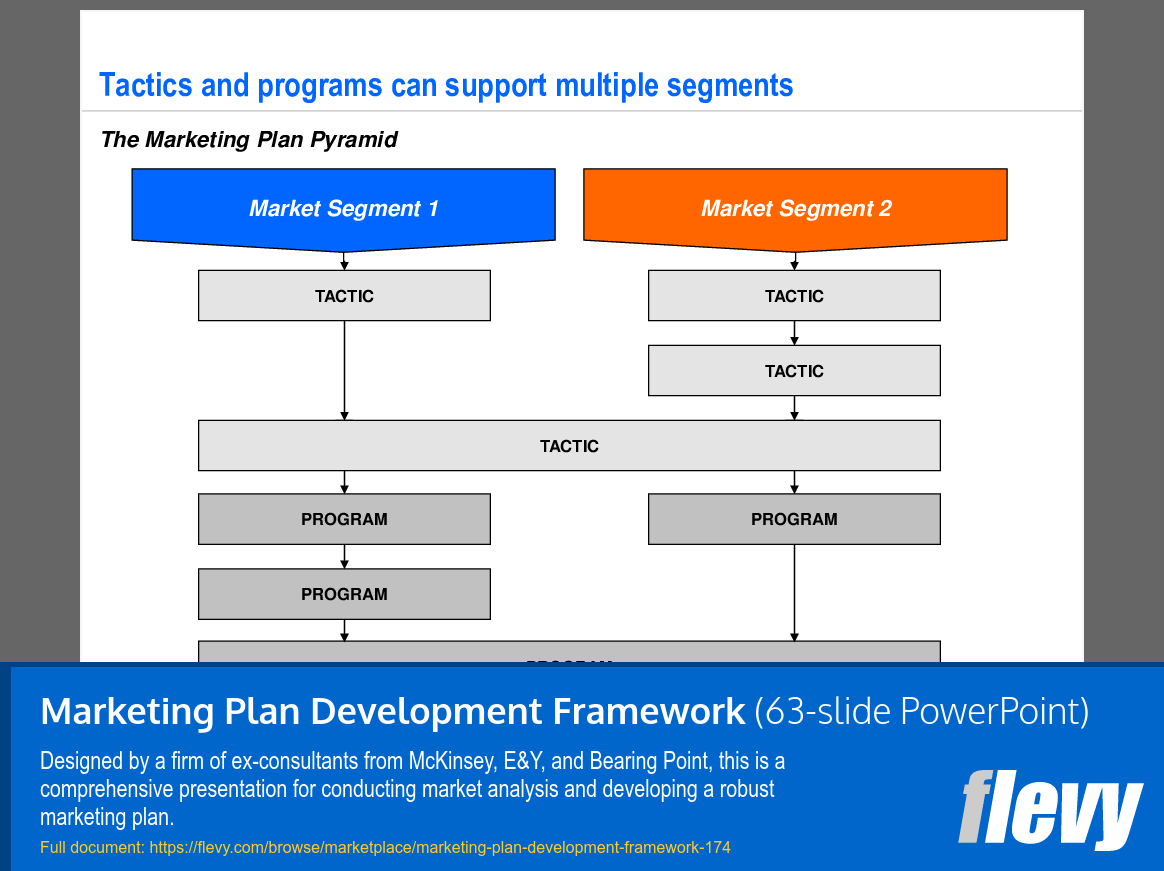
This PPT slide outlines a framework for aligning marketing tactics and programs across 2 distinct market segments. Market Segment 1 and Market Segment 2 are supported by specific tactics, which are actions designed to effectively engage target audiences. Each segment illustrates a hierarchy where tactics lead to broader programs, indicating a layered marketing approach. Multiple tactics can contribute to a single program, enhancing flexibility and adaptability. The interconnectedness of tactics and programs allows organizations to optimize marketing efforts, leveraging shared tactics to improve efficiency while tailoring programs to meet segment-specific needs. Strategic alignment in marketing planning facilitates effective resource allocation and enhances execution, guiding decision-makers in developing scalable and responsive marketing strategies.
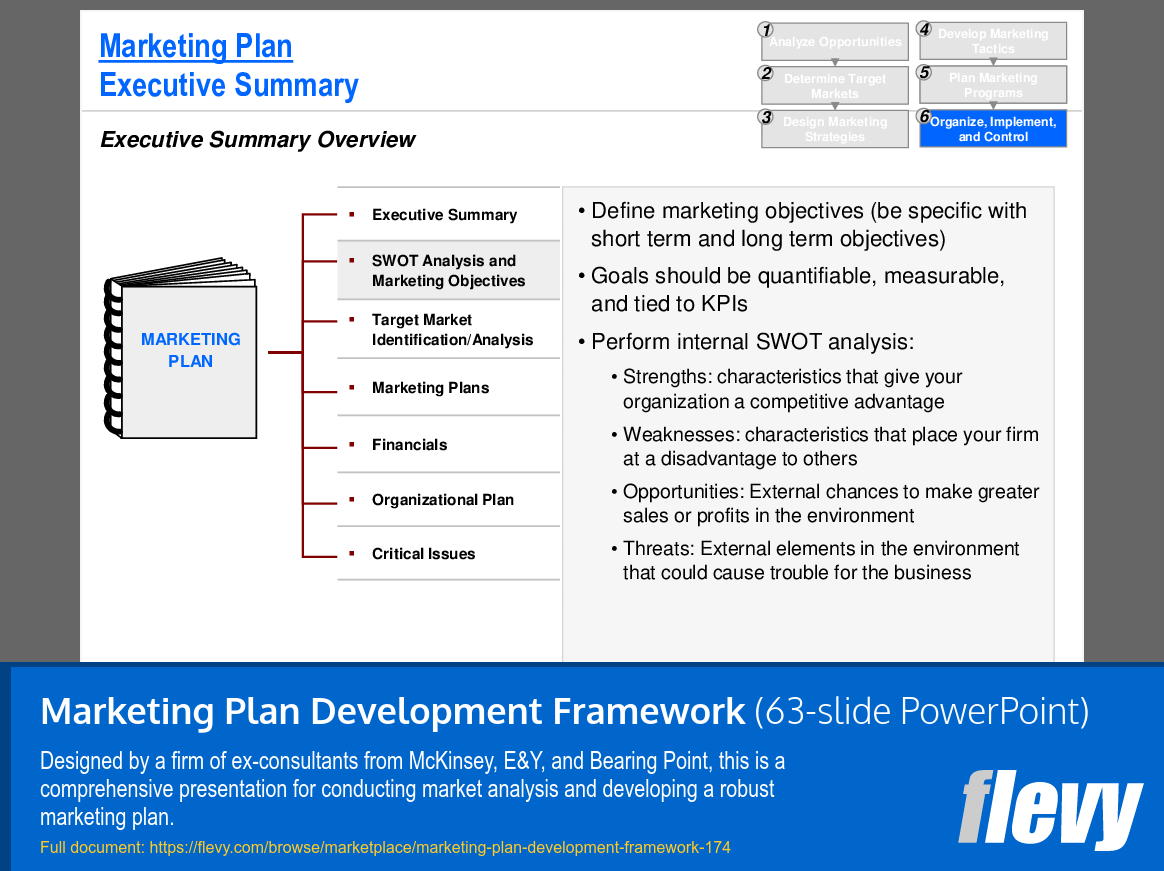
This PPT slide outlines an executive summary of a marketing plan, focusing on defining specific, quantifiable marketing objectives linked to key performance indicators (KPIs). It includes an internal SWOT analysis to identify organizational strengths and weaknesses, alongside external opportunities for sales enhancement and potential threats. Critical elements of the marketing plan also encompass target market identification, marketing strategies, financial considerations, and organizational planning. This document serves as a foundational tool for developing a robust marketing plan, providing a structured approach to understanding market dynamics and internal capabilities for informed decision-making.
This PPT slide outlines a four-step process for building a marketing budget. The first step involves calculating transaction values and the number of transactions, emphasizing the complexity of revenue analysis by product category and customer. The second step calculates lead generation requirements, determining the number of leads needed to meet revenue goals based on conversion rates, using a B-to-B formula that categorizes leads into leads, prospects, hot prospects, and closes. The third step focuses on lead generation tactics, identifying sources such as trade shows and telemarketing while considering associated expenses and revenues. The fourth step involves planning specific programs, ensuring alignment between lead generation and revenue generation strategies. This structured approach serves as a practical guide for refining the budgeting process in marketing.
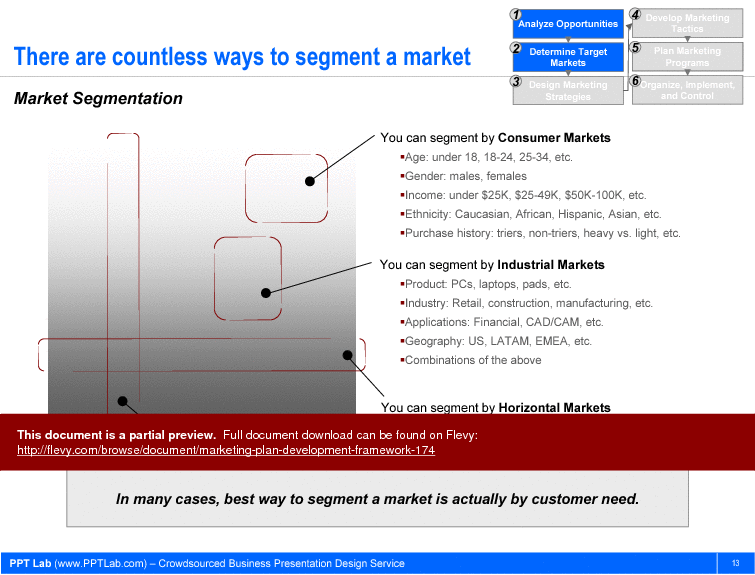
This PPT slide provides an overview of market segmentation strategies: Consumer Markets, Industrial Markets, and Vertical Markets. Consumer Markets segmentation relies on demographic factors such as age, gender, income, ethnicity, and purchase history, enabling tailored marketing efforts. Industrial Markets segmentation considers product type, industry classification, application areas, and geographic location, addressing the specific needs of different sectors. Vertical Markets focus on niche segments requiring specialized strategies. The most effective market segmentation aligns with customer needs, underscoring the importance of matching marketing strategies with target audience demands. This structured approach aids organizations in refining market analysis and developing targeted marketing strategies.
This PPT slide distinguishes between marketing strategy and marketing tactics. A marketing strategy is a broad, theoretical statement outlining how to achieve a marketing objective, such as growing sales by 5% through an expanded field sales force. In contrast, marketing tactics are operational, detailed actions that execute the strategy, specifying the offer, marketing message, and communication method. For example, a tactic may involve selling a particular product to existing customers, translating strategic goals into actionable steps. This differentiation enables organizations to align marketing efforts effectively, ensuring strategies inform tactical decisions that drive results.
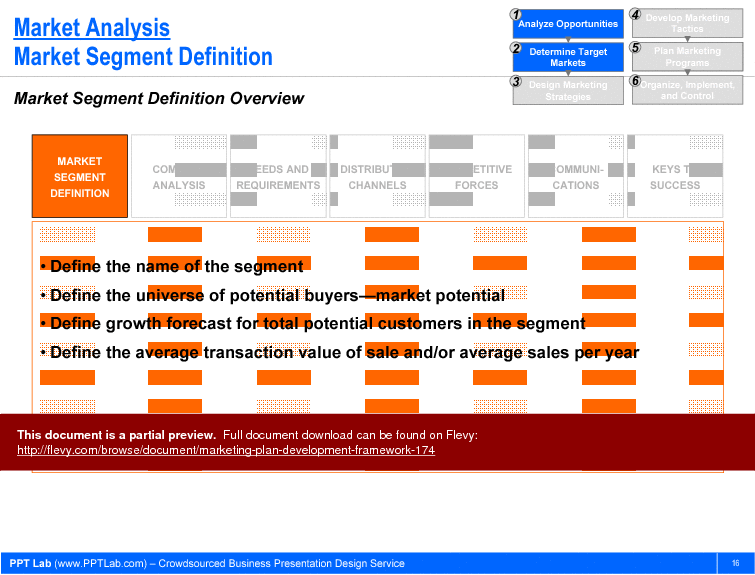
This PPT slide outlines critical components for defining a market segment. Key tasks include clearly naming the segment to align stakeholders, defining the universe of potential buyers to capture market potential, and forecasting growth for total potential customers, which aids in strategic planning and resource allocation. Additionally, it emphasizes defining the average transaction value and average sales per year as vital financial metrics for assessing economic viability and setting realistic revenue targets. This structured approach to segment definition is fundamental for effective marketing strategies and enhances decision-making processes.
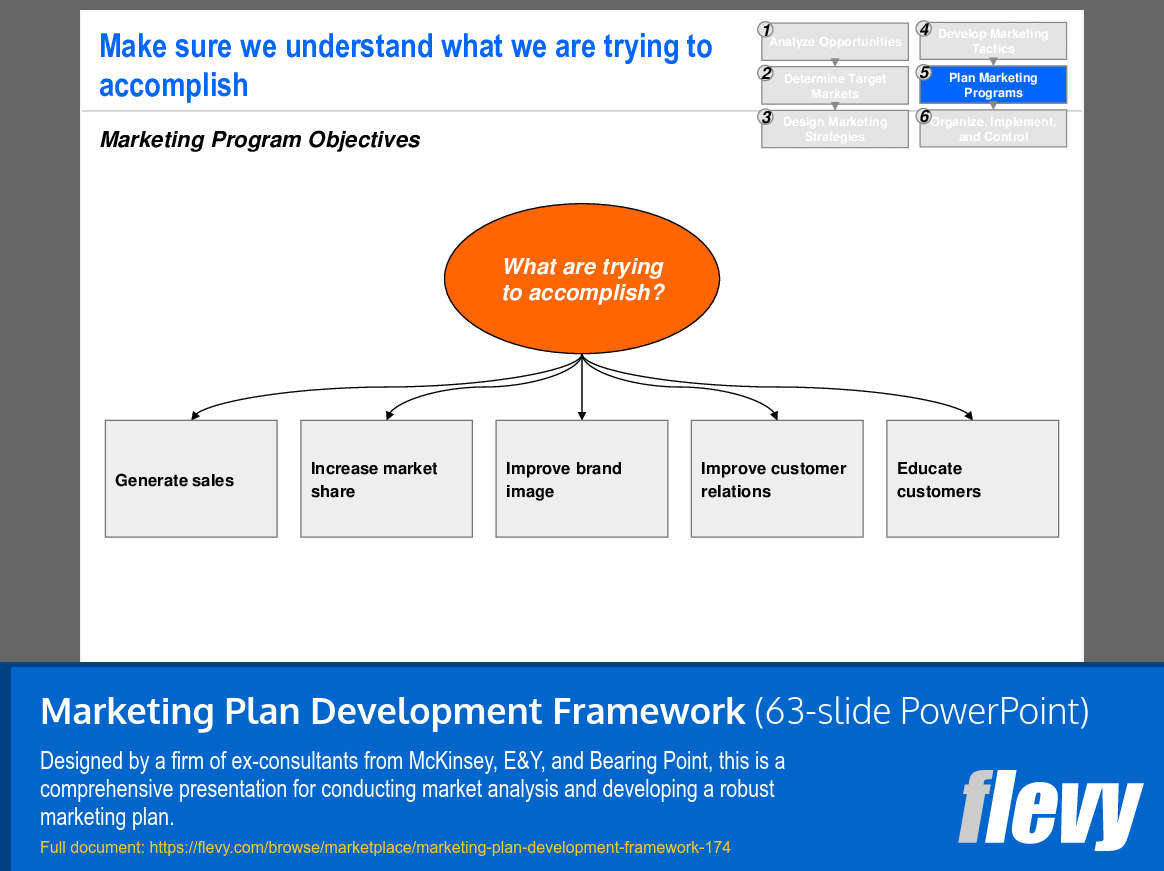
This PPT slide outlines key objectives of a marketing program centered around the question, “What are we trying to accomplish?” The primary objectives include generating sales, increasing market share, improving brand image, and enhancing customer relations. Generating sales is the fundamental aim of marketing initiatives. Increasing market share is essential for long-term growth and sustainability, requiring strategies to attract new customers and retain existing ones. Improving brand image recognizes the significant role of perception in consumer behavior, leading to increased loyalty and sales. Enhancing customer relations underscores the importance of strong connections with customers to boost satisfaction and encourage repeat business. Each goal is clearly defined, ensuring alignment among team members in developing a comprehensive marketing strategy.
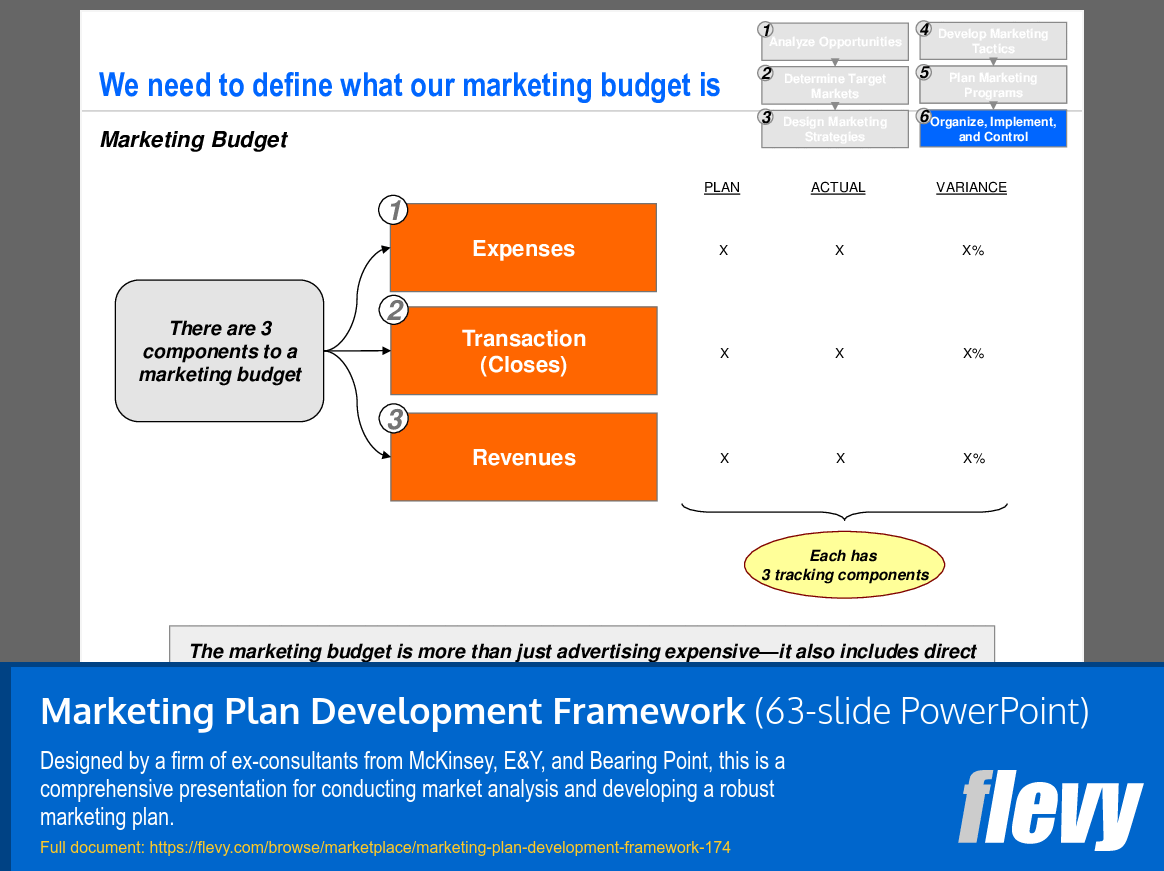
This PPT slide outlines essential components of a marketing budget: Expenses, Transactions (Closes), and Revenues. Expenses include costs for advertising, promotions, and operations, establishing the investment baseline. Transactions, or Closes, measure successful conversions from marketing initiatives, evaluating the effectiveness of marketing spend in generating sales. Revenues represent income generated from marketing activities, providing insight into profitability and return on investment when analyzed alongside expenses and transactions. The slide includes tracking planned versus actual figures and variance analysis for performance measurement, enabling strategy adjustments based on real-time data. This comprehensive view of a marketing budget emphasizes the importance of direct costs and the financial impact of marketing initiatives for optimizing investments.
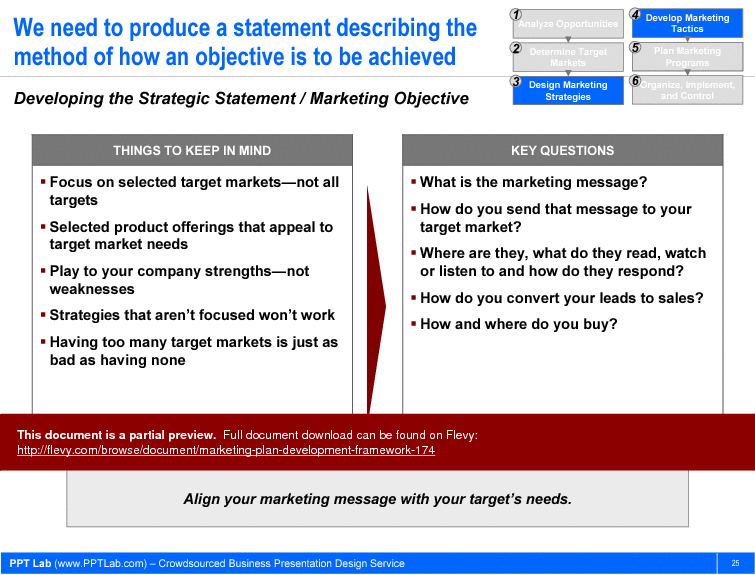
This PPT slide outlines the development of a strategic marketing statement, focusing on clarity in targeting and messaging. It emphasizes selecting specific target markets to align product offerings with market segment needs, leveraging company strengths, and avoiding unfocused strategies that dilute marketing efforts. Having too many target markets can equate to having no target at all. Essential questions guide the marketing strategy's development, probing the marketing message's essence, delivery to the target audience, and engagement channels. Understanding target market content consumption and purchasing behavior is crucial for effective lead conversion into sales. This structured guidance aids executives in refining their marketing strategies for better alignment with company strengths and market needs.
A structured marketing plan offers critical advantages for organizations entering competitive markets. It provides a stable foundation for market entry, ensuring preparedness for challenges. Effective organization and coordination of marketing activities foster company-wide buy-in, essential for cross-departmental support. The plan serves as a benchmark for clear objectives, strategies, and tactics, acting as a learning tool to reflect on past experiences. It minimizes surprises and mitigates risks associated with market entry, ensuring clarity for all stakeholders. Additionally, a marketing plan facilitates execution of strategic initiatives, driving outcomes such as increased sales from existing customers, acquiring new customers, identifying new marketing opportunities, and establishing strategic partnerships and sales channels, ultimately guiding organizations toward broader strategic goals.
This PPT slide outlines a six-step marketing management process. The first step, "Analyze Opportunities," involves conducting a SWOT analysis to evaluate internal strengths and weaknesses alongside external environmental factors and industry trends. The second step, "Determine Target Markets," emphasizes selecting primary target markets that align with firm capabilities and market needs. The third step, "Design Marketing Strategies," focuses on tailoring offerings to meet target market needs. The fourth step, "Develop Marketing Tactics," addresses critical questions regarding offerings, communication methods, distribution channels, and pricing strategies. This structured approach helps organizations refine marketing processes and align efforts with strategic objectives for enhanced market presence and growth.
Source: Best Practices in Marketing Plan Development PowerPoint Slides: Marketing Plan Development Framework PowerPoint (PPT) Presentation Slide Deck, PPT Lab
Designed by a firm of ex-consultants from McKinsey, E&Y, and Bearing Point, this is a comprehensive presentation for conducting market analysis and developing a robust marketing plan.
PPT Lab is a presentation design firm specializing in business frameworks and PowerPoint templates. Our team is comprised of ex-consultants from McKinsey, E&Y, Bearing Point, and boutique consulting firms. We have worked with hundreds of clients globally, ranging from mid-size manufacturing companies to global Fortune 500 conglomerates.
All of our documents are of the
... [read more] same quality produced by top-tier consulting firms and utilize the Consulting Presentation Framework.
The average daily rate of a McKinsey consultant is $6,625 (not including expenses). The average price of a Flevy document is $65.
Trusted by over 10,000+ Client Organizations
Since 2012, we have provided best practices to over 10,000 businesses and organizations of all sizes, from startups and small businesses to the Fortune 100, in over 130 countries.
"As a niche strategic consulting firm, Flevy and FlevyPro frameworks and documents are an on-going reference to help us structure our findings and recommendations to our clients as well as improve their clarity, strength, and visual power. For us, it is an invaluable resource to increase our impact and value."
– David Coloma, Consulting Area Manager at Cynertia Consulting
"If you are looking for great resources to save time with your business presentations, Flevy is truly a value-added resource. Flevy has done all the work for you and we will continue to utilize Flevy as a source to extract up-to-date information and data for our virtual and onsite presentations!"
– Debbi Saffo, President at The NiKhar Group
"As a small business owner, the resource material available from FlevyPro has proven to be invaluable. The ability to search for material on demand based our project events and client requirements was great for me and proved very beneficial to my clients. Importantly, being able to easily edit and tailor
the material for specific purposes helped us to make presentations, knowledge sharing, and toolkit development, which formed part of the overall program collateral. While FlevyPro contains resource material that any consultancy, project or delivery firm must have, it is an essential part of a small firm or independent consultant's toolbox.
"
– Michael Duff, Managing Director at Change Strategy (UK)
"As a consultant requiring up to date and professional material that will be of value and use to my clients, I find Flevy a very reliable resource.
The variety and quality of material available through Flevy offers a very useful and commanding source for information. Using Flevy saves me time, enhances my expertise and ends up being a good decision."
– Dennis Gershowitz, Principal at DG Associates
"I have used Flevy services for a number of years and have never, ever been disappointed. As a matter of fact, David and his team continue, time after time, to impress me with their willingness to assist and in the real sense of the word. I have concluded in fact
that it is not at all just a repository of documents/resources but, in the way that David and his team manage the firm, it is like dealing with consultants always ready to assist, advise and direct you to what you really need, and they always get it right.
I am an international hospitality accomplished senior executive who has worked and lived during the past 35 years in 23 countries in 5 continents and I can humbly say that I know what customer service is, trust me.
Aside from the great and professional service that Flevy's team provide, their wide variety of material is of utmost great quality, professionally put together and most current.
Well done Flevy, keep up the great work and I look forward to continue working with you in the future and to recommend you to a variety of colleagues around the world.
"
– Roberto Pelliccia, Senior Executive in International Hospitality
"[Flevy] produces some great work that has been/continues to be of immense help not only to myself, but as I seek to provide professional services to my clients, it gives me a large "tool box" of resources that are critical to provide them with the quality of service and outcomes they are expecting."
– Royston Knowles, Executive with 50+ Years of Board Level Experience
"As a young consulting firm, requests for input from clients vary and it's sometimes impossible to provide expert solutions across a broad spectrum of requirements. That was before I discovered Flevy.com.
Through subscription to this invaluable site of a plethora of topics that are key and crucial to consulting, I
have been able to exceed expectations and deliver quality advice and solutions to my clients. The quality and expertise of the authors are exemplary and gives me great confidence to use as part of my service offerings.
I highly recommend this company for any consultant wanting to apply international best practice standards in their service offerings.
"
– Nishi Singh, Strategist and MD at NSP Consultants
"FlevyPro provides business frameworks from many of the global giants in management consulting that allow you to provide best in class solutions for your clients."
– David Harris, Managing Director at Futures Strategy
Download our free compilation of 50+ Strategy & Transformation slides and templates. Frameworks include McKinsey 7-S, Balanced Scorecard, Disruptive Innovation, BCG Curve, and many more.