
The Digital Age has significantly impacted and fundamentally changed Marketing. There are countless more marketing channels, customer touchpoints, data sources—all from disparate systems and providers. And, this proliferation is only growing, as a new technology platform or channel is launched every week.
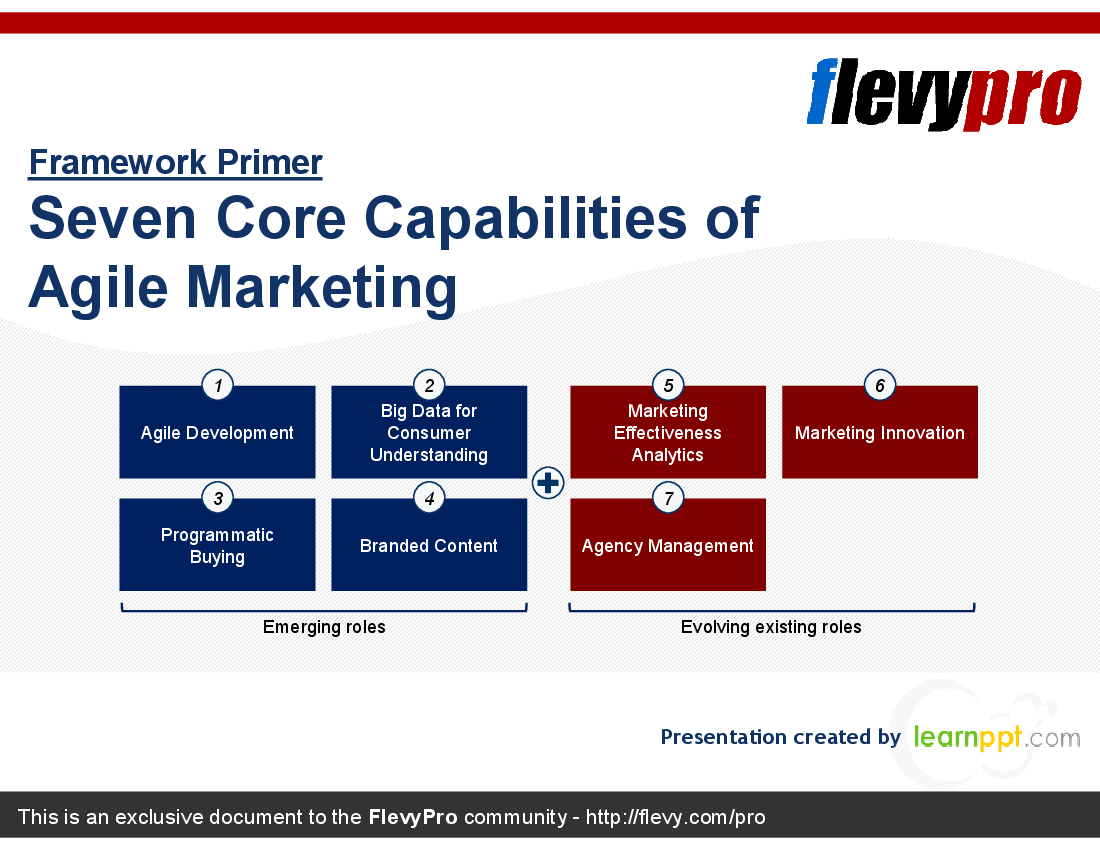
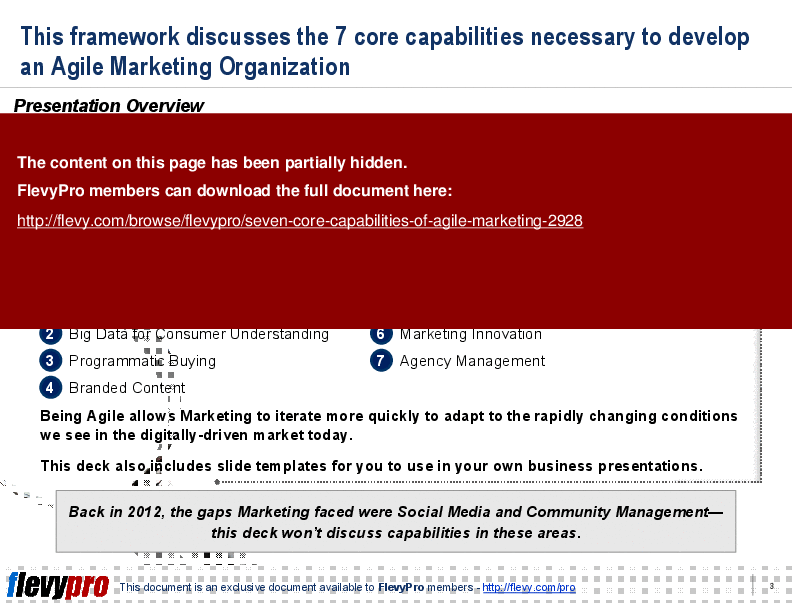
Thus, leading organizations are adopting agile thinking from software to create the Agile Marketing Organization. This presentation discusses the 7 core capabilities needed in Agile Marketing:
1. Agile Development
2. Big Data for Consumer Understanding
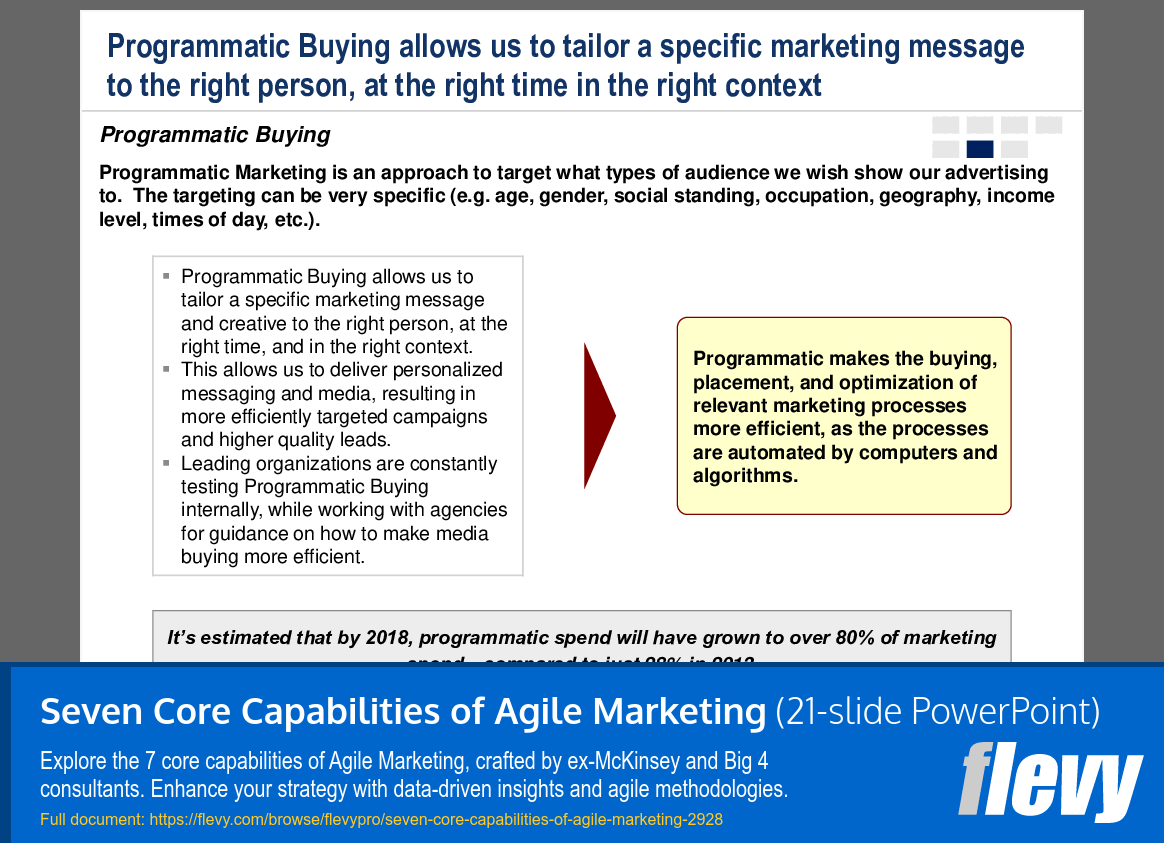
3. Programmatic Buying
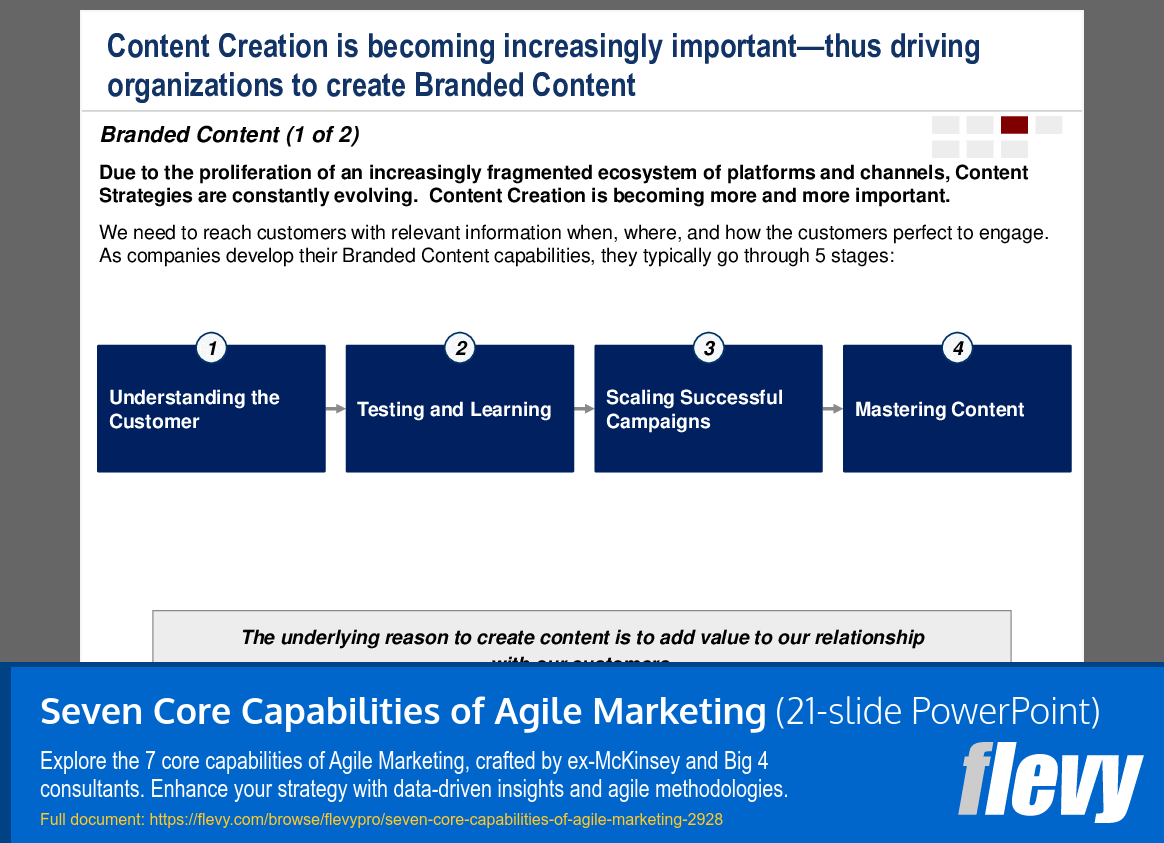
4. Branded Content
5. Marketing Effectiveness Analytics
6. Marketing Innovation
7. Agency Management
Being Agile allows Marketing to iterate more quickly to adapt to the rapidly changing conditions we see in the digitally-driven market today.
Back in 2012, the gaps Marketing faced were Social Media and Community Management. This presentation won't discuss capabilities in these areas.
This deck also includes slide templates for you to use in your own business presentations.
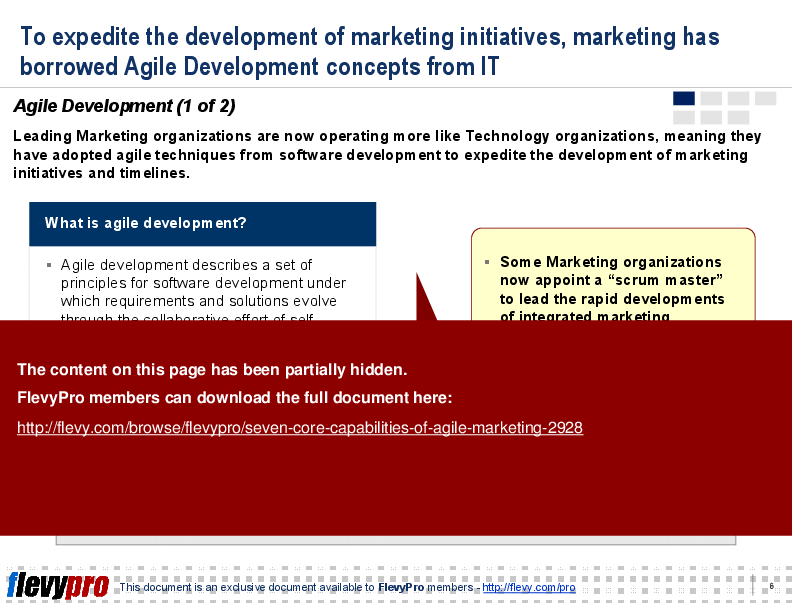
This presentation delves into the intricacies of Agile Development, illustrating how marketing teams can leverage agile methodologies to expedite campaign launches and optimize performance. It highlights the importance of appointing a "scrum master" to lead integrated marketing efforts, ensuring rapid iterations and continuous improvement. The deck also provides a detailed breakdown of the four "sprints" involved in an agile marketing initiative, offering a practical framework for implementation.
The PPT emphasizes the critical role of Big Data and Analytics in understanding consumer behavior and making data-driven decisions. It outlines the necessity of acquiring talent in data management, advanced analytics, and consumer insights to harness the full potential of available data. By focusing on these areas, organizations can transform raw data into actionable insights, driving more effective marketing strategies and achieving better ROI.
Got a question about this document? Email us at flevypro@flevy.com.
Executive Summary
The "Seven Core Capabilities of Agile Marketing" presentation provides a comprehensive framework for organizations aiming to develop an Agile Marketing approach. Created by seasoned consultants, this deck outlines the essential capabilities required for marketing teams to adapt swiftly to the evolving digital landscape. By leveraging Agile methodologies, organizations can enhance their marketing effectiveness, optimize resource allocation, and improve customer engagement through data-driven insights. This presentation includes practical templates to facilitate the implementation of these capabilities in real-world scenarios.
Who This Is For and When to Use
• Chief Marketing Officers (CMOs) seeking to modernize their marketing strategies
• Marketing teams aiming to adopt Agile methodologies for improved efficiency
• Data analysts focused on enhancing consumer insights through big data
• Brand managers looking to innovate content strategies and agency collaborations
Best-fit moments to use this deck:
• During strategic planning sessions to align marketing initiatives with Agile principles
• For training workshops aimed at upskilling marketing teams in Agile methodologies
• When assessing current marketing capabilities and identifying gaps for improvement
Learning Objectives
• Define the 7 core capabilities essential for Agile Marketing.
• Build a framework for integrating Agile methodologies into marketing practices.
• Establish metrics for measuring marketing effectiveness and ROI.
• Develop strategies for leveraging big data to enhance consumer understanding.
• Create a roadmap for implementing programmatic buying and branded content initiatives.
• Foster innovation through the establishment of Centers of Excellence in marketing.
Table of Contents
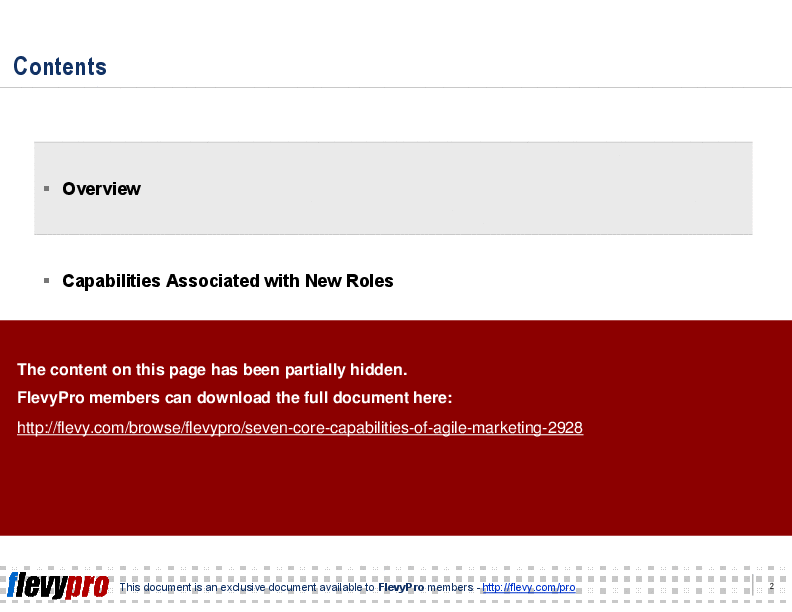
• Overview (page 3)
• Capabilities Associated with New Roles (page 5)
• Capabilities Associated with Existing Roles (page 5)
• Templates (page 12)
Primary Topics Covered
• Agile Development - This topic explores how Agile principles from software development can be applied to marketing initiatives, emphasizing iterative processes and cross-functional collaboration.
• Big Data for Consumer Understanding - Focuses on the necessity of advanced analytics and data management skills to derive actionable insights from vast data sources.
• Programmatic Buying - Discusses the automation of media buying processes to deliver targeted marketing messages efficiently.
• Branded Content - Highlights the importance of creating valuable content that resonates with customers and enhances brand engagement.
• Marketing Effectiveness Analytics - Covers the evolution of marketing mix models and the use of digital attribution to measure campaign effectiveness.
• Marketing Innovation - Examines the establishment of Innovation Centers of Excellence to foster continuous improvement and adaptation to market trends.
• Agency Management - Addresses the complexities of managing multiple agencies and the need for streamlined processes to enhance collaboration and efficiency.
Deliverables, Templates, and Tools
• Agile Development Sprints template for planning and executing marketing initiatives
• Framework for assessing capabilities associated with new and existing marketing roles
• Template for measuring marketing effectiveness and ROI
• Guidelines for establishing Centers of Excellence in marketing innovation
• Best practices playbook for agency management and collaboration
Slide Highlights
• Overview of the 7 core capabilities necessary for Agile Marketing.
• Visual representation of the Agile Development process, including sprint planning and reviews.
• Insights on leveraging big data for consumer insights and decision-making.
• Framework for measuring marketing effectiveness through advanced analytics.
• Strategies for creating impactful branded content that drives consumer engagement.
Potential Workshop Agenda
Agile Marketing Framework Overview (60 minutes)
• Introduce the 7 core capabilities of Agile Marketing
• Discuss the importance of Agile methodologies in modern marketing
Data-Driven Decision Making (90 minutes)
• Explore techniques for leveraging big data in marketing
• Develop actionable insights from consumer data
Implementing Programmatic Buying (60 minutes)
• Discuss the principles of programmatic marketing
• Create a plan for integrating programmatic buying into existing strategies
Customization Guidance
• Tailor the Agile Development Sprints template to fit your organization's specific marketing initiatives and timelines.
• Adapt the metrics for measuring marketing effectiveness to align with your organization's goals and KPIs.
• Modify the agency management playbook to reflect your unique processes and agency relationships.
Secondary Topics Covered
• The role of data storytelling in communicating insights effectively.
• Strategies for scaling successful marketing campaigns.
• The impact of technology on marketing innovation and consumer engagement.
• Best practices for fostering collaboration among cross-functional teams.
Topic FAQ
Document FAQ
These are questions addressed within this presentation.
What are the 7 core capabilities of Agile Marketing?
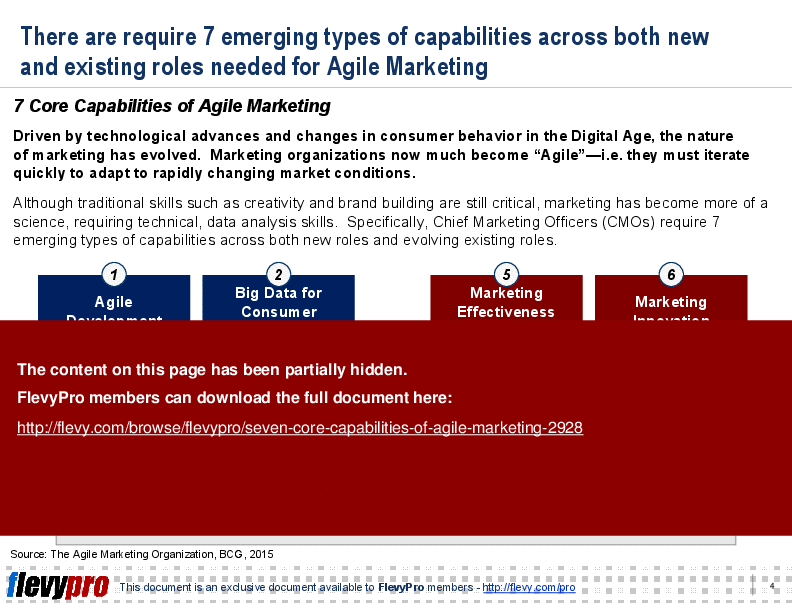
The 7 core capabilities include Agile Development, Big Data for Consumer Understanding, Programmatic Buying, Branded Content, Marketing Effectiveness Analytics, Marketing Innovation, and Agency Management.
How can this presentation help my marketing team?
This presentation provides a structured framework for adopting Agile methodologies, enhancing data-driven decision-making, and improving overall marketing effectiveness.
What templates are included in the deck?
The deck includes templates for Agile Development Sprints, measuring marketing effectiveness, and agency management best practices.
How do I implement programmatic buying in my organization?
Start by assessing your current marketing strategies, then develop a plan to integrate programmatic buying processes, focusing on targeting and personalization.
What is the significance of Centers of Excellence in marketing?
Centers of Excellence foster innovation and keep marketing teams at the forefront of industry trends, enabling them to respond quickly to market changes.
How can I measure the effectiveness of my marketing campaigns?
Utilize advanced analytics and digital attribution models to assess the impact of your campaigns on consumer behavior and ROI.
What skills are necessary for leveraging big data in marketing?
Key skills include data management, advanced analytics, and the ability to derive consumer insights from complex data sets.
How can I enhance collaboration with multiple agencies?
Develop a comprehensive agency management playbook that outlines best practices, processes, and policies for effective collaboration.
Glossary
• Agile Development - A methodology that promotes iterative processes and collaboration in project management.
• Big Data - Large and complex data sets that require advanced analytical tools to process and analyze.
• Programmatic Buying - Automated purchasing of digital advertising space based on specific targeting criteria.
• Branded Content - Content created to engage consumers while promoting a brand's values and products.
• Marketing Effectiveness Analytics - Metrics and tools used to assess the impact of marketing campaigns.
• Innovation Centers of Excellence - Dedicated teams focused on exploring and implementing new marketing strategies and technologies.
• Agency Management - The process of overseeing and coordinating work with multiple marketing agencies.
Source: Best Practices in Big Data, Agile, Agile Marketing PowerPoint Slides: Seven Core Capabilities of Agile Marketing PowerPoint (PPT) Presentation Slide Deck, LearnPPT Consulting
Did you need more documents?
Consider a FlevyPro subscription from $39/month. View plans here.
For $10.00 more, you can download this document plus 2 more FlevyPro documents. That's just $13 each.
|
Download our FREE Strategy & Transformation Framework Templates
Download our free compilation of 50+ Strategy & Transformation slides and templates. Frameworks include McKinsey 7-S, Balanced Scorecard, Disruptive Innovation, BCG Curve, and many more. |