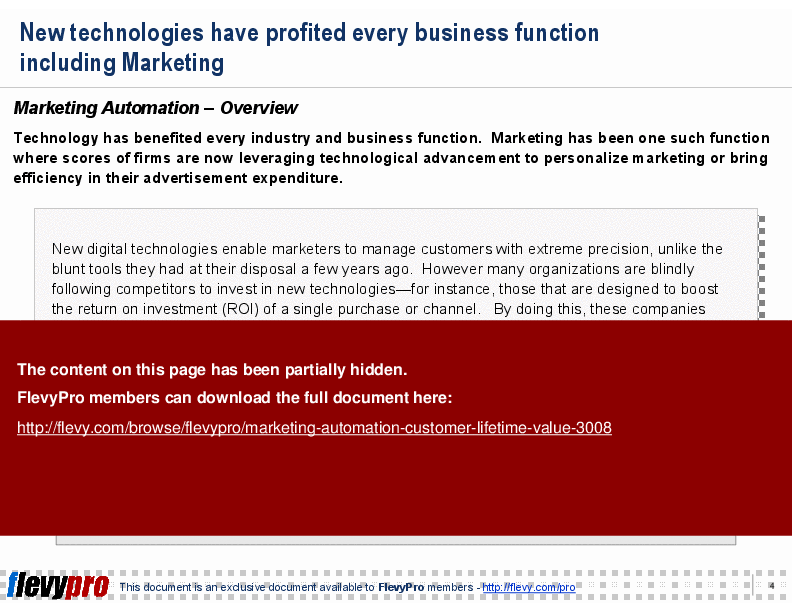

Technology has promoted every industry and occupation. Marketing has been one such function where scores of firms are now leveraging technological advancement to personalize marketing or bring efficiency in their advertisement expenditure—leading to the rise of Marketing Automation.
With more and more innovative tools becoming available to the marketers—such as Artificial Intelligence (AI) tools for one-to-one or segment marketing—they will have to focus those tools and ROI metrics on strengthening customer relationships. More and more organizations are turning to automation and advanced tools to optimize their marketing endeavours.
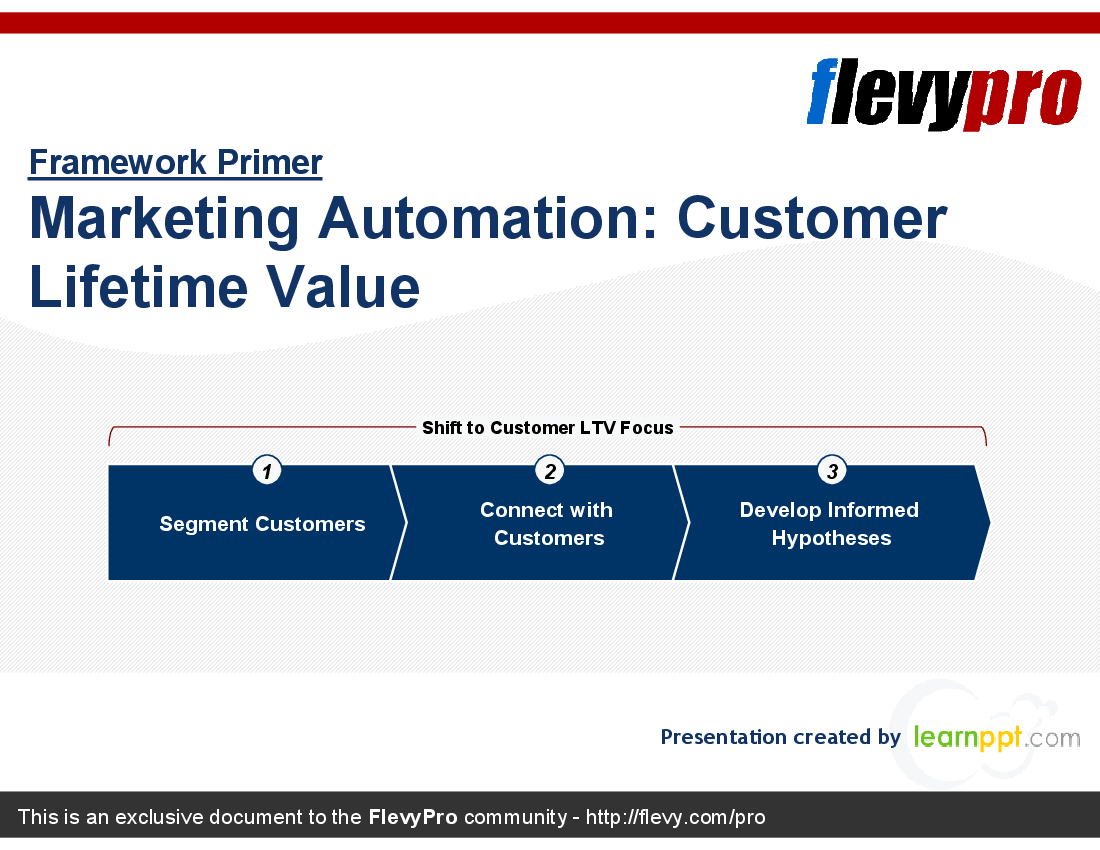
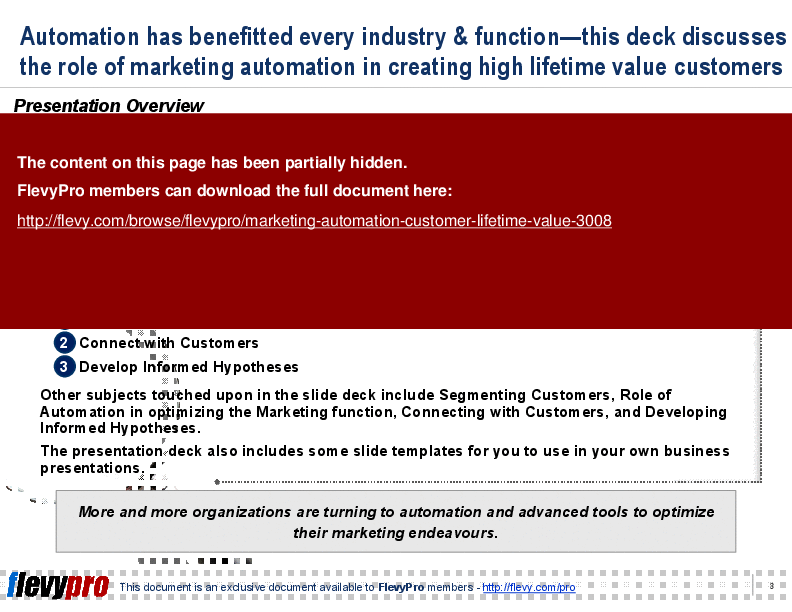
Leading marketers today are not only aware of the importance of customer lifetime value (LTV), they actually direct focus of their budget and resources accordingly. This deck discusses a 3-phase approach to shift to a customer LTV focus:
1. Segment Customers
2. Connect with Customers
3. Develop Informed Hypotheses
Other subjects touched upon in the slide deck include Segmenting Customers, Role of Automation in optimizing the Marketing function, Connecting with Customers, and Developing Informed Hypotheses.
The presentation deck also includes some slide templates for you to use in your own business presentations.
This PPT provides a comprehensive roadmap for shifting your marketing strategy towards a customer lifetime value (LTV) focus. It breaks down the process into three actionable phases, enabling you to segment customers, connect with them effectively, and develop informed hypotheses. Each phase is designed to maximize the value derived from each customer, ensuring that your marketing efforts are both efficient and impactful.
The deck also includes practical slide templates that you can adapt for your own presentations. These templates are particularly useful for visualizing data and strategies, making it easier to communicate your marketing plans to stakeholders. By leveraging the insights and tools provided in this document, you can enhance your marketing automation efforts and drive long-term customer loyalty.
Got a question about this document? Email us at flevypro@flevy.com.
Executive Summary
This presentation, titled "Marketing Automation: Customer Lifetime Value," provides a strategic framework for leveraging marketing automation to enhance customer lifetime value (LTV). Crafted by experienced consultants from top firms, this deck outlines a three-phase approach to shift marketing focus towards LTV, enabling organizations to optimize their marketing investments. By segmenting customers, connecting with them effectively, and developing informed hypotheses, businesses can foster stronger customer relationships and improve overall marketing ROI.
Who This Is For and When to Use
• Marketing executives looking to enhance customer engagement strategies
• Data analysts focused on customer segmentation and behavior analysis
• Business development teams aiming to improve customer acquisition and retention
• Consultants advising organizations on marketing automation strategies
Best-fit moments to use this deck:
• During strategic planning sessions focused on marketing automation
• When launching new customer engagement initiatives
• In workshops aimed at training teams on customer LTV metrics
Learning Objectives
• Define customer lifetime value and its significance in marketing automation
• Build effective customer segmentation strategies based on LTV
• Establish methods to connect with high-value customers across various touchpoints
• Develop informed hypotheses to optimize marketing efforts and resource allocation
• Analyze customer behavior to enhance marketing effectiveness
• Leverage technology to track and measure marketing ROI
Table of Contents
• Overview (page 3)
• Shift to Customer LTV Focus – Phase 1 (page 8)
• Shift to Customer LTV Focus – Phase 2 (page 11)
• Shift to Customer LTV Focus – Phase 3 (page 14)
• Templates (page 17)
Primary Topics Covered
• Overview of Marketing Automation - Discusses the role of marketing automation in enhancing customer relationships and optimizing marketing expenditures.
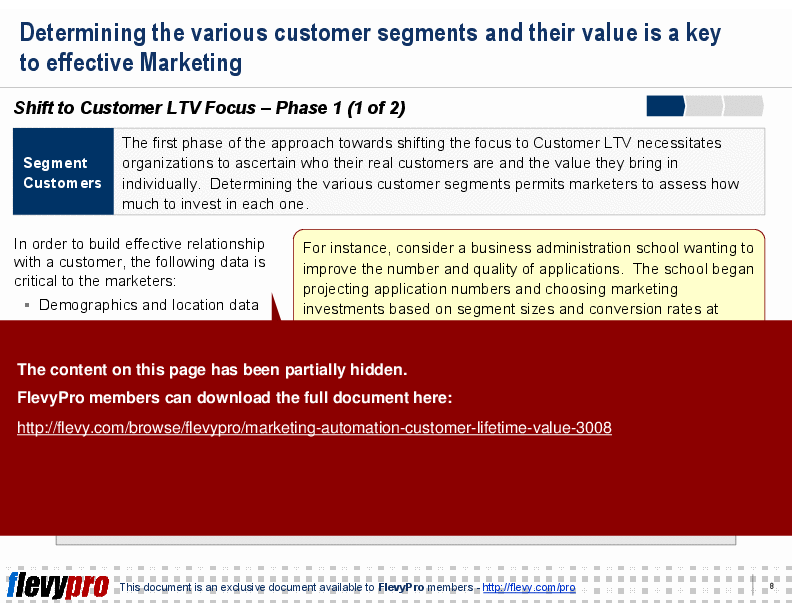
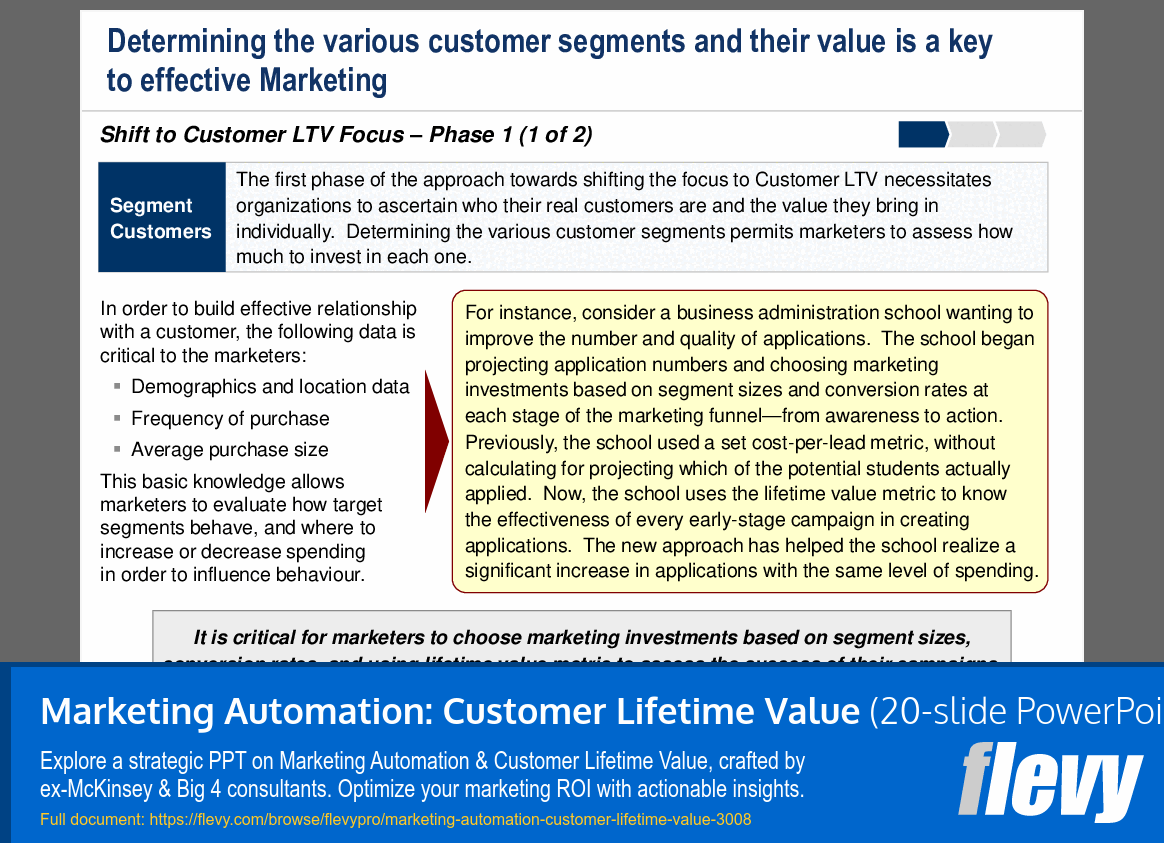
• Phase 1: Segment Customers - Focuses on identifying customer segments based on demographics, purchase frequency, and average purchase size to allocate marketing resources effectively.
• Phase 2: Connect with Customers - Emphasizes the importance of understanding customer touchpoints and preferences to enhance engagement and satisfaction.
• Phase 3: Develop Informed Hypotheses - Guides marketers in creating data-informed hypotheses to test and prioritize marketing strategies for acquiring and retaining customers.
• Role of Technology in Marketing - Explores how technological advancements can aid in understanding customer behavior and improving marketing strategies.
• Customer Lifetime Value Focus - Highlights the significance of prioritizing customer relationships over immediate sales metrics.
Deliverables, Templates, and Tools
• Customer segmentation template for identifying high-value customer groups
• Customer touchpoints analysis template to track engagement across channels
• Hypothesis development framework for testing marketing strategies
• ROI measurement tools to assess the effectiveness of marketing campaigns
• Data analysis models for evaluating customer behavior and preferences
• Marketing automation implementation checklist to streamline processes
Slide Highlights
• Overview slide illustrating the shift towards customer LTV focus
• Phase 1 slide detailing customer segmentation strategies
• Phase 2 slide showcasing customer touchpoints and engagement methods
• Phase 3 slide outlining the hypothesis development process
• Technology integration slide emphasizing the role of data in marketing decisions
Potential Workshop Agenda
Customer Segmentation Workshop (90 minutes)
• Discuss the importance of customer segmentation
• Identify key customer segments based on LTV
• Develop a segmentation strategy for marketing efforts
Customer Engagement Strategy Session (60 minutes)
• Review customer touchpoints and engagement methods
• Brainstorm ways to enhance customer interactions
• Create an action plan for implementing engagement strategies
Hypothesis Development and Testing (90 minutes)
• Define the process for developing informed hypotheses
• Identify key metrics for testing marketing strategies
• Plan for data collection and analysis
Customization Guidance
• Tailor customer segmentation criteria to align with specific business goals
• Adjust engagement strategies based on customer feedback and preferences
• Modify templates to reflect your organization's branding and messaging
• Incorporate specific metrics relevant to your marketing objectives
• Update case studies and examples to reflect industry-specific insights
Secondary Topics Covered
• The impact of marketing automation on customer retention
• Strategies for measuring customer satisfaction and loyalty
• Best practices for integrating technology into marketing efforts
• The importance of data privacy and compliance in marketing automation
• Trends in customer behavior and preferences in the digital age
Topic FAQ
Document FAQ
These are questions addressed within this presentation.
What is customer lifetime value (LTV)?
Customer lifetime value is the total revenue a business can expect from a single customer account throughout the business relationship.
How can marketing automation improve customer relationships?
Marketing automation allows for personalized communication and targeted campaigns, enhancing customer engagement and satisfaction.
What are the phases of shifting to a customer LTV focus?
The phases include segmenting customers, connecting with them effectively, and developing informed hypotheses for marketing strategies.
What role does technology play in marketing automation?
Technology aids in tracking customer behavior, analyzing data, and optimizing marketing efforts for better ROI.
How can I measure the effectiveness of my marketing campaigns?
Use ROI metrics and customer feedback to assess the impact of marketing initiatives on customer engagement and sales.
What types of templates are included in the deck?
Templates for customer segmentation, touchpoint analysis, and hypothesis development are included to facilitate implementation.
How can I customize the provided templates?
Templates can be tailored to reflect your organization's branding, specific metrics, and customer insights.
What industries can benefit from this approach?
Any industry focused on customer engagement and retention can benefit, including retail, education, and service sectors.
Glossary
• Customer Lifetime Value (LTV) - The total revenue expected from a customer over their relationship with a business.
• Marketing Automation - Technology that streamlines marketing tasks and workflows.
• Segmentation - The process of dividing customers into groups based on shared characteristics.
• Touchpoints - Interactions between a customer and a brand across various channels.
• ROI (Return on Investment) - A measure of the profitability of an investment.
• Data-Driven Marketing - Marketing strategies based on data analysis and insights.
• Customer Engagement - The interaction between a brand and its customers.
• Hypothesis Testing - The process of making predictions and testing them through data analysis.
• Customer Insights - Information about customer preferences and behaviors.
• Personalization - Tailoring marketing messages to individual customer preferences.
• Behavioral Analysis - The study of customer actions to inform marketing strategies.
• CRM (Customer Relationship Management) - Systems for managing a company's interactions with current and potential customers.
• Marketing Metrics - Quantifiable measures used to evaluate marketing performance.
• Customer Feedback - Insights gathered from customers regarding their experiences and satisfaction.
• Digital Marketing - Marketing efforts that use the internet and digital devices.
• Lead Generation - The process of attracting and converting prospects into customers.
• Customer Retention - Strategies aimed at keeping existing customers engaged and satisfied.
• Market Segmentation - The practice of dividing a market into distinct groups of buyers.
• Predictive Analytics - Techniques that use statistical algorithms to identify the likelihood of future outcomes.
• Brand Loyalty - The tendency of consumers to continue buying the same brand over time.
• Customer Journey - The complete experience a customer has with a brand, from awareness to purchase and beyond.
Source: Best Practices in Marketing Automation, Customer Lifetime Value PowerPoint Slides: Marketing Automation: Customer Lifetime Value PowerPoint (PPT) Presentation Slide Deck, LearnPPT Consulting
Did you need more documents?
Consider a FlevyPro subscription from $39/month. View plans here.
For $10.00 more, you can download this document plus 2 more FlevyPro documents. That's just $13 each.
|
Download our FREE Strategy & Transformation Framework Templates
Download our free compilation of 50+ Strategy & Transformation slides and templates. Frameworks include McKinsey 7-S, Balanced Scorecard, Disruptive Innovation, BCG Curve, and many more. |