
This framework is developed by a team of former McKinsey and Big 4 consultants. The presentation follows the headline-body-bumper slide format used by global consulting firms.
Editor Summary
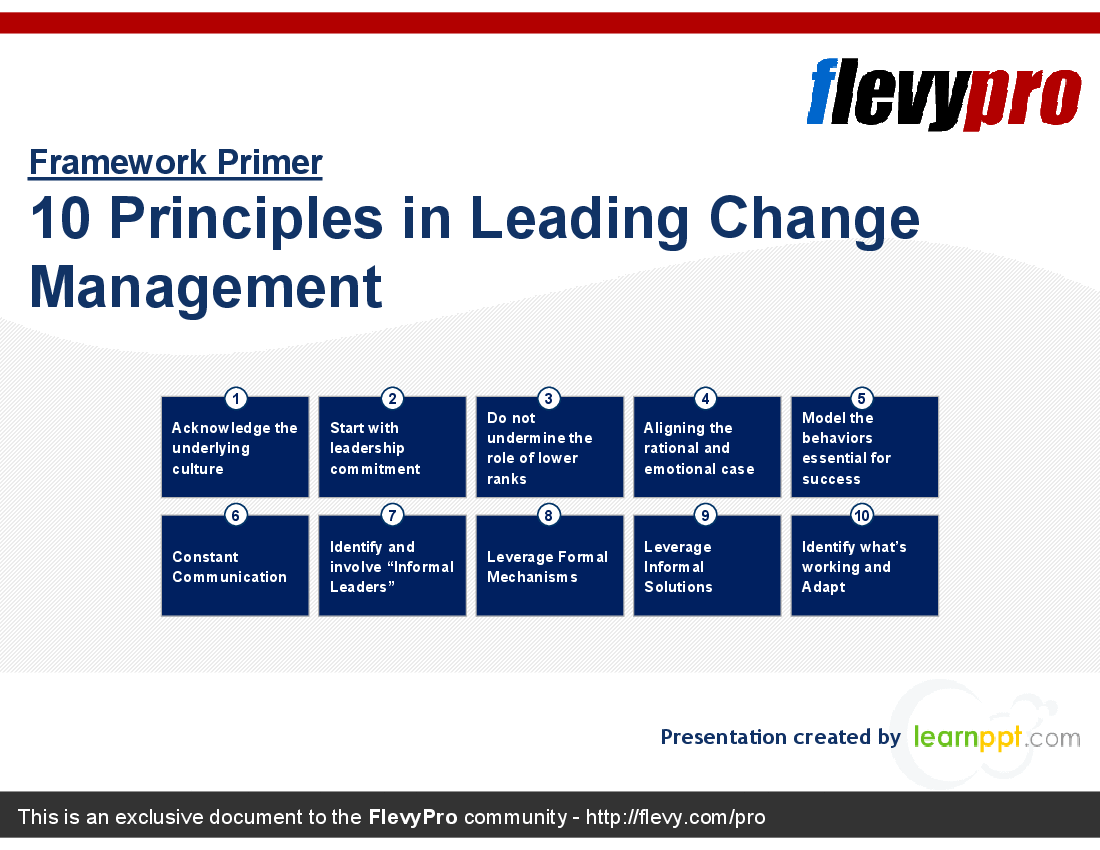
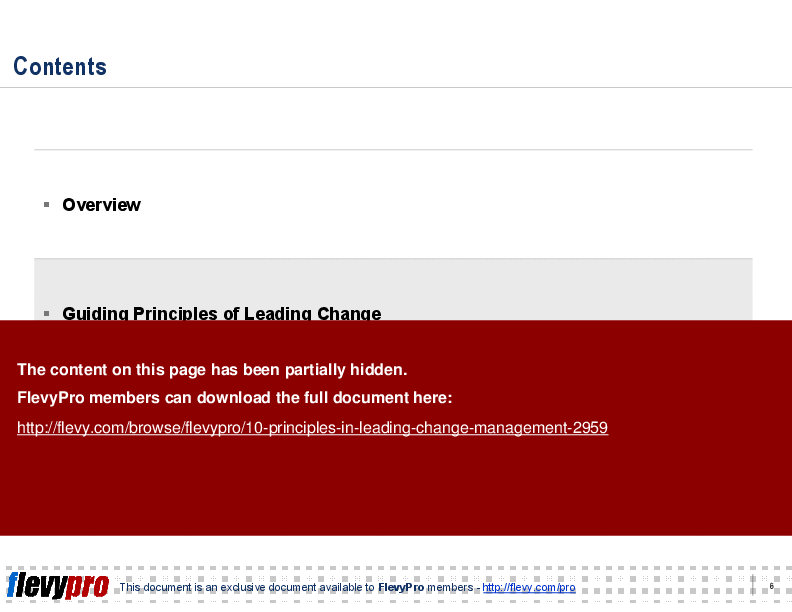
17-slide PowerPoint deck "10 Principles in Leading Change Management" by LearnPPT Consulting presents ten guiding principles for implementing organizational change: Acknowledge the Underlying Culture; Start with Leadership Commitment; Do Not Undermine the Role of Lower Ranks; Align the Rational and Emotional Case; Model Behaviors; Constant Communication; Identify and Involve Informal Leaders; Leverage Formal Mechanisms; Leverage Informal Solutions; Identify What Works and Adapt.
Read moreTarget users include senior leaders, transformation leads, HR leaders, change managers, and consultants. Sold as a digital download on Flevy with immediate digital download.
Use this deck when organizations face market disruption, technological shifts, or business-model change and need to improve low change-success rates through culture-aware leadership actions.
Senior leaders preparing an executive briefing that ties leadership commitment to observable behavior modeling and communication plans.
Transformation leads designing stakeholder engagement to identify informal leaders and align formal/informal mechanisms.
HR leaders building communication campaigns and frontline engagement strategies that avoid undermining lower ranks.
Management consultants diagnosing cultural barriers and recommending iterative adaptations.
The 10-principle approach combines culture assessment, leadership alignment, stakeholder engagement, and iterative adaptation, reflecting structured change-management practice.
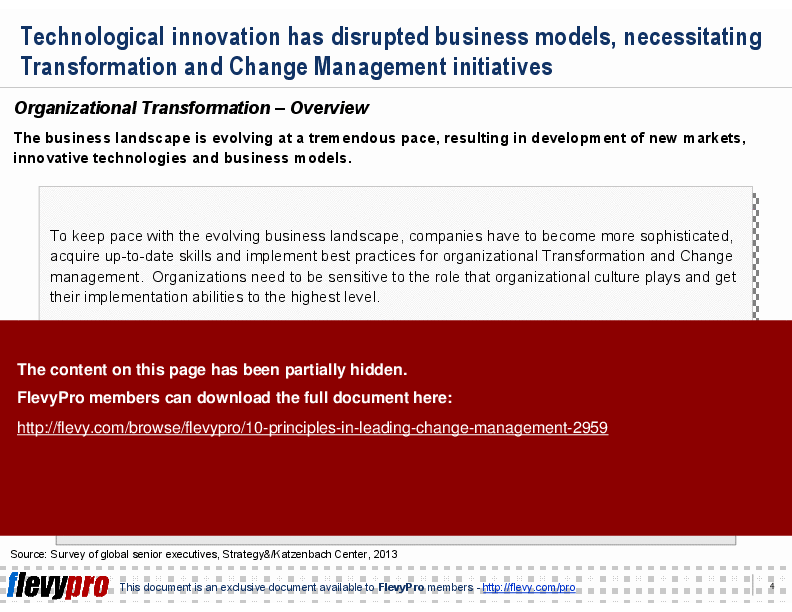
The evolving business landscape is shaping new markets, innovative technologies and business models. Companies have to become more sophisticated—acquire up-to-date skillsets, apply best practices to transform their organizations while remaining sensitive to the role that organizational culture plays—and get their implementation abilities to the highest level.
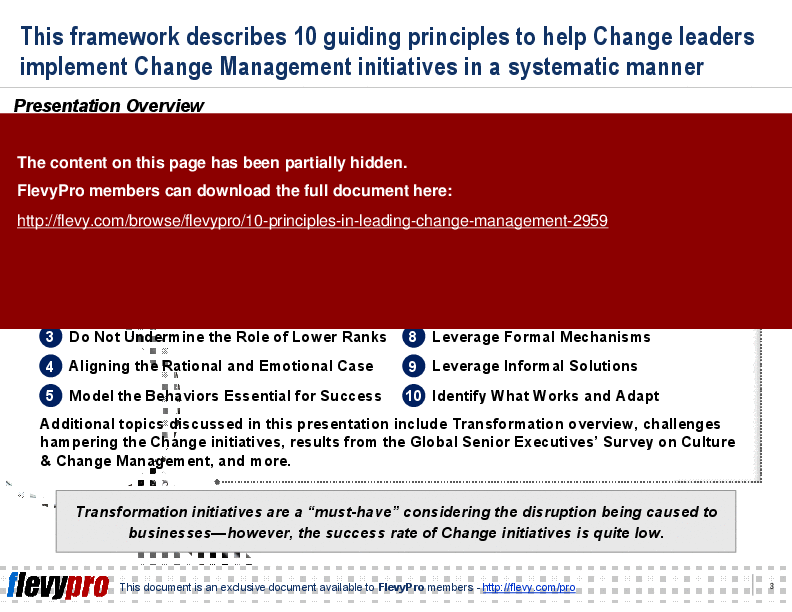
Transformation initiatives are a “must-have” considering the disruption being caused to businesses—however, the success rate of Change initiatives is quite low, warranting a better approach.
This deck talks about the guiding principles that help leaders implement Change initiatives in a systematic manner to maximize chances of success. These principles are:
1. Acknowledge the Underlying Culture
2. Start with Leadership Commitment
3. Do Not Undermine the Role of Lower Ranks
4. Aligning the Rational and Emotional Case
5. Model the Behaviors Essential for Success
6. Constant Communication
7. Identify and Involve Informal Leaders
8. Leverage Formal Mechanisms
9. Leverage Informal Solutions
10. Identify What Works and Adapt
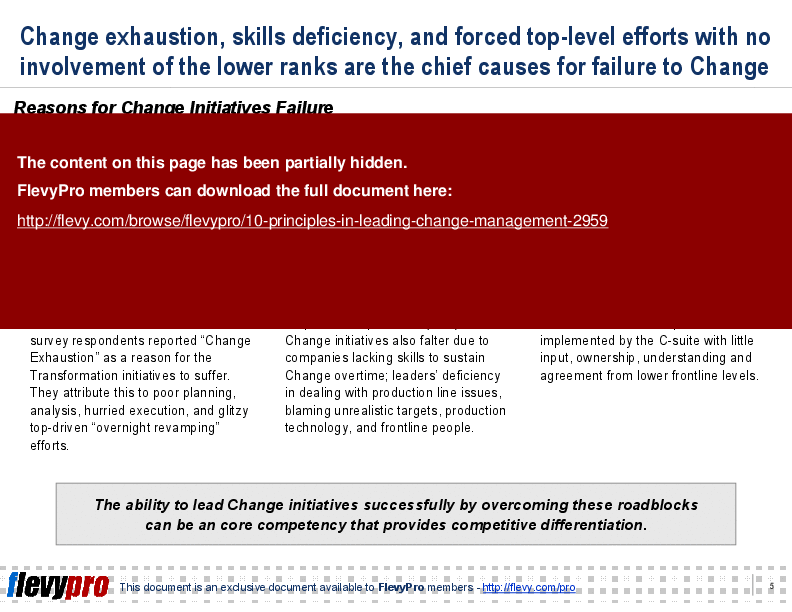
Additional topics discussed in this presentation include Transformation overview, challenges hampering the Change initiatives, results from the Global Senior Executives' Survey on Culture & Change Management, and more.
This presentation provides a comprehensive framework for leading Change Management initiatives by leveraging both formal and informal solutions. It emphasizes the importance of understanding and aligning with the underlying organizational culture, engaging informal leaders, and ensuring constant communication throughout the transformation process. The PPT also highlights the necessity of modeling essential behaviors for success and adapting strategies based on what works.
The deck includes detailed insights from the Global Senior Executives' Survey on Culture & Change Management, offering a data-driven approach to overcoming common roadblocks. It addresses the critical role of frontline employees and the need for leadership commitment to drive successful change. This resource is designed to equip leaders with the tools and knowledge necessary to navigate and lead effective change initiatives in today's rapidly evolving business environment.
What are common principles for leading organizational change?
Common guiding principles include acknowledging the underlying culture, securing leadership commitment, respecting the role of lower ranks, aligning rational and emotional cases, modeling essential behaviors, maintaining constant communication, identifying informal leaders, leveraging formal mechanisms, using informal solutions, and identifying what works to adapt. These are presented as 10 principles.
How should leaders involve frontline employees during transformation?
Leaders should recognize the frontline's role rather than undermine it, engage them through constant communication and behavior modeling, and involve informal leaders who influence peers. The approach emphasizes combining formal mechanisms with informal solutions and engaging lower ranks as outlined among the 10 principles.
What role do informal leaders play in change management?
Informal leaders are influencers who can accelerate adoption by modeling behaviors and spreading messages peer-to-peer; identifying and involving them helps leverage informal solutions alongside formal mechanisms. The deck explicitly lists "Identify and Involve Informal Leaders" as a guiding principle (Principle 7).
What should I look for in a change-management PowerPoint for executives?
Look for content that links leadership commitment to behavior change, addresses organizational culture and frontline roles, explains communication approaches, and includes evidence or survey insights on common roadblocks. A useful example is a 17-slide deck that includes Global Senior Executives' Survey findings.
How do I assess whether a failed change lacked leadership commitment or cultural alignment?
Review whether senior leaders visibly modeled required behaviors, whether the underlying culture was acknowledged, and whether lower ranks were engaged instead of undermined; also check if the rational and emotional cases were aligned. These factors correspond to principles like Start with Leadership Commitment and Acknowledge the Underlying Culture.
Can informal solutions be used alongside formal mechanisms during transformation?
Yes. The recommended approach explicitly combines formal mechanisms (policies, structures) with informal solutions (peer influence, norms) and encourages identifying informal leaders to bridge the two. The presentation highlights leveraging both formal and informal mechanisms as complementary strategies.
How should I adapt change initiatives based on what works?
Use an iterative approach: observe which behaviors, communication channels, and engagement tactics gain traction, scale those practices, and modify others while maintaining leadership support and measurement. The deck captures this as the principle "Identify What Works and Adapt" (Principle 10).
What executive-survey topics are useful when planning change initiatives?
Executive surveys that report on culture and change-management barriers help prioritize leadership commitment, communication, frontline engagement, and the balance of formal versus informal mechanisms. The presentation references findings from the Global Senior Executives' Survey on Culture & Change Management.
This PPT slide outlines ten fundamental principles for effective change management. The first principle emphasizes acknowledging organizational culture to understand resistance and leverage strengths. The second principle highlights leadership commitment, indicating that change must be championed from the top. The third principle recognizes the importance of lower ranks in the change process. The fourth principle advocates aligning rational and emotional cases for change. The fifth principle stresses that leaders must model desired behaviors. The sixth principle underscores constant communication with stakeholders. The seventh principle encourages involving informal leaders to drive acceptance. The eighth and ninth principles suggest leveraging both formal mechanisms and informal solutions for enhanced effectiveness. The tenth principle focuses on identifying successful strategies and adapting them for long-term success in change initiatives.
This PPT slide outlines 2 fundamental principles for effective change management: organizational culture and leadership commitment. A survey by the Katzenbach Center reveals that 84% of business leaders consider culture more essential than strategy or operating models. Change leaders often overlook cultural aspects, mistakenly believing culture can adapt without focus. Successful change management should leverage existing cultural elements rather than overhauling them, aligning cultural factors with proposed changes to engage stakeholders. The second principle emphasizes that successful initiatives require a supportive executive group, including the CEO. Firms should conduct exercises to gauge leadership effectiveness, fostering alignment and a shared vision, which is crucial for cascading the transformation message throughout the organization.
This PPT slide outlines 2 guiding principles for effective change management: leveraging informal leaders and formal mechanisms. Identifying and involving informal leaders, who influence peers without formal authority, enhances change initiatives. Conducting network analyses helps organizations engage these influencers effectively. The second principle emphasizes the importance of formal mechanisms, including reward systems, methodologies, and training programs. Organizations must design robust development programs that offer mentorship and recognize contributions from volunteers and trained individuals. Establishing these formal structures fosters a culture of participation and support during transformations, ensuring that change management strategies are comprehensive and effective.
Source: Best Practices in Change Management PowerPoint Slides: 10 Principles in Leading Change Management PowerPoint (PPT) Presentation Slide Deck, LearnPPT Consulting
This framework is developed by a team of former McKinsey and Big 4 consultants. The presentation follows the headline-body-bumper slide format used by global consulting firms.
For $10.00 more, you can download this document plus 2 more FlevyPro documents. That's just $13 each.
ABOUT FLEVYPRO
This document is part of the FlevyPro Library, a curated knowledge base of documents for our FlevyPro subscribers.

FlevyPro is a subscription service for on-demand business frameworks and analysis tools. FlevyPro subscribers receive access to an exclusive library of curated business documents—business framework primers, presentation templates, Lean Six Sigma tools, and more—among other exclusive benefits.
The average daily rate of a McKinsey consultant is $6,625 (not including expenses). The average price of a Flevy document is $65.
Trusted by over 10,000+ Client Organizations
Since 2012, we have provided business templates to over 10,000 businesses and organizations of all sizes, from startups and small businesses to the Fortune 100, in over 130 countries.
"I have used Flevy services for a number of years and have never, ever been disappointed. As a matter of fact, David and his team continue, time after time, to impress me with their willingness to assist and in the real sense of the word. I have concluded in fact
that it is not at all just a repository of documents/resources but, in the way that David and his team manage the firm, it is like dealing with consultants always ready to assist, advise and direct you to what you really need, and they always get it right.
I am an international hospitality accomplished senior executive who has worked and lived during the past 35 years in 23 countries in 5 continents and I can humbly say that I know what customer service is, trust me.
Aside from the great and professional service that Flevy's team provide, their wide variety of material is of utmost great quality, professionally put together and most current.
Well done Flevy, keep up the great work and I look forward to continue working with you in the future and to recommend you to a variety of colleagues around the world.
"
– Roberto Pelliccia, Senior Executive in International Hospitality
"My FlevyPro subscription provides me with the most popular frameworks and decks in demand in today’s market. They not only augment my existing consulting and coaching offerings and delivery, but also keep me abreast of the latest trends, inspire new products and service offerings for my practice, and educate me
in a fraction of the time and money of other solutions. I strongly recommend FlevyPro to any consultant serious about success.
"
– Bill Branson, Founder at Strategic Business Architects
"Last Sunday morning, I was diligently working on an important presentation for a client and found myself in need of additional content and suitable templates for various types of graphics. Flevy.com proved to be a treasure trove for both content and design at a reasonable price, considering the time I
saved. I encountered a download issue during the ordering process. However, a quick email to Flevy's support team, even on a Sunday (!!!), resulted in assistance within less than an hour, allowing me to download the content I needed. Fantastic job, Flevy! I give 5 stars for both content/price and customer service. Thank you!
"
– M. E., Chief Commercial Officer, International Logistics Service Provider
"If you are looking for great resources to save time with your business presentations, Flevy is truly a value-added resource. Flevy has done all the work for you and we will continue to utilize Flevy as a source to extract up-to-date information and data for our virtual and onsite presentations!"
– Debbi Saffo, President at The NiKhar Group
"As a small business owner, the resource material available from FlevyPro has proven to be invaluable. The ability to search for material on demand based our project events and client requirements was great for me and proved very beneficial to my clients. Importantly, being able to easily edit and tailor
the material for specific purposes helped us to make presentations, knowledge sharing, and toolkit development, which formed part of the overall program collateral. While FlevyPro contains resource material that any consultancy, project or delivery firm must have, it is an essential part of a small firm or independent consultant's toolbox.
"
– Michael Duff, Managing Director at Change Strategy (UK)
"FlevyPro provides business frameworks from many of the global giants in management consulting that allow you to provide best in class solutions for your clients."
– David Harris, Managing Director at Futures Strategy
"As a niche strategic consulting firm, Flevy and FlevyPro frameworks and documents are an on-going reference to help us structure our findings and recommendations to our clients as well as improve their clarity, strength, and visual power. For us, it is an invaluable resource to increase our impact and value."
– David Coloma, Consulting Area Manager at Cynertia Consulting
"I have used FlevyPro for several business applications. It is a great complement to working with expensive consultants. The quality and effectiveness of the tools are of the highest standards."
– Moritz Bernhoerster, Global Sourcing Director at Fortune 500
Download our free compilation of 50+ slides and templates on Organizational Design, Change Management, and Corporate Culture. Methodologies include ADKAR, Burke-Litwin Change Model, McKinsey 7-S, Competing Values Framework, etc.









