
 Click main image to view in full screen. Unlock all 23 preview images:
McKinsey Influence Model of Leading Change – PowerPoint PPTX Template
PowerPoint (PPTX) 70 Slides


BENEFITS OF THIS DOWNLOADABLE POWERPOINT DOCUMENT
- Proven Framework: Leverage McKinsey's Influence Model for driving impactful change.
- Practical Application: Gain actionable tools and strategies for real-world success.
- Leadership Empowerment: Strengthen your leadership skills to inspire and sustain transformation.
CHANGE MANAGEMENT PPT TEMPLATE DESCRIPTION
The McKinsey Influence Model Training Presentation is a facilitation-ready deck designed to help leaders and managers understand how to influence behavior and drive organizational change.
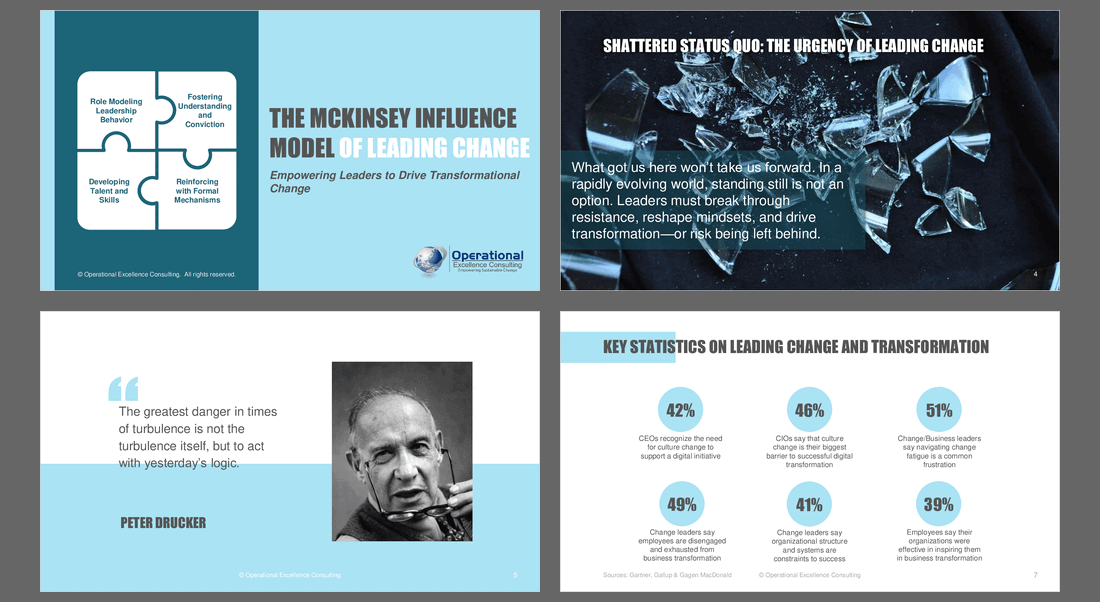
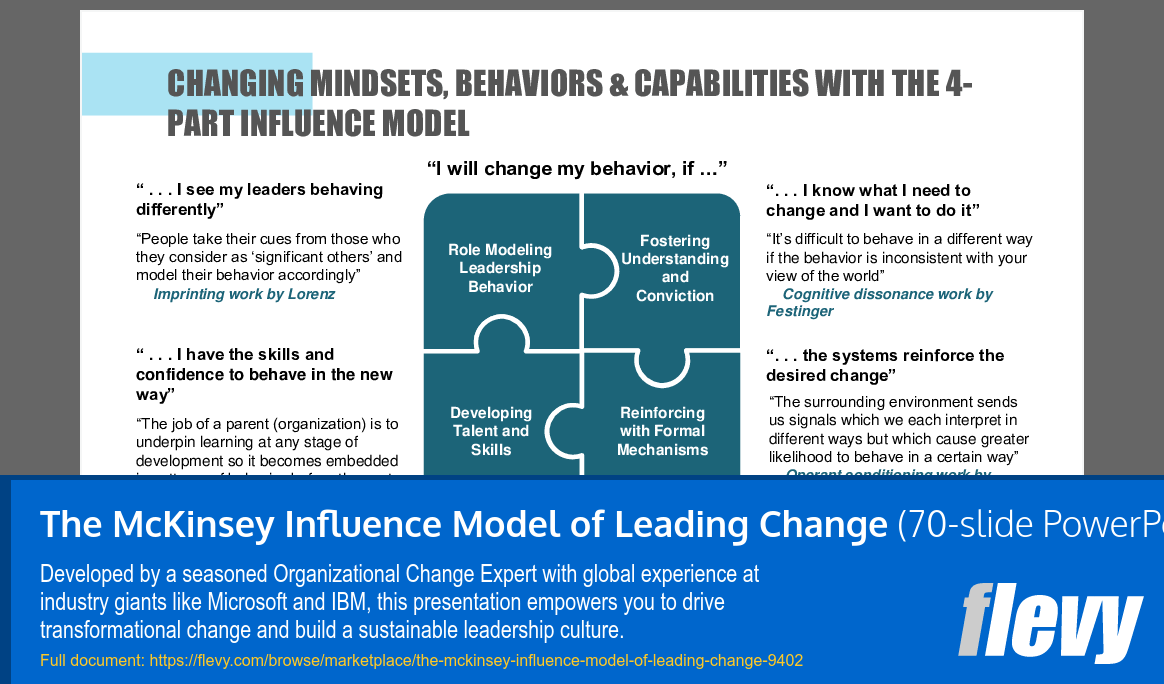
Developed by McKinsey & Company, the model identifies four building blocks of influence that organizations can leverage to embed new mindsets and sustain transformation:
✅ Fostering Understanding and Conviction – Clear communication of why change is needed.
✅ Reinforcing with Formal Mechanisms – Aligning structures, processes, and incentives.
✅ Developing Talent and Skills – Equipping employees with capabilities to succeed.
✅ Role Modeling Leadership Behavior – Leaders demonstrate desired behaviors.
This presentation provides a structured overview, activities for each building block, a leadership self-assessment checklist, implementation guidelines, and pitfalls to avoid, making it a practical resource for leadership development, change management workshops, and organizational transformation initiatives.
LEARNING OBJECTIVES
1. Understand the McKinsey Influence Model and its four building blocks.
2. Learn how influence drives organizational change and transformation.
3. Apply practical activities to reinforce each building block.
4. Use the leadership self-assessment checklist to evaluate readiness.
5. Implement change effectively while avoiding common pitfalls.
CONTENTS
1. Introduction to the McKinsey Influence Model
• Origins and purpose
• Why influence matters in change management
2. The Four Building Blocks of Influence
2.1 Fostering Understanding and Conviction
• Definition, objectives, key activities
• Activity: Crafting compelling narratives and stakeholder engagement
2.2 Reinforcing with Formal Mechanisms
• Definition, objectives, key activities
• Activity: Aligning incentives, accountability structures, and policies
2.3 Developing Talent and Skills
• Definition, objectives, key activities
• Activity: Designing training programs and continuous learning initiatives
2.4 Role Modeling Leadership Behavior
• Definition, objectives, key activities
• Activity: Demonstrating leadership commitment and consistent behaviors
3. Leadership Self-Assessment Checklist
• Evaluate leadership commitment and readiness
• Identify gaps in influence practices
4. Implementation Guidelines
• Steps for embedding the Influence Model in organizations
• Aligning leadership, communication, and systems
5. Pitfalls to Avoid
• Common mistakes in applying the Influence Model
• Strategies to overcome resistance and sustain change
6. Case Examples & Best Practices
• Practical illustrations of influence in action
Got a question about the product? Email us at support@flevy.com or ask the author directly by using the "Ask the Author a Question" form. If you cannot view the preview above this document description, go here to view the large preview instead.
PRESENTATION DEEP DIVE ANALYSIS
This deep-dive analysis was generated from the full 70-slide PowerPoint presentation.
Source: Best Practices in Change Management PowerPoint Slides: McKinsey Influence Model of Leading Change PowerPoint (PPTX) Presentation Slide Deck, Operational Excellence Consulting
ABOUT THE AUTHOR

Operational Excellence Consulting, founded in 2009 by Allan Ung, draws from extensive experience at Microsoft, IBM, and Underwriters Laboratories (UL). We specialize in strategy deployment, customer experience design, and operational excellence, applying Design Thinking, Lean, and Systems Thinking to maximize customer value and minimize waste.
Our
... [read more]
Ask the Author a Question
You must be logged in to contact the author.




























