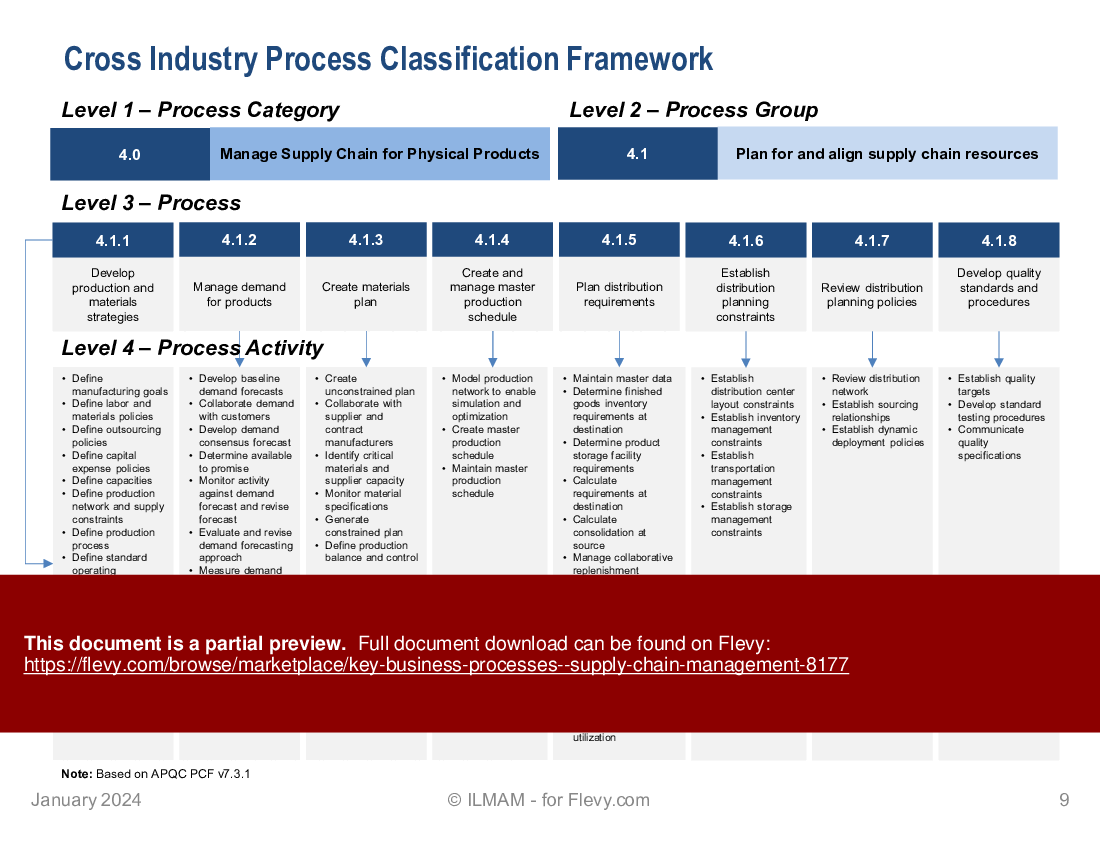
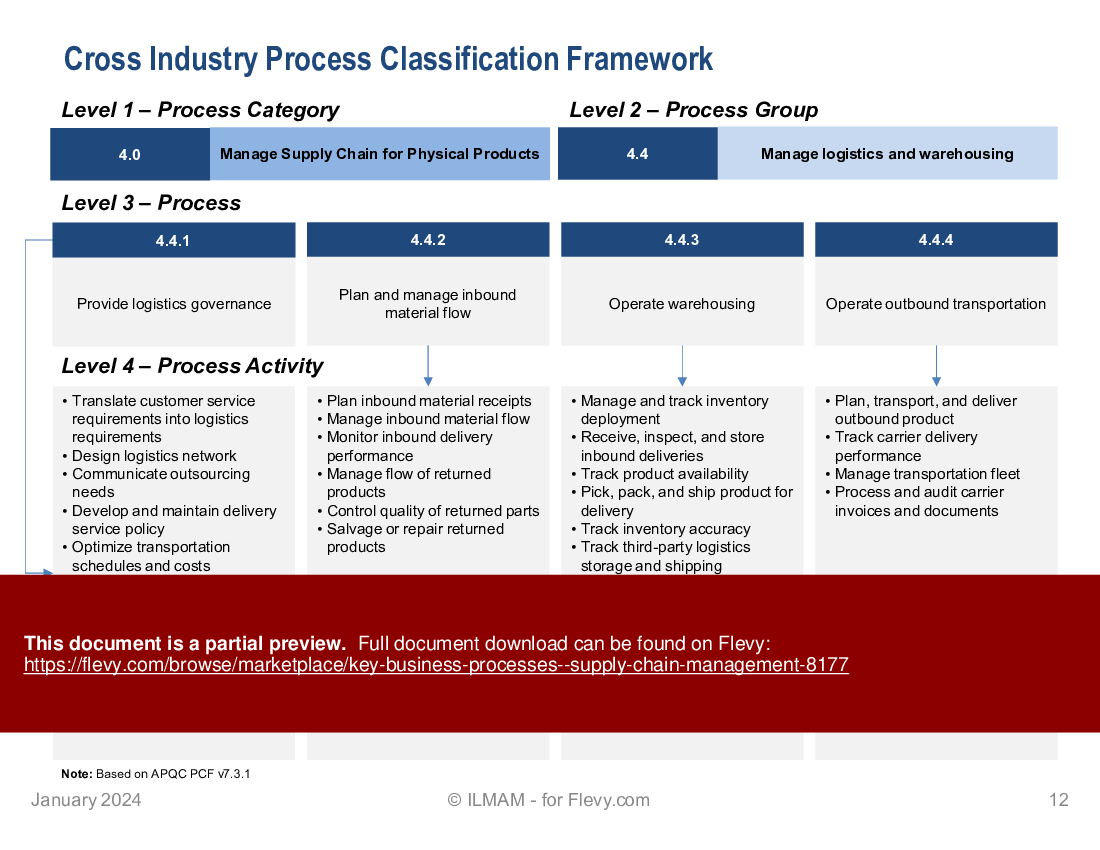
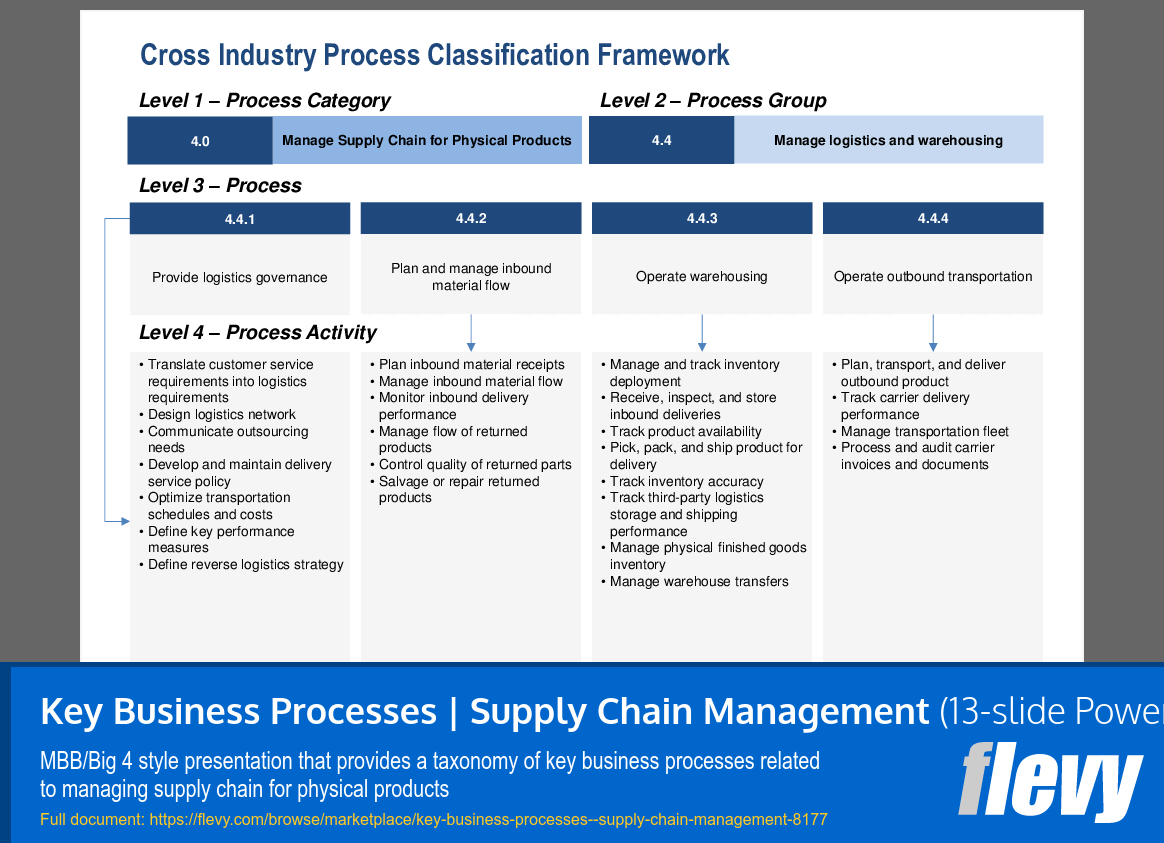
This document provides a thorough visual taxonomy of key business processes related to managing supply chain for physical products based on APQC's cross-industry process classification system (PCF), the most used process framework globally.
A process classification framework can be utilized in many practical ways. For example, it can provide a:
1. framework and checklist of processes when scoping process-related projects
2. starting point for a process documentation, offering a detailed list of processes to use in process flows, maps, and/or models
3. basis for structuring a process repository, whether using a sophisticated software or simple folders
4. foundation for undertaking process-related benchmarking and generating business analytics
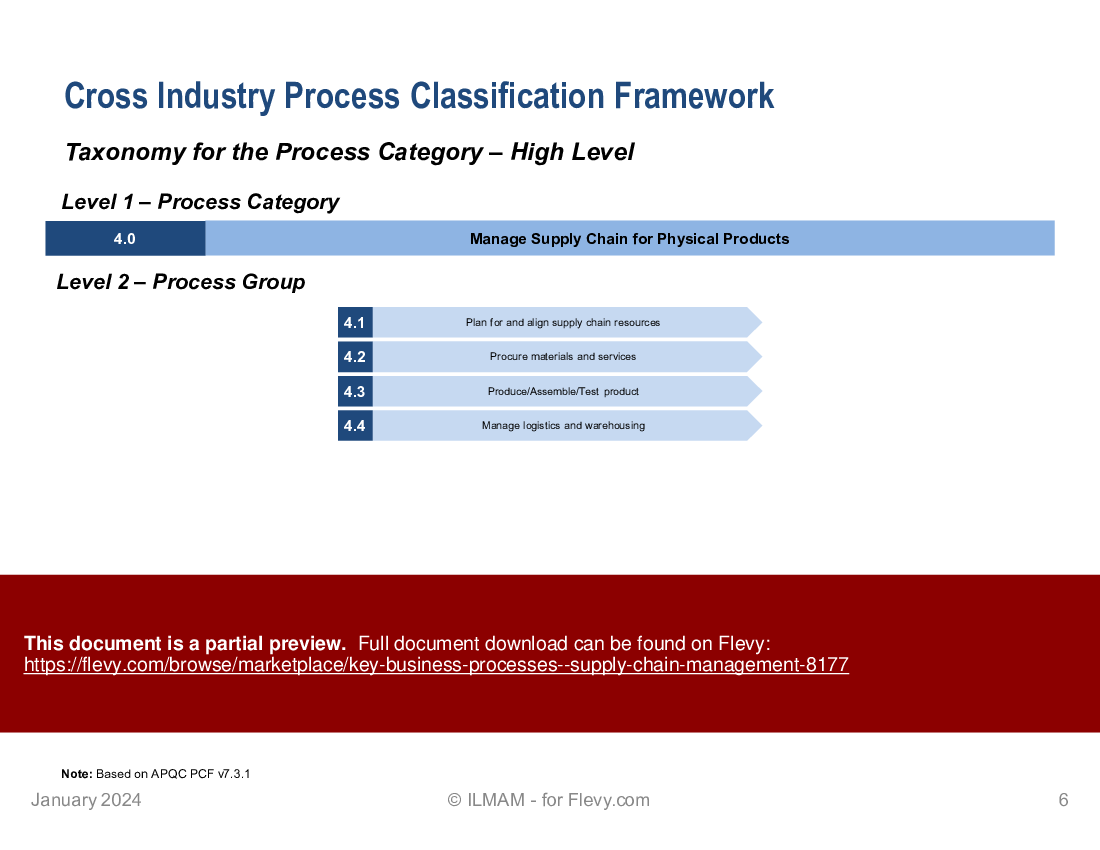
This document follows the structure, and facilitates the usage, of APQC's PCF v7.3.1. It includes 4 process groups, 20 processes, and 115 process activities related to managing supply chain for physical products.
Contents
1. PCF Levels
2. PCF Overall Structure
3. Taxonomy for the Process Category – High Level
4. Taxonomy for the Process Category – Detailed
5. Taxonomy by Process Group – Detailed
Got a question about the product? Email us at support@flevy.com or ask the author directly by using the "Ask the Author a Question" form. If you cannot view the preview above this document description, go here to view the large preview instead.
Executive Summary
This presentation titled "Key Business Processes | Supply Chain Management" is designed to provide a structured overview of essential business processes for managing supply chains specifically for physical products. Utilizing the APQC Process Classification Framework (PCF) v7.3.1, this document serves as a comprehensive guide for process optimization and benchmarking. It equips corporate executives, integration leaders, and consultants with the tools necessary to enhance operational efficiency and drive organizational improvement through effective supply chain management.
Who This Is For and When to Use
• Supply Chain Managers overseeing logistics and procurement operations
• Operations Executives responsible for process optimization and efficiency
• Business Analysts focused on benchmarking and performance measurement
• Consultants providing advisory services in supply chain management
Best-fit moments to use this deck:
• During process improvement initiatives aimed at optimizing supply chain operations
• When conducting benchmarking activities to compare supply chain performance
• In training sessions for teams involved in supply chain management
Learning Objectives
• Define key supply chain processes using the APQC PCF framework
• Identify opportunities for process optimization within supply chain operations
• Establish a structured approach to benchmarking supply chain performance
• Develop effective strategies for managing suppliers and logistics
• Create and manage production schedules aligned with demand forecasts
• Implement quality standards and procedures within the supply chain
Table of Contents
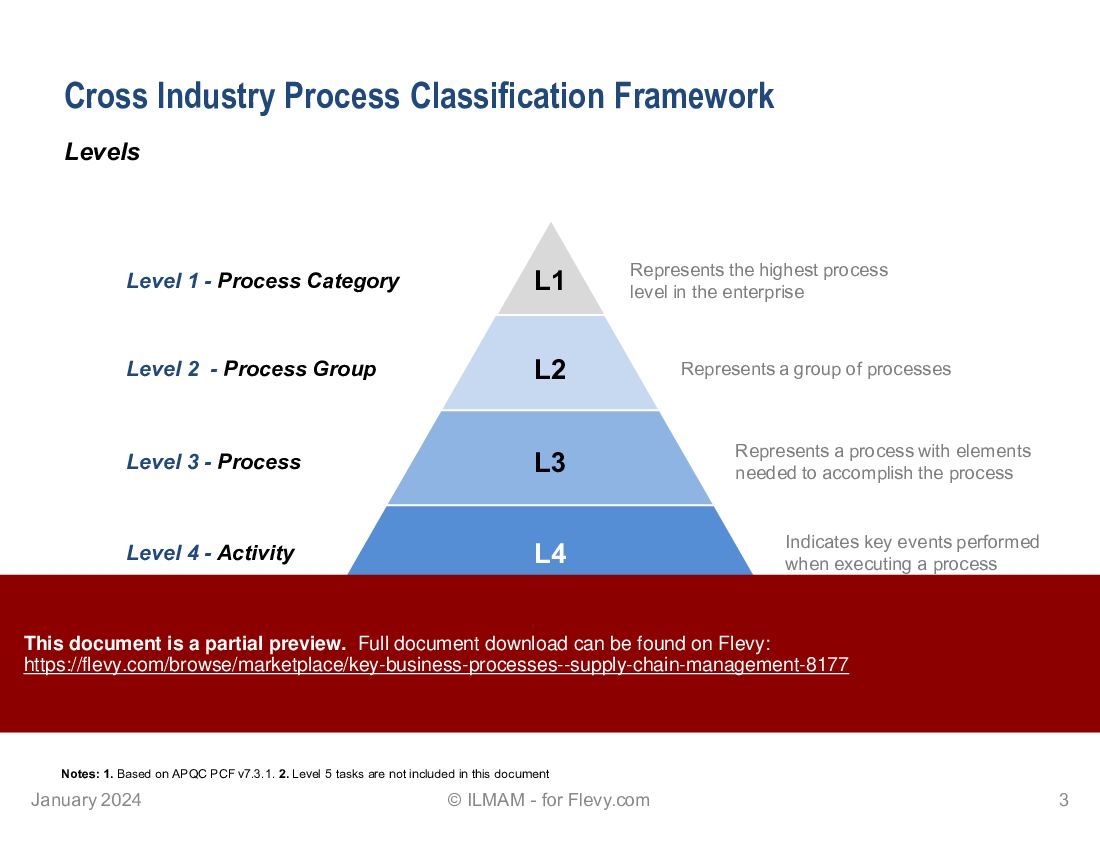
• PCF Levels (page 3)
• PCF Overall Structure (page 4)
• Taxonomy for the Process Category – High Level (page 5)
• Taxonomy for the Process Category - Detailed (page 6)
• Taxonomy by Process Group - Detailed (page 7)
Primary Topics Covered
• Process Classification Framework - A structured approach to categorizing business processes, facilitating better management and benchmarking.
• Supply Chain Management - Focuses on managing the flow of goods and services, including all processes that transform raw materials into final products.
• Procurement Processes - Details the steps involved in sourcing materials and services, including supplier selection and contract management.
• Production Management - Covers the processes for scheduling production, assembling products, and maintaining quality standards.
• Logistics and Warehousing - Discusses the governance of logistics operations, including inbound material flow and outbound transportation.
• Quality Management - Outlines the procedures for establishing and maintaining quality standards throughout the supply chain.
Deliverables, Templates, and Tools
• Process classification framework template for scoping supply chain projects
• Benchmarking checklist for evaluating supply chain performance
• Supplier management and procurement strategy template
• Production scheduling model for aligning manufacturing with demand forecasts
• Quality standards documentation template for supply chain processes
• Logistics governance framework for managing transportation and warehousing
Slide Highlights
• Overview of the APQC Process Classification Framework and its application in supply chain management
• Detailed taxonomy of supply chain processes, illustrating the hierarchical structure from categories to tasks
• Visual representation of key supply chain activities, including procurement, production, and logistics
• Framework for establishing quality standards and procedures within the supply chain
Potential Workshop Agenda
Supply Chain Overview Session (60 minutes)
• Introduce the APQC Process Classification Framework
• Discuss the importance of supply chain management in business operations
• Identify key supply chain processes and their interdependencies
Process Optimization Workshop (90 minutes)
• Analyze current supply chain processes using the provided framework
• Develop action plans for process improvement and optimization
• Establish metrics for benchmarking supply chain performance
Customization Guidance
• Tailor the process classification framework to fit specific organizational needs and industry requirements
• Adjust the procurement and logistics templates to reflect company-specific supplier relationships and contracts
• Incorporate organizational terminology and metrics into the quality management documentation
Secondary Topics Covered
• Demand forecasting techniques and their impact on supply chain efficiency
• Supplier relationship management strategies for enhancing collaboration
• Risk management practices within the supply chain context
• Technology integration in supply chain operations
Topic FAQ
Document FAQ
These are questions addressed within this presentation.
What is the APQC Process Classification Framework?
The APQC Process Classification Framework is an open standard that provides a structured approach to categorizing business processes, facilitating benchmarking and improvement across various industries.
How can this presentation help in process optimization?
This presentation outlines key supply chain processes and provides tools and templates for identifying inefficiencies and implementing improvements.
What are the main components of supply chain management covered in this deck?
The deck covers procurement, production, logistics, and quality management processes essential for effective supply chain operations.
Can this framework be applied to industries other than manufacturing?
Yes, the APQC Process Classification Framework is designed to be applicable across various industries, promoting best practices in process management.
How can organizations benchmark their supply chain performance?
Organizations can use the benchmarking checklist provided in the deck to evaluate their supply chain processes against industry standards and identify areas for improvement.
What role does quality management play in supply chain processes?
Quality management ensures that products meet established standards and customer expectations, which is crucial for maintaining competitiveness in the market.
How can I customize the templates provided in this presentation?
Templates can be tailored by incorporating specific organizational metrics, terminology, and supplier information relevant to your business.
What are the benefits of using a structured process classification framework?
A structured framework helps organizations clearly define processes, identify inefficiencies, and implement best practices for continuous improvement.
Glossary
• APQC - American Productivity & Quality Center, a nonprofit organization that develops benchmarking and best practices.
• Process Classification Framework (PCF) - A structured framework for categorizing business processes.
• Supply Chain Management - The management of the flow of goods and services from raw materials to final products.
• Procurement - The process of sourcing and acquiring goods and services.
• Production Management - The planning and control of manufacturing processes.
• Logistics - The management of the flow of goods, including transportation and warehousing.
• Quality Management - The process of ensuring that products meet established quality standards.
• Benchmarking - The practice of comparing business processes and performance metrics to industry bests.
• Supplier Relationship Management - The systematic approach to developing and managing partnerships with suppliers.
• Demand Forecasting - The process of estimating future customer demand for products.
• Risk Management - The identification and assessment of risks to minimize their impact on the supply chain.
• Continuous Improvement - Ongoing efforts to enhance products, services, or processes.
• Inventory Management - The supervision of non-capitalized assets (inventory) and stock items.
• Transportation Management - The planning and execution of the movement of goods.
• Warehouse Management - The process of overseeing the storage and movement of goods within a warehouse.
• Manufacturing Strategy - The plan for how a company will produce its goods.
• Supplier Selection - The process of evaluating and choosing suppliers based on specific criteria.
• Production Scheduling - The process of planning production activities to meet demand.
• Quality Standards - The criteria set to ensure products meet certain requirements.
• Logistics Governance - The framework for managing logistics operations effectively.
• Material Flow - The movement of materials through the supply chain.
• Finished Goods - Products that are completed and ready for sale.
Source: Best Practices in Supply Chain Analysis, Process Maps PowerPoint Slides: Key Business Processes | Supply Chain Management PowerPoint (PPTX) Presentation Slide Deck, ILMAM - Strategy & Management Consulting
This document is available as part of the following discounted bundle(s):
Save %!
Key Business Processes | Operating Processes
This bundle contains 6 total documents. See all the documents to the right.
|
Receive our FREE presentation on Operational Excellence
This 50-slide presentation provides a high-level introduction to the 4 Building Blocks of Operational Excellence. Achieving OpEx requires the implementation of a Business Execution System that integrates these 4 building blocks. |