
Editor Summary
Strategic Pricing Framework and Tactics is a 56-slide PowerPoint by ex-McKinsey consultants presenting a structured Pricing Strategy Development Framework and related tools.
Read moreIncludes a Pricing Strategy Development Framework template, Quick Wins assessment tool, customer behavior analysis framework, competitive pricing conflict guidelines, bundling strategy template, and price elasticity measurement tools. Targeted at pricing strategy teams, marketing executives, finance leaders, and business development teams for pricing strategy development, competitive analysis, and bundling decisions. Sold as a digital download on Flevy.
Use this deck when an organization needs to develop or revise pricing strategy due to margin pressure, market positioning shifts, new product introductions, or competitive price attacks.
Pricing strategy teams running a structured pricing review using the Pricing Strategy Development Framework and scoping activities.
Marketing executives mapping reference prices and customer behavior to influence purchase decisions and value communication.
Finance leaders modeling price sensitivity and profit impact using price elasticity measurement tools.
Business development teams designing bundling offers and competitive response plans after competitor price changes.
The three-step approach (Scope, Quick Wins, Optimize) reflects a structured, hypothesis-driven consulting methodology associated with McKinsey-style engagements.
Pricing products and services is one of the most complex and overlooked elements of a strategy. This document provides a guide and framework to help build better understanding of different strategies and tactics available.
Areas covered include:
Why is pricing important?
Pricing Strategy Development Framework
Scoping and Quick wins
Influencing the Purchase Decision
Price Wars – Managing Competitive Conflict
General Pricing Strategies
Bundling
Measuring Price Elasticity
This document is suitable for consultants and those in corporate roles and is designed to give some fundamental pricing knowledge to build on.
This comprehensive PPT delves into the intricacies of pricing strategies, emphasizing the shift from traditional cost-based pricing to value-based customer pricing. It highlights the critical question of maintaining margins while maximizing profit through proactive pricing approaches. The framework provided is designed to guide executives through the complexities of developing and implementing effective pricing strategies, ensuring a robust foundation for decision-making.
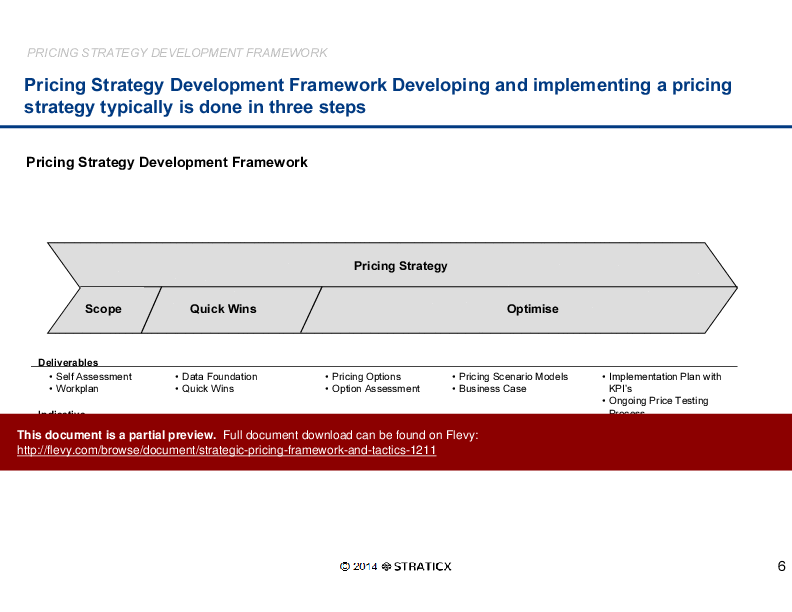
The document also explores the Pricing Strategy Development Framework, breaking it down into three essential steps: Scope, Quick Wins, and Optimize. Each step is meticulously detailed, offering deliverables such as self-assessment, data foundation, pricing options, scenario models, and implementation plans. This structured approach ensures that organizations can systematically address pricing challenges and capitalize on quick wins for immediate impact.
In addition, the document addresses common pricing issues in business markets, such as the erosion of premiums for value-added products and the impact of poorly controlled pricing processes. It provides actionable insights into managing competitive information, pre-announcing price increases, and leveraging strategic pricing to maintain industry leadership. This resource is indispensable for consultants and corporate professionals aiming to refine their pricing tactics and drive sustainable profitability.
Got a question about the product? Email us at support@flevy.com or ask the author directly by using the "Ask the Author a Question" form. If you cannot view the preview above this document description, go here to view the large preview instead.
MARCUS OVERVIEW
This synopsis was written by Marcus [?] based on the analysis of the full 56-slide presentation.
Executive Summary
The Strategic Pricing Framework and Tactics presentation, crafted by ex-McKinsey consultants, offers a structured approach to pricing strategy development, emphasizing the importance of pricing in driving profitability. This consulting-grade resource equips corporate executives and consultants with actionable insights to optimize pricing strategies, assess market conditions, and influence customer purchasing decisions. Users will learn to navigate competitive pricing landscapes, manage price wars, and implement effective bundling strategies, ultimately enhancing their organization’s financial performance.
Who This Is For and When to Use
• Pricing strategy teams responsible for developing and implementing pricing frameworks
• Marketing executives seeking to influence customer purchasing behavior
• Finance leaders focused on profit optimization through pricing strategies
• Business development teams aiming to assess competitive pricing dynamics
Best-fit moments to use this deck:
• During the development of a new pricing strategy or framework
• When assessing current pricing practices and identifying quick wins
• In preparation for competitive pricing analysis and market positioning
Learning Objectives
• Define the critical role of pricing in business profitability
• Develop a structured pricing strategy using the Pricing Strategy Development Framework
• Identify quick wins for immediate pricing improvements
• Analyze customer behavior to influence purchasing decisions effectively
• Manage competitive pricing conflicts and avoid detrimental price wars
• Implement bundling strategies to enhance perceived value and sales
Table of Contents
• Why Is Pricing Important? (page 2)
• Pricing Strategy Development Framework (page 6)
• Scoping and Quick Wins (page 10)
• Influencing the Purchase Decision (page 20)
• Price Wars - Managing Competitive Conflict (page 26)
• General Pricing Strategies (page 32)
• Bundling (page 44)
• Measuring Price Elasticity (page 47)
Primary Topics Covered
• Importance of Pricing - Pricing is essential for maximizing profitability and requires a data-driven approach rather than subjective judgment.
• Pricing Strategy Development Framework - A three-step framework encompassing scope, quick wins, and optimization to develop effective pricing strategies.
• Scoping and Quick Wins - Techniques for assessing pricing capabilities and identifying immediate improvements to enhance profitability.
• Influencing Purchase Decisions - Understanding customer behavior and the economic value of products to optimize pricing strategies.
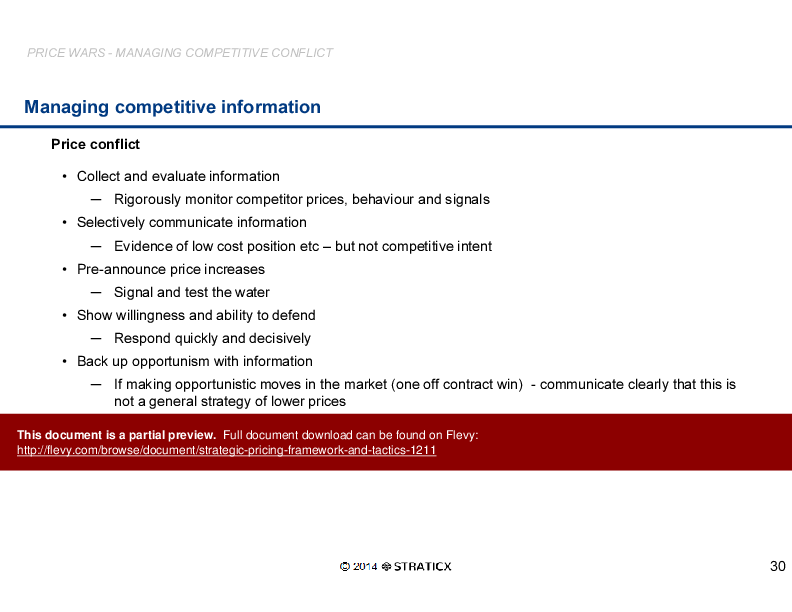
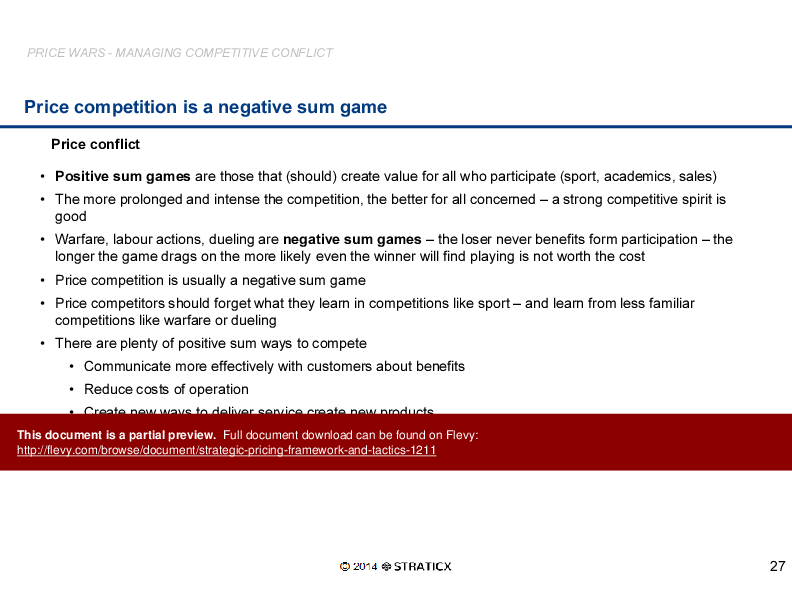
• Managing Competitive Conflict - Strategies to navigate price wars and maintain profitability without engaging in detrimental price competition.
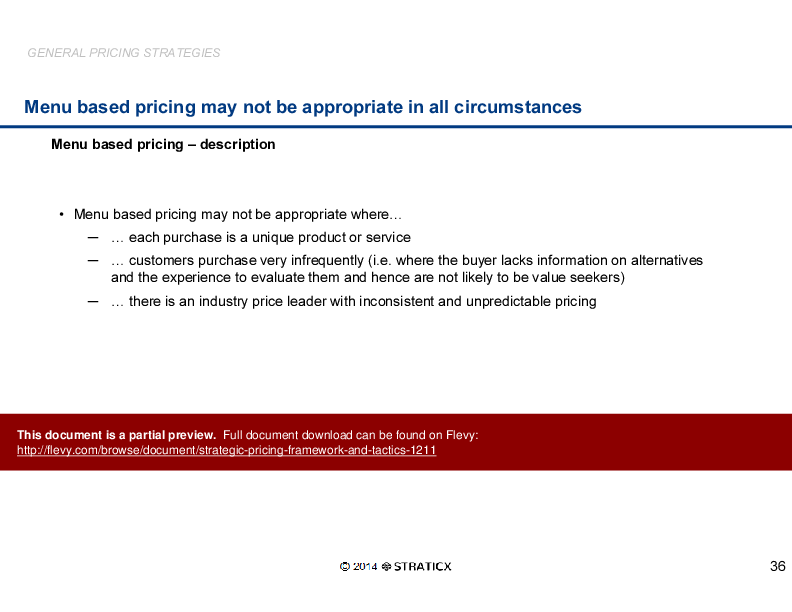
• General Pricing Strategies - Overview of various pricing strategies, including menu-based pricing and value proposition pricing.
• Bundling - Techniques for price bundling to enhance customer value and drive sales.
• Measuring Price Elasticity - Methods for assessing price sensitivity and optimizing pricing based on elasticity data.
Deliverables, Templates, and Tools
• Pricing Strategy Development Framework template for structured pricing strategy creation
• Quick Wins assessment tool for identifying immediate pricing improvements
• Customer behavior analysis framework to influence purchasing decisions
• Competitive pricing conflict management guidelines
• Bundling strategy template for implementing effective product/service packages
• Price elasticity measurement tools for ongoing pricing optimization
Slide Highlights
• Slide detailing the Pricing Strategy Development Framework, outlining the 3 key steps: Scope, Quick Wins, and Optimize.
• Visual representation of the importance of pricing, contrasting common pricing myths with pricing realities.
• Framework for managing competitive pricing conflicts, including response strategies to competitor price attacks.
• Overview of bundling definitions and when to implement bundling strategies effectively.
• Elasticity testing methodologies to assess price sensitivity and optimize pricing strategies based on customer behavior.
Potential Workshop Agenda
Pricing Strategy Overview (60 minutes)
• Discuss the importance of pricing and its impact on profitability
• Review the Pricing Strategy Development Framework and its application
Quick Wins Identification Session (90 minutes)
• Analyze current pricing practices and identify immediate improvement opportunities
• Develop a list of actionable quick wins for pricing optimization
Competitive Pricing Conflict Management (60 minutes)
• Explore strategies for managing price wars and competitive conflicts
• Discuss case studies and real-world examples of effective pricing strategies
Customization Guidance
• Tailor the Pricing Strategy Development Framework to align with specific organizational goals and market conditions.
• Adjust quick win strategies based on current pricing practices and customer feedback.
• Modify bundling strategies to fit product/service offerings and customer preferences.
Secondary Topics Covered
• Pricing capability assessment frameworks
• Customer segmentation for pricing strategies
• Techniques for measuring and analyzing customer price sensitivity
• Impact of pricing on overall business strategy and profitability
• Best practices for maintaining pricing discipline in business-to-business markets
Topic FAQ
What are the typical phases of a pricing strategy framework I should follow?
A commonly used framework breaks pricing strategy into 3 phases: scoping current capabilities and market context, identifying Quick Wins for immediate improvement, and optimizing longer-term pricing architecture. The Strategic Pricing Framework describes these 3 steps: Scope, Quick Wins, and Optimize.
How can I measure price elasticity for my products in practical terms?
Price elasticity can be measured using controlled experiments and iterative testing, such as champion/challenger tests and test-cell analysis to observe demand response to price changes. The product describes elasticity testing methodologies including champion/challenger tests and iterative test cell analysis.
What is product bundling and when should a business use it?
Bundling is offering multiple products or services together, often at a combined price, to increase perceived value and sales. It is frequently recommended for new product introductions or when you want to steer customer choice toward higher-margin combinations. The deck covers bundling definitions and implementation guidance for new product introductions.
How do I identify quick wins in pricing without a full transformation program?
Quick wins are typically found through a pricing capability assessment that highlights misaligned discounts, poor price segmentation, or obvious value-capture opportunities. The resource provides a Quick Wins assessment tool and guidance to align pricing with cost structures and customer value perceptions.
What should I look for when choosing a pricing toolkit for my team?
Useful toolkits include a clear strategy framework, diagnostic and Quick Wins tools, customer behavior analysis templates, competitive pricing conflict guidelines, bundling templates, and price elasticity measurement methods. The Strategic Pricing Framework and Tactics lists these deliverables, including a Pricing Strategy Development Framework template and price elasticity tools.
How long do workshops based on a pricing framework typically take?
A sample workshop agenda in the materials outlines a 60-minute Pricing Strategy Overview, a 90-minute Quick Wins Identification session, and a 60-minute Competitive Pricing Conflict Management session, totaling several focused sessions for initial roadmap and diagnostics.
After a competitor cuts prices, what analytic steps should I prioritize to respond?
Prioritize scoping to assess your pricing capabilities, analyze customer behavior and reference prices, evaluate the cost implications of matching cuts, and apply competitive pricing conflict management guidelines before executing changes. Use price elasticity measurement to estimate demand effects and competitive response strategies.
Are pricing templates worth purchasing for a small internal team with limited resources?
Templates can provide a structured approach and ready deliverables—such as self-assessment tools, scenario models, data foundations, and implementation plans—that reduce design time for teams lacking in-house pricing methodology. The author materials list deliverables like self-assessment, scenario models, and implementation plans.
Document FAQ
These are questions addressed within this presentation.
Why is pricing important?
Pricing is crucial for maximizing profitability and requires a precise, data-driven approach to effectively influence customer behavior and market positioning.
What is the Pricing Strategy Development Framework?
The framework consists of 3 steps: scoping, identifying quick wins, and optimizing pricing strategies to enhance profitability and market competitiveness.
How can I identify quick wins in pricing?
Quick wins can be identified through a pricing capability assessment, focusing on immediate improvements that align pricing with cost structures and customer value perceptions.
What are the key elements of influencing purchase decisions?
Key elements include understanding customer behavior, identifying reference prices, and effectively communicating the economic value of products.
How should I respond to competitive pricing attacks?
Responses should be strategic, focusing on maintaining profitability while assessing the cost of potential price cuts against the risk of losing market share.
What is bundling, and when should it be used?
Bundling involves offering multiple products or services together at a discounted price, enhancing perceived value and increasing sales, particularly for new product introductions.
How do I measure price elasticity?
Price elasticity can be measured through various testing methodologies, including champion/challenger tests and iterative test cell analysis, to assess customer sensitivity to price changes.
What are the common pitfalls in pricing strategies?
Common pitfalls include lack of pricing discipline, poorly defined discounting criteria, and failure to assess customer price sensitivity adequately.
Glossary
• Price Elasticity - A measure of how sensitive customer demand is to price changes.
• Bundling - The practice of selling multiple products or services together at a discounted price.
• Quick Wins - Immediate improvements in pricing strategies that can enhance profitability.
• Competitive Pricing Conflict - Situations where companies engage in price wars, often leading to reduced profitability.
• Menu-Based Pricing - A pricing strategy that offers fixed prices for flexible product/service options.
• Value Proposition - The unique value a product or service offers to customers compared to alternatives.
• Economic Value - The maximum price a customer is willing to pay based on the perceived benefits of a product.
• Scoping - The process of assessing current pricing capabilities and identifying areas for improvement.
• Customer Segmentation - Dividing customers into groups based on shared characteristics to tailor pricing strategies.
• Profitability Modeling - Analyzing costs and revenues to determine pricing strategies that maximize profit.
• Reference Price - The price customers expect to pay based on their perceptions of value and alternatives.
• Price Wars - Competitive situations where companies lower prices to gain market share, often harming profitability.
• Discounting - Reducing prices to attract customers, which can lead to pricing discipline issues if not managed properly.
• Incentive Structures - The frameworks that guide how discounts and pricing decisions are made within an organization.
• Market Research - The process of gathering information about customer preferences and behaviors to inform pricing strategies.
• Cost-Based Pricing - A pricing strategy that sets prices based on the costs of production plus a markup.
• Value-Based Pricing - A pricing strategy that sets prices based on the perceived value to the customer rather than costs.
• Competitive Analysis - The assessment of competitor pricing strategies to inform one's own pricing decisions.
• Customer Profitability - The analysis of how profitable individual customers or segments are to the business.
• Sales Volume - The total quantity of products sold, which can be influenced by pricing strategies.
• Profit Margin - The difference between the cost of goods sold and the selling price, expressed as a percentage of sales.
This PPT slide outlines the Pricing Development process, segmented into stages: Scope, Quick Wins, Data Foundation, Diagnostic, Develop Pricing Options, Optimize, and Implement. The Scope section focuses on summarizing previous work, assessing pricing sophistication, and identifying scaling opportunities. Quick Wins emphasizes immediate actions to align prices with costs and establish effective pricing strategies. The Data Foundation includes essential elements like value chain data, cost models, and competitor positioning for informed decision-making. The Diagnostic phase analyzes the purchase process and customer perceptions to identify gaps in pricing strategies. Develop Pricing Options involves creating value propositions and classifying product lines for tailored pricing strategies. The Optimize section integrates models for elasticity and incentives, while Scenario Tests evaluate pricing strategies against market changes. The Implement section details steps for executing the pricing strategy, including an implementation plan and ongoing market tests to ensure relevance and effectiveness.
This PPT slide presents a framework for assessing pricing capabilities across 3 levels: Basic, Average, and Advanced. At the Basic level, businesses lack clear pricing objectives, rely on internal profit assumptions, and have rudimentary profitability modeling focused on variable costs. Competitor intelligence is absent, and customer interviews are infrequent. The Average level shows defined objectives aimed at maximizing net present value, refined segmentation, and limited profitability insights. Competitor prices are occasionally monitored, and customer interviews become more quantitative. The Advanced level features clear objectives, needs-based segmentation, continuous competitor price monitoring, and targeted customer interviews. Price elasticity is rigorously tested, and pricing strategies are well communicated, ensuring alignment with staff incentives. This framework serves as a roadmap for enhancing pricing capabilities.
This PPT slide outlines a structured approach to price setting, focusing on 3 components: Profit Estimates, Elasticity Estimates, and Integrating Mechanisms. Profit Estimates analyze potential profit from customer sign-ups and renewals, assessing expected claims and costs, and illustrating the relationship between price and profit per customer. Elasticity Estimates quantify customer acquisition and renewal likelihood at different price points, showing the inverse relationship between price and customer volume, highlighting demand sensitivity. Integrating Mechanisms address balancing price to optimize margin and volume, aiming for maximum net present value while maintaining market share, with a graph demonstrating the total profit curve and optimal price point for sustainability.
This PPT slide categorizes SKU pricing tactics across 20,000 product lines into 5 categories: Core lenders (125 lines), Core matchers, Related, Tactical, and Less sensitive (approximately 17,500 lines). Core lenders and Core matchers each contribute 5% to sales, while Related and Tactical contribute 7.5% and 15%, respectively, highlighting the significance of Core categories in sales performance. Pricing strategies include positioning 5% below the cheapest local competitor or matching prices, with Core matchers maintaining relativity with core competitors. The Tactical category suggests pricing 5% below a competitor's unpromoted price and matching promotional prices. Average price changes range from -10.0 to +3.5, indicating a nuanced approach to pricing strategy that can affect profitability and market positioning.
This PPT slide presents a strategic overview of product profitability in medium to large organizations, indicating that up to 25% of products may be unprofitable. The graphical representation shows the relationship between cumulative margin and product count, revealing that 80% of contribution comes from a limited number of products. Organizations should focus on managing their product portfolio effectively and culling unprofitable items to enhance financial performance. Retaining unprofitable products can lead to margin destruction, with data showing that 28 products could contribute to a 10% loss in margin. Additionally, optimizing pricing strategies for profitable products can drive volume and improve overall contribution, creating a sustainable financial model.
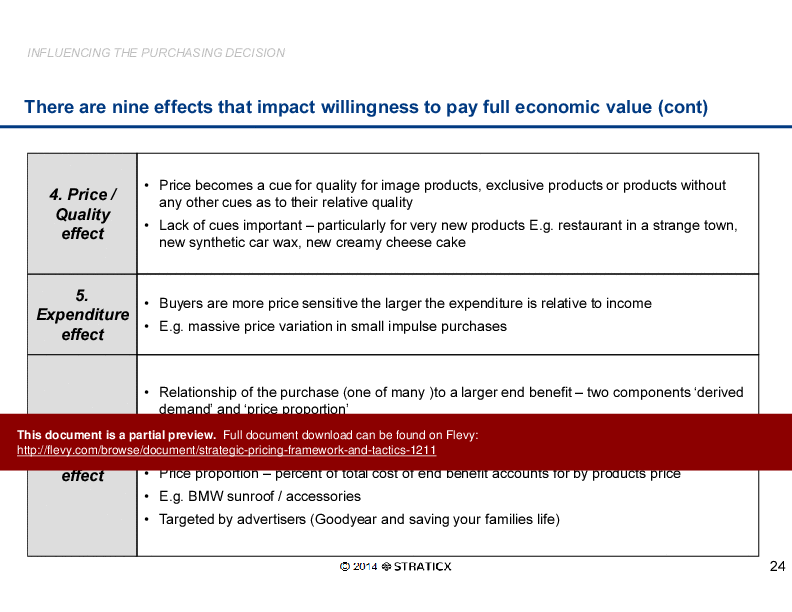
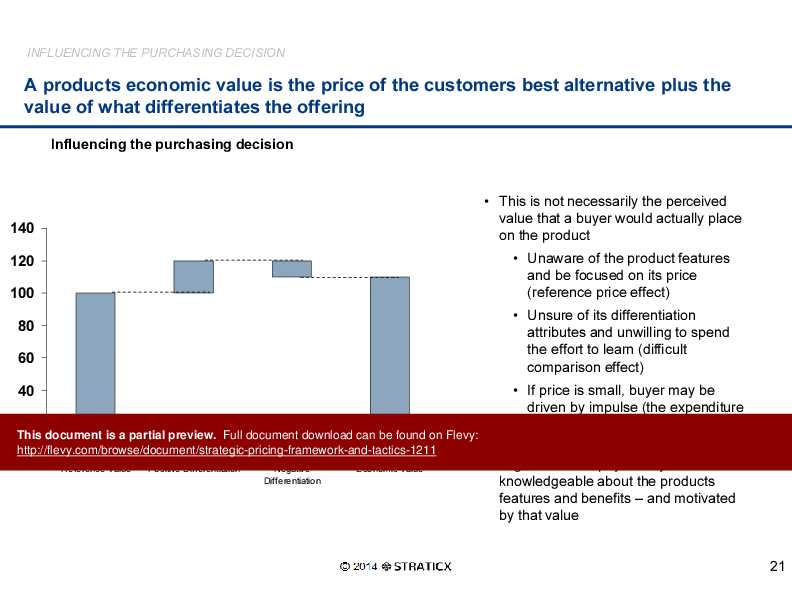
This PPT slide outlines nine effects influencing a buyer's willingness to pay full economic value. The Reference Price effect indicates that buyers become more price-sensitive when comparing a product's price to perceived alternatives, highlighting the importance of product positioning in retail environments. The Difficult Comparison effect shows that when alternatives are hard to compare, customers rely on trusted brands, especially in management consulting, where brand reputation is critical. Clear pricing information, such as unit pricing, can enhance comparisons and boost sales of lower-priced brands. The Switching Cost effect reveals that higher switching costs—monetary and non-monetary—reduce price sensitivity, with new suppliers often absorbing these costs to attract customers. Understanding these effects helps businesses refine pricing models and marketing strategies to enhance perceived value and drive sales.
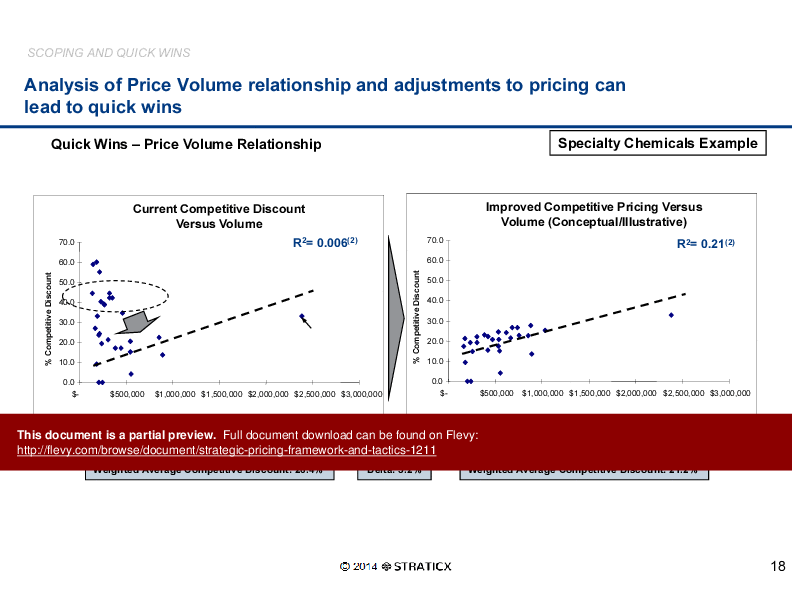
This PPT slide analyzes the price-volume relationship in the specialty chemicals sector, focusing on strategic pricing adjustments for quick wins. The "Current Competitive Discount Versus Volume" graph shows a weak correlation (R² = 0.006), indicating minimal impact of the current pricing strategy on sales volume, with a weighted average competitive discount of 26.4% and a delta of 5.2%. In contrast, the "Improved Competitive Pricing Versus Volume" graph demonstrates a stronger relationship (R² = 0.21), suggesting that revised pricing strategies could enhance sales performance, with a weighted average competitive discount of 21.2%. The contrasting R² values highlight the potential gains from improved pricing tactics, urging decision-makers to reevaluate pricing frameworks to drive sales growth and profitability.
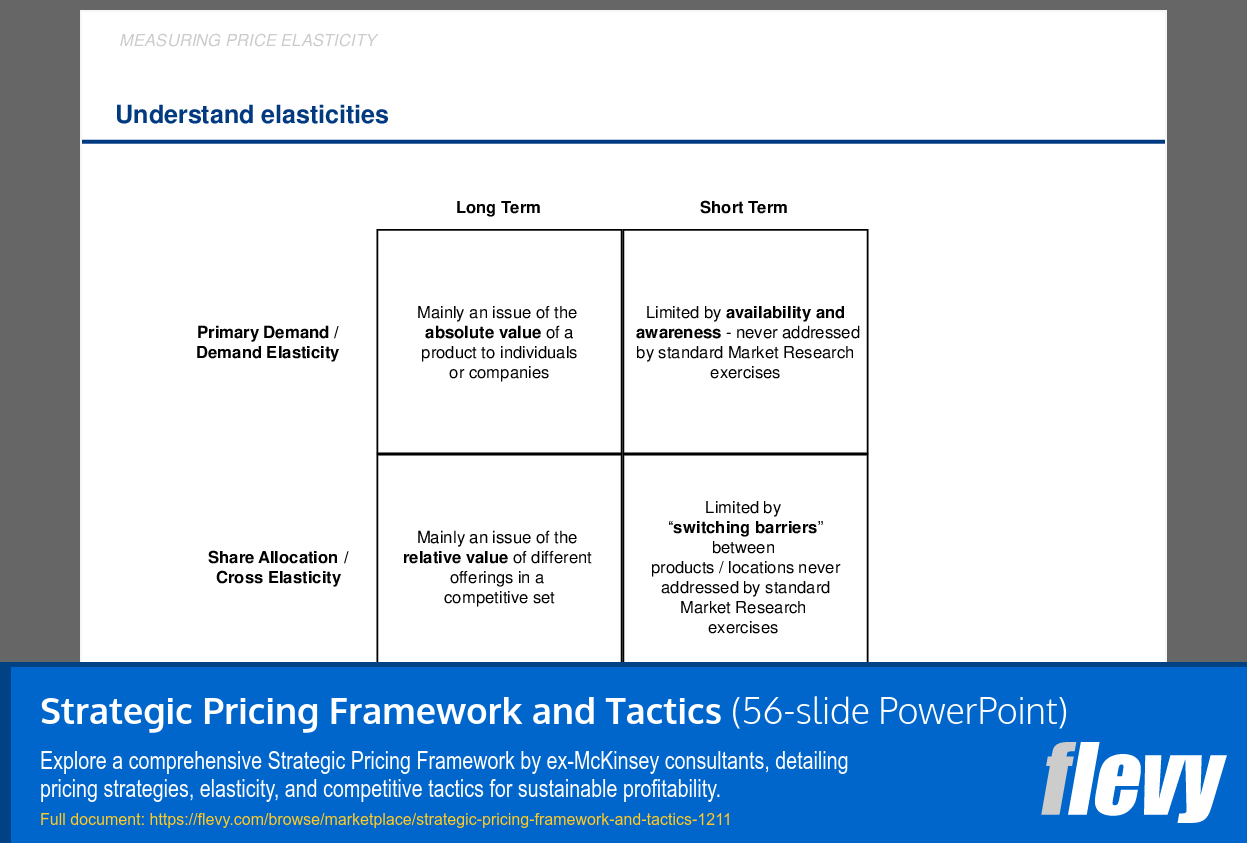
This PPT slide presents a framework for understanding price elasticity through 2 dimensions: time (long term vs. short term) and type of elasticity (primary demand vs. cross elasticity). Long-term primary demand elasticity reflects the absolute value of a product, indicating that consumer perceptions significantly influence demand over time. In contrast, short-term elasticity is limited by factors such as availability and consumer awareness, impacting immediate demand. Cross elasticity distinguishes long-term relative value of offerings within a competitive set, where consumer preferences may shift based on perceived alternatives. Short-term cross elasticity is constrained by switching barriers that hinder transitions to alternative products, affecting immediate demand. This framework aids businesses in optimizing pricing strategies by addressing both long-term and short-term factors aligned with consumer behavior and market dynamics.
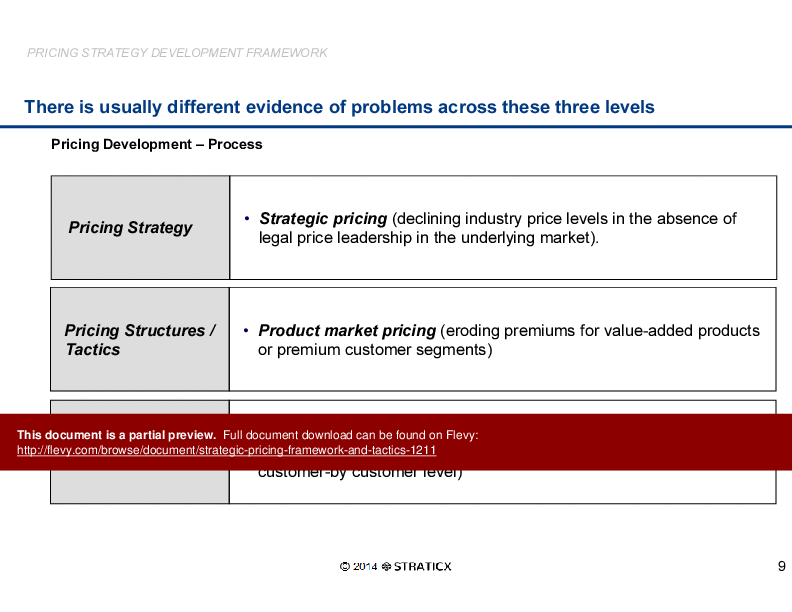
This PPT slide outlines a structured approach to pricing development with 3 strategies: Lowest Price on the Market, Match Competitors, and Highest Premium on the Market. The Lowest Price strategy targets companies with high fixed costs and emphasizes basic products to attract price-sensitive customers, though it may limit profitability due to lower margins. The Match Competitors strategy aligns pricing with rivals, requiring perceived value to exceed competitors, which may not drive profitability without strong brand support. The Highest Premium strategy is for companies with unique value propositions, allowing for higher margins as customers are less price-sensitive. Additionally, pricing structures and tactics, including service and product bundling, unbundling, and volume-based discounts, are essential for tailoring strategies to market demands and customer expectations.
This PPT slide analyzes customer profitability for a product in the metal goods sector, plotting contribution in euros per ton against volume in tons. The contribution curve reveals varying profitability levels as volume increases, with a critical point where average contribution stabilizes. Scenarios are categorized based on customer bargaining power: limited power leads to high premiums, while large customers with significant bargaining power result in lower premiums and higher costs due to product complexity. High complexity in product offerings can also lead to elevated costs and inefficient pricing strategies, potentially eroding margins. Understanding customer dynamics and product complexity is essential for optimizing pricing strategies and enhancing profitability.
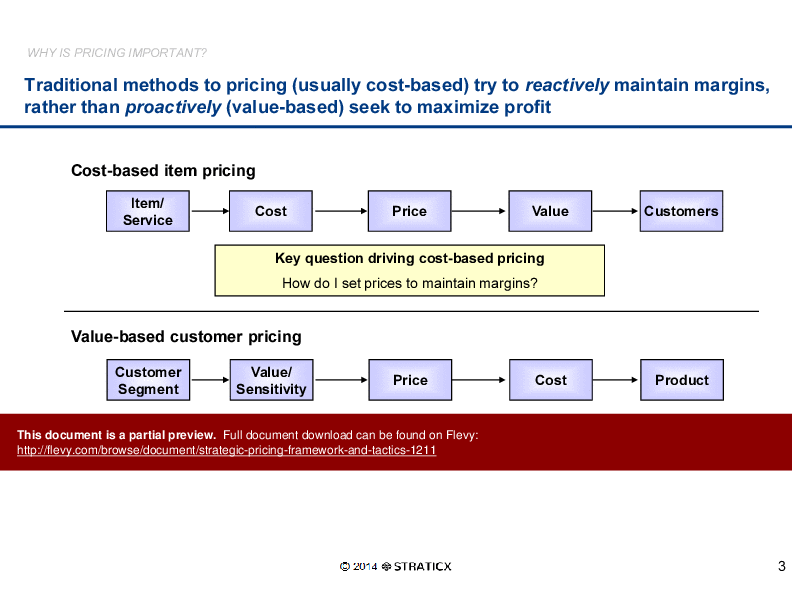
This PPT slide compares 2 pricing methodologies: cost-based item pricing and value-based customer pricing. Cost-based pricing focuses on maintaining margins by setting prices based on internal cost structures, asking, "How do I set prices to maintain margins?" In contrast, value-based pricing aligns prices with perceived customer value, guided by the question, "What value will this customer (segment) pay for?" This shift enhances understanding of customer segments and their willingness to pay, optimizing pricing strategies for profitability. The visual structure illustrates the flow of logic: cost-based pricing moves from item/service to cost to price to value, while value-based pricing starts with customer segments, moving to value/sensitivity, then price, and finally cost and product. This highlights the fundamental differences in conceptualizing pricing, costs, and customer value.
Source: Best Practices in Pricing Strategy PowerPoint Slides: Strategic Pricing Framework and Tactics PowerPoint (PPTX) Presentation Slide Deck, STRATICX
Straticx is redefining strategy and innovation consulting through online access to high value consulting partners, who work with senior executives and boards of corporations to frame key business issues, develop hypothesis, apply structured problem solving and commercial acumen to drive development of solutions. The partners all have 10+ consulting experience covering a broad range of sectors and
... [read more] have delivered a range of engagements such as corporate and business unit strategy, business transformation, business case development, M&A, and operational improvement.
Since 2012, we have provided business templates to over 10,000 businesses and organizations of all sizes, from startups and small businesses to the Fortune 100, in over 130 countries.
"I have used FlevyPro for several business applications. It is a great complement to working with expensive consultants. The quality and effectiveness of the tools are of the highest standards."
– Moritz Bernhoerster, Global Sourcing Director at Fortune 500
"My FlevyPro subscription provides me with the most popular frameworks and decks in demand in today’s market. They not only augment my existing consulting and coaching offerings and delivery, but also keep me abreast of the latest trends, inspire new products and service offerings for my practice, and educate me
in a fraction of the time and money of other solutions. I strongly recommend FlevyPro to any consultant serious about success.
"
– Bill Branson, Founder at Strategic Business Architects
"As an Independent Management Consultant, I find Flevy to add great value as a source of best practices, templates and information on new trends. Flevy has matured and the quality and quantity of the library is excellent. Lastly the price charged is reasonable, creating a win-win value for
the customer, Flevy and the various authors. This is truly a service that benefits the consulting industry and associated clients. Thanks for providing this service.
"
– Jim Schoen, Principal at FRC Group
"As a niche strategic consulting firm, Flevy and FlevyPro frameworks and documents are an on-going reference to help us structure our findings and recommendations to our clients as well as improve their clarity, strength, and visual power. For us, it is an invaluable resource to increase our impact and value."
– David Coloma, Consulting Area Manager at Cynertia Consulting
"FlevyPro provides business frameworks from many of the global giants in management consulting that allow you to provide best in class solutions for your clients."
– David Harris, Managing Director at Futures Strategy
"Flevy is now a part of my business routine. I visit Flevy at least 3 times each month.
Flevy has become my preferred learning source, because what it provides is practical, current, and useful in this era where the business world is being rewritten.
many challenges and there is the need to make the right decisions in a short time, with so much scattered information, we are fortunate to have Flevy. Flevy investigates, selects, and puts at our disposal the best of the best to help us be successful in our work.
"
– Omar Hernán Montes Parra, CEO at Quantum SFE
"As a small business owner, the resource material available from FlevyPro has proven to be invaluable. The ability to search for material on demand based our project events and client requirements was great for me and proved very beneficial to my clients. Importantly, being able to easily edit and tailor
the material for specific purposes helped us to make presentations, knowledge sharing, and toolkit development, which formed part of the overall program collateral. While FlevyPro contains resource material that any consultancy, project or delivery firm must have, it is an essential part of a small firm or independent consultant's toolbox.
"
– Michael Duff, Managing Director at Change Strategy (UK)
"One of the great discoveries that I have made for my business is the Flevy library of training materials.
As a Lean Transformation Expert, I am always making presentations to clients on a variety of topics: Training, Transformation, Total Productive Maintenance, Culture, Coaching, Tools, Leadership Behavior, etc. Flevy
It is well worth the money to purchase these presentations. Sure, I have the knowledge and information to make my point. It is another thing to create a presentation that captures what I want to say. Flevy has saved me countless hours of preparation time that is much better spent with implementation that will actually save money for my clients.
"
– Ed Kemmerling, Senior Lean Transformation Expert at PMG
Save with Bundles
This document is available as part of the following discounted bundle(s):
Download our free compilation of 50+ Strategy & Transformation slides and templates. Frameworks include McKinsey 7-S, Balanced Scorecard, Disruptive Innovation, BCG Curve, and many more.