
This presentation is created by former McKinsey, BCG, Deloitte, EY, and Capgemini consultants. It is an emerging Growth Strategy framework that focuses on changing customer behaviors, instead of product differentiation.
Explore the Organic Growth Framework (OGF) by ex-McKinsey, BCG, and Deloitte consultants. Master customer behavior-driven growth strategies with actionable insights. Organic Growth Framework (OGF) is a 98-slide PPT PowerPoint presentation slide deck (PPTX) available for immediate download upon purchase.
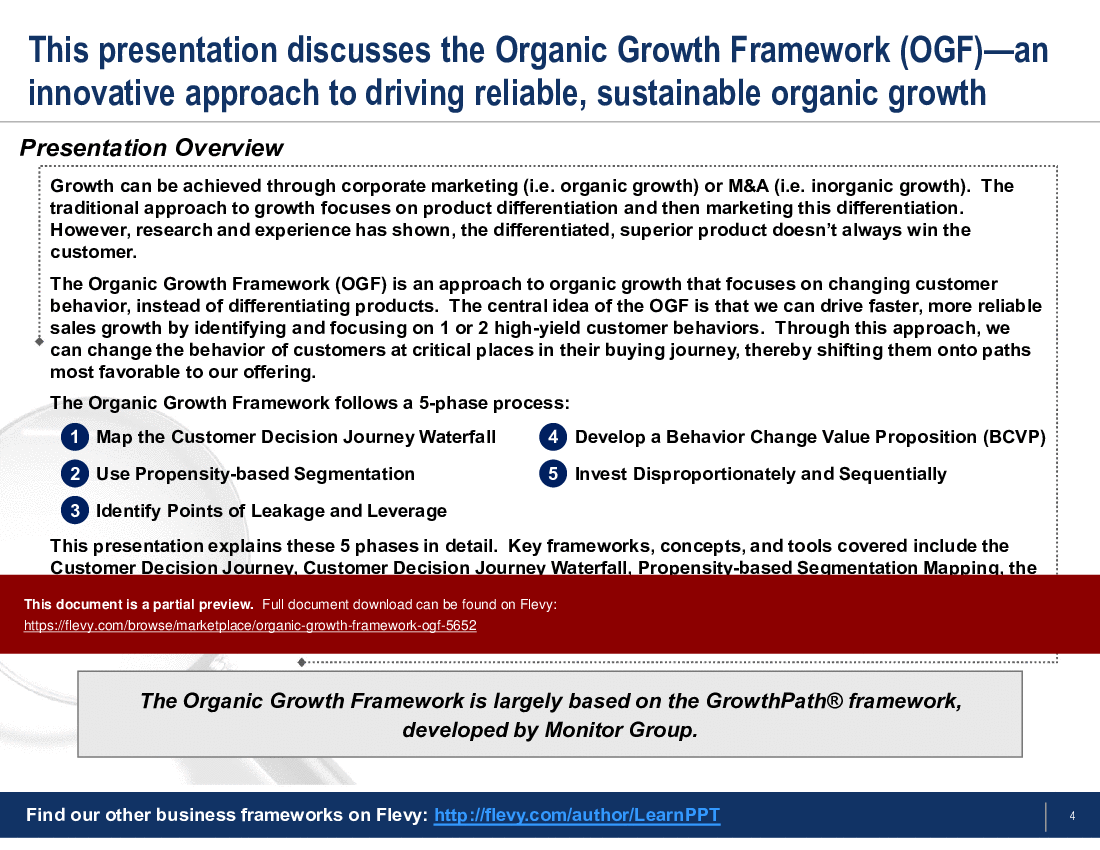
Growth can be achieved through corporate marketing (i.e. organic growth) or M&A (i.e. inorganic growth). The traditional approach to growth focuses on product differentiation and then marketing this differentiation. However, research and experience has shown, the differentiated, superior product doesn't always win the customer.
The Organic Growth Framework (OGF) is an approach to organic growth that focuses on changing customer behavior, instead of differentiating products. The central idea of the OGF is that we can drive faster, more reliable sales growth by identifying and focusing on 1 or 2 high-yield customer behaviors. Through this approach, we can change the behavior of customers at critical places in their buying journey, thereby shifting them onto paths most favorable to our offering.
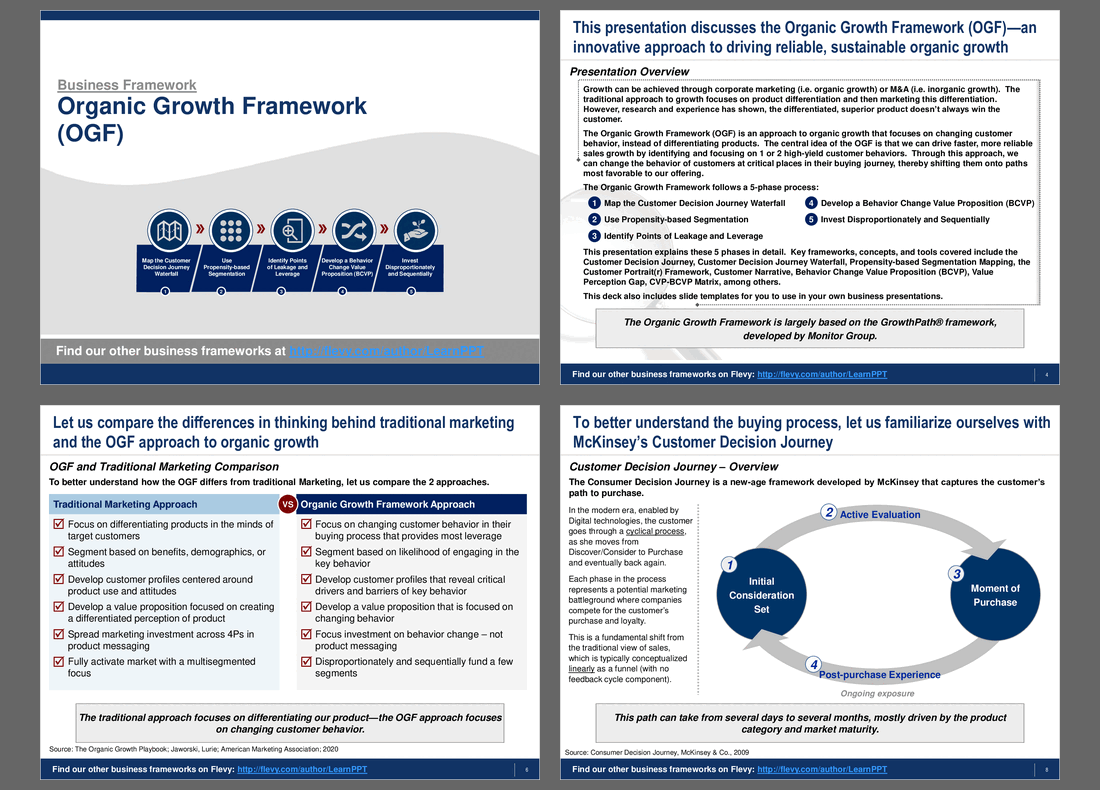
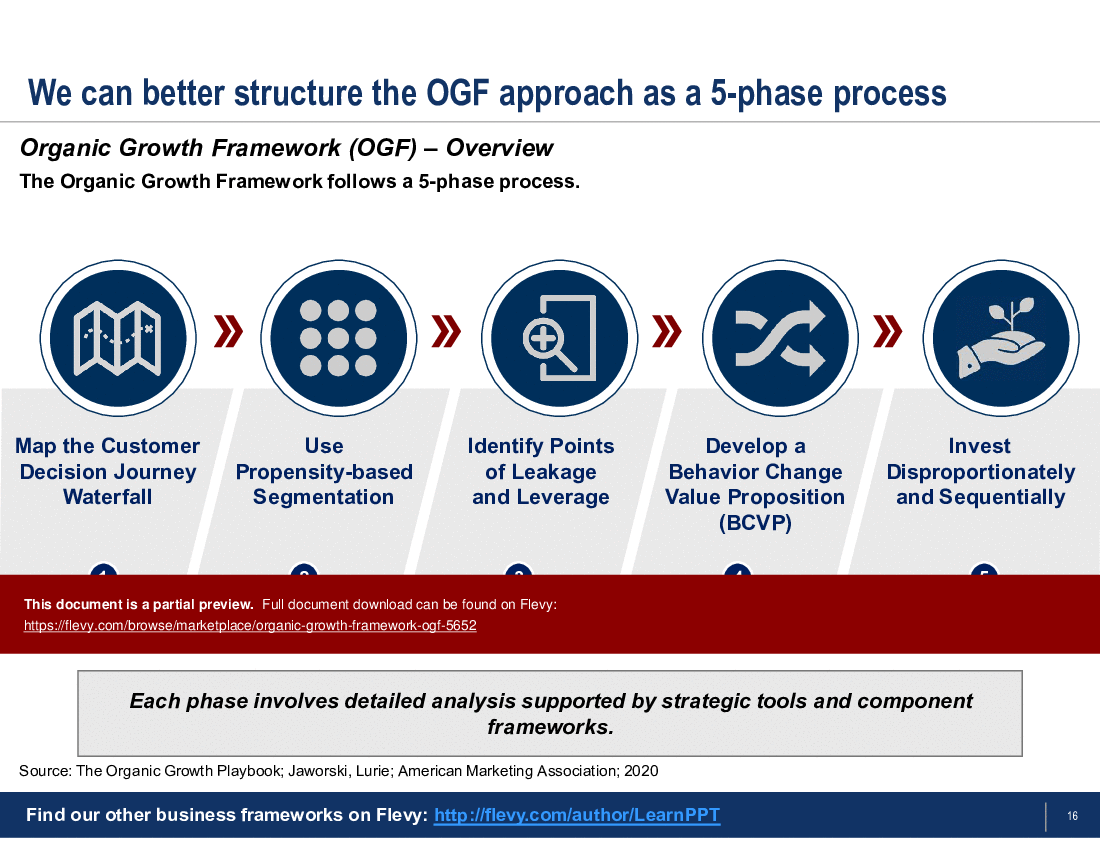
The Organic Growth Framework follows a 5-phase process:
1. Map the Customer Decision Journey Waterfall
2. Use Propensity-based Segmentation
3. Identify Points of Leakage and Leverage
4. Develop a Behavior Change Value Proposition (BCVP)
5. Invest Disproportionately and Sequentially
This presentation explains these 5 phases in detail. Key frameworks, concepts, and tools covered include the Customer Decision Journey, Customer Decision Journey Waterfall, Propensity-based Segmentation Mapping, the Customer Portrait(r) Framework, Customer Narrative, Behavior Change Value Proposition (BCVP), Value Perception Gap, CVP-BCVP Matrix, among others.
This deck also includes slide templates for you to use in your own business presentations.
The Organic Growth Framework (OGF) offers a comprehensive approach to driving sustainable growth by focusing on customer behavior. This PPT delves into the intricacies of the Customer Decision Journey, providing a detailed analysis of each phase. It emphasizes the importance of propensity-based segmentation and the identification of high-yield behaviors. The framework also highlights the critical role of developing a Behavior Change Value Proposition (BCVP) to align with customer perceptions. By investing disproportionately and sequentially, the OGF ensures targeted and efficient resource allocation. This presentation is an invaluable resource for executives looking to implement a structured, behavior-driven growth strategy.

Got a question about the product? Email us at support@flevy.com or ask the author directly by using the "Ask the Author a Question" form. If you cannot view the preview above this document description, go here to view the large preview instead.
MARCUS OVERVIEW
This synopsis was written by Marcus [?] based on the analysis of the full 98-slide presentation.
Executive Summary
The Organic Growth Framework (OGF) is a sophisticated approach designed to drive sustainable organic growth by focusing on customer behavior rather than product differentiation. Developed by former consultants from McKinsey, BCG, and Deloitte, this framework emphasizes the importance of understanding and influencing customer actions throughout their decision journey. By identifying and targeting high-yield behaviors, organizations can achieve faster and more reliable sales growth. The OGF is structured into 5 distinct phases, each providing actionable insights and tools to facilitate effective implementation.
Who This Is For and When to Use
• Marketing executives seeking innovative growth strategies
• Business consultants focused on enhancing client growth trajectories
• Sales leaders aiming to optimize customer engagement
• Product managers looking to align offerings with customer behavior
• Strategy teams tasked with developing sustainable growth plans
Best-fit moments to use this deck:
• During strategic planning sessions to identify growth opportunities
• When launching new products or services that require customer behavior insights
• In workshops aimed at improving marketing effectiveness and customer engagement
• For training sessions focused on implementing behavior-driven strategies
Learning Objectives
• Define the Organic Growth Framework and its relevance to sustainable growth
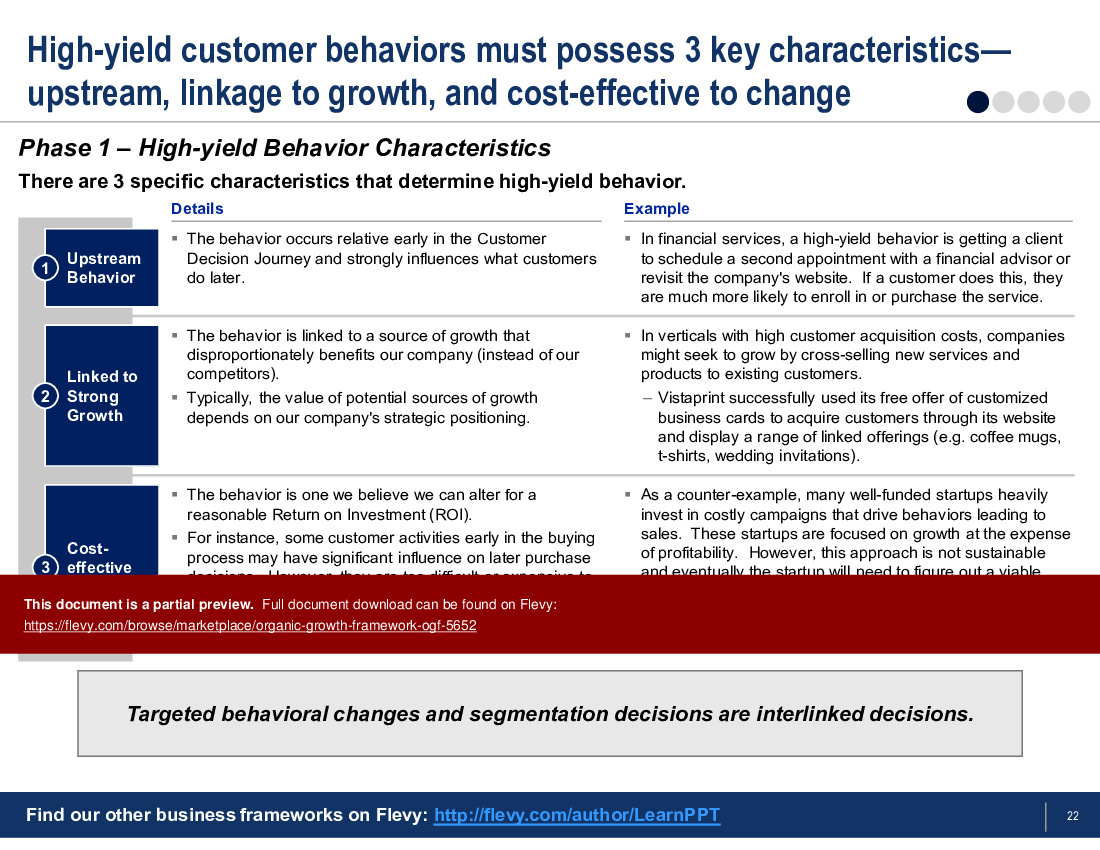
• Identify high-yield customer behaviors that drive sales
• Develop a comprehensive Customer Decision Journey map
• Utilize propensity-based segmentation to target key customer segments
• Create a Behavior Change Value Proposition (BCVP) to influence customer actions
• Implement a tactical growth plan that invests disproportionately in high-potential segments
Table of Contents
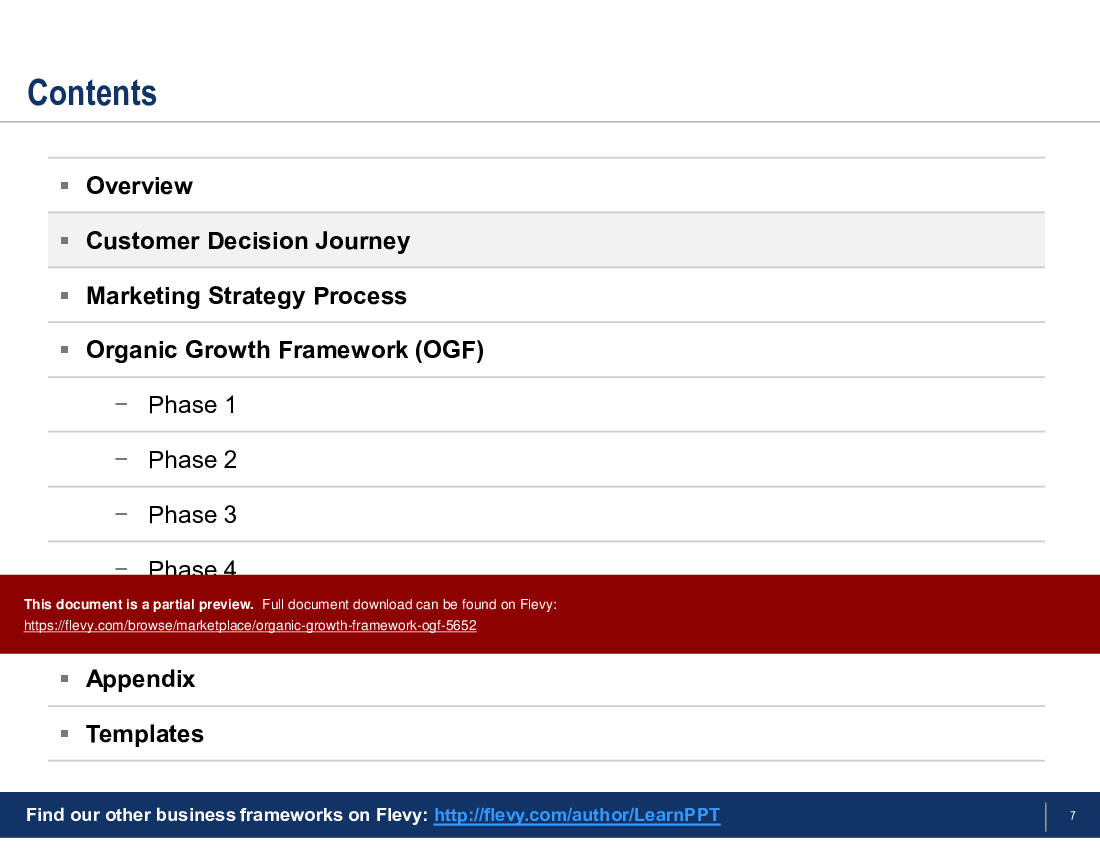
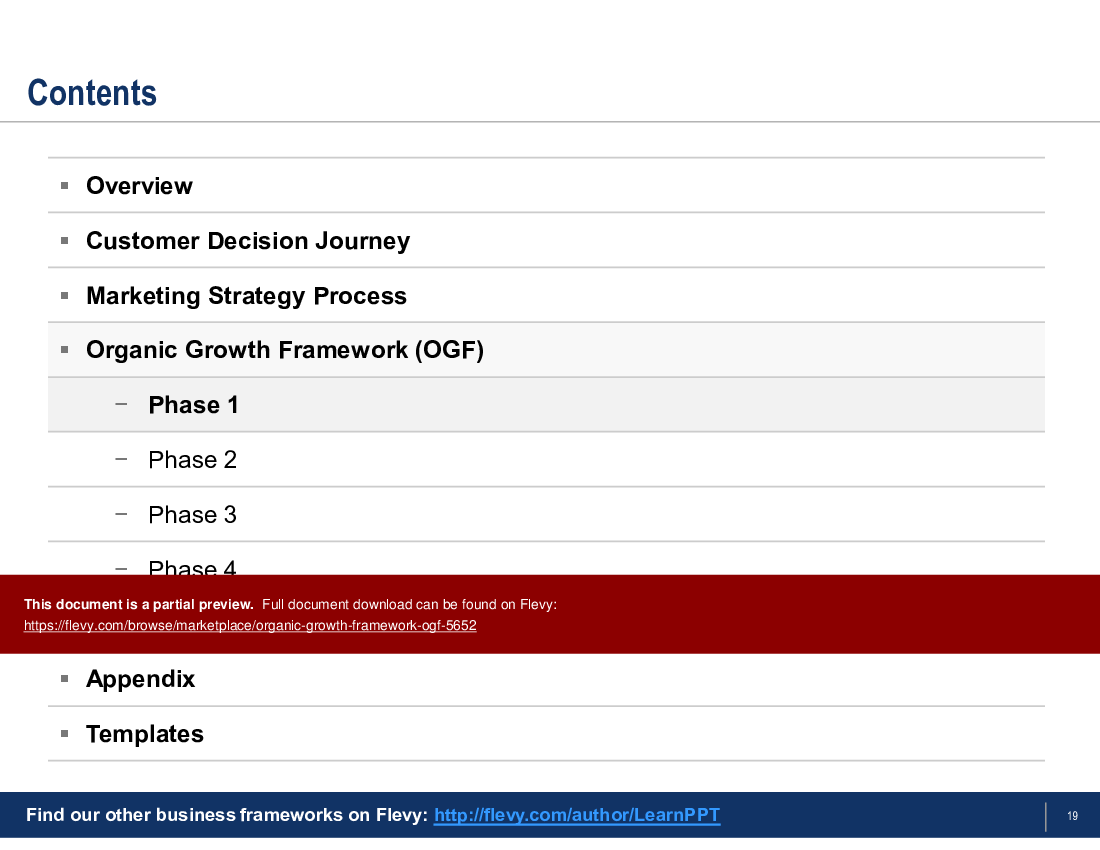
• Overview (page 4)
• Customer Decision Journey (page 8)
• Marketing Strategy Process (page 12)
• Organic Growth Framework (OGF)
• Phase 1: Map the Customer Decision Journey Waterfall (page 20)
• Phase 2: Use Propensity-based Segmentation (page 28)
• Phase 3: Identify Points of Leakage and Leverage (page 38)
• Phase 4: Develop a Behavior Change Value Proposition (BCVP) (page 47)
• Phase 5: Invest Disproportionately and Sequentially (page 57)
• Appendix (page 69)
• Templates (page 70)
Primary Topics Covered
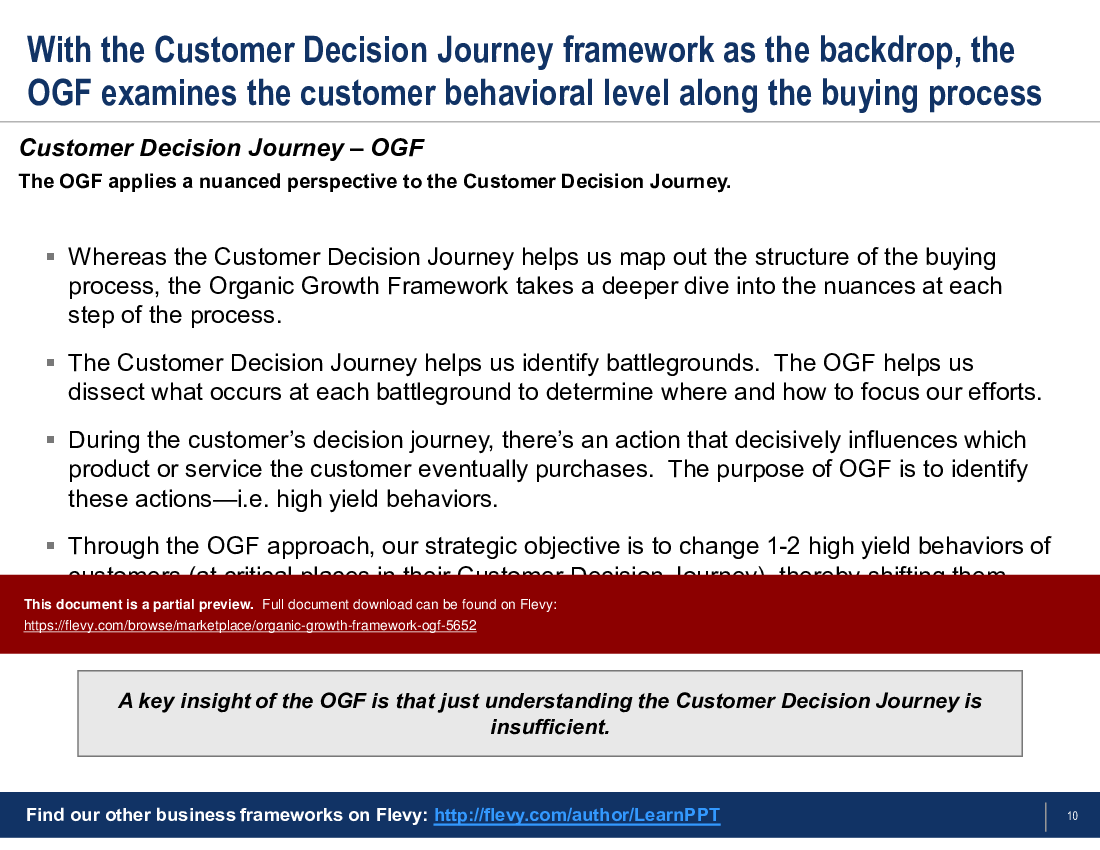
• Customer Decision Journey - A framework that outlines the stages customers go through when making a purchase, emphasizing the cyclical nature of their decision-making process.
• Organic Growth Framework (OGF) - A five-phase process that focuses on changing customer behavior to drive organic growth.
• Propensity-based Segmentation - A method for identifying customer segments based on their likelihood to engage in high-yield behaviors.
• Behavior Change Value Proposition (BCVP) - A framework for articulating the benefits of engaging in desired customer behaviors.
• Points of Leakage and Leverage - Identifying critical areas where customer engagement can be improved to enhance sales outcomes.
• Investment Strategy - A tactical approach to allocating resources disproportionately to maximize growth in targeted segments.
Deliverables, Templates, and Tools
• Customer Decision Journey Waterfall template for mapping customer behaviors
• Propensity-based Segmentation Map for identifying high-potential customer segments
• Customer Portrait® Framework for understanding customer motivations and behaviors
• Behavior Change Value Proposition (BCVP) template to articulate behavior change strategies
• Implementation plan template for organizing growth initiatives into waves
• Diagnostic questions for analyzing customer behavior and decision-making
Slide Highlights
• Overview of the OGF and its 5 phases
• Visual representation of the Customer Decision Journey
• Comparison between traditional marketing approaches and the OGF
• Examples of high-yield behaviors and their impact on sales
• Case studies demonstrating successful implementation of the OGF
• Templates for practical application of the framework
Potential Workshop Agenda
Introduction to OGF (30 minutes)
• Overview of the framework and its significance
• Discussion on customer behavior and its impact on growth
Mapping the Customer Decision Journey (60 minutes)
• Hands-on activity to create a Customer Decision Journey Waterfall
• Identification of key touchpoints and customer behaviors
Segmentation and Targeting (60 minutes)
• Workshop on using propensity-based segmentation
• Group exercise to define target segments
Developing the BCVP (60 minutes)
• Collaborative session to create Behavior Change Value Propositions
• Sharing and feedback on proposed strategies
Implementation Planning (30 minutes)
• Outline of next steps for applying the OGF in participants' organizations
• Q&A session to address specific challenges and opportunities
Customization Guidance
• Tailor the Customer Decision Journey map to reflect your specific market dynamics
• Adjust the Propensity-based Segmentation Map based on available customer data
• Modify the BCVP template to align with your organization's unique value propositions
• Incorporate relevant metrics and KPIs to track the effectiveness of behavior change initiatives
Secondary Topics Covered
• The role of digital marketing in influencing customer behavior
• Integrating customer feedback into the OGF process
• Best practices for measuring the impact of behavior change strategies
• The importance of cross-functional collaboration in executing the OGF
FAQ What is the Organic Growth Framework?
The OGF is a structured approach to driving sustainable organic growth by focusing on changing customer behaviors rather than product differentiation.
How does the OGF differ from traditional marketing strategies?
The OGF emphasizes understanding and influencing customer behavior throughout the decision journey, while traditional strategies often focus on product differentiation and marketing.
What are high-yield behaviors?
High-yield behaviors are specific customer actions that, when influenced, can lead to significant increases in sales and customer engagement.
How can I implement the OGF in my organization?
Begin by mapping your Customer Decision Journey, identifying high-yield behaviors, and developing targeted strategies to influence those behaviors through the OGF phases.
What tools are included in the OGF presentation?
The presentation includes templates for mapping the Customer Decision Journey, conducting propensity-based segmentation, and developing Behavior Change Value Propositions.
How can I measure the success of the OGF implementation?
Establish clear metrics and KPIs related to customer engagement, sales growth, and behavior change to track the effectiveness of your OGF initiatives.
Is the OGF applicable to all industries?
Yes, the OGF can be adapted to various industries, as it focuses on universal customer behaviors and decision-making processes.
What resources are available for further learning?
Additional resources, including case studies and templates, can be found on the Flevy website, where you can explore more business frameworks and consulting-grade materials.
Glossary
• Organic Growth Framework (OGF) - A structured approach to driving sustainable growth through customer behavior change.
• Customer Decision Journey - The path customers take from awareness to purchase and beyond.
• High-Yield Behaviors - Specific customer actions that significantly impact sales outcomes.
• Behavior Change Value Proposition (BCVP) - A framework for articulating the benefits of desired customer behaviors.
• Propensity-based Segmentation - A method for identifying customer segments based on their likelihood to engage in specific behaviors.
• Points of Leakage - Areas where customers drop off in the buying process.
• Points of Leverage - Opportunities to influence customer behavior positively.
• Implementation Plan - A tactical roadmap for executing growth initiatives based on the OGF.
• Customer Portrait® Framework - A tool for understanding customer motivations and behaviors.
• Value Perception Gap - The difference between the seller's value proposition and the customer's perceived value.
• CVP-BCVP Matrix - A tool for evolving from a Customer Value Proposition to a Behavior Change Value Proposition.
• Segmentation Map - A visual representation of customer segments based on propensity to engage in high-yield behaviors.
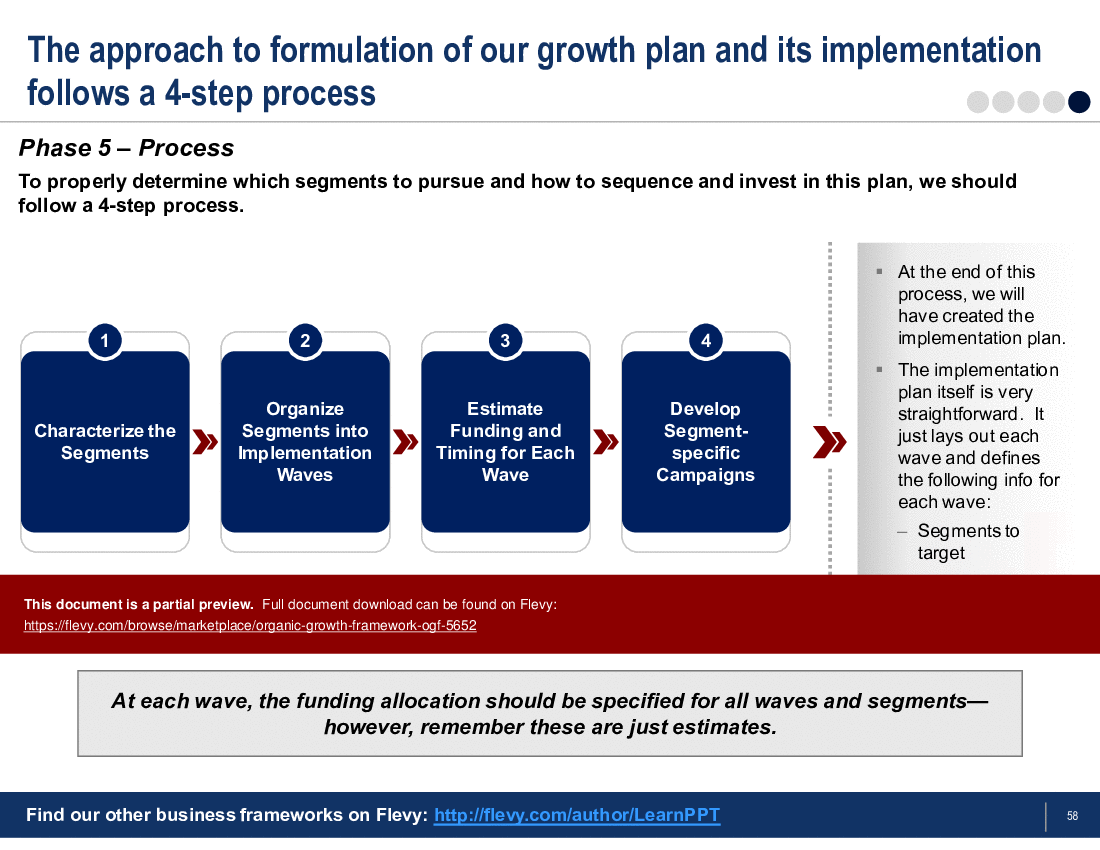
This PPT slide outlines a four-step process for formulating and implementing a growth plan. The first step, "Characterize the Segments," involves defining and understanding target market segments. The second step, "Organize Segments into Implementation Waves," groups segments based on characteristics or potential impact for focused execution. The third step, "Estimate Funding and Timing for Each Wave," emphasizes financial planning and resource allocation for growth initiatives. The final step, "Develop Segment-specific Campaigns," highlights the need for tailored marketing efforts to engage target audiences effectively. The implementation plan will detail each wave's segments, duration, and funding requirements, with a flexible approach to financial planning.
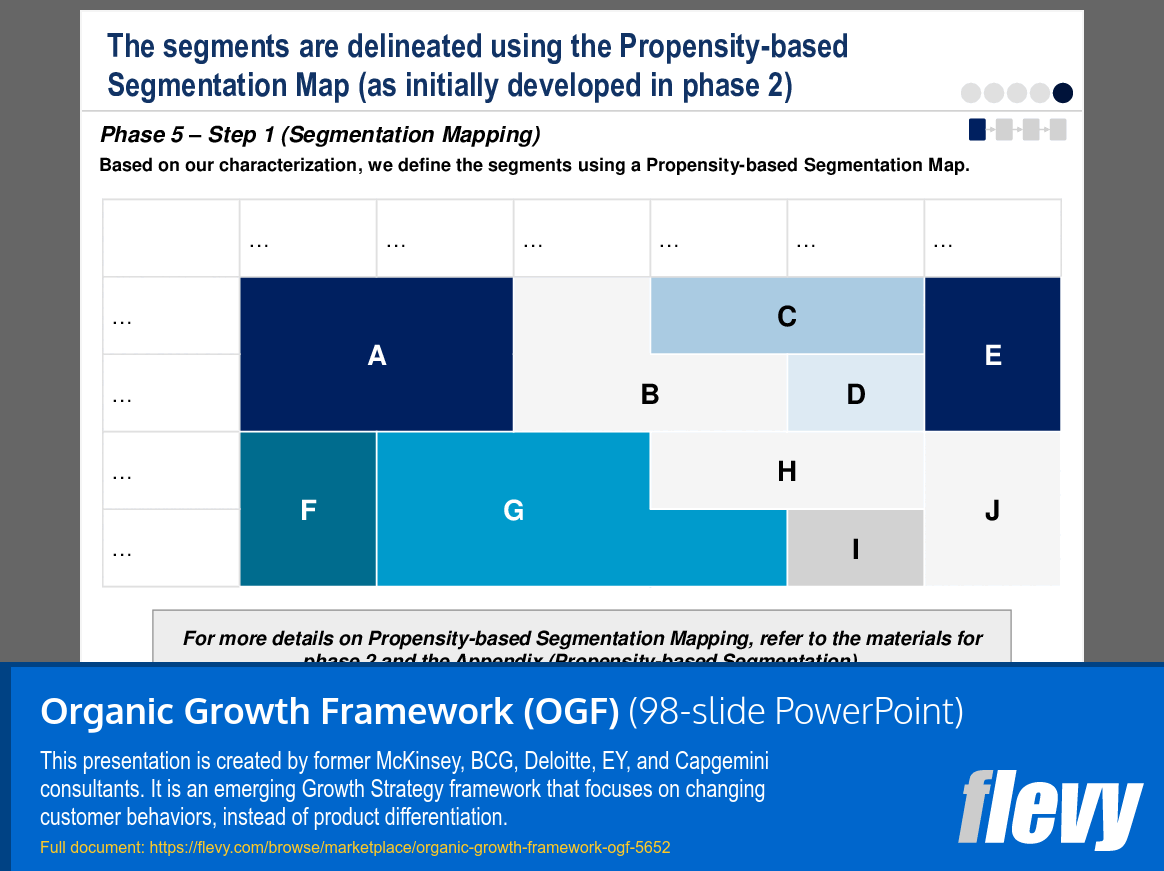
This PPT slide outlines a structured approach to market segmentation using a Propensity-based Segmentation Map, identified as Phase 5, Step 1 of a broader framework. It focuses on defining market segments based on characteristics from earlier phases, particularly Phase 2. The segmentation map is displayed in a grid format, with segments labeled A to J, representing distinct customer profiles or behaviors. The use of color differentiation suggests varying levels of importance among segments. The Propensity-based approach employs statistical methods to predict customer behaviors and preferences, aiding in the development of tailored marketing strategies and product offerings. Further details and methodologies are referenced in an appendix for deeper insights into the segmentation process.
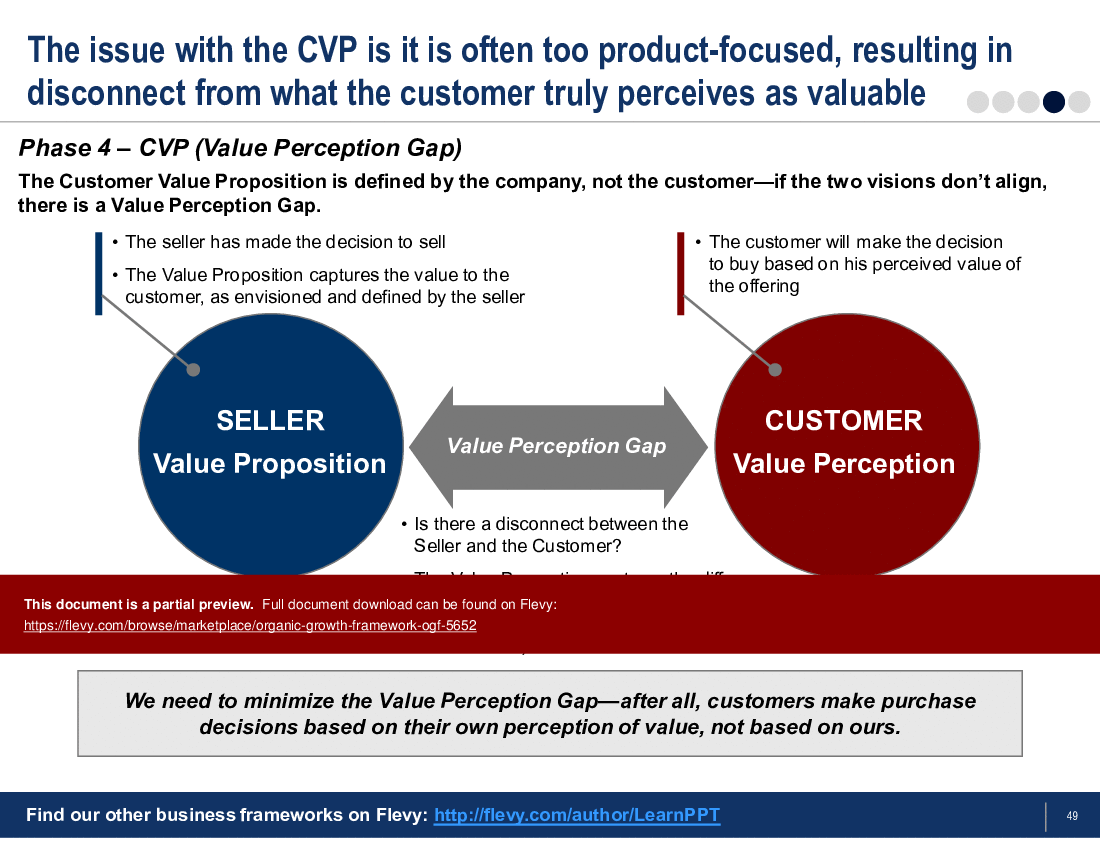
This PPT slide addresses the Value Perception Gap in the Customer Value Proposition (CVP) framework, highlighting the misalignment between the Seller Value Proposition and Customer Value Perception. The Seller Value Proposition reflects the seller's vision of value, while Customer Value Perception is shaped by the customer's experiences and expectations. This disconnect can negatively impact sales and customer satisfaction. It raises critical questions about whether the seller's offering resonates with customer needs and emphasizes the necessity of minimizing the Value Perception Gap. Ultimately, customers make purchase decisions based on their perceptions, not the seller's assumptions, underscoring the importance of aligning value propositions with customer perceptions to enhance engagement and drive sales.
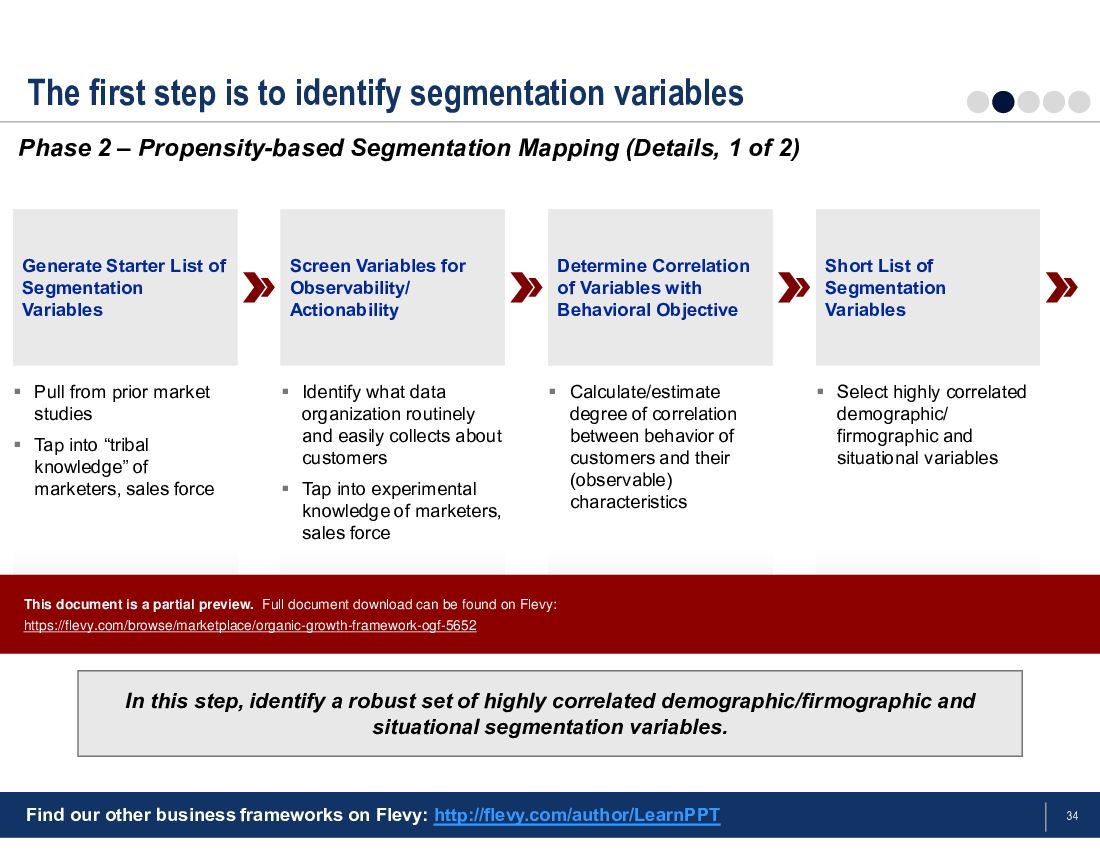
This PPT slide outlines a three-step process for developing a Propensity-based Segmentation Map. The first step involves identifying segmentation variables by generating a list, screening for observability and actionability, and correlating them with behavioral objectives to create a shortlist. The second step focuses on constructing a segmentation frame by organizing shortlisted variables into a structured framework for data population, serving as a foundation for analyzing customer segments based on their propensity to engage or convert. The final step is defining segments based on propensity and prioritizing them according to potential impact, enabling businesses to tailor strategies effectively. This innovative approach differs significantly from traditional segmentation methods, providing deeper insights into customer behavior for more effective marketing and engagement strategies.
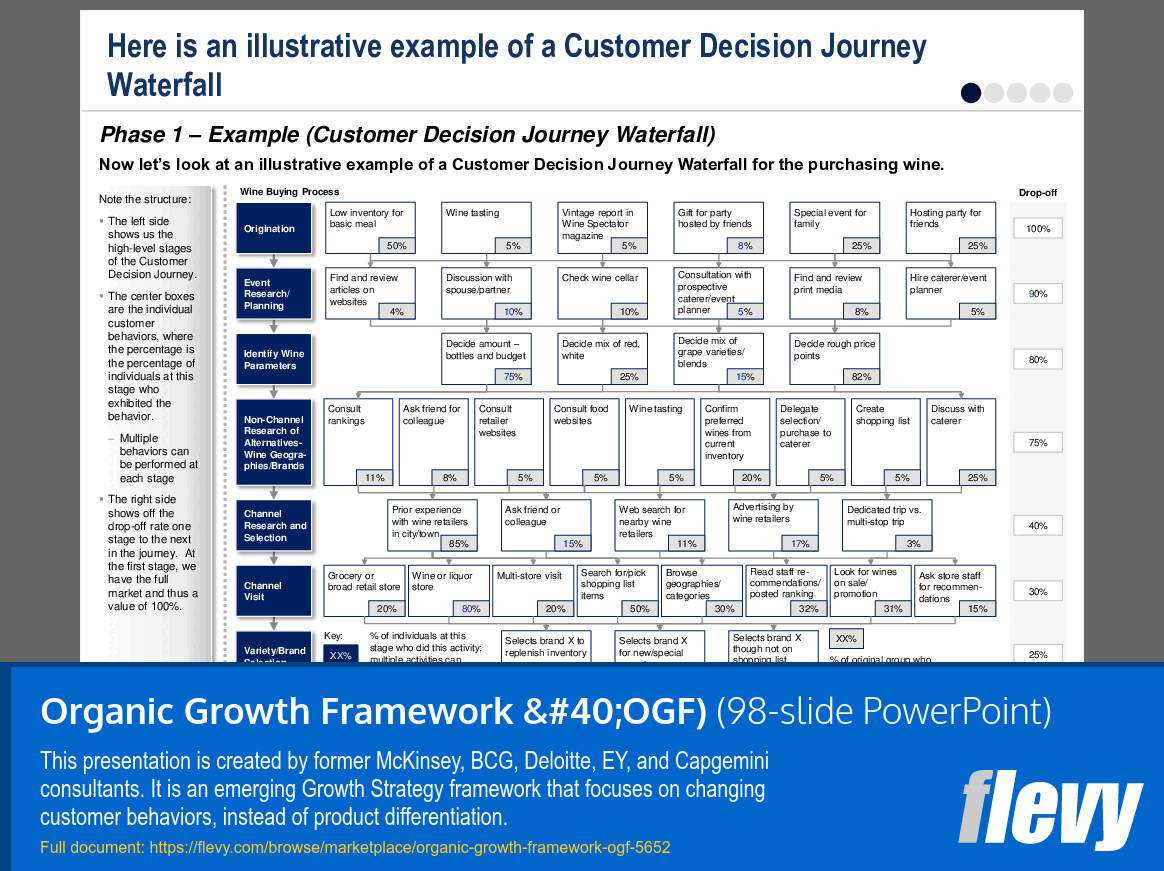
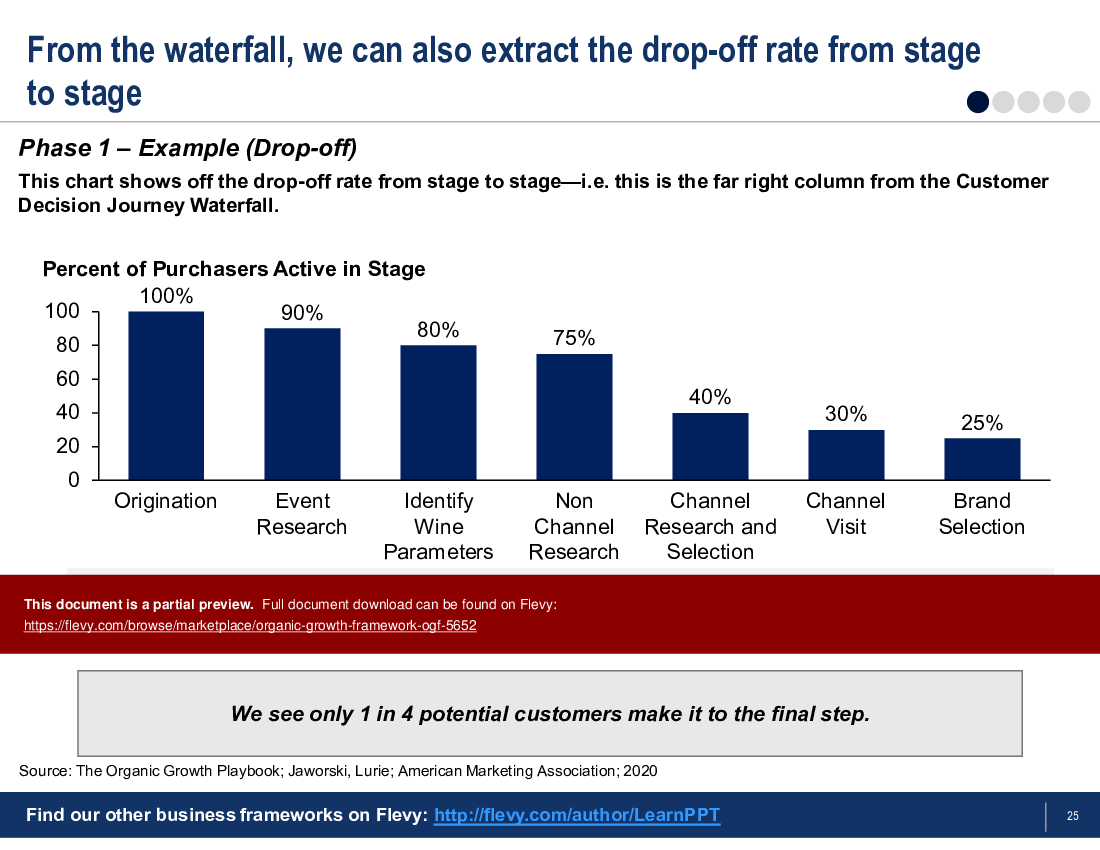
This PPT slide illustrates the Customer Decision Journey for wine purchasing, divided into 2 sections. The left side outlines high-level stages, starting with the "Origination" phase, where triggers like "Low inventory for basic meal" (50%) prompt purchases. In the "Event Research Planning" stage, customer behaviors include "Find and review articles on websites" (4%) and "Discussion with spouse/partner" (10%). The "Identify Wine Parameters" phase sees 75% of customers determining the amount and budget. The right side displays drop-off rates, showing that 100% of potential customers start the journey,, but only 40% reach the final selection and purchase stages. This data provides insights for marketing strategies and customer engagement in the wine industry.
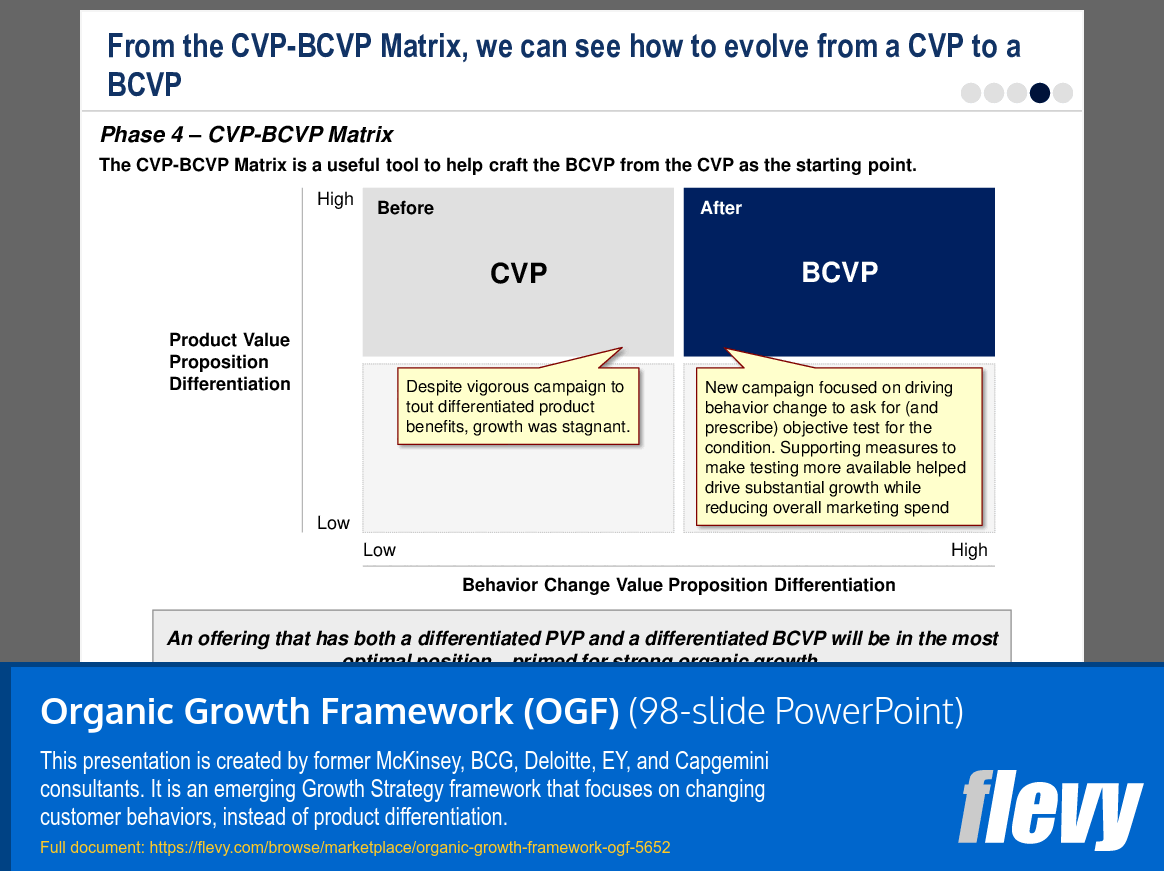
The CVP-BCVP Matrix is a strategic tool for transitioning from a Customer Value Proposition (CVP) to a Behavior Change Value Proposition (BCVP). It illustrates 2 phases: "Before" and "After." The "Before" phase highlights a campaign focused on differentiated product benefits, resulting in stagnant growth, indicating a disconnect between marketing strategies and customer behavior. The "After" phase showcases a campaign aimed at driving behavior change, encouraging stakeholders to request objective tests, thus influencing customer actions. Supporting measures to enhance testing availability drive substantial growth and reduce marketing expenditures, reflecting efficient resource allocation. The matrix emphasizes aligning product value propositions with behavioral changes for optimal market positioning, suggesting that offerings with both differentiated PVP and BCVP are best positioned for strong organic growth.

This PPT slide outlines a structured approach to defining behavioral objectives for strategic goal achievement. The framework follows the format: "The person in role X does activity A (at stage N) instead of doing activity B (at stage N)." This encourages identification of key roles whose behavior is critical to influence and highlights the timing of behavior changes within the purchase process. Three essential sub-choices include identifying the key person or role, selecting the appropriate stage in the purchasing process for maximum intervention impact, and targeting specific behavior changes for measurable outcomes. Detailing new behaviors to adopt and existing behaviors to discontinue is crucial for a comprehensive strategy that aligns with broader business objectives.
The Organic Growth Framework (OGF) outlines a structured approach to growth strategy development across 5 phases.
1. "Map the Customer Decision Journey Waterfall" focuses on understanding customer behavior and decision-making, identifying high-yield behavioral objectives (Strategic Objective 1).
2. "Use Propensity-based Segmentation" targets attractive segments with high engagement potential, aligning with Strategic Objective 2.
3. "Identify Points of Leakage and Leverage" pinpoints areas of customer engagement falter, addressing drivers and barriers to high-yield behaviors (Strategic Objective 3).
4. "Develop a Behavior Change Value Proposition (BCVP)" crafts compelling value propositions to motivate customer behavior change (Strategic Objective 4).
5. "Invest Disproportionately and Sequentially" advocates for focused funding strategies on key segments to ensure effective growth (Strategic Objective 5).
This methodology emphasizes systematic decision-making in achieving strategic objectives.
This PPT slide outlines McKinsey's Customer Decision Journey, a framework illustrating the consumer path from awareness to purchase. It consists of 4 phases: Initial Consideration Set, Active Evaluation, Moment of Purchase, and Post-purchase Experience. The Initial Consideration Set is where potential customers identify brands that meet their needs. Active Evaluation involves researching and comparing options, making it a critical battleground for marketers to influence perceptions. The Moment of Purchase represents the transaction, while the Post-purchase Experience fosters customer loyalty and repeat purchases, impacting future buying decisions. The journey's duration varies based on product category and market maturity, highlighting the need for tailored marketing strategies.
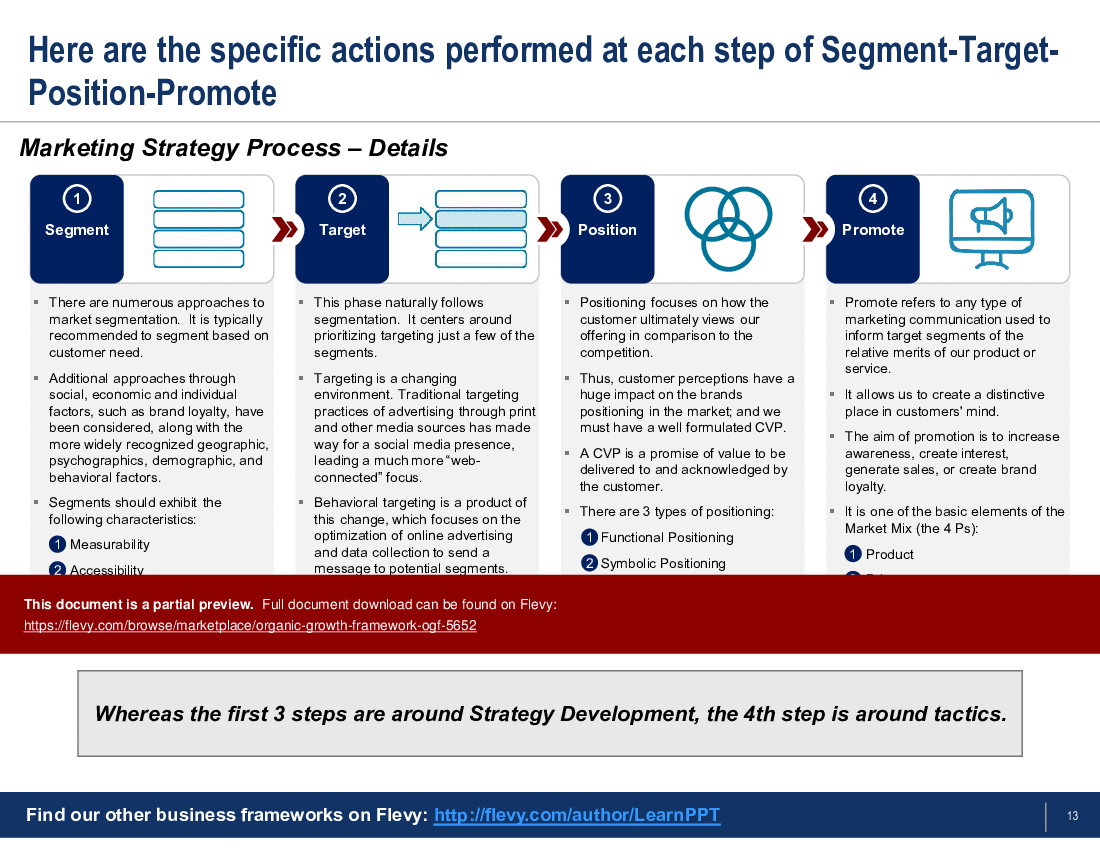
This PPT slide outlines the Segment-Target-Position-Promote framework in marketing strategy. Segmentation focuses on understanding customer needs through methods like social, economic, and individual factors, prioritizing customer-centric approaches. Effective segments are characterized by measurability, accessibility, sustainability, and actionability. The targeting phase shifts from traditional advertising to digital methods, emphasizing behavioral targeting through online data and machine learning to optimize messaging. Positioning defines how customers perceive the brand relative to competitors, highlighting the importance of a Customer Value Proposition (CVP) and identifying 3 types of positioning: functional, symbolic, and experiential. The promote phase is crucial for creating awareness, generating interest, and fostering brand loyalty, linking to the marketing mix's 4 Ps: product, price, place, and promotion, ensuring a cohesive strategy aligned with customer expectations and market dynamics.
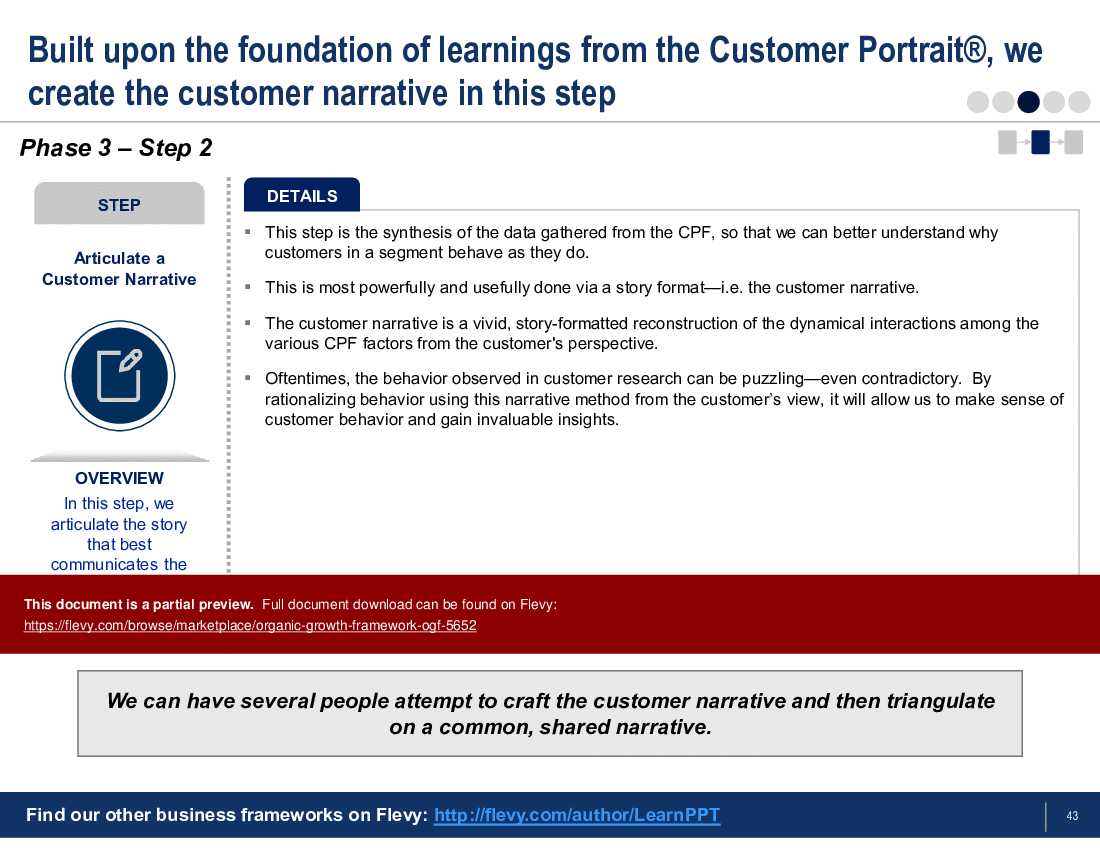
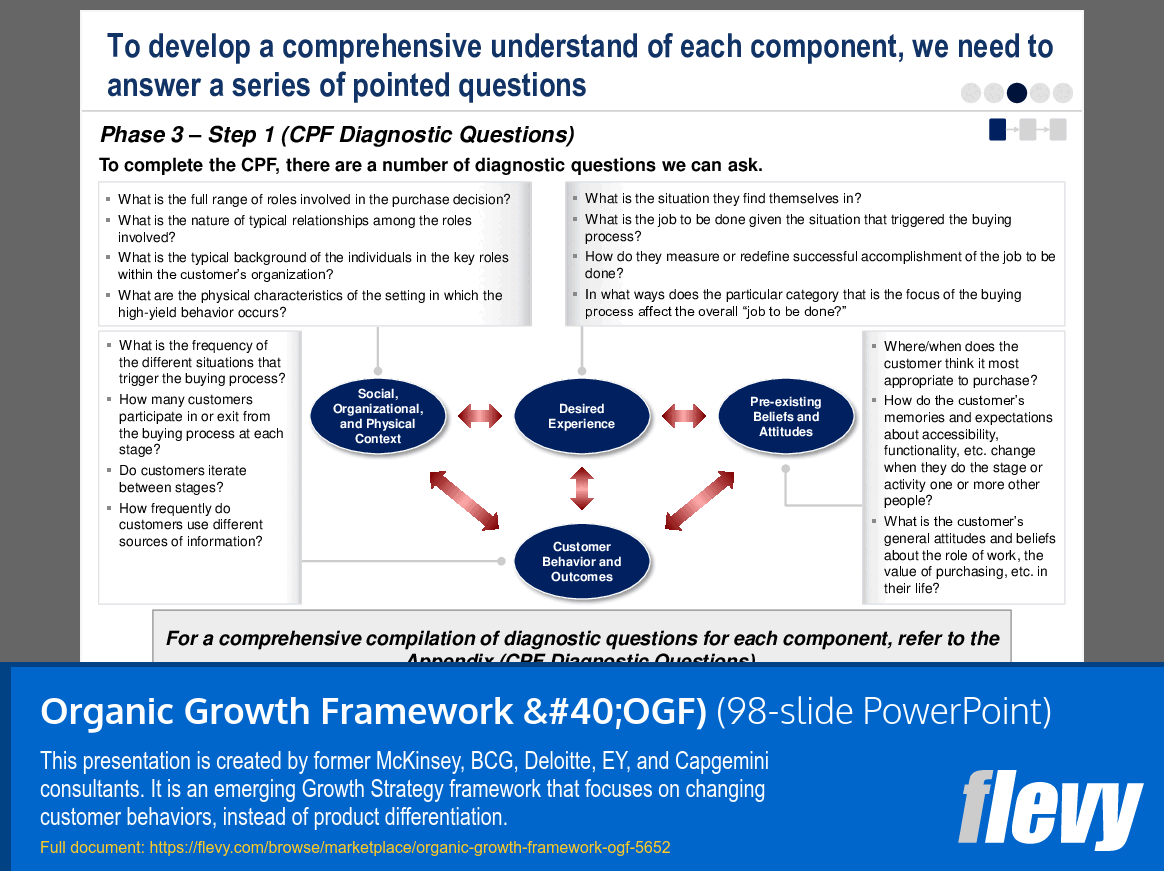
This PPT slide outlines Phase 3, Step 1 of the Customer Purchase Framework (CPF), focusing on diagnostic questions that reveal customer behavior. It categorizes inquiries into key areas: the roles in purchase decisions, the context of the buying process, and the desired customer experience. Understanding the relationships among decision-makers and their backgrounds is essential for identifying influencers in purchasing. The slide also examines triggers for purchases and customer navigation through buying stages, highlighting the importance of customer participation and information sources. Additionally, it explores pre-existing beliefs and attitudes, including preferred purchasing locations and how memories shape decisions. This structured approach aids organizations in refining their understanding of customer behavior to develop effective marketing strategies.
This PPT slide presents a framework for organizing market segments into sequential waves for marketing campaigns. Phase 5, Step 2 focuses on visually bundling segments to optimize marketing efforts. The segmentation map illustrates 3 waves: Wave 1 highlights Segment A for initial marketing outreach; Wave 2 includes adjacent segments F and G to leverage existing customer relationships; Wave 3 introduces segments E and J for the next engagement phase. The guidance emphasizes that waves should consist of adjacent segments to create synergy in marketing efforts, ensuring a cohesive and integrated approach to customer engagement. This framework aids marketers in structuring campaigns effectively by promoting strategic bundling of related segments based on customer behaviors.
This PPT slide presents results from organizations implementing the Organic Growth Framework (OGF) across various sectors, highlighting annual growth rates before and after adopting the GrowthPath® methodology. A bar graph compares annual growth rates of companies, showing significant increases post-OGF implementation. For example, Terrafix's growth rate rose from 6.0% to 17.0%, while non-alcoholic beverages and cosmetics saw increases from 3.0% to 6.0% and 1.0% to 6.0%, respectively. Organizations can achieve considerable growth within 2 years of applying the OGF approach, which spans sectors like commercial energy services, engineering plastics, and wealth management. Following the OGF can lead to potential growth increases of up to 10 times, as exemplified by EnServ.
The BCVP Template articulates the Behavior Change Value Proposition (BCVP) and consists of 6 key components. The first component, "For," identifies the target segment, ensuring campaign tailoring. "Doing Behavior" defines the desired behavior, while "Instead of Behavior" highlights existing behaviors for baseline comparison. "Will Produce Value for Customers By" articulates the benefits of adopting the new behavior. The template emphasizes enhancing perceived value and increasing adoption likelihood through 2 strategies: "Tapping Key Points of Leverage By," which activates desired behaviors, and "Eliminating Points of Leakage By," which addresses barriers to change. A compelling statement on realizing the targeted behavior change is essential for campaign clarity and execution.
This PPT slide compares traditional marketing approaches with the Organic Growth Framework (OGF). Traditional marketing emphasizes product differentiation, customer segmentation based on benefits, demographics, and attitudes, and developing customer profiles focused on product use. Its value proposition centers on creating a differentiated perception of the product, utilizing the 4 Ps—product, price, place, and promotion—to activate the market multisegmentedly. In contrast, the OGF shifts focus to influencing customer behavior during the buying process, using behavior-based segmentation rather than demographics. The OGF's value proposition targets behavior change, directing investment towards this goal and advocating for a sequential funding strategy for select segments. This comparison illustrates a shift in marketing strategy towards understanding and influencing customer behavior for organic growth.
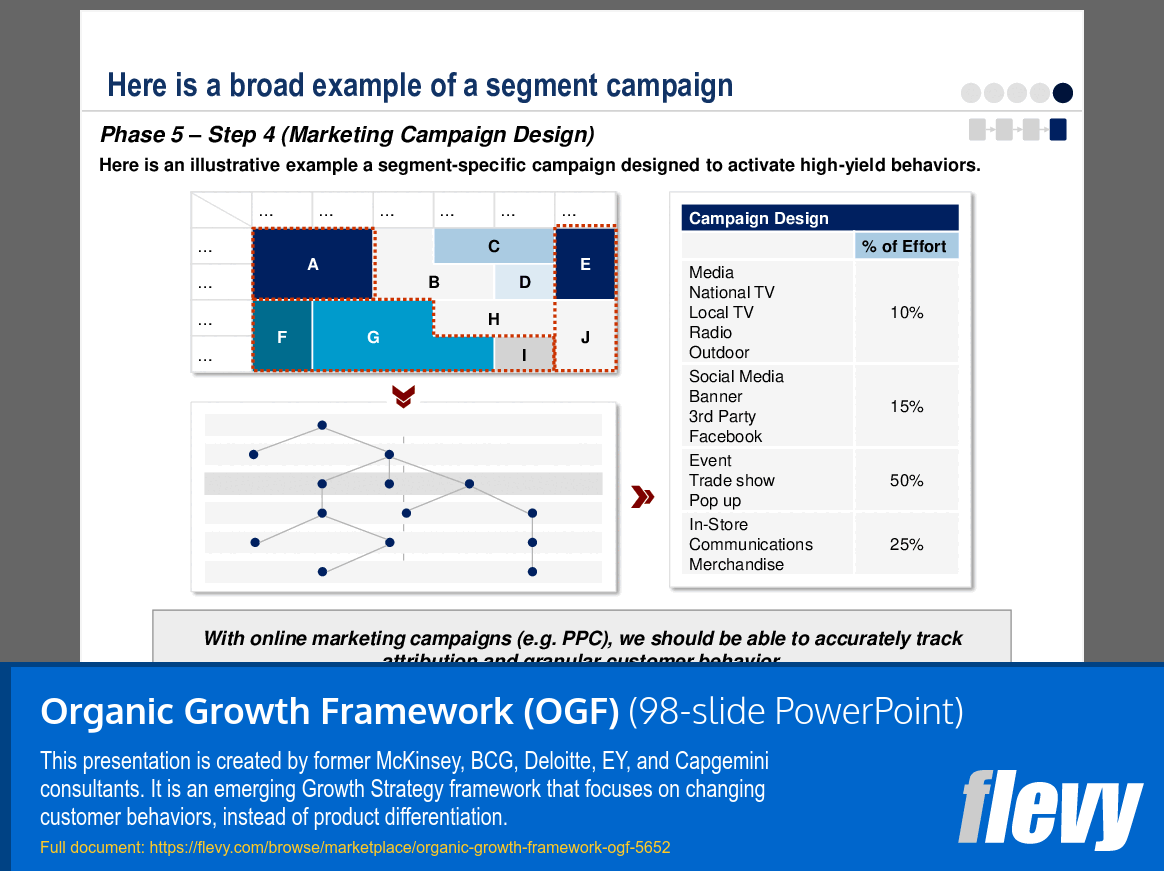
This PPT slide outlines a segment-specific marketing campaign targeting high-yield customer behaviors, featuring a visual representation of campaign design and a table detailing media channels and effort percentages. The segmented approach allows for tailored messaging and engagement strategies for distinct customer profiles. Events and trade shows dominate the strategy with 50% effort allocation, indicating their critical role in driving engagement, while social media channels receive 15%, reflecting a focused approach on direct interactions. The slide emphasizes the necessity of tracking and analyzing customer behavior through online marketing campaigns for accurate attribution, which is essential for evaluating channel effectiveness and refining future strategies. A well-structured campaign leveraging multiple channels can activate desired customer behaviors when supported by robust measurement mechanisms.
This PPT slide outlines the expected results from implementing the Organic Growth Framework (OGF) over 3 years, emphasizing sustainable, incremental growth through a structured approach. Year 1 shows modest growth, reflecting the initial OGF implementation phase. In Year 2, growth increases due to the activation of the first wave campaign. The graph illustrates overlapping impacts of different growth initiatives, ensuring continuous growth momentum. By Year 3, incremental growth from both Wave 1 and Wave 2 campaigns indicates effective leveraging of strategic initiatives. This iterative process requires organizations to reassess strategies annually, adapt to market dynamics, and target different segments through new waves to maintain relevance and achieve sustained growth.
Source: Best Practices in Growth Strategy, Strategy Development, Marketing Plan Development PowerPoint Slides: Organic Growth Framework (OGF) PowerPoint (PPTX) Presentation Slide Deck, LearnPPT Consulting
This presentation is created by former McKinsey, BCG, Deloitte, EY, and Capgemini consultants. It is an emerging Growth Strategy framework that focuses on changing customer behaviors, instead of product differentiation.
We are a team of management consultants trained by top tier global consulting firms (including McKinsey, BCG, Deloitte, EY, Capgemini) with a collective experience of several decades. We specialize in business frameworks based on real-life consulting engagements.
We have served 100s of clients that range from Fortune 500 companies to tech startups to
... [read more] $1B+ private companies.
Utilize our consulting frameworks to apply structured thinking & analysis to address your business challenges, uncover strategic insights, and implement workable solutions. Our PowerPoint presentations follow traditional consulting slide design formats, starting with a clear slide headline. Easily customize and repurpose our slides for your own business presentations.
Beyond business frameworks & methodologies, we also offer PowerPoint templates and other business templates. Our templates are professionally designed and have been used in thousands of deliverables & work products across hundreds of clients.
Since 2012, we have provided business templates to over 10,000 businesses and organizations of all sizes, from startups and small businesses to the Fortune 100, in over 130 countries.
Read Customer Testimonials
"I am extremely grateful for the proactiveness and eagerness to help and I would gladly recommend the Flevy team if you are looking for data and toolkits to help you work through business solutions."
– Trevor Booth, Partner, Fast Forward Consulting
"Last Sunday morning, I was diligently working on an important presentation for a client and found myself in need of additional content and suitable templates for various types of graphics. Flevy.com proved to be a treasure trove for both content and design at a reasonable price, considering the time I
saved. I encountered a download issue during the ordering process. However, a quick email to Flevy's support team, even on a Sunday (!!!), resulted in assistance within less than an hour, allowing me to download the content I needed. Fantastic job, Flevy! I give 5 stars for both content/price and customer service. Thank you!
"
– M. E., Chief Commercial Officer, International Logistics Service Provider
"The wide selection of frameworks is very useful to me as an independent consultant. In fact, it rivals what I had at my disposal at Big 4 Consulting firms in terms of efficacy and organization."
– Julia T., Consulting Firm Owner (Former Manager at Deloitte and Capgemini)
"My FlevyPro subscription provides me with the most popular frameworks and decks in demand in today’s market. They not only augment my existing consulting and coaching offerings and delivery, but also keep me abreast of the latest trends, inspire new products and service offerings for my practice, and educate me
in a fraction of the time and money of other solutions. I strongly recommend FlevyPro to any consultant serious about success.
"
– Bill Branson, Founder at Strategic Business Architects
"Flevy is now a part of my business routine. I visit Flevy at least 3 times each month.
Flevy has become my preferred learning source, because what it provides is practical, current, and useful in this era where the business world is being rewritten.
many challenges and there is the need to make the right decisions in a short time, with so much scattered information, we are fortunate to have Flevy. Flevy investigates, selects, and puts at our disposal the best of the best to help us be successful in our work.
"
– Omar HernĂ¡n Montes Parra, CEO at Quantum SFE
"[Flevy] produces some great work that has been/continues to be of immense help not only to myself, but as I seek to provide professional services to my clients, it gives me a large "tool box" of resources that are critical to provide them with the quality of service and outcomes they are expecting."
– Royston Knowles, Executive with 50+ Years of Board Level Experience
"Flevy is our 'go to' resource for management material, at an affordable cost. The Flevy library is comprehensive and the content deep, and typically provides a great foundation for us to further develop and tailor our own service offer."
– Chris McCann, Founder at Resilient.World
"As a small business owner, the resource material available from FlevyPro has proven to be invaluable. The ability to search for material on demand based our project events and client requirements was great for me and proved very beneficial to my clients. Importantly, being able to easily edit and tailor
the material for specific purposes helped us to make presentations, knowledge sharing, and toolkit development, which formed part of the overall program collateral. While FlevyPro contains resource material that any consultancy, project or delivery firm must have, it is an essential part of a small firm or independent consultant's toolbox.
"
– Michael Duff, Managing Director at Change Strategy (UK)
Save with Bundles
This document is available as part of the following discounted bundle(s):
Download our free compilation of 50+ Strategy & Transformation slides and templates. Frameworks include McKinsey 7-S, Balanced Scorecard, Disruptive Innovation, BCG Curve, and many more.