
This presentation is created by former McKinsey, BCG, Deloitte, EY, and Capgemini consultants. It teaches a practical consulting framework actively used by tier-1 consulting firms.

Editor Summary
Breakthrough Strategy Development: Competing for the Future is a 54-slide PowerPoint presentation that presents a consulting framework for developing breakthrough strategies to seize and shape future markets.
Read moreThe deck details 4 strategic initiatives, a three-phase approach (intellectual leadership, migration management, market share), and delivers 6 tools/templates including a strategic architecture framework template, core competency assessment tool, expeditionary marketing plan template, global preemption strategy outline, future visioning workshop guide, and strategic initiative roadmap. Target users include corporate executives, business consultants, strategic planning teams, and marketing leaders; sold as a digital download on Flevy.
Use this deck when an organization must define or realign strategy to pursue emerging market opportunities—such as during strategic planning cycles, innovation initiatives, post-merger planning, or capability-building workshops.
Corporate executives aligning future market positioning using the strategic architecture framework to map benefits, competencies, and customer interface changes.
Business consultants designing migration paths and intellectual leadership programs to preempt competitors across migration management activities.
Strategic planning teams running future visioning workshops to generate scenarios and actionable insights using the future visioning workshop guide.
Marketing leaders piloting rapid market tests and learning loops via the expeditionary marketing plan template.
The three-phase sequencing—competing for intellectual leadership, managing migration paths, then pursuing market share—reflects the structured, hypothesis-driven strategy sequencing used at McKinsey and BCG.
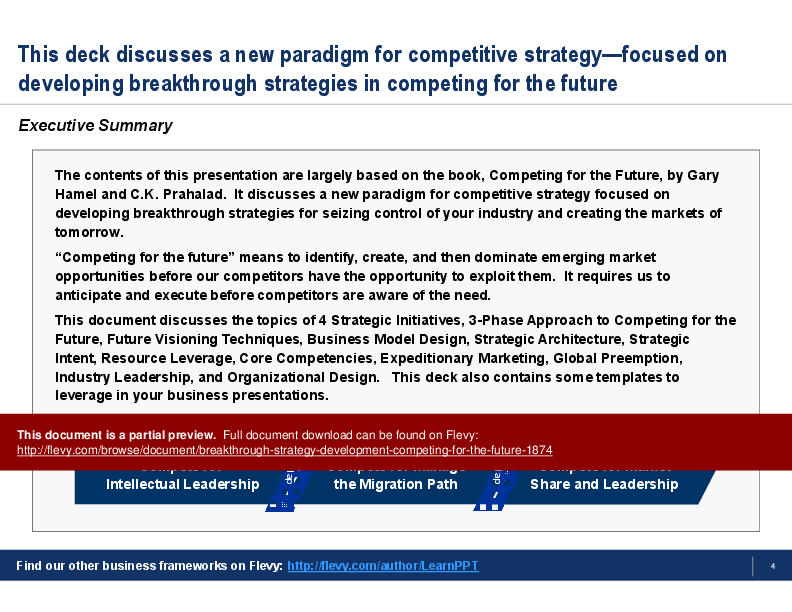
The contents of this presentation are largely based on the book, Competing for the Future, by Gary Hamel and C.K. Prahalad. It discusses a new paradigm for competitive strategy focused on developing breakthrough strategies for seizing control of your industry and creating the markets of tomorrow.
"Competing for the future" means to identify, create, and then dominate emerging market opportunities before our competitors have the opportunity to exploit them. It requires us to anticipate and execute before competitors are aware of the need.
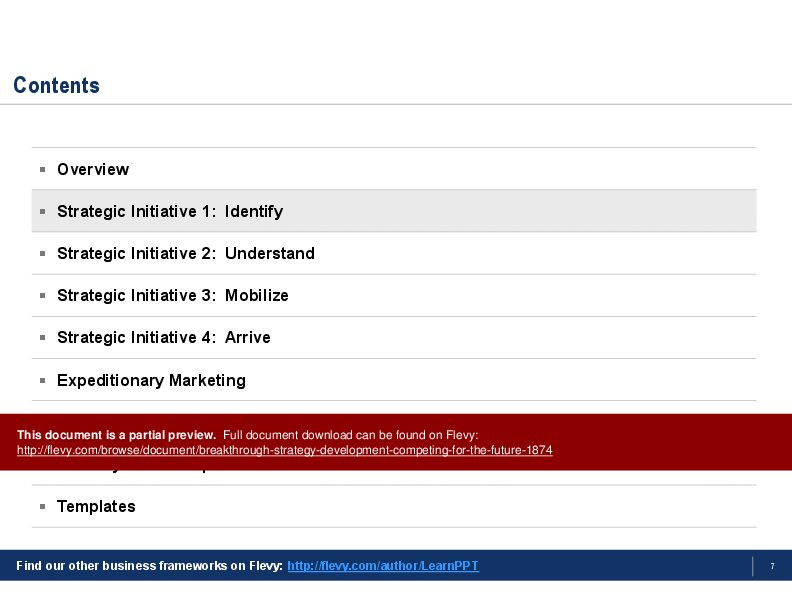
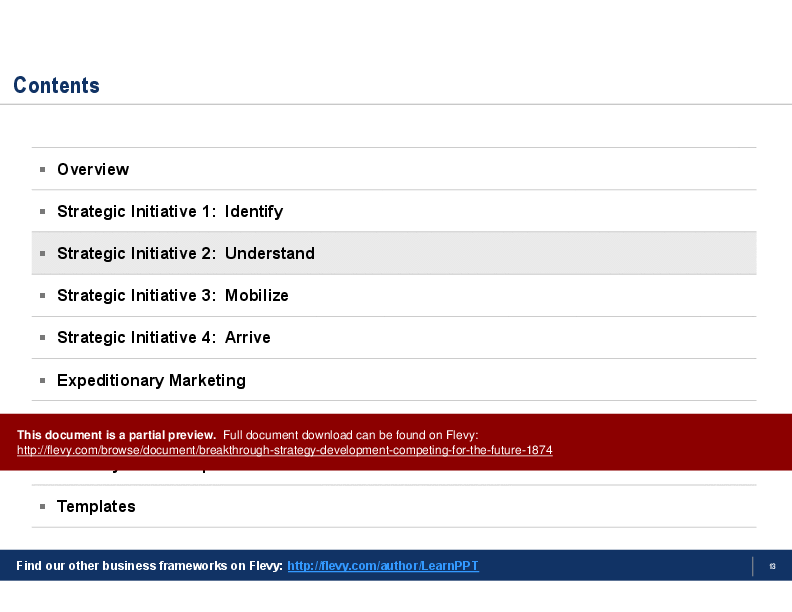
Topics covered include: 4 Strategic Initiatives, 3-Phase Approach to Competing for the Future, Future Visioning Techniques, Business Model Design, Strategic Architecture, Strategic Intent, Resource Leverage, Core Competencies, Expeditionary Marketing, Global Preemption, Industry Leadership, and Organizational Design.
This deck also contains some templates to leverage in your business presentations.
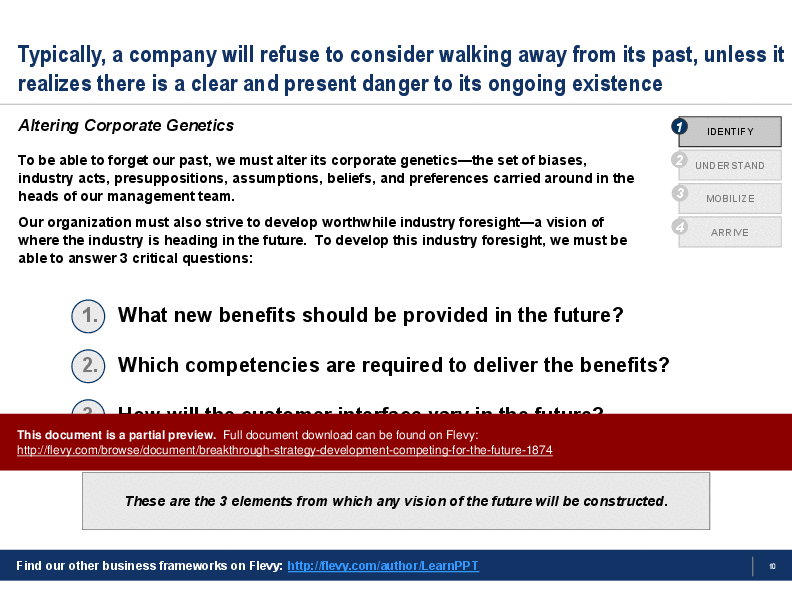
This presentation delves into altering corporate genetics to foster a forward-thinking mindset. It emphasizes the necessity of reshaping biases, assumptions, and preferences ingrained in the management team to align with future industry trends. By addressing three critical questions—future benefits, required competencies, and customer interface variations—organizations can construct a robust vision for the future.
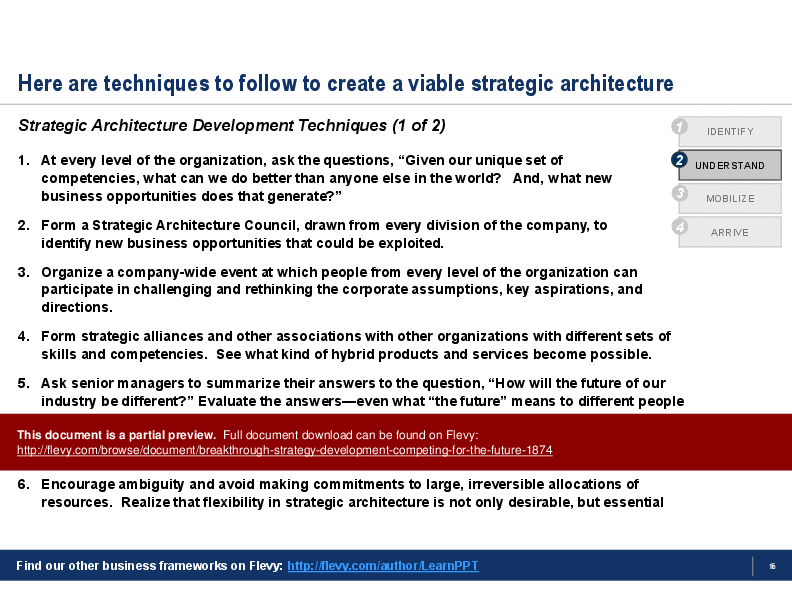
The PPT outlines a comprehensive approach to strategic architecture development. Techniques include forming a Strategic Architecture Council, organizing company-wide events, and encouraging strategic alliances. It also highlights the importance of flexibility in strategic commitments and leveraging senior management insights to anticipate industry evolution. These steps are crucial for identifying and exploiting new business opportunities.
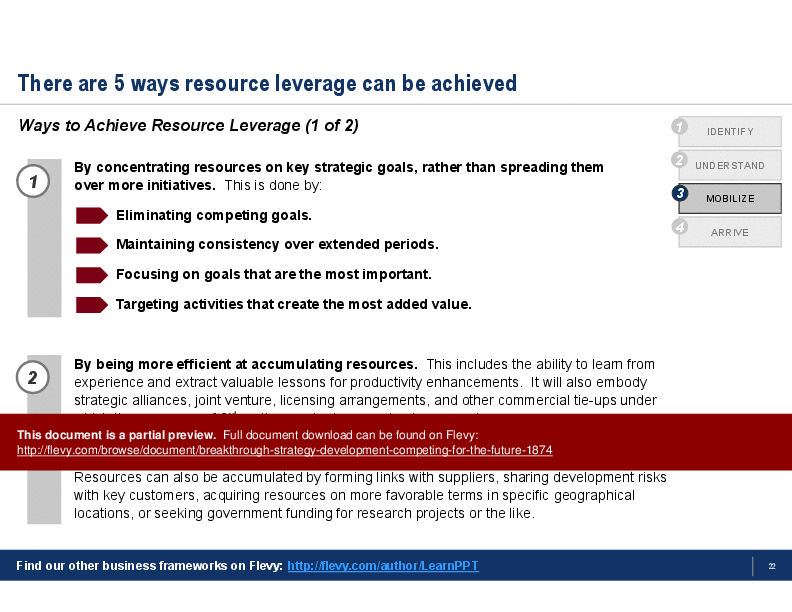
Resource leverage is another key focus, with strategies to concentrate resources on critical goals and accumulate them efficiently. This involves eliminating competing goals, maintaining consistency, and forming strategic alliances. The presentation also covers the importance of protecting core competencies by reallocating assets to high-benefit areas and appointing internal guardians. This ensures long-term competitiveness and market leadership.
Got a question about the product? Email us at support@flevy.com or ask the author directly by using the "Ask the Author a Question" form. If you cannot view the preview above this document description, go here to view the large preview instead.
MARCUS OVERVIEW
This synopsis was written by Marcus [?] based on the analysis of the full 54-slide presentation.
Executive Summary
This presentation, titled "Breakthrough Strategy Development: Competing for the Future," introduces a transformative approach to competitive strategy, emphasizing the development of breakthrough strategies to seize control of industries and create future markets. Drawing from the foundational concepts in Gary Hamel and C.K. Prahalad's book, it provides a structured framework for identifying, creating, and dominating emerging market opportunities before competitors can act. The presentation covers 4 strategic initiatives, a three-phase approach to competition, and essential techniques for future visioning and organizational design, equipping executives and consultants with the tools to anticipate market shifts and execute strategic plans effectively.
Who This Is For and When to Use
• Corporate executives seeking to redefine competitive strategies
• Business consultants advising on market positioning and strategy development
• Strategic planning teams focused on innovation and future market trends
• Marketing leaders aiming to understand and leverage emerging opportunities
Best-fit moments to use this deck:
• During strategic planning sessions to align on future market positioning
• When initiating discussions on innovation and market leadership
• In workshops aimed at fostering organizational change and adaptability
• For training sessions on competitive strategy frameworks and methodologies
Learning Objectives
• Define the concept of "competing for the future" and its implications for strategy
• Build a strategic architecture that aligns with future market demands
• Identify and exploit emerging market opportunities proactively
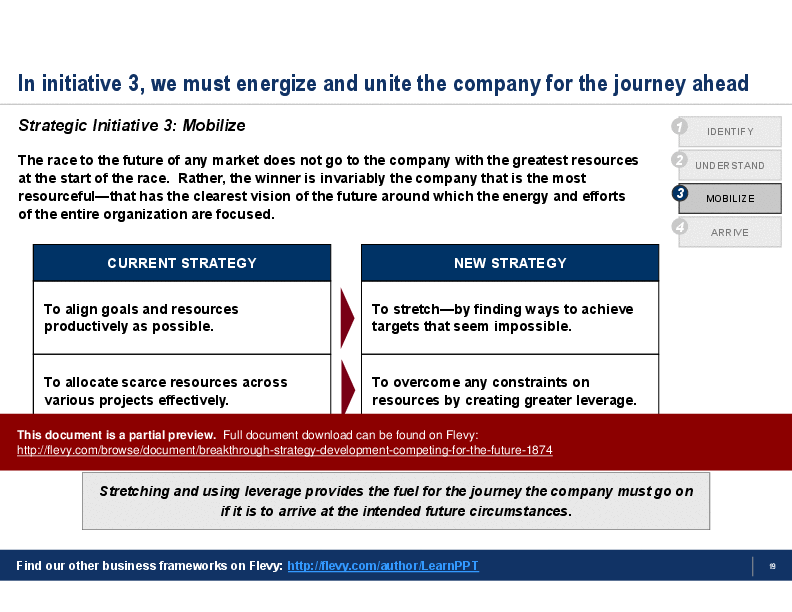
• Mobilize organizational resources effectively to achieve strategic goals
• Develop core competencies that provide a competitive advantage
• Implement expeditionary marketing techniques to learn from market interactions
Primary Topics Covered
• Strategic Initiatives - Four key initiatives that guide efforts to compete for future market leadership.
• Three-Phase Approach - A structured method for competing across intellectual leadership, migration management, and market share.
• Future Visioning Techniques - Methods for anticipating market changes and shaping strategic direction.
• Core Competency Development - Framework for identifying and leveraging essential skills and technologies.
• Expeditionary Marketing - Strategies for rapid market entry and learning from customer feedback.
• Global Preemption - Tactics for establishing a market presence before competitors.
Deliverables, Templates, and Tools
• Strategic architecture framework template for aligning competencies with future needs
• Core competency assessment tool for evaluating organizational strengths
• Expeditionary marketing plan template for rapid product testing and iteration
• Global preemption strategy outline for securing market advantages
• Future visioning workshop guide for fostering organizational foresight
• Strategic initiative roadmap for tracking progress and alignment
Slide Highlights
• Overview of the 4 strategic initiatives and their importance in shaping future markets
• Detailed breakdown of the three-phase approach to competing effectively
• Visual representation of future visioning techniques and their application
• Core competency development framework illustrating competitive advantages
• Expeditionary marketing insights emphasizing the importance of market learning
Potential Workshop Agenda
Strategic Initiative Overview Session (90 minutes)
• Introduce the 4 strategic initiatives and their relevance
• Discuss case studies illustrating successful implementation
• Facilitate group discussions on organizational alignment
Future Visioning Workshop (120 minutes)
• Engage participants in identifying emerging market trends
• Utilize visioning techniques to develop future scenarios
• Create actionable insights for strategic planning
Core Competency Development Session (90 minutes)
• Assess current competencies and identify gaps
• Develop a roadmap for enhancing core capabilities
• Align competencies with future market demands
Customization Guidance
• Tailor the strategic architecture framework to reflect specific organizational goals
• Adjust the core competency assessment tool to align with industry standards
• Incorporate company-specific examples in the expeditionary marketing plan
• Modify the workshop agenda to focus on relevant market dynamics and challenges
Secondary Topics Covered
• Organizational design for future competitiveness
• The role of strategic intent in motivating teams
• Techniques for fostering a culture of innovation
• Navigating industry disruptions and market shifts
• Building strategic alliances for enhanced market positioning
Topic FAQ
What are the core phases of a "competing for the future" strategy approach?
The approach is organized as a three-phase sequence: competing for intellectual leadership, managing migration paths (migration management), and focusing on market share. These phases guide efforts from positioning and thought leadership through customer migration to capturing market presence, as described in the three-phase approach.
How does expeditionary marketing help validate future-market strategies?
Expeditionary marketing emphasizes rapid market entry and iterative learning from customer interactions to refine offerings and assumptions. The deck covers expeditionary marketing techniques and includes an expeditionary marketing plan template you can use to structure rapid testing and market learning activities.
What practical steps support developing core competencies for future markets?
The presentation recommends assessing current capabilities, identifying gaps, building new skills, reallocating assets to high-benefit areas, and appointing internal guardians to protect competencies. A core competency assessment tool is provided to evaluate strengths and plan capability development.
What does global preemption involve and what advantages does it offer?
Global preemption means establishing a market presence before competitors to maximize innovation returns, lock distribution channels, and build consumer mindshare. The deck outlines tactics for global preemption and includes a global preemption strategy outline to plan early market entry moves.
What should I look for when buying a strategy toolkit for future-market planning?
Prioritize materials that map strategic architecture to competencies and customer interfaces, offer future visioning workshop guides, provide templates for rapid market testing, and include a strategic initiative roadmap to track progress. Breakthrough Strategy Development: Competing for the Future includes these elements and is 54 slides long.
How long should a future-visioning workshop take if I use a ready agenda?
The presentation provides a suggested Future Visioning Workshop agenda set at 120 minutes, which includes identifying emerging trends, applying visioning techniques, and developing scenario-based insights suitable for strategic planning sessions and workshop settings.
We just merged and need to identify new market opportunities—what framework helps prioritize actions?
Use the deck’s 4 strategic initiatives—Identify, Understand, Mobilize, Arrive—to sequence work from opportunity identification through capability mobilization to market arrival. The materials include a strategic initiative roadmap and templates to prioritize initiatives and align resources across those 4 initiatives.
How can a small strategy team run expeditionary marketing with limited resources?
The presentation recommends concentrating resources on critical goals, eliminating competing objectives, forming strategic alliances, and using rapid market tests to learn quickly. You can operationalize this approach with the expeditionary marketing plan template and resource-leverage guidance included in the materials.
Document FAQ
These are questions addressed within this presentation.
What does "competing for the future" mean?
It refers to the proactive identification and exploitation of emerging market opportunities before competitors can act, ensuring market leadership.
How can we develop core competencies?
By assessing current capabilities, identifying gaps, and systematically building new skills that align with future market demands.
What is expeditionary marketing?
A strategy focused on rapid market entry and learning from customer interactions to refine product offerings.
How do we implement the three-phase approach?
By systematically competing for intellectual leadership, managing migration paths, and focusing on market share through strategic initiatives.
What are the benefits of global preemption?
Establishing a market presence early allows companies to maximize innovation returns, lock up distribution channels, and build consumer mindshare.
How can we foster a culture of innovation?
By encouraging open dialogue about future trends and providing platforms for employees to share insights and ideas.
What techniques can help in future visioning?
Techniques include analyzing market trends, encouraging diverse perspectives, and using scenario planning to anticipate changes.
How do we measure the success of our strategic initiatives?
By tracking progress against defined milestones, assessing market response, and evaluating the alignment of competencies with strategic goals.
Glossary
• Breakthrough Strategy - An innovative approach to gaining market control and creating future opportunities.
• Core Competency - A unique capability that provides a competitive advantage.
• Expeditionary Marketing - A strategy focused on rapid market entry and learning from customer feedback.
• Global Preemption - The act of establishing a market presence before competitors.
• Strategic Architecture - A framework that outlines the competencies and resources needed for future success.
• Strategic Intent - A clear vision that guides organizational efforts toward future goals.
• Three-Phase Approach - A structured method for competing across intellectual leadership, migration management, and market share.
• Future Visioning - Techniques used to anticipate and shape future market conditions.
• Organizational Design - The structure and culture of an organization that supports strategic goals.
• Market Share - The portion of a market controlled by a particular company or product.
• Innovation - The process of creating new ideas, products, or methods that provide value.
• Strategic Initiative - A key focus area that drives organizational strategy and performance.
• Market Dynamics - The forces that impact the behavior and performance of a market.
• Customer Interface - The point of interaction between a company and its customers.
• Resource Leverage - The efficient use of resources to achieve strategic goals.
• Industry Leadership - The position of a company as a leader in its industry.
• Strategic Planning - The process of defining an organization's direction and making decisions on allocating resources.
• Business Model - The framework for how a company creates, delivers, and captures value.
• Competitive Advantage - A condition that allows a company to perform better than its competitors.
• Market Opportunities - Potential areas for growth and expansion in a market.
• Organizational Change - The process of transforming an organization to improve effectiveness and adapt to market conditions.
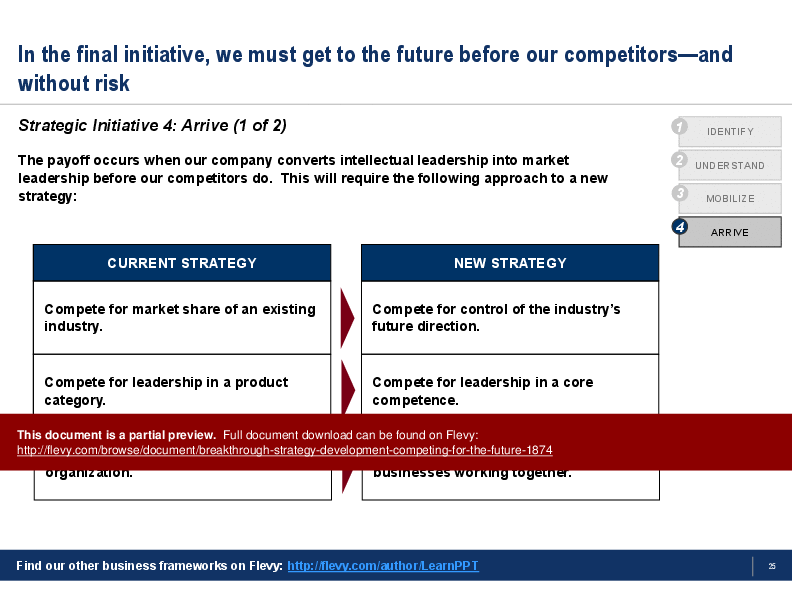
This PPT slide outlines a strategic initiative contrasting current and proposed strategies for identifying future market opportunities. The current strategy focuses on reengineering processes, transforming the organization, and competing for market share, indicating a reactive mindset. In contrast, the new strategy advocates for unlearning outdated processes, developing new methodologies, and leading the industry by capitalizing on emerging opportunities, emphasizing agility and innovation. It also includes competing to shape future market structures, highlighting a proactive approach. Creating a vision for the future is essential for strategically positioning the company for long-term success in an evolving market landscape.
This framework guides organizations from their current state to a desired future position, emphasizing strategic architecture as a blueprint for successful transition. Immediate action is necessary to identify key initiatives that position the company for future success in a rapidly evolving market. The framework bridges present operations and long-term goals, ensuring cohesive efforts towards a common vision. Organizations should adopt an opportunity approach, assessing and acquiring future competencies to stay ahead of market demands and technological advancements. Understanding changing consumer interfaces is crucial for adapting strategies to evolving customer expectations. Maintaining a broader perspective while avoiding excessive detail is essential for effective decision-making. Regular updates refine strategies, allowing organizations to incorporate new insights and adjust their paths in a dynamic business environment.
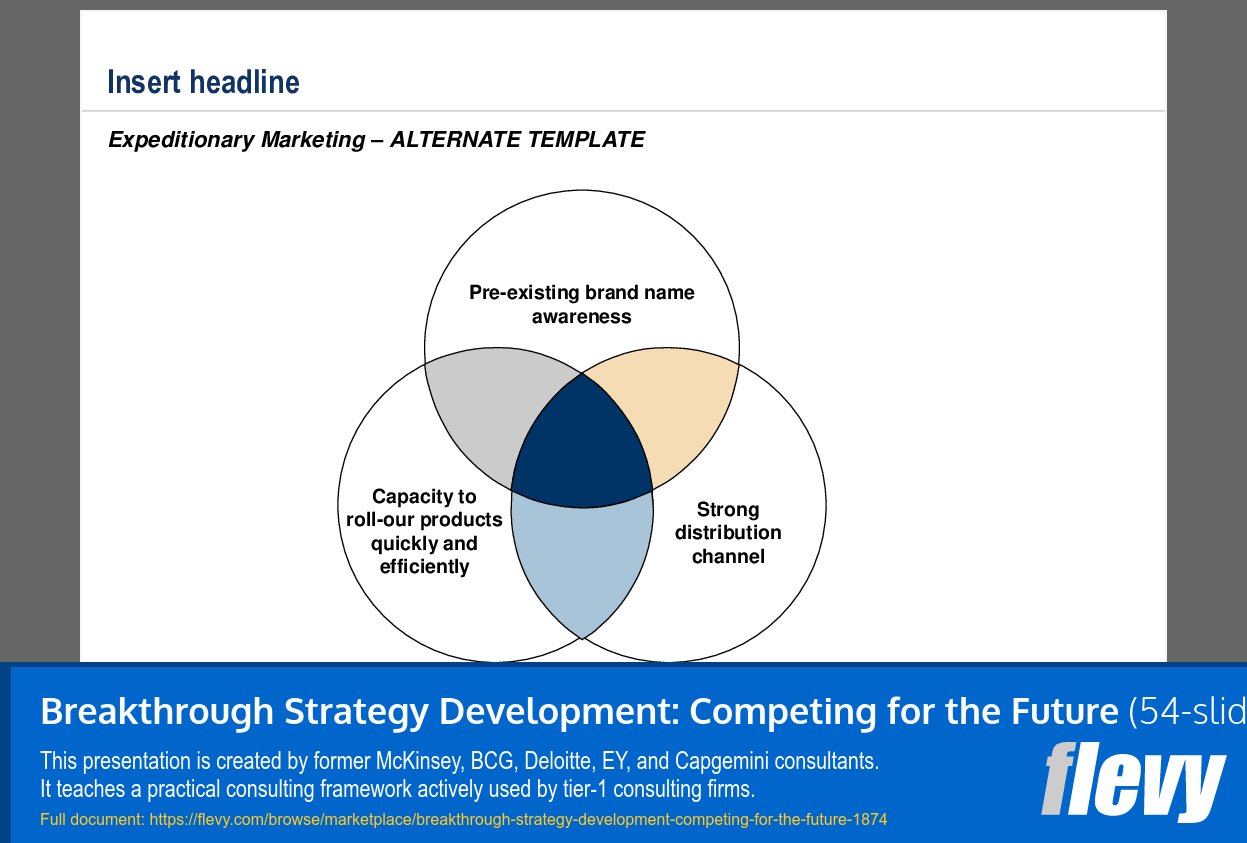
This PPT slide presents the "Expeditionary Marketing" framework, illustrated through a Venn diagram highlighting 3 critical components: pre-existing brand name awareness, operational capacity for rapid product rollout, and strong distribution channels. Pre-existing brand awareness reduces time and resources for market entry, enabling companies to leverage recognition for immediate consumer traction. Rapid product rollout is essential in fast-paced markets, allowing organizations to respond to demand and capitalize on trends. Strong distribution channels are vital for delivering products effectively; without them, even superior products may fail to reach target audiences. Integrating branding, operational capabilities, and distribution strategies maximizes market impact and enhances marketing effectiveness.
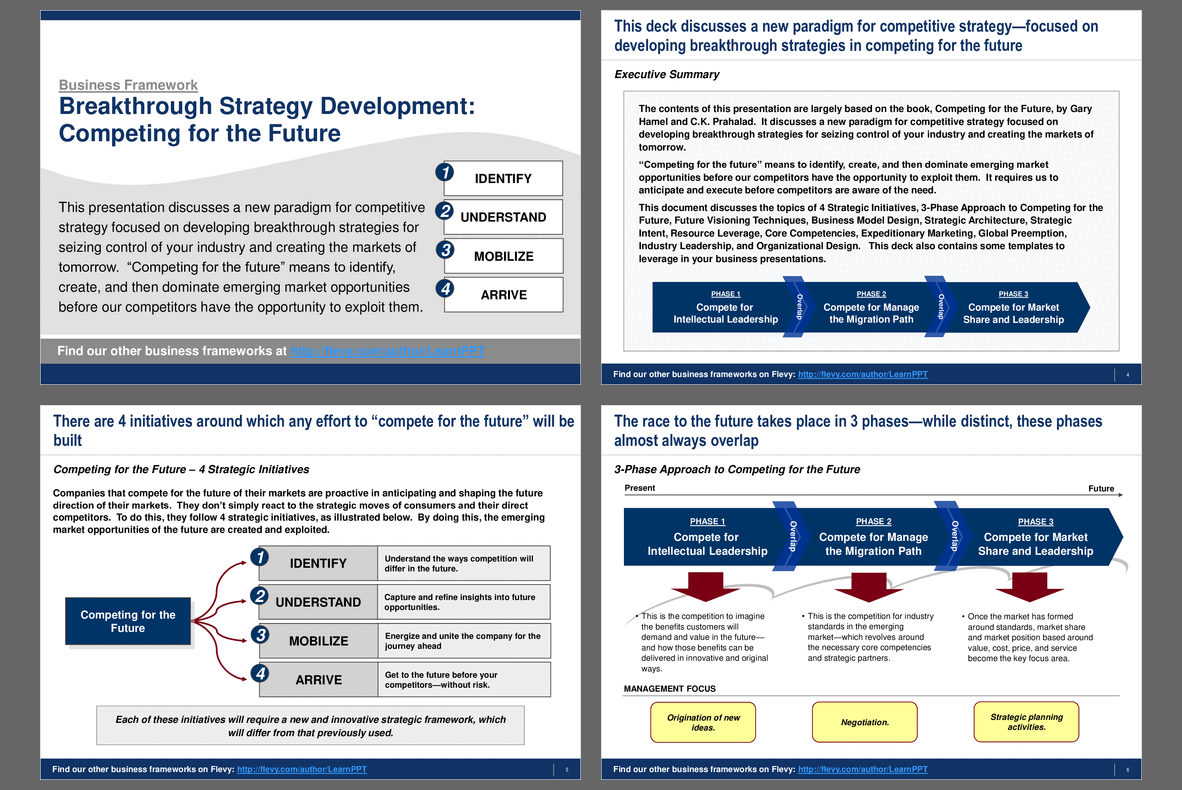
This PPT slide outlines a three-phase framework for navigating future competition. Phase 1, "Compete for Intellectual Leadership," emphasizes envisioning future customer needs and innovating benefit delivery, focusing on creativity and original concept generation. Phase 2, "Compete for Manage the Migration Path," centers on establishing industry standards in emerging markets, identifying core competencies, and forming strategic partnerships to manage market transitions. Phase 3, "Compete for Market Share and Leadership," focuses on securing market position through understanding standards, market share, and competitive positioning based on value, cost, and service. This framework highlights the importance of innovation, strategic partnerships, and market positioning for organizations to thrive in an evolving landscape.
This PPT slide outlines a framework for understanding competition in developing core competencies within organizations, identifying 4 levels of competition. The first level, "Competition to acquire various components," focuses on gathering essential skills and technologies. The second level, "Competition to synthesize skills," emphasizes integrating these technologies to create greater value. The third level, "Competition to supply core products or platforms," highlights achieving economies of scale by providing subsystems to original equipment manufacturers (OEMs). The fourth level, "Competition to maximize end market share," centers on selling more than competitors through proprietary brands and OEM arrangements. The framework advocates viewing companies through core competencies rather than traditional metrics, enhancing strategic decision-making and leveraging strengths in competitive environments.
This PPT slide outlines 2 primary strategies for achieving resource leverage within organizations. The first strategy focuses on concentrating resources on key strategic goals, enhancing focus by eliminating competing objectives, ensuring consistency, and prioritizing high-value activities. This streamlined allocation maximizes impact and effectiveness. The second strategy emphasizes the efficiency of resource accumulation through learning from past experiences and leveraging strategic alliances, joint ventures, and licensing arrangements to access third-party resources. Collaborations with suppliers and customers can also enhance resource security by sharing development risks and negotiating favorable terms. This dual approach optimizes current resource use while building a framework for future resource acquisition.
This PPT slide outlines 4 strategic initiatives for proactive market positioning: "Identify," "Understand," "Mobilize," and "Arrive." "Identify" focuses on anticipating competition by recognizing shifts in consumer behavior and market trends. "Understand" emphasizes capturing and refining insights into emerging opportunities through a data-driven approach. "Mobilize" stresses the importance of internal alignment and motivation for effective strategy execution. "Arrive" highlights the goal of achieving future market positions ahead of competitors while minimizing risks. These initiatives necessitate a new strategic framework, indicating that traditional approaches may be inadequate for navigating future market complexities.
Source: Best Practices in Growth Strategy, Breakout Strategy PowerPoint Slides: Breakthrough Strategy Development: Competing for the Future PowerPoint (PPT) Presentation Slide Deck, LearnPPT Consulting
This presentation is created by former McKinsey, BCG, Deloitte, EY, and Capgemini consultants. It teaches a practical consulting framework actively used by tier-1 consulting firms.
We are a team of management consultants trained by top tier global consulting firms (including McKinsey, BCG, Deloitte, EY, Capgemini) with a collective experience of several decades. We specialize in business frameworks based on real-life consulting engagements.
We have served 100s of clients that range from Fortune 500 companies to tech startups to
... [read more] $1B+ private companies.
Utilize our consulting frameworks to apply structured thinking & analysis to address your business challenges, uncover strategic insights, and implement workable solutions. Our PowerPoint presentations follow traditional consulting slide design formats, starting with a clear slide headline. Easily customize and repurpose our slides for your own business presentations.
Beyond business frameworks & methodologies, we also offer PowerPoint templates and other business templates. Our templates are professionally designed and have been used in thousands of deliverables & work products across hundreds of clients.
Since 2012, we have provided business templates to over 10,000 businesses and organizations of all sizes, from startups and small businesses to the Fortune 100, in over 130 countries.
"My FlevyPro subscription provides me with the most popular frameworks and decks in demand in today’s market. They not only augment my existing consulting and coaching offerings and delivery, but also keep me abreast of the latest trends, inspire new products and service offerings for my practice, and educate me
in a fraction of the time and money of other solutions. I strongly recommend FlevyPro to any consultant serious about success.
"
– Bill Branson, Founder at Strategic Business Architects
"As a young consulting firm, requests for input from clients vary and it's sometimes impossible to provide expert solutions across a broad spectrum of requirements. That was before I discovered Flevy.com.
Through subscription to this invaluable site of a plethora of topics that are key and crucial to consulting, I
have been able to exceed expectations and deliver quality advice and solutions to my clients. The quality and expertise of the authors are exemplary and gives me great confidence to use as part of my service offerings.
I highly recommend this company for any consultant wanting to apply international best practice standards in their service offerings.
"
– Nishi Singh, Strategist and MD at NSP Consultants
"[Flevy] produces some great work that has been/continues to be of immense help not only to myself, but as I seek to provide professional services to my clients, it gives me a large "tool box" of resources that are critical to provide them with the quality of service and outcomes they are expecting."
– Royston Knowles, Executive with 50+ Years of Board Level Experience
"As a consultant requiring up to date and professional material that will be of value and use to my clients, I find Flevy a very reliable resource.
The variety and quality of material available through Flevy offers a very useful and commanding source for information. Using Flevy saves me time, enhances my expertise and ends up being a good decision."
– Dennis Gershowitz, Principal at DG Associates
"FlevyPro provides business frameworks from many of the global giants in management consulting that allow you to provide best in class solutions for your clients."
– David Harris, Managing Director at Futures Strategy
"As a consulting firm, we had been creating subject matter training materials for our people and found the excellent materials on Flevy, which saved us 100's of hours of re-creating what already exists on the Flevy materials we purchased."
– Michael Evans, Managing Director at Newport LLC
"If you are looking for great resources to save time with your business presentations, Flevy is truly a value-added resource. Flevy has done all the work for you and we will continue to utilize Flevy as a source to extract up-to-date information and data for our virtual and onsite presentations!"
– Debbi Saffo, President at The NiKhar Group
"One of the great discoveries that I have made for my business is the Flevy library of training materials.
As a Lean Transformation Expert, I am always making presentations to clients on a variety of topics: Training, Transformation, Total Productive Maintenance, Culture, Coaching, Tools, Leadership Behavior, etc. Flevy
It is well worth the money to purchase these presentations. Sure, I have the knowledge and information to make my point. It is another thing to create a presentation that captures what I want to say. Flevy has saved me countless hours of preparation time that is much better spent with implementation that will actually save money for my clients.
"
– Ed Kemmerling, Senior Lean Transformation Expert at PMG
Save with Bundles
This document is available as part of the following discounted bundle(s):
Download our free compilation of 50+ Strategy & Transformation slides and templates. Frameworks include McKinsey 7-S, Balanced Scorecard, Disruptive Innovation, BCG Curve, and many more.