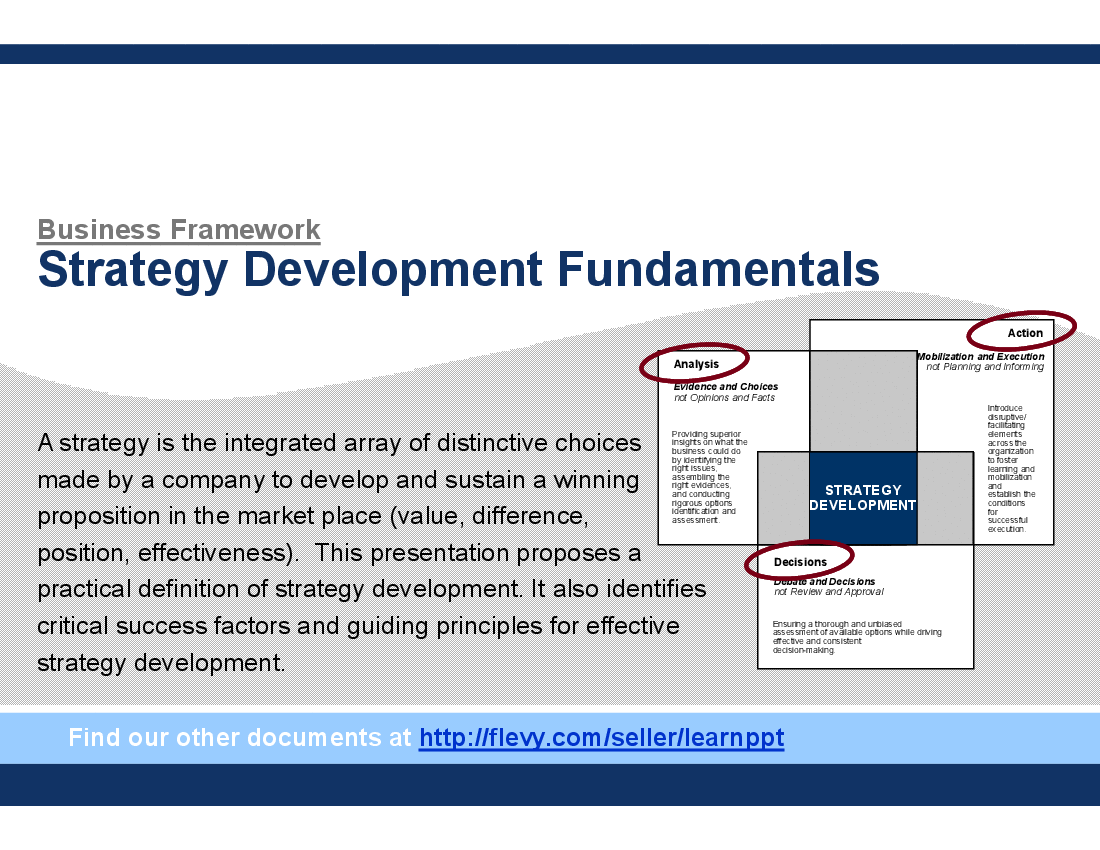
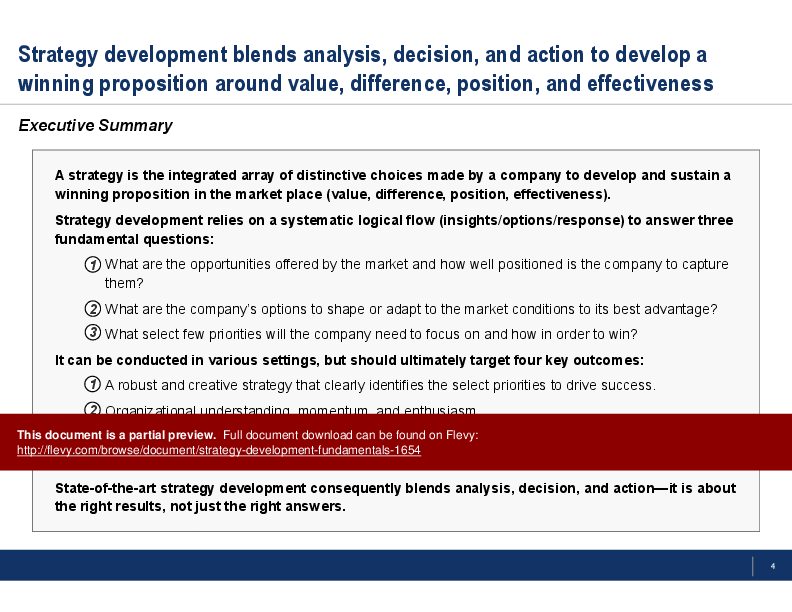

A strategy is the integrated array of distinctive choices made by a company to develop and sustain a winning proposition in the market place (value, difference, position, effectiveness). This presentation proposes a practical definition of strategy development. It also identifies critical success factors and guiding principles for effective strategy development.

This deck shows how strategy development relies on a systematic logical flow (insights/options/response) that seeks answer 3 fundamental questions:
1. What are the opportunities offered by the market and how well positioned is the company to capture them?
2. What are the company's options to shape or adapt to the market conditions to its best advantage?
3. What select few priorities will the company need to focus on and how in order to win?
This deck also introduces the 4 key outcomes of strategy development:
• A robust and creative strategy that clearly identifies the select priorities to drive success.
• Organizational understanding, momentum, and enthusiasm.
• Strategic actions embedded in day-to-day business.
• Reinforced capability to adapt and evolve as market and industry develop.
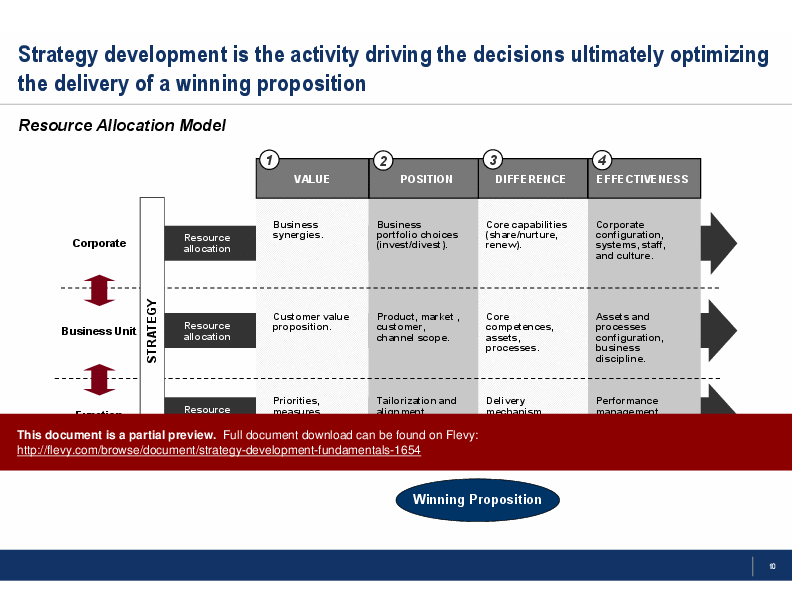
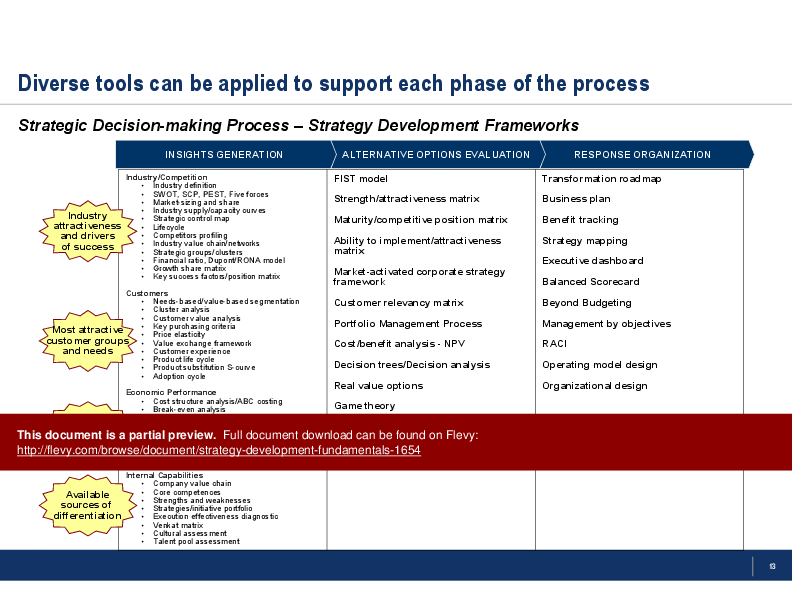
This PPT dives deep into the mechanics of crafting a winning proposition, emphasizing the importance of value, position, difference, and effectiveness. It provides a comprehensive framework for resource allocation across corporate, business unit, and functional levels, ensuring alignment with strategic priorities. The presentation also covers diverse tools and methodologies to support each phase of the strategy development process, from insights generation to response organization.
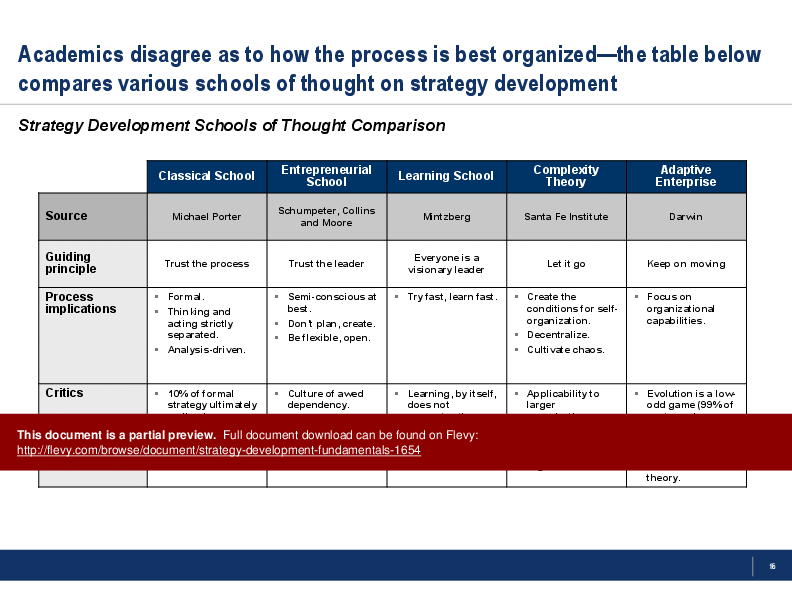
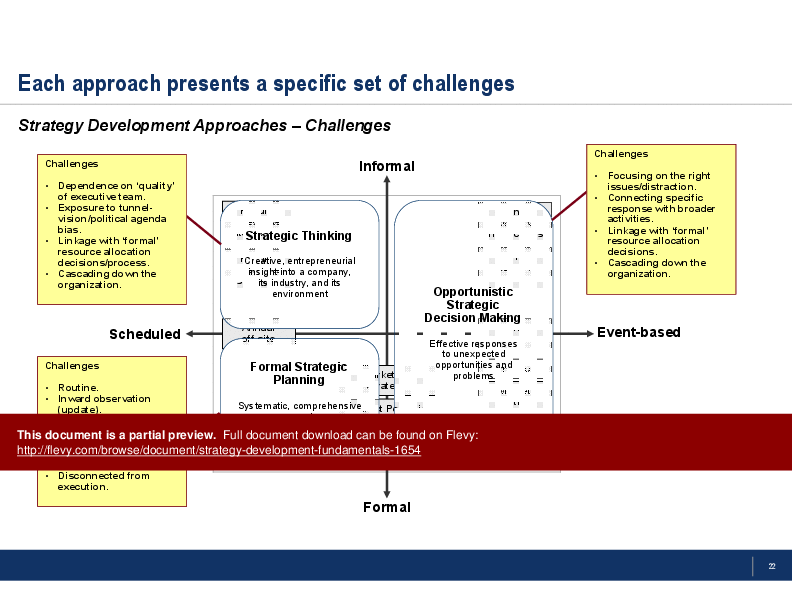
The document compares various schools of thought on strategy development, offering a balanced view of different approaches and their implications. It highlights the challenges associated with each approach, providing practical insights for overcoming common pitfalls. This resource is essential for executives seeking to refine their strategic planning and execution capabilities, ensuring sustained competitive advantage in a dynamic market environment.
Got a question about the product? Email us at support@flevy.com or ask the author directly by using the "Ask the Author a Question" form. If you cannot view the preview above this document description, go here to view the large preview instead.
Executive Summary
This presentation titled "Strategy Development Fundamentals" is crafted by former consultants from leading firms such as McKinsey, BCG, and Deloitte, offering a consulting-grade framework for effective strategy development. It defines strategy as an integrated array of distinctive choices that enable a company to create and sustain a winning proposition in the marketplace. The deck outlines critical success factors, guiding principles, and a systematic approach to strategy development, emphasizing the importance of analysis, decision-making, and action. Buyers will gain insights into developing robust strategies that align with organizational goals and market opportunities.
Who This Is For and When to Use
• Corporate executives seeking to refine their strategic planning processes
• Integration leaders responsible for aligning strategy with operational execution
• Consultants aiming to enhance their strategy development frameworks
• Business unit leaders looking to drive effective decision-making and resource allocation
Best-fit moments to use this deck:
• During strategic planning sessions to define and align on key priorities
• When assessing market opportunities and evaluating competitive positioning
• In workshops focused on mobilizing teams around strategic initiatives
Learning Objectives
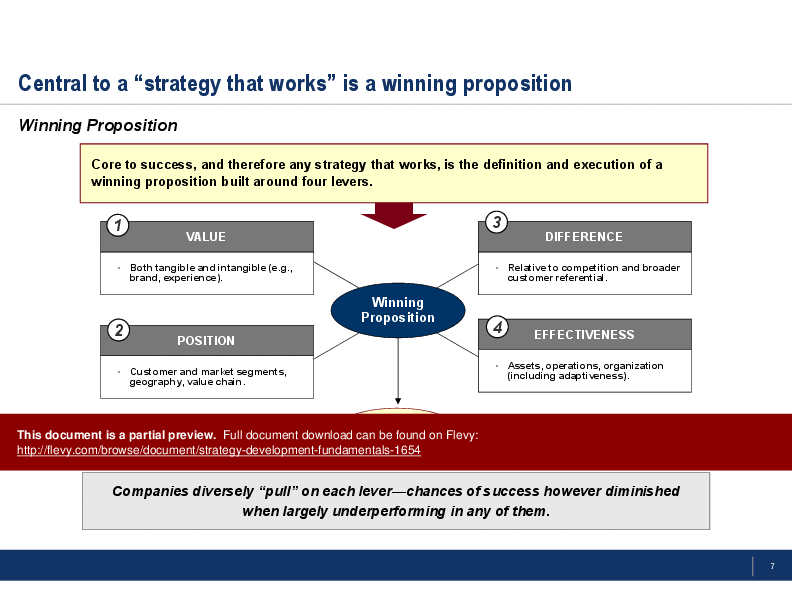
• Define the concept of a winning proposition and its components
• Build a strategic decision-making process that integrates analysis and action
• Establish guiding principles for effective strategy development
• Identify critical success factors that drive strategic outcomes
• Evaluate various schools of thought in strategy development
• Develop a framework for resource allocation aligned with strategic goals
Table of Contents
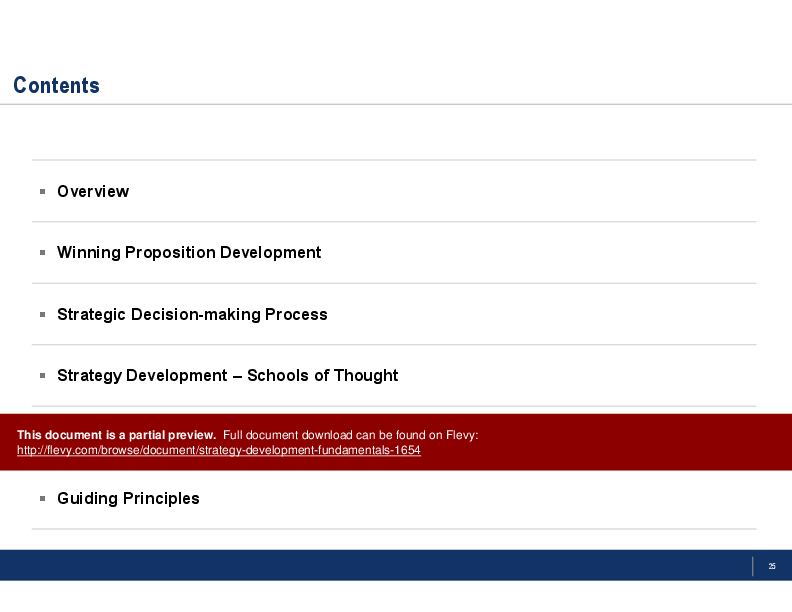
• Overview (page 3)
• Winning Proposition Development (page 6)
• Strategic Decision-making Process (page 11)
• Strategy Development – Schools of Thought (page 15)
• Strategy Development – Approaches & Outcomes (page 20)
• Guiding Principles (page 25)
Primary Topics Covered
• Winning Proposition Development - This section outlines the core components of a winning proposition, emphasizing value, difference, position, and effectiveness.
• Strategic Decision-making Process - A structured approach to generating insights, evaluating options, and organizing responses to strategic challenges.
• Schools of Thought - A comparison of various academic perspectives on strategy development, highlighting differing methodologies and implications.
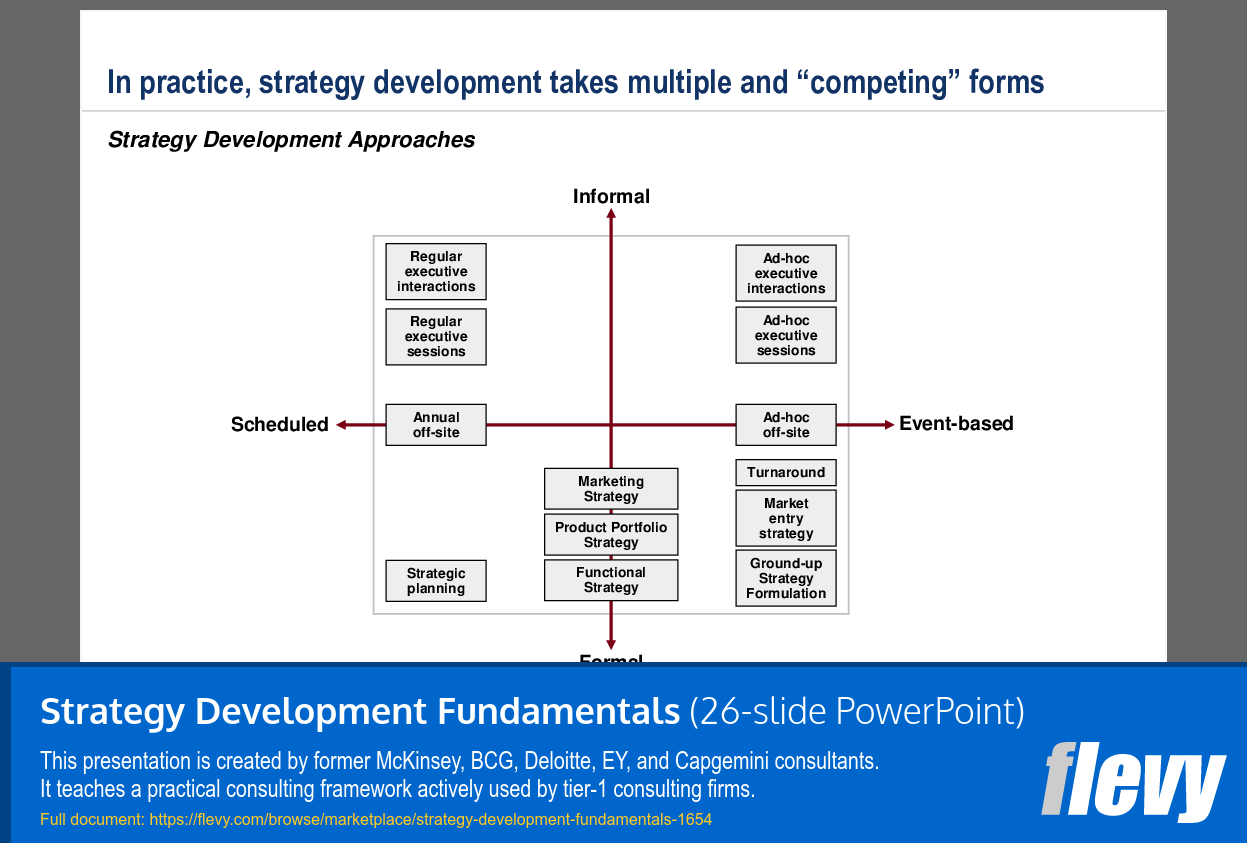
• Approaches to Strategy Development - An exploration of formal and informal methods for developing strategies, including their respective challenges.
• Guiding Principles - Key principles that inform effective strategy development, emphasizing the importance of adaptability and alignment.
Deliverables, Templates, and Tools
• Framework for developing a winning proposition that integrates value, difference, position, and effectiveness
• Strategic decision-making process template to guide insights generation and options evaluation
• Resource allocation model to optimize the deployment of capital, talent, and operational focus
• Guiding principles checklist to ensure comprehensive strategy development
• Assessment tools for evaluating market opportunities and competitive positioning
Slide Highlights
• Overview of the strategy development process, highlighting the integration of analysis, decision, and action
• Visual representation of the winning proposition and its 4 key levers
• Comparative analysis of different schools of thought in strategy development
• Framework for strategic decision-making, illustrating the flow from insights generation to response organization
• Guiding principles for strategy development, emphasizing the importance of a tailored approach
Potential Workshop Agenda
Introduction to Strategy Development (60 minutes)
• Overview of strategy and its importance
• Discussion on the components of a winning proposition
• Interactive session on defining organizational goals
Strategic Decision-making Framework (90 minutes)
• Introduction to the strategic decision-making process
• Group activity on generating insights and evaluating options
• Case study analysis to apply the framework
Guiding Principles and Best Practices (60 minutes)
• Presentation of guiding principles for effective strategy development
• Discussion on adapting strategies to changing market conditions
• Wrap-up and Q&A session
Customization Guidance
• Tailor the winning proposition framework to reflect specific organizational values and market conditions
• Adjust the strategic decision-making process to align with existing governance structures
• Incorporate industry-specific examples and case studies to enhance relevance
• Modify guiding principles to reflect organizational culture and strategic priorities
Secondary Topics Covered
• Resource allocation strategies in the context of strategic decision-making
• The impact of market dynamics on strategy formulation
• The role of organizational capabilities in executing strategic initiatives
• Challenges associated with formal versus informal strategy development approaches
FAQ
What is a winning proposition?
A winning proposition is an integrated set of distinctive choices that enables a company to deliver superior value to customers while achieving competitive advantage.
How does the strategic decision-making process work?
The process involves generating insights, evaluating alternative options, and organizing responses to align with strategic objectives.
What are the guiding principles for effective strategy development?
Key principles include tailoring strategies to unique situations, focusing on customer needs, and fostering an inclusive process for strategy formulation.
What schools of thought exist in strategy development?
Various schools include the Classical School, Entrepreneurial School, Learning School, and Complexity Theory, each offering different perspectives on strategy formulation.
How can I adapt this framework to my organization?
Customize the winning proposition and decision-making processes to reflect your organization's specific goals, market conditions, and operational capabilities.
What challenges might I face in strategy development?
Challenges include aligning diverse stakeholder interests, adapting to market changes, and ensuring effective execution of strategic initiatives.
How does resource allocation impact strategy?
Strategic resource allocation ensures that limited resources are deployed effectively to support key priorities and enhance competitive positioning.
What role does analysis play in strategy development?
Analysis provides the insights necessary to identify opportunities, assess competitive dynamics, and inform strategic choices.
Glossary
• Winning Proposition - The integrated set of choices that defines how a company delivers value to customers.
• Strategic Decision-making - The process of generating insights, evaluating options, and organizing responses to strategic challenges.
• Guiding Principles - Fundamental concepts that inform and shape the strategy development process.
• Resource Allocation - The strategic deployment of capital, talent, and operational focus to achieve organizational goals.
• Schools of Thought - Various academic perspectives on strategy development, each with unique methodologies and implications.
• Market Dynamics - The forces that influence competition and customer behavior in a given market.
• Organizational Capabilities - The skills and resources that enable a company to execute its strategy effectively.
• Strategic Planning - The systematic process of defining an organization's strategy and making decisions on resource allocation.
• Competitive Positioning - The process of establishing a brand or product in a way that distinguishes it from competitors.
• Insights Generation - The process of deriving actionable knowledge from data and analysis to inform strategic decisions.
• Adaptability - The ability of an organization to adjust its strategies in response to changing market conditions.
• Holistic Business Model - A comprehensive approach to strategy that considers all aspects of the business environment and operations.
• Innovation - The process of developing new ideas, products, or processes that create value for customers.
• Strategic Alignment - The degree to which an organization's resources and actions are coordinated to support its strategic objectives.
• Execution - The implementation of strategic plans and initiatives to achieve desired outcomes.
• Learning Process - The ongoing cycle of acquiring knowledge and adapting strategies based on experience and market changes.
• Value Creation - The process of delivering products or services that provide benefits to customers and stakeholders.
• Performance Management - The systematic process of monitoring and evaluating organizational performance against strategic goals.
• Decision-making Framework - A structured approach to making informed choices based on analysis and evidence.
• Strategic Initiatives - Specific projects or actions undertaken to achieve strategic objectives.
• Customer Focus - The commitment to understanding and meeting the needs of customers as a central aspect of strategy.
• Competitive Advantage - The unique strengths or attributes that allow a company to outperform its competitors.
Source: Best Practices in Strategy Development, Chief Strategy Officer PowerPoint Slides: Strategy Development Fundamentals PowerPoint (PPT) Presentation Slide Deck, LearnPPT Consulting
This document is available as part of the following discounted bundle(s):
Save %!
Strategy Development Frameworks
This bundle contains 7 total documents. See all the documents to the right.
|
Download our FREE Strategy & Transformation Framework Templates
Download our free compilation of 50+ Strategy & Transformation slides and templates. Frameworks include McKinsey 7-S, Balanced Scorecard, Disruptive Innovation, BCG Curve, and many more. |