
This presentation provides a review of external thinking of corporate strategy by a leading strategy consulting firm.
The contents include:
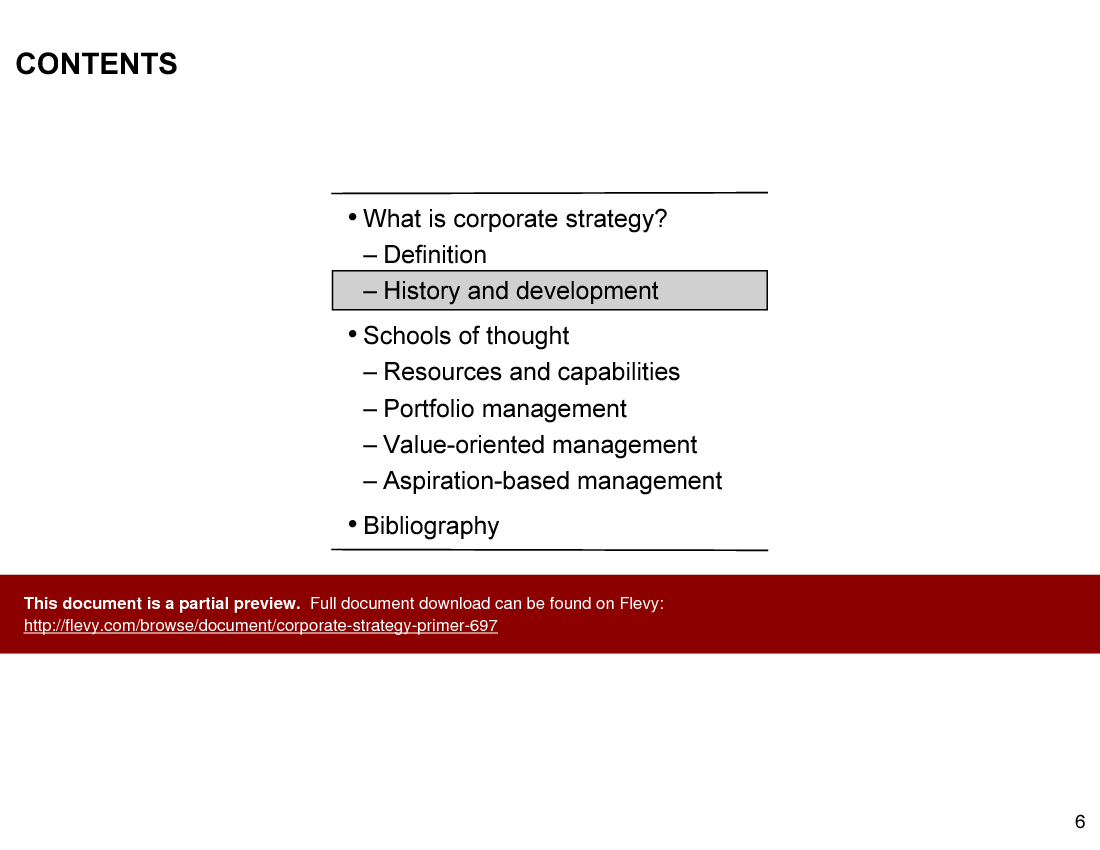
1. What is corporate strategy?
• Definition
• History and development
2. Schools of thought
• Resources and capabilities
• Portfolio management
• Value-oriented management
• Aspiration-based management
3. Bibliography
It discusses the origin, characteristics, pros and cons, and key considerations in application of major schools of thoughts in corporate strategy.
A must-read for business leaders and strategy consultants!
The Corporate Strategy Primer goes beyond just definitions and historical context. It delves into the intricacies of various schools of thought, providing a comprehensive analysis of resources and capabilities, portfolio management, value-oriented management, and aspiration-based management. Each section is meticulously detailed, offering insights into the focus areas, key concepts, and strategic advantages of each approach.
The document also covers core competencies and competitiveness, highlighting the importance of collective learning, cross-functional organization, and strategic resource allocation. It emphasizes the long-term benefits of developing core competencies and how they can be leveraged to achieve a competitive edge. This section is crucial for understanding how to sustain and enhance a company's market position.
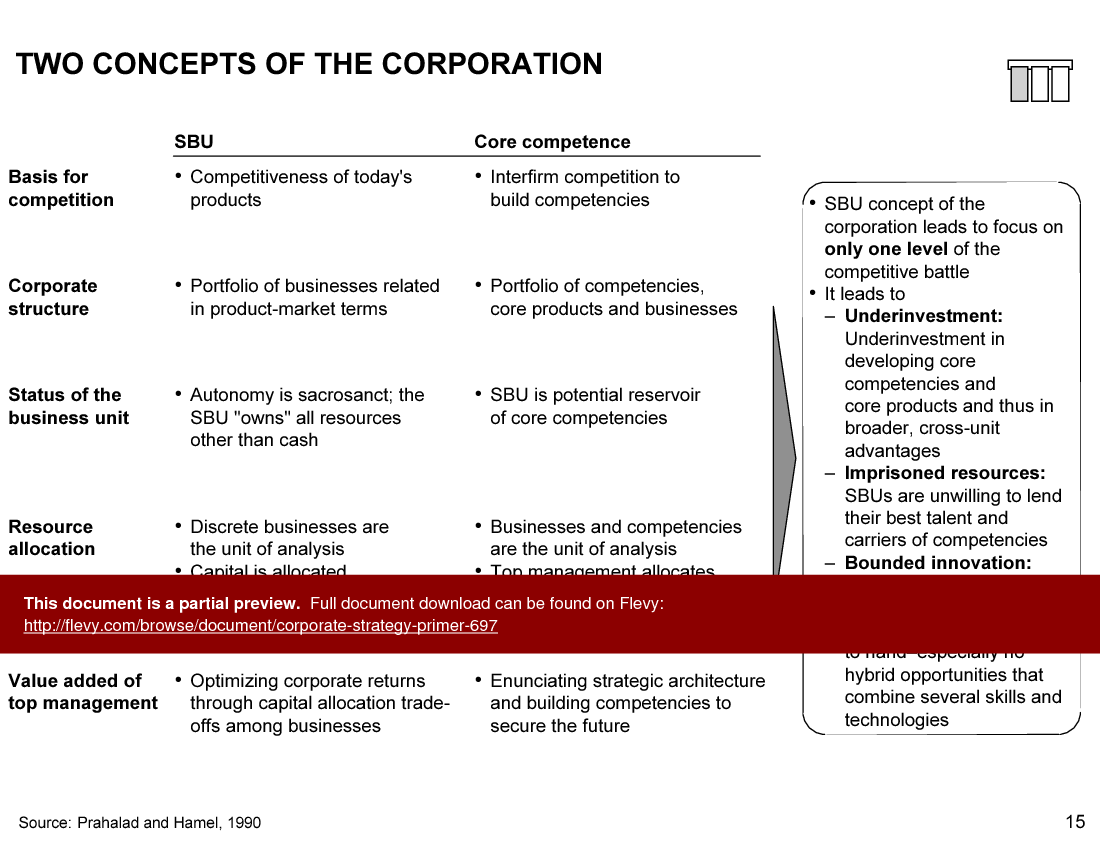
Two concepts of the corporation, SBU and core competence, are compared in detail. The analysis includes the basis for competition, corporate structure, resource allocation, and the value added by top management. This comparison provides a clear understanding of the strengths and weaknesses of each concept, helping executives make informed decisions about their corporate strategy.
The primer also introduces the four basic principles of capabilities-based competition and the new capabilities-based growth logic. These sections offer practical frameworks for transforming business processes into strategic capabilities that drive growth and competitive advantage. The emphasis on strategic investments in support infrastructure and the transferability of strategic advantages across geographies is particularly valuable for global businesses.
Got a question about the product? Email us at support@flevy.com or ask the author directly by using the "Ask the Author a Question" form. If you cannot view the preview above this document description, go here to view the large preview instead.
MARCUS OVERVIEW
This synopsis was written by Marcus [?] based on the analysis of the full 69-slide presentation.
Executive Summary
The "Primer on Corporate Strategy" presentation provides a comprehensive overview of corporate strategy, emphasizing its definition, historical evolution, and various schools of thought. This consulting-grade deck, akin to McKinsey, Bain, or BCG-quality, equips corporate executives and consultants with the foundational knowledge to navigate corporate strategy effectively. Users will gain insights into strategic frameworks, competitive positioning, and value creation, enabling them to make informed decisions that align with organizational goals.
Who This Is For and When to Use
• Corporate executives responsible for strategic planning and decision-making
• Business unit leaders seeking to align their strategies with corporate objectives
• Consultants advising organizations on corporate strategy development
• Academic professionals and students studying business strategy
• Stakeholders involved in mergers, acquisitions, or corporate restructuring
Best-fit moments to use this deck:
• During strategic planning sessions to define corporate objectives
• In workshops focused on aligning business unit strategies with corporate goals
• For training sessions on corporate strategy fundamentals for new executives
• When evaluating potential acquisitions or divestitures
Learning Objectives
• Define corporate strategy and its significance in organizational success
• Analyze historical developments in corporate strategy thought
• Identify and differentiate between various schools of thought in corporate strategy
• Evaluate the impact of resources and capabilities on competitive advantage
• Apply portfolio management techniques to enhance corporate value
• Develop a value-oriented management approach to increase shareholder value
• Formulate aspiration-based management strategies to unify organizational efforts
Table of Contents
• What Is Corporate Strategy? (page 3)
• Schools of Thought (page 9)
• Resources and Capabilities (page 11)
• Portfolio Management (page 29)
• Value-Oriented Management (page 42)
• Aspiration-Based Management (page 61)
• Bibliography (page 66)
Primary Topics Covered
• Corporate Strategy Definition - Corporate strategy encompasses the overall purpose and scope of an organization, aiming to meet stakeholder expectations and add value across business units.
• Historical Development - The evolution of corporate strategy reflects changing paradigms, from diversification to value-based management and beyond.
• Resources and Capabilities - This school emphasizes leveraging internal resources and capabilities to achieve competitive advantage rather than focusing solely on business units.
• Portfolio Management - This approach involves managing a corporate portfolio by identifying and selecting businesses for investment or divestment to maximize value.
• Value-Oriented Management - This framework focuses on increasing shareholder value through strategic decisions that enhance business performance.
• Aspiration-Based Management - This perspective advocates for a broader purpose beyond profit maximization, emphasizing a unifying vision and mission for the organization.
Deliverables, Templates, and Tools
• Corporate strategy framework template for defining organizational purpose and scope
• Portfolio analysis tools for evaluating business unit performance and strategic fit
• Value creation assessment model to measure shareholder value enhancement
• Aspiration-based management guidelines for developing a unifying vision and mission
• Resources and capabilities assessment checklist to identify competitive advantages
• Historical evolution timeline for corporate strategy thought
Slide Highlights
• Overview of corporate strategy definitions and key quotes from thought leaders
• The strategy-making pyramid illustrating the relationship between corporate and business unit strategies
• Historical timeline showcasing the evolution of corporate strategy theories
• Frameworks for resources and capabilities analysis and their impact on competitive advantage
• Portfolio management matrices for evaluating business unit performance and strategic positioning
Potential Workshop Agenda
Corporate Strategy Overview Session (90 minutes)
• Define corporate strategy and its importance in organizational success
• Discuss historical developments and key schools of thought
• Analyze case studies of successful corporate strategies
Resources and Capabilities Workshop (60 minutes)
• Identify core competencies and their role in competitive advantage
• Explore frameworks for leveraging resources across business units
• Develop action plans for resource optimization
Portfolio Management Strategy Session (90 minutes)
• Evaluate current business unit performance using portfolio analysis tools
• Discuss diversification strategies and their implications for corporate value
• Create a roadmap for future portfolio management decisions
Customization Guidance
• Tailor the corporate strategy framework to align with specific organizational goals and industry context
• Modify portfolio analysis tools to reflect unique business unit characteristics and market conditions
• Adapt value creation assessment models to incorporate company-specific financial metrics and benchmarks
• Update aspiration-based management guidelines to resonate with organizational culture and employee values
Secondary Topics Covered
• The role of senior management in corporate strategy development
• The impact of market dynamics on corporate strategy formulation
• Challenges in implementing portfolio management strategies
• The significance of stakeholder engagement in strategy execution
• Trends in corporate strategy research and emerging frameworks
FAQ What is corporate strategy?
Corporate strategy defines the overall purpose and scope of an organization, focusing on how to add value across its various business units.
Why is understanding schools of thought important?
Different schools of thought provide diverse perspectives on corporate strategy, enabling organizations to adopt the most suitable approaches for their unique contexts.
How can resources and capabilities impact competitive advantage?
Leveraging internal resources and capabilities allows organizations to differentiate themselves and achieve sustained competitive advantage over rivals.
What is the significance of portfolio management?
Portfolio management helps organizations identify which businesses to invest in or divest, optimizing resource allocation and maximizing overall corporate value.
How does value-oriented management contribute to shareholder value?
Value-oriented management focuses on strategic decisions that enhance business performance, ultimately leading to increased shareholder value through improved financial metrics.
What is aspiration-based management?
Aspiration-based management emphasizes a broader organizational purpose beyond profit maximization, fostering a unifying vision and mission that inspires employees.
How can this presentation be used in strategic planning sessions?
The presentation serves as a foundational resource for defining corporate objectives, aligning business unit strategies, and facilitating informed decision-making.
What tools are included for practical application?
The deck includes templates for corporate strategy frameworks, portfolio analysis, and value creation assessments, providing actionable resources for implementation.
Glossary
• Corporate Strategy - The overall purpose and scope of an organization aimed at adding value across business units.
• Resources and Capabilities - Internal assets and skills leveraged to achieve competitive advantage.
• Portfolio Management - The process of managing a corporate portfolio by selecting businesses for investment or divestment.
• Value-Oriented Management - A framework focused on increasing shareholder value through strategic decision-making.
• Aspiration-Based Management - An approach that emphasizes a unifying vision and mission beyond profit maximization.
• Core Competencies - Key organizational skills that provide a competitive edge.
• Diversification - The strategy of entering new markets or industries to spread risk and enhance growth.
• Shareholder Value - The financial worth delivered to shareholders through business performance.
• Strategic Capabilities - The unique abilities of an organization to leverage resources for competitive advantage.
• Competitive Advantage - The attributes that allow an organization to outperform its competitors.
• Strategic Planning - The process of defining an organization's direction and making decisions on allocating resources.
• Market Dynamics - The forces that impact the supply and demand of goods and services in a market.
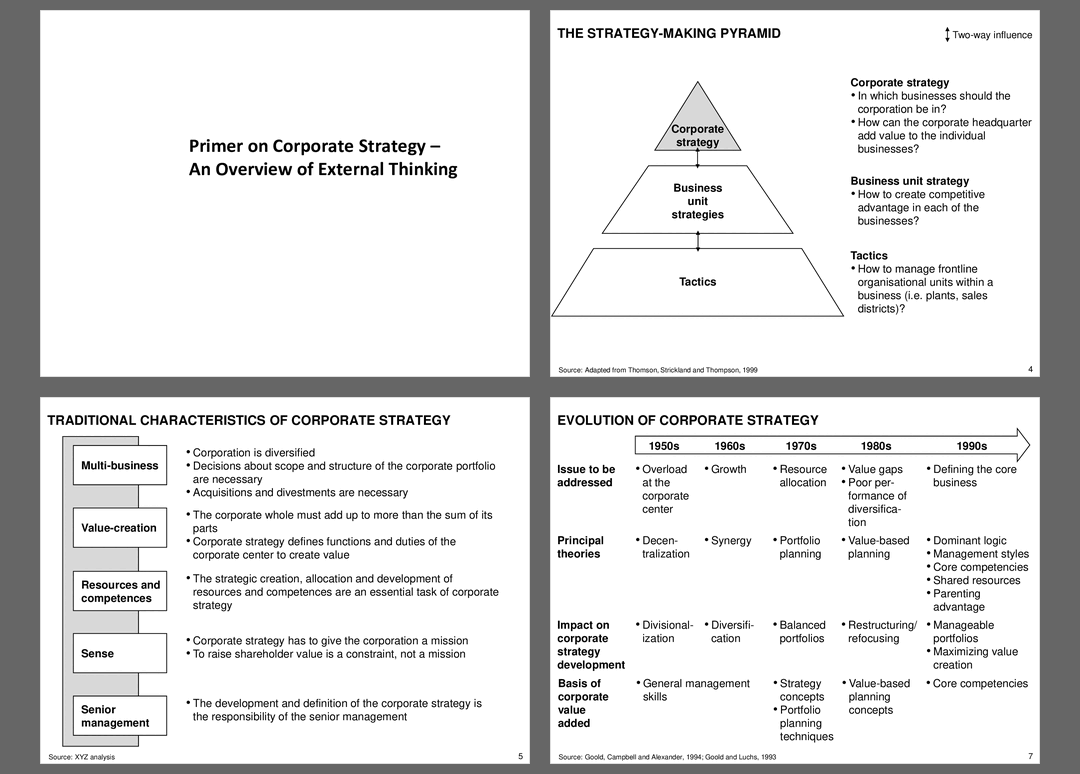
The Strategy-Making Pyramid framework illustrates the hierarchical relationship between corporate strategy, business unit strategies, and tactical execution. At the apex, corporate strategy addresses the scope of the business portfolio, guiding leaders on industry engagement and value enhancement across business units. Below, business unit strategies focus on unique positioning in respective markets, fostering independent growth aligned with corporate goals. The base consists of tactics, which are actionable steps for managing frontline operations, ensuring strategies translate into daily activities. The two-way influence indicates that corporate strategy informs business unit strategies, while insights from business units refine corporate strategy, maintaining relevance to market dynamics. This interconnectedness is essential for aligning strategic initiatives across the organization.
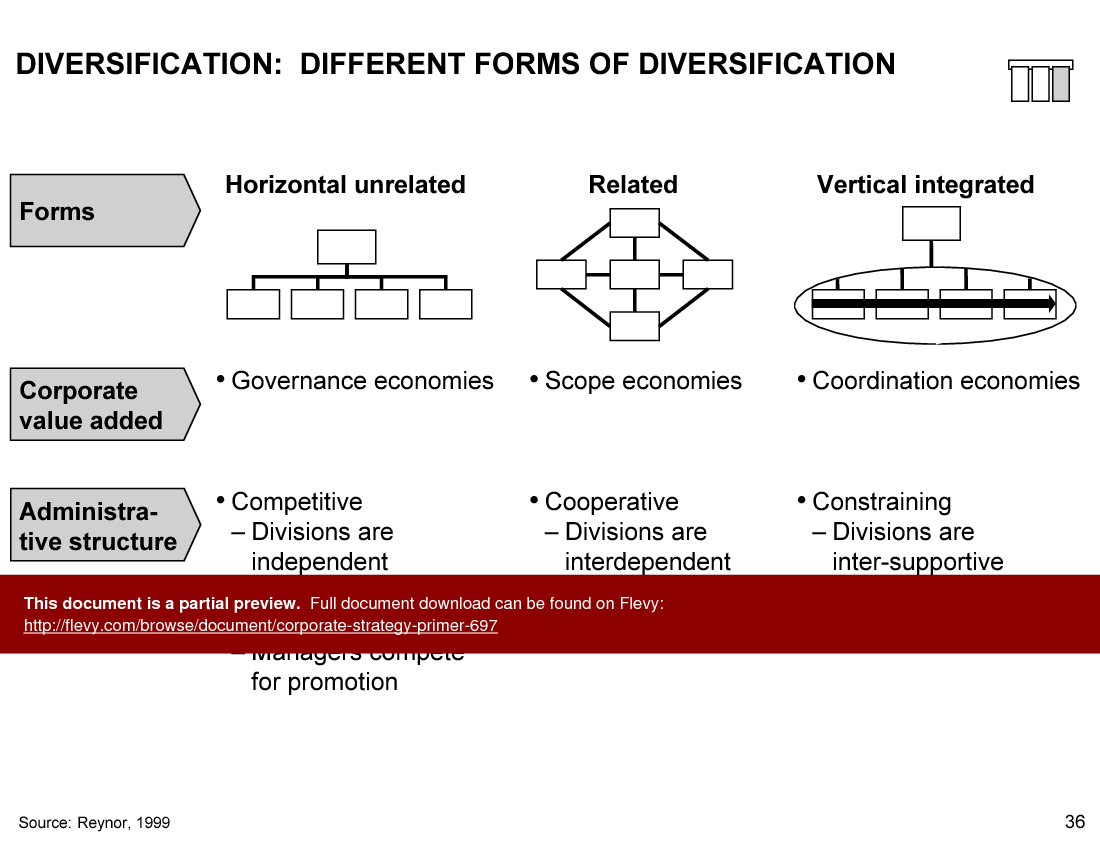
This slide outlines 3 types of diversification: horizontal unrelated, related, and vertical integrated. Horizontal unrelated diversification focuses on governance economies, where independent divisions compete for capital and promotions, fostering innovation, but potentially causing inefficiencies. Related diversification emphasizes scope economies, promoting interdependence among divisions, which can enhance performance through shared resources, but may lead to dysfunctional competition if mismanaged. Vertical integration features coordination economies, where supportive divisions streamline operations, though excessive reliance can create constraints and competition issues. Balancing support and competition is essential for effective operational flow across these diversification strategies.
The "Three Growth Horizons Analysis" framework categorizes growth initiatives into 3 horizons. Horizon 1 focuses on "Creating strategic degrees of freedom," emphasizing core businesses and unlocking incremental growth while managing value decline. Horizon 2, "Destiny shaping decisions," involves new businesses and extensions crucial for future growth, requiring organizations to exercise options and drive innovation. Horizon 3, "Creating options for future businesses," explores possibilities for new ventures, with a management imperative to test the viability of business concepts. This framework guides executives in balancing immediate operational needs with long-term strategic planning for sustainable growth.
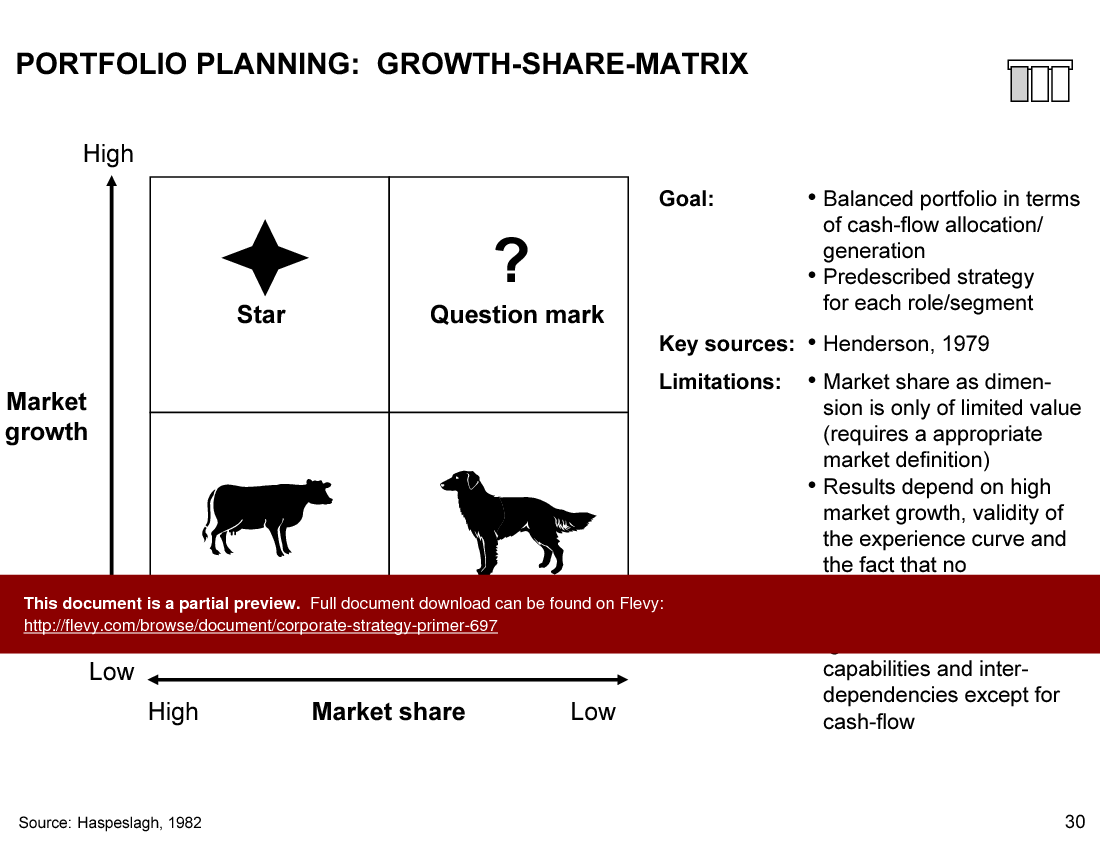
The Life Cycle – Competitive Strength Matrix is a Portfolio Planning framework that aids executives in resource allocation across business units. It features 4 quadrants based on competitive strength (low to high) and product life cycle stages (Introduction, Growth, Maturing, Decline). The "Push" quadrant recommends aggressive investment in high-strength, growth-phase products. The "Caution" quadrant advises selective investment for maturing products with moderate strength, requiring careful evaluation. The "Danger" quadrant suggests harvesting resources from low-strength, declining products, emphasizing divestment. The framework, grounded in sources like Arthur D. Little, highlights that results are sensitive to perception changes and factor weighting, necessitating accurate data for effective strategic planning.
The evolution of corporate strategy from the 1950s to the 1990s highlights key theories and impacts on corporate value. In the 1950s, decentralization emerged as a response to corporate center overload, emphasizing divisionalization and general management skills. The 1960s introduced synergy and diversification, evolving corporate value to include strategy concepts and portfolio management. The 1970s focused on resource allocation and portfolio planning, characterized by balanced portfolios and refined strategy concepts. The 1980s addressed value gaps and poor performance, leading to value-based planning and restructuring. In the 1990s, defining the core business became critical, with dominant logic, shared resources, and parenting advantage shaping corporate strategy, while core competencies refined the basis of corporate value.
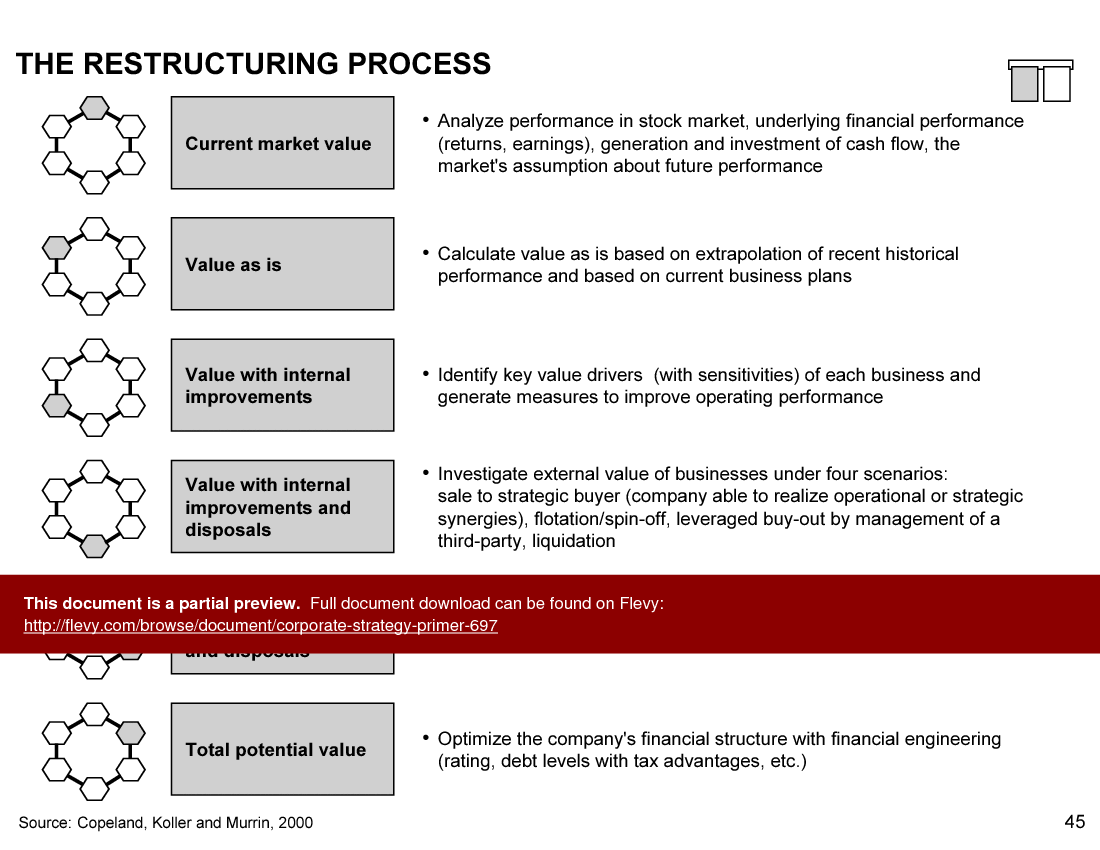
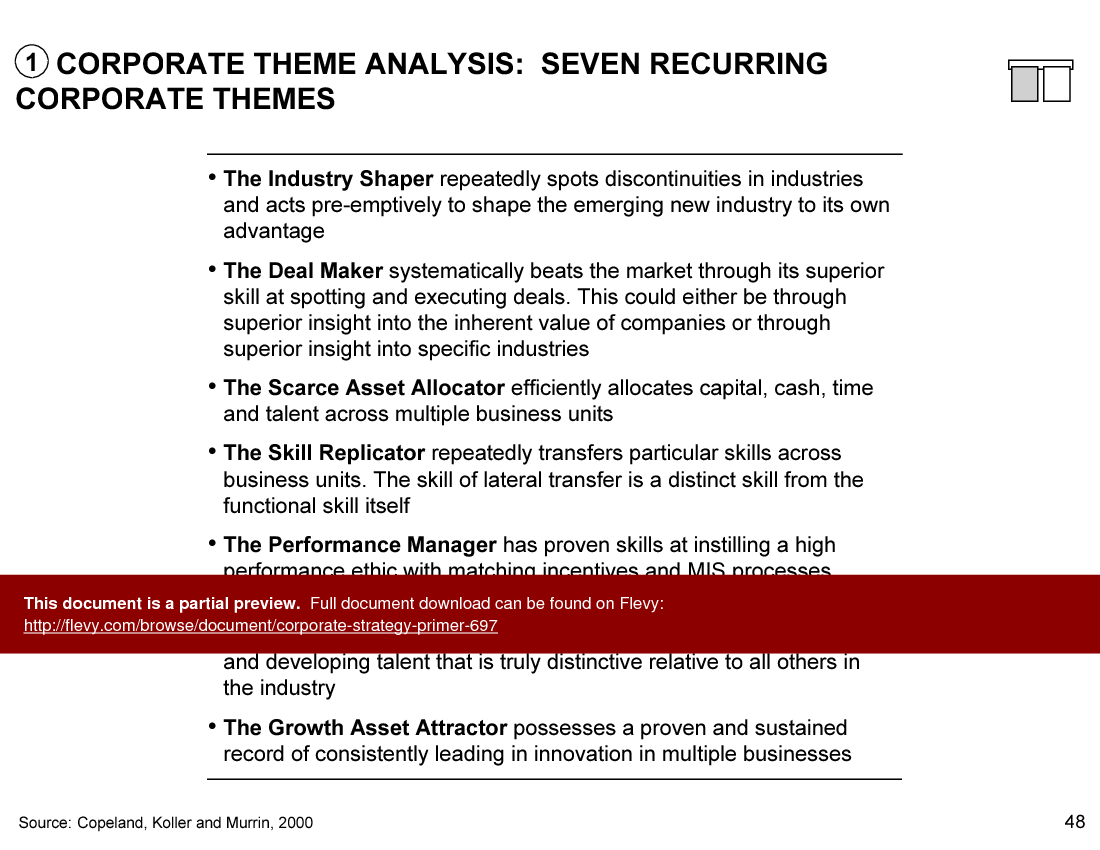
This slide provides a structured overview of portfolio management through 3 perspectives aimed at enhancing shareholder value. The top concept emphasizes shareholder value, linking it to organizational strategy aspirations and targets. The first perspective, "Corporate theme analysis," identifies 7 themes for corporate centers to create value, suggesting a strategic focus on one or 2 themes for effective resource allocation. The second perspective, "Restructuring hexagon," advocates for periodic assessments using a hexagonal framework to identify and prioritize performance improvement opportunities. The final perspective, "Three growth horizons analysis," stresses maintaining a balanced portfolio across various business development stages, highlighting the importance of engaging in core businesses, exploring new ventures, and ensuring profitable growth. This comprehensive approach aligns strategic themes with organizational performance and growth opportunities.
This slide outlines traditional characteristics of corporate strategy, structured into 5 key areas: Multi-business, Value-creation, Resources and competences, Sense, and Senior.
The Multi-business section emphasizes diversification, highlighting the importance of acquisitions and divestments in maintaining a balanced corporate portfolio. The Value-creation area stresses that the corporate entity must generate more value collectively than the sum of its parts, necessitating clear roles for the corporate center. Resources and competences focus on the strategic management of resources, emphasizing the creation, allocation, and development of these assets. The Sense category indicates that corporate strategy should provide a clear mission beyond just raising shareholder value. Lastly, the Senior section underscores that developing corporate strategy is a core responsibility of senior leadership, reinforcing the importance of strategic oversight.
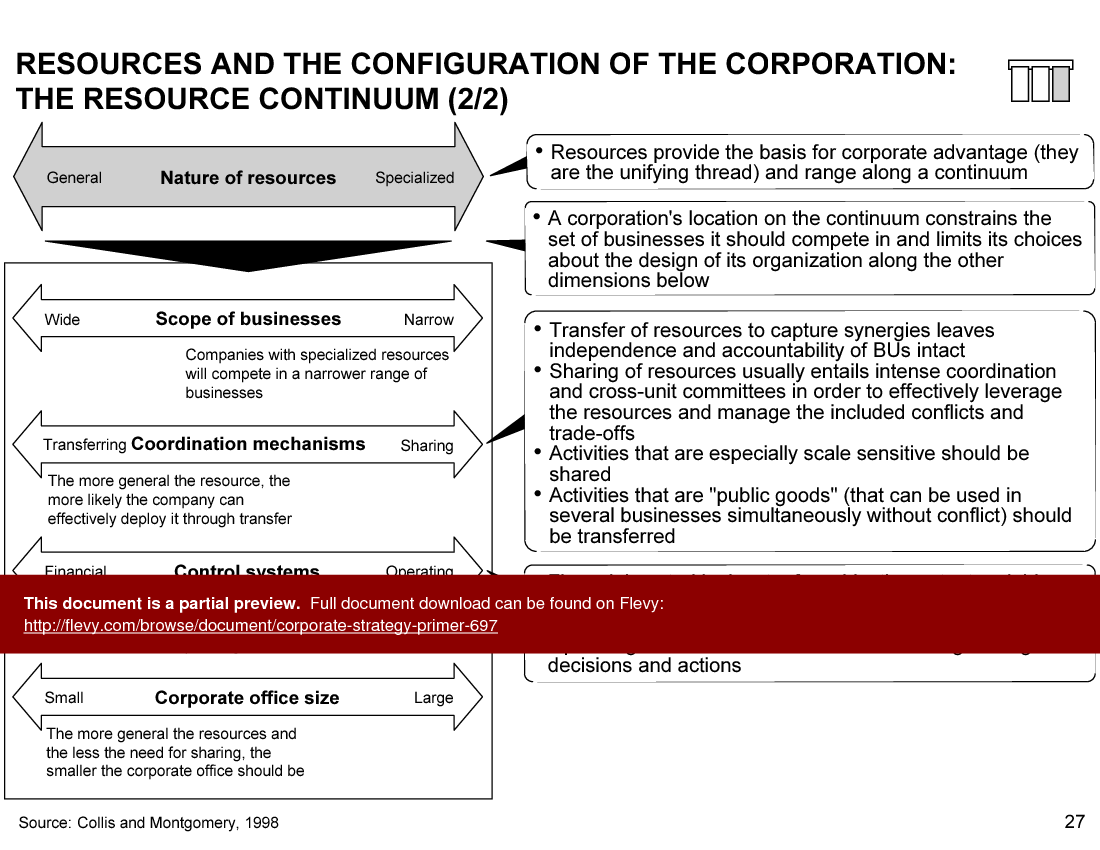
This slide outlines the resource-based view of corporate strategy, defining how companies generate value through coordinated business activities. Diversification should focus on resource similarities to drive success across markets, leveraging existing strengths rather than indiscriminately expanding. Corporate value added emphasizes the need for resources to enhance competitiveness across all business units. The "corporate acid test" assesses whether the collective value of a company's businesses justifies their existence under one umbrella. Developing corporate strategy begins with a clear vision of how resources differentiate a company from competitors, requiring deliberate investment over time. Tailoring the organization to align with this vision and benchmarking against successful companies are essential for refining strategic initiatives.
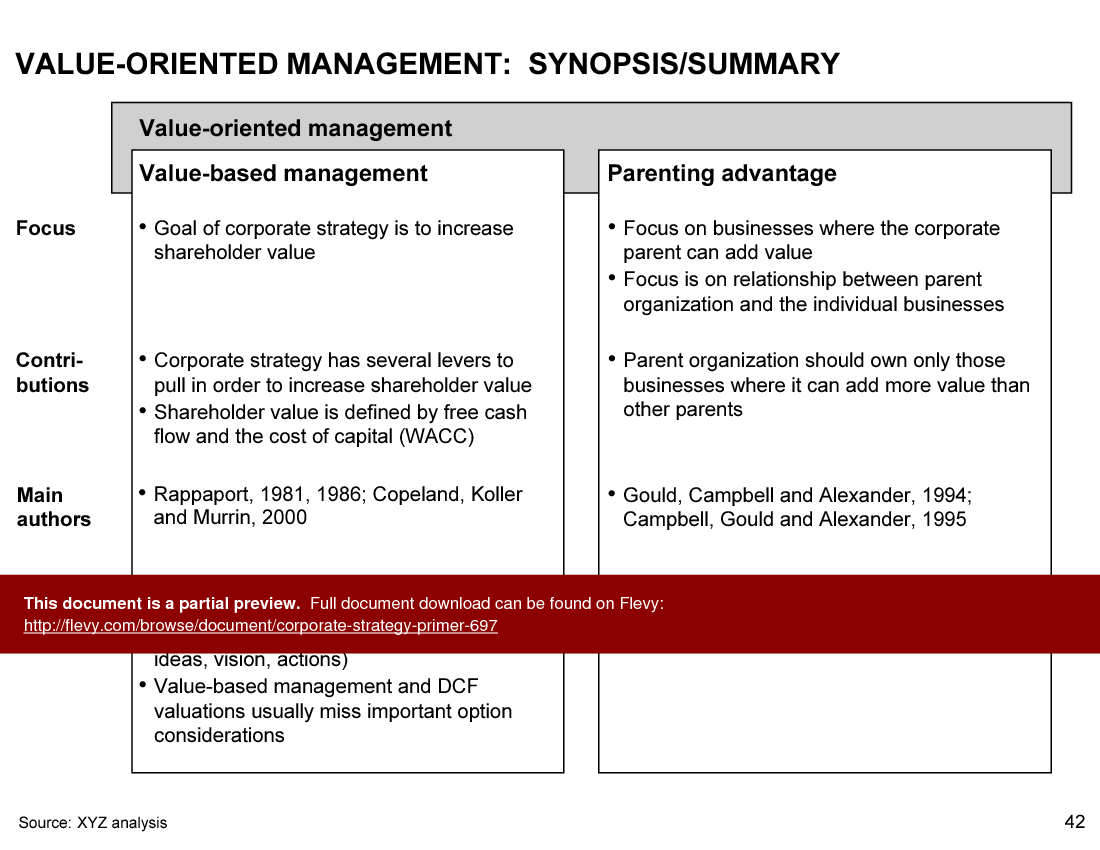
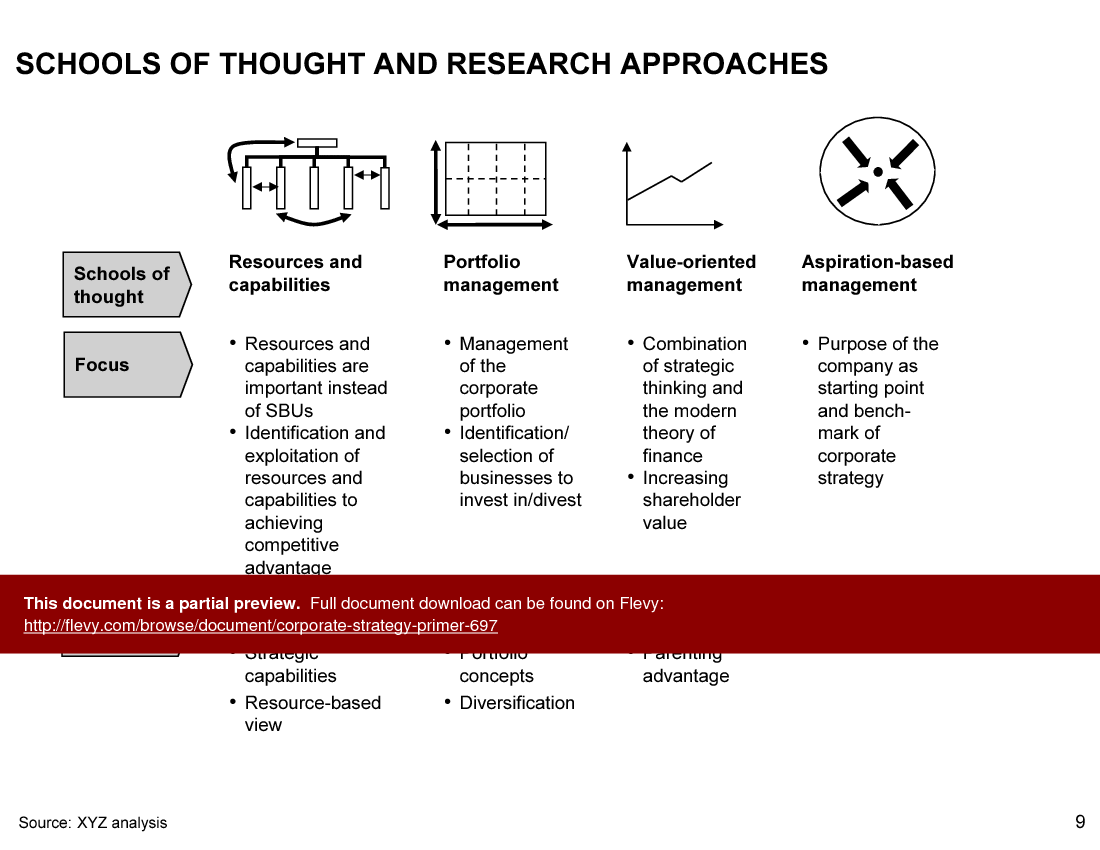
This slide categorizes corporate strategy into 4 frameworks: Resources and Capabilities, Portfolio Management, Value-Oriented Management, and Aspiration-Based Management. The "Resources and Capabilities" framework focuses on leveraging internal resources and core competencies, emphasizing a resource-based view. "Portfolio Management" addresses the selection process for investments and divestments, highlighting strategic planning and diversification. "Value-Oriented Management" integrates strategic thinking with financial theory, introducing value-based management and parenting advantage to enhance shareholder value. "Aspiration-Based Management" centers on aligning a company's purpose with its vision, mission, and objectives, guiding strategic initiatives. These frameworks provide insights for refining corporate strategies in complex environments.
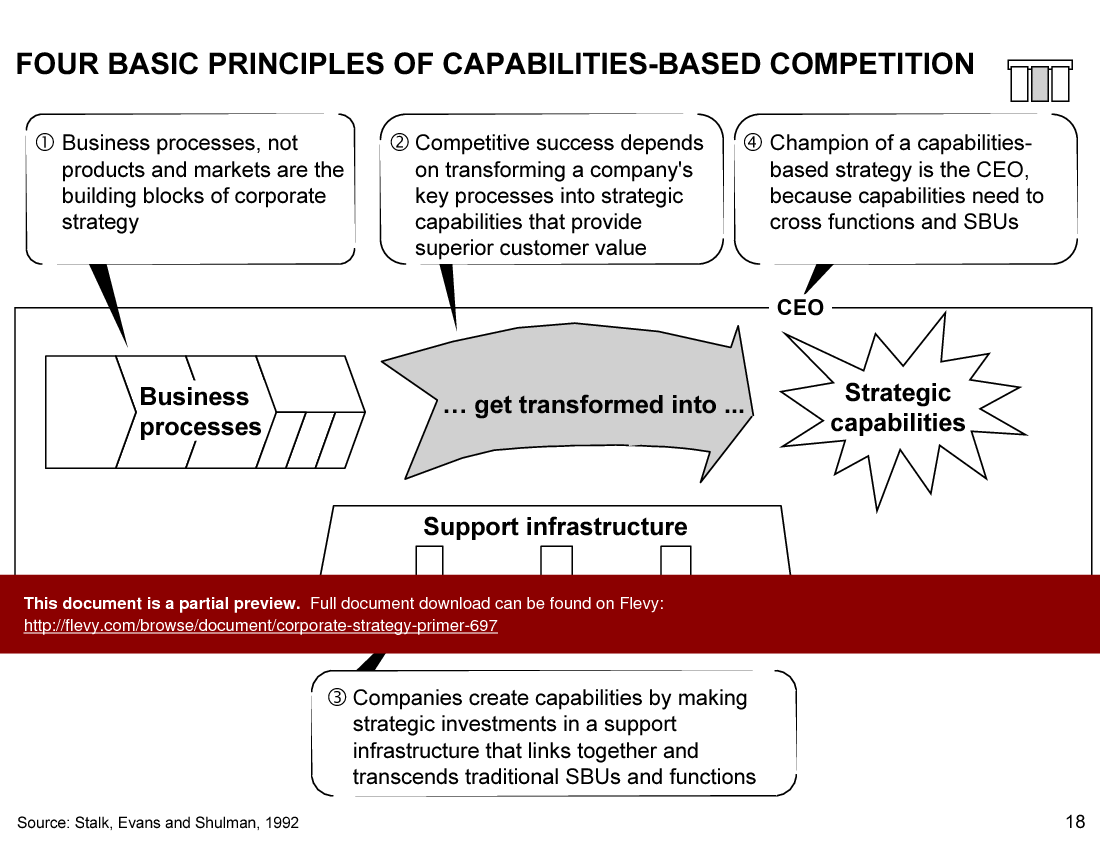
This slide outlines 4 principles of capabilities-based competition. The first principle states that business processes are core to corporate strategy, shifting focus from products or markets to internal operations. The second principle emphasizes transforming key processes into strategic capabilities that provide superior customer value, highlighting the need for operational efficiency and customer engagement. The third principle suggests that targeted investments in support infrastructure are essential for developing these strategic capabilities, necessitating strategic resource allocation. The final principle identifies the CEO as the champion of capabilities-based strategy, ensuring integration across functions and strategic business units (SBUs) to enhance organizational performance.
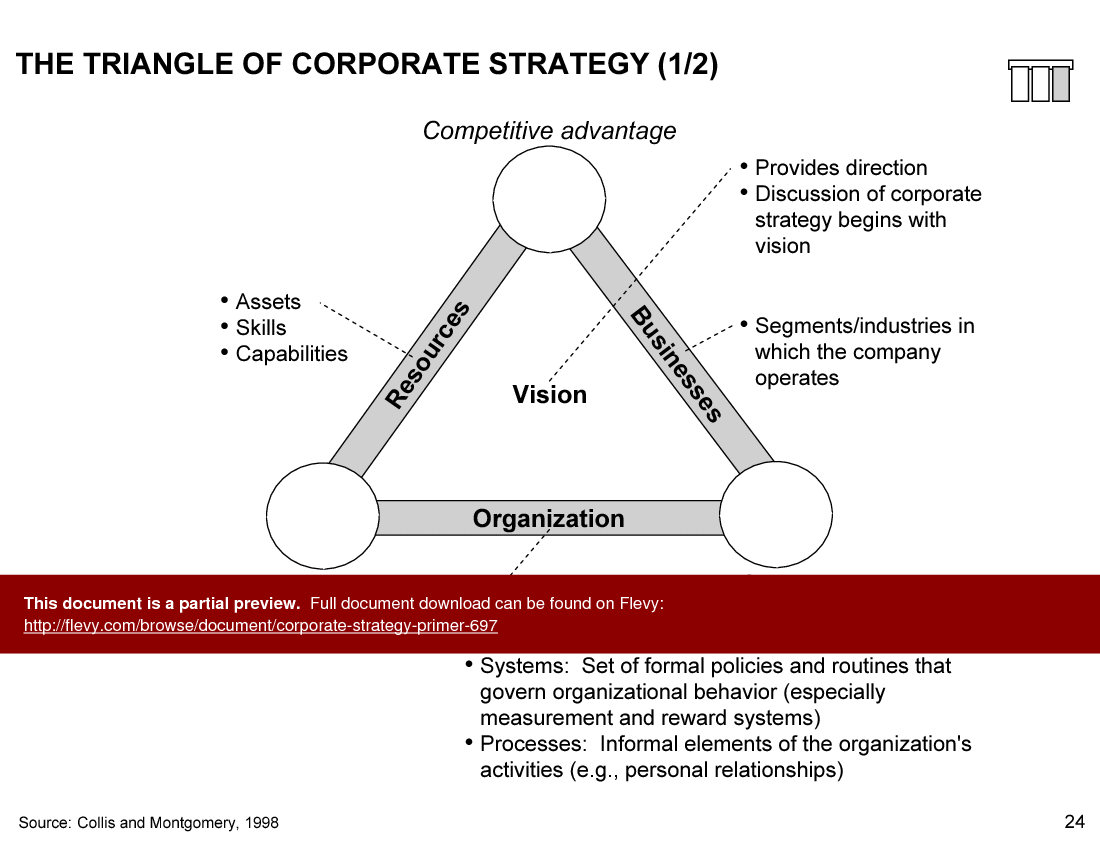
The Triangle of Corporate Strategy framework highlights the interconnectedness of 3 core elements: Resources, Businesses, and Organization, anchored by a central Vision. High-quality resources, strong market positions, and efficient administrative structures are essential for success in attractive industries. The integration of these elements is crucial, as leveraging resources effectively can create synergies that enhance overall performance. Coordination among the components is vital for achieving strategic goals, ensuring that the organization adapts to market demands and capitalizes on opportunities. This framework guides executives in refining corporate strategies to align all parts of the organization towards a common vision.
The Parenting-Fit Matrix evaluates the alignment between critical success factors and parenting characteristics in organizations. It consists of 4 quadrants: "Ballast" (low fit, high misalignment), indicating inefficiencies; "Alien Territory" (high misfit, low fit), showing a disconnect between strategic direction and operational capabilities; "Heartland" (high fit, low misalignment), representing optimal alignment that fosters growth; and "Edge of Heartland," indicating a transitional state needing improvement. The "Value Trap" quadrant warns of a misleading good fit that leads to stagnation. This matrix serves as a diagnostic tool for executives to identify strengths and weaknesses, guiding strategic decision-making and informing future investments and operational adjustments.
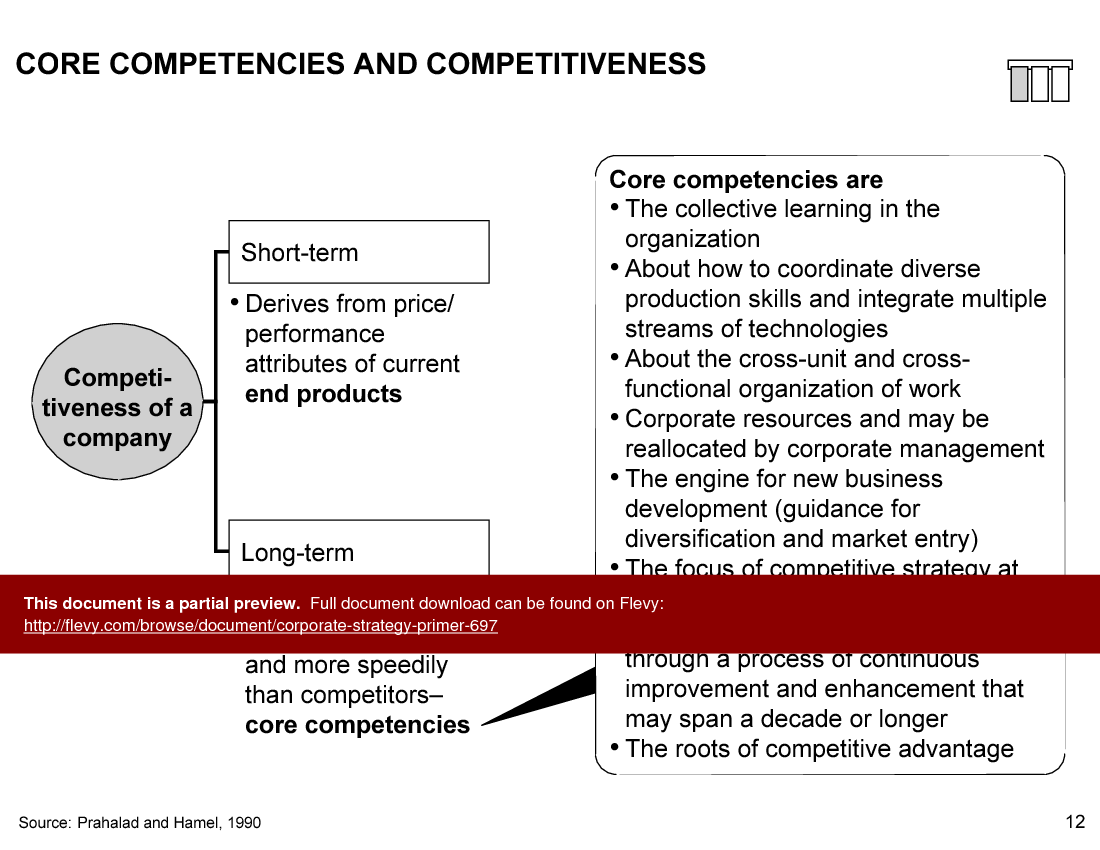
This slide presents a structured approach to core competencies and their relationship to business units and end products, outlining 3 levels of competition. The first level focuses on end products, aiming for global brand share to gain market traction. The second level emphasizes core products, with the objective of maximizing manufacturing share to leverage economies of scale and scope for improved market presence and profitability. The third level addresses core competencies, targeting world leadership in product functionality design and development, highlighting the importance of innovation and expertise. Core products are tangible manifestations of core competencies, illustrating how competencies translate into value for end products. This framework aligns competencies with business goals to enhance market positioning and operational effectiveness.
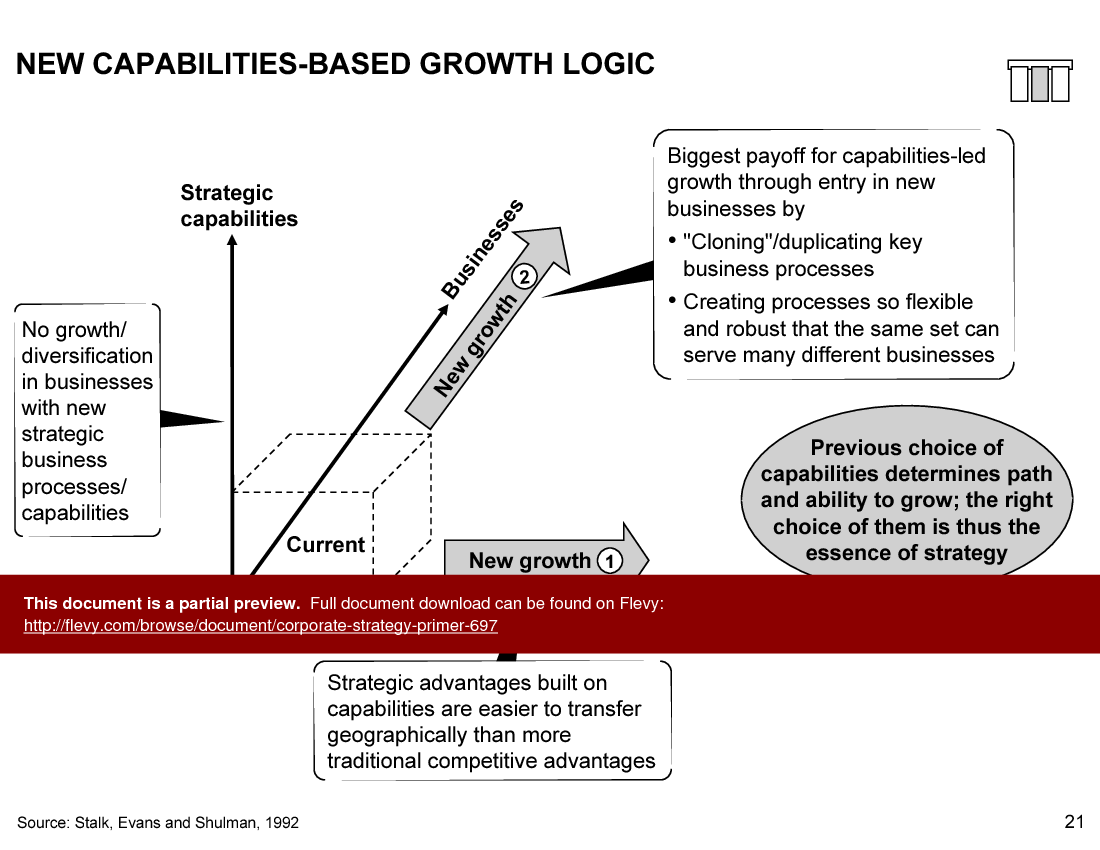
This slide presents a framework for business growth based on strategic capabilities. The vertical axis represents strategic capabilities, while the horizontal axis illustrates geographic area and business diversification. The current state of businesses indicates that without new strategic processes or capabilities, growth and diversification are unattainable. Significant growth opportunities arise from entering new businesses through "cloning" successful processes, allowing effective strategies to be replicated across markets. Creating flexible and robust processes enhances growth potential and adaptability to various business models. Initial choices regarding capabilities critically influence future expansion trajectories, positioning capability selection as essential in strategic planning. The visual representation suggests that strategic advantages from capabilities are transferable, encouraging organizations to develop core competencies that foster growth and agility in a changing environment.
This slide outlines a capabilities-based competitive strategy for organizations. It emphasizes the role of top management, particularly the CEO, in leading the transformation across functions and strategic business units (SBUs). The first section, "Shift strategic framework," advocates redefining the business in terms of strategic capabilities linked to customer satisfaction. The second section, "Organize around strategic capabilities," recommends adapting organizational structures, clarifying roles, and providing training to strengthen selected capabilities. The final section, "Adapt measurement and reward system," highlights the need for a measurement system aligned with strategic capabilities, including performance-based compensation. This approach guides executives in pivoting towards a capabilities-driven strategy.
Source: Best Practices in Growth Strategy, Strategy Development PowerPoint Slides: Corporate Strategy Primer PowerPoint (PPT) Presentation Slide Deck, Documents & Files
The average daily rate of a McKinsey consultant is $6,625 (not including expenses). The average price of a Flevy document is $65.
Trusted by over 10,000+ Client Organizations
Since 2012, we have provided best practices to over 10,000 businesses and organizations of all sizes, from startups and small businesses to the Fortune 100, in over 130 countries.

"Flevy is now a part of my business routine. I visit Flevy at least 3 times each month.
Flevy has become my preferred learning source, because what it provides is practical, current, and useful in this era where the business world is being rewritten.
many challenges and there is the need to make the right decisions in a short time, with so much scattered information, we are fortunate to have Flevy. Flevy investigates, selects, and puts at our disposal the best of the best to help us be successful in our work.
"
– Omar Hernán Montes Parra, CEO at Quantum SFE
"The wide selection of frameworks is very useful to me as an independent consultant. In fact, it rivals what I had at my disposal at Big 4 Consulting firms in terms of efficacy and organization."
– Julia T., Consulting Firm Owner (Former Manager at Deloitte and Capgemini)
"As a young consulting firm, requests for input from clients vary and it's sometimes impossible to provide expert solutions across a broad spectrum of requirements. That was before I discovered Flevy.com.
Through subscription to this invaluable site of a plethora of topics that are key and crucial to consulting, I
have been able to exceed expectations and deliver quality advice and solutions to my clients. The quality and expertise of the authors are exemplary and gives me great confidence to use as part of my service offerings.
I highly recommend this company for any consultant wanting to apply international best practice standards in their service offerings.
"
– Nishi Singh, Strategist and MD at NSP Consultants
"Last Sunday morning, I was diligently working on an important presentation for a client and found myself in need of additional content and suitable templates for various types of graphics. Flevy.com proved to be a treasure trove for both content and design at a reasonable price, considering the time I
saved. I encountered a download issue during the ordering process. However, a quick email to Flevy's support team, even on a Sunday (!!!), resulted in assistance within less than an hour, allowing me to download the content I needed. Fantastic job, Flevy! I give 5 stars for both content/price and customer service. Thank you!
"
– M. E., Chief Commercial Officer, International Logistics Service Provider
"As a niche strategic consulting firm, Flevy and FlevyPro frameworks and documents are an on-going reference to help us structure our findings and recommendations to our clients as well as improve their clarity, strength, and visual power. For us, it is an invaluable resource to increase our impact and value."
– David Coloma, Consulting Area Manager at Cynertia Consulting
"FlevyPro has been a brilliant resource for me, as an independent growth consultant, to access a vast knowledge bank of presentations to support my work with clients. In terms of RoI, the value I received from the very first presentation I downloaded paid for my subscription many times over! The
quality of the decks available allows me to punch way above my weight – it's like having the resources of a Big 4 consultancy at your fingertips at a microscopic fraction of the overhead.
"
– Roderick Cameron, Founding Partner at SGFE Ltd
"I am extremely grateful for the proactiveness and eagerness to help and I would gladly recommend the Flevy team if you are looking for data and toolkits to help you work through business solutions."
– Trevor Booth, Partner, Fast Forward Consulting
"I have found Flevy to be an amazing resource and library of useful presentations for lean sigma, change management and so many other topics. This has reduced the time I need to spend on preparing for my performance consultation. The library is easily accessible and updates are regularly provided. A wealth of great information."
– Cynthia Howard RN, PhD, Executive Coach at Ei Leadership
Download our free compilation of 50+ Strategy & Transformation slides and templates. Frameworks include McKinsey 7-S, Balanced Scorecard, Disruptive Innovation, BCG Curve, and many more.