
Products to Platforms Primer   20-slide PPT PowerPoint presentation slide deck (PPTX)
$29.00

Products to Platforms Primer (20-slide PPT PowerPoint presentation slide deck (PPTX)) Preview Image
Log in to unlock full preview.
Products to Platforms Primer (20-slide PPT PowerPoint presentation slide deck (PPTX)) Preview Image
Arrow   Click main image to view in full screen.

Products to Platforms Primer (PowerPoint PPTX Slide Deck)

PowerPoint (PPTX) 20 Slides FlevyPro Document

Top 1,000 Best Practice $29.00
FlevyPro price: FREE (included in subscription)
This framework is developed by a team of former McKinsey and Big 4 consultants. The presentation follows the headline-body-bumper slide format used by global consulting firms.
Add to Cart


Immediate download
Free lifetime updates

PRODUCT STRATEGY PPT DESCRIPTION

Editor Summary Products to Platforms Primer is a 20-slide PowerPoint (PPTX) by LearnPPT Consulting, developed by former consultants from McKinsey and the Big 4, guiding organizations through product-to-platform transformation. Read more

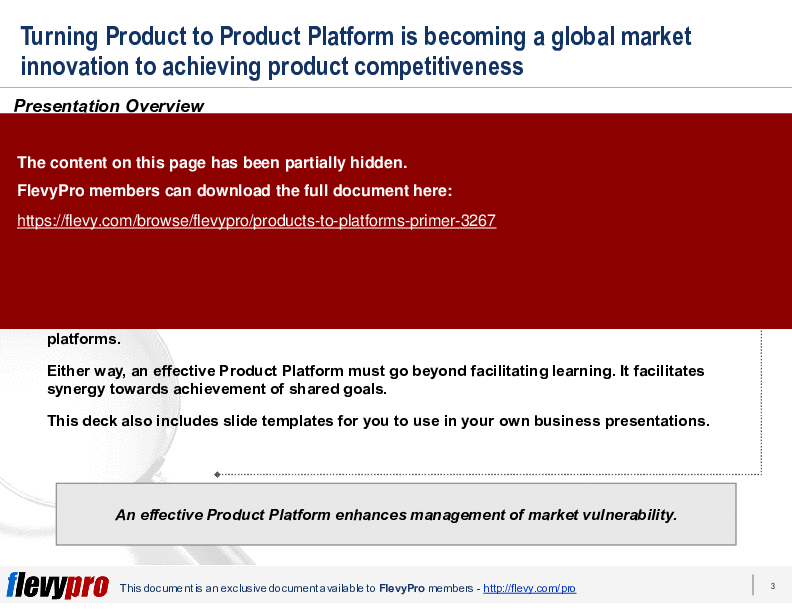
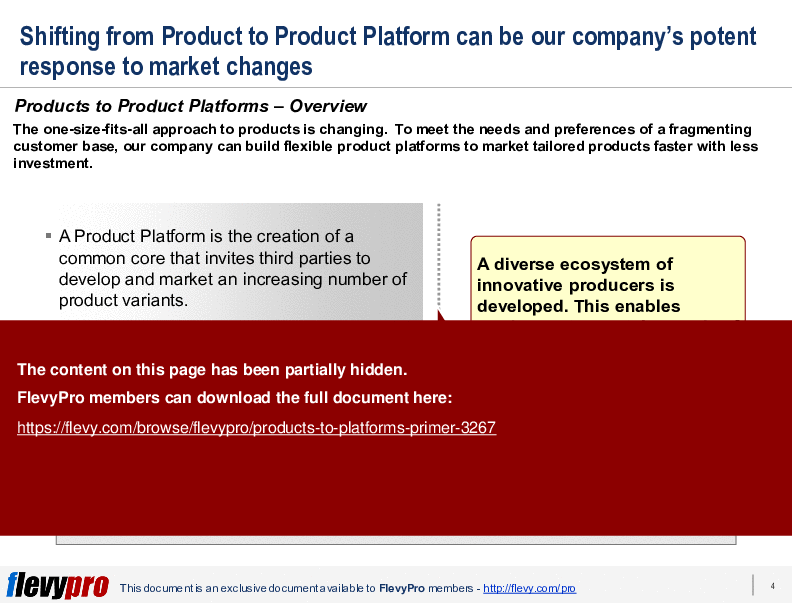
A Product Platform is the creation of a common core that invites third parties to develop and market an increasing number of product variants. An effective Product Platform enhances management of market vulnerability.

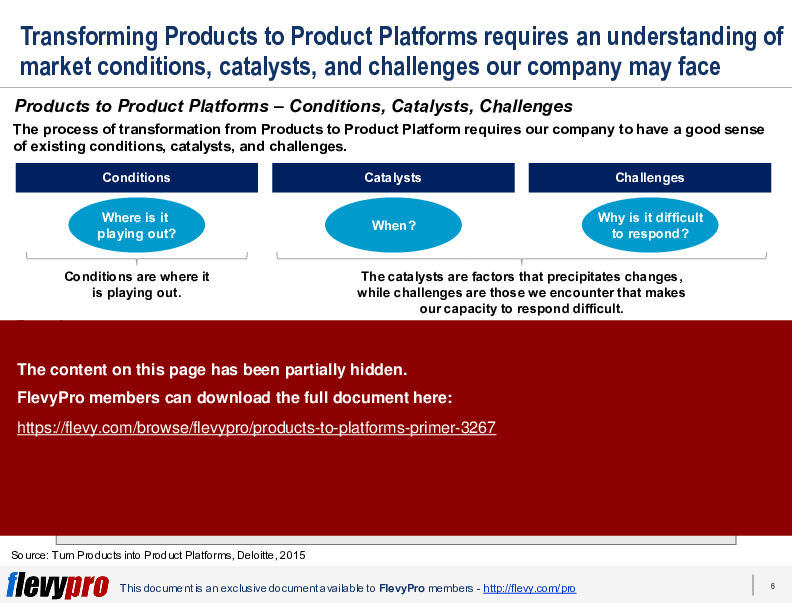
Undertaking the Product to Product Platform Transformation requires strategic understanding and management of conditions, catalysts, challenges that exist in the process.

Using a Product Platform strategy can enhance our company's capability to sustain more customers. Its application becomes more effective when our company applies a Product Platform that best sit our product requirements and tactical operation.

A Product Platform can fall under 1 of 4 categories:

1. Aggregation Platforms
2. Social Platforms
3. Mobilization Platforms
4. Learning Platforms

Either way, an effective Product Platform must go beyond facilitating learning. It facilitates synergy towards achievement of shared goals.

This deck also includes slide templates for you to use in your own business presentations.

Our PPT delves into the intricacies of transforming products into platforms, emphasizing the need for a strategic approach to navigate market conditions, catalysts, and challenges. The shift from a product-centric to a platform-centric model is not merely a trend, but a potent strategy to stay competitive in a fragmented market. By leveraging a common core, companies can invite third-party innovations, creating a diverse ecosystem that drives growth and reduces investment risks.

The primer provides a comprehensive overview of the different types of product platforms, including Aggregation, Social, Mobilization, and Learning Platforms. Each type is dissected to show how they can be tailored to meet specific business needs, enhancing the ability to respond to market changes swiftly. The document also highlights the importance of understanding market vulnerability and provides tools to assess and mitigate risks effectively.

Included are actionable templates for immediate application in your business strategy sessions. These templates are designed to help you map out the conditions, catalysts, and challenges specific to your industry, ensuring a well-rounded approach to platform development. This resource is indispensable for executives looking to future-proof their business models and drive sustainable growth.

Got a question about this document? Email us at flevypro@flevy.com.

MARCUS OVERVIEW

This synopsis was written by Marcus [?] based on the analysis of the full 20-slide presentation.


Executive Summary
The "Products to Platforms Primer" is a strategic presentation designed to guide organizations through the transformation from traditional product offerings to dynamic product platforms. This deck, crafted by former consultants from McKinsey and the Big 4, emphasizes the importance of understanding market conditions, catalysts, and challenges that influence this transition. By adopting a product platform strategy, companies can enhance their market resilience, foster innovation, and better meet the diverse needs of their customer base. The presentation includes practical templates and frameworks to facilitate effective implementation.

Who This Is For and When to Use
•  Corporate executives seeking to innovate product strategies
•  Integration leaders managing product transformation initiatives
•  Consultants advising clients on market adaptation and platform strategies
•  Product managers focused on enhancing product offerings and customer engagement

Best-fit moments to use this deck:
•  During strategic planning sessions focused on product innovation
•  When assessing market vulnerabilities and opportunities for platform development
•  In workshops aimed at aligning teams on product platform strategies

Learning Objectives
•  Define the concept of a product platform and its strategic significance
•  Identify market conditions and catalysts that drive the transition to product platforms
•  Analyze challenges that may hinder effective platform transformation
•  Develop a tailored product platform strategy that aligns with organizational goals
•  Create actionable plans using templates provided in the deck
•  Foster collaboration among stakeholders to enhance platform capabilities

Table of Contents
•  Overview (page 3)
•  Conditions, Catalysts, Challenges (page 6)
•  Product Platforms (page 9)
•  Market Vulnerability (page 12)
•  Templates (page 16)

Primary Topics Covered
•  Overview of Product Platforms - A product platform creates a common core that allows third parties to develop and market various product variants, enhancing competitiveness.
•  Conditions for Transformation - Understanding the existing market conditions is crucial for successfully transitioning to product platforms.
•  Catalysts for Change - Identifying factors that precipitate the shift to product platforms helps organizations prepare for transformation.
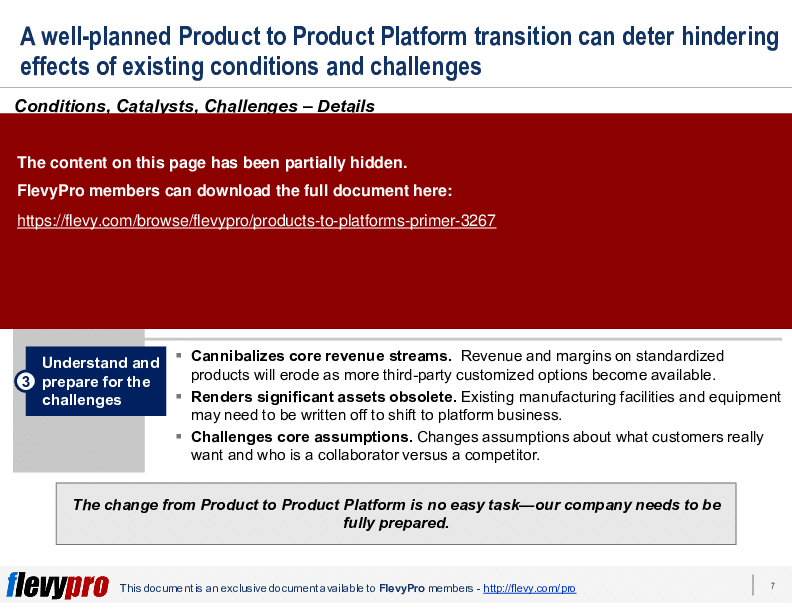
•  Challenges in Transition - Recognizing challenges such as cannibalization of core products and obsolescence of existing assets is essential for strategic planning.
•  Types of Product Platforms - Different types of platforms, including aggregation, social, mobilization, and learning platforms, can be leveraged to enhance product offerings.
•  Market Vulnerability Assessment - Evaluating market vulnerability helps organizations make informed decisions about product platform strategies.

Deliverables, Templates, and Tools
•  Product platform strategy template for aligning organizational goals
•  Market vulnerability assessment framework to identify risks
•  Conditions, catalysts, and challenges analysis template for strategic planning
•  Types of product platforms overview for guiding platform selection
•  Action plan template for implementing product platform strategies
•  Workshop facilitation guide for aligning teams on platform transformation

Slide Highlights
•  Overview slide detailing the significance of product platforms in modern markets
•  Conditions, Catalysts, Challenges framework illustrating key factors influencing transformation
•  Types of Product Platforms slide showcasing various platform models and their applications
•  Market Vulnerability slide highlighting critical questions for assessing market readiness
•  Template slides providing practical tools for immediate application in business contexts

Potential Workshop Agenda
Introduction to Product Platforms (60 minutes)
•  Overview of product platform concepts and benefits
•  Discussion on market trends and customer needs

Conditions and Challenges Analysis (90 minutes)
•  Identify current market conditions impacting product strategies
•  Group exercise to evaluate catalysts and challenges in transitioning to platforms

Developing a Product Platform Strategy (120 minutes)
•  Workshop on creating tailored product platform strategies
•  Hands-on session using provided templates to draft action plans

Customization Guidance
•  Adjust the templates to reflect specific organizational goals and market conditions
•  Incorporate relevant terminology and metrics that align with your industry
•  Tailor the action plans to include specific workstreams and governance structures

Secondary Topics Covered
•  The role of enabling technologies in product platform development
•  Strategies for fostering collaboration among third-party innovators
•  The impact of customer mindsets on platform adoption
•  Financial implications of transitioning to a product platform model
•  Case studies of successful product platform implementations

Topic FAQ

What is a product platform and why would a company move from products to platforms?

A product platform creates a common core that invites third parties to develop and market multiple product variants, improving responsiveness to diverse customer needs and managing market vulnerability. Organizations pursue platforms to enable third‑party innovation and broader product ecosystems supported by a common core.

What are the main conditions, catalysts, and challenges to assess before starting a platform transformation?

Key considerations include current market conditions, factors that precipitate change (catalysts), and obstacles such as product cannibalization, asset obsolescence, and shifting customer expectations. These are typically organized and evaluated using a conditions–catalysts–challenges analysis template, as in Flevy's Products to Platforms Primer.

How can an organization assess market vulnerability before choosing a platform strategy?

Assess market vulnerability by evaluating customer diversity, product functionality overlap, and the potential for shared infrastructure across offerings; use structured questions to identify susceptibility to market changes. A market vulnerability assessment framework helps quantify these risks and inform strategy, as provided in Flevy's Products to Platforms Primer.

What types of product platforms exist and how do they differ?

Product platforms commonly fall into 4 categories—Aggregation, Social, Mobilization, and Learning—each serving different use cases, from transaction facilitation to knowledge sharing. Selection depends on product requirements and operational tactics, guided by a types-of-platforms overview.

What financial implications should leaders consider when shifting to a platform model?

Financial considerations include upfront costs to develop the core platform infrastructure, ongoing investment in enabling technologies, and potential revenue impacts from third-party variants or cannibalization. Evaluations should compare infrastructure costs against projected revenue changes and ecosystem benefits.

How should a workshop be structured to align teams on a product platform strategy?

A workshop can begin with an introductory overview (about 60 minutes), followed by conditions and challenges analysis (around 90 minutes), and conclude with strategy development and hands-on action planning (about 120 minutes), using template slides and facilitation guidance to produce actionable plans.

What should I look for when selecting a products-to-platforms toolkit or deck?

Prioritize resources that include diagnostic frameworks (conditions, catalysts, challenges), a market vulnerability assessment, clear platform-type guidance, implementation action plans, and workshop facilitation tools; pedigree from experienced consultants can be useful, as in Flevy's Products to Platforms Primer which includes those templates.

After a merger, how can we decide whether to consolidate product lines into a single platform?

Start by mapping product functionality overlaps, assessing customer diversity, and evaluating shared infrastructure potential; use a conditions–catalysts–challenges analysis and market vulnerability assessment to weigh risks and design an action plan for consolidation using provided templates.

Document FAQ
These are questions addressed within this presentation.

What is a product platform?
A product platform is a common core that allows third parties to develop and market various product variants, enhancing flexibility and responsiveness to market demands.

What are the key conditions for a successful transition?
Understanding existing market conditions, recognizing catalysts for change, and preparing for potential challenges are critical for a successful transition to a product platform.

How can we assess market vulnerability?
Market vulnerability can be assessed through key questions regarding customer diversity, product functionality, and potential for shared infrastructure across offerings.

What types of product platforms exist?
Types of product platforms include aggregation platforms, social platforms, mobilization platforms, and learning platforms, each serving different market needs.

How do we develop a product platform strategy?
A product platform strategy should align with organizational goals, leverage market insights, and incorporate stakeholder collaboration to enhance product offerings.

What challenges might we face during the transition?
Challenges may include cannibalization of existing products, obsolescence of assets, and shifts in customer expectations regarding product customization.

How can we foster collaboration among third-party innovators?
Creating an open and supportive environment that encourages innovation and shared goals can enhance collaboration among third-party producers.

What financial implications should we consider?
Organizations should evaluate the costs associated with developing core product infrastructure and the potential revenue impacts of transitioning to a platform model.

Glossary
•  Product Platform - A core structure that allows for the development of various product variants by third parties.
•  Market Vulnerability - The susceptibility of a company to fluctuations in market conditions.
•  Conditions - The existing market environment influencing product strategies.
•  Catalysts - Factors that drive changes in market dynamics.
•  Challenges - Obstacles that hinder effective transformation to product platforms.
•  Aggregation Platforms - Platforms that facilitate transactions and connect users to resources.
•  Social Platforms - Platforms that foster social interactions and community building.
•  Mobilization Platforms - Platforms that encourage collective action among users.
•  Learning Platforms - Platforms that facilitate knowledge sharing and collaboration.
•  Customization - The ability to tailor products to meet specific customer needs.
•  Stakeholders - Individuals or groups with an interest in the success of the product platform.
•  Third-party Innovators - External entities that contribute to the development of product variants.
•  Financial Implications - The economic considerations associated with transitioning to a product platform model.
•  Enabling Technologies - Digital tools and infrastructure that support product platform development.
•  Customer Mindset - The evolving expectations and preferences of consumers regarding product offerings.
•  Interoperability - The ability of different systems or products to work together effectively.
•  Modular Design - A flexible approach to product development that allows for easy customization and scalability.
•  Synergy - Collaborative efforts that enhance the overall effectiveness of product platforms.
•  Ecosystem - The network of participants involved in the development and use of product platforms.

PRODUCT STRATEGY PPT SLIDES

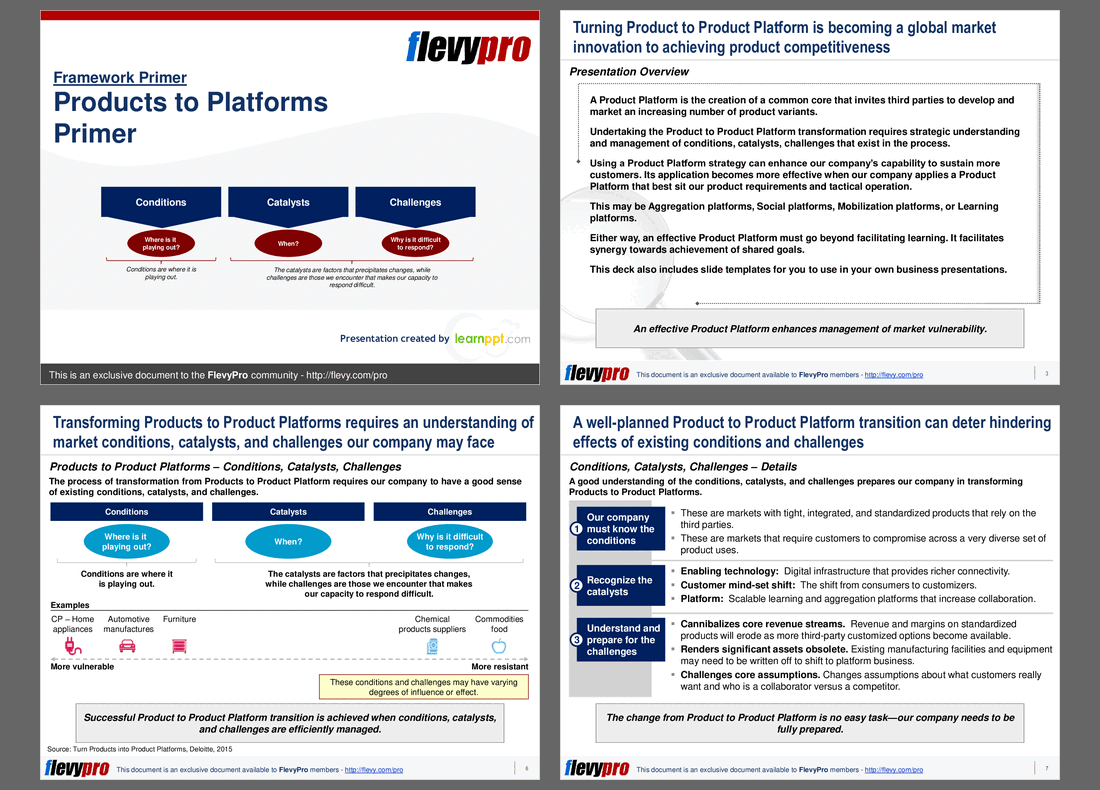
Framework for Transforming Products into Platforms

Strategic Insights on Product Platform Development

Key Questions for Managing Market Vulnerability

Key Considerations for Product to Platform Transition

Source: Best Practices in Product Strategy, Platform Strategy PowerPoint Slides: Products to Platforms Primer PowerPoint (PPTX) Presentation Slide Deck, LearnPPT Consulting


$29.00
FlevyPro price: FREE (included in subscription)
This framework is developed by a team of former McKinsey and Big 4 consultants. The presentation follows the headline-body-bumper slide format used by global consulting firms.
Add to Cart
  

Did you need more documents?

Consider a FlevyPro subscription from $39/month. View plans here.

For $10.00 more, you can download this document plus 2 more FlevyPro documents. That's just $13 each.

ABOUT FLEVYPRO

This document is part of the FlevyPro Library, a curated knowledge base of documents for our FlevyPro subscribers.

FlevyPro is a subscription service for on-demand business frameworks and analysis tools. FlevyPro subscribers receive access to an exclusive library of curated business documents—business framework primers, presentation templates, Lean Six Sigma tools, and more—among other exclusive benefits.

Click here to learn more about FlevyPro and its benefits.

Did you know?
The average daily rate of a McKinsey consultant is $6,625 (not including expenses). The average price of a Flevy document is $65.


Trusted by over 10,000+ Client Organizations
Since 2012, we have provided business templates to over 10,000 businesses and organizations of all sizes, from startups and small businesses to the Fortune 100, in over 130 countries.
AT&T GE Cisco Intel IBM Coke Dell Toyota HP Nike Samsung Microsoft Astrazeneca JP Morgan KPMG Walgreens Walmart 3M Kaiser Oracle SAP Google E&Y Volvo Bosch Merck Fedex Shell Amgen Eli Lilly Roche AIG Abbott Amazon PwC T-Mobile Broadcom Bayer Pearson Titleist ConEd Pfizer NTT Data Schwab


Read Customer Testimonials

 
"As a consultant requiring up to date and professional material that will be of value and use to my clients, I find Flevy a very reliable resource.

The variety and quality of material available through Flevy offers a very useful and commanding source for information. Using Flevy saves me time, enhances my expertise and ends up being a good decision."

– Dennis Gershowitz, Principal at DG Associates
 
"FlevyPro provides business frameworks from many of the global giants in management consulting that allow you to provide best in class solutions for your clients."

– David Harris, Managing Director at Futures Strategy
 
"I have used FlevyPro for several business applications. It is a great complement to working with expensive consultants. The quality and effectiveness of the tools are of the highest standards."

– Moritz Bernhoerster, Global Sourcing Director at Fortune 500
 
"Flevy is now a part of my business routine. I visit Flevy at least 3 times each month.

Flevy has become my preferred learning source, because what it provides is practical, current, and useful in this era where the business world is being rewritten.

In today's environment where there are so "

– Omar Hernán Montes Parra, CEO at Quantum SFE
 
"The wide selection of frameworks is very useful to me as an independent consultant. In fact, it rivals what I had at my disposal at Big 4 Consulting firms in terms of efficacy and organization."

– Julia T., Consulting Firm Owner (Former Manager at Deloitte and Capgemini)
 
"I have found Flevy to be an amazing resource and library of useful presentations for lean sigma, change management and so many other topics. This has reduced the time I need to spend on preparing for my performance consultation. The library is easily accessible and updates are regularly provided. A wealth of great information."

– Cynthia Howard RN, PhD, Executive Coach at Ei Leadership
 
"I am extremely grateful for the proactiveness and eagerness to help and I would gladly recommend the Flevy team if you are looking for data and toolkits to help you work through business solutions."

– Trevor Booth, Partner, Fast Forward Consulting
 
"As a niche strategic consulting firm, Flevy and FlevyPro frameworks and documents are an on-going reference to help us structure our findings and recommendations to our clients as well as improve their clarity, strength, and visual power. For us, it is an invaluable resource to increase our impact and value."

– David Coloma, Consulting Area Manager at Cynertia Consulting


Customers Also Bought These Documents


Customers Also Like These Documents

Explore Templates on Related Management Topics


Your Recently Viewed Documents
Download our FREE Strategy & Transformation Framework Templates

Download our free compilation of 50+ Strategy & Transformation slides and templates. Frameworks include McKinsey 7-S, Balanced Scorecard, Disruptive Innovation, BCG Curve, and many more.